Magdalena Zurawski: The Tiniest Muzzle Sings Songs of Freedom

The poetry of Magdalena Zurawski has enter’d the poetic firmament, where her star radiates with talent & personality
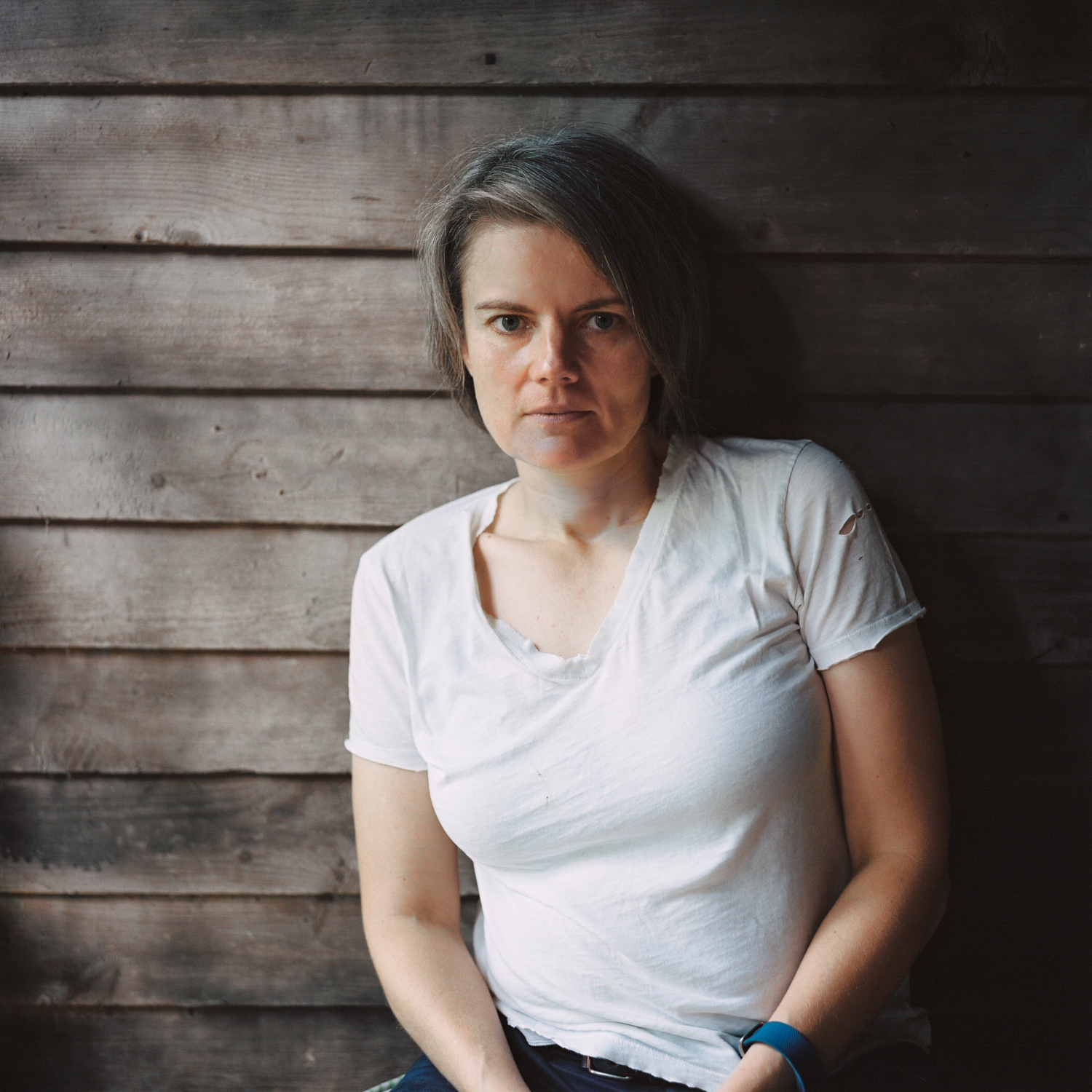
Magdalena Zurawski is a poet’s poet, a disseminator of the vocation into the very lines of her craft. “The poem is a pair of eyes,” she tells us in Natural Skin, “moving a nose down a page.” We do not read her work to be taken upon fantastic journeys in exotic climes, or to ride the dragon’s back of passionate love. No, we read Zurawski to lie awhile beside her awkward genius, revel in her race-fit wordplay, & to examine the evidence left behind by the world through her almost mournful eye-piece; “the shapes of foreign spoons, the lightly different cut of shirt worn by men over 50.”
Zurawaski is a recent revelation, usher’d into the public consciousness by Litmus Press, when her debut collection, Companion Animal, won the 2016 Norma Farber First Book Award. Three years later, Wave Books are releasing THE TINIEST MUZZLE SINGS SONGS OF FREEDOM, a collection of 42 poems of varying life, but all deliver’d via the voracious appetite for the well-woven word-verve which Zurawski innately possesses.
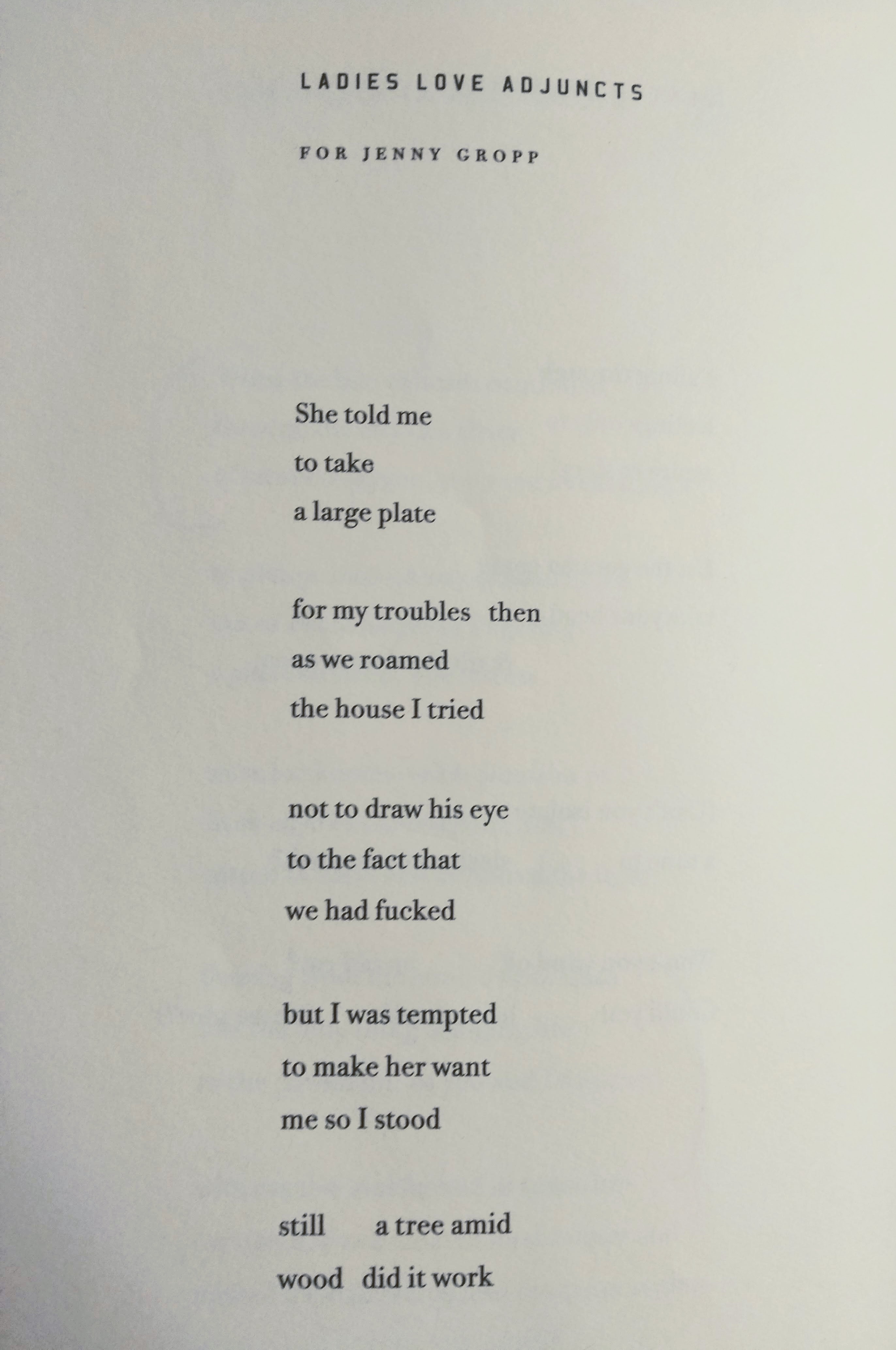

Her collection is a series of abstractly European movie shorts, flashing with inspired images in eclectic combinations. ‘Someplace in your Mouth’ is an excellent example, which opens with
When the line of heads continued
through the city in a sliver
of tattered oxygen
The poems vary in length & measure, & her stanza blocks are aesthetically pleasing at all times, if a little tough to read at times. However, the more you enter her worldscape, the more you are drawn in, & the more her book becomes something of a page-turner. The reader becomes assiduously addicted to her characteristic & assured uncertainties as she teleports us into her orbit with passages such as
Oh, to have birds cooing,
bells ringing, tofu frying, and unusually
high energy levels!
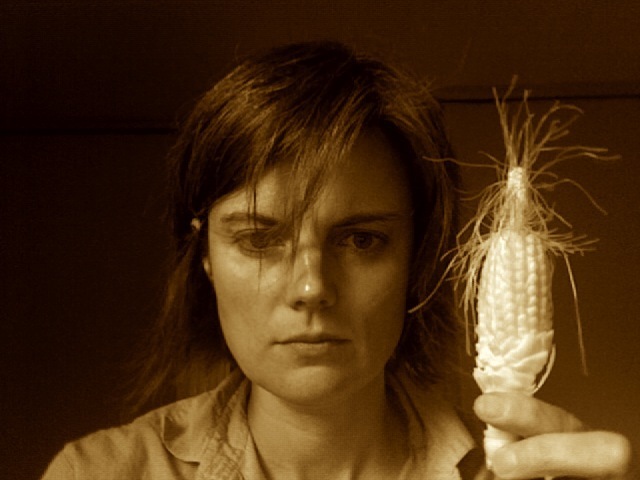 I loved the pastoral punk of ‘Summer In The Network Of Privileged Carports,’ the sensual cravings of ‘Ladies Love Adjuncts’ & the staccato philosophising of ‘Does My Lip Limp?‘, but it is when Zurawski is translating the poetic experience that she really shines. In ‘The Problem‘ we see how ‘the musculature’ of her hand, ‘could no longer speed the pen to my thoughts,‘ while in the opening to ‘It’s Hard To Be A Saint,‘ she tells us;
I was sympathetic to language, but often
it shrugged me and kept other lovers.
I crawled through the commas ofRomanticism and rejected the rhythms,
though sometimes at night I could feel
a little sad.
There is a subtle prettiness to Magdalena Zurawski’s poetry, which shudders into moments of extreme & sublime majestie, such as the passage in ‘The Tiny Aches‘ with which I shall close the Mumble’s review of a cathartically sensitive poet & her transcendent art.
…Four a.m. keeps ringing
Its spidery snare and all the stars are
your own headache cemented in our most ancient fears.
The Tiniest Muzzle Sings Songs of Freedom
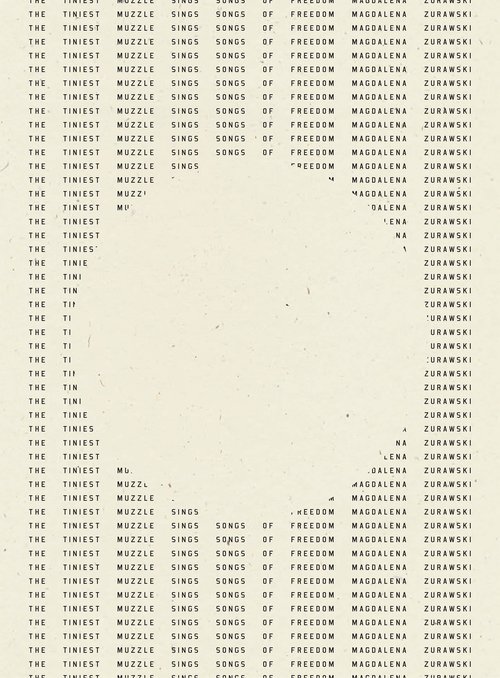
Buy the Book
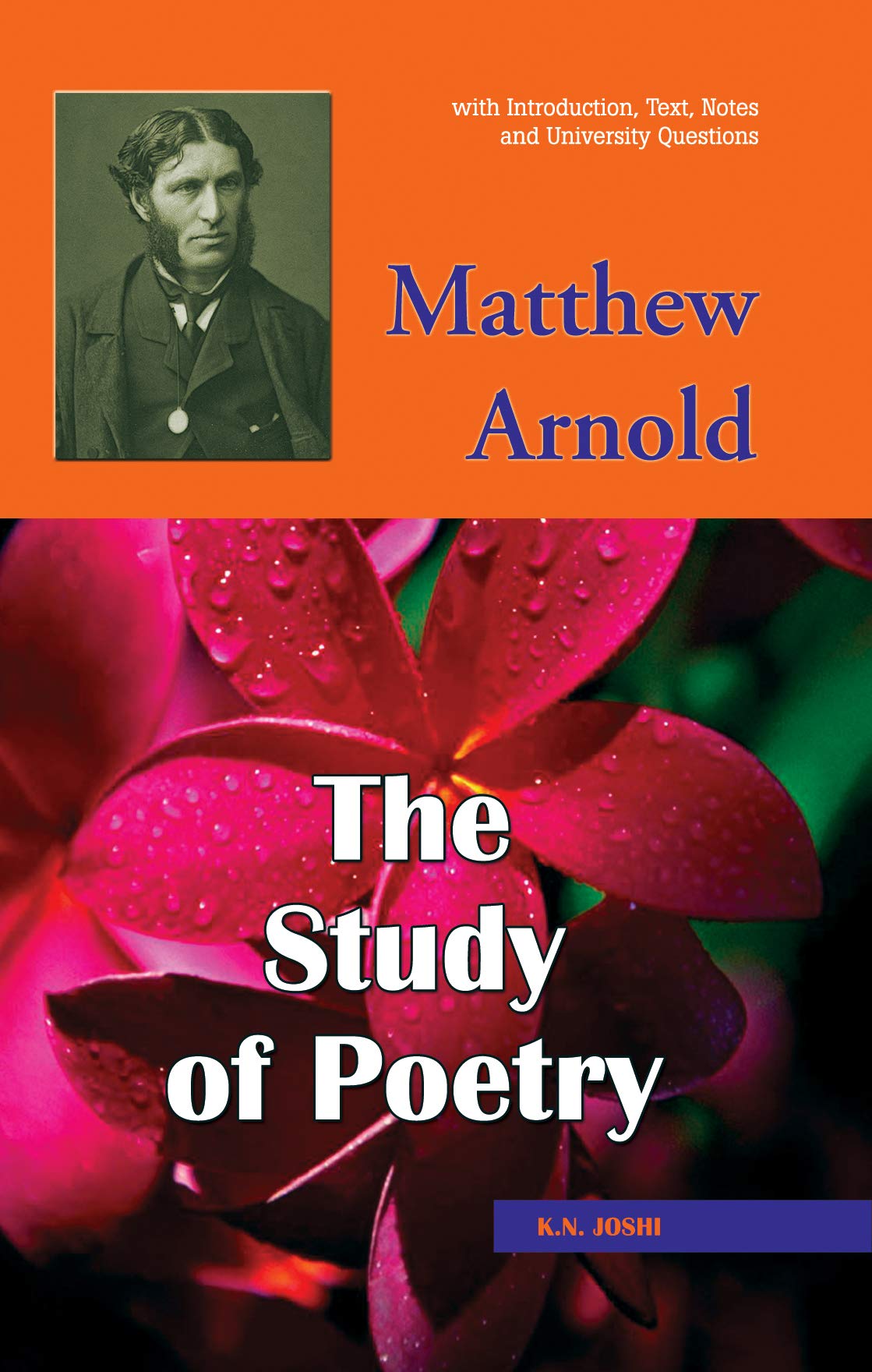
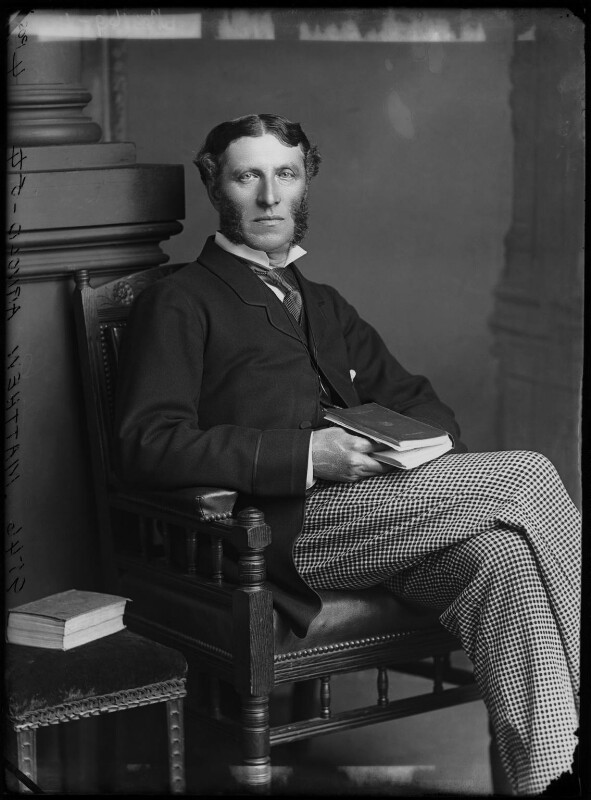
Classic Essays: Matthew Arnold’s ‘The Study of Poetry’

Continuing a series of classic essays on literature. This month sees one of the greatest Victoria poets pontificate upon the poetic art – originally published as the introduction to T. H. Ward’s anthology, The English Poets (1880)…
The future of poetry is immense, because in poetry, where it is worthy of its high destinies, our race, as time goes on, will find an ever surer and surer stay. There is not a creed which is not shaken, not an accredited dogma which is not shown to be questionable, not a received tradition which does not threaten to dissolve. Our religion has materialised itself in the fact, in the supposed fact; it has attached its emotion to the fact, and now the fact is failing it. But for poetry the idea is everything; the rest is a world of illusion, of divine illusion. Poetry attaches its emotion to the idea; the idea is the fact. The strongest part of our religion to-day is its unconscious poetry.
If we conceive thus highly of the destinies of poetry, we must also set our standard for poetry high, since poetry, to be capable of fulfilling such high destinies, must be poetry of a high order of excellence. For in poetry the distinction between excellent and inferior, sound and unsound or only half-sound, true and untrue or only half-true, is of paramount importance. It is of paramount importance because of the high destinies of poetry.
The best poetry is what we want; the best poetry will be found to have a power of forming, sustaining, and delighting us, as nothing else can. A clearer, deeper sense of the best in poetry, and of the strength and joy to be drawn from it, is the most precious benefit which we can gather from a poetical collection such as the present. And yet in the very nature and conduct of such a collection there is inevitably something which tends to obscure in us the consciousness of what our benefit should be, and to distract us from the pursuit of it. We should therefore steadily set it before our minds at the outset, and should compel ourselves to revert constantly to the thought of it as we proceed.
Yes; constantly in reading poetry, a sense for the best, the really excellent, and of the strength and joy to be drawn from it, should be present in our minds and should govern our estimate of what we read. But this real estimate, the only true one, is liable to be superseded, if we are not watchful, by two other kinds of estimate, the historic estimate and the personal estimate, both of which are fallacious. A poet or a poem may count to us historically, they may count to us on grounds personal to ourselves, and they may count to us really. They may count to us historically. The course of development of a nation’s language, thought, and poetry, is profoundly interesting; and by regarding a poet’s work as a stage in this course of development we may easily bring ourselves to make it of more importance as poetry than in itself it really is, we may come to use a language of quite exaggerated praise in criticising it; in short, to overrate it. So arises in our poetic judgments the fallacy caused by the estimate which we may call historic. Then, again, a poet or poem may count to us on grounds personal to ourselves. Our personal affinities, likings and circumstances, have great power to sway our estimate of this or that poet’s work, and to make us attach more importance to it as poetry than in itself it really possesses, because to us it is, or has been, of high importance. Here also we overrate the object of our interest, and apply to it a language of praise which is quite exaggerated. And thus we get the source of a second fallacy in our poetic judgments—the fallacy caused by an estimate which we may call personal.
Both fallacies are natural. It is evident how naturally the study of the history and development of poetry may incline a man to pause over reputations and works once conspicuous but now obscure, and to quarrel with a careless public for skipping, in obedience to mere tradition and habit, from one famous name or work in its national poetry to another, ignorant of what it misses, and of the reason for keeping what it keeps, and of the whole process of growth in its poetry. The French have become diligent students of their own early poetry, which they long neglected; the study makes many of them dissatisfied with their so-called classical poetry, the court-tragedy of the seventeenth century, a poetry which Pellisson long ago reproached with its want of the true poetic stamp, with its politesse stérile et rampante [sterile and bombastic politeness—ed.], but which nevertheless has reigned in France as absolutely as if it had been the perfection of classical poetry indeed. The dissatisfaction is natural; yet a lively and accomplished critic, M. Charles d’Héricault, the editor of Clément Marot, goes too far when he says that “the cloud of glory playing round a classic is a mist as dangerous to the future of a literature as it is intolerable for the purposes of history.” “It hinders,” he goes on, “it hinders us from seeing more than one single point, the culminating and exceptional point; the summary, fictitious and arbitrary, of a thought and of a work. It substitutes a halo for a physiognomy, it puts a statue where there was once a man, and hiding from us all trace of the labour, the attempts, the weaknesses, the failures, it claims not study but veneration; it does not show us how the thing is done, it imposes upon us a model. Above all, for the historian this creation of classic personages is inadmissible; for it withdraws the poet from his time, from his proper life, it breaks historical relationships, it blinds criticism by conventional admiration, and renders the investigation of literary origins unacceptable. It gives us a human personage no longer but a God seated immovable amidst His perfect work, like Jupiter on Olympus; and hardly will it be possible for the young student to whom such work is exhibited at such a distance from him, to believe that it did not issue ready—made from that divine head.”
All this is brilliantly and tellingly said, but we must plead for a distinction. Everything depends on the reality of a poet’s classic character. If he is a dubious classic, let us sift him; if he is a false classic, let us explode him. But if he is a real classic, if his work belongs to the class of the very best (for this is the true and right meaning of the word classic, classical), then the great thing for us is to feel and enjoy his work as deeply as ever we can, and to appreciate the wide difference between it and all work which has not the same high character. This is what is salutary, this is what is formative; this is the great benefit to be got from the study of poetry. Everything which interferes with it, which hinders it, is injurious. True, we must read our classic with open eyes, and not with eyes blinded with superstition; we must perceive when his work comes short, when it drops out of the class of the very best, and we must rate it, in such cases, at its proper value. But the use of this negative criticism is not in itself, it is entirely in its enabling us to have a clearer sense and a deeper enjoyment of what is truly excellent. To trace the labour, the attempts, the weaknesses, the failures of a genuine classic, to acquaint oneself with his time and his life and his historical relationships, is mere literary dilettantism unless it has that clear sense and deeper enjoyment for its end. It may be said that the more we know about a classic the better we shall enjoy him; and, if we lived as long as Methuselah and had all of us heads of perfect clearness and wills of perfect steadfastness, this might be true in fact as it is plausible in theory. But the case here is much the same as the case with the Greek and Latin studies of our schoolboys. The elaborate philological groundwork which we require them to lay is in theory an admirable preparation for appreciating the Greek and Latin authors worthily. The more thoroughly we lay the groundwork, the better we shall be able, it may be said, to enjoy the authors. True, if time were not so short, and schoolboys wits not so soon tired and their power of attention exhausted; only, as it is, the elaborate philological preparation goes on, but the authors are little known and less enjoyed. So with the investigator of “historic origins” in poetry. He ought to enjoy the true classic all the better for his investigations; he often is distracted from the enjoyment of the best, and with the less good he overbusies himself, and is prone to over-rate it in proportion to the trouble which it has cost him.
The idea of tracing historic origins and historical relationships cannot be absent from a compilation like the present. And naturally the poets to be exhibited in it will be assigned to those persons for exhibition who are known to prize them highly, rather than to those who have no special inclination towards them. Moreover, the very occupation with an author, and the business of exhibiting him, disposes us to affirm and amplify his importance. In the present work, therefore, we are sure of frequent temptation to adopt the historic estimate, or the personal estimate, and to forget the real estimate; which latter, nevertheless, we must employ if we are to make poetry yield us its full benefit. So high is that benefit, the benefit of clearly feeling and of deeply enjoying the really excellent, the truly classic in poetry, that we do well, I say, to set it fixedly before our minds as our object in studying poets and poetry, and to make the desire of attaining it the one principle to which, as the Imitation says, whatever we may read or come to know, we always return.
At any rate the end to which the method and the estimate are designed to lead, and from leading to which, if they do lead to it, they get their whole value,—the benefit of being able clearly to feel and deeply to enjoy the best, the truly classic, in poetry,—is an end, let me say it once more at parting, of supreme importance. We are often told that an era is opening in which we are to see multitudes of a common sort of readers, and masses of a common sort of literature; that such readers do not want and could not relish anything better than such literature, and that to provide it is becoming a vast and profitable industry. Even if good literature entirely lost currency with the world, it would still be abundantly worth while to continue to enjoy it by oneself. But it never will lose currency with the world, in spite of monetary appearances; it never will lose supremacy. Currency and supremacy are insured to it, not indeed by the world’s deliberate and conscious choice, but by something far deeper,—by the instinct of self-preservation in humanity.
The essay continues with a historical survey upon famous poets
If you enjoyed this article
Please make a donation
***

Birth of a Poet 5: Working Livorno
Continuing Damian Beeson Bullen’s retrospective adventure through the journey that made him a poet…
Monday 20th April, 1998
Woke up with the sun streaming into my face! Put on a clean t-shirt given to me yesterday, turn’d up the collars like a genuine romantic poet, got 2000 lira off Kaptiano, then went off for a cappucino. En route I saw Ariel the sax-player – who was having a sneaky wash at a street fountain – & captured another stanza as I strode. The pace of the poem is quite slow, actually, with me having to squeeze in moments of inspirations between floods of madness.

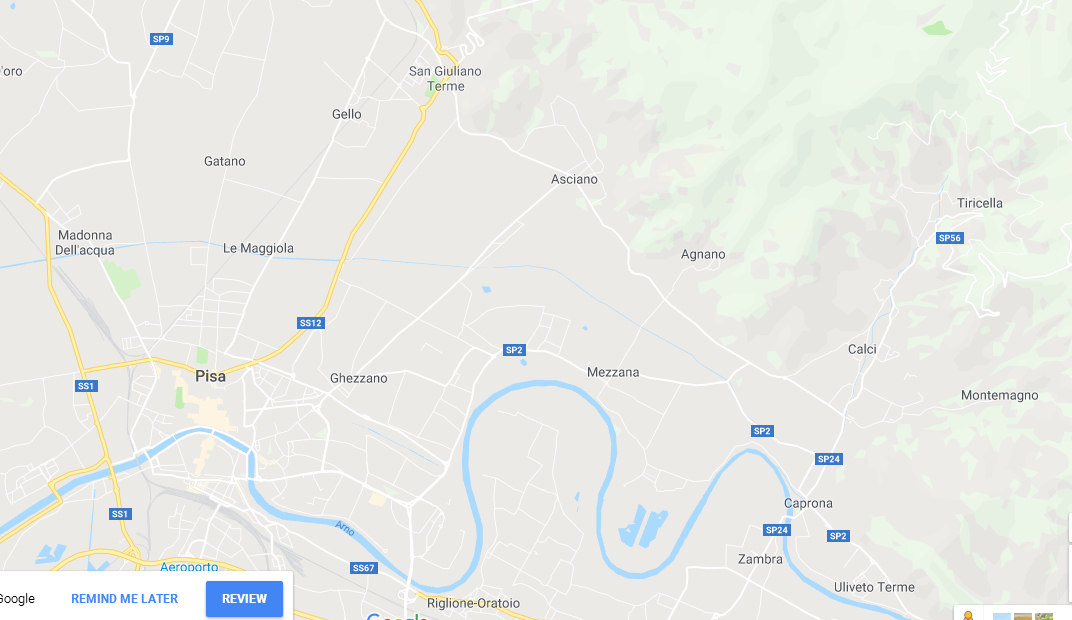
After lunch the day took off. I borrow’d Megadeth’s bycycle, bagg’d some food, a bottle of water, my blanket curtain & a couple of books (my Shelley & my notebook), slipp’d on my shades & shorts, left my bags with Kapitano, & set off on my bike ride. My spirit soar’d as I broke free of the mad Pisan hustle-bustle streets, & took to the open roads. My destination was somewhere in the mountains that loom’d over Pisa, & I literally headed for the hills. As I rode along the right side of the road (wrong to me), the countryside was rather flat. I noticed pretty flocks of wild flowers by the sides oft he road as I pass’d through idyllic villages. At the start of the mountains a tower topp’d a huge cliff – but it was a little off-track & I made a mental note to visit at some later date.
The road started to climb into a sort of loop of mountains, with houses stretching up the sides, & lots of olive groves on level platforms, like steps. I stopp’d for water in a peaceful cemetary. Each grave was well-tended & blooming with flowers, like a garden of graves. I’m sure this image will infiltrate my poem at a later date.
Back in the saddle, the road wound thro’ the loveliest houses, always uphill & very sleepy. The people hardly notic’d me pass them. I eventually could ride no further, & chain’d the bike to a bridge over a gurgling river, from which point I started an ascent of a peak. The sun was blaring down (about time too), so I took my shirt off & bask’d in the Italian sun. I first came across an old barn, then pick’d my way up thro’ a piny forest. It was quite weird, really – all the trees seems burnt, cover’d in black charcoal.
After a while, I climb’d some rocks & got my first serious view. It ran all the way down to the valley. It was great, but I knew there was more to come. I pick’d up quite a firm a stick & made my arduous way to the first ‘peak,’ where to my delight the the mountain sloped onwards to its proper summit. So I carried on, & the view kept getting better. I only had a pair of pumps on, tho’, but apart from standing on a couple of snapp’d off trees, a thistly brush & one rocky bump, I made it thro’ the day quite well.
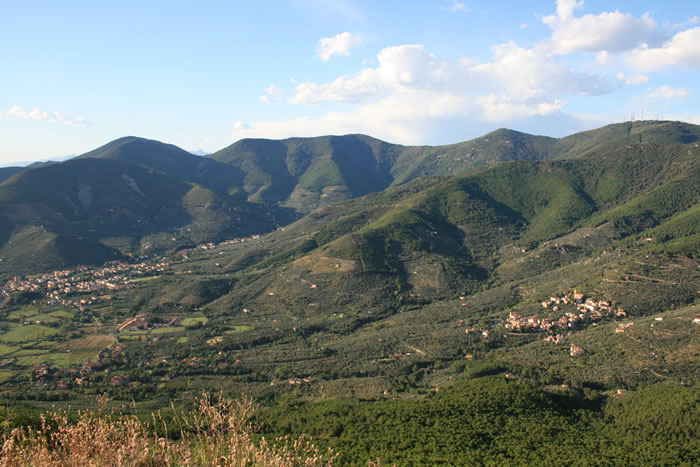
Not long after I climb’d up the hardest part of my ascent (scampering up a rocky formation) I was greeted with my prize – the most amazing view I’ve ever seen. I made my camp at the peak & buzz’d off the panorama which stretch’d from Livorno to Le Spezia – my poem’s entire stomping ground. As snakes & lizards, insects & wild flowers all did their thing, to the ringings of church bells echoing thr’o the valley, I fully embraced the view. I could see Pisa & its tower embedded in a completely flat plain, thro’ which the river Arno wound a meandering course lazily to the sea. From the peaks Pisa appears as a small town, its white leaning tower a tiny bristle on its face. The city is not that big at all, rather like Chichester in Southern England, & it is amazing to discover that in its hey-day the city once ruled a widely-scattered Meditteranean empire. Now, the sea has retreated from this fading maritime jewel, leaving only the tower to draw the attention of the world.
Across the valley the mountains were amazing, & I was almost as high as the clouds, which stretched all fluffy & puffified. I bellow’d a great ‘hellloooooo’ to a hang-glider rising on the mountain air currents, then spread out my blanket & tuck’d into my food stash. This consisted of a sandwich, cake, 2 oranges & an apple, curtesy of the nuns. I also worked on a little poetry, but could only manage one stanza; I couldn’t really settle with the place being so cool.

After a while it was time to descend, this time by a different route, following a road that wound through an (unburnt) pine forest. I pass’d by the most picturesque houses, all surrounded by olive groves, & thoroughly enjoying – so it seem’d being sited in the bosom of the mountains. An idela retreat from the follies of mankind.
As I zoom’d downhill I whistl’d Honky-Tonk Woman by the Rolling Stones. I also had a better look at the tower I’d seen earlier. On closer inspection the cliffs were actually quarried slopes, & the tower was full of grafitti. The alternate view of the plain it commanded, however, was extremely relishable.
On my return to Pisa I got a bit lost, via a mad 15th century viaduct, but I eventually managed to give Megadeth his bike back & rejoin the gang. I bought a new string for 3500 lira, leaving me 50,000 lira & £10 sterling left. Ate ravenously at the stazione, then busk’d for an hour before I collaps’d unconscious over my guitar – drunk, ston’d & exhausted.
Kapitano is talking about fruit-picking & drug-selling in the summer; I shan’t be with him, but its interesting to see how he survives. It appears we move to Livorno tomorrow, which is good timing for my poem. Today’s ride really help’d stir things up in my mentalities – the Muse is coming calling – its a wondrous thing!
Tuesday 21st April, 1998
Usual routine in the morning, but woke a little earlier & managed a couple of stanzas. I’m really getting into the swing of things now. It turn’d out that we would be leaving for Livorno in the evening, after stazione pasta, so we spent the day basking in the sun, & for the first time didn’t drink wine! I felt satisfied just to be kicking back tanning my skin into an improved, blackhead-free complexion, while at home everyone’s a bit chilly, like!
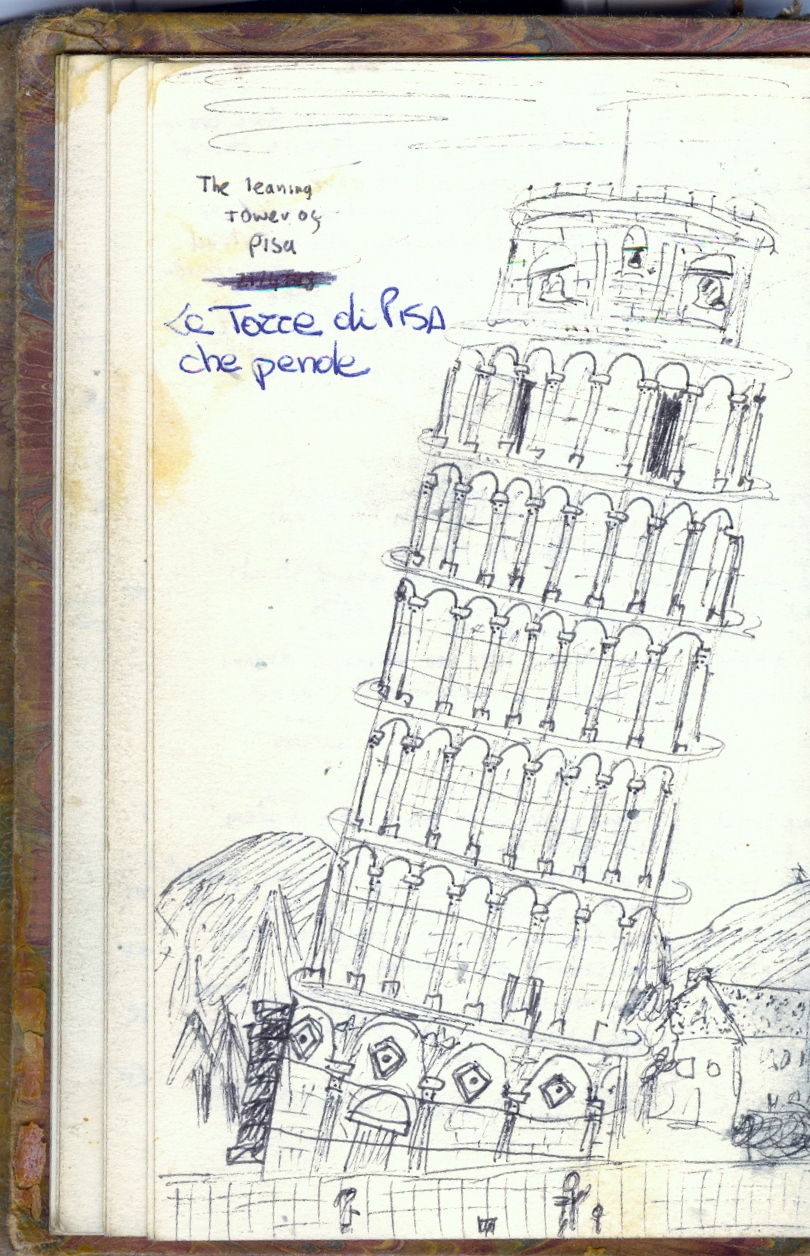
The day pass’d quite dreamlike – I got a couple more stanzas & even managed to sketch the leaning tower of Pisa! Art is always a hit or miss affair with me – mainly a miss – but it turne’d out quite good, I think. Even Kapitano was impress’d.
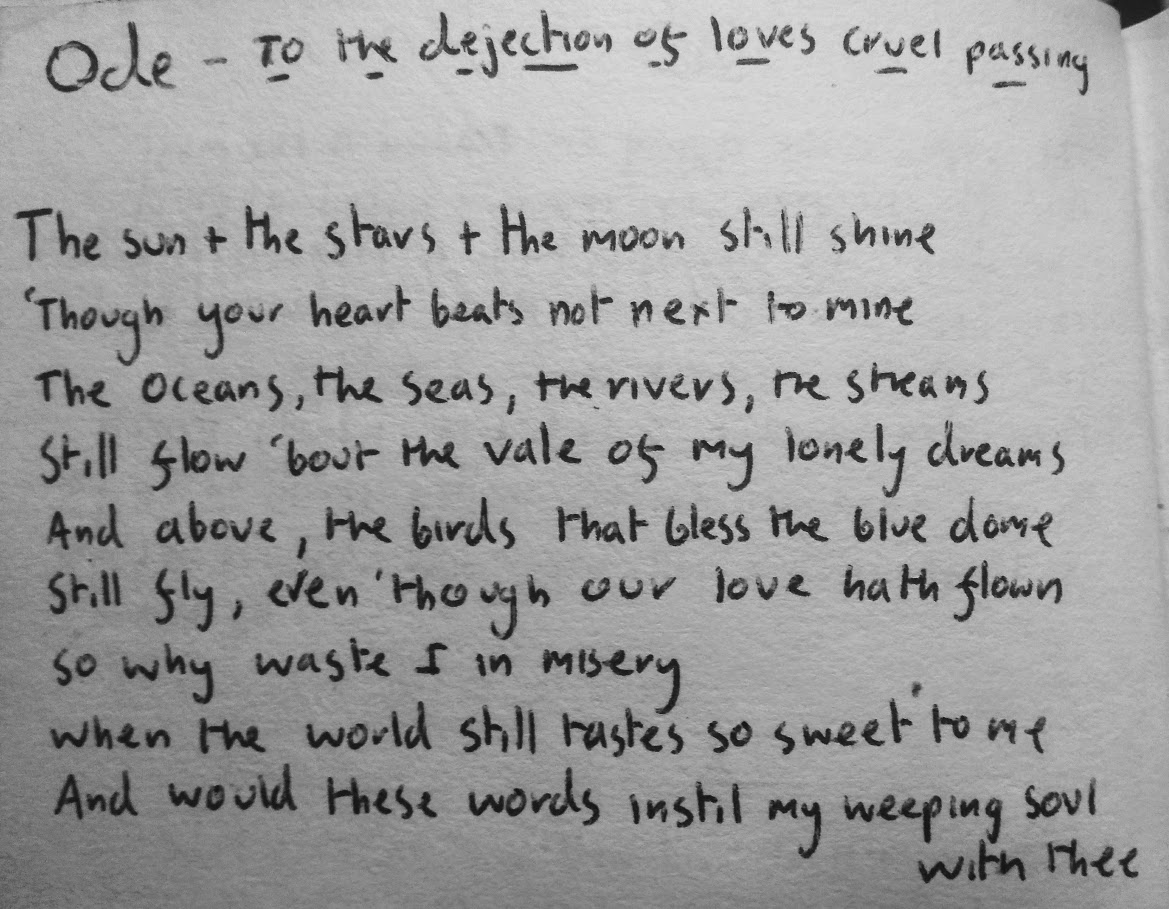
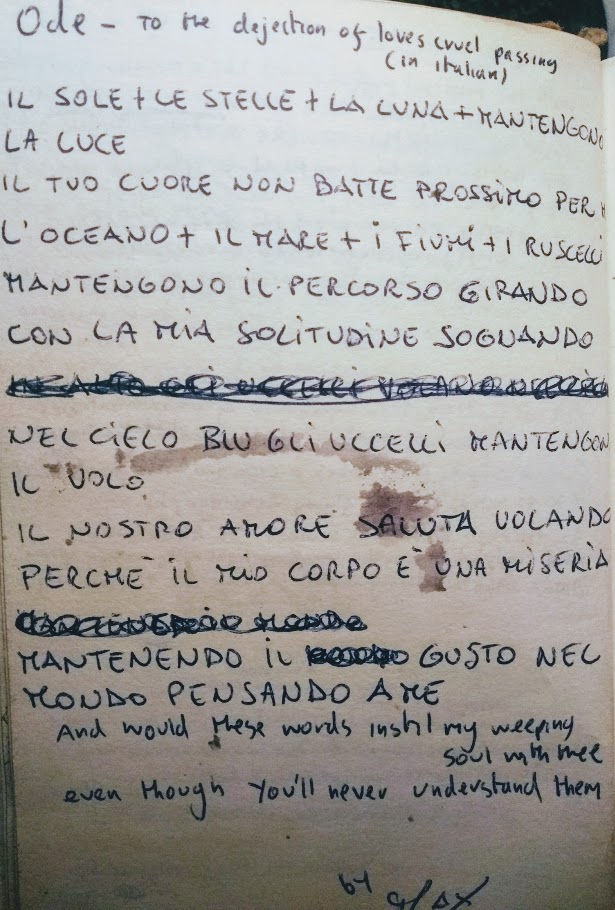
At about 7 we got the evening’s wine in (4 litres) & watched the sun go down by the Arno. It was very pleasant, my last sunrise in Pisa, the houses silhouetting against a vibrant, violet sky. I even penned an ode, I’d never done one before, but was very pleased with it;
“You are always writing – writing, writing, writing,” noticed Kapitano every day.
“I am a poet,” I would reply before buring my head once more in my notebook.
Once the sun had set we busk’d up a little cash, then had our food at the stazione, with me stocking up on loads of goodies just in case. It was time for the train to Livorno, a journey that would only take 20 minutes. Kapitano was a natural train jumper (of course) & we had arrived for free. I rang up Ruth, a bit too drunk, & have vowed not to do it again. Plus I can;t afford it, I broke into my 50,000 lira note to do so, & I’m also vowing now not to spend any more non-essential, non-survival money.
Soon I am back in bohemian swing
Musin away, one long mellow daydream.
By the side of the Arno sometime sing
Or bathe in the sun embracin ice-cream
Or busk to the world as a poet-king
Or party hard with Kapitano’s team.
How life is forever tender to me
Now I’ve tasted the breath of Italy.
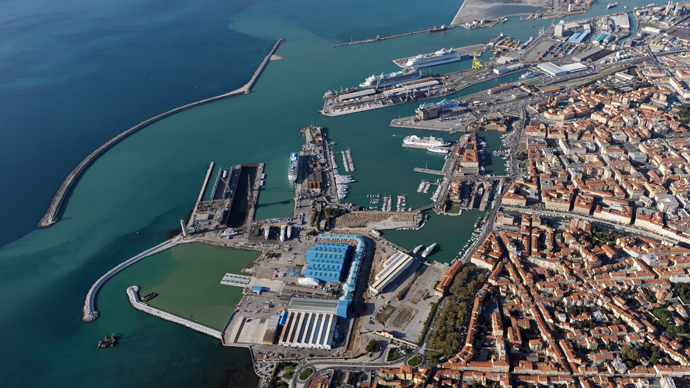
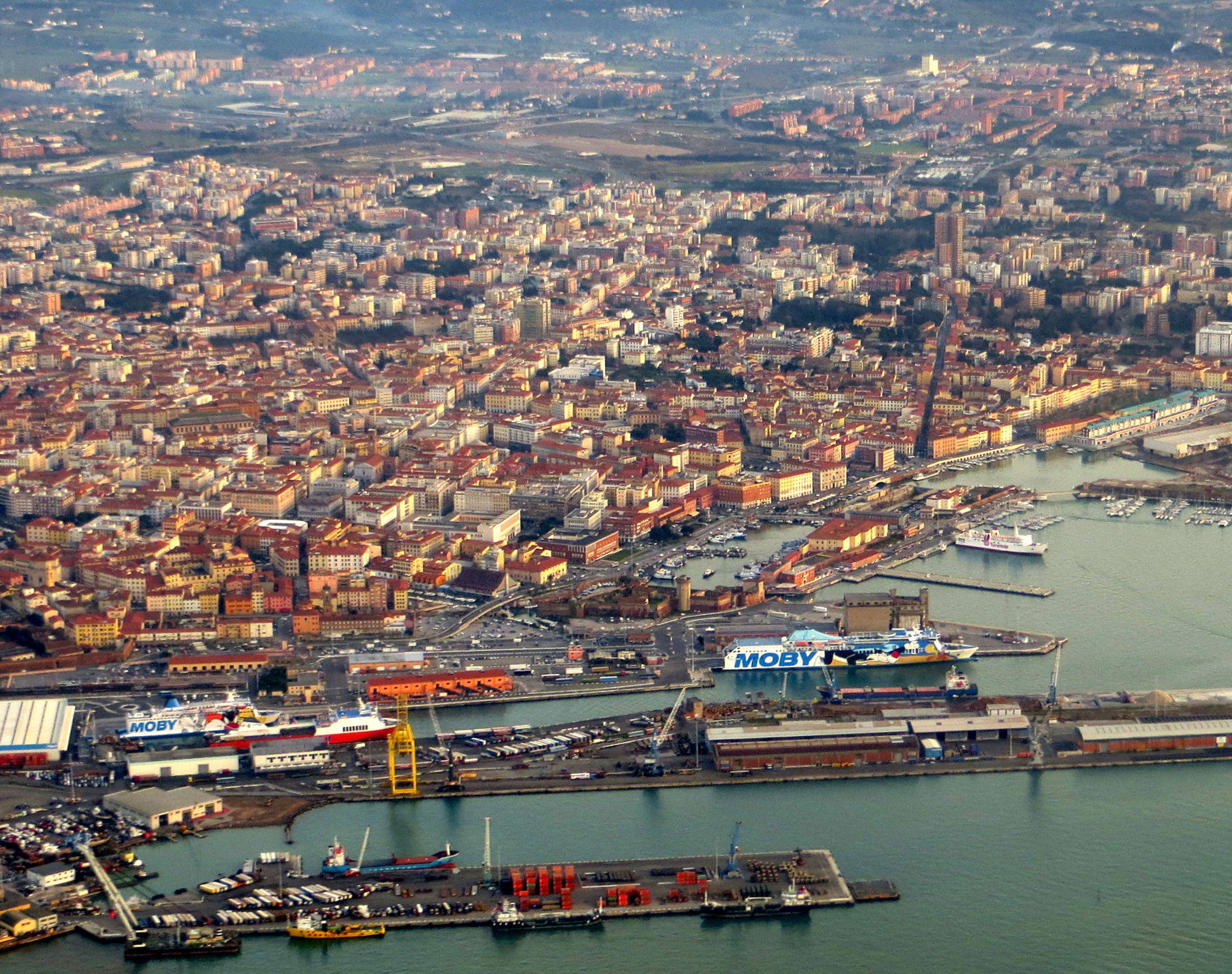
We trudged thro’ the port city of Livorno, which was a pain as I was weigh’d down by ALL my stuff. Its a lot different to Pisa – wide streets & a heavy atmosphere. Ah well, at least I made it here & I’m up to the right place in my poem to be writing about Livorno, so maybe its just fate!
Livorno is also the place where my poem, ‘The Death of Shelley,’ begins. The year is 1822 & Shelley has just been to visit Lord Byron in Pisa. The previous year what amounted to a poetic colony had existed there, but time had fragmented their group & now the Shelleys had set up home further up the coast at Lerici, near La Spezia. Their small yet enchanting villa was lapped by the sea & the poet intended to sail there with Edward Williams, the friend who co-habitated with him in their idyllic home. Their wives were expecting them & indeed they were both looking forward to returning home.
In my world, we found a church to sleep next to, with Kapitano putting out his hat for money in the morning, & I settl’d into sleep in my different, stone-matress’d bed.
Wednesday 22nd April, 1998
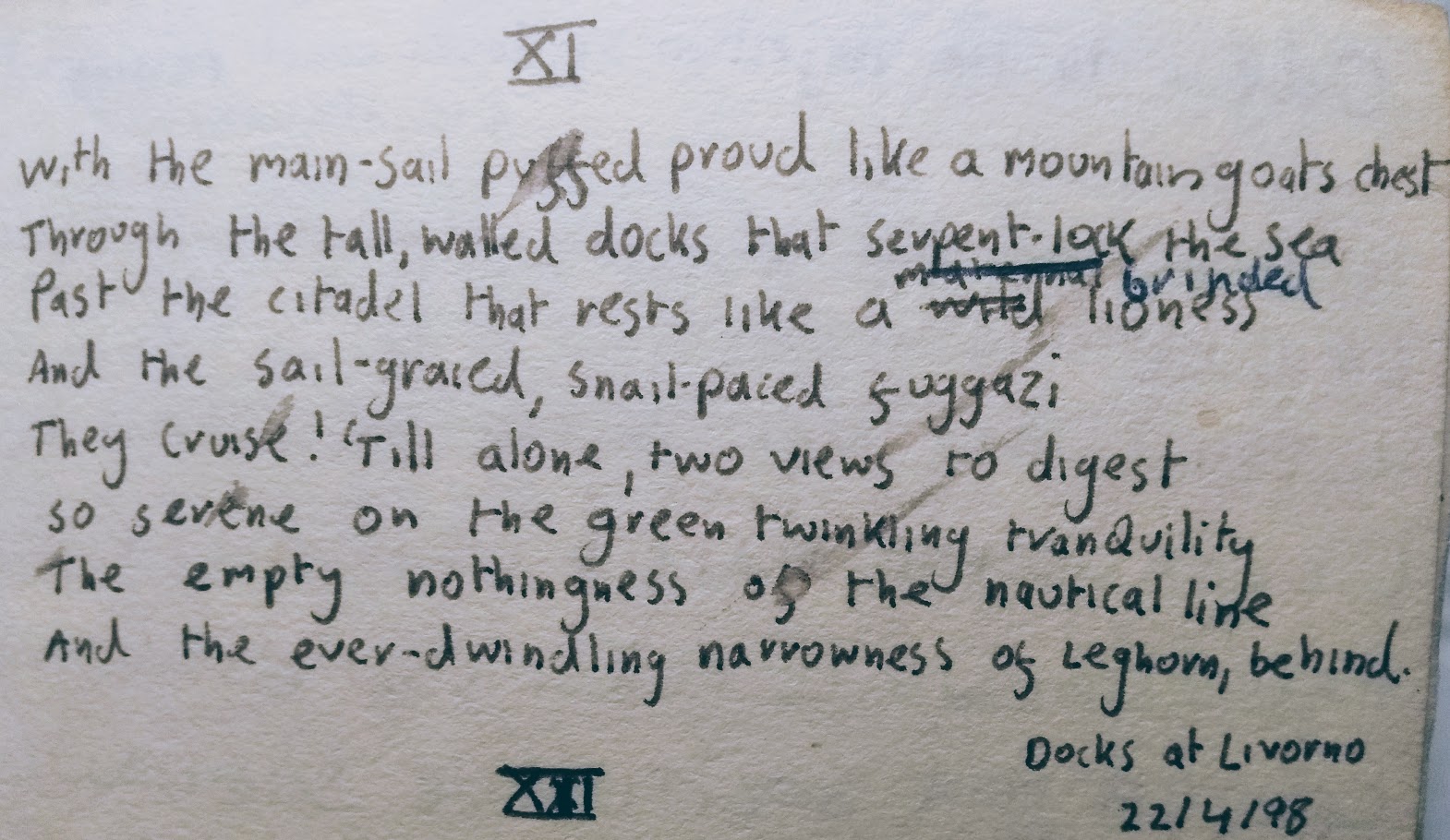
Woke early in Livorno, about 08.30, so went for a little stroll to the docks. It was mostly uninteresting, not as pleasanat a vibe as Portsmouth, but I did get a rather fine stanza, & being on the spot really help’d the flow.
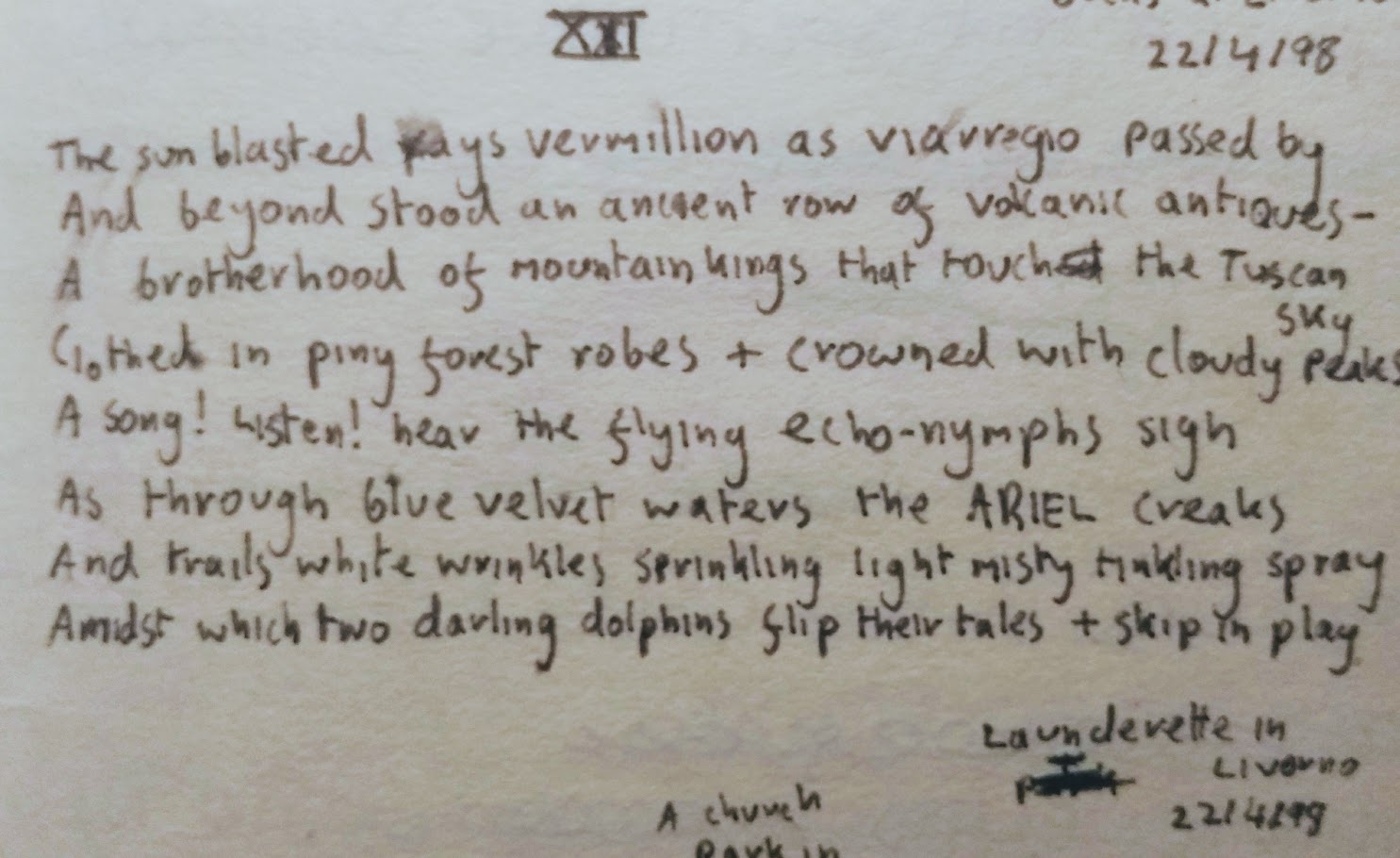
When the others awoke, we went to a church, where after registering I got a shower (aaaaahhhh!) & some new clothes (double aaaahhhh!) & a meal ticket for 3 days! Free food, stuff & sunshine – Italy is wicked! We then went to a launderette for an hour to watch some Italian music channel – quite a silly thing to do, but I did manage another stanza.
Next was a park for a chillout by a church, where Kapitano did his normal ritual of pouring out a bit of wine on first opening, for his dead alcoholic pals back home. It was now 6PM, when we trudged back to the first church & got a magnificent meal – sausages, bread, beans, biscuits, coffee, etc! We ate it in a room full of Italian drop-outs – Down & Out in Livorno & Pisa!
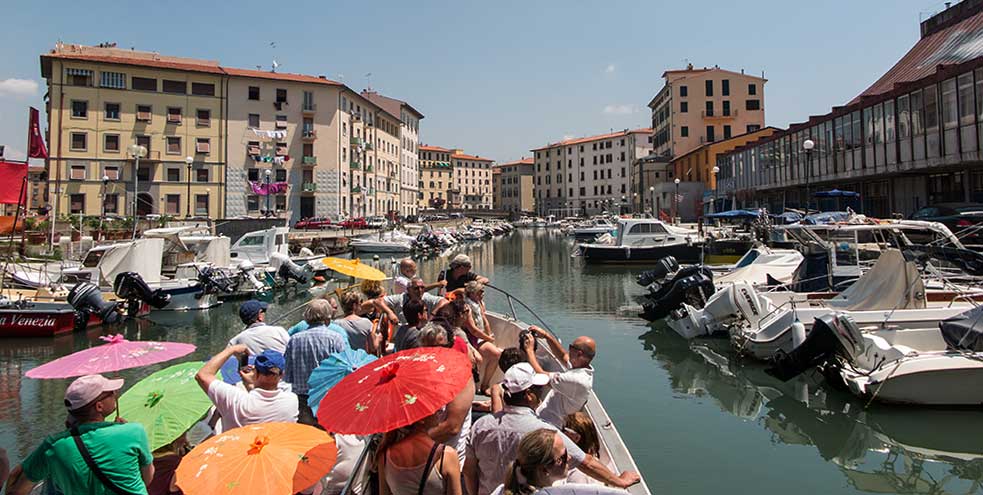
Feeling quite bloated, we went into Livorno’s shopping area to busk (Jesse had wandered off somewhere else), but had little luck. Unlike Pisa, where everyone is chanell’d down one street, Livorno is much larger & more spread out! We did make enough for some more wine, however, which me & Kapitano drank in a friendly little bar while watching the Italy v Paraguay game. Next up was the Cosby show dubb’d in Italian, yet still, if not even more so, funny!
We eventually went back to our original starting point to got some sleep. Kapitano says we go back to Pisa tomorrow & I’m very glad about it. Livorno’s a bit, well, dull, far removed from what I feel is the real Italy. Too modern & too ordered, where overmanicured women wandered the fashionable high street shops & visiting sailors buy sunglasses for the girl in the next port.
Thursday 23rd April, 1998
I woke up & found Jesse had rejoined us, sporting his own guitar. Kapitano said, ‘lets go,’ almost straight away, & like a sheep I follow’d, hiding in the train toilets. It felt a little weird coming back to the same stomping grund, a bit poetically restrictive perhaps, but I don’t spend any money in Pisa so I shouldn’t complain.
We spent the day outside a different church, & slowly but surely I got piss’d & began to busk. The best time was after 6PM, when the locals had finish’d their prayers, with Jesse waiting outside the doors while I sang Oasis – what a team!
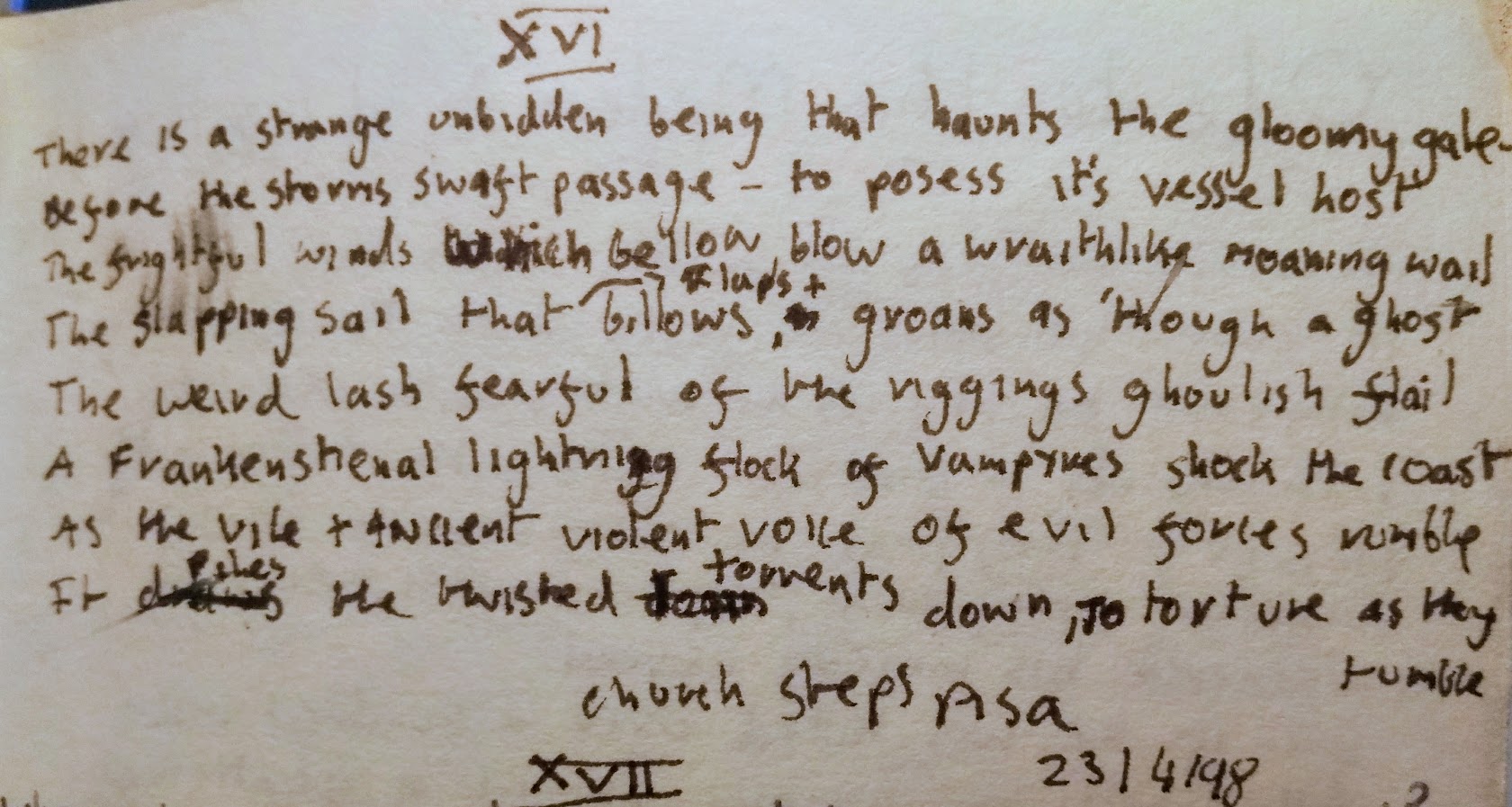
After all the religiosa had left, I turn’d the notch up via some supervino energy, Jesse jamming eccentrically on lead guitar, Maximillion (i.e. Megadeth) on oooos & aahhs, with Kapitano also getting into the performance stride like a shaman, we turn’d the streets into a massive party! The boys were back in town & it must have looked really wild to the passers-by, especially this middle-aged American couple who pass’d us at our wailing banshee peak.
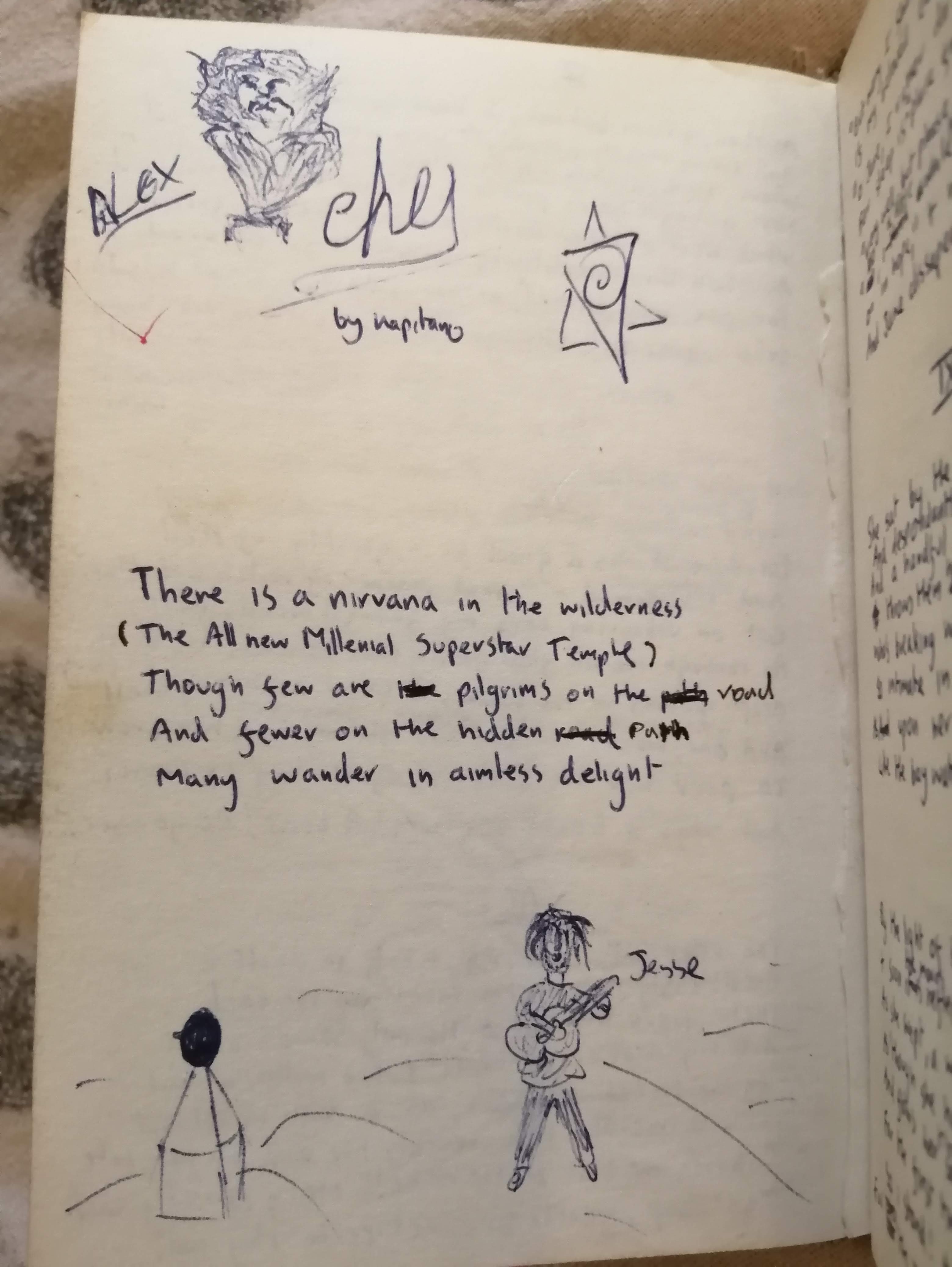
While the woman whose shop was right next to the door looked on in disbelief, the money began to pour in. Then it was time for food at the stazione, more wine, & even a new pair of shoes from the nuns, before we trundl’d back into town for one last bit of busking. On the way to the centre I met an interesting American girl from Brooklyn who play’d guitar & sang quite well. I also enjoyed speaking English for once – its healthy for the soul.
We busk’d for a while, until about 2AM, when we decided to go to the macanera. As we trudg’d there we bump’d into Megadeth, but the place was unfortunately shut. So Kapitano disappears into some bushes & starts snoring almost at once – so me & Jesse found the same place from last week where we slept, & collapsed into a drunken dream.
THE BIRTH OF A POET
************************
An Interview with Danny Dorling
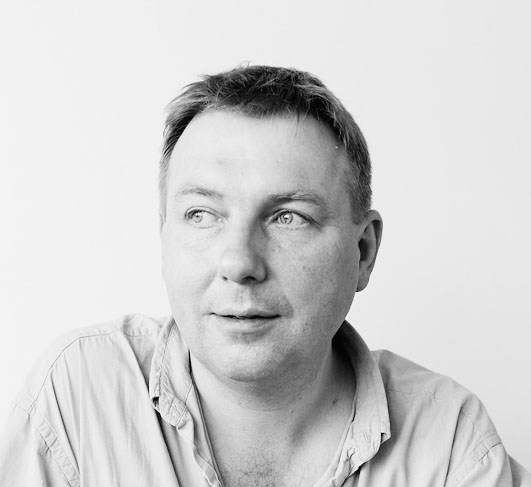
Danny Dorling is coming to Brighton to explain just what the hell is going on in mid-Brexit Britain…
Hello Danny, so where are you from & where are you at, geographically speaking?
I’m from Oxford, born and bred. Left the city at 18 and went to live in Newcastle upon Tyne for ten years. I think it was Ian Brown who said “Its not where you’re from – it’s where you’re at” – or some such. I’m 51, i have lived in the North for 23 years, roughly half of the years I can remember and most of my adult life. I lived in Bristol for three years and New Zealand for five months.
When did you first realise you had a gift for writing?
About a year ago. Honestly. I find writing hard. I did not learn to read until I was eight years old. But I have things I want to say. In books you can say what you want to say in a way you can’t do when writing academic papers (I used to do a lot of those).
Are there any particular catalysts which set you off on a writing binge?
Working with a lovely group of people in Bristol, 1996-1999 where we met in pubs and wrote books together. We ignored what the university wanted us to do and just did what we thought we should do – but in our spare time.Two of the three (Dave Gordon and George Davey Smith) were older than me and had an idea of what they were doing! The younger one, Mary Shaw, could actually write properly, which did help – and she was enthusiastic and very thoughtful. I say younger as she was about six weeks younger than me I think! She now teaches.
When you are authoring a book, how meticulous is your research?
Meticulous with the data, but not with the reading. I do read a lot. I skim read a book a day (on average) and I seriously read a book every two weeks. My room at work is full of books, thousands. I get sent a lot for free and it feels like a crime not to read them. But there is so much you could read that I always feel inadequate over having not read enough. Usually my co-authors are better read than me. With the data – there basically is no excuse for making a mistake as often what I do with data is quite easy. And I am a bit obsessive about not making a mistake. Most of my books are full of diagrams which I usually put up for free on the web, for example these are the ones in Rule Britannia.
You’re stranded on a desert island for an indeterminate amount of time with only three books – what would they be?
Definitely not the bible. I was made to read that in Sunday school (which I hated as a result as I had only just learnt to read). And no Shakespeare. I was made to read (some of) that later at secondary school. Having to read Shakespeare at school made me appreciate maths, not English. As I would have a lot of time I’d choose some books I would never otherwise read – a translation of the Buddhist Diamonds Sutra or some book like that, although I would probably regret that pompous cerebral choice as I would already be bored; then possibly something I really should have read and never have – anything by Jane Austin ( a collected works?); and then a book on how to make the perfect sandcastle on the island’s beach (which would, of course, be washed away with each tide each evening).

You have recently releas’d ‘Rule Britannia’ – can you tell us about the book?
I have just emailed you a PDF – have a look. It’s an attempt to try to work out why the UK is now very odd. The first EU country to try to leave the EU is the UK; possibly the last to try to leave for some time. Sally and I try to work out – why us? Why are we strange? Why don’t we know we are strange? Just how strange are we? And so on and on.
What is the state of social inequality in Britain in 2019, & how has it changed since the occasion you first became concern’d?
I was probably first concerned when at school; but more so since. It has got worse. 2018 may have been the year of “Peak Inequality” in the UK (but then I would say that as I published a book with that title. As house prices fall in much of the south of England in 2019 wealth inequality falls slightly. People hardly notice. It is a little like how 1920 was a little more equitable than 1919. Few people noticed then that we were just beginning to become more equal. But, of course things are also getting worse. Two people who went to my school died when homeless in Oxford at the start of this year (2019). They were both younger than me. You don’t expect children in your school to later die in the city they grew up in for want of a home.
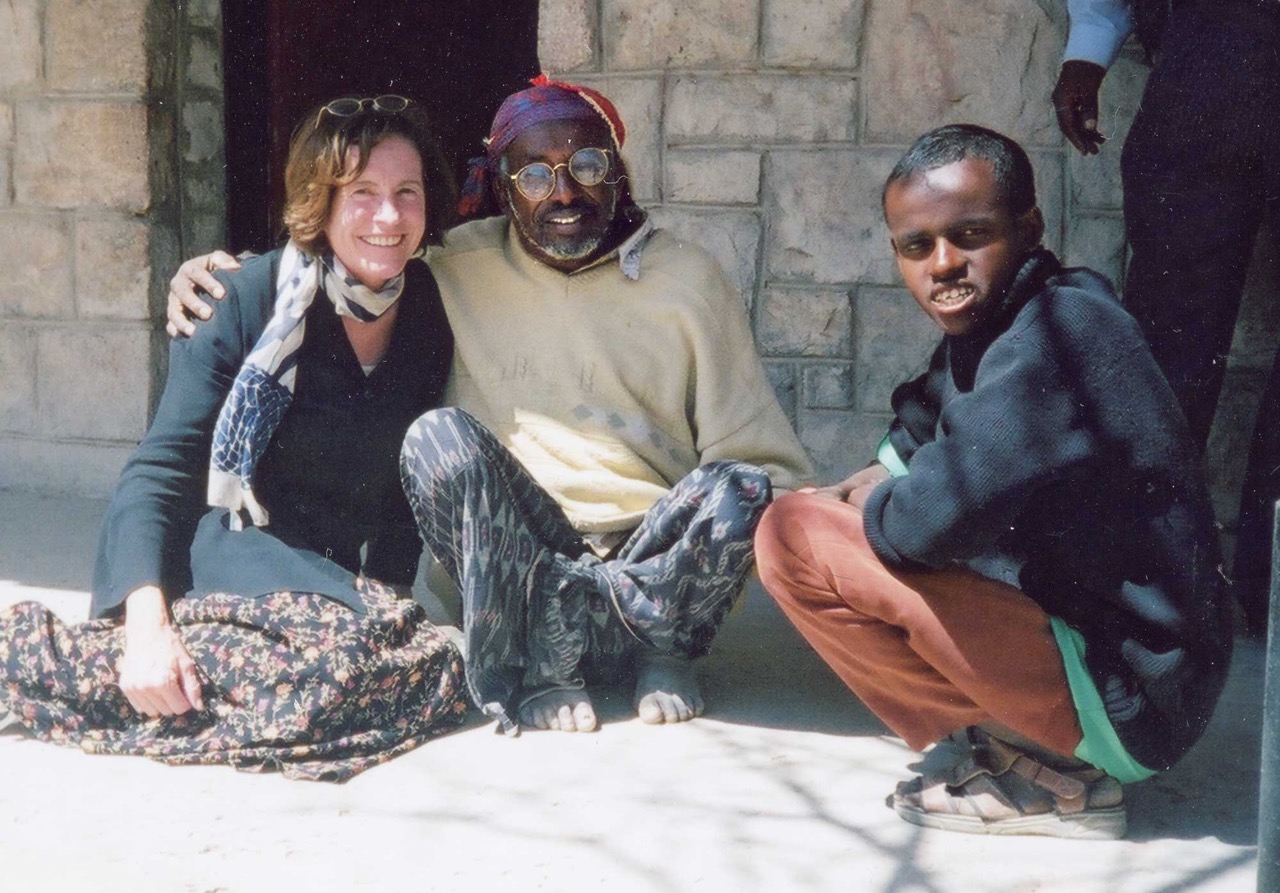
How did you find working with Sally Tomlinson?
Lovely. She doesn’t worry. I have not met anyone who worries less than Sally.
The book has a message of hope – can you condense that message into a single paragraph?
A single sentence: When the old and those in charge make a big mistake, as they did in the UK by taking the country to war in 1914, and as they did with the Suez crisis, and as they will again some day, the young see that the old and those in charge are fallible – and start to both demand and secure a better future.
You will be giving a talk on the book at the Brighton Fringe, how did you get the gig?
I didn’t know it was the Fringe. I just knew it was in Brighton. A friend, Mike McCarthy, got it me.
What are your own thoughts on that romantic, seagirt city?
It’s where a Prince of Wales had to go to get his leg over and get inebriated in peace – I think that is the first thing that comes to mind.
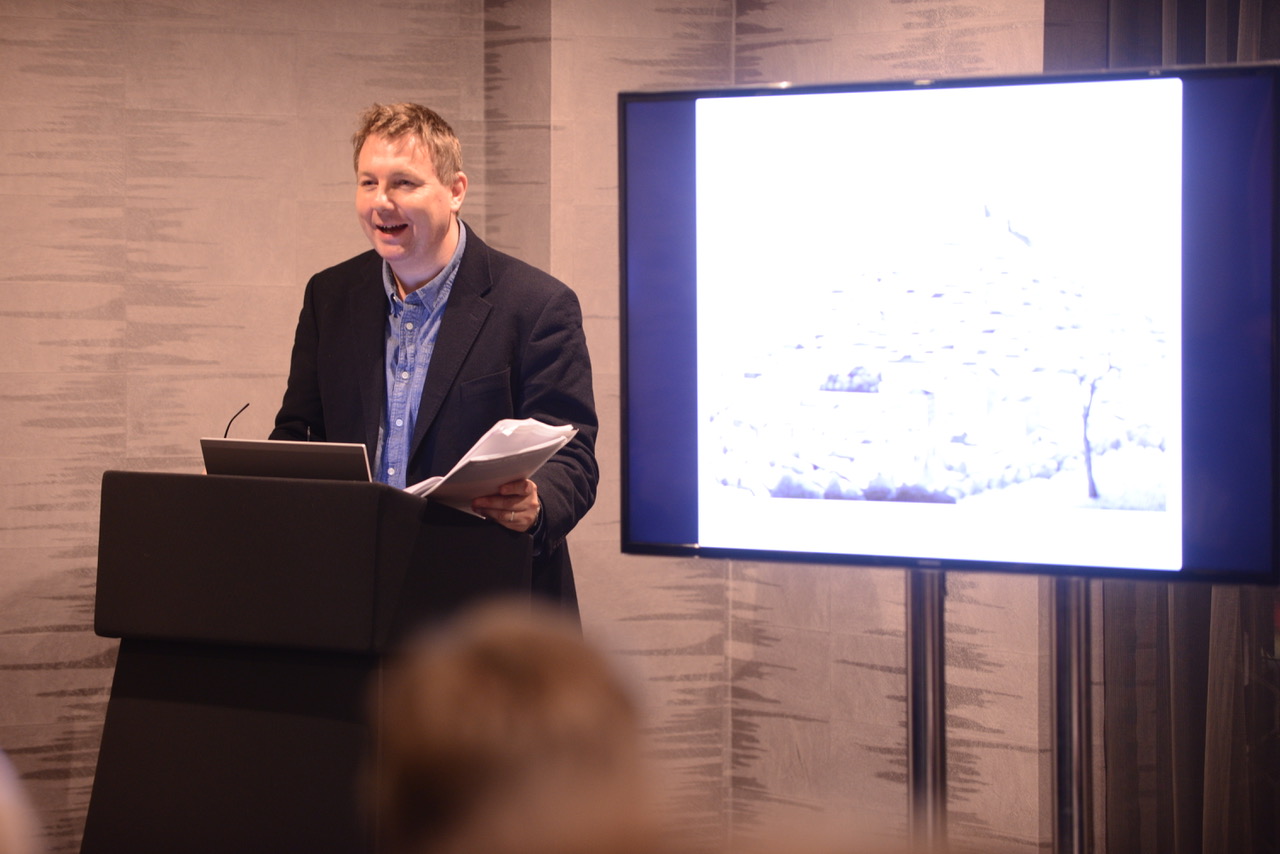
What does the rest of 2019 hold in store for Danny Dorling?
A lot more talk to people about Brexit; and listening. I’m sick of the sound of my own voice – but I think Brexit is really interesting – so I ask people what they think again and again over time – and I listen to the answers changing over time and – I think – a country, this country (England), is slowly coming to see itself differently. Brexit is knocking the brass off and exposing the bigotry fr what it is. Later, in 2019, at some point I get to make some sandcastles on a beach somewhere (Brighton beach is terrible for that – no sand). And I am working on a new book called ’slowdown’ – slowly.
DANNY DORLING: RULE BRITANNIA,
BREXIT AND THE END OF EMPIRE

Sunday 5th May, Komedia (18:00)
www.dannydorling.org
Border Crossings: Laura Accerboni & Kathrine Sowerby
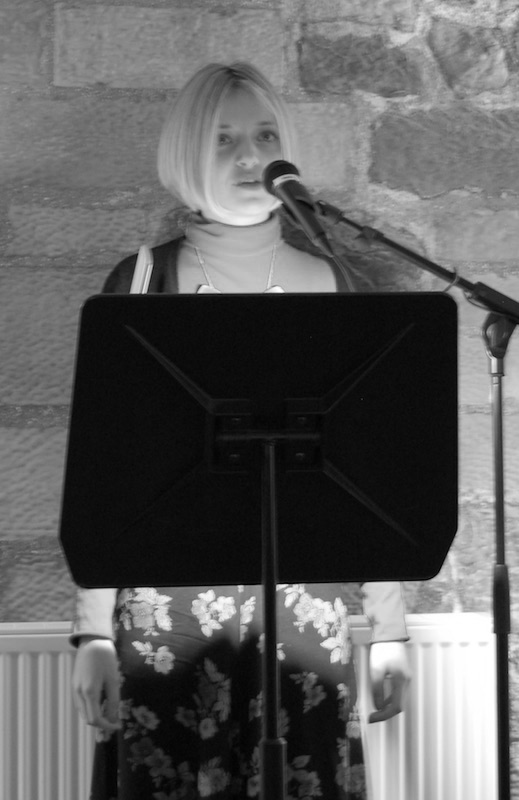
StAnza International Poetry Festival
The Undercroft, St John’s House, St Andrews
9th March 2019
The Undercroft is an intimate, arched, windowed cellar room belonging to the School of History at the University of St Andrews. It is almost too intimate for a mic’dpresentation, but being long and narrow it is not intimate enough to do without. Thereon hangs a problem: microphone technique is not something that everyone has, and a simple operational slip can cause something unwanted to obtrude.
So I’m sorry to start on a negative note – please bear with me. As Laura Accerboni recited her work purely in Italian, she was partnered by a man who alternated with translations into English of each poem. He sat while she recited, and vice versa; the lack of space meant that they had to shuffle round each other to get to the lectern, and whilst Laura recited from memory, her English reader referred to a script, spoke with his head down, approached the microphone too closely, and treated us to a series of plosive, overdriven consonants. Added to that, his script was organised in such a way that on several occasions he had to turn over his corner-stapled A4 sheets in the middle of a poem. Interruption of speech. Rustle, rustle. All this could have been avoided with a tiny bit more planning. He and Laura could have both stood, either side of the lectern, approaching and retreating as necessary; he could have had a better-organised, less unwieldy script. That would have added the little bit of polish that had worn off Laura’s half of the event.
Did it matter much? Well, to be honest, not when one considers the poetry. Laura’s wont is to stand immobile, arms by her side, and almost declaim her work, the listener, to whom it is xenoglossy, being made aware of the aural qualities of the Italian language. Each line of poetry seemed to take a single breath, and there was a rise-and-fall there, regardless of enjambment. As I listened, I recalled how Swiss French has this kind of rise-and-fall, and wondered if what I heard was some characteristic of the spoken Italian in the same country. As my own knowledge of Italian is very sketchy, I found myself listening as though to Baroque music – Scarlatti or Pergolesi – and reflecting how much Basil Bunting would have approved of that! The lack of movement of limb or feature in Laura’s presentation meant that every syllable was crystalline, and that aspect of her half of the event was utterly captivating.
One thing the English translations certainly did do was reveal the sometimes startling imagery behind the musicality. Otherwise who would have guessed, for instance, that “Yesterday all the tallest boys / made their enemies starve / and quickly gathered up their toys. / They showed their mothers / the order / and discipline of the dead.”

The matter of translation is something both poets at this event shared. Katherine Sowerby – we learned from the chairman’s introduction – had recently taken part in poetry translation projects in Pakistan and Latvia. Katherine, right at the beginning of her half, signaled her intention to read twelve poems. It was that structured. There was to be no looking across at the chairman to check how long there was to go, no fitting in a couple of short ones at the end. Twelve were scheduled and twelve is what we got. The result was that this session of ‘Border Crossings’ had a ‘short-and-sharp’ feel to it, the whole event lasting little more than half an hour. Although her delivery was not as straight-ahead as Laura Accerboni’s, although there was animation in her face and voice, there was a non-nonsense feel to the presentation. Title, poem. Title, poem. Title, poem…
House However, her most recent collection, from which she selected part of her presentation, consists of sixty-two prose poems. If, as another contemporary Scottish poet said, poetry is whatever prose wouldn’t dare say, where does that leave ‘prose poetry’? in Katherine’s case it leaves it in a place where (yes!) short-and-sharp images can be strung together, teasing us with their apparent lack of relevance to each other but, true to the concept of gestalt, making up a whole that is other than the sum of their parts. Sometimes, despite this, there is deliberate repetition (“You want to reach us. You want to reach us. You want to reach us. You want us. You want us. You want.”), often there isn’t (“The creak of a chair. Our lit-up faces,” or “Mountains cut in half. I wear a shirt from that day. You told me the cost. You asked me questions about my microwave.”). The answer is, therefore, is that prose poetry can indeed fulfill the same function as any other kind of poetry, move us out of our comfort zone in which we expect step and step, cause and effect, day and night.
All of which leaves me wanting to read Katherine’s three-novellas-in-one-cover, The Spit, the Sound and the Nest, to find out what in her poetics feeds into her fiction. Poets can make the most startling storytellers, and a story would add yet another dimension to what I was able to experience today.
Paul Thompson
An Interview with Megha Sood

Megha Sood’s talent began blossoming in the Himalayan foothills, these days it is flourishing in the streets of New Jersey…
Hello Megha, so where are you from & where are you at at, geographically speaking?
I was born in a quaint little hilly city called Nangal, Himachal Pradesh, India. I have spent most of life in India and traveled a lot around the Northern states as my father was transferred often. After getting married in 2008 I shifted my base from India to the east coast of the United States. Now I live in Jersey City, New Jersey. My home is next to the beautiful Hudson River.
When did you realise you were a poet?
Writing poems has always given me that cathartic feeling and to pen down your deep thoughts have always given me solace. Writing in any form lets you connect to your deeper self. This change in perspective made me realize that I have a grown appreciation of these moments around me.That slowly seeping feeling was the affirmation of me being a poet and along with a growling list of publications.
Which poets inspired you, both old skool & of today?
I have been influenced by modern poets, such as Kaveh Akbar, Peycho Kanev, Rupi Kaur, Nikita Gill, Shel Silverstein, Lang Leav, Ocean Vuong, Tiana Clark, Danez Smith, Elizabeth Horan, Courtney Poppell, to name a few. Classic poets have also inspired me. I love to read the amazing and soul-stirring poetry of Maya Angelou, Ruskin Bond, the confessional poetry of Sylvia Plath, the dark and surreal poetry of Edgar Allan Poe, and the mesmerizing sonnets of Rumi. Also, being a member of literary collectives, I’m extremely blessed to work with and read the amazing writings of the talented poets of the WordPress, such as Christine Ray, Kindra Austin, Georgia Parks, Kristiana Reed, Devika Mathur, Aakriti Kuntal, Nicholas Gagnier, and Stephen Fuller.
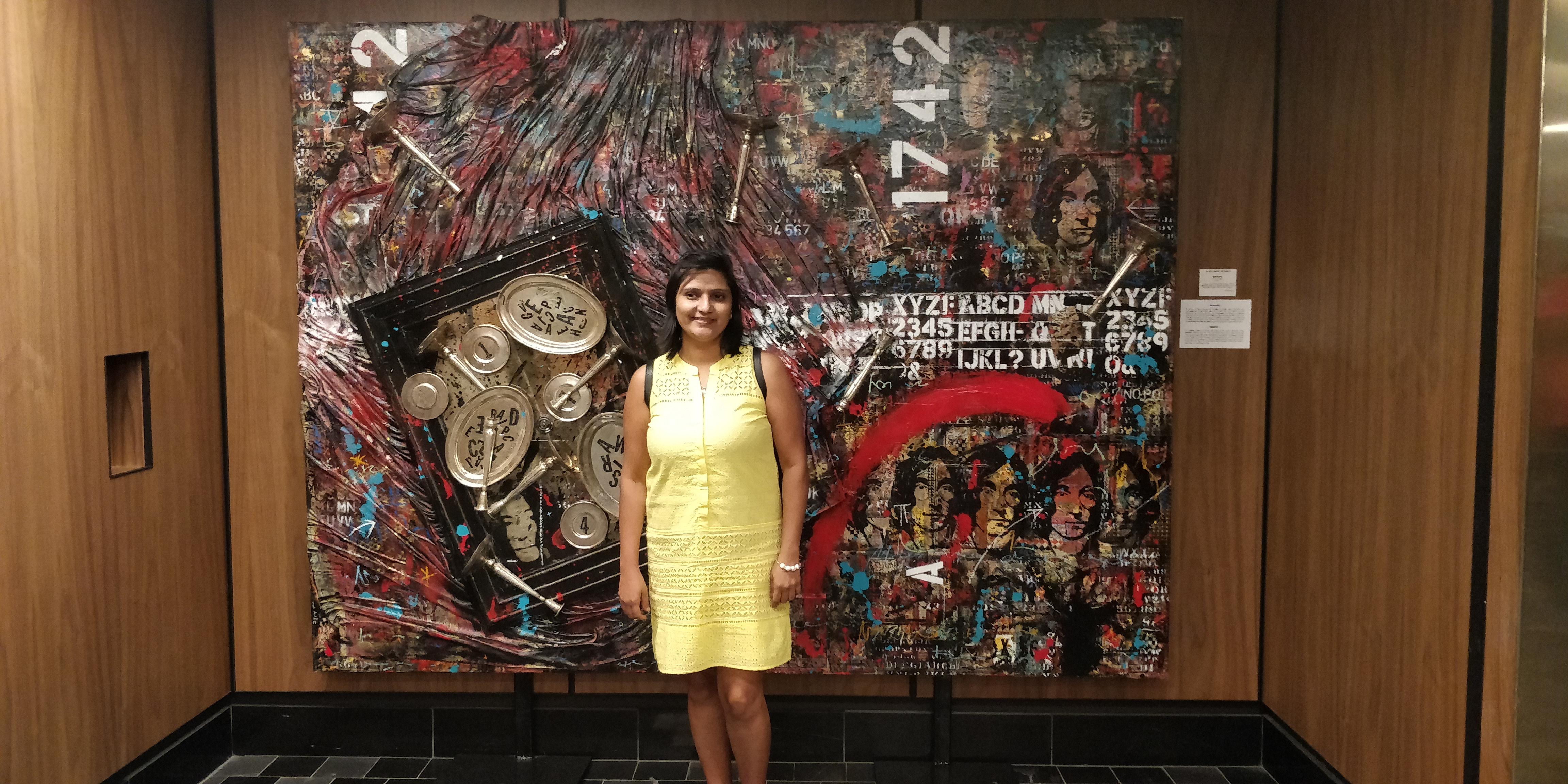
What does Megha Sood like to do when she’s not being, well, poetic?
I’m the mother of a smart and energetic 8-year-old boy. When I’m not writing I’m taking care of his activities along with the regular chores.I have also worked in the IT field for almost 12 years as a Project Manager in Business Intelligence and Data Mining. In the last one year, there has been a boost in my writing process and I’ve been blessed to be part of six literary collectives.I’m a collaborative member and associate editor in many of them. So in addition to writing and submitting for my dream publication(s), I also get the chance to review the submission for these Literary collectives and prepare for the next Issue.Being a contributing author on many of these requires me to submit poems occasionally. I also moderate regular features such as ” Pay it Forward Thursdays” on GoDogGO cafe. Also, I volunteer as class president in my son’s school along with a few neighborhood activities.
You have your fingers in quite a number of poetical pies, such as GoDogGO Cafe & Whisper and the Roar – can you tell us about this?
GoDogGO Cafe is a virtual Cafe on WordPress which serve as a place where all writers are welcome, collaboration is encouraged. It was founded by a fellow poet Stephen Fuller and now have raised to the string collective of 16 members. They are brimming with daily features( Writing prompts, Pay it forward, Promote yourself etc) and are inclusive of the writers of the WordPress community. To me, it is a warm and cozy virtual cafe where all writers are invited. It was one of the first few literary collectives which not only published my first poem but also invited me to join their amazing team of writers. Whisper and the Roar is a feminist literary collective founded initially by Georgia Parks and now a strong team of 15 collective members. All the members are well-established authors and seasoned writers with a long list of books and publications under their belt. In addition to the above, I’m also a collaborative member for the Poet’s Corner ( UK Based Poetry website), Candles Online ( India based writing portal) and recently have joined the Ariel Chart ( a signatory of pw.org) as an associate editor.
How on earth do you keep have the time or energy to do anything else?
I was always decent with time management and I guess that skill of mine has helped in juggling all these tasks effectively. There are days where I’m drowned with writing deadlines and there are days where I can simply read, create and revel in the writing of my favorite writers.
When do you know you have just composed a decent poem, & how does it make you feel?
They say if a poem doesn’t stir your soul, it has lost its purpose. As I always say, the writing has been a cathartic experience to me and and I feel if a poem moves me from inside or fills me with the joy of accomplishing something, I know I have written something significant.
You recently won the 1st prize in NAMI NJ Dara Axelrod Mental Health Poetry contest, can we see the poem?
Yes, my poem bagged the 1st place. The prompt was “What’s your song?”
My Victory Song
My heart parts its lips
utter something
pure and divine
like the moon in its reverie
you ask “What’s my song”
I laugh and smile
with beauty imbued with
the fluttering of the
butterfly wings
so sublime;
My heart though brimming
with pain and anxiety
but ready for its encore every time.
My love is boundless
like a star-spangled sky
covering every iota of my soul;
gives me the sustenance
clears out the wool and webbing
from my disordered thinking
and makes me feel alive
once more.
I adorn the scars
as victory marks and
leaves the bloody trails
as maps, who follow;
Pushed and shoved aside
for reasons unknown
I thrash like a juggernaut
crashing and crumbling
the voices which pull me down
I simply ignore.
Waving my victory flag
so fervently
and singing my song
under my bated breath;
Here I come to
conquer the
uncharted waters of
my life
with a roar.
Where can we find your published work?
Last Year I was accepted in the Poets and Writers( pw.org) Directory of Poets and Writers. Founded in 1970, Poets & Writers is the nation’s largest nonprofit organization serving creative writers. Their mission is to foster the professional development of poets and writers, to promote communication throughout the literary community, and to help create an environment in which literature can be appreciated by the widest possible public. The following link gives a comprehensive view of few of the places where my writing has been published. My 290+ poems have been published in the almost 70 literary collectives around the world. To know more about my published works you can visit here. In addition to this my works have been published or upcoming in the following anthology by US, UK , Canada, Australia, Philippines,based publishing presses.
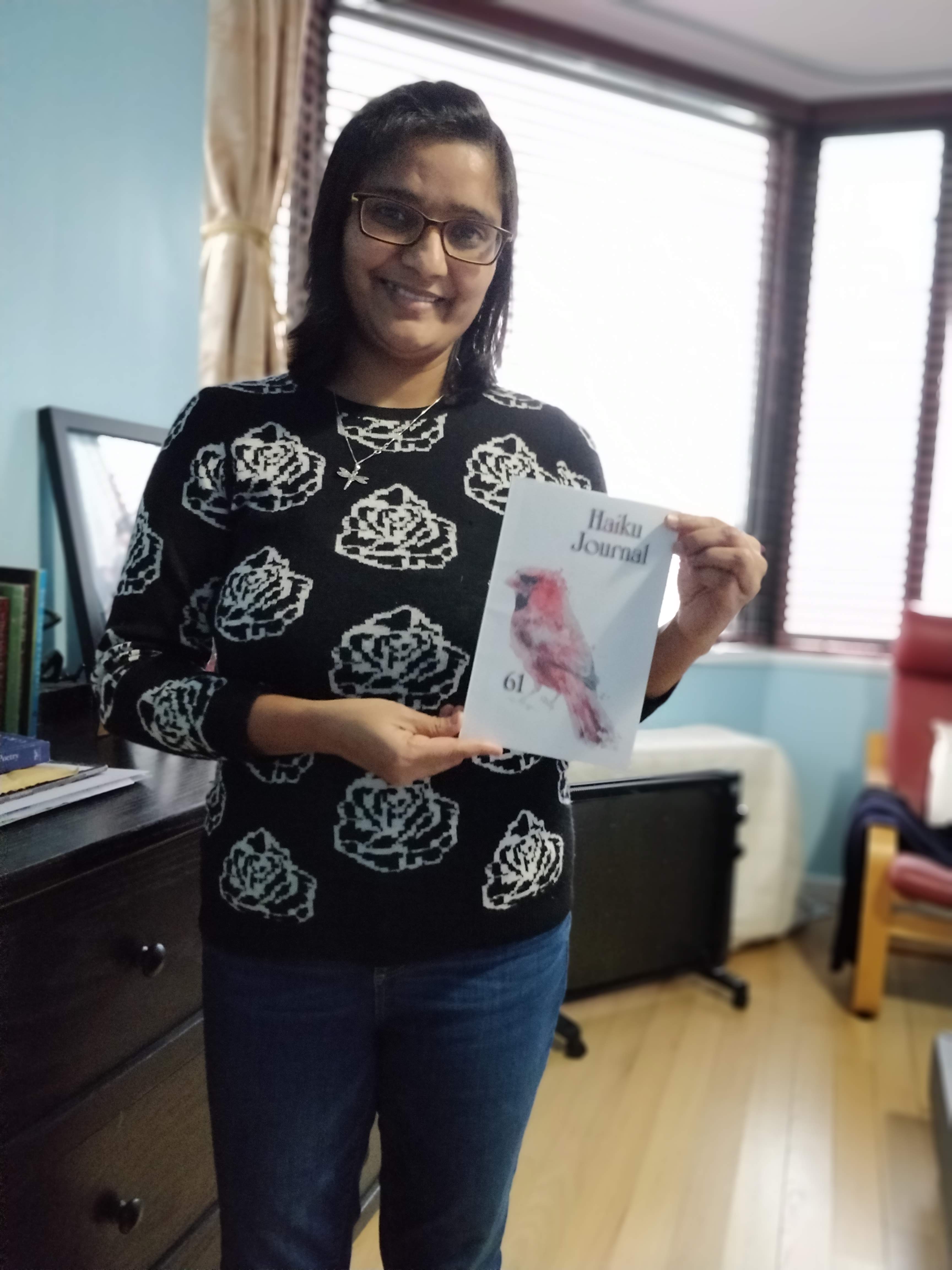
Anthology ( Past and upcoming)
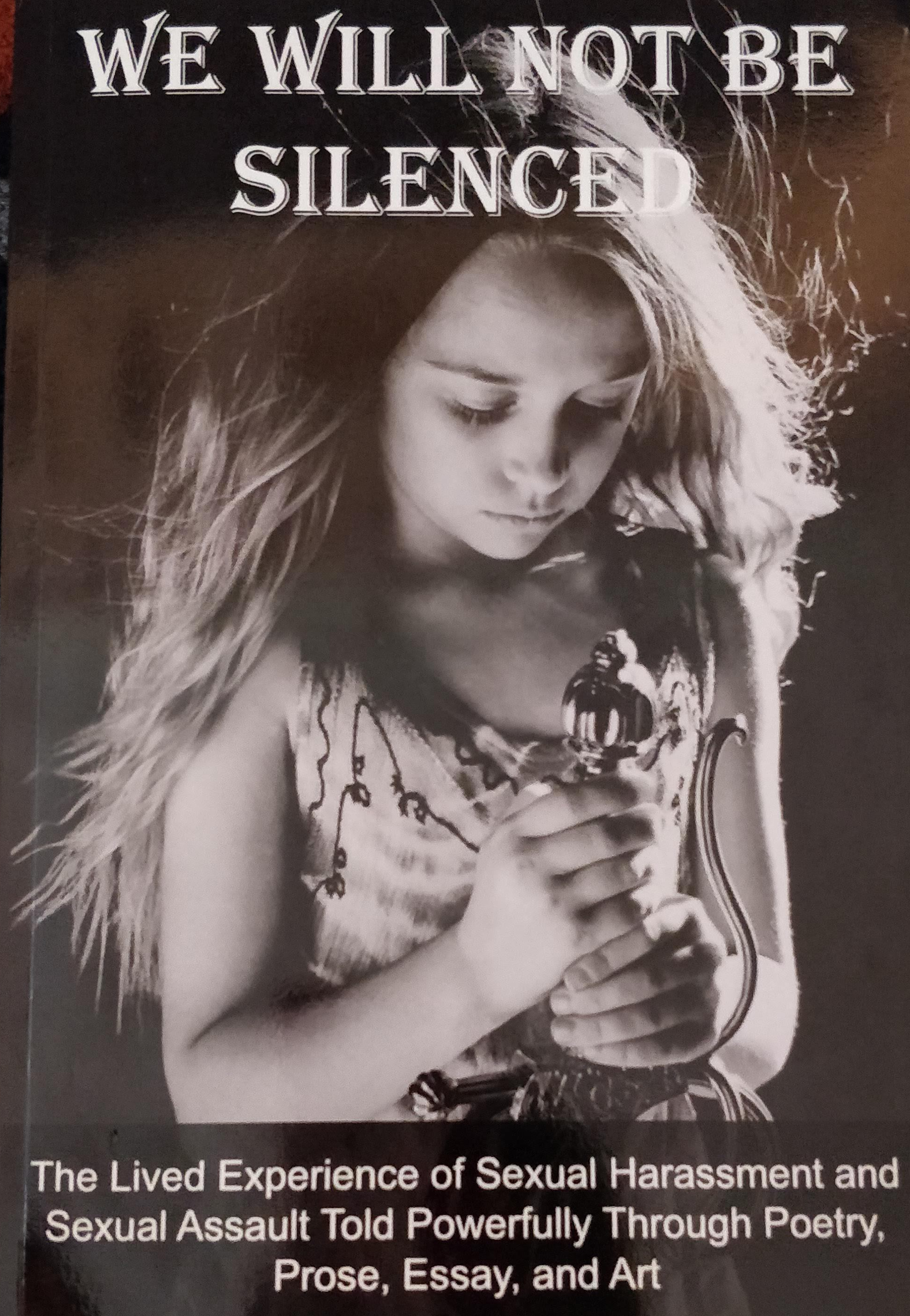
“We will not be silenced”, Indie Blu(e) Publishing, Fall 2018, USA
“All the lonely people”, Blank Paper Press, Feb 2019, Canada
“Voices Carry”, Sudden Denouement Publishing, Feb 2019, USA
Madness Muse Press, Fall 2019, USA
The Stray Branch, Fall 2019, USA
Poetica Vol 2, By Me Poetry Press, Australia, 2019
RECLAIM Anthology, Philippines, 2019
Flight Magazine, Nightingale and Sparrow, March 2019, USA
HAIKU Journal, Prolific Press, Feb 2019, USA
Poetry Quarterly Winter Issue, Prolific Press, March 2019
What will you be doing for the rest of 2019?
After getting published online and in a various print publication I am gearing myself to work for on my full poetry collection.In addition to that, I am planning to attend the poetry-related events in and around Jersey City and Manhattan.
www.meghasworldsite.com
Border Crossings: Nadine Aisha Jassat and Mary Jean Chan.
StAnza International Poetry Festival
The Supper Room, The Town Hall, St Andrews
8thMarch 2019
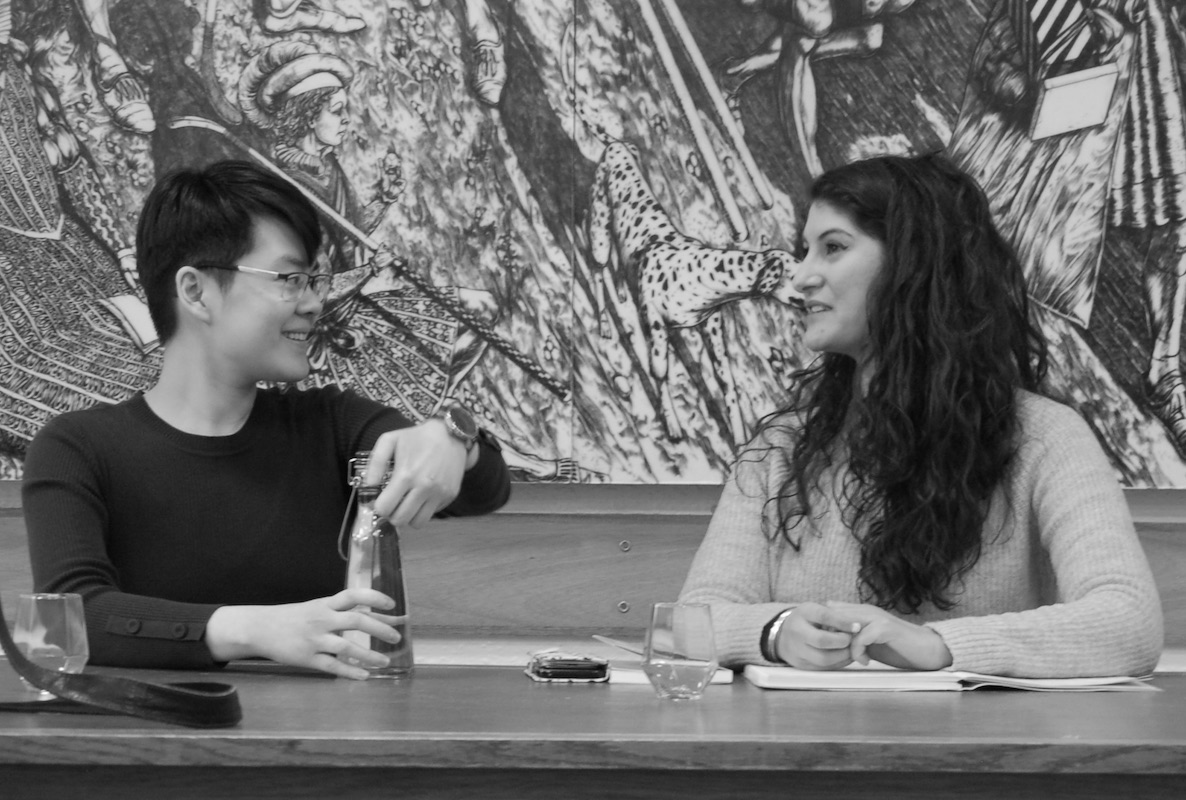
I am ashamed to say that it totally passed me by that Friday was International Women’s Day until I was on the train home. There, I’ve got that confession out of the way, so there is no danger of my falling for the temptation of claiming I came to see these two poets as some kind of celebration or act of solidarity. Nope, I just had poetry on my mind. I had just come from a free lunch at the ‘Poetry Café’, and hearing Nadine Aisha Jassat start off by remarking that she had her “Fisher and Donaldson stash” offstage right made me hope that this wasn’t going to be the “pudding session” of the day. Don’t worry – it wasn’t.
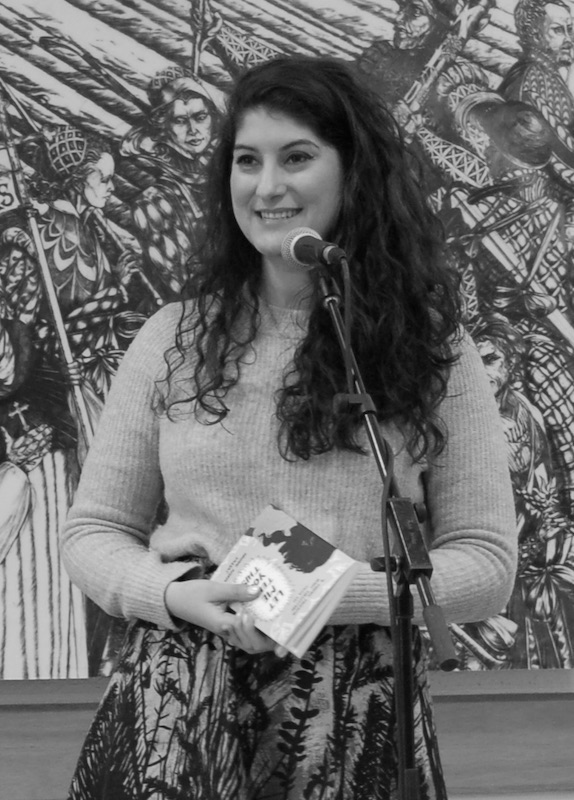
However, wherever I go at StAnza synchronicity seems to keep step with me, and today was no exception. Nadine’s first poem was about her grandmother, who has Alzheimer’s, and whom she refers to as a “time traveller” because of the shifts in time and place that seem to go on in her mind, according to the narrative of her one-sided conversation. Of course I too am a time traveller as I write this review, having just written a review of an event from Saturday the 9th, in which the topic of dementia also came to the fore. Review-writing can be approached phenomenologically, let me tell you… oh… Let Me Tell Youis the title of Nadine’s debut collection, damn this synchronicity thing! As for her grandmother, Nadine says that her time travelling is by turns moving and hilarious, because you can never be quite sure what you are going to get.
I can see the “moving” part of it without any problem; to watch an elder’s memory loosen like a piece of fine, paterned cloth having threads tugged from it must be especially poignant for someone with as many threads to her heritage as Nadine has. Her voice is Yorkshire, her family story is full of other people’s journeys to where she is. Her own journey includes, expressed in a poem – “Hopscotch” – all the words that men have said to her on the street. There is only one up-side of the latter circumstance, and that is the poem itself, its anger presented so gently in a simple reading, used as a reason to create. If you want to hear it in full menace mode, then I suggest the following short film by Roxana Vilk, which is based on the poem.
Mary Jean Chan is a poet and an academic living in London, though originally from Hong Kong. I love the way she delivers her poetry, which is with composure and utter clarity. It’s not surprising to note that when she was a young adult she was a fencer, nor is it surprising to find out, in the context of border crossings, that her discipline was European – she handled an épée – rather than Chinese. Given the subtlety and directness of her poetry, the simplicity of the choice between a straight and pistol grip seems entirely in keeping…
Here I stop and stand apart for a moment. There is a challenge to ‘Border Crossings’, and it is this: how much attention do we give to the ethnicity, or the actual mix of heritages, that the poets bring with them? There are those of us, I suppose, who try to keep this uppermost in their minds, and others whose priority is to try to let the words, the actual poetry, take them. What, on that sliding scale, is appropriate? Each poet – every poet fulfilling a ‘Border Crossing’ role at StAnza – has crossed, or even ‘transgressed’, some of the fault lines that we, humanity, have opened up for ourselves. They have made a conscious journey, taken a step across a metaphorical meridian, made a choice to say this-and-that in such-and-such a way not necessarily their own, or perhaps have brought something very much their own and set it down in the context of a Scottish poetry festival. Take Mary Jean Chan, for example, whose latest collection is called ‘Flèche’. She has already crossed from Cantonese to English; now that French word, a homophone for ‘flesh’, crosses yet another border, punning as it goes. The blurb for her book puts it like this: “This cross-linguistic pun presents the queer, non-white body as both vulnerable and weaponised, and evokes the difficulties of reconciling one’s need for safety alongside the desire to shed one’s protective armour in order to fully embrace the world.” In French, ‘flèche’ means ‘arrow’, and it is also a method of attack in the discipline of épée.
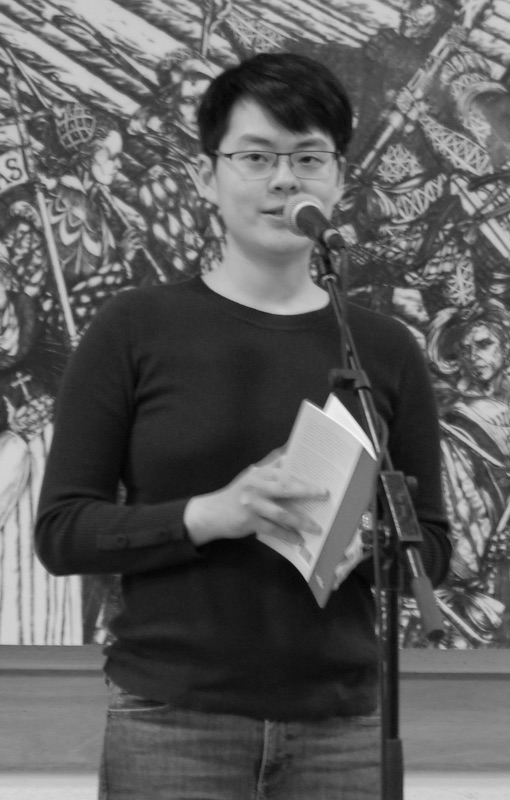
Over her vulnerable flesh, “my skin is yellow,” she says in one poem, and in doing so she takes on directly one of our fault lines – the biological fiction of race and skin colour, of which we have made so big a deal, so great a burden for ourselves. And then in the next she cites fencing: “As a teenager […] the closest thing I knew to desire.” It is a sudden and surprising launch of an image, direct, as I said before, to find a fighting sport, a combat between two people, made cognate with sex and with sexuality, the homosociality of the young women’s group suddenly given a tension that wasn’t there before as they change between one uniform and another.
This is brilliant stuff, and no mistake. At the end I wanted to shake both poets’ hands, I wanted to cross that border between listener and… something else. In the end I only managed a brief passing comment about Yorkshire to Nadine, but I did shake Mary Jean’s. I took hold of a hand that had both held an épée and penned poetry, and I left the Town Hall buzzing, and ready for a cup of normal tea… that sounds like normality… and which, in my case, means Earl Grey.
Paul Thompson
Stanza 2019

StAnza International Poetry Festival
‘Poetry Café’, featuring Harry Baker (8th March)
‘Poetry Café’, featuring Ben Norris (9th March)
Studio Theatre, The Byre Theatre, St Andrews
I’ve decided to roll two reviews into one, because in many ways the ‘Poetry Café’ experience at StAnza is of-a-piece. For example, your ticket entitles you to a drink, and a pie by Stuarts of Buckhaven – you get a choice between macaroni, scotch, steak-and-ale, and chicken curry, and believe me, they deliver more pie for your peso! The chicken curry pies are insanely delicious and, without fail, I’m in danger of regarding the poetry as an afterthought. You get a comfy armchair too.
However, the good folk at Stanza have a knack of picking poets for the Café that they know will deliver on a par with the pies. On the two occasions I was there this year, for example, they put up two Slam Champions for us. First up, on the Friday was Harry Baker, at one time the youngest ever World Poetry Slam Champion. The other amazing fact about him is that he is a mathematician, though really I don’t know why that should be amazing – the juxtaposition of poet and mathematician – because a love of numbers and patterns can manifest itself in both disciplines. In Harry’s case, it can result in poems that are actually about prime numbers. Equally it can result in alliterative displays about proper pop-up purple paper people.
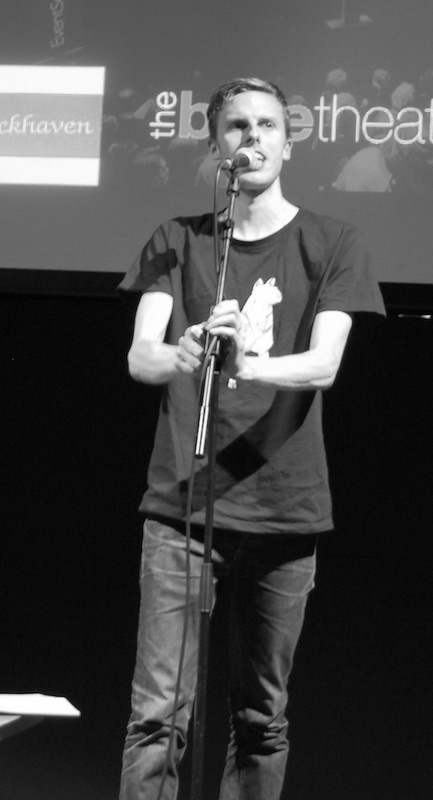
Harry Baker delivers, somehow, with the air of a boy in Year 10, but a very clever boy. If he were wearing a blazer you would want to hate him, but you wouldn’t be able to, because not only would he be too clever he would also be too damn funny. You would let him hang out with you and the rest of the kids who think that school in uncool, he would take a sip of Relentless and say “Bloody hell, that’s strong,” and proceed to tell you the percentages of the ingredients, and then multiply the calories by the number of minutes in a week. He, and only he, could compose a poem about the number of birthdays there are every day, or how many hours he has been alive, or could say that ten thousand days equals 27.39726 years, unless you’re talking binary, and then it’s sixteen.
A panel of five random French people crowned him champion, true, but there is one thing that worries me rather than delights me in his delivery. He has a tendency to let his voice die away at the end of lines or phrases, to the extent that sometimes, regardless of the mic, one can lose an important word and thus fail to succumb to the force of the slam. High point, though, was the poem in which he taught us a brand new word in German: Falafellöffel. As I said to him afterwards, “Das war ausgezeichnet!”
Two slammers means more of the same, right? Wrong. For a start, have you ever had this nagging feeling that you recognise someone’s voice? That’s how it was with Ben Norris. “Who the heck is this bloke?” I kept asking myself. It turns out he plays Ben Archer in BBC Radio4’s The Archers. StAnza sure know how to pick someone for a middle-class, middle-aged audience!
Ben Norris is not as outright funny as Harry Baker, but then he doesn’t need to be and doesn’t try to be. Twenty minutes of his performance was dedicated not to a poem, but to a short story written from the point of view of a young man visiting his gran, who is hospitalised and in the grip of senile dementia. It is written in a style, and was delivered in a style, that demanded and held attention. For most of it the story had a solidity and a flow; towards the end it became more fragmented, but for the listener that was the part which reminded us that Ben is a poet, its fragments signaled ideas, breaths, images.
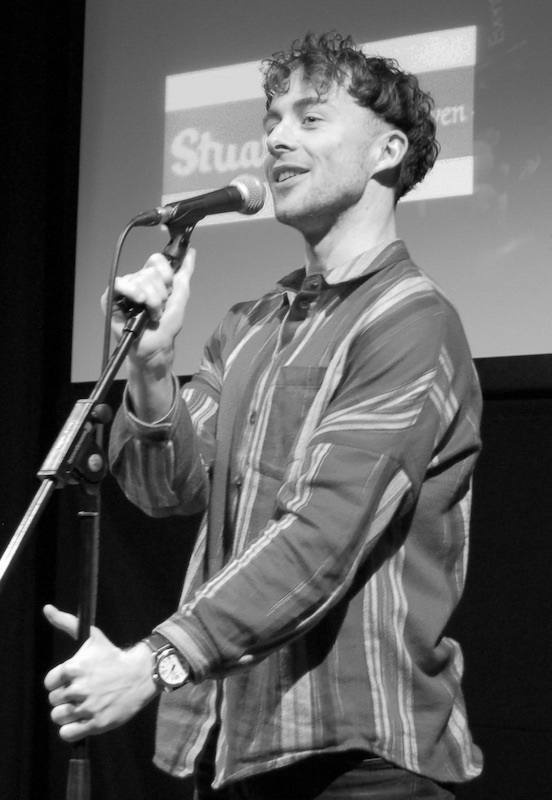
A Poetry Café performance, you see, does not need to be funny. As Ben launched into a series of poems about the time when his parents split up, and he learned that his mother had been having an affair that lasted six years, he told us there was no need to applaud. And indeed, they were moving, intense, and personal, so we didn’t. Not that they were full of angst or resentment – though he did refer to them as the poems he wouldn’t recite to his family – indeed the poem dedicated to his father’s subsequent partner, Sue, was a work of dedication and appreciation. Strangely enough, this was probably the point in the performance where the majority of the laughs came, if only because Ben forgot the opening words of the poem – ‘The Only Ethnic Minority Dentist in Boston, Lincs’ – and decided to do the millennial thing of reading it all off his phone. And why not. Hand-held devices are now part of the performance poet’s natural toolkit.
It’s marginal which of these two poetry lunches I liked best. I liked them both, I loved the poetry, I warmed to the poets. Ben, by a whisker, though. People slightly ahead of numbers. But do appreciate these two guys, and if either comes to your town, give him a look-see and a listen-hear.
Paul Thompson
Jericho Brown: The Tradition
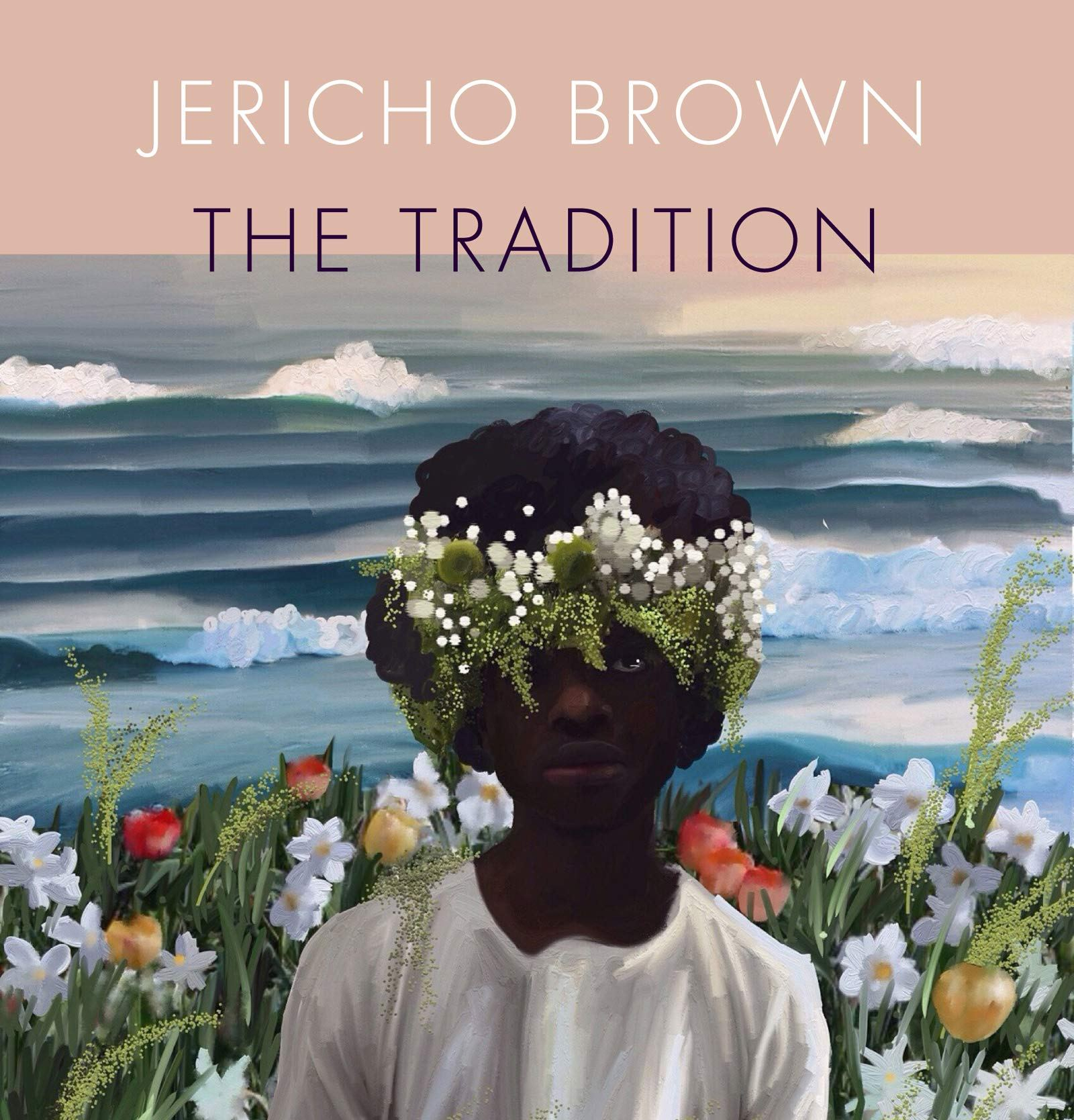
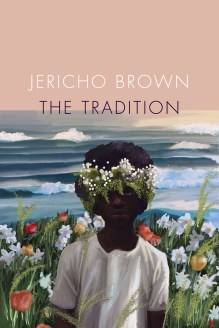
The poetry of Jericho Brown is like a magnet. It always pulls you in. His third collection is firmly upholding the tradition.
I love Copper Canyon’s books; soft & gentle pages carress’d by a lip-gloss cover lending a certain bubble-bath quality to the reading of one of their poets. But ultimately it is what is on the page that counts. First things first, Jericho Brown is a poet, a real, poet, he has the elixir in his veins. He also possesses a curious voice, like a multi-sharded cylinder standing steadfast in a storm. That storm is America, its culture & its questionable past.
His first two volumes were received with high praise & deep respect across the English-speaking world, the second of which, New Testament (2014) won the Anisfield-Wolf Book Award. The Tradition is eagerly awaited, then, & does not disappoint. In places it even exceeds expectations; the lyrical jaundice of Flower, the killer jibes of truth within Bullet Points & numerous moments of the highest pathos & beauty, as in the closing couplet of The Microscopes;
A region I imagine you imagine when you see
A white women walking with a speck like me
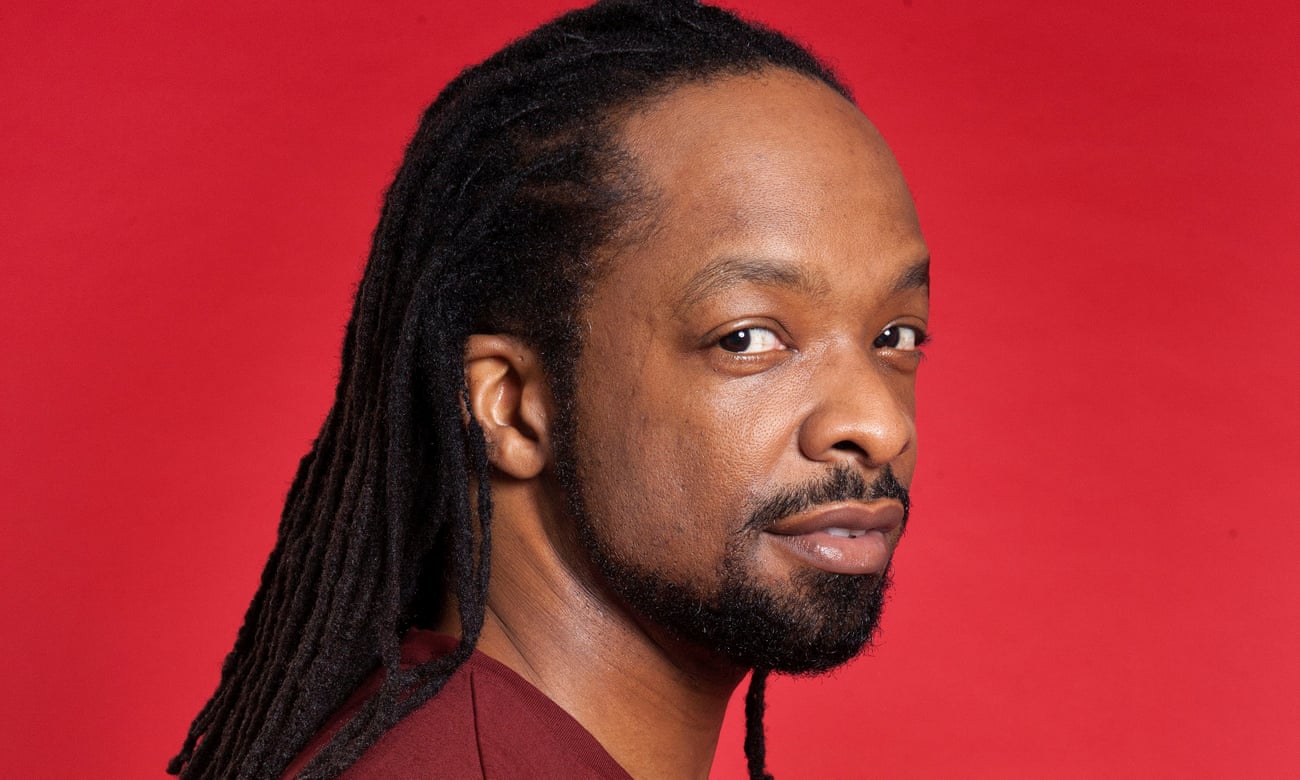
The chief pillars of Jericho’s creative temple are his colour, his family & his sexuality. His mother, grandmother, brother & kids all have cameos & something important to contribute to both the poet’s life & our understanding of the world. These very personal takes are full of raw remembrance temper’d by a supreme sense of post-Millennium reality.
……………………………They remind
Me of black people who see the movie
About slaves and exit saying how they would
Have fought to whip Legree with his own whip
And walked away from the plantation,
Their eyes raised to the sun, without going blind.
On a number of occasions I was very much reminded of a poem by Gwendolyn Brooks, Negro Hero; the pitch & balance of the wordplay are almost identical – is he her spiritual inheritor, perhaps? Jericho’s art presents the Apollonian & the Dionysical extremes of poetic composition; from technical stanza formation full of controll’d & order’d musings, to solid blocks of Wolfean streams of consciousness. The latter sort are often triggered by the smallest things, such as the two copulating rabbits on his lawn, providing the catalyst for an introspective journey into the failings of his own love life. Then, with his title poem, Jericho proves he can turn not just a good sonnet, but an absolutely bangin’ one.
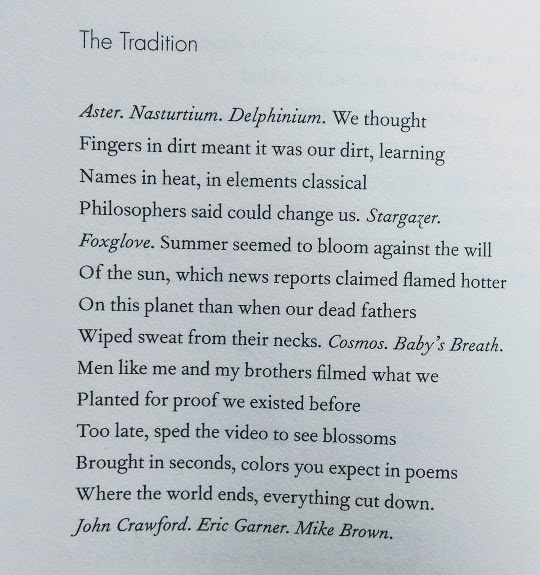
Also a sonnet of sorts are his five Duplex poems, seven couplets where the second line is the same as the first line in the following couplet. From innovation comes mastery, and Jericho is growing into his role as both a teacher in his tactile environment, & a clear-cadenced, beautiful poet-teacher for the planet. Indeed, his academic background – studying at Harvard, teaching at Emery – seems to be a fertile field for inspiring such embedded nuances as his use of Homeric simile in the opening to As a Human Being;
There is the happiness you have
And the happiness you deserve.
They sit apart from each other
The way you and your mother
Sat on opposite ends of the sofa
After an ambulance came to take
Your father away.
Jericho Brown is a philosopher-poet, stood on a crag overlooking the humanity of America, striking the rocks, drawing lightning into his penstaff & tossing electrical ejecta onto his page. The Tradition delights on first reading & invites further study. Each poem contains a different beam of inspiration wassailing from Jericho’s kaleidoscopic soul, altho’ the colors aren’t garish, its too moody a piece for that. This is an extremely intelligent collection, filled with both unpretentious flair & flashes of Faustian confidence. Roll on Brown’s 4th book.
Buy the Book
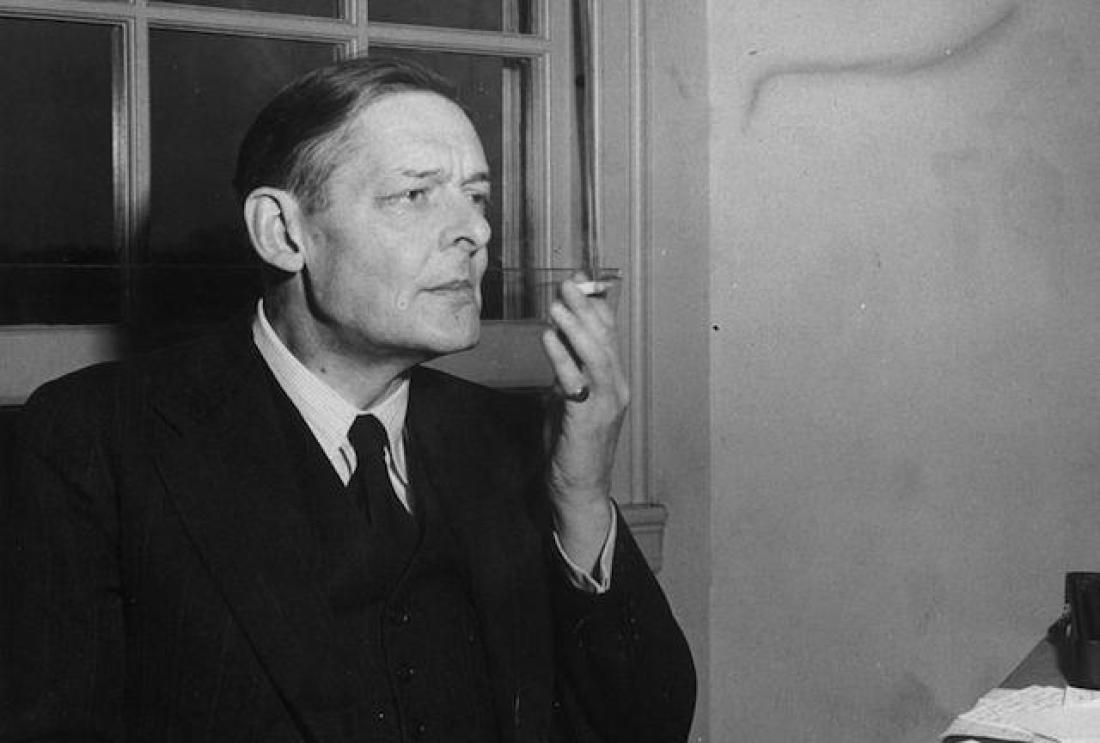
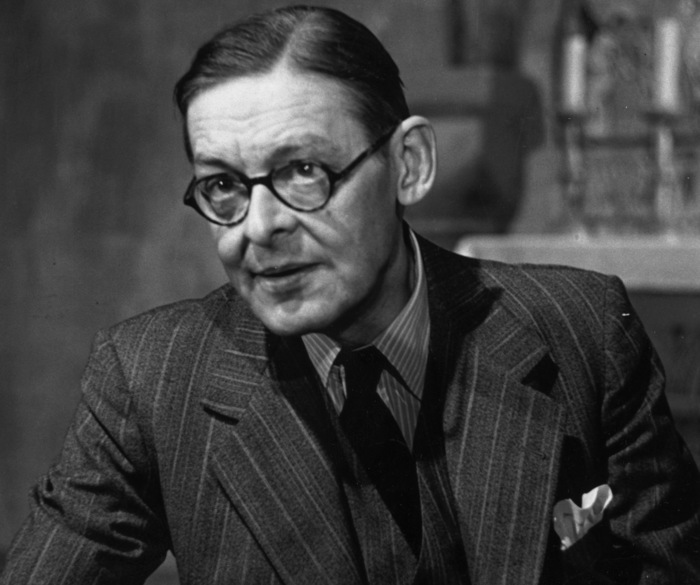
Classic Essays: TS Elliot’s Tradition & The Individual Talent
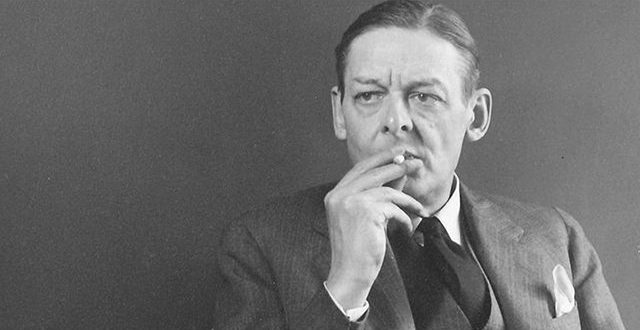
Continuing a series of classic essays on literature. This month sees the sagely intuition of TS Elliot in quintessential action (1919)
In English writing we seldom speak of tradition, though we occasionally apply its name in deploring its absence. We cannot refer to “the tradition” or to “a tradition”; at most, we employ the adjective in saying that the poetry of So-and-so is “traditional” or even “too traditional.” Seldom, perhaps, does the word appear except in a phrase of censure. If otherwise, it is vaguely approbative, with the implication, as to the work approved, of some pleasing archaeological reconstruction. You can hardly make the word agreeable to English ears without this comfortable reference to the reassuring science of archaeology.
Certainly the word is not likely to appear in our appreciations of living or dead writers. Every nation, every race, has not only its own creative, but its own critical turn of mind; and is even more oblivious of the shortcomings and limitations of its critical habits than of those of its creative genius. We know, or think we know, from the enormous mass of critical writing that has appeared in the French language the critical method or habit of the French; we only conclude (we are such unconscious people) that the French are “more critical” than we, and sometimes even plume ourselves a little with the fact, as if the French were the less spontaneous. Perhaps they are; but we might remind ourselves that criticism is as inevitable as breathing, and that we should be none the worse for articulating what passes in our minds when we read a book and feel an emotion about it, for criticizing our own minds in their work of criticism. One of the facts that might come to light in this process is our tendency to insist, when we praise a poet, upon those aspects of his work in which he least resembles any one else. In these aspects or parts of his work we pretend to find what is individual, what is the peculiar essence of the man. We dwell with satisfaction upon the poet’s difference from his predecessors, especially his immediate predecessors; we endeavour to find something that can be isolated in order to be enjoyed. Whereas if we approach a poet without this prejudice we shall often find that not only the best, but the most individual parts of his work may be those in which the dead poets, his ancestors, assert their immortality most vigorously. And I do not mean the impressionable period of adolescence, but the period of full maturity.
Yet if the only form of tradition, of handing down, consisted in following the ways of the immediate generation before us in a blind or timid adherence to its successes, “tradition” should positively be discouraged. We have seen many such simple currents soon lost in the sand; and novelty is better than repetition. Tradition is a matter of much wider significance. It cannot be inherited, and if you want it you must obtain it by great labour. It involves, in the first place, the historical sense, which we may call nearly indispensable to any one who would continue to be a poet beyond his twenty-fifth year; and the historical sense involves a perception, not only of the pastness of the past, but of its presence; the historical sense compels a man to write not merely with his own generation in his bones, but with a feeling that the whole of the literature of Europe from Homer and within it the whole of the literature of his own country has a simultaneous existence and composes a simultaneous order. This historical sense, which is a sense of the timeless as well as of the temporal and of the timeless and of the temporal together, is what makes a writer traditional. And it is at the same time what makes a writer most acutely conscious of his place in time, of his own contemporaneity.
No poet, no artist of any art, has his complete meaning alone. His significance, his appreciation is the appreciation of his relation to the dead poets and artists. You cannot value him alone; you must set him, for contrast and comparison, among the dead. I mean this as a principle of aesthetic, not merely historical, criticism. The necessity that he shall conform, that he shall cohere, is not onesided; what happens when a new work of art is created is something that happens simultaneously to all the works of art which preceded it. The existing monuments form an ideal order among themselves, which is modified by the introduction of the new (the really new) work of art among them. The existing order is complete before the new work arrives; for order to persist after the supervention of novelty, the whole existing order must be, if ever so slightly, altered; and so the relations, proportions, values of each work of art toward the whole are readjusted; and this is conformity between the old and the new. Whoever has approved this idea of order, of the form of European, of English literature will not find it preposterous that the past should be altered by the present as much as the present is directed by the past. And the poet who is aware of this will be aware of great difficulties and responsibilities.
In a peculiar sense he will be aware also that he must inevitably be judged by the standards of the past. I say judged, not amputated, by them; not judged to be as good as, or worse or better than, the dead; and certainly not judged by the canons of dead critics. It is a judgment, a comparison, in which two things are measured by each other. To conform merely would be for the new work not really to conform at all; it would not be new, and would therefore not be a work of art. And we do not quite say that the new is more valuable because it fits in; but its fitting in is a test of its value—a test, it is true, which can only be slowly and cautiously applied, for we are none of us infallible judges of conformity. We say: it appears to conform, and is perhaps individual, or it appears individual, and many conform; but we are hardly likely to find that it is one and not the other.
To proceed to a more intelligible exposition of the relation of the poet to the past: he can neither take the past as a lump, an indiscriminate bolus, nor can he form himself wholly on one or two private admirations, nor can he form himself wholly upon one preferred period. The first course is inadmissible, the second is an important experience of youth, and the third is a pleasant and highly desirable supplement. The poet must be very conscious of the main current, which does not at all flow invariably through the most distinguished reputations. He must be quite aware of the obvious fact that art never improves, but that the material of art is never quite the same. He must be aware that the mind of Europe—the mind of his own country—a mind which he learns in time to be much more important than his own private mind—is a mind which changes, and that this change is a development which abandons nothing en route, which does not superannuate either Shakespeare, or Homer, or the rock drawing of the Magdalenian draughtsmen. That this development, refinement perhaps, complication certainly, is not, from the point of view of the artist, any improvement. Perhaps not even an improvement from the point of view of the psychologist or not to the extent which we imagine; perhaps only in the end based upon a complication in economics and machinery. But the difference between the present and the past is that the conscious present is an awareness of the past in a way and to an extent which the past’s awareness of itself cannot show.
Some one said: “The dead writers are remote from us because we know so much more than they did.” Precisely, and they are that which we know.
I am alive to a usual objection to what is clearly part of my programme for the métier of poetry. The objection is that the doctrine requires a ridiculous amount of erudition (pedantry), a claim which can be rejected by appeal to the lives of poets in any pantheon. It will even be affirmed that much learning deadens or perverts poetic sensibility. While, however, we persist in believing that a poet ought to know as much as will not encroach upon his necessary receptivity and necessary laziness, it is not desirable to confine knowledge to whatever can be put into a useful shape for examinations, drawing-rooms, or the still more pretentious modes of publicity. Some can absorb knowledge, the more tardy must sweat for it. Shakespeare acquired more essential history from Plutarch than most men could from the whole British Museum. What is to be insisted upon is that the poet must develop or procure the consciousness of the past and that he should continue to develop this consciousness throughout his career.
What happens is a continual surrender of himself as he is at the moment to something which is more valuable. The progress of an artist is a continual self-sacrifice, a continual extinction of personality. There remains to define this process of depersonalization and its relation to the sense of tradition. It is in this depersonalization that art may be said to approach the condition of science. I, therefore, invite you to consider, as a suggestive analogy, the action which takes place when a bit of finely filiated platinum is introduced into a chamber containing oxygen and sulphur dioxide.
This is only the first part of the essay. There are two more parts.
If you enjoyed this article
Please make a donation
***
 Mumble Words