OMO: Lesson 6 – First Word Hoards
An auxiliary language is essential, one wee phrase book to be anywhere in the world, a language simple enough for anyone to learn but complex enough to 8handle most situations. There are limits to OMO, but the limits were very much intended in order to open it up to the wider population of the world. Better to obtain mastery in a new, equal-for-all & quite finite language, than learn a complicated alien tongue as if one’s mind were a mere colony of an imperial power.
It is very difficult to get people to switch habits. A child in Botswana cannot be expected to learn the complexities of English or Mandarin, for example, two of the most widely spoken tongues. Learning a new language is a difficult task, but I hope to present to the world a simple to learn, easy to communicate universal language. Auxiliary in consistence, it is complex enough to facilitate huge swathes of our Human interactions, but not so complex as to prohibit its learning to proficiency by the general masses of the planet.
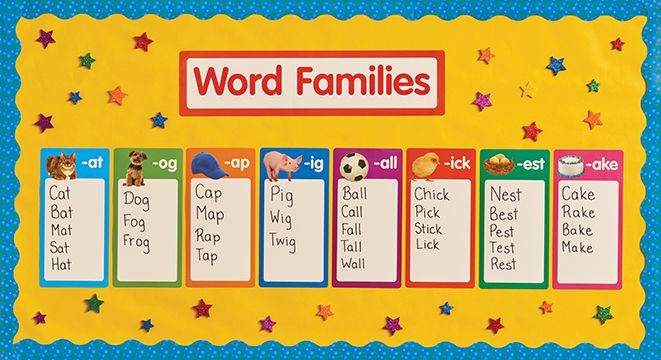
We are on our way, however, & it is time to get into the nuts & bolts of OMO, the main vocab. As mentioned in Lesson 3, when combining the 15 core sounds into ‘double onset’ pairs, we can create 225 different words such as Le-Lo & Va-Me, with the stress being made on the first syllable, rendering the two examples Lee-lo & Vay-me. These 225 words constitute a basic strata, a primordial phonology, on which human communication may exist utilising words such as ‘book,’ ‘computer’ & ‘meat.’ In this lesson we shall look at three Trunk words & their 15 branches,supplying us with 45 new ‘triple onset’ words to learn, plus their fyres. That there are hints of the English language in these root words. I felt that this method would negate Karl Haag’s criticism of how artificial languages create their lexicon, when he wrote;
It is precisely because artificial languages randomly accumulate the plundered detritus which forms their core, that, from a logical point of view, they are fundamentally inferior to real and historically-attested languages; they often destroy both the logic and the aesthetic beauty of any inner conceptual interconnection and elaboration which, thanks to the root words, permeate a natural language when it is allowed to grow naturally, and they thus offend the mind as much as the sensitivities.
As we proceed through the Lexicon, the root word phonetics shall be dispensed across the many languages of the planet, thus creating a vocabulary that has commonality with almost every tongue on the planet. Esperanto & Ido, for example, have mainly stemmed from European languages like Latin, Spanish, French, German, and English, which precludes them from two thirds of the world obtaining at least the hint that I attempting to provide.

ALCOHOL: La-Co
Language is essentially expressions and sentences are deeply rooted in the real world, & more or less everybody loves a drink. Before we look at the rest of its word hoard, lets see how fyers may be applied to the word for alcohol.
M-M-La-Co: To do Alcohol is essentially getting drunk
V-K-La-Co: To personify Alcohol is to deem somebody an alcoholic. In each instance here the ‘la’ element would be stressed and sound as ‘laay.’
With branch words, the stress comes with the middle syllable, so whiskey is pronounced something like Lay-Coor-Ve.
La-Co-Va: Brandy
La-Co-Vo: Whiskey
La-Co-Ve: Wine
La-Co-Ma: Rum
La-Co-Mo: Saki / Rice Wine
La-Co-Me: Stout / Guinness
La-Co-Ta: Gin
La-Co-To: Vodka
La-Co-Te: Tequila
La-Co-Co: Ale
La-Co-Ca: Cider
La-Co-Ce: Home Brew / Moonshine
La-Co-La: Bubbly (Champagne / Prosecco)
La-Co-Lo: Baileys / Irish Cream
La-Co-Le: Beer / Lager
Like Alcohol, the sport of Athletics is a truly international entity, & one which would benefit from a universal language. An athlete would then be a V-K-Le-Te, with the ‘le’ sounding like ‘lee.’

ATHLETICS: Le-Te
Le-Te-Va: Olympics
Le-Te-Vo: Track
Le-Te-Ve: Field
Le-Te-Ma: Race
Le-Te-Mo: Marathon
Le-Te-Me: Relay
Le-Te-Ca: Long jump
Le-Te-Co: High jump
Le-Te-Ce: Triple jump
Le-Te-Ta: Shot put
Le-Te-Ta: Javelin
Le-Te-Ta: Discus
Le-Te-La: National anthem
Le-Te-Lo: Medal
Le-Te-Le: Podium
Continuing the theme that a useful auxiliary language must have a vocabulary drawn from universal themes and every day occurrences, our final root word of the lesson is TOOL, pronounced TO-LO. These are objects, so Tools is T-T-To-Lo & Screwdrivers are T-T-To-Lo.

TOOLS (To-Lo)
To-Lo-Va: Drill
To-Lo-Vo: Saw
To-Lo-Ve: Measuring tape
To-Lo-Ma: Sandpaper
To-Lo-Mo: Nails
To-Lo-Me: Screw
To-Lo-Ca: Screwdriver
To-Lo-Co: Hammer
To-Lo-Ce: Spirit level
To-Lo-Ta: Bolt
To-Lo-To: Nut
To-Lo-Te: Washer
To-Lo-La: Scissors
To-Lo-Lo: Spade
To-Lo-Le: Wrench
To conlcude this lesson, it is the using of 2 or 3 syllable words with stress which allows for an easy understanding & a natural separation of words by the mind. This system also taps into the origins of language, for both Vedic Sanskrit & ancient Greek possess a similar system of accentuation in which pitch is dominant. That’s gotta be a good thing, right?
OMO: Lesson 5 – Prime Words, Doucons And Fyers
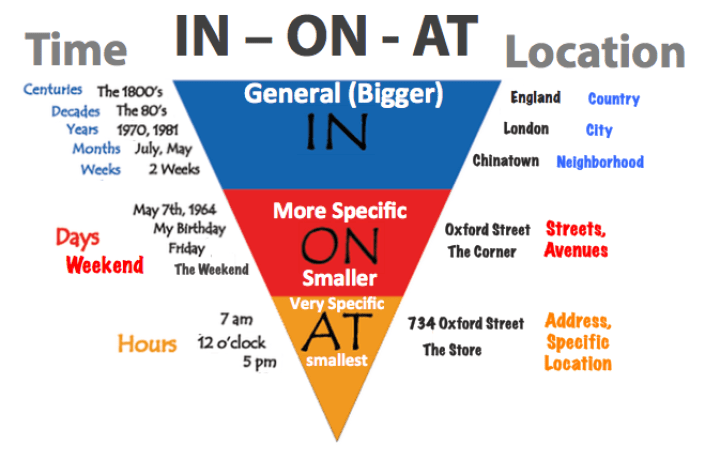
Without further ado let us now introduce the word families based upon the Consonant-Vowel-Vowel construct. This gives us 5 blocks, then, each of which consists of six words. The five blocks have been distributed through the most important preopositions & conjunctions – the glue which holds sentences together – alongside such significant words as Questions & the Modal Verbs. Thus the whole C-V-V section can be considered as vital to Human communication, & should be considered as prime words. When pronouncing these words, the stress should fall on the first vowel; so in the case of CAO, it would sound like ‘caay-oh.’
———————
QUESTIONS
When speaking Omo, the stress always falls in the early sections of an individual word. This opens the possibility of allowing a raised stress at the end a word to imply the context of a question being asked. Alternatively, just use these curt babies!
CAO – Who / Which
COA – When
CEA – How
CAE – Why
CEO – Where
COE – What
———————
PRIME CONJUNCTIONS
LAE – And
LEA – But
LOE – Or
LEO – Nor
LAO – So
LOA – Yet
——————-
MODAL VERB
A modal verb is a type of verb that is used to indicate modality – that is: likelihood, ability, permission, request, capacity, suggestions, order, obligation, or advice.
TAE: Can
TEA: Could
TOE: Will
TEO: Would
TOA: Shall
TAO: Should
——————
PREPOSITIONS OF PLACE
Place prepositions are a rigid bunch that really do fix other mimesi/words in position. Note I have done away with the nuances of on (the table), at (the disco). From this defusion of confusion, one should understand exactly what is meant by the context in which the statement is made.
MAE: On, At
MEA: Around/About
MOE: Between
MEO: Against
MAO: In, Inside
MOA: Outside
————–
PREPOSITIONS OF TIME
As with the Prepositions of Place, I have done away with the nuances of at (5PM), on (the 6th of June) & in (ten minutes). Again, one should understand what is meant by the context. With the word VOE, again context will dictate meaning. Even then, the shades of difference in meaning are also so subtle that there should be no mistakes in understanding.
VAO: Before / Since
VOA: After
VEA: Approximately
VAE: At / On / In
VEO: Until
VOE: For / During / Throughout / While
————–
Another section of the conjunction word-types, along with what are known as fyers, have been allocated to the Doucons, a word which means double consonant. In essence, these are the ‘twigs’ which shoot out of branch words & trunk words. Examples of these rapidly spoken entities are the T-T doucon, which sounds something like ‘ter-ter’ & the K-M doucon, pronounced ‘ker-mer.’
MOVEMENT CONJUNCTION
ML: Across
MK: Over
MT: Pass
MV: Towards
———–
BRIDGE CONJUNCTION
KM: To
KL: For
KT: The / A
KV: Of
———–
CONDITIONAL CONJUNCTION
LM: If
LK: Unless
LT: Although
LV: Despite
————
FYERS
In the case of a Fyer doucon, these are affixed to the start of a word in order to modify its meaning. Examples of each fyer are given in brackets
T-T: plurify (dog to dogs)
M-M: verbify (swim to swimming)
L-L: Objectify (the game football to a football)
V-V: Adjectify (charity to charitable)
K-K: adverbify (quick to quickly)
—————–
TM: negify (small to tiny)
TK: Anti (happy to unhappy)
TL: posify (strong to mighty)
TV: future tense (play to will play)
————–
VM: comparify (tall to taller)
VK: personify (farm to farmer)
VT: past tense (run to ran)
VL: intensify (smart to smartest)
——————
The use of the negator prefix T-K allows us to dispense with hundreds, if not thousands of negative-themed words, which means less words to learn overall! the presence of the negative marker at the beginning of the word is also in a global majority. Under the umbrella comes sane & insane, lead & mislead, etc..
OMO: Lesson 4 – Numbers

The global understanding of numbers presented as 1-9 & so on is the closest to a universal communication system possessed by our species. The alphabet of OMO affords a near-perfect way of representing numbers. The name of each number is given in the vowel-consonant-vowel format. The word for one is Omo, which is also the name of the entire language. The significance is that the Human race will become as one when it speaks a universal language. OMO also transchispers into Homo, a Latin word that means human. This word derives comes from the Greek word homos, meaning the same.
Let us begin with the numbers one to ten, which are written as follows;
1: OMO
2: EMO
3: OKO
4: EKO
5: OVO
6: EVO
7: OTO
8: ETO
9: OLO
10: ELO
When counting to ten, flipping between the word-opening O & E sounds is somewhat quite pleasing on the ear. As you can see the ending of all numbers is ‘O’ which is the unique quality that marks it out as a number. If this letter were changed to an ‘E’ or an ‘A’ then the meaning of the word changes to either a position or a fraction. Thus EKO, 4, becomes OKE, fourth, & EKA, a quarter. The only exception is no such fraction as 1, so this word – OMA – we shall designate as zero.
The final set of numbers are known as ‘brackets,’ & reflect of each fresh numerical level, and the adding of a new zero. Their meanings are as follows;
AMO: Hundred
AKO: Thousand
AVO: Tens of Thousands
ATO: Hundreds of Thousands
ALO: Million
Like the first ten numbers, this new set may also be altered by the final vowel, creating words like AVE – the thousandth – & ALA – a millionth (of). There is no room for the word, billion or trillion here, I’m afraid, not yet anyway. I mean, its not like its in every day use, is it? ‘Excuse me, can I have a billion onions please? We’ll get by without them for now.
So, how are OMO’s numbers actually spoken? Well, numbers between 11 & 99 are simply the two visible numbers spoken unlinked, as in omo-omo (11) & olo-olo (99). A round decade, like thirty, is said 3-zero, & thus in this case, ‘oko-elo’. To state a decade of numbers, like the 70s, you simply pluralise the number (see lesson x).
Once we start getting into the bigger numbers, the largest is mentioned first followed by how many of them, ie 500 hundred is said as AKO-OVO (hundred five). If the number is something like 582, then you would say AVO-OKO as before, followed by each number, here 8 then 2, resulting in AVO-OVO-ETO-EMO. It is also possible to dispense with the formal introduction of the numberscape via the bracket & simply say the numbers in sequence, tho once you reach tens of thousands & beyond it is probably better to introduce the bracket.
In the case of three hundred & twenty-eight thousand, seven hundred & sixty five (328765) you will say; ATO-EKO (hundreds of thousands x 3) then EMO-ETO-OTO-EVO-OVO (28765). There are nuances I haven’t covered here, but the general schema is on the table & I do believe it works. Thus four lessons in we can differentiate between people & also understand who owns what. We can also count, which in a weird way reflects the mercantile dna inherent in Human Kind. But we are beadcounting cavedwellers no longer, & its time we had a wee gossip or summat. But before we go I’d like to introduce what is called an ‘Objectifyer,’ which places the double consonant L-L directly before a number to create ‘second, third, etc.’ First has its own word which we’ll come to in the seventh lesson.
Second: LL-EMO
Third: LL-OKO
Tenth: LL-ELO
OMO: Lesson 3 – Word Construction

So, on with the course. Having established the script of OMO, we can now assemble the core sounds. Combining the five consonants with the three syllables gives us fifteen possible core sounds being;
ME – MO – MA
VE – VO – VA
KE – KO – KA
LE – LO – LA
TE – TO – TA

These core sounds, or ‘morphemes,’ are never used individually to create a word. The creation of the vocabulary begins when we add two core sounds together. These combinations create 225 different words such as Le-Lo & Va-Me, the idea being that they constitute a basic strata, a primordial phonology, on which human communication may exist utilising words such as ‘book,’ ‘computer’ & ‘meat.’ There is no scope for intelligent conversation, per se, but there will be enough variety & flexibility in these 225 words to form a general & global sense of understanding. This level provides enough communication to survive & interact in life, & may transpose easily into a situation where we find ourselves in any non-native lingual area.
When designing a universal language, I understood that it should inherently contain layered levels of proficiency to reflect the natural acquistion of language. Like infants we first learn the sounds, then create a word pool to enable communication with our family members & playtime friends. After establishing this skill-set, & as the infant brain is enabled with greater powers of speech, the natural instinct for Humans is to converse. To facilitate this, each basic word then becomes a trunk for 15 new compound words, which are all connected familially to each other through the trunk. Linguists have a word for this kind of synthetic language, ‘agglutinative,’ derived from the Latin verb agglutinare, which means “to glue together”.
There are four sets of words that differ from this general schema,the first being six basic words consisiting of two vowels only. When pronouncing them the main stress should be on e first vowel, such as E-A sounding like eee-ay. These are;
AE : Is/are
EA: IS Not/Are Not
OE : Yes
EO : No
OA : With
AO : Without
The other three sets to differ from the principle schema are; (1) the numbers, formed from a vowel-consonant-vowel combination, (2) Linking words like prepositions & conjunctions (see next lesson); & (3) the pronouns & possessive pronouns such as ‘you’ & ‘yours.’ The latter group are created from the 30-strong word pool formed by the diphthongean ‘consonant-vowel-vowel’ combination. Not all of the 30 possibilities have been utilised, which should ensure ease of understanding. Note how some words represent several of shades of the core meaning, subject-object superfluities which may be dismissed to ensure a smoother running of the Unversal langauge.
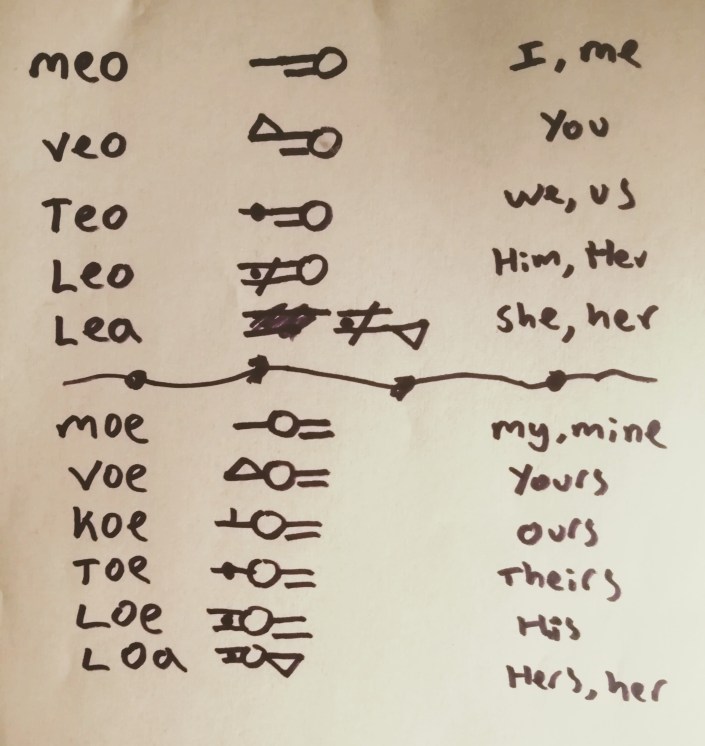
PRONOUNS
MEO – Me, I
VEO – You
KEO – We, Us
TEO – They, Them, Those
LEO – Him, He
LEA – She, Her
POSSESSIVES
MOE – Mine
VOE – Yours
KOE – Ours
TOE – Theirs
LOE – His
LOA – Hers
A simple study of the 12 words will show immediately how the pronouns & the possessive pronouns are different yet phonetically similar. Keep it in the family to speak. So, have a pop at learning & sayong aloud these 12 words & speak OMO for the first time in your life. If you’re inclined to stress sounds within words, then press a little on the first vowel please, but in this OMO instance stress is not important. However, for the rest of the lexcion stress plays an important part…
OMO: Lesson 2 – Phonetics
We designate the study of sound pertaining to the act of speech by the term phonetics, the study of sound pertaining to the system of language by the term phonology
N.S. Trubetzkoy
As a language needs a script, the Universal Language needs a universal script. It is a fascinating facet of human creativity that alphabets look so different across the planet; Chinese, Tamil, the Roman of the west, there are literally 100s of different characters in play every day. It is during my experiences of traveling the vast medley of regions & tongues that is India, that I first began to understand the fractious nature of communication between the races & nations of the Earth. During these same journeys I would also find myself sat at keyboards in various internet-cafes, my fingers completely flummoxed by the altered letter-placements, & in some cases no Roman letters at all. Composing an email which would have taken me two minutes on my laptop at home, had now become a laborious & boring task. Thus, when coming to the creation of a new language, I knew the script would have to be created from scratch, ensuring a certain fairness to all the other alphabets of the world. This would thus be a completely fresh enterprise; there would be no remoulding or rehashing of an existing tongue, only words created by art & the natural impulses of the Human spirit.

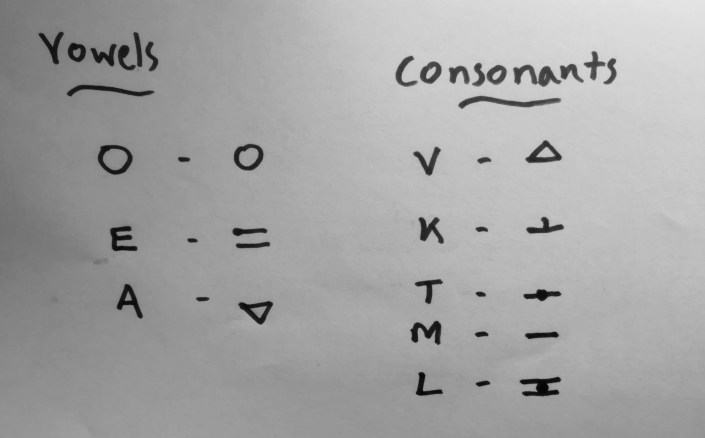
To keep OMO fair, I knew I needed a completely original script, & one that could be understand by everyone. This led me to envisioning chracters based upon how the letters appear when being made by the mouth. Also, as an auxiliary language, there would have to be used a modicum of letters able to squeeze easily onto any future keyboards. The English language is the de facto universal language as it stands, but its phoentical range, if you inclde dipthongs, is forty-five distinct sounds. I began to ponder upon which letters & sounds would be suitable. I ultimately decided upon eight letters, which means they easily can fit into modern day keyboards in an auxiliary fashion. The letter consist of five consonants – V, T, M, L, K – & three vowels… two gutturals, A & E, & the labial O. The vowels are extended, I’m from Burnley & I’m inventing the language, so I pull rank – & vowels definitely sound warmer when extended. Thus we have low, lay lee, but never pock pack & peck.
In the above video I show how the pictorial images correspond to the mouth-shapes. In addition, by using only eight easy-to-ascertain letters, a deaf person would be able to dispense, in the main, with the need for sign-language. One language for everybody. That’s a Universal Language.
OMO: Lesson 1 – A Universal Language

Civilizations should be measured by the degree of diversity attained
& by the degree of unity retained
WH Auden
Back in August I both enjoyed & decried the creation of A New Divan, in which poets of different races, lands & languages created poetry which was then translated into English. Quite a lot of effort really, & I ended my review with the following statement;
Perhaps the powers & attentions of such a Samgam of international poets would be better suited to creating & perfecting the Universal language of humanity instead. Of course, every one of Babel’s tongues will be cherished & possibly curated forever, but projects such as the New Divan are very much like the UN where an excess of time & money are spent upon translations & their translators.
If you want a job doin’ right, ya gotta do it yerself, innit. So, since August, I’ve been working on the creation of a Universal Language. I have also been transcreating A New Divan into The New Divan, & at some point in the future the two streams are going to cross, that is to stay I will be translating The New Divan into my Universal Language. It makes sense, for A New Divan is a truly international collection, whose widely-wrought vocabulary will give a complex flavour to my lexicon. This will also add a certain literary meritability to the language, which in the main shall be focussed on its simplicity. Nobody wants to speak an uninteresting robotic language, so the vocabulary of The New Divan will infuse my new tongue with the poetical speech of the planet, creating a language both easy to learn & interesting to speak.
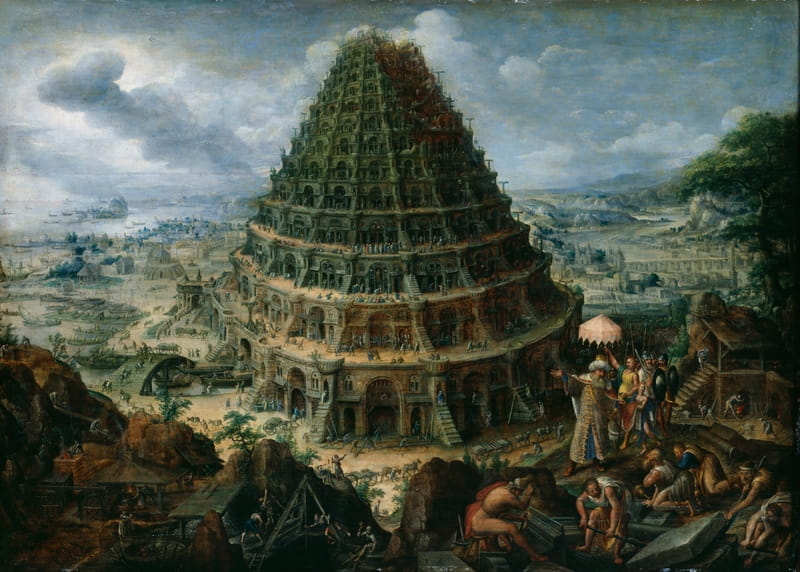
A great deal of time has passed in the Human experience since the Judeo-Christian deity purportedly splintered the ancient common language into hundreds & thousands of variants at the Tower of Babel. This so-called curse, this ‘confusion of tongues,’ would lead to Mithridates VI, King of Pontus, having to become skilled in the twenty-two tongues of his dominions. Two millennia later, the Holy Roman Emperor, Charles V, would quip, ‘I speak Spanish to God, Italian to women, French to men, & German to my horse.’
This division of tongues has ultimately led to conflict & wars & misunderstandings & a right mess, really. A principle step on the road to acheiving global harmony is to create & disseminate throughout the world a single lingua franca fit for all. Introducing such a sociolinguistic change into international culture is the next step in our evolution, when the hindrances & obstructions created by the ‘confusion of tongues’ are removed, the Human mind will with more freedom soar.
There is definitely room, almost desire, for an auxiliary universal language which, while respecting the intrinsic diversity of Humanity, will serve as the common glue between us all. An auxilliary language will sit alongside our mother tongues, not conquer them. Fluency in our native speech must be always encouraged, to promote deeper discourse, & to discover those sweeter shades of meaning which comport existence with its peculiar breadth of beauty. An evolution in communication will ensure an evolution in Humanity, & just as the World Wide Web has enhanced all our lives & enriched our wisdom, so the World Wide Word will also.
The advantages of lingual standardization are clear. In 2020, the fragmentation of human speech is phenomenal, the linguistic heterogeneity of Human populations fascinating. There are almost 7000 living languages spoken in a world of 271 nations, which equates to 25 languages per country. Nigeria, a nation of 141 million people, speaks 527 languages alone. Thro’ the globalizing internet, each of Nigeria’s 141 million are open to communicating with speakers of the other 6500 languages across the planet. The numbers heady, & the solution simple – a universal language most be designed to please everyone. The English language is taking on the mantle at this current time, but its script is alien to billions, & its ever-increasing complexities preclude its easy mastery from the incredulous masses.
With only twenty percent of the world’s population speaking English – 350 millions worth – is it correct to teach the intransient morass of word variants, idiomatic expression & endless unstandardized dialects to a Peruvian rustic mountain child, or an office worker in an off-track Chinese country town, & we have reached a natural impasse. There are 400 million native Spanish speakers on the planet, & 870 million, natural Mandarin speakers, so why should they be expected to English? This conundrum, this fractive state of international communication, I hope to solve. My attempt is not the first, many have been made before, but none have ever reached the shores of wide acceptance, shackledby various reasons all of which can be linked to an inherent lack of universality – somebody somkewhere is being excluded. Esperanto, for example, is written only in Roman script.
Humans are primevally renown’d for inventing tools, & to find an antidote for a multiplicitous Earth constantly abuzz with the chitter-chatter babbling of confused tongues, a universal language is a correct & fair solution. With its creation, I hope to facilitate mutual commerce; I hope to assist the international interchange of ideas & culture & goods; I hope to assist foreign travel in an increasingly reachable world; I hope to aid the spreading of knowledge which would inevitably lead to the disintegration of ignorance, when the unmasking & elimination of many wild errors can only lead to an indissolvably beautiful world; & the name of our universal language…. OMO.
The Madness of Merlin
Those whom the gods destroy, they first make mad
Euripides
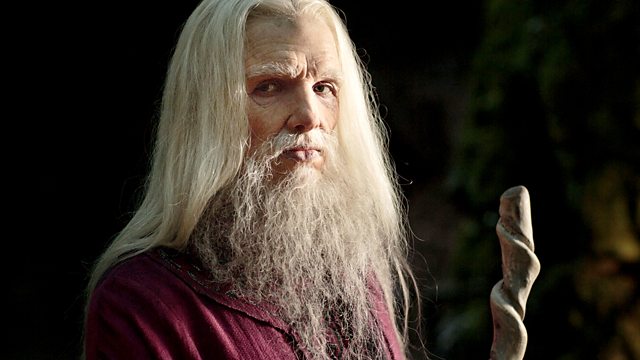
In recent years, in other places, I have demonstrated that King Arthur really did once exist, when from the obscure seed that was his life sprung up the legion of legends that constitute the Arthurian myth. If our great king existed, then, is it not also possible that the other members of his pantheon are also real? This leads us to Merlin, the spell-singing court sorcerer of Camelot, whose vitality supported by a wide array of sources. The Welsh chronicle known as the Annales Cambraie tells us.
573 AD: The battle of Arfderydd between the sons of Eliffert and Gwenddolau son of Ceidio; in which battle Gwenddolau fell; Merlin went mad.
A medieval Welsh triad sums up the battle perfectly;
The three frivolous causes of battle in the Isle of Britain.
…The second was the action of Arderydd, caused by a bird’s nest, in which 80,000 Cambrians were slain…
The battle of Arfderydd & Merlin are tied together in a number of old Welsh poems. They tell the story of a great civil war among the native Britons, climaxing at the battle of Arferydd. After the battle Merlin lost his mind then ran off to be a hermit in the Caledonian Wood. A sterling effort in finding the battle site was made by the great nineteenth century Scottish antiquarian, William Forbes Skene. His ‘Notice of the site of the Battle of Ardderyd or Arderyth‘ in the PSAS of 1864-65 shows this often brilliant scholar at his very best.
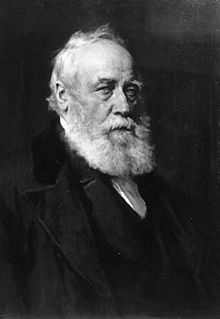
Where, then, was this battle fought? We ought, in the first place, to look for it in one of the great passes into the country; & a curious passage in Fordun gave me a clue to the probable situation. In his notice of Saint Kentigern, he describes, evidently from some older authority, his meeting in the desert a wild man, who informs him that his name was Merlin, & that he had lost his reason, & roamed in these solitudes because he had been the cause of the slaughter of so many men : ‘qui interfecti sunt in bello, cunctis in hac patria constitutis satis moto, quod erat in campo inter Lidel et Carwanalow situato. The last part of the Latin means, ‘fought on the plain between Liddel and Carwannok.’ Liddel, as is well known, is the name of the river which flows westward through Liddesdale, & joins the Esk about nine miles north of Carlisle. Near the junction is the border between England & Scotland, & from thence the flat & mossy district, called the Debateable Lands, bounded on the east by the Esk, extends to the Solway Firth
This nugget of information was the catalyst for Skene, who now begins to hone in on the battlefield, near Longtown in Cumbria, where a small settlement called Athuret immediately raised his heckles. Taking the train down from Edinburgh, Skene found a place to stay in Longtown, whose landlady was quite shocked to see anybody staying in the area at all. Skene continued;
About half a mile from Longtown is the church & rectory of Arthuret, situated on a raised platform on the west side of the River Esk, which flows past them on a lower level; & south of the church & parsonage there rise from this platform two small hills covered with woods, called the Arthuret Knowes. The top of the highest, which overhangs the river, is fortified by a small earthen rampart, enclosing a space nearly square, & measuring about 16 yards square. On returning to Longtown, I asked the old guard whether he knew of any place called Carwandlow. He said that Carwinelaw was the name of a stream which flowed into the Esk from the west about three miles north of Longtown, & also of a mill situated on it, & that beyond it was a place called the Roman Camp.
At this point Skene visited the ‘camp,’ which is today known as the Moat of Liddle. He thought it a magnificent native strength, & was taken aback by its splendid views, including the knowes at Athuret in the distance. He went on;
Between the fort & Carwhinelaw is a field extending to the ridge along Carwhinelaw, which is about half a mile off… The old farmer of the Upper Moat, who accompanied us, informed me that the tradition of the country was that a great battle was fought here between the Romans; & the Picts held the camp, in which the Romans were victorious; that the camp was defended by 300 men, who surrendered it, & were all put to the sword & buried in the orchard of the Upper Moat, at a place he showed me. This part of the tradition is curious, as the Triads mention the Gosgord of Drywon-ap-Nudd at Arderyth which consisted of 300 men.
The name of Erydon, which Merlin attaches to it as a name for the battle, probably remains in Ridding at the foot of the fort, & I have no doubt at all that the name Carwhinelaw is a corruption of Caerwenddolowe, the caer or city of Gwenddolowe, & thus the topography supports the tradition.
This is all breathless work, & leaves us moderns with a few scanty crumbs to discover. The only object of interest I could scrape up myself concerned another fortification, a mile or so to the North of the Moat of Liddel, where; ‘there is a slight eminence called Battle Knowe by Prioryhill farm near Canonbie. It feels like a burial mound & tradition says that a battle was fought here & human bones have frequently been dug up but no authentic information can be obtained to confirm the supposition. (Ordnance Survey Name Book 1858)

Having discovered battlefield where Merlin went mad, let us now practice the very modern art of Psychoanalysis on his mind. By studying the old poems & stories surrounding Merlin, it is clear he had paranoid schizophrenia, the modern terminology of a condition as old as humanity itself. Joan of Arc heard voices & in the first Book of Samuel, Saul shows all the classic symptoms of a lunatic. The following are extracts from a report by the World Health Organisation in 1992.
Paranoid schizophrenia is the most common type of schizophrenia in most parts of the world. The clinical picture is dominated by relatively stable, often paranoid, delusions, usually accompanied by hallucinations, particularly of the auditory variety, and perceptual disturbances. Examples of the most common paranoid symptoms are:
Delusions of persecution, reference, exalted birth, special mission, bodily change, or jealousy; Hallucinatory voices that threaten the patient or give commands, or auditory hallucinations without verbal form, such as whistling, humming, or laughing;
Hallucinations of smell or taste, or of sexual or other bodily sensations; visual hallucinations may occur but are rarely predominant. Thought disorder may be obvious in acute states, but if so it does not prevent the typical delusions or hallucinations from being described clearly. Affect is usually less blunted than in other varieties of schizophrenia, but a minor degree of incongruity is common, as are mood disturbances such as irritability, sudden anger, fearfulness, and suspicion.
Merlin appears the medieval tale Lailoken and Kentigern, which states: “…some say {Lailoken} was called Merlynum.” This name change leads us to the 9th Century Historia Brittonum of Nennius, which states that in the late 6th century, ‘Talhaiarn Tataguen was famed for poetry, and Neirin, and Taliesin and Bluchbard, and Cian, who is called Guenith Guaut, were all famous at the same time in British poetry.’ Nobody has ever established the further identity of Bluchbard, but the ‘Luch’ embedded in the name links it to the ‘Lok’ within Lailoken. Thus Lailoken the Bard easily becomes Luch the Bard, then Bluchbard. Perhaps, perhaps not, but there’s enough in there to believe it so.
Moving on from digressive conjecture, in the tale of Lailoken & Kentigern, Merlin is depicted as seeing visions & hearing voices, the classic symptoms of paranoid schizophrenia. On one occasion a voice from heaven says; ‘because you alone are responsible for the blood of all these dead men, you alone will bear the punishment for the misdeeds of all. For you will be given over to the angels of Satan & you will have communion with the creatures of the wood.‘ We probably all have experienced a moment in public when a person of obvious insanity wanders around screaming wildly & talking to themselves. Lailoken and Kentigern reports the same thing of Merlin, who used to interrupt the services of his clergy by shouting out prophecies. It also has Merlin seeing bright visions of ‘martial battalions’ lighting up the sky shaking their lances ‘most fiercely’ at him, & then dragged off into the woods by an evil spirit. In another text, the Itinerarium Kambriae of Giraldus Cambrensis, he is said to have lost his mind just before the battle of Arferydd when he saw a monster in the sky.
On Thursday 11th September 2008 The Independent ran a fascinating story about the son of Patrick Cockburn, a foreign correspondent. His name was Henry, who told the paper; ‘do I have schizophrenia? My mother and father and the dreaded psychiatrist definitely believe I am schizophrenic. They have grounds for their belief, such as my being found naked and talking to trees in woods. Yet I think I just see the world differently from other people.’ Patrick added, ‘Jan and I soon became familiar with the distorted landscape of the strange world in which Henry was now living. The visions and voices, though the most dramatic part, were infrequent. He spoke vaguely of religious and mystical forces and was extremely ascetic, adopting a vegan diet and not wearing shoes or underpants.’
Henry certainly sounds like a modern day Merlin. When the mind is being bombarded by extra-sensory stimuli, there is only one true way to ‘let of the steam,’ & that was summed up nicely by Henry; ‘my main strength was art, and it was through art that I understood my world.‘ Among the all the arts poetry is perhaps the oldest, yet its beauty is that anyone can write a poem. The writing of them is seen by modern psychology as a therapeutic tool to aid schizophrenia. In the Journal of Poetry Therapy (June 2010), Noel Shafi writes; ‘a patient exhibited negative symptoms including social withdrawal. Under clinical observation she successfully wrote renkus describing her everyday life & seasonal feelings. After 13 months of renku therapy the therapist observed improved social functioning &decreased negative symptoms in the patient.’
This brings us neatly to the ‘therapeutic’ poetry of Merlin himself. While he was in the woods, fuelled by the typical poetic salve that is insanity, Merlin composed a number beautiful poems, of which 6 still survive. In them solid traces of schizophrenia can be found. They also show the skill of an accomplished bard, the first step on the ladder to becoming a Druid. Inbetween is the Ovates, the title given to a bard after twelve years of intense poetic training. On attaining this second rank, the bard will develop visionary powers, being able to see into the future & commune with long dead ancestors. It must have been a total nightmare experience for Merlin once he lost control of his visionary mind. He was not the bearded wise-man of Arthurian mythology, but a man in need of series help.
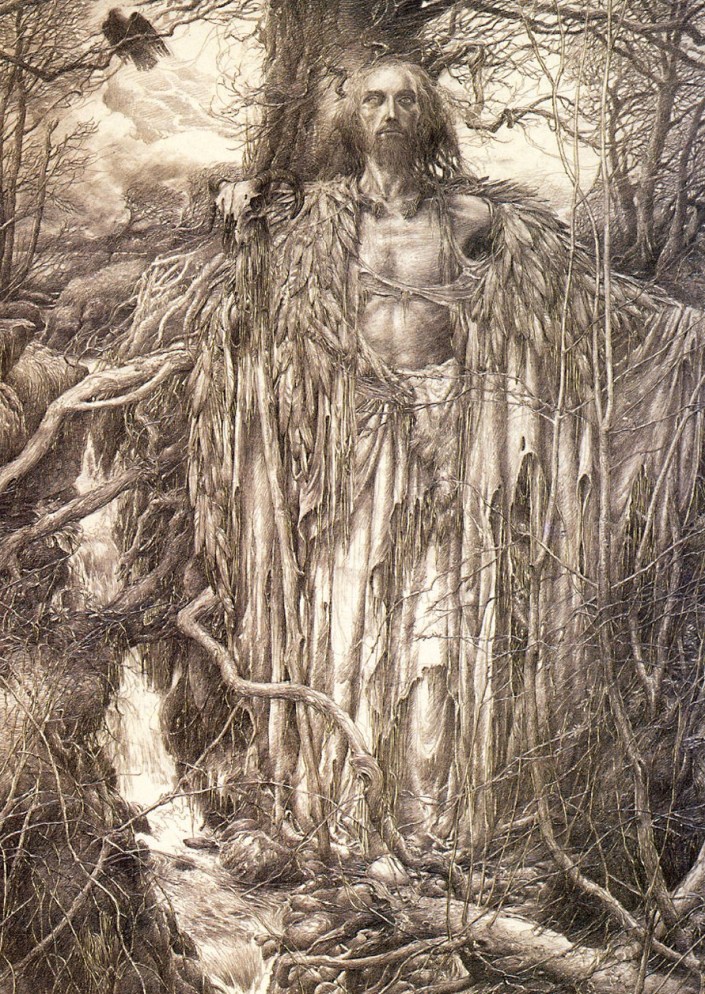
Throughout his poetry we can detect the possible reason behind Merlin’s madness, the catalyst that sent him over the edge. It begins with the tradition of Gwendydd being his twin sister, which is given in the aptly titled, ‘The Dialogue Between Myrddin and His Sister Gwenddydd’ from the Red Book of Hergest.
Myrddin
Since the action at Arderydd and Erydon
Gwendydd, and all that happened to me,
Dull of understanding I am–
Where shall I go for delight?
Gwenddydd
I will speak to my twin brother Myrddin,
wiseman and diviner,
Since he is used to making disclosures
When a girl goes to him.
The tone of the first stanza is sullen & reflective. We can work out why from the following stanza from the Black Book of Carmarthen;
Sweet appletree that grows in the glade!
Their vehemence will conceal it from the lords of Rydderch,
Trodden it is around its base, and men are about it.
Terrible to them were heroic forms.
Gwendydd loves me not, greets me not;
I am hated by the firmest minister of Rydderch;
I have ruined his son and his daughter.
Death takes all away, why does he not visit me?
For after Gwenddoleu no princes honour me;
I am not soothed with diversion, I am not visited by the fair;
Yet in the battle of Ardderyd golden was my torques,
Though I am now despised by her who is of the colour of swans.
So here we have Merlin talking to the trees. It also introduces Rydderch Hael into the story, the King of Strathclyde who had married Merlin’s sister. With the line, ‘I have ruined his son and his daughter,’ we have a clue as to why Merlin went mad. If Rydderch is his brother-in-law, then the children in question were his nephew & niece. In the next line he says that ‘death takes all away,’ which hints that it was Merlin himself who killed them. No wonder his sister ‘loves him not!’ The emptiness of the last few lines portray his soul in dejected reclusion. His lord Gwenddoleu is dead & his mind is full memories of when he was wearing the ‘golden torques.’ The pathos of the piece gives us an excellent insight into Merlin’s mind at the time of his madness. He is obviously suicidal, a thread which the Dialogue poem expands on;
Myrddin
Great affliction has fallen upon me,
And I am sick of life–
I feel heavy affliction.
Dead is Morgenau, dead is Mordav,
Dead is Moryen, I wish to die!
Could Merlin, by surrounding himself with nature & solitude, be seeking reaffirmation with a forgiving god in the woods. Not wanting to disturb him too much, I think we should leave Merlin in the soft, safe confines of his Caledonian Woods. We find him talking to a little piglet & bidding him hide from the ‘dogs of Rhydderch,’– who were out to get them both – that classic delusion persecution, where conspiracies are found at every turn.
Listen, O little pig! happy little pig,
Do not go rooting on top of the mountain.
But stay here, secluded in the wood.
Hidden from the dogs of Rhydderch the Faithful.
I will prophecy–it will be truth!
There has always been a certain sense of the insane about the poet. John Clare spent years in an asylum churning out new cantos of Don Juan. TS Elliot composed his seminal Wasteland while undergoing psychological treatment at a clinic in Switzerland, while William Blake was blatantly as mad as a hatter. Of Baudelair, Jeremy Reed, in his Madness- the Price of Poetry (1989) wrote; ‘Baudelair was a prey to neurosis, his life is the record of an individual seeking to interpret incipient madness through the refinement of an aesthetic sensibility.’ So I guess Merlin & his madness are in pretty esteemed company, & I suppose you do have to be a bit mad to be a poet in the first place!
POEMS BY MERLIN
(& links)
The first three are found in the thirteenth-century Black Book of Carmarthen, with the others appearing in manuscripts from later centuries.
Yr afallennau – The Apple Trees
Yr Oianau – The Greetings
Ymddiddan Myrddin a Thaliesin – The Dialogue between Merlin & Taleisin
Cyfoesi myrddin a gwenddydd ei chwaer – The Dialogue between Merlin & his Sister
Gwasgargerdd fyrddin yn y bedd – The diffused song of Myrddin in his grave
Peirian Faban – Commanding Youth
The New Divan
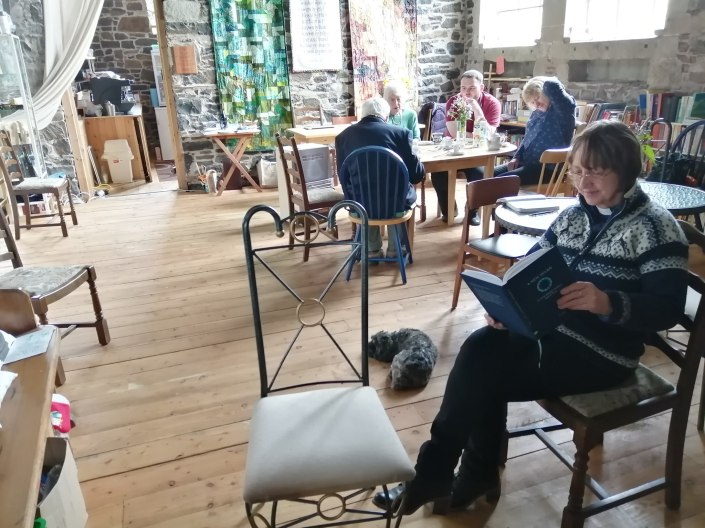
I have just begun the transcreation of a book called A New Divan, recently released by Gingko. It had been inspired by the 200th anniversary of a collection of poems by Goethe, itself inspired by works of the medieval Pesian poet, Hafiz. I had no idea either existed, & thoroughly enjoyed my education into the texts at the recent Edinburgh International Book Festival, of which you can read more of here.

The main premise of A New Divan is to mirror Goethe’s subjects & themes using an international array of poets, whose creations would then be translated into English by another set of pets. Like a poetical UN. Intrigued, I requested a review copy from Gingko, which duly arrived yesterday. Running through the poems gave me the distinct impression that the collection was unfinished – that to match a production by Goethe, & the musical poetics of Hafiz, a single synthesizing mind had to work the ‘notes’ to order. With yesterday also being my last day reviewing at the Edinburgh Fringe, & with a full month’s worth of poesis stored in my creative antechambers, the catalyst had been sparked. I felt almost like Hammer did when hearing Hafiz in the original Persian for the first time, now compelled to translate it into German. I felt almost like Goethe did on hearing Hammer’s translation for the first time, now compelled to create a western reply to Hafiz.
Hafiz, Herr Goethe, wait for me!
Forming triplet fraternity,
By chance, or not by chance, I heard,
Entrancing dances of the word,
Rose Voice of East, rose Voice of West,
Where voices lay choice words to rest,
I’ll pluck them up, I’ll dust them down,
Then cap them with my laurel crown.
The vast majority of Goethe’s Divan is cast in octosyllabic metre, with simple but effective rhyme schemes. This of course I had to emulate, into which mould I would try & replicate the literary trickery of high-brow Persian poetics. Ultimately its the spirit of Goethe we are trying to please here, and I’m sure he’d be quite averse to Free Verse. Its still early days of course, but a project worth pursuing, the resulting piece, then, drawn from A New Divan, I shall name THE New Divan. Some of the fruits of my efforts thus fare are printed below.
Damian Beeson Bullen
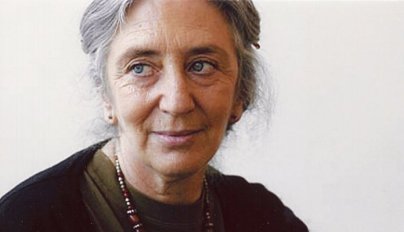
CLARA JANES: The Song of the One Who Pours the Wine
As Shiraz roses sheer upclimb
These pages thro’, so hear the chime
Sung by the Holy Fool that stands
Beside the well at dusk – these hands
Reveal the decorated cup,
As if, from it, Jamshid did sup,
Containing worlds within wine-pools
Where ripple stars, submerging jewels,
Revealing patterns unimpair’d
By fauna & by flora shar’d,
A human heart or pulseless stone?
Upon a palm leaf focus hone
In some garden botanica,
Such as the one in Padua,
When famously illustrated
The metamorph you’ll see outspread!
As formula, in chimes, upswells
From caravans & tiny bells;
All things must change, all time must pass,
But even so, as higher class
Of thinker contemplates these things,
All fixed must be in place on strings –
Prayer beads of love & science.
Pour me another cup forth-hence,
Permitting detailed inspection
Of all that swims in reflection,
I’ll read the Cosmos as a sacred text,
Accepting what I’ll see I must acknowledge next.
Keeping electrons in a trance,
By atom procharge made to dance,
Like the limitless extension
Of the waves in curv’d connexion;
Deep secrets of this circuitrie
Reveals the links twyx atomie,
When object & subject between
Sees space collapsing mezzanine.
All this is held by such perfume
Exhaled by Shiraz rose in bloom,
Love is the scent-sway, & does etch
The first & best alphabet, which
Declaring in Persopolis,
This Human grace forever is!
Yet, falls the dusk, the Holy Fool
Sings by the well’s radiant pool,
The poet plucks from blazing flames
A flicker of all things, all names,
That brand my hands, together we
Repeat his arcane sorcery;
Nature, my one joy is to connect!

JAN WAGNER: Ephesus Ghazal
With tyrants who cavort like gods,
Our days cut-short at shortest odds,
Of these severe was one in faith,
His painters perpetrate a wraith,
With shaggy face & eyes like sleet,
Lads seven underneath his feet,
Prepar’d for freedom, so they hid
Themselves before Dawn lifts its lid.
Cavebound, the dog curl’d at their feet,
That loved them all with love complete,
While they first slept the Emperor
Gave rocks in cartloads the order,
‘Block up the entrance!’ Still they slept,
Dispersing trances, by them crept
Long centuries on centuries,
So deep that sleep it seems death is
Enmesh’d with slumbers – angel’s hand
As gentle as a grazing land,
Did turn them… dreadful, delicate;
Depending on which way the foot
Did point – to Heaven, down to Hell –
Limbs rolling as lads dreamlands dwell.
Eroded rocks, awoke hungry,
Thinking new morn was what they see
Just one night old; so sent to town
Their youngest, keenest, skills a crown,
Who found a bakers where once stood
The court, the baker’s face of blood
Drain’d white, straining for friends, in fear –
The proffer’d coin engrav’d, a clear
Depicted face, some king long dead,
“He was the emperor,” someone said,
A whole town came to gawp & glare
At this young marvel standing there,
Whose uncles & great-grandchildren
Were lang syne dust, distant aeon
In which he tried to grow a beard,
The townsfolk thought this very weird,
Tho’ simmering their pots were set,
They shrank Ephesus’ parapet,
To distant dots, even before
The millet cook’d; they wanted more
To see the cave, & when they did,
The other six no longer hid,
A clan of seven spread from death,
Who’d somehow shar’d eternal breath!

FADHIL AL-AZZAWI: Paradise on Earth
I see it as I leave the inn
The dark of night, an evil djinn
Pursues me close, each step I take,
These steps shall shudder as I shake
Dogs furious, a-bark behind
Like hunt-track wolves, outflung from mind,
I must drive this road’s solitude,
I must sing madly, loud & crude!
Dervish disguis’d as angel slips
Out from the mosque, threats on his lips,
Waving his stick thro’ air at me,
“Hey, you are losing your life!” he
Screams, “You have lost your life,” Adam,
Did you not know its forbidden
In this world to drink Eden’s wine?
But in Paradise, hey, that’s fine!
Go drink that wine, its bountiful
& free, search for the beautiful
Eyes, bountiful houris, gratis.
Oh master of my days, where is
This place, lord tell me where we are.
He points his stick up to a star,
“There,” utters he, “Eternity,”
Twinkling… blazing… “Up there!” says he,
Fluttering as the falcons rise
Evanishing in splendid skies!
I do not move, stricken with doubt,
I dare not move, Hafiz steps out
Arriving as he always does
As of-a-sudden surprises,
“My friend!” he laughs, “Why worry so?
Their walls are high & you have no
Wings there to fly – no – let us make
This mortal rock an angels’ lake ,
Look at these mountains rising up,
For when the flood oerflows the cup,
These seas, these oceans, all aswirl
With fish & gorgeous whales which whirl
About this Godufactured Earth,
Where even serpents maintain worth,
We must remember to release
Snakes from their cages, whom, in peace,
Shall twine around those fine branches
Of our tree – happy, glorious –
What more will we need than that?

REZA MOHAMMADI: Smoke
Unto the man I would return
Who once inside my shirt did burn.
At each lip’s precipice I fret
To find the voice I once did set
Down-dangling from a cigarette.
I ask the card-turn to unshroud
The revelations thro’ the crowd
That sweeps aside bird, plant & cloud.
Carry off, great Lord, this flower,
To tables fill’d by my mother,
& to the house of my father,
& to the fish of the rivers
Whom, three times a day, take lovers,
Suicide’s soft deliverers.
I’m six years old, care to buy bread?
What am I doing here, I said.
Carry my soul to the tented
Gypsy mystic, tinted, scented,
Take it to be finger-printed.
I’ll never leave this street, y’know,
That named a missile long ago.
You’ll see I only came to buy
Some rolls of bread – you’ll see that I
Have seen exactly six years by.
Before the next man join’d my thread
Morning stopp’d gorging on his head,
& like this poem’s folding, he
Was thrown, was caught, within old me.
Hey! This much wind my shirt won’t stand,
We should not let this much cloud land.
The blacken’d body’s shrapnel flew
Right back to eat, snack, feast on you.
Why should I be God’s kick’d up dust,
I flow like ink from His fingers.
The broken lighters of his feet
Flicker & flare in mine like heat.
His heart a wet, spent ciggarette,
His mother’s lashes crudely set
Inside his pocket, food for worms,
With sister’s hair that fistfull squirms,
& those barb’d eyelids of his wife.
I wish somebody in his life
Had told him moons dont burst in flame
When clad in clothes by top brands made.
The one runs from me as he ran
From his ma’s table & her pan,
Thus I would like to tell him this,
How poet’s metamorphosis
Grows on lips like little roses
Caus’d by earth – which decomposes!
Even the river dodges me,
Even the doves take flight to flee
& all the Judas trees within
Are made of debris from this bin;
How was your face made up, I said,
What shade the scarf swath’d round your head?
Black-sooted in black suit I stand,
A dandelion in one hand,
Addresses I can’t call to mind,
As on moth-wings descends dusts fine,
Dusts upon petals de-scend-ing –
Now I’m forgetting everything.
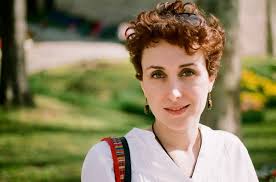
FATEMEH SHAMS: Electrocardigram
My back she aches again today,
Three months ago they mov’d my heart
& ledg’d my vital spine apart,
Then wedg’d it in the vertebrae,
Now each musk-fragrant breath depends
On one thin vein that empties blood,
From darkness to new heart’s blood wends
My idiotic bruise of vein.
My wanton whore of heart, the pain
My back endures nobody should.
My ECG supplies, these days,
My news, headlines from past suck’d out –
A woman used to laugh about
Her love for one man & his ways,
When lavish hearts love’s healths endow,
Form windows facing long exile,
These bunch’d red muscles bled servile,
I wish it were a mirror, now!
The medic team with smiles aflock
Chirps “We had to move it a bit,
& from today we must admit
By beating hearts please set your clock,”
Alarmic systems rotten grown,
My lover new has ask’d last night
“Are all our words & movements known?”
I thought he quizz’d me for to see
How paranoid & how crazy
I was, my shadows hid from sight,
For years my shadow’s eyes did hide
In dresses – cities far & wide,
The final shadow ran its part
& in his fist a bleeding heart –
The doctors are the shadow’s foes
& paranoia diagnose
Expertly well, & for exile
Prescibe a perfect potion’s phial,
Moving the heart to think & feel
In times when no heart’s scar could heal.

JAAN KAPLINSKI: The Great Axe
Knew everybody since childhood,
He’d dreamt he was a shaft of wood
By axehead topp’d, his foes to fight
To chop off heads & branches smite!
He grew & chopp’d & splinters flew,
Heads fell & everybody knew
He was the sharpest one of all,
Most pitiless of axeheads’ fall,
Him from the toughest shell was cast
The special spirit naught could rust,
Let no-one ken the truth display’d,
He was just normal, iron-made,
Of brittle rust was he afraid,
Standing alone before mirror
He would check, those new red stains were
Upon his blade? He tried to wash
Away the rust stains with blood fresh
From wounds, but not enough to hide,
Until his peace one day defied,
Smashing the mirror angrily,
He fell inside some phantasie
Beyond the Looking Glass’s ledge,
Near marshes large by forest edge,
& realised his place was there,
In that swamp’s pool, & full aware
He transformed could be back into
A fist of mud-brown bog ore goo!

The Poetry of Muhammad Ali
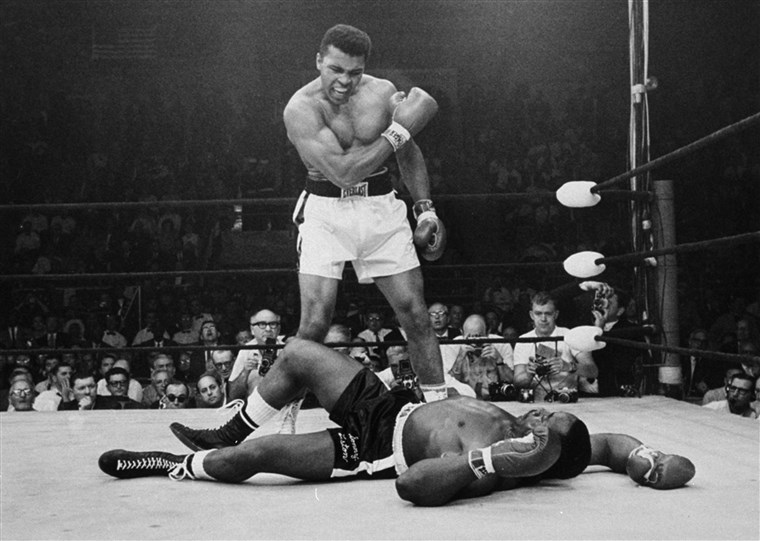
The warrior poet is one of the more remarkable figures in history. In the English-speaking world, their zenith came with the horrors of World War One, when Siegfried Sassoon, Wilfred Owen & others veered away from patronising the soldier’s noble death with high-blown lyricism, & got down to expositing the true danger & desperation of combat. Fifty years later the world encountered a different kind of warrior poet, the boxer called Cassius Clay / Muhammad Ali who like a high-ranked bardic-trained Gaulish druid passed judgement on the age of Civil Rights.
I am America.
I am the part you won’t recognize.
But get used to me:
Black, confident, cocky.
My name, not yours.
My religion, not yours.
My goals, my own.
Get used to me.
Muhammad Ali
How Cassius Took Rome
To make America the greatest is my goal,
So I beat the Russians, and I beat the Pole,
and for the USA won the medal of gold.
Italians said: “You’re Greater than the Cassius of old´´.
We like your name, we like your game,
So make Rome your home if you will.
I said I appreciate your kind hospitality,
But the USA is my country still,
‘Cause they’re waiting to welcome me in Louisville.
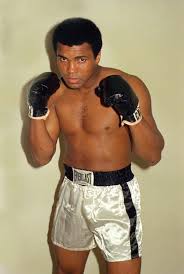 LAST NIGHT I HAD A DREAM
Last night I had a dream, When I got to Africa,
I had one hell of a rumble.
I had to beat Tarzan’s behind first,
For claiming to be King of the Jungle.
For this fight, I’ve wrestled with alligators,
I’ve tussled with a whale.
I done handcuffed lightning
And throw thunder in jail.
You know I’m bad.
just last week, I murdered a rock,
Injured a stone, Hospitalized a brick.
I’m so mean, I make medicine sick.
I’m so fast, man,
I can run through a hurricane and don’t get wet.
When George Foreman meets me,
He’ll pay his debt.
I can drown the drink of water, and kill a dead tree.
Wait till you see Muhammad Ali.
Written by Muhammad Ali | Create an image from this poem
There live a great man named Joe
There live a great man named Joe
who was belittled by a loudmouth foe.
While his rival would taunt and tease
Joe silently bore the stings.
And then fought like gladiator in the ring.
CLAY COMES OUT TO MEET LISTON
Clay comes out to meet Liston
and Liston starts to retreat,
if Liston goes back an inch farther
he’ll end up in a ringside seat.
Clay swings with his left,
Clay swings with his right,
Look at young Cassius
carry the fight
Liston keeps backing, but there’s not enough room,
It’s a matter of time till Clay lowers the boom.
Now Clay lands with a right,
What a beautiful swing,
and the punch raises the Bear
clean out of the ring.
Liston is still rising and the ref wears a frown,
For he can’t start counting
till Sonny goes down.
Now Liston is disappearing from view,
The crowd is going frantic,
But radar stations have picked him up,
Somewhere over the Atlantic.
Who would have thought
when they came to the fight?
That they’d witness the launching
of a human satellite.
Yes the crowd did not dream,
when they put up the money,
That they would see
a total eclipse of the Sonny
VERSUS LISTON
I’m young,
I’m handsome,
I’m fast,
I can’t possibly be beat.
I’m ready to go to war right now.
If I see that bear on the street,
I’ll beat him before the fight.
I’ll beat him like I’m his daddy.
He’s too ugly to be the world champ.
The world’s champ should be pretty like me.
If you want to lose your money,
then bet on Sonny,
because I’ll never lose a fight.
It’s impossible.
I never lost a fight in my life.
I’m too fast;
I’m the king.
I was born a champ in the crib.
I’m going to put that ugly bear on the floor,
and after the fight I’m gonna build myself a pretty home and use him as a bearskin rug.
Liston even smells like a bear.
I’m gonna give him to the local zoo after I whup him.
People think I’m joking.
I’m not joking; I’m serious.
This will be the easiest fight of my life.
The bum is too slow; he can’t keep up with me;
I’m too fast. He’s old, I’m young.
He’s ugly, I’m pretty.
It’s just impossible for him to beat me.
He knows I’m great.
He went to school;
he’s no fool.
I predict that he will go in eight
to prove that I’m great;
and if he wants to go to heaven,
I’ll get him in seven.
He’ll be in a worser fix
if I cut it to six.
And if he keeps talking jive,
I’ll cut it to five.
And if he makes me sore,
he’ll go like Archie Moore,
in four.
And if that don’t do,
I’ll cut it to two.
And if he run,
he’ll go in one.
And if he don’t want to fight,
he should keep his ugly self home that night.
—Muhammad Ali
Ali ‘the poet’ must also go down on record as the author of the shortest poem in the language. According to Bartlett’s Familiar Quotations, the shortest poem in the English language was Lines on the Antiquity of Microbes by Strickland Gillilan, which went, ‘Adam / Had’em.’ Ali beat this hands down with his sexy & supercilious, ‘Me / We.’ Yes, Muhammad Ali, you truly were the greatest.
READ
THE GODS OF THE RING
THE NEW DRAMATIC MUSICAL BY
DAMIAN BEESON BULLEN
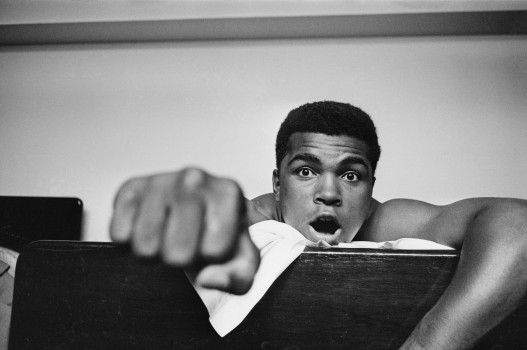
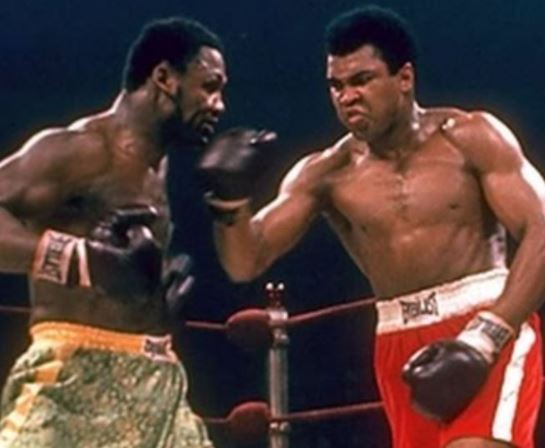
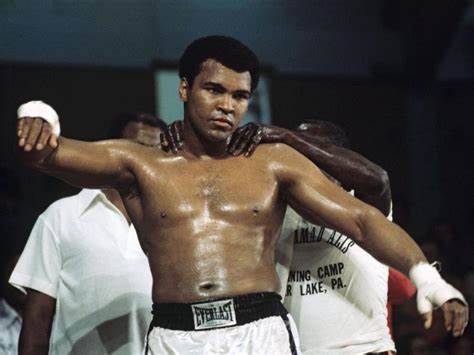
The boy could fight too – sheer poetry in the ring, but he actually created a great deal of interesting, funny verse. Inspired by the barber-shop banter he heard in his youth, & driven through a supra-arrogant ‘I’m the greatest’ persona based upon a wrestler called Gorgeous George, the world became hooked on every word the young Cassius said – & he knew it, touching an entire planet thro’ his simple lyricism enabled by his global persona. “Float like a butterfly, sting like a bee.”
ALI V JOE FRAZIER
Ding! Ali comes out to meet Frazier
But Frazier starts to retreat
If Frazier goes back any further
He’ll wind up in a ringside seat
Ali swings to the left
Ali swings to the right
Look at the kid
Carry the fight
Frazier keeps backing
But there’s not enough room
It’s a matter of time
Then Ali lowers the boom
Now Ali lands to the right
What a beautiful swing!
And deposits Frazier
Clean out of the ring
Frazier’s still rising
But the referee wears a frown
For he can’t start counting
Till Frazier comes down
Now Frazier disappears from view
The crowd is getting frantic
But our radar stations have picked him up
He’s somewhere over the Atlantic
Who would have thought that
When they came to the fight
That they would have witnessed
The launching of a coloured satellite!
After becoming involved with the controversial ‘Nation of Islam’ group in the 60s, Clay changed his name to Muhammad Ali, which will stick unto eternity. His legacy is being forgotten by the millennial generation, unfortunately, as is his poetry. But there is a clear case that for while he was at the peak of his powers, more people heard, were touched by, & recited back his poetry than other individual on the planet before or since. Maybe not a better poet than Shakespeare, but definitely, during his hey-days, bigger!
ON THE ATTICA PRISON RIOTS OF 1971
He said breedom – Better Now
Better far— from all I see—
To die fighting to be free
What more fitting end could be?
Better surely than in some bed
Where in broken health I’m led
Lingering until I’m dead
Better than with prayers and pleas
Or in the clutch of some disease
Wasting slowly by degrees
Better than a heart attack
or some dose of drug I lack
Let me die by being Black
Better far that I should go
Standing here against the foe
Is the sweeter death to know
Better than the bloody stain
On some highway where I’m lain
Torn by flying glass and pane
Better calling death to come
Than to die another dumb
Muted victim in the slum
Better than of this prison rot
If there’s any choice I’ve got
Kill me here on the spot
Better far my fight to wage
Now while my blood boils with rage
Lest it cool with ancient age
Better vowing for us to die
Than to Uncle Tom and try
Making peace just to live a lie
Better now that I say my sooth
I’m gonna die demanding truth
While I’m still akin to youth
Better now than later on
Now that fear of death is gone
Never mind another dawn.
This poem was recited on air while in Ireland & depicts a hostage protest for better conditions which led to 29 prisoners being shot by soldiers. After reading the poem, Muhammad Ali related the struggle of the Afro-Americans for freedom and justice to the struggle of the Irish against British imperialism
THE LEGEND OF MUHAMMAD ALI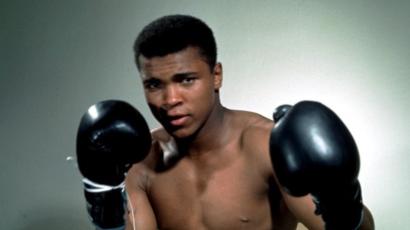
This is the legend of Muhammad Ali,
The greatest fighter that ever will be.
He talks a great deal and brags, indeed.
Of a powerful punch and blinding speed.
Ali fights great, he’s got speed and endurance.
If you sign to fight him, increase your insurance.
Ali’s got a left, Ali’s got a right;
If he hits you once, you’re asleep for the night
Written by Muhammad Ali | Create an image from this poem
To make America the greatest is my goal
To make America the greatest is my goal,
So I beat the Russians, and I beat the Pole,
and for the USA won the medal of gold.
Italians said: “You’re Greater than the Cassius of old´´.
We like your name, we like your game,
So make Rome your home if you will.
I said I appreciate your kind hospitality,
But the USA is my country still,
‘Cause they’re waiting to welcome me in Louisville.
LAST NIGHT I HAD A DREAM
Last night I had a dream, When I got to Africa,
I had one hell of a rumble.
I had to beat Tarzanís behind first,
For claiming to be King of the Jungle.
For this fight, Iíve wrestled with alligators,
Iíve tussled with a whale.
I done handcuffed lightning
And throw thunder in jail.
You know Iím bad.
just last week, I murdered a rock,
Injured a stone, Hospitalized a brick.
Iím so mean, I make medicine sick.
Iím so fast, man,
I can run through a hurricane and donít get wet.
When George Foreman meets me,
Heíll pay his debt.
I can drown the drink of water, and kill a dead tree.
Wait till you see Muhammad Ali.
Written by Muhammad Ali | Create an image from this poem
There live a great man named Joe
There live a great man named Joe
who was belittled by a loudmouth foe.
While his rival would taunt and tease
Joe silently bore the stings.
And then fought like gladiator in the ring.
Lines upon a Louisville Lip
Nine years ago, they said.
Before Liston the Bear Muhammad Ali would be dead.
But he went out. In just this way and with no fear,
Ali did the same trick to Foreman the Bull,
but this time in Zaire.
While you were waiting for George Foreman’s eye to mend
You said “Muhammad Ali’s reached his end.
He is too old, and has got slower,
And Foreman the Bull will bowl him over.”
When I said I was still the best
The suckers said: “He will never pass this test.”
But I pulled the wool over everybody’s eyes
And in round eight it was Foreman who was looking at the skies.
I float like a butterfly and sting like a bee,
But this time I showed my brain was the fastest part of me.
People said: “You can only win by slipping his fists,”
So I took them on and he could not resist,
For when the Bull began to slow
Muhammad Ali showed his punches,
by Allah, could land the blow.
Five million dollars is a lot to pay two men to fight,
And George’s showing is proof that this is robbery, not right.
Sure you need against him doublehitting power,
But Ali the Genius was the man of the hour.
Foreman’s a fighter of no great merit.
It is I who should receive the full five million credit.
Whipping George has made my day,
There is no nicer way I know of earning my pay.
But because this time I get one half the price I’m worth,
Next time Ali dances round the ring he’s asking twice the purse.
So next time ‘don’t match Bull and Master,
Because Muhammad Ali has shown he is much the faster.
I was perfect and Allah showed,
He’d realised, For as soon as I won
His lightning shot across the skies.
TRUTH
The face of Truth is open
The eyes of Truth are bright
The lips of Truth are ever closed
The head of Truth is upright
The breast of Truth stands forward
The gaze of Truth is straight
Truth has neither fear nor doubt
Truth has patience to wait
The words of Truth are touching
The voice of Truth is deep
The law of Truth is simple:
All you sow, you reap
The soul of Truth is flaming
The heart of Truth is warm
The mind of Truth is clear and firm
Through rain and storm
Facts are only its shadow
Truth stands above all sin
Great be the battle of life
Truth in the end shall win
The image of Truth is the cross
Wisdom’s message is his rod
The sign of Truth is the crescent
And the soul of Truth is God
Life of Truth is eternal
Immortal is its past
Power of Truth shall endure
Truth shall hold to the last
In the following interview, the controversial 1975 one with Playboy Magazine, Ali talks about his poetry & his newfound love of ‘sayings’
PLAYBOY:
Since a lot of people are wondering about this, level with us. Do you write all the poetry you pass off as your own?
ALI:
Sure I do. Hey, man, I’m so good I got offered a professorship at Oxford. I write late at night, after the phones stop ringin’ and it’s quiet and nobody’s around—all great writers do better at night. I take at least one nap during the day, and then I get up at two in the morning and do my thing. You know, I’m a worldly man who likes people and action and I always like cities, but now when I find myself in a city, I can’t wait to get back to my training camp. Neon signs, traffic, noise and people—all that can get you crazy. It’s funny, because I was supposed to be torturing myself by building a training camp out in the middle of no where in northern Pennsylvania, but this is good livin’—fresh air, well water, quiet and country views. I thought I wouldn’t like it at all but that at least I’d work a lot instead of being in the city, where maybe I wouldn’t train hard enough. Well, now I like it better than being in any city. This is a real good setting for writin’ poetry and I write all the time, even when I’m in training. In fact, I wrote one up here that’s better than any poem in the world.
PLAYBOY:
How do you know that?
ALI:
My poem explains truth, so what could be better? That’s the name of it, too,
Truth:
The face of Truth is open, the eyes
of Truth are bright
The lips of Truth are ever closed,
the head of Truth is upright
The breast of Truth stands forward,
the gaze of Truth is straight
Truth has neither fear nor doubt,
Truth has patience to wait.
The words of Truth are touching,
the voice of Truth is deep
The law of Truth is simple: All you
sow, you reap.
The soul of Truth is flaming, the
heart of Truth is warm
The mind of Truth is clear and
firm through rain and storm.
Facts are only its shadow, Truth
stands above all sin.
Great be the battle of life—Truth
in the end shall win.
The image of Truth is the Honorable
Elijah Muhammad, wisdom’s message is his rod
The sign of Truth is the crescent
and the soul of Truth is God.
Life of Truth is eternal
Immortal is its past
Power of Truth shall endure
Truth shall hold to the last.
It’s a masterpiece, if I say so myself.
But poems aren’t the only thing I’ve been writing. I’ve also been setting my mind to sayings. You want to hear some?
PLAYBOY:
Do we have a choice?
ALI:
You listen up and maybe I’ll make you as famous as I made Howard Cosell. “Wars on nations are fought to change maps, but wars on poverty are fought to map change.” Good, huh? “The man who views the world at 50 the same as he did at 20 has wasted 30 years of his life.” These are words of wisdom, so pay attention, Mr. Playboy. “The man who has no imagination stands on the earth he has no wings, he cannot fly.” Catch this: “When we are right, no one remembers, but when we are wrong, no one forgets. Watergate!” I really like the next one: “Where is man’s wealth? His wealth is in his knowledge. If his wealth was in the bank and not in his knowledge, then he don’t possess it—because it’s in the bank!” You got all that?
PLAYBOY:
Got it, Muhammad.
ALI:
Well, there’s more. “The warden of a prison is in a worse condition than the prisoner himself. While the body of the prisoner is in captivity, the mind of the warden is in prison!” Words of wisdom by Muhammad Ali. This is about beauty: “It is those who have touched the inner beauty that appreciate beauty in all its forms.” I’m even going to explain that to you. Some people will look at a sister and say, “She sure is ugly.” Another man will see the same sister and say, “That’s the most beautiful woman I ever did see.” How do you like this one: “Love is a net where hearts are caught like fish”?
PLAYBOY:
Isn’t that a little corny?
ALI:
I knew you wasn’t smart as soon as I laid eyes on you. But I know you’re gonna like this one, which is called Riding on My Horse of Hope: “Holding in my hands the reins of courage, dressed in the armor of patience, the helmet of endurance on my head, I started on my journey to the land of love.” Whew! Muhammad Ali sure goes deeper than boxing.
READ
THE GODS OF THE RING
The Requiem of Anna Akhmatova
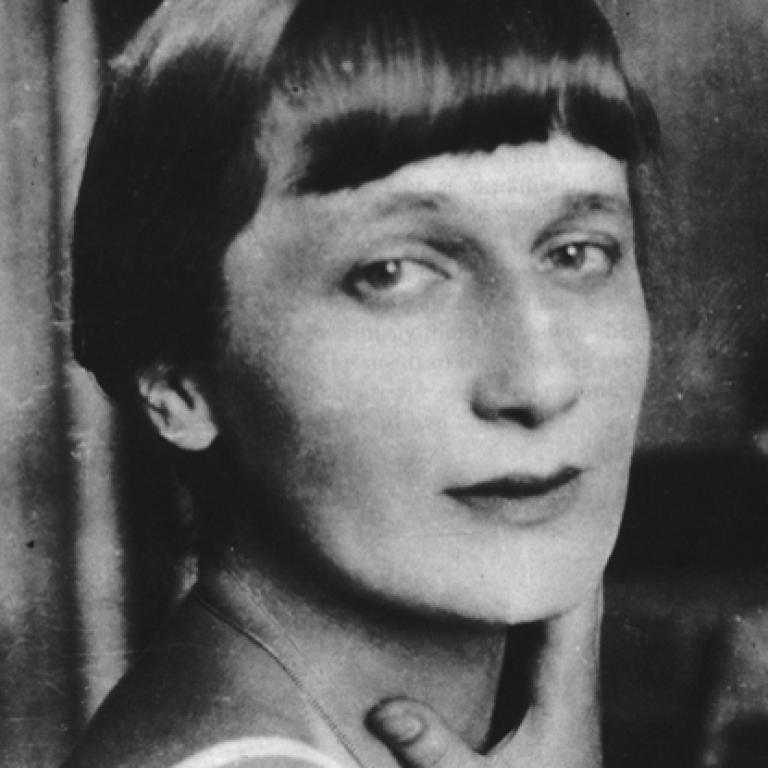
Anna Akhmatova’s Requiem is a perfect piece
Of mid-20th Century epyllia
Anna Akhmatova is one of the greatest ever Russian poets, essayists & translators. During the climate of Stalinist oppression, between 1935 and 1940 she composed she composed the bulk of her long narrative poem, Rekviem. It was whispered line by line to her closest friends, who quickly committed to memory what they had heard. Akhmatova would then burn in an ashtray the scraps of paper on which she had written Rekviem. If found by the secret police, this narrative poem could have unleashed another wave of arrests for subversive activities. The poem would be published for the first time in Russia only during the years of perestroika, in the journal Oktiabr’ (October) in 1989. Mixing various genres and styles & forms, the poem’s scatteredness reflects the disintegration of self and the world that the old Russian order was experiencing- Anna had aristocratic blood.
Not under foreign skies
Nor under foreign wings protected –
I shared all this with my own people
There, where misfortune had abandoned us.
[1961]
INSTEAD OF A PREFACE
During the frightening years of the Yezhov terror, I
spent seventeen months waiting in prison queues in
Leningrad. One day, somehow, someone ‘picked me out’.
On that occasion there was a woman standing behind me,
her lips blue with cold, who, of course, had never in
her life heard my name. Jolted out of the torpor
characteristic of all of us, she said into my ear
(everyone whispered there) – ‘Could one ever describe
this?’ And I answered – ‘I can.’ It was then that
something like a smile slid across what had previously
been just a face.
[The 1st of April in the year 1957. Leningrad]
DEDICATION
Mountains fall before this grief,
A mighty river stops its flow,
But prison doors stay firmly bolted
Shutting off the convict burrows
And an anguish close to death.
Fresh winds softly blow for someone,
Gentle sunsets warm them through; we don’t know this,
We are everywhere the same, listening
To the scrape and turn of hateful keys
And the heavy tread of marching soldiers.
Waking early, as if for early mass,
Walking through the capital run wild, gone to seed,
We’d meet – the dead, lifeless; the sun,
Lower every day; the Neva, mistier:
But hope still sings forever in the distance.
The verdict. Immediately a flood of tears,
Followed by a total isolation,
As if a beating heart is painfully ripped out, or,
Thumped, she lies there brutally laid out,
But she still manages to walk, hesitantly, alone.
Where are you, my unwilling friends,
Captives of my two satanic years?
What miracle do you see in a Siberian blizzard?
What shimmering mirage around the circle of the moon?
I send each one of you my salutation, and farewell.
[March 1940]
INTRODUCTION
[PRELUDE]
It happened like this when only the dead
Were smiling, glad of their release,
That Leningrad hung around its prisons
Like a worthless emblem, flapping its piece.
Shrill and sharp, the steam-whistles sang
Short songs of farewell
To the ranks of convicted, demented by suffering,
As they, in regiments, walked along –
Stars of death stood over us
As innocent Russia squirmed
Under the blood-spattered boots and tyres
Of the black marias.
I
You were taken away at dawn. I followed you
As one does when a corpse is being removed.
Children were crying in the darkened house.
A candle flared, illuminating the Mother of God. . .
The cold of an icon was on your lips, a death-cold sweat
On your brow – I will never forget this; I will gather
To wail with the wives of the murdered streltsy
Inconsolably, beneath the Kremlin towers.
[1935. Autumn. Moscow]
II
Silent flows the river Don
A yellow moon looks quietly on
Swanking about, with cap askew
It sees through the window a shadow of you
Gravely ill, all alone
The moon sees a woman lying at home
Her son is in jail, her husband is dead
Say a prayer for her instead.
III
It isn’t me, someone else is suffering. I couldn’t.
Not like this. Everything that has happened,
Cover it with a black cloth,
Then let the torches be removed. . .
Night.
IV
Giggling, poking fun, everyone’s darling,
The carefree sinner of Tsarskoye Selo
If only you could have foreseen
What life would do with you –
That you would stand, parcel in hand,
Beneath the Crosses, three hundredth in line,
Burning the new year’s ice
With your hot tears.
Back and forth the prison poplar sways
With not a sound – how many innocent
Blameless lives are being taken away. . .
[1938]
V
For seventeen months I have been screaming,
Calling you home.
I’ve thrown myself at the feet of butchers
For you, my son and my horror.
Everything has become muddled forever –
I can no longer distinguish
Who is an animal, who a person, and how long
The wait can be for an execution.
There are now only dusty flowers,
The chinking of the thurible,
Tracks from somewhere into nowhere
And, staring me in the face
And threatening me with swift annihilation,
An enormous star.
[1939]
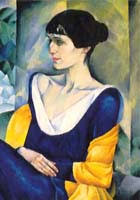
VI
Weeks fly lightly by. Even so,
I cannot understand what has arisen,
How, my son, into your prison
White nights stare so brilliantly.
Now once more they burn,
Eyes that focus like a hawk,
And, upon your cross, the talk
Is again of death.
[1939. Spring]
VII
THE VERDICT
The word landed with a stony thud
Onto my still-beating breast.
Nevermind, I was prepared,
I will manage with the rest.
I have a lot of work to do today;
I need to slaughter memory,
Turn my living soul to stone
Then teach myself to live again. . .
But how. The hot summer rustles
Like a carnival outside my window;
I have long had this premonition
Of a bright day and a deserted house.
[22 June 1939. Summer. Fontannyi Dom (4)]
VIII
TO DEATH
You will come anyway – so why not now?
I wait for you; things have become too hard.
I have turned out the lights and opened the door
For you, so simple and so wonderful.
Assume whatever shape you wish. Burst in
Like a shell of noxious gas. Creep up on me
Like a practised bandit with a heavy weapon.
Poison me, if you want, with a typhoid exhalation,
Or, with a simple tale prepared by you
(And known by all to the point of nausea), take me
Before the commander of the blue caps and let me glimpse
The house administrator’s terrified white face.
I don’t care anymore. The river Yenisey
Swirls on. The Pole star blazes.
The blue sparks of those much-loved eyes
Close over and cover the final horror.
[19 August 1939. Fontannyi Dom]
IX
Madness with its wings
Has covered half my soul
It feeds me fiery wine
And lures me into the abyss.
That’s when I understood
While listening to my alien delirium
That I must hand the victory
To it.
However much I nag
However much I beg
It will not let me take
One single thing away:
Not my son’s frightening eyes –
A suffering set in stone,
Or prison visiting hours
Or days that end in storms
Nor the sweet coolness of a hand
The anxious shade of lime trees
Nor the light distant sound
Of final comforting words.
[14 May 1940. Fontannyi Dom]
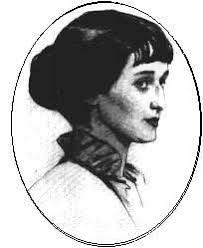
X
CRUCIFIXION
Weep not for me, mother.
I am alive in my grave.
1.
A choir of angels glorified the greatest hour,
The heavens melted into flames.
To his father he said, ‘Why hast thou forsaken me!’
But to his mother, ‘Weep not for me. . .’
[1940. Fontannyi Dom]
2.
Magdalena smote herself and wept,
The favourite disciple turned to stone,
But there, where the mother stood silent,
Not one person dared to look.
[1943. Tashkent]
EPILOGUE
1.
I have learned how faces fall,
How terror can escape from lowered eyes,
How suffering can etch cruel pages
Of cuneiform-like marks upon the cheeks.
I know how dark or ash-blond strands of hair
Can suddenly turn white. I’ve learned to recognise
The fading smiles upon submissive lips,
The trembling fear inside a hollow laugh.
That’s why I pray not for myself
But all of you who stood there with me
Through fiercest cold and scorching July heat
Under a towering, completely blind red wall.
2.
The hour has come to remember the dead.
I see you, I hear you, I feel you:
The one who resisted the long drag to the open window;
The one who could no longer feel the kick of familiar
soil beneath her feet;
The one who, with a sudden flick of her head, replied,
‘I arrive here as if I’ve come home!’
I’d like to name you all by name, but the list
Has been removed and there is nowhere else to look.
So,
I have woven you this wide shroud out of the humble words
I overheard you use. Everywhere, forever and always,
I will never forget one single thing. Even in new grief.
Even if they clamp shut my tormented mouth
Through which one hundred million people scream;
That’s how I wish them to remember me when I am dead
On the eve of my remembrance day.
If someone someday in this country
Decides to raise a memorial to me,
I give my consent to this festivity
But only on this condition – do not build it
By the sea where I was born,
I have severed my last ties with the sea;
Nor in the Tsar’s Park by the hallowed stump
Where an inconsolable shadow looks for me;
Build it here where I stood for three hundred hours
And no-one slid open the bolt.
Listen, even in blissful death I fear
That I will forget the Black Marias,
Forget how hatefully the door slammed and an old woman
Howled like a wounded beast.
Let the thawing ice flow like tears
From my immovable bronze eyelids
And let the prison dove coo in the distance
While ships sail quietly along the river.
[March 1940. Fontannyi Dom]
If you enjoyed this article
Please make a donation
***


