Walter Scott’s Epic Voice

Hark, from yon misty cairn their answer tost:
“Minstrel! the fame of whose romantic lyre,
Capricious-swelling now, may soon be lost
Sir Walter Scott – The Vision of Don Roderick
The concept of the Accertamento Grande is essentially a process of re-reading the poetry in existence & trying to establish some kind of order or preferment, the most pristeen models through which we can teach our future poets & bards. As an example of the process, I would like to restore a quite a forgotten poem to the public consciousness. It was composed at the height of the Napoleonic phrenzie, in the summer of 1811, by Sir Walter Scott. Coincidence or not, the poem was divided into the same Spenserian stanzas as those the young Lord Byron was dividing his Childe Harolde’s Pilgirmage, a poem which he gave to his publishers on returning from his European tour in that same year of 1811.
Let us now examine looking Scott’s ‘Vision,’ from a certain angle, that is the way he managed to fashion a sumblime & excellent rendition of the poetic voice first used by Homer. The rest of Scott’s poetic output is rather insipid: the verse-ballads, while selling extremely well they contain little of the true juices of Parnassus. Of this poet, Walter Bagehot describes an artist who, ‘had no sense of smell, little sense of taste, almost no ear for music (he knew a few, perhaps three, scotch tunes, which he avowed that he had learnt in sixty years, by hard labour & mental association) & not much turn for the minutiae of nature in any way. The effect of this may be seen in some of the best descriptive passages of his poetry, & we will not deny that it does (although proceeding from a sensuous defect), in a certain degree, add to their popularity. He deals with the main outlines & great points of nature, never attends to any others, & in this respect he suits the comprehension & knowledge of many who know only those essential & considerable outlines.’

Not the most complimentary of words – yet as we shall see Scott’s ‘Vision’ at times matches the solemn grandeur of Homer & Dante & especially Milton, whose meter was caught by Scott’s ear & transferred into his own poem. This, ‘The Vision of Don Roderick,’ was printed at Edinburgh by James Ballantyne & Co. in 1811, before Napoleon’s march on Moscow & at a time when he held most of Europe in his clutches – only the Iberian peninsular was proving to be a problem, with the Spanish revolting against Napoleon’s brother’s rule, assisted manfully by the Portuguese & British with the whole confederation led by the Duke of Wellington, Arthur Wellesley. The poem was written to celebrate this great moment, when the British were holding their own against a megalomaniac, led by a true hero in the vein of Achilles or Aeneas. The chief contents are based upon an episode in Ginés Pérez de Hita’s Guerras civiles de Granada, a book which Scot devoured as a boy. The mimesis stored for years in his memory banks suddenly had a channel through which to pour, the force of which elevated Scott’s poetic voice from rustic piper to Olympian bard. Scott’s own introduction reads;
The following Poem is founded upon a Spanish Tradition, bearing, in general, that Don Roderick, the last Gothic King of Spain, when the invasion of the Moors was depending, had the temerity to descend into an ancient vault, near Toledo, the opening of which had been denounced as fatal to the Spanish Monarchy. The legend adds, that his rash curiosity was mortified by an emblematical representation of those Saracens who, in the year 714, defeated him in battle, and reduced Spain under their dominion. I have presumed to prolong the Vision of the Revolutions of Spain down to the present eventful crisis of the Peninsula, and to divide it, by a supposed change of scene, into, THREE PERIODS. The FIRST of these represents the Invasion of the Moors, the Defeat and Death of Roderick, and closes
with the peaceful occupation of the country by the victors. The SECOND PERIOD embraces the state of the Peninsula when the conquests of the Spaniards and Portuguese in the East and West Indies had raised to the highest pitch the renown of their arms; sullied, however, by superstition and cruelty. An allusion to the inhumanities of the Inquisition terminates this picture. The LAST PART of the Poem opens with the state of Spain previous to the unparalleled treachery of BUONAPARTE, gives a sketch of the usurpation attempted upon that unsuspicious and friendly kingdom, and terminates with the arrival of the British succours. It may be further proper to mention, that the object of the Poem is less to commemorate or detail particular incidents, than to exhibit a general and impressive picture of the several periods brought upon the stage. EDINBURGH, June 24, 1811.

Here we have an epic tri-parted echo of Dante’s Divine Comedy. Strangely, Scott thought the poem was a mere ‘Drum and Trumpet performance’ (letter to William Hayley, 2 July 1811), but this reminds us of Virgil, who wanted to throw the Aeniad into the flames, before being persuaded to preserve his epic for the Roman people. In the ‘Vision’, Don Roderick, the last Visigothic King of Spain, descends into an enchanted cave to learn the outcome of the Moorish invasion. This also has echoes of Virgil who sent Aeneas into the underworld to see prophesies upon the Roman Republic.
Scott’s handling of an epic sweep through Spanish history propels his wordsmithery to heights he never before or after got close to. Here are some examples of Scott’s work; a passage from his famous ‘Lay of the Last Minstrel’ & Marmion, followed by a stanza from the ‘Vision.’
They bid me sleep, the bid me pray,
They say my brain is warp’d & wrung
I cannot sleep on Highland brea,
I cannot pray in Highland tongue
But were I now where Allan glides
Or heard my native’s Devan tides
So sweetly would I rest & pray
That Heaven would close my wintry day. Last Minstrel
Not far advanced was morning day,
When Marmion did his troop array
To Surrey’s camp to ride;
He had safe-conduct for his band,
Beneath the Royal seal & hand,
And Douglas gave a guide;
The ancient Earl, with stately grace,
Would Clara on her Palfrey place
& whispered in a undertone… Marmion
So passed that pageant. Ere another came,
The visionary scene was wrapped in smoke
Whose sulph’rous wreaths were crossed by sheets of flame;
With every flash a bolt explosive broke,
Till Roderick deemed the fiends had burst their yoke,
And waved ‘gainst heaven the infernal gonfalone!
For War a new and dreadful language spoke,
Never by ancient warrior heard or known;
Lightning and smoke her breath, and thunder was her tone. Vision
There is no doubt we get a different sensation from reading the first two stanza than the third. They seem different voices, but what has happened is that Scott is speaking with the immortal tones of the epic voice. Similarily, the voice Milton used in his Paradise Lost was different to those used in his Nativity Ode or his Lycidas; Virgil’s Aeneid is different from his pastoral Eclogues & Dante’s Vita Nuova is different from his Divine Comedy. The separating factor is the poet has altered his output in the same way a comedian may don the guise of several different characters during a performance.

I shall now elucidate more of Scott’s usage of traditional epic themes through stanzas taken from the ‘Vision;
The Epic Hero
Lives there a strain, whose sounds of mounting fire
May rise distinguished o’er the din of war;
Or died it with yon Master of the Lyre
Who sung beleaguered Ilion’s evil star?
Such, WELLINGTON, might reach thee from afar,
Wafting its descant wide o’er Ocean’s range;
Nor shouts, nor clashing arms, its mood could mar,
All, as it swelled ‘twixt each loud trumpet-change,
That clangs to Britain victory, to Portugal revenge!
The Invocation
But we, weak minstrels of a laggard day
Skilled but to imitate an elder page,
Timid and raptureless, can we repay
The debt thou claim’st in this exhausted age?
Thou givest our lyres a theme, that might engage
Those that could send thy name o’er sea and land,
While sea and land shall last; for Homer’s rage
A theme; a theme for Milton’s mighty hand
How much unmeet for us, a faint degenerate band!
Tribute to Older Epics
Ye mountains stern! within whose rugged breast
The friends of Scottish freedom found repose;
Ye torrents! whose hoarse sounds have soothed their rest,
Returning from the field of vanquished foes;
Say, have ye lost each wild majestic close
That erst the choir of Bards or Druids flung,
What time their hymn of victory arose,
And Cattraeth’s glens with voice of triumph rung,
And mystic Merlin harped, and grey-haired Llywarch sung?
Here, Milton is alluding to the poem Y Gododdin, etched by the 7th century bard Aneirin. On its discovery in the 18th century, a startled Lewis Morris proclaimed to Edward Richard (1758);
Who do you think I have at my elbow, as happy as ever Alexander thought himself after a conquest? No less a man than Ieuan Fardd who hath discovered some old MSS. Lately that nobody of this age or the last ever dreamed of. And this discovery is to him & me as great as that of America by Colombus. We have found an epic poem in the British called Gododin, equal at least to the Iliad, Aeneid or Paradise Lost. Tudfwlch & Marchlew are heroes fiercer than Achilles or Satan
The Plea for Immortality
For not till now, how oft soe’er the task
Of truant verse hath lightened graver care,
From Muse or Sylvan was he wont to ask,
In phrase poetic, inspiration fair;
Careless he gave his numbers to the air,
They came unsought for, if applauses came:
Nor for himself prefers he now the prayer;
Let but his verse befit a hero’s fame,
Immortal be the verse!–forgot the poet’s name!
Epic Geographical Sweeps
“Explore those regions, where the flinty crest
Of wild Nevada ever gleams with snows,
Where in the proud Alhambra’s ruined breast
Barbaric monuments of pomp repose;
Or where the banners of more ruthless foes
Than the fierce Moor, float o’er Toledo’s fane,
From whose tall towers even now the patriot throws
An anxious glance, to spy upon the plain
The blended ranks of England, Portugal, and Spain.
Supernatural Agents
Grim sentinels, against the upper wall,
Of molten bronze, two Statues held their place;
Massive their naked limbs, their stature tall,
Their frowning foreheads golden circles grace.
Moulded they seemed for kings of giant race,
That lived and sinned before the avenging flood;
This grasped a scythe, that rested on a mace;
This spread his wings for flight, that pondering stood,
Each stubborn seemed and stern, immutable of mood.
Fixed was the right-hand Giant’s brazen look
Upon his brother’s glass of shifting sand,
As if its ebb he measured by a book,
Whose iron volume loaded his huge hand;
In which was wrote of many a fallen land
Of empires lost, and kings to exile driven:
And o’er that pair their names in scroll expand –
“Lo, DESTINY and TIME! to whom by Heaven
The guidance of the earth is for a season given.”
Heroic Speeches
That Prelate marked his march–On banners blazed
With battles won in many a distant land,
On eagle-standards and on arms he gazed;
“And hopest thou, then,” he said, “thy power shall stand?
Oh! thou hast builded on the shifting sand,
And thou hast tempered it with slaughter’s flood;
And know, fell scourge in the Almighty’s hand,
Gore-moistened trees shall perish in the bud,
And by a bloody death shall die the Man of Blood!”
Catalogues
From Alpuhara’s peak that bugle rung,
And it was echoed from Corunna’s wall;
Stately Seville responsive war-shot flung,
Grenada caught it in her Moorish hall;
Galicia bade her children fight or fall,
Wild Biscay shook his mountain-coronet,
Valencia roused her at the battle-call,
And, foremost still where Valour’s sons are met,
First started to his gun each fiery Miquelet.
There are many other stanzas throughout the poem, WHICH YOU MAY READ IN FULL HERE. One of them in particular has the true epic ring;
As that sea-cloud, in size like human hand,
When first from Carmel by the Tishbite seen,
Came slowly overshadowing Israel’s land,
A while, perchance, bedecked with colours sheen,
While yet the sunbeams on its skirts had been,
Limning with purple and with gold its shroud,
Till darker folds obscured the blue serene
And blotted heaven with one broad sable cloud,
Then sheeted rain burst down, and whirlwinds howled aloud:-
Here we have the best example amongst the Romantic poets of the Epic – or Heroic – simile. This is an elaborate piece of showcasing, a wonderful learned little ornament that adds dignity & variety to a poem. Another example would be Milton’s;
He stood & called
His Legions, Angel Forms, who lay intrans’t
Thick as Autumnal Leaves that strow the Brooks
In Vallambrosa, where th’Etrurian shades
High overarch’t imbower
That Scott mentions Milton a couple of times in his poem & has fashioned a similar sounding epic voice tells us that Scott would have had a copy of Paradise Lost before him as he wrote. This is only natural, for all new poetry should contain the waters of pParnassus, to which is added a poet’s own personal outpourings of fortified poesis. That Scott had Milton before him can be truly discerned from the following two stanzas – where we have Napoleon as the satanic anti-christ attempting to storm Spain, which is portrayed by Scott as another Eden.
“Who shall command Estrella’s mountain-tide
Back to the source, when tempest-chafed, to hie?
Who, when Gascogne’s vexed gulf is raging wide,
Shall hush it as a nurse her infant’s cry?
His magic power let such vain boaster try,
And when the torrent shall his voice obey,
And Biscay’s whirlwinds list his lullaby,
Let him stand forth and bar mine eagles’ way,
And they shall heed his voice, and at his bidding stay.
“Else ne’er to stoop, till high on Lisbon’s towers
They close their wings, the symbol of our yoke,
And their own sea hath whelmed yon red-cross powers!”
Thus, on the summit of Alverca’s rock
To Marshal, Duke, and Peer, Gaul’s Leader spoke.
While downward on the land his legions press,
Before them it was rich with vine and flock,
And smiled like Eden in her summer dress; –
Behind their wasteful march a reeking wilderness.
One of the key components of an epic is its narrator, & Scott plays the role to an almost perfection – perhaps the poem gets lost a little in the middle. The epic voice is an elaborate creature which must be sustained throughout an entire production. Scott’s was a rush job, & unfortunately the poem shows moments of melancholia & dullness – but the attempt is a noble one & there are genuine moments of clear magnitude, which if sustained throughout the rest of his ouvre, would have placed him at the top of the Romantic tree. With Calliope at the helm, however, despite her brief visitation, Scott’s blood-drenched poem possesses a wonderful music & portrays at all times that ever-present focus of Scott’s powers which produced the ‘Drum and Trumpet’effect he wrote of, which has become in his hands an epic voice. Scott maintains his pitch & rhythm all the way through his poem with perfect uniformity – an excellent performance. It is a little Iliad of regions, wars, & heroes, & should rightly belong to the class of poems called Epyllia, or ‘little epics.’ We are whisked about European history like a ravishing whirlwind, from William Wallace at the Scottish Wars of Independence, with Scott often distilling massive sweeps of time & space into a couple of lines at most.

With the Vision, Scott is moving his imagination out of Britain onto the European – again a precursor for Byron’s Childe Harolde, whose scenes of continental travel fired the imaginations of a book-buying public trapped on their island by Napoleon’s European blockade. Byron would then go on to fashion his own epic voice, which manifested itself best in his rambling & operatic Don Juan, yet Scott’s ‘Vision’ has primacy & it also raised 100 guineas for the war fund. Written when the real struggle for Europe was about to begin, I believe this piece of poetic propaganda would have inspired the hearts of British Soldiers at the time – I don’t think any man reading it at the time would have failed to have been moved militarily to match the feats of the great heroes of whom Scott’s epic voice had sang.
Letters From Crete IV: Framing the Sonneverse
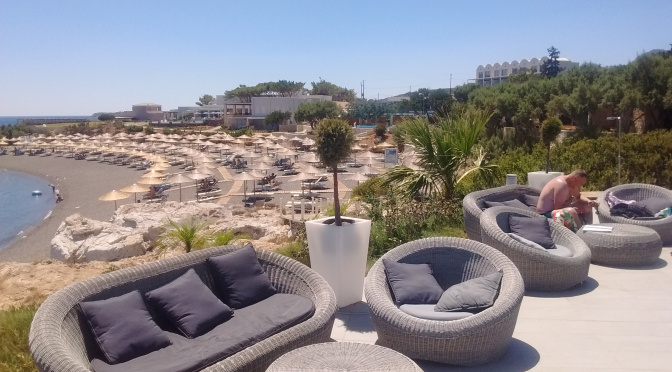
While lazing in the Cretan hills these past few days I have been chiefly editing my sonnet sequence, The Silver Rose, which has led me to finally finalize the contents of this essay. The Sonneverse has been running around my head since about 2008, when I used to muse on its essence on the long walk from Heather Lodge to Dunbar. One occasion is especially memorable, as I sat on Spott Dod overlooking East Lothian, with the universe surging from my mind. The general thesis is that there is a corpus of human works known as the Sonneverse, an ever-expanding collection of poetry in the sonnet form. Imagine the very first sonnet ever written to be the Big Bang, kinda thing. I have written a sonnet, of course, elucidating its properties;
Every stanza is a planet
Every sonnet is a star
Fourteen sonnets constellations make
But brighter skies by far
Are galaxies of constellations
Fourteen in each one
Stretching epic metaverses,
& when one’s works are done
A host of sonnets ye shall choose
Full seven score & fourteen gems
Most lucious whisp’rings of thy muse
Set in those precious diadems
Crowning the sonnetteer who sings
From Ceasars to our petty kings
When the opening couplet reads, ‘Every stanza is a planet, Every sonnet is a star,’ the meaning is simple. A sonnet is powered by the same energy which emanates from a star; i.e. the fiery light-giving force which giving life to its planetary system. In terms of the sonnet, this energy will then bring to life the poem’s planets – the stanzas – & whether the star’s energy is powerful or weak will depend upon the quality of the sonnet. William Blake once said that the genius & creative spirit of mankind was poetry & it is in the sonneverse that we gain our most natural reflection of the Untold Universe at large.
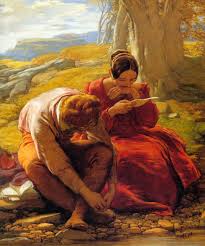
In one of my Pendragon Lectures of two years ago, I formulated the theory that poems stood upon four pillars – Music, Mood, Mould & Measure.Let us now apply this theory to the exploration of the sonnet form, retaining the ‘quatordicci’ element that seems natural in soneteering, ie the omniprevalent usage of the number 14. The MOULD of every sonnet is bound by a 14-line restriction. Each sonnet, however, may be divided into staves, or stanzettas as I like to call them. These are the planets in orbit around the sonnet’s star. The Petrarchean, for example, contains two stanzettas, of 8 & 6 lines respectively. During my time as an explorer of the Sonneverse, I have mapped out a number of typical planetary systems.
Petrarchean
X X X X X X X X – X X X X X X
Shakesperean
X X X X – X X X X – X X X X – X X
Couplets
X X – X X – X X – X X – X X – X X – X X
Pentastaves
X X X X X – X X X X X – X X X X
Each planet of a starsystem can be mapped out via its MEASURE. There may be seven Archilochian Couplets, for example, or the 3/3/3/3/2 Oriental system, i.e. four stanzettas of 5-7-5 Haiku, follow’d by the concluding 7-7 couplet. If one had decided upon a structure of 5/5/4, then for your pentet staves you could use a Limerick, perhaps, or the South American Wayra, whose syllable counts are 5-7-7-6-8. There are vastly numbered variants; including irregular sonnets which look & feel like Free Verse, hefty Alexandrines in solid blank verse blocks, & so on, into infinity, one expects.

Every planet also possesses an atmosphere, or MOOD. These could be a Prosodion to Apollo perhaps, or a precious Paean to a new-found paramour. A bubbling Barzelletta; a sensuous Ghazel; a Senryu to a silly friend, a weeping Epicedium; a Protreptic plea to passion; or a soul-stirring Aubade. For the budding sonneteer there are many, many possible ways in which to create one’s words. These are instilled with a poem’s MUSIC, the animated life of both line & the stave, where the poets weave their symphonies utilising elements such as cynghanned & rhymes both internal & line-ending.
The planetary systems created by the sonetteers oscillate between barren anisometric rocks of sterile worlds, or are occupied by single & gigantic fertile planets, buzzing with the operatic voices of man, beast, bird & insect, just as is heard in this fabulous land of Creta. In one corner of the sonneverse, for example, the hardy explorer may encounter the Onegin giant devised by Alexander Sergevich Pushkin for his Eugene Onegin, a novel in verse. Stanzas have 14 lines of iambic tetrameter rhyming ababccddeffegg, & the rhymes may be feminine & masculine.

Returning to my sonnet given earlier, where we read ‘fourteen sonnets constellations make,’ in the purest sense of the physics, fourteen sonnets make a traditional sequenza, ie 14 star-systems closely linked in time, in space & by the aforementioned ‘constellation’ of sonnets. ‘The Fourteen Sonnets, Elegiac and Descriptive. Written During a Tour. Bath and London, 1789,’ by William Lisle Bowles are a perfect example. Each sonnets is Petrarchian in mould, iambic pentameter in measure, & are unified by the observatory mood of a travelling poet. In my own experimental periods with the constellation, I tried diversifying the measures, sometimes utilizing the same one for 14 stanzas, sometimes using 14 different ones. I also did the same with the Moods, such as;
Vista : Composed from a high viewpoint
Odes : A tribute to people or places
Pastoral : Poetry describing rural scenes
Amoebean : A conversation between 2 speakers
Ensenhamen : A didactic poem
Epistle : A poem addressed to a friend
Barzelletta : A funny story
History : A poem about a past event
Ghazel : A poem concerning lovemaking
Quasida : A place which recalls lamented lost love
Sutra : A treatise
Tantra : A religious treatise/sermon
Fable : A moral narrative
Geste : An account of deeds / adventures

Of the next step up in the Sonneverse, I wrote there are, ‘galaxies of constellations, fourteen in each one.’ i.e. 196 sonnets again unified by a grand theme we shall call the Gestalt. I have composed several of galaxies; a tour of the far North of Scotland, a tour of Edinburgh, & a tour of India. Of these, the Ediniad galaxy was the most technical, for each of the 14 constellations were unified by a singular measure, such as 14 alexandrines, 14 ottosyllabics, etc. As for the mould, the first sonnet of each constellation would be a dense block of fourteen lines, the next would be seven couplets, the next would be 3/3/3/3/2, the next would be 4/4/4/2 & so on. A incredibly complex, but quite satisfying essay into the possible architectronics of sonnetry. For me, a royal suite of sonnets would be a galaxy in which every sonnet would have a different mould of fourteen varieties, a different metre of fourteen varieties & a differnt mood of fourteen varieties. I have never attempted to create one, but on those lofty walks in the foothills of the Lammermuirs I definitely ruminated upon such… a glimpse through my psychic telescope into the far-flung reaches of the Sonneverse.
Agios Ioanniss
13th July
READ MORE POETICAL ESSAYS
***

Love, Wine & Nature in the Everliving China III: Feng from Ch’en, Wei, Ch in & Ch’i
Continuing the selection from William Dolby’s
Majestic translations of ancient Chinese poetry
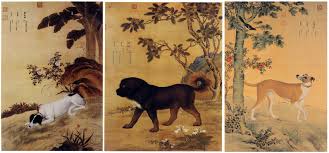
HUNTING DOGS
Ch’i
His hunting dogs’ bells jingle
He himself is handsome & moreover gentle
His hunting dogs have double rings,
He himself is handsome & moreover has good-looking hair;
His hunting dogs have big doubkle chains,
He himself is handsome & moreover strong in ability
RIVER FEN STAGNATED INTO MARSH
Wei
Where yon River Fen has stagnated into swamp
Oh, I pick the flaxen plant
That young gentleman there is immerasurably handsome
Immeasurably handsome
Quite different from the minister’s bastard-sons in charge of the duke’s carriages
In one area by yon River Fen,
Oh, I pick the mulberry-leaves.
That young gentleman there is as handsome as amethyst
He’s as handsome as amethyst
Quite different from the men in charge of the duke’s war chariots
DAWN BREEZE FALCON
Ch’in
Swift-flying is yon Dawn Breeze Falcon
& luxuriant is yon North Forest;
I haven’t met my young lord, my beau
And my troubl’d heart frets unable to forget him
What can I do? What can I do?
You’re truly so very forgetful of me.
On the mountain there are lush-bushy ioaks
In the damp hollow there are mottl’d camphor trees,
I haven’t yet met my young lord, my beau,
& my troubl’d heart is joyless.
What can I do? What can I do?
You’re truly so very forgetful of me.
On the mountain there are lush-bushy Prunus-Japanica trees
In the damp hollow there are sui-trees
I haven’t yet met my young lord, my beau,
& my troubl’d heart is as if drunk
What can I do? What can I do?
You’re truly so very forgetful of me.
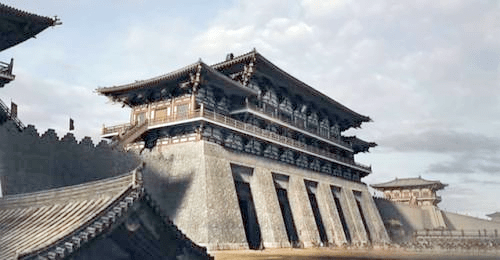
WHITE ELMS AT THE EAST GATE
Ch’en
White elms at the East Gate
Oaks upon hill-on-hill Hill
The young gentlemen of the Tzu-chung clan,
Whirl around in dance at the foot of the helm
They’re choosing a fine morning;
On the plain of the southern region;
They’re not twisting their hemp thread,
They’re whirling in dance in the market-place
They’re going off ona fine morning,
Ah, they stride along together;
“We regard you as high-mallow flowers,”
They give us gifts of a fistful of pepper-plants
WILLOW BY THE EAST GATE
Ch’en
The willow by the east gate
Its leaves are so sleek & lush
We fixed the date fotr dusk
But now the dawn star, Venus, is dazzling shimmering
The willow by the east gate
Its leaves are sio luxuriant
We fixed a date for dusk
But now the dawn star, Venus, is sparkling splendid
SLOPING SIDE OF THE MARSH EMBANKMENT
Ch’en
By the aloping side of that marsh’s embankment
There are cattails & lotus-plants;
There’s a certain handsome man,
In my grief what can I do about him?
Waking or sleeping abed, I can’t do anything about it,
My sobs & snivel pour down like heavy rain
By the sloping side of that marsh’s embankment
There are cattails & fragrant thoroughworts;
There’s a certain handsome man,
Mighty big & moreover lissome fair
Letters From Crete III: The Trojan War
I am writing this overlooking the Libyan Sea, high up in the mountain village of Agios Ioanis. We reached here three days ago, calling in at Gortys along the way – the ancient capital of Crete – in 39 degree heat, & far too hot to explore very much. I did pick up a copy of the oldest Law Code in Europe however, & have a mind to mixing it in with some classical poetry Emily gifted me as translated by Robin Skelton. All in the relatively near future of course. From Gortys, we took a wrong turn & ended up back at busy Heraklion, which was perhaps serendipitous as it allowed the girls to have another blast at Star Beach.
At 5 in the evening we set off for our next residence, crossing the island again from sea-to-sea as far as Ireapetra. As we drove south I was delighted to see the stone boat sunk by Poseidon near Pseria, the island I presume to be that of the Phaecaens of the Odyssey. I had searched for the stone boat in vain on Google Earth, thinking it would be hard at the Pseria’s twin Minoan harbours – but is instead closer to the mainland & the Minoan city of Gournia, which may be of some significance.
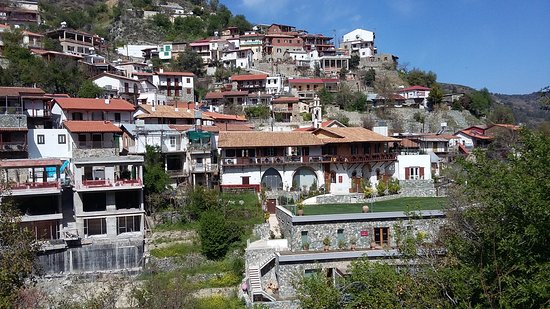
Agios Ioannis is a 9K drive to the head of a wonderful olive-smitten U-shaped mountain recess. Stacked white against the mountains, it is half dilapidated & half regenerated in the Calcata fashion. Once a bustling town, in the 70s & 80s the inhabitants drifted to easier lives in the city & by the coast, leaving an insanely beautiful ghost-town. Even today, in the winter, there are only six full-time residents. Our house is large… two wings behind an excellent garden tended by the grey-bearded Adonis. Five cats, three dogs & a timid goat contribute to the safari-like nature of our domicile, along with all those grievously nasty mosquitos that are ravaging the girls. There are no shops & only two places to eat; the modernistic, uniquely-detailed Route 55 Café Bar & Kristina’s tavern, where we can take away genuine Greek food to eat at varius places at our homestead & garden. It is over one of these meals, with wine to hand, in the gentle evening light, sat at the table on our porch, that I shall now ruminate on the true Trojan War.
As I have stated in previous essays, the Homeric epics are a grand jumble of creochisps; a wooly ball of well-woven threads of numerous origins. Having extracted the Menalean string at Karames, let us now examine the orgins of the war which Homer clearly sets in NW Turkey. We begin with the supposed date, deduced by examining The Life of Homer – said to have been penned by Herodotus (scholars prefer to call him Pseudo-Herodotus) – which tells us that the poet was born 168 years after the Trojan War & 622 years before the Persian invasion of Greece by Xerxes I. With the Xerxean battle of Thermopyles taking place in 480BC, if we wind back another (622+168=) 790 years, we may assume the Trojan War ended in 1270 BC. This year also fits information supplied by Herodotus’, ‘Pan who was born of Penelope… came into being later than the wars of Troy, about eight hundred years before my time.’
To Herodotus the Trojan War was fought before 1250 BC. To this period, we may also pin the Locrian Curse, which gives us the exact year of the fall of Troy, 1264 BC. The story goes that the Locrian hero Ajax was shipwrecked by Poseidon for raping Cassandra in the temple of Athena just after the fall of Troy. Swimming for his life, when he reached the coast of Eobea he was struck by a bolt of lightning & slain. Lycophron, in his ‘Alexandria,’ describes the Locrians as being subsequently cursed for a thousand years, & were forced to send two unmarried maidens to the temple of Athena at Ilion of Athens each year, where they would spend the remainder of their lives. It was only in 264 BC that the Locrians finally satisfied the curse’s conditions.
Another route comes via combining the date given by ‘Timaeus the Sicilian,’ for the foundation of Rome, who says it was founded at the same time as Carthage, in the thirty-eighth year before the first Olympiad. This year would be 814 or 813. Anchoring our investigation on this date, when we examine the writings of the celebrated 2nd century BC orator Porcius Cato – Cato the Elder – we learn that the Trojan War occurred 432 years before the foundation of Rome. This gives a date of 1246/45.
As for where this war was fought, up until the end of the nineteenth century the enlightened opinion of academia considered the Trojan War to be a battle non gratia, on the basis that nobody could actually find a city called Troy. It took the financial fortune & dogged persistance of Heinrik Schliemann to uncover the long-lost capital citadel of Ilium. As a boy he had been entertained upon his father’s knee by the tales of Achilles, Helen, Paris & Menaleus. Growing into manhood, these stories gripped his imagination more & more, until he decided to plunge his business fortune into a search for the city of Troy. Choosing a site where the Roman ‘New Troy’ had been built – & very much to the scoffs of the scholars – Schliemann began to excavate a certain Hisalrik Hill in NW Turkey. The results were simply astonishing as he & his team of Turkish workers, toiling daily in the sun, slowly unearthed the massive cyclopean walls of a great citadel; the long-lost ‘high-towered Troy.’ Schliemann also discovered a great entranceway, which he dubbed the Homeric ‘Scaean Gate,’ leading him to declare to the planet, ‘I have proved that in a remote antiquity there was in the plain of Troy a large city, destroyed of old by a fearful catastrophe, which had on the hill of Hisalrik only its Acropolis with its temples and a few other large edifices, southerly, and westerly direction on the site of the later Ilium; and that, consequently, this city answers perfectly to the Homeric description of the sacred site of Ilios.’
Scholars were unsurprisingly skeptical as to the size of the city; such a palace, though undoubtedly large, could never have housed the massy legions which swarmed on the Trojan side. Schliemann would eventually die dissapointed that he had not discovered the true Troy. But, to please his ghost, since his passing, layer by layer, like the skins of a field-fresh onion, archeologists have uncovered a series of Troys dating back thousands of years, including parts of a long wall which would have encircled Hisalrik hill, vastly enlarging the city’s size. In total, there are seven ‘layers’ to Troy, ranging from 3000 BC to the aforementioned ‘New Troy,’ built by the Romans c.100 AD. These seven cities are divided into sub-stratific layers, of which Troy VIh & VIIa are the most interesting. Troy VI was initially built on massive scale c.1400 BC, a solid edifice of carefully fitted ashlar blocks, with two of its towers erected not long before the destruction of VIh by an earthquake, about the year 1300 BC.
It is possible to match these events to a creochisping mythomeme of a demigod called Herakles, & his own destruction of Troy. According to Herodotus (c.450 BC), Herakles was born ‘about nine hundred years,’ before his own time, ie c.1350. The legend of the demi-god’s destruction of Troy, as found in the Iliad & the Bibliotheke of Apollodorus, shows Poseidon, The Earthshaker, attacking Troy with the help of a sea-beast, a probable euhemeristic account of an earthquake & tsunami striking the shores of Asia Minor. The Roman historian Strabo tells us;
Poseidon, as the story runs, became angry with Laomedon the king of Troy in connection with the building of its walls, and sent forth from the sea a monster to ravage the land. By this monster those who made their living by the seashore and the farmers who tilled the land contiguous to the sea were being surprised and carried off. Furthermore, a pestilence fell upon the people and a total destruction of their crops, so that all the inhabitants were at their wits’ end because of the magnitude of what had befallen them. Consequently, the common crowd gathered together into an assembly and sought for a deliverance from their misfortunes, and the king, it is said, dispatched a mission to Apollo to inquire of the god regarding what had befallen them. When the oracle, then, became known, which told that the cause was the anger of Poseidon and that only then would it cease when the Trojans should of their own free will select by lot one of their children and deliver him to the monster for his food, although all the children submitted to the lot, it fell upon the king’s daughter Hesionê.
Luckily for Hesione, Herakles turns up just in time & offers to slay the monster in return for some of Laomedon’s quality horses. After Herakles upheld his side of the bargain & slew the beast, Laodemon then went back on his word, resulting in a very angry demigod sacking Troy. Another Roman historian, Diodorus Siculus, writes;
Aye, what a man, they say, was Heracles in might, my father he, steadfast, with heart of lion, who once came here to carry of the mares of King Laomedon, with but six ships and scantier men, yet sacked he then the city of proud Ilium, and made her streets bereft.
During the slaughter, Herakles killed Laodemon & all of his sons except a young Priam, the Homeric king of Troy. Hesione also survived, marrying Herakles’ companion Telamon & settling in Greece. According to the myths, Herakles placed the young Priam on the throne of Troy. The actual foundations of this story can be discerned through certain letters discovered at Hattusa, the capital of a Near Eastern empire ruled by the Hittites. In them we may read how, in about the year 1290BC, a certain Tawagawala, the brother of the King of Ahhiyawa (Grecian Achaea), supports a certain Piyamaradu in southern Turkey. It is time to assemble a couple of babel-chains;
Tawagawala
Awag-awala
Herak-awa-la
Herak-la
Herakles
Piyamaradu
Piyam
Priam
That Herakles is Tawagalawa is supported by the Hattusa letter placing him in Lycia, a region on the southern Turkish coast. ‘When the men of the city Lukka transferred their allegience to Mr. Tawagalawa, he came into these lands. They transferred their allegience to me in the same way, and I came down into these lands.’ These events are also mentioned by Panyassis of Helicarnassus – a student of Herodotus – whose epic poem on Herakles, the Heracleia, has the hero rescuing certain Cretan colonists in Lyica. ‘It is certain,’ states Christoper Prestige Jones, ‘that Panyassis’ epic brought Heracles to Lycia, & here too the poet may well have followed local tradition.’
The Hittite letters describe Piyamaradu as a renegade ‘adventurer,’ who at one point tries to reassert his dynastic claim to the throne of Troy, called Wilusa in the letters. We also learn how he married his daughter off to Ata, the ruler of Millawanda, or Miletus, the very same city where Hesione is said by the Greeks to have sought refuge from her unwanted marriage to Telamon. From Miletus, Piyaramadu launched his quest to regain the throne of Troy, at which time was occupied by a certain Alaksandru. This name is the Hittite philochisp of Alexandros, a confusing alternate name given to Paris in the Iliad. According to the Hattusa letters, Alaksandu wrote to Muwatalli II asking for assistance against Piyaramadu, which resulted in a treaty between Troy & the Hittites, concluded about 1280 BC. Troy was now a vassal state of its neighbouring superpower, & the treaty was guaranteed by a god named Apaliunas, ie Apollo, a diety of the Iliad who stands firmly on the side of the Trojans. Just after the treaty was signed, the ancient world was witnessing an epic conflict being played out between the Hittites & the other near-eastern superpower, Egypt.
It very much seems that the battles of Troy were less the greatest conflict of the heroic age, more a side-show in a much larger conglagaration in which was fought the famous Battle of Kadesh on the Orontes River near the border between Syria & Lebanon. The gargantuan struggle would last for two decades, between 1278BC & 1258BC, into which time-frame fits the historically dated Trojan War. That the Trojans were involved in a larger war can actually be seen in the Iliad, where Hittites are listed as among the allies of Troy. The city’s location as the watchtower over the vital Dardanellian gateway to the Mediterranean, would have been motive enough for either side to want its control.
There is a problem, however, & that is the date given for the fall of Troy by the normally reliable & accurate 3rd Century Greek geographer, Eratosthenes; 1184BC. This date. However, falls extremely close to the destruction layer of the next Troy. After the destruction of Troy VIh the builders of its successor, Troy VIIa, patched up the fortification walls & created a city which would last until 1190 BC – the date of its destruction layer being supported by pottery styles discovered in that strata. This layer seems to record the city being razed during the invasions of the so-called Sea Peoples. King Ammurapi of Ugarit, writing about 1185, describes the onslaught;
My father, behold, the enemy’s ships came (here); my cities were burned, and they did evil things in my country. Does not my father know that all my troops and chariots are in the Land of Hatti, and all my ships are in the Land of Lukka…Thus, the country is abandoned to itself. May my father know it: the seven ships of the enemy that came here inflicted much damage upon us.
What exactly went on up there in turbulent, windy Troy is uncertain. The Sea-Peoples attack may even be remembered in the Iliad as the army of ships beached on the sands of Ilium, forming another ingredient in the Homeric soup. Mixing all the names & dates together suggests that Priam was replaced on the throne of Troy by a man – Alexandros – who could not have been his son as stated by Homer. A chispological embellishment seems evident, with Homer understanding Priam & Alaksandu were both in Troy at the right time, but got things muddled up whether purposefully or not. As for Alexandros being also called Paris, this supports my theory that the Helen abduction motif was played out in Egypt three centuries before the battles in NW Turkey. Paris was perhaps the name of the 16th Century BC abductor of Helen, while Alexandros was the chieftan of the 13th century BC citadel at Ilium. In the same way, the Egyptian Troy was conflated with the Turkish Ilium by Homer, the fusion of which created something more-than-real, something majestic enough to become the subject of his superhuman poetry.
Agios Ioanniss
13th July, 2017
READ MORE POETICAL ESSAYS
***
Letters From Crete II: Finding Menaleus
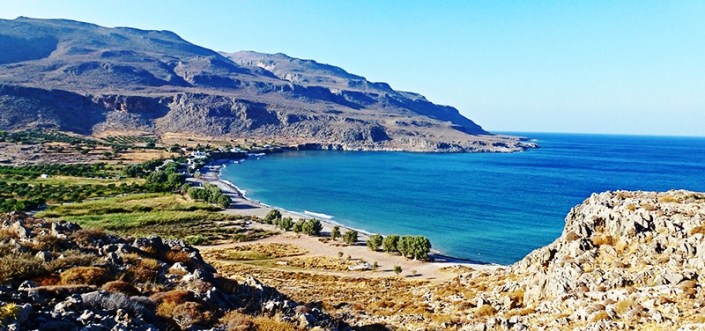
I am currently sat on the patio of an air B&B in Karemas, southern Crete, overlooking the Libyan Sea. It is morning. In the foreview to my left are the double rocks of the pretty Paximadian Islands, upon which the Cretans say Apollo was born. To my right is Gavdos, the most southerly point of Europe. There is a high wind blowing fiercely, as it has been for four days now, we are told. We drove here yesterday, first calling in at the many-peopled ‘funfair’ that the Knossos site has become; then entering & crossing the Cretan hinterland, a mixture of beautiful hills dotted with olive trees as if they were woven into some starlet’s hair, roughed up here & there by rather desolate villages. After stopping in at the oasis watering hole that are the Goanesque beaches of Agia Galini, we took a serendipitous wrong turn which snaked us out through the heart of the quite breathtaking Kedros range, via the villages of Apodolou, Nithavris, Agios Ioannis & Agia Pareskevi. Another wrong turn later & we were high up in the idyllic hilltop village of Vrisses, where, finally swapping our tourist map for a more detailed & accurate one contained in my portable library’s 1995 book on Crete, we finally came to Kerames.
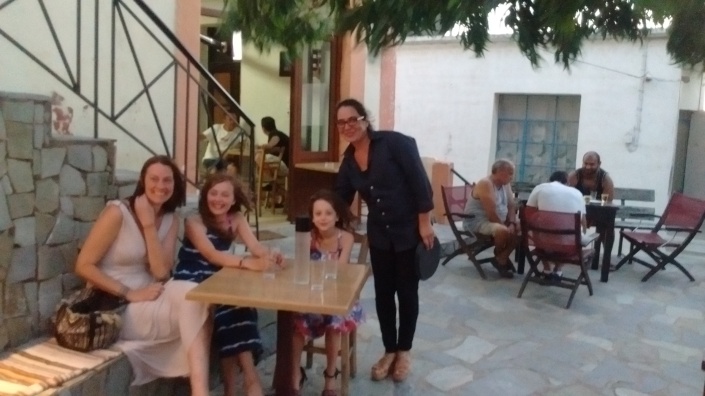
On arrival we were met at the mini-market by stylish Kleopatra, a teacher of ancient Greek & Latin in Athens, who returns to her home village to rent out the house to erstwhile travelers. Built in the 16th century, it has been the home of two saints & a Cretan governor, & has also played host to many a village dance. An excuisitely beautiful building, made from a mixture of searocks & quarried stone, it is a geologist’s dream, & is ours for last night & the next two to come. Kleopatra delighted in showing us around the house, its history, & also walking us through the village so the locals knew we were with her. The encounter with her plump mother was amusing to say the least; with the mother mocking Kleopatra’s slight build & saying she was far too thin, that she was like a little girl, & that she needs to eat more… much to the agreement of the other plump women of a certain age sat on chairs in the vicinity.
Roll on three days & I am finishing this off in the pinkening sunrise on the lazy morning on the 10th of July. On tour first full day, upon a visit to the amazing Preveli Beach, via a rough & twisting Himalayanesque mountain road & reached only by footpath as in Gokarna; after swimming in a lagoon I suddenly found my foot pierced by a palmleaf spine &, well, ouch. The next dawn, me & Emily left the girls sleeping & drove to nearby Spili & its free health centre. Cue two female doctors writhing at my poor wound, trying to drag the thorn out. At one point one of the nurses turned her to mine & looking at me with a most solemn stare, said quite plainly, ‘pain?’ Through my acute grimacing I could only nod. The thorn, alas, was buried too deep & so with prescription in hand we returned to Agia Galini for another day at the beach & to buy some antibiotics. During that sunkissed day I collated my notes for this essay, which I am polishing off the now. Last night was very special, with us all getting dressed up & hitting the village square for a wonderful meal of native meat & salads which cost only 22 euros – our hostess refusing a tip & also joining us in the complimentary ouzo shots!
Kemares village is a white-washed, narrow-streeted affair in the Italian style, & rather the perfect place to work upon one of my thornier essays – that of the character of Menaleus, appearing in the Homeric epics. In summary, I believe he was not actually around in the thirteenth century BC to fight the traditionally dated Trojan War, but was instead active three centuries earlier, & that his deeds were later superimposed upon the story of the Trojan War by Thales. I believe his story was one of the ‘Homeric fragments’ discovered by Lycurgus & that the Trojan War in which Achilles fought was a different fragment altogether, with Thales splicing them together into a single story. I also believe that the War which Menaleus fought – in order to retrieve Helen – was not in NW Turkey, but in Egypt.
We shall anchor our investigation upon a figure in Greek mythology called Phineus, son of Bellus, the brother of Aegyptus & Danaus. Analyzing the contextus of Phineus, we discover a certain tale – as given by Ovid – in which he brandishes a spear against Perseus while squabbling over the daughter of Casseiopeia, who had been declared by her mother to be more beautiful than the Nereids. The names & situation massively reflect a Biblical figure called Phinehas, in whose tales we see an incident with remarkable echoes to that of Phineus. For Casseiopia we have a certain idolatrous Cozbi, & we may observe the Biblical Phinehas also brandishes a spear. The ‘most beautiful woman’ motif contained in Ovid finds its Biblical reflection in Flavius Josephus, who asserts that the enemies of the Israelites sent their most beautiful women to seduce the Jews into idolatry. Josephus explains the result was the slaying of Cozbi by Phinehas, after which God rewarded him & his posterity with the covenant of an everlasting hereditary priesthood.
The Biblical priestly Phinehas is said to have assisted Moses throughout the Exodus, even being master of the sacred Ark of the Covenant. Also active in those ‘days of Moses’ was a certain Gaythelos, or Goidal Glas, whose name seems to contain part of the Hebrew moniker for High Priest – the ‘Kohen Godal.’ According to Irish sources, the grandfather of Goidal Glas was a certain Fenius Farsaid. Thus Fenius, the grandfather of a Hebrew High Priest, can be matched on ethnological & phonetical grounds with Phinehas, one of the holiest men in the entourage of Moses.
The crux of the matter comes with the observance that between Fenius Farsaid & Gaythelos comes, according to John of Fordun, a ‘certain king of the countries of Greece, Neolus.’ Variant names given in other medieval sources include Nel (Lebor Gabala Erenn), while Geoffrey Keating gives Fenius two sons, Nenual & Niul, which seem to be a genflation of the same person. It is time for a wee babel-chain.
Nenual
Menual
Menal
Menaleus
Me-Neolus
Me-Niul
Me-Nel
At the heart of this babel chain we see the name of Menaleus, whose eloping wife Helen initiated the Homeric Trojan War. In support of the Menaleus-Neolus connection, three ancient sources state that Menaleus had a son called Aithiolas, being the Scholion to Homer’s Iliad 3 (175th); Eustathius of Thessalonica & the Byzantine Suda (alphaiota 124). It is by no stretch of the imagination to see how the name Aithiolas transchispers into Gaythelos, or better still Gaithelos, as given by other records.

In my book, The Chisper Effect, I showed how Gaythelos was a prince with connections to Minoan Crete, & by studying the lineage of Menaleus, we can see why. The old tales have it that a certain Cretan king called Catreus begat a daughter called Aerope, who became the mother of Agamemnon and Menelaus, either by Plisthenes or by Atreus, in Mycynae. This means that Gaythelos was Minoan on his mother’s side, explaining why the treasures found at Mycynae contain, according to Martin Bernal, ‘an increase of the Minoan influences.’
The ancient city of Mycenae was sited in the northwest corner of the Plain of Argos, on the Peloponnese, in which place Pausanius, the Greek travel writer of the 2nd century AD, recorded, ‘the underground chambers of Atreus & his children, in which were stored their treasure. There is the grave of Atreus, along with the graves of such as returned with Agamemnon from Troy.’ In the late 19th century, a renegade amateur archeologist from Germany called Albert Schliemann excavated the site, discovering fabulous grave treasures which included the ‘Mask of Agamemnon,’ proving that the Homeric epithet, ‘Mycenae, rich in gold,’ was no exaggeration. Dated to 1550 BC, scholars have suggested that the treasures cannot be connected to the Mycynean leadership fighting a Trojan War in the 13th Century BC. But unraveling the factochisp & moving Menaleus & Agamemnon back three centuries, when Schilemann telegraphed the King of Greece that he had, ‘gazed on the face of Agamenon,’ his proud & swoony statement may bear out to be true, although not in the way standard Homeric scholarship has imagined.
When examining the other Homeric epic, the Odyssey, we encounter certain adventures of Menaleus which may be dated to the 16th Century BC. ‘It was nearly eight years,’ he says, ‘before I could get home with my fleet. I went to Cyprus, Phoenicia and the Egyptians; I went also to the Ethiopians, the Sidonians, and the Erembians, and to Libya.’ Each of these regions saw military activity during the reign of Amenhotep I (1546 -1526 BC); where the tomb biography of Ahmose Pen-Nekhebet says Amenhotep fought in Kush (Ethiopia) so Menaleus places himself in that same land; where Pen-Nekhebet states Amenhotep campaigned in Kehek – ie against the Qeheq tribe – so Menaleus places himself in Libya; where, in the tomb of Amenhotep I, we find a hostile reference made against the Transjordanian Qedmi, so Menaleus places himself among the Erembians, or the Arameans, the nomadic Bedouin tribes of the Syrian Desert.
It seems that the Mycyenean leadership of the 16th Century BC has been poetically superimposed onto the basic narrative infrastructure of the Trojan War. On investigating the matter deeper, it seems that there was a siege of Troy in order to reunite Menaleus with his errant wife, but this was not the citadel in NW Turkey, but was a site near Memphis in Egypt. In the Bronze Age, the city we now know as Troy was in fact Illium, or Wilusa, hence the Iliad. The earliest time the name ‘Troy’ is applied to Ilium was Homer’s poetry, i.e. the 9th century BC. As we are slowly discerning, the poet appears to have blended several strands of material from different periods & places in order to create his poems. That the Trojan siege occurred in Egypt fits well with the question mark that has hung since antiquity over the war’s causus belli. Stesichorus, for example, stated that Helen never went to the Turkish Troy & that the war was fought for a phantom. Euripides elaborated further, saying that Hermes took Helen to Egypt where she would spend the entire war. The grand old donjon of history himself, Herodotus, also raised serious doubts as to a Turkish Troy, making a serious study of the matter, from which we may read;
When I inquired of the priests, they told me that this was the story of Helen. After carrying off Helen from Sparta, Alexandrus sailed away for his own country; violent winds caught him in the Aegean and drove him into the Egyptian sea; and from there (as the wind did not let up) he came to Egypt, to the mouth of the Nile called the Canopic mouth, and to the Salters’. Now there was (and still is) on the coast a temple of Heracles; if a servant of any man takes refuge there and is branded with certain sacred marks, delivering himself to the god, he may not be touched. This law continues today the same as it has always been from the first. Hearing of the temple law, some of Alexandrus’ servants ran away from him, threw themselves on the mercy of the god, and brought an accusation against Alexandrus meaning to injure him, telling the whole story of Helen and the wrong done Menelaus. They laid this accusation before the priests and the warden of the Nile mouth, whose name was Thonis.
This mention of Thonis is interesting, as a remembrance of Helen in Egypt slipp’d into the Odyssey, where she is said to have had, ‘such ingenious drugs, Good ones, which she had from Thon’s wife, Polydamna, an Egyptian.’ Homer continues;
When Thonis heard it, he sent this message the quickest way to Proteus at Memphis: “A stranger has come, a Trojan, who has committed an impiety in Hellas. After defrauding his guest-friend, he has come bringing the man’s wife and a very great deal of wealth, driven to your country by the wind. Are we to let him sail away untouched, or are we to take away what he has come with?” Proteus sent back this message: “Whoever this is who has acted impiously against his guest-friend, seize him and bring him to me, that I may know what he will say.”
Hearing this, Thonis seized Alexandrus and detained his ships there, and then brought him with Helen and all the wealth, and the suppliants too, to Memphis. When all had arrived, Proteus asked Alexandrus who he was and whence he sailed; Alexandrus told him his lineage and the name of his country, and about his voyage, whence he sailed. Then Proteus asked him where he had got Helen; when Alexandrus was evasive in his story and did not tell the truth, the men who had taken refuge with the temple confuted him, and related the whole story of the wrong. Finally, Proteus declared the following judgment to them, saying, “If I did not make it a point never to kill a stranger who has been caught by the wind and driven to my coasts, I would have punished you on behalf of the Greek, you most vile man. You committed the gravest impiety after you had had your guest-friend’s hospitality: you had your guest-friend’s wife. And as if this were not enough, you got her to fly with you and went off with her. And not just with her, either, but you plundered your guest-friend’s wealth and brought it, too. Now, then, since I make it a point not to kill strangers, I shall not let you take away this woman and the wealth, but I shall watch them for the Greek stranger, until he come and take them away; but as for you and your sailors, I warn you to leave my country for another within three days, and if you do not, I will declare war on you.”
This, the priests said, was how Helen came to Proteus. And, in my opinion, Homer knew this story, too; but seeing that it was not so well suited to epic poetry as the tale of which he made use, he rejected it, showing that he knew it. This is apparent from the passage in the Iliad (and nowhere else does he return to the story) where he relates the wanderings of Alexander, and shows how he and Helen were carried off course, and wandered to, among other places, Sidon in Phoenicia.
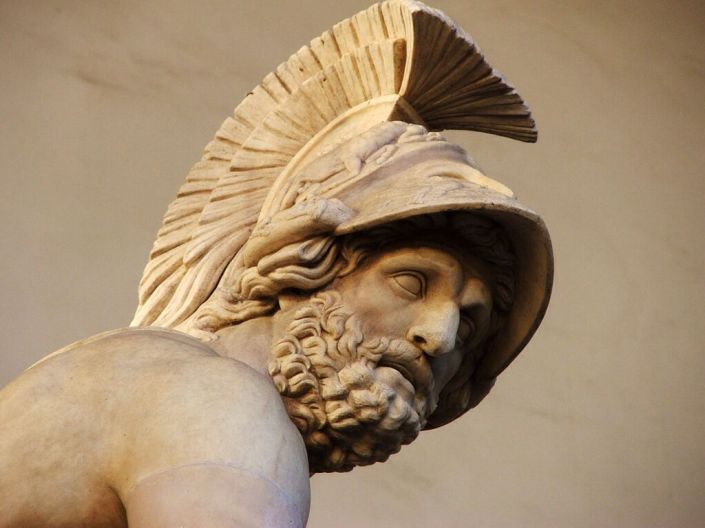
In the 16th century BC, there was an Egyptian city called Troy, of which Diodorus Siculus recorded (in the first century BC); ‘even to this day exists on the bank of the Nile.’ Strabo gives us more gloss on the Egyptian Troy;
In the neighbourhood of the quarry of the stones from which the pyramids are built, which is in sight of the pyramids, on the far side of the river in Arabia, there is a very rocky mountain which is called “Trojan,” and that there are caves at the foot of it, and a village near both these and the river which is called Troy.
Diodorus describes Menaleus crossing into Egypt where facing the Trojans of the Egyptian Troy he, ‘maintained a warfare until he granted them safety and freedom.’ The actual story behind the original Trojan siege may be embedded in an account of Herodotus, who places both Menaleus & Helen in Egypt;
When I asked the priests whether the Greek account of what happened at Troy were idle or not, they gave me the following answer, saying that they had inquired and knew from Menelaus himself. When these were let inside the city walls, they demanded the restitution of Helen and of the property which Alexandrus had stolen from Menelaus and carried off, and they demanded reparation for the wrongs; but the Trojans gave the same testimony then and later, sworn and unsworn: that they did not have Helen or the property claimed, but all of that was in Egypt, and they could not justly make reparation for what Proteus the Egyptian had. But the Greeks, thinking that the Trojans were mocking them, laid siege to the city, until they took it; but there was no Helen there when they breached the wall, but they heard the same account as before; so, crediting the original testimony, they sent Menelaus himself to Proteus.
Menelaus then went to Egypt and up the river to Memphis; there, relating the truth of the matter, he met with great hospitality and got back Helen, who had not been harmed, and also all his wealth, besides. An idea is arising here that Menaleus thought Helen was at a city by the ‘Trojan’ mountain, known today as the Hill of Toorah near Memphis. After raising its citadel he discovered that Helen was in fact at Memphis, perhaps whisked there by the Pharaoh on discovering Menaleus was attacking the Egyptian Troy. That is all a great big ‘perhaps’ of course, but there are too many factors & facts pointing to an Egyptian locality for denoument of the kidnapping of Helen. Other memories of Menaleus in Egypt can be found at Canopus, an ancient coastal town, located in the Nile Delta & named after Menealeus’ pilot. Legend describes how Menelaus built a monument to his memory on the shore, around which the town later grew up. This leads us to a passage in the Odyssey, one of the ‘Cretan Lies’ told by Odysseus which distinctly remembers a military campaign in Egypt;

We came to fair-flowing Aegyptus, and in the river Aegyptus I moored my curved ships. Then verily I bade my trusty comrades to remain there by the ships, and to guard the ships, and I sent out scouts to go to places of outlook. But my comrades, yielding to wantonness, and led on by their own might, straightway set about wasting the fair fields of the men of Egypt; and they carried off the women and little children, and slew the men; and the cry came quickly to the city. Then, hearing the shouting, the people came forth at break of day, and the whole plain was filled with footmen, and chariots and the flashing of bronze. But Zeus who hurls the thunderbolt cast an evil panic upon my comrades, and none had the courage to hold his ground and face the foe; for evil surrounded us on every side. So then they slew many of us with the sharp bronze, and others they led up to their city alive, to work for them perforce. But in my heart Zeus himself put this thought—I would that I had rather died and met my fate there in Egypt, for still was sorrow to give me welcome. Straightway I put off from my head my well-wrought helmet, and the shield from off my shoulders, and let the spear fall from my hand, and went toward the chariot horses of the king. I clasped, and kissed his knees, and he delivered me, and took pity on me, and, setting me in his chariot, took me weeping to his home. Verily full many rushed upon me with their ashen spears, eager to slay me, for they were exceeding angry. But he warded them off, and had regard for the wrath of Zeus, the stranger’s god, who above all others hath indignation at evil deeds. “There then I stayed seven years, and much wealth did I gather among the Egyptians, for all men gave me gifts.
Further support for a 16th century BC date for the Menaleus-Helen story turned up in finds excavated at the 16th century BC palace near Xirokambi, just to the south of the Menalean kingdom of Sparta. Cups excavated at the site are both Minoan & Mycynean in origin, while Xirokambi’s bull motifs are evocative of images found at Knossos & Avaris. The latter connects with Menaleus’s Minoan son, Gaythelos. Furthermore, tablets found at Xirokambi indicate that the palace there was a center of two productions – perfume & fabric – which have strong echoes in the Odyssey. The following passage sees Helen at home in her native Sparta;
While he was thus in two minds Helen came down from her high vaulted and perfumed room, looking as lovely as Diana herself. Adraste brought her a seat, Alcippe a soft woollen rug while Phylo fetched her the silver work-box which Alcandra wife of Polybus had given her. Polybus lived in Egyptian Thebes, which is the richest city in the whole world; he gave Menelaus two baths, both of pure silver, two tripods, and ten talents of gold; besides all this, his wife gave Helen some beautiful presents, to wit, a golden distaff, and a silver work-box that ran on wheels, with a gold band round the top of it. Phylo now placed this by her side, full of fine spun yarn, and a distaff charged with violet coloured wool was laid upon the top of it. Then Helen took her seat, put her feet upon the footstool, and began to question her husband.
One final piece of evidence I shall include in my lecture are a couple of references to a Bronze Age Libyan peoples called the Meshwesh. Their first historical mention occurs during the 18th Dynasty during the reign of Amenhompet III (1386-1349 BC), being cited as a source of cattle provided to the palace at Malkata. The actual origin of the Meshwesh is defined by Herodotus himself;
West of the Triton river and next to the Aseans begins the country of Libyans who cultivate the soil and possess houses; they are called Maxyes; they wear their hair long on the right side of their heads and shave the left, and they paint their bodies with vermilion. These claim descent from the men who came from Troy.
This definitively places the Meshwesh after the ‘Trojan War’, which means that, as they existed during the reign of Amenhomet III, the Trojan War must have occurred before his floruit in the the 14th century BC. That the name of the tribe, Maxyes or Meshwesh, can be transchispered into Mycynae with relative ease suggests that the tribe was indeed founded by the soldiers of Menaleus. To conclude, it appears that Homer discarded the true story of Helen’s kidnapping & instead wanted to resituate his epic during the siege of Ilium in the 13th century BC, rather than in Egypt in the 16th century BC. In my next lecture I shall attempt to understand why.
Kerames
10th July, 2017
READ MORE POETICAL ESSAYS
***
Love, Wine & Nature in the Ever-Living China II: Feng From Cheng
Continuing the selection from William Dolby’s
Majestic translations of ancient Chinese poetry
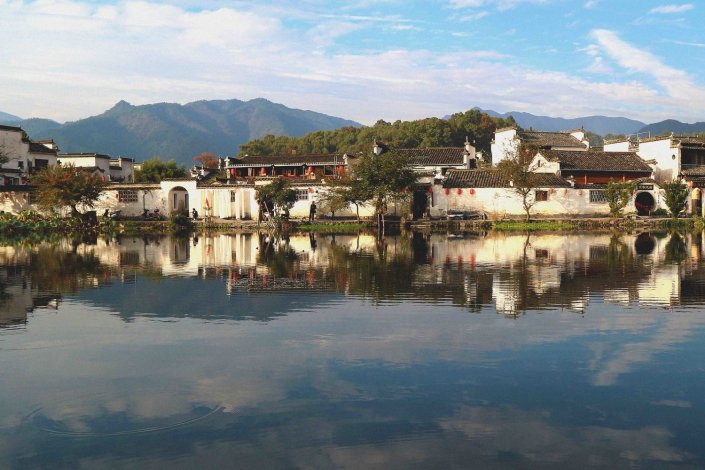
I BEG YOU, SIR SECOND SON
I beg you, Sir Second Son, oh,
Don’t jump over into our village,
Don’t snap the wolf-berry shrubs we’ve planted;
How would I dare to grudge them! –
But it’s out of awed respect for my father & mother!
You’re worth my yearning, Sir Second Son,
But my father & mother’s words
Are also deserving of respect.
I beg you, Sir Second Son, oh,
Don’t jump over our wall,
Don’t snap the mulberry-trees we’ve planted;
How would I dare to grudge them! –
But it’s out of awed respect for my elder brothers!
You’re worth my yearning, Sir Second Son,
But my elder brothers’ words
Are also deserving of respect.
I beg you, Sir Second Son, oh,
Don’t jump over into our village,
Don’t snap the sandalwood-trees we’ve planted;
How would I dare to grudge them! –
But I’m afraid of people’s talking a lot!
You’re worth my yearning, Sir Second Son,
But people’s talking a lot
Are also deserving of respect.
***
SHU’S OUT HUNTING
Shu’s out hunting,
& in our lane there’s no man left
No, of course there are some men left,
Just that none of them’s up to Shu,
So truly handsome & gentle.
Shu’s out chasing with the hounds,
& in our lane there’s no man drinking wine.
No, of course there are some men drinking wine!
Just that none of them’s up to Shu,
So truly handsome & good.
Shu’s gone off into the wild countryside,
& in our lane there’s no man breaking-in horses.
No, of course there are some men breaking-in horses,
Just that none of them’s up to Shu,
So truly handsome & warrior-like.
***
PUPPY-WILY LAD
Yon puppy-wily lad,
Won’t talk with me.
All your fault I can’t tough my food
Yon puppy-wily lad,
Won’t sup with me.
All your fault, I can’t sleep a wink.
***
***
LIFTING HER SKIRTS
If you’ll yearn for me with kindly love,
I’ll lift my skirts & wade even the River Chen to you.
And if you won’t love me,
Do you think there’s none other will –
Oh silliest of fickle lads!
If you’ll yearn for me with kindly love,
I’ll lift my skirts & wade even the River Wei to you.
And if you won’t love me,
Do you think there’s no other gentleman will –
Oh silliest of fickle lads!
***
WOMAN SAYS, “COCKS ARE CROWING”
Knight says, “It’s still only pre-dawn gloaming.”;
“Get up & look at the knight”, she says,
“The Morning Star, Venus, is still somewhat freshly shining,” he says
“They’re about to flap their wings, about to glide the air,
Shoot the ducks & wild-geese with line-attached arrow!” she says.
“If you shoot & hit them with line-attached arrow,” she says,
“I’ll prepare them nicely for you,
& when I’ve prepeared them nicely, we’ll drink some wine.
I’ll be with you through old age, the two of us together,
a dulcimer & zither being played together,
Everything without exception will be tranquial & fine.”
***
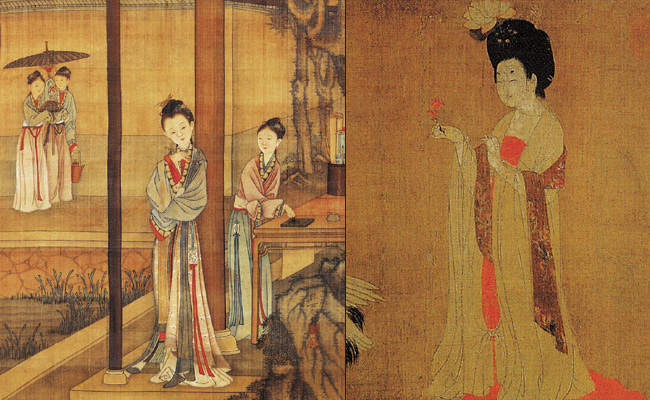
GOING OUT THROUGH THE EAST GATE
Going out through the East Gate,
Saw there were girls as many as the clouds;
But even though there were as many as the clouds,
They weren’t what my longings were dwelling on.
Plain white-silk dress & pale grey maiden’s head-cloth, –
She’ll make me merry for the while.
Going out through the city-gate terrace watch-tower of the curved city-wall,
Saw there were girls as many as the bulrush flowers;
But even though there were as many as the bulrush flowers,
They weren’t what my longings were dwelling on.
Plain white-silk dress & madder-dyed maiden’s cloth, –
I can divert myself with her for the while.
The Declaration of Arbroath
Seven Hundred years ago this week, the Scottish nobility put their names & seals to a document which defined the independence of Scotland. In this extract from THE SCOTIAD, the Mumble presents a poetical dramatisation of the events around the signing of the Treaty of Arbroath.

1 The Declaration of Abroath
All wars end in diplomacy,
Battle has set the Scottis free,
But far away the contree’s hope
Lies with the bias of the Pope,
If Robert was refused his reign
Would all their suffrance be in vain?
If Christ’s first soul denies the king
Many more knights could Ingland bring
Drawn from all over Christendom,
From Bannockburn to Kingdom Come,
So Bruce summon’d nobility
To come & pay due fealty
At the cathedral of Arbroath –
From both sides of the frothing Forth
They came in splendid finery
& plentiful festivity,
Where on the beach did De Linton,
Muse magic in the morning sun
Native spirit helping him scrieve
& web of noble words to weave
This brightly shining document,
A manuscript that would be sent
To Avignon, where pious bides
The Pope & all His spirit-guides,
As one-by-one the magnates came
Each swore to add their seal & name
To Scottis spirit carved in word,
As gather’d round their King they heard
The settl’d will of Scottis soul
The Bruce’s words filling the hall
Chaunting in sweeping cadences
Through these sonorous sentences!
***
2 The Scottish Nobility
“Most Holy Father, friend of Christ,
Lord John, vicar of paradise,
Man of the providence divine,
Supreme Pontiff of Jesus’ wine,
Laird of the holy church of Rome,
Receive us from oor Scottish home,
Your sons so humble in their life;
Noble Duncan, the Earl of Fife,
Thomas Randolph, Roger Mowbray,
David Graham & Gilbert Hay,
The Earls of Ross, March & Moray,
Lennox, Strathearn & Sutherland,
Sir Walter, Steward of Scotland,
Campbell, Fergus of Ardrossan,
Mowat, Murray, Maxwell, Straiton,
Cheyne, Ramsay, Leslie, Cameron,
Wemyss, Mushet, Graham, Fenton,
Magnus of Caithness & Orkney
& others of good baronrie,
The Lords of Brechin & Douglas
& through Scotland divers others
Offer filial reverence,
Kisses devout & Peter’s pence.
***
3 The Scottish Primacy
Thou most Holy Father & Lord,
As ancyent chronicles abroad
Tell that the Scottis & their crown
Graced with a widespread, world renown,
From Greater Scythia they hail’d,
Through pillars Herculean sail’d
To dwell an age in dusky Spain
Where savage tribes desired them pain,
But nowhere could they be subdued
By races barbarous & crude,
& thence they came, twelve hundred years
Since Moses dried old Israel’s tears,
Finding a special place to stay,
Westerly, where they live today,
The Britons, there, they first drove out
& then the Picts utterly rout,
Though often was assailed the reign
By Norwegian, Saxon & Dane,
They took possession of that home,
Valorous as a second Rome
&, as historians of old
Bare witness, they have kept good hold
Upon these lands where minstrel sings
Of one hundred & thirteen kings
Of oor ain royal stock divine,
Pure in blood, an unbroken line.
***

4 Saint Andrew
This people’s highest qualities
Have gain’d glories enough from this:
But in the kirk the eunoch sings
Of Jesus Christ, oor king of kings,
Following his perfect Passion
& the day of Resurrection,
Did call them to his holy thought,
Even though settled so remote
Into the Earth’s uttermost parts,
Nigh first, with faith filling their hearts,
Nor would He have confirmed the Scots
With anyone chosen by lots,
But the first of His Apostles
Whose e’erlasting relique fossils
Were brought for all good Scots to view,
Him, the most gentle Saint Andrew,
Him, the blessed Peter’s brother,
Desires to be our protector
& sacred patron forever –
Since then oor Most Holy Fathers,
Your wide, revered predecessors,
Gave careful heed to all these things
& on the country & her kings
Bestowed many gracious favours
& numerous privileges,
As we, being the special care
Of blessed Peter’s brother fair,
Have lived & thrived so peacefully,
Rejoicing in oor liberty.
***
5 The Wars of Independance
Scotland saw days of darkling crime
In Ingland’s first King Edward’s time,
Father of him that rules today,
Who to low lots oor land would lay,
Seeing oor kingdom had no head,
& our people unprotected
He treat us as an enemy
Drew deeds of violent cruelty
Wholesale slaughter, pillage, arson,
Both robb’d & murder’d monk & nun,
Comitting many outrages
To all sexes, ranks & ages,
That could cover countless pages,
Such horrors no-one could surmise
Unless were seen by their own eyes!
But from this endless treachery
Our peoples have gain’d liberty
By help of Him, who though afflicts,
Heals & restores, & those edicts
Sent by our tireless King & Lord,
Robert the Bruce, whose fiery sword,
Fearless in wars that others wage,
Preserv’d his people’s heritage,
Deliver’d from opponent hands,
& ‘gainst the tides of peril stands
Like another Macabaeus
Or Joshua, victorious
He bore those hardships cheerfully,
For greater good of his contree,
With divine providence, his right
Of succession in heaven’s sight!
***
6 The Scottish Defiance
According to those ancyent laws
We shall maintain, them whom oppose
Oor customs, fight unto the death,
All of Scotland join’d in one breath,
That duly with oor consenting
Has made the Bruce oor prince & king,
Whereby whose merits & the law
Holding oor freedom to the fore,
We are bound to the Bruce today
& by him stand, proud come what may!
Yet, thoogh he is oor greatest son,
If he gives up what he begun,
Trifles with oor hard-won freedom
& to make us or oor kingdom
Subject to the King of Ingland,
For this we Scots would never stand
& would at once put him to flight
As the subverter of oor right
& make some other man the king,
Able the land’s defence to bring,
For as long as but a hundred
Of us remain alive & good,
From this moment & forever,
We shall never, thrice times never,
Be brought before the Inglis rule,
‘Tis not for glory, gleaming jewel,
Nor honours that we are fighting,
But freedom, tis a noble thing,
Which no man born with honesty
Would give up, unless dead were he!
Read More of the Scotiad
7 The Papal Plea
Thus we to thee, Father & Lord,
Beseech thy Holinesses word,
Hearts open, praying earnestly,
Hope you will in sincerity
& goodness consider all this,
Look at those troubles brought on us
By Inglis hosts vainglorious
May it please you to admonish
& exhort Kings of the Inglis,
Who ought them to be satisfied
With what once seven did divide
& leave us Scots to our own soil,
Who covet nothing but the toil
Of oor poor, little dwelling place,
Father, this truly concerns you,
Since you have been sanction’d to view
The savagery of the heathens
Raging against the Christians,
Whose princes false reasons pretend,
They cannot to the crusades send
Their Knights because of local wars,
For all this read one real cause,
For making war on neighbours small
Makes fast profit & few knights fall,
As Him, whom nothing does not know,
Knows how cheerfully would we go
To war against the infidel,
In your thoughts let this reason dwell,
Our lives we shall profess to thee,
Vicar of Christianity!
***

8 Bruce Completes the Reading
But, if regards your Holiness
With faith the false English impress
& will not grant belief sincere
To what we have written down here,
Then the slaughter that must befall,
With the perdition of the soul
& all the woe inflicted then,
By them on us & us on them,
Will surely be laid upon you
By Him Most High that all must view
Concluding, we shall ever be,
As far as the call of duty
Binds us to your will, full ready
As sons obedient to you
His Vicar, & forever true
To Him our Supreme judge & King,
To cast our cares in thee, trusting
He will inspire us with courage,
Annul the wars our foemen wage,
May the Most High with sacred gaze,
Preserve your health, grant length of days!”
Silence descended for a while,
De Linton gave approving smile
& all the nobles gather’d there
Toss’d herbs & flowers to the air
& all who heard the words agree
They’d never known sic majesty,
Feeling their rightful liberties
Would thunder down the centuries,
Seeming that Scotland & the age
Are cast forever on the page!
***
9 The Declaration Taken to France
The Treaty of Arboath is born
& on the breast of Scotland worn
As noble men with teary zeal
Inscribe the parchment with their seal,
The bells of Abroath peeel & peel!
With the declaration muster’d,
On two knights the scroll entrusted,
De Gordon & De Maubuisson,
Who by the morning star were gone,
Meandering to Avignon,
Sails bellied out beneath the breeze,
Stretch’d far & roundabout the seas,
Where bottlenose & flipper rise
Above the waves… the crows nest cries,
“Inglis pirates are bearing down!”
The captain’s face grew affy frown,
“Do not fret!” said De Maubuisson,
“We shall win yet!” adds De Gordon,
As pirates pulled aside to board
Both knights unsheath’d a gleaming sword
& leapt upon the pirate’s deck
Severing bodies from the neck
& less than half-a-minute pass’d
Before they had broken the mast
& slain the ocean banditry,
The Scottis captain jigged in glee
& boated them round Brittany,
Surfing the vast Atlantic flow
To dock the vessel at Bordeaux,
& bid the knights his heart-felt hope
They would be welcom’d by the Pope.
***
10 Avignon
Two Knights kelper’d through sundry lands
To where the Rhone spreads silver sands
Where the Rocher les Doms commands
An oval bowl of gardens green
Stuffed full of priestliness serene
That gilded cage beneath the sun
The holy see of Avignon!
Here many days those knights did wait,
The mistral fierce, the evening late,
When they were granted audience,
The room was candle lit intense,
As bishop reads De Linton’s words,
Fluttering as a flock of birds,
Their flight ends & a silence falls,
Soft breeze flutters along the walls
Raising the rows of canvas art,
The Pope took bishoprie apart
& there they talk’d a little while,
The knights stood nervous in the aisle
Til bishop greets them with a smile,
“De Gordon & De Maubisson,
Ye brave young knights of Caledon,
Him that resides at Avignon
Has been heart-struck by your warm plea,
Wishes freedom for your contree,
& now shall treat you as his friend
By morning prayers he shall send
A transcript to your sacred king,
Which ye two knights shall to him bring!”
***
11 Two Letters
Two parchments have departed France,
Both texts desiring to advance,
The peaceful isles of Albion –
The first is carried to London,
Words that the second Edward reads
Describing warfare’s gory deeds,
& strongly urging them to cease
So Scots can carry on in peace –
Of this Edward did nobly learn
First witness of the papal turn,
Remembering brave Bannockburn,
He sent a letter to Scotland
Offering them filial hand!
So one by sea & one by land
Two letters came to Edinburgh!
Arriving almost together,
One from King Edward in London
One from the Pope in Avignon
Which with a knife of silver sheen
Was opened by the Scottis Queen,
“Has word come on from Avignon
On oor ex-communication?”
“My husband, Dio gloria,
Absolvitur ab instantia!”
The second text confirms the truce,
Sent by King Edward to the Bruce,
Recognizing the Scotis right,
Resolved for ever in her fight,
To never let battle renew,
So both lands can the future view
In perfect calm as neighbours do.
***
12 Freedom
The Scots free from tyrant control,
Free as the waves of ocean roll,
Free as the thoughts of minstrel soul
But freedom bought at such a price,
Many had made good sacrifice,
But bonnie Scotland has stood firm
Against the frightful Lambeth worm!
Her voices rising proud & free
For love of land & liberty,
Frae granite city, Aberdeen,
To Aberfeldy sat serene
Frae Inchcolm, Findochty, Durness
To Comrie, Sanquhar & Stenness,
Frae Fintry, Keith & Cunnighame
To woolly-wooded Whittinghame
Frae bothys between Lairg & Tongue
To all the islands set among
The Hebrides both near & far,
Frae Dalkeith, Dunfermline, Dunbar
To Currie, Carnoustie, Cupar,
Frae Granton, Gorbals & Maybole
To Papay near the Arctic Pole
The Glaswegian, the Galwegian,
Frae Gilmerton in Lothian,
To Motherwell & marshy Merse,
& all the luchts that intersperse
The golden spellcraft of a glen,
Where nature dwells with happy men!
***
13 Saint Andrew’s Cross
Fly mightily noble Saltire
Frae Taransay & Luskentyre
To the crofts of treeless Lewis
& the soft hill slopes of Harris,
Frae Ayr, which no town can surpass
For honest lad & bonny lass,
To Invergarry, Inverness,
Portlethen, Prestwick, Quanterness,
& Edina, Scotia’s empress,
Frae Newcastleton in the south
To Ullapool at Loch Broon’s mouth,
Where fishermen e’er praise this day
Frae Kenmore, all along the Tay,
Thro’ Crieff to Perth & then Dundee
& further, perch’d upon the sea,
Airy Arbroath & its abbey,
Where pious Bernard de Linton
Reads out the text from Avignon,
Ending the pages with a smile,
As wide as Thurso to Argyle
& summons a young trumpeteer
To sound the glory of this year,
Soft airels on the ocean breeze
Ascend the skies in sweet degrees,
Sailing to nations overseas,
Now all shall know who know the world
Saint Andrews cross fore’er unfurl’d!
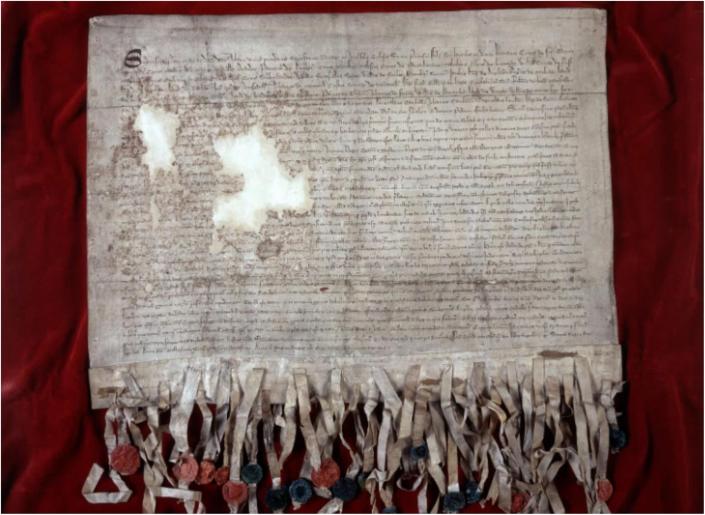
Letters From Crete: The Homeric Answer (Iliad)
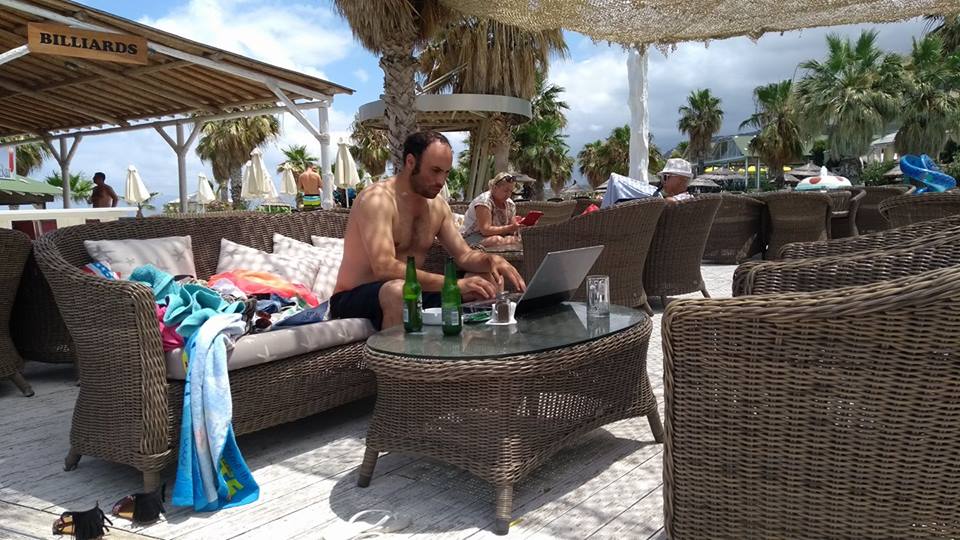
A poem is never finished, only abandoned
Paul Valéry
I am currently sat at an outside restaurant table amidst the sunswingingly sensuous delights of Star Beach, a free-to-all leisure resort on the northern shores of Crete. The family & I arrived late last night, hiring a car & eventually tracking down our residence for the next three nights; Petra Village, a cool set of apartments with a pool, a bar & a trillion cicada piping a rickety cacophony. This coming period shall see me complete my training as a Pendragon, with the essays being constructed from both my notebooks & from my experiences on the ground as we tour Megalonisi, the ‘big island’ of the Greeks. During this ‘duesettimane,’ the lava that has been my poetic studies is set to finally cool, & the volcano that has spewed forth two decades worth of poesis from my animated soul finally return to a dormant state (for now).
I shall begin my dissertation with an account of the mesmerizing energy of Homer’s mind-music, that weaver of disparate strands of ancient subject matter into the world’s earliest & most majestic epic poems. That an individual author composed them, however, is simply not the case. This ‘Homeric Question’ has tested academic minds for many an age, with Frederick Nietzsche declaring ‘the primary form of this widespread and honeycombed mountain known as the Homeric question can be most clearly observed by looking down at it from a far-off height.’ The ‘far-off height’ is the tall mountain eyrie on which the chispologist builds a weather-station & shouts into the gusting breezes that Homer was a quasi-mythological deity, to whom only the highest examples of streaming elysium would be associated, less of an individual genius & more the poetic soul of an entire people.
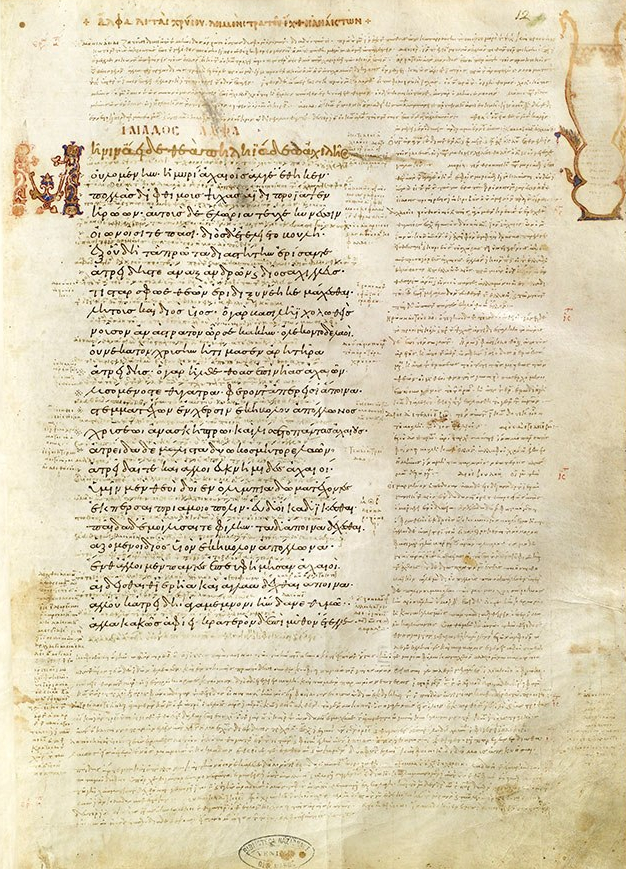
For ease of dictate, however, we shall call Homer by his antique identity, that of the singular author of the Iliad & Odyssey. His subject was the Trojan War & its aftermath, an event of deep history whose war-drums still beat resoundingly today. His ‘Iliad’ centers on a small series of events that took place towards the end of a ten-year siege of the city of Troy, while his ‘Odyssey’ sings of the return from that war of the Grecian hero Odysseus. The poems are, in a word, magnificent, full of comprehension for the ways of men, while at the same time possessing some of the greatest phraseology ever uttered by a human tongue. The most astonishing thing about these two epics is their sheer antiquity, & it is through the mists of deepest time that the creation of the poems, & of course their creator, have been obscured.
It was as early as the Classical period that the first doubts to the origins of the epics was raised. The oldest complete copy of the Iliad, the 10th-century manuscript ‘Venetus Marcianus Graecus 454,’ first published by De Villoison in 1788, has marginal notes which preserve substantial remnants of ancient scholarship on the poems; nuggets of studied wisdom obtained from the intense erudition of Didymus, Aristonicis, Herodian, Nicanor & Antoninian. A century later, a similar note-smitten codex was created which eventually ended up in the library of the Townleys of Townley Hall, in my hometown of Burnley. Of the scholia it contained, we encounter the thoughts of two obscure figures known as Xenon & Hellanicus, antique scholars who speculated that the Iliad & Odyssey had been composed by separate authors. Such a notion makes sound sense, for where the Iliad contains four times as many similes as the Odyssey, the language of the Odyssey is less archaic, to which we may add that words for many common items are different in each poem. Aristotle further highlights the differences between the epics when he muses, ‘the composition of the Iliad is simple & full of pathos, that of the Odyssey complex, as there are recognitions throughout & full of character.’
So far so different, & as the Aegean blows a refreshing wind into my beachside boudoir, let us acknowledge that, long before the days of word-files & photocopying, the preservation of Homer’s poetry, spread over many centuries, suggests a great number of scribes have handled the text. Along the way, each new copyist would add something of their own making, maybe respelling a word, or perhaps re-writing whole passages in order to please an ever-changing audience. As the poems evolved, two vast transchispering chains would slowly but surely fossilize themselves into the epics we whimsically attribute to a single Homer. A loose remembrance of such a transmission as this may be traced in a passage by the early Christian churchman, Tatian, whose ‘Address to the Greeks’ identifies the scattered strata of Homeric composition;
Now the poetry of Homer, his parentage, and the time in which he flourished have been investigated by the most ancient writers,—by Theagenes of Rhegium, who lived in the time of Cambyses, Stesimbrotus of Thasos and Antimachus of Colophon, Herodotus of Halicarnassus, and Dionysius the Olynthian; after them, by Ephorus of Cumæ, and Philochorus the Athenian, Megaclides and Chamæleon the Peripatetics; afterwards by the grammarians, Zenodotus, Aristophanes, Callimachus, Crates, Eratosthenes, Aristarchus, and Apollodorus. Of these, Crates says that he flourished before the return of the Heraclidæ, and within 80 years after the Trojan war; Eratosthenes says that it was after the 100th year from the taking of Ilium; Aristarchus, that it was about the time of the Ionian migration, which was 140 years after that event; but, according to Philochorus, after the Ionian migration, in the archonship of Archippus at Athens, 180 years after the Trojan war; Apollodorus says it was 100 years after the Ionian migration, which would be 240 years after the Trojan war. Some say that he lived 90 years before the Olympiads, which would be 317 years after the taking of Troy. Others carry it down to a later date, and say that Homer was a contemporary of Archilochus; but Archilochus flourished about the 23d Olympiad, in the time of Gyges the Lydian, 500 years after Troy.
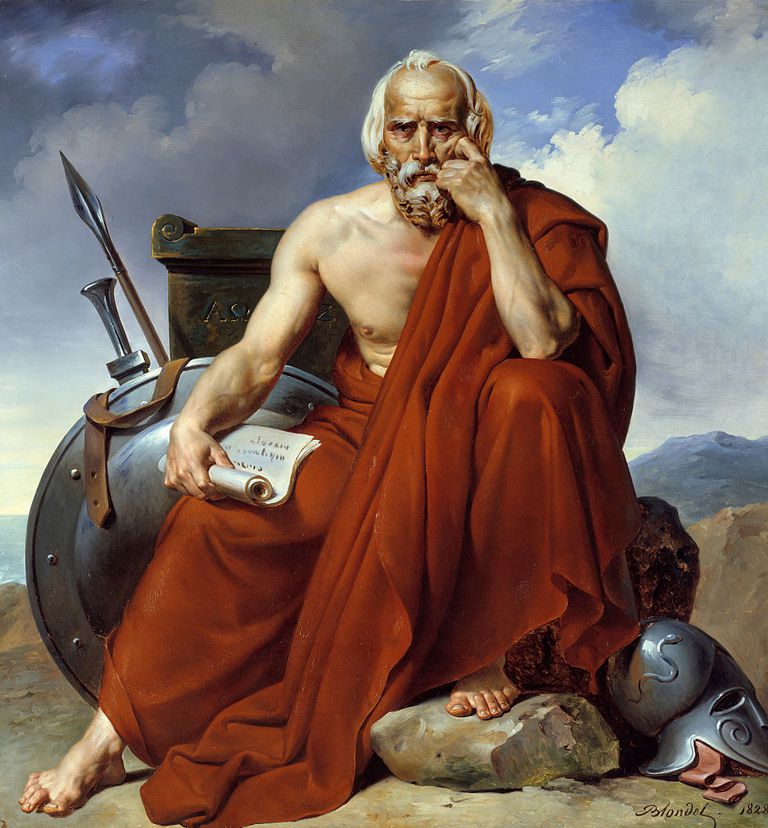
It is through all these ‘Homers’ that the story of the Trojan War & its aftermath would pass, until the Iliad as we know it began to take shape in – I believe – the 9th century BC, under the auspices of the Spartan King, Lycurgus. The task was given to a certain verse-maker called Thales, whom Lycurgus had met on Crete. It is through the vita of Lycurgas, as given by Plutarch, that we gain a heady hint of just how powerful a thinker was Thales. We join the story with Lycurgus on some kind of state visit to Crete;
One of the men regarded there as wise statesmen was Thales, whom Lycurgus persuaded, out of favour and friendship, to go on a mission to Sparta. Now Thales passed as a lyric poet, and screened himself behind this art, but in reality he did the work of one of the mightiest lawgivers. For his odes were so many exhortations to obedience and harmony, and their measured rhythms were permeated with ordered tranquillity, so that those who listened to them were insensibly softened in their dispositions, insomuch that they renounced the mutual hatreds which were so rife at that time, and dwelt together in a common pursuit of what was high and noble.
This description of Thales tells us he was a poetical teacher, who instilled in the soft & easy words of the lyric plenty of subtle meaning in order to educate the Cretans in how to lead a good life. I have only been on the island a few hours, as if I was one of the German gliders crash-landing in advance of the German Fallschirmjäger in 1941, but so far all the Cretans we have encountered have been decent folk & the most openhearted; from the young couple on a moped who led us to the beach road in the dark last night, to our cool & friendly waiter here at Star Beach, the appropriately named ‘Adonis.’ ‘Don’t worry be happy’ is the mantra, & if these easy vibes I am experiencing emanated from the original wisdom of Thales, to have been present in his actual company would have been a tremendous sensation for Lycurgus. It is no wonder that Thales was invited to join the royal Spartan party, to leave this gorgeous rock at the edge of Europa & to return with Lycurgas to Sparta. En route, according to Plutarch, Lycurgas visited Asia Minor, where he;
Made his first acquaintance with the poems of Homer, which were preserved among the posterity of Creophylus; and when he saw that the political and disciplinary lessons contained in them were worthy of no less serious attention than the incentives to pleasure and license which they supplied, he eagerly copied and compiled them in order to take them home with him. For these epics already had a certain faint reputation among the Greeks, and a few were in possession of certain portions of them, as the poems were carried here and there by chance; but Lycurgus was the very first to make them really known.
At this point in time we have a certain Spartan king in possession of the two foundation stones of what would become the Iliad; i.e. fragments of the early Homeric materials, & a poet who could turn them into something cohesive & infinitely beautiful. Such a moment provided the perfect conditions for what can only be called a transcreation of Homer, an occasion remembered by Demeterius of Magnesia, who placed the author of the Iliad in the same ‘very ancient times’ of Lycurgus. With all the pieces in position, all that was needed was a catalyst to spark off the creative furnace that would produce the Iliad as we know it, & there are certain evidences which point towards the first Olympic Truce.
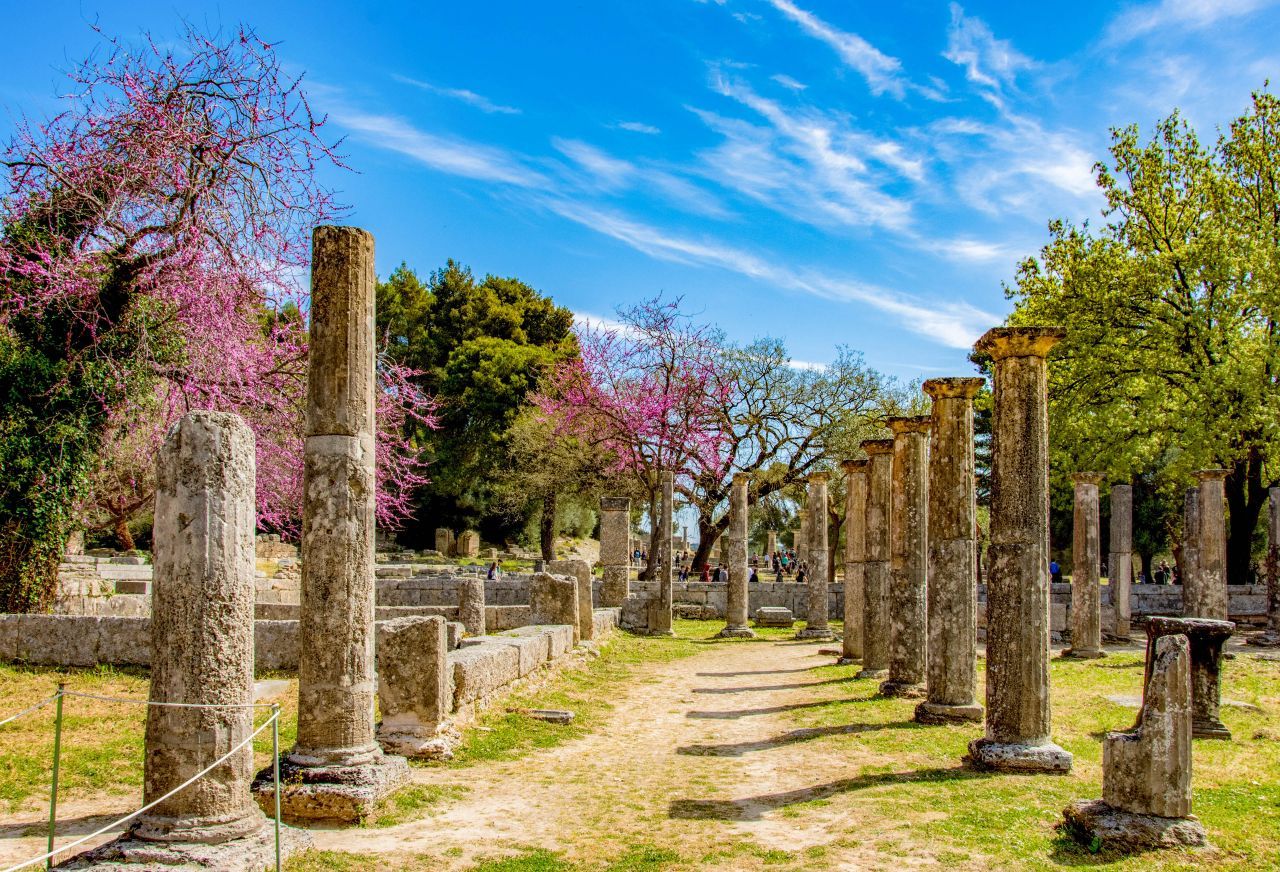
We must return to Plutarch once more, who writes of Lycurgus; ‘some say that he flourished at the same time with Iphitus, and in concert with him established the Olympic truce. Among these is Aristotle the philosopher, and he alleges as proof the discus at Olympia on which an inscription preserves the name of Lycurgus.’ The truce forged by Lycurgas, Iphitus of Elis & Cleosthenes of Pisa was designed to bring peace to the Peloponnese; all three sides were bogged down in endless rounds of bloodshed, and it was mutually agreed upon that they would try to soothe their differences by staging a games at Olympia. This is where I think Thales entered the picture, for to celebrate the event, an artistic tribute to Pan-Grecian unity was needed. The 5th Century BC Athenian historian, Thucydides, backs up the necessity of a unifying model;
The weakness of the olden times is further proved to me chiefly by this circumstance, that before the Trojan War, Hellas, as it appears, engaged in no enterprise in common
The squabbling Greeks of the Olympic Truce needed reminding of when they stood shoulder-to-shoulder in solidarity. If anything could convince them to settle their differences, Homeric poetry recreated by a noble-minded Thales would definitely do the job. That Thales handled the Iliad is unconsciously supported by Pausanius; where he describes the Greece of Lycurgas’ time as being grievously worn by plague, the Iliad actually begins with a plague. Pausanius tells us that Thales, ‘stayed the plague at Sparta,’ during which time, I conject, he was likely to have been composing the Iliad. The dates also fit, for where Herodotus tells us, ‘Hesiod and Homer I suppose were four hundred years before my time and not more,’ i.e. 850 BC, the Olympics of Lycurgas can be approximately dated to the same period. The Greeks counted their Olympiads from 776 BC, but the Olympic Games of Lycurgas were said to have taken place much earlier. Sources vary as to when; both Polybius (quoting Aristodemus of Elis) & Eratosthenes tell us that the 776B.C. victors were recorded 27 Olympiads from that of Iphitops & Lycurgas, whereas Callimachus differs by saying 13 Olympiads had passed. If we average these out, & say 20 Olympiads – a timespan of 80 years – we obtain a date of 856 BC for the Lycurgan Olympics.
Returning to Tatian’s Address to the Greeks, where he says, ‘some say that he lived 90 years before the Olympiads, which would be 317 years after the taking of Troy,’ we gain the following timline.
776 BC: First Olympiad begins
866 BC: Homer
1183 BC: Fall of Troy
According to calculations made by Eratosthenes, Troy fell in 1184 BC, a date backed up by archaeological evidence showing a destruction layer to Troy VIIa in that very period. Wherever Tatian got his information from, it seems certain that one layer of the Homeric material was set in stone at the heart of the 9th century BC. Delving further into the ordinance of what I shall from now on call the Thalian Iliad, its form appears to be based upon the ritualistic & theatrical mystery plays of Greece & Egypt, played out over several days like the Ring Cycle of Wagner. Plutarch places Lycurgas in Egypt at one point, where he would have encountered Egyptian theatre full of soliloquies by narrator-style priests, actors’ dialogue & dramaturgical expressions of stage-craft which are all still used in the theatres of today. Egyptian theatre of the Lycurgan period was quite sophisticated; consisiting of a prologue, three acts divided into scenes, & a concluding epilogue. Two of the plays have come down to us whole, the ‘Ramesseum Coronation’ & the ‘Myth of Horus at Edfu.’ In the latter, it must be noted, both mortals & immortals play out the action, a motif present also in the Iliad.
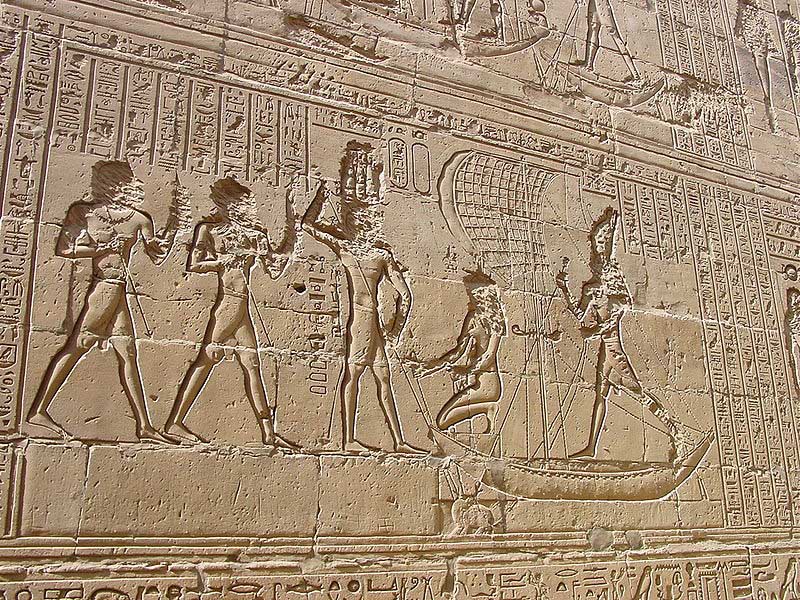
Over the centuries, academics have subconsciously suspected that the Iliad was originally intended for dramatic performance. The Roman writer Quintilian praises the second book of the Iliad for the greatness of its speeches, while the 17th century English poet, Alexander Pope, stated, ‘for a farther preservation of this air of simplicity, a particular care should be taken to express with all plainness those moral sentences & proverbial speeches which are so numerous in this poet. They have something venerable, & as I may so oracular, in that unadorned gravity & shortness with which they are delivered.’ In recent years we have Jenny Strauss Clay’s description of the Iliad’s, ‘extraordinarily high percentage of direct speech – much more than any other epic;’ Bernard Fenik’s, ‘direct discourse comprises 67 percent of the Iliad;’ & Laura M Slatkin’s, ‘extraordinary refinement & complexity of oral performance.’ From such erudite opinions we may not be so foolish to suggest that the Iliad was in fact played out through a series of scenes in which actors & actresses were given lengthy speeches. Interspersed are the battle scenes, which may have been acted out in the manner of the Egyptian dramas, reminiscent of gladiators in a Roman arena – beautifully choreographised physical theatre, but without the actual bloodshed.
One expects that the creation of the Thalian Iliad would have called for a written script to be shared around the actors. Indeed, Josephus in the first book of his history states the Greeks did noot have an alphabet until the time of Homer. It is interesting that before 850 BC we find no record of the Greek alphabet anywhere, but within a few decades of the Lycurgan Olympics its first relics were preserved for posterity. The earliest recognizable sample of the Greek alphabet was based upon that of the Phoenicians, who were positively active in Crete c.900 BC – when Thales would have been a boy – depositing objects at Knossos, Kommos & the Idaean cave. One can only imagine the young, studious Thales learning Phoenician & its script, realising how wonderful an entity was the recorded word, & understanding how vital such a recording would be when promulgating the script of the Iliad among the actors. In doing so, he consolidated all the dialects of Greece into a single, slightly artifical literary lingua franca, creating the unifying language of the ancient Greeks.
The original theatrical purpose of the Iliad would be slowly eroded by time, when the mega-money spectacular of Lycurgas would gradually give way to performances by individual singers called Rhapsodes, such as the Homeridae. In a modern context it would be like the script of a Holywood movie being reduced to being aired as a radio-play. Eventually, from the memories of the rhapsodes, or perhaps a well preserved piece of papyrus that contained the Thalian script, that the Iliad was transcribed into literary life by the librarians of Alexandria. So that is all for today. Some chilli olives & a soft Cretan red await me back at the Petra Village, to where I shall be idly sidling the now!
Star Beach
5th July, 2017
READ MORE POETICAL ESSAYS
***
Love, Wine & Nature in the Ever-Living China I: Feng Love Poems
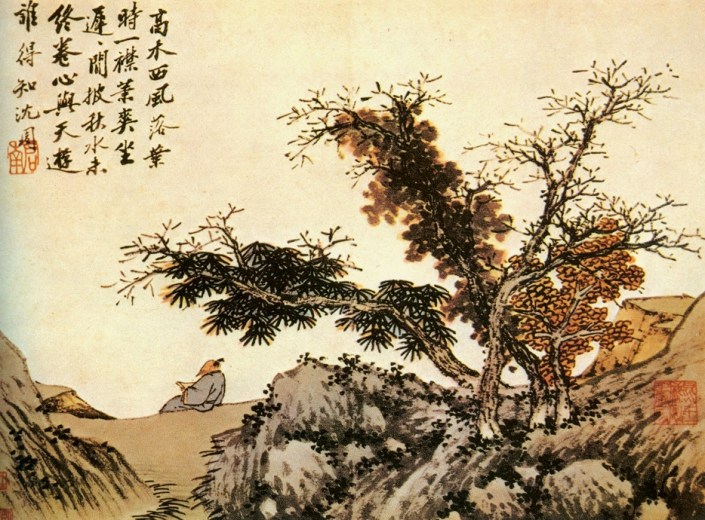
With the Coronavirus kicking in the global lock-down, its time for everyone to reflect & maybe look at projects that have been lying gathering dust for a while. In my case its the compilation of the very best of a certain William Dolby’s translations of ancient Chinese poetry. A brilliant, extremely prolofic man, Dolby has unfortunately passed away, leaving his son as the custodian of his works. Last year I contacted said son, Ieuan, who very kindly sent me a few books – about 8 in total.
I am now in the process of diving into thoise 8 books & digging out the nuggets, all of which I am collating under the umbrella term, LOVE, WINE & NATURE IN THE EVER-LIVING CHINA. The idea is to provide a poetic hotline to a most wonderful time of humanity – millennia before the technocracies in which we dwell. I hope the readers of Mumble Words will deligth as much as I have in Dolby’s genius – I will be changing the word of two here & there, & scribble out stanzas as well, leading to a final result which I believe will benefit the world a great deal.
The first selection of poems are being made from the ‘SHI-CHING,‘ (tr. songs-lyric-warp/weave), China’s earliest poetry anthology. It was compiled c.500 BC in the age of Confucious, who many scholars believe composed new music for the songs. Drawn from all the regions of ancient China, the oldest material goes back to the Shang Dynasty (1766-1122 BC) & are a mixture of court songs, war songs, & of course romantic numbers. It is of the latter sort,l known as the Feng (folk-love-songs) that we shall begin what will become a long essay into Chinese poetry, the culmination of which should be a brand new anthology for the 21st century. The names under the titles, by the way, are the region from where the song was drawn.
CURLY EARS
Chou South
Cull & cull the Curly Ears – cerastium,
Don’t fill my lopsided shallow-fronted basket;
Sighing for the one I’m yearning for in my breast,
I put it aside, leave it on the Chou Road.
I go up into the rock-strewn hills,
Till my horses are ill with exhaustion;
For a while I pour wine from the rhinoceros-horn jar,
To stop myself from greiving on & on.
I go up onto the rocky earth-hill summit,
Till my horses are sick with the effort;
My charioteer is poorly now,
&, oh, how I’m sighing now.
GATHERING THE WHITE DAISIES
Shao South
Where is she going to gather the fecund white daisy?
She’s going to the pools & the islets;
Where is she going to employ them?
In the sacriificial services of her lord.
Where is she going to gather the fecund white daisy?
She’s going in among the mountain brooks’
Where is she going to employ them?
In the palace of her lord.
She has an abundance of hair-jewels,
In the pre-dawn she’s with her lord;
She has such a luxuriance of hair-jewels,
As she turns back & goes home.
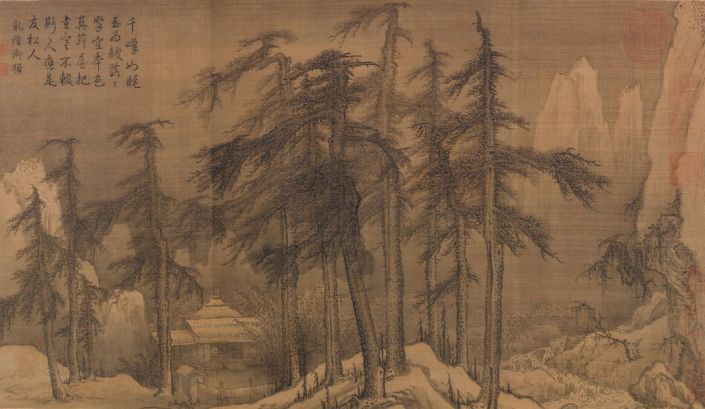
THE WIND
Pei
There’s wind, & its violent, moreover,
When you look around at me, you smile,
Your jokes are wild & your laughter scorching,
& deep in my heart I lament over that!
There’s wind & its flying dusr filling the air, moreover,
Its a favour when you agree to come to me!
If you don’t come & go with me,
I long for you endlessly.
There’s wind, & its overcast, moreover,
No sun, & overcast.
When I go to bed, I stay awake, don;t sleep,
Longing for you, I keep on sneezing.
The cloud-covered skies are dark overcast,
The thunder rumbles loud.
LIFE-GIVING EASTERN BREEZE
Pei
The life-giving eastern breeze gently shushes,
Bringing overcast skies & rain;
I strove to be your soul-mate,
You shouldn’t have got angry with me.
When you pick radishes & turnips,
Don;t you include their roots!
If you hadn’t gone against the love between us,
I’d have died together with you at the same time as you die.
I travel the road slowly tarrying,
Deep inside my heart unwilling;
Not a long way, indeed a short onw,
You only saw me off to the threshold of your door!
Who says that the sow-thistle is bitter!
Its as sweet as shepherd’s purse;
You rejoice in your new bride,
As if she were your elder or younger brother!
Alas you didn’t have affection for me,
But on the contrary treated me as an enemy;
Since you warded off my goodwill,
What I was selling wouldn’t sell.
In the old days, I lived in nervousness & at the end of my resources
When you tumbl’d into calamity;
When we’d survived that & flourish’d,
You liken’d me to poison.
I had some fine dried vegetables in store,
Which, to be sure, were to guard against the winter,
You rejoice in your new bride,
& used me to gaurd against hard times.
You were rough, you were wildly enraged,
& you had me hard toil;
You didn’t recall the old days,
When you & I were in love!
OMO: Lesson 7 – Basic Sentences & Syntax
The panting, light-brown dog – who is very hungry – will happily eat his dug-up bone – which he buried last week
OK troops- so we’ve got ourselves a lovely wee vocab so far, including numbers & a whole heap of cool words to link them all together. That means we’re ready for our first sentence, which of course will be constructed thro OMO syntax, the procedure of which is to be examin’d in this lesson.
On top of basic interpersonal relationships, a language needs to be able to interpret, refer, enquire, reflect, and other such actions. To achieve as much the core of each declarative sentence shall be based around what is known as the SVO principle – i.e. a word order of Subject + Verb + Object.
A sentence is divided into subject (a person, thing, or topic about which something is said) and predicate (that which is said about the subject), which might be the verb – ‘Jack is playing’ – the object ‘ Jack’s ball’ or both – ‘Jack is playing with the ball.’ For this lesson we shall be constructing our sentences around a core subject-verb-object of ‘DOG-EAT-BONE.’
The overall effect of the SVO principle is rather like the medieval tryptych, from which identification we might call each step a panel, rendering the three steps; subject panel, verb panel & object panel. As with all art, some tryptychs & panesl are more decorative than others, & are open to several levels of development.
Dog Eat Bone
Ko-Ta Ka-Ma-Va Mo-Mo-Me
At first glance/experience, it may appear as if there is a lot of OMO action for just three English syllables – but a seasoned OMO speaker will utter the words with concision almost matching the speed of their native language.
It is now time to start playing with, & elaborating upon, the core idea. First things first, we need to add begin with the bridge conjunction doucon, ‘KT,’ meaning ‘the’ or ‘a.’ This means we now have;
The Dog Eat Bone
KT…….. Ko-Ta… Ka-Ma-Va… Mo-Mo-Ma
Panel One: Subject
With Omo, as with the Latin languages, descriptions always follow the word it is describing, – thus brown dog as said in English is described as dog brown. It is better to let the hierarchy of thought concentrate on the main subject.
If we want to add texture to the description, this developmental word follows the initial description word, thus delicious boiled egg would have the word order EGG – BOILED – DELICIOUS. With colours, however, to indicate a deep or a paler shade simply posify or negify the word, thus light brown enters into the examplar as;
The Dog Light-Brown
KT… Ko-Ta… TM-Va-Na-Ka
After the subject is described, we should then include the subordinate verb, which in the case of our dog is ‘panting.’
The Dog Light-Brown Panting
KT… Ko-Ta… TM-Va-Na-Ca… Me-Le-Ta
Although not included in our example, it is also possible to describe the subordinate verb, such as ‘panting hard,’ with the word appearing after the verb as with all descriptions. Dog – Brown – Light – Panting – Hard.
Panel Two: Verb
Returning to our sentence, let us turn not to the second panel, & the primary verb, ‘Eat’. This word is a branch of Food/Ka-ma, & adding the past-tense fyre ‘twig’ gives us VT-Ka-Ma-Va. We then discover that our dog that our dog ‘happily eat(s).’ To create ‘happily’ two new words we need to verbify the word happy, i.e. adding ‘M-M’ to ‘Ka-Me-To.’
The Dog Light-Brown Panting Happily Eat(s)
KT… Ko-Ta… TM-Va-Ma-Ka… Me-Le-Ta… MM-Ka-Me-To… Ka-Ma-Va
The next development is the introduction of the modal verb will – TOE. It is also possible to future-tensify the word eat with a doucon (TV-KA-MA-VA), but in this lesson we’ll be focussing on the modal, to-be, ‘will’ version.
The panting, light-brown dog will happily eat
The Dog Light-Brown Panting
KT… Ko-Ta… TM-Va-Ma-Ka… Me-Le-Ta…
Will Eat Happily
Toe… Ka-Ma-Va… MM-Ka-Me-To.
Panel Three: Object
It is now time to analyze the third panel of our tryptych, the object, which is in this case a bone. First things first, we must connect the bone to the dog with the possessive ‘his‘ – LOE.
The panting, light-brown dog will happily eat his bone.
The Dog Light-Brown Panting
KT… Ko-Ta… TM-Va-Ma-Ka… Me-Le-Ta…
Will Happily Eat His Bone
Toe… MM-Ka-Me-To… Ka-Ma-Va… Loe… Mo-Mo-Ma
Let us develop even further here, by describing the bone with the past tense dug-up. There is no actual word for dug-up in OMO, but in the given context it will be easily understood.
The panting, light-brown dog will happily eat his dug-up bone
The Dog Light-Brown Panting Will Happily
KT… Ko-Ta… TM-Va-Ma-Ka… Me-Le-Ta… Toe… MM-Ka-Me-To…
Eat His Bone Dug (up)
Ka-Ma-Va… Loe… Mo-Mo-Ma… VT-Ka-Ve-Vo
Relative Clauses
Now for the fun part, the relative clauses. They begin with questions such as where & when, & pronouns such as from. They are most often used to define or identify the subject or object that precedes them. For the examplar we’re gonna be using two of these bad boys in order to create a rather volumous first ever sentence in OMO.
The panting, light-brown dog WHO IS VERY HUNGRY – will happily eat his old, dug-up bone – WHICH HE BURIED LAST WEEK.
The word for both who & which is KAO. The word for is/are is AE. Very Hungry is created by posifying (TL) Hungry (Ko-Ke-Le), creating TL-Ko-Ke-Le. In the second of the relative clauses, the word for He or him is LEO, the past tense of Bury is VT-Ka-Ve-Ve, the word last is that signified by previous – Va-Ka-Ke – & finally the word for week is Me-Te-Te.
Who… Is… Very… Hungry…
KAO AE TL Ko-Ke-Lo
Which… He… Buried… Last… Week…
KAO LEO VT-Ka-Ve-Ve Va-Ka-Ke Me-Te-Te
Okeydokes (which I’m not translating into OMO), so we now have our very first sentence, with lots of little nuances to show the flexibility of the language, the final version of which is;
The panting, light-brown dog will happily eat his dug-up bone
The Dog Light-Brown Panting
KT… Ko-Ta… TM-Va-Ma-Ka… Me-Le-Ta…
Who… Is… Very… Hungry… Will
KAO AE TL Ko-Ke-Lo Toe…
Happily Eat His Bone Dug (up)
MM-Ka-Me-To… Ka-Ma-Va… Loe… Mo-Mo-Ma… VT-Ka-Ve-Vo
Which… He… Buried… Last… Week…
KAO LEO VT-Ka-Ve-Ve Va-Ka-Ke Me-Te-Te
New Word Hoards
I hope that was an instructive enough lesson to get a basic grips of how to communicate thro’ OMO. To conclude this lesson I’d like to show you where each word fits into the overall vocabulary. In the last post I explained how I would be disseminating the trunk words through the interglobal community, & as we hit the word hordes I shall be sending them to the east to languages like Korean & Tamil.

COLOUR: Va-Ma
Sanskrit = Varna
Va-Ma-Va : Rainbow
Va-Ma-Vo: Red
Va-Ma-Ve: Pink
Va-Ma-Ma: Burgundy / Claret
Va-Ma-Mo: Blue
Va-Ma-Me: Purple
Va-Ma-Ta: Black
Va-Ma-To: White
Va-Ma-Te: Grey
Va-Na-Ka: Brown
Va-Na-Ko: Beige
Va-Ma-Ke: Cream
Va-Ma-La: Green
Va-Ma-Lo: Yellow
Va-Ma-Le: Orange
SPEECH: Me-Le
Malayalam = Meāḻi
Me-Le-Va: Voice
Me-Le-Vo: Articulate
Me-Le-Ve: Eloquent
Me-Le-Ma: Stutter
Me-Le-Mo: Babble
Me-Le-Me: Incoherent
Me-Le-Ta: Pant
Me-Le-To: Breathe
Me-Le-Te: Whisper
Me-Le-Ko: Accent
Me-Le-Ka: Fluent
Me-Le-Ke: Expression / Phrase
Me-Le-La: Scream
Me-Le-Lo: Shout
Me-Le-Le: Conversation
DOG: Ko-Ta
Hindi = Kutta
Ko-Ta-Va: Breed
Ko-Ta-Vo: Mongrel / Mix
Ko-Ta-Ve: Thoroughbred / Purebreed
Ko-Ta-Ma: Terrier
Ko-Ta-Mo: Lhasssa Apso
Ko-Ta-Me: Chihuauau
Ko-Ta-Ta: Poodle
Ko-Ta-To: Spaniel
Ko-Ta-Te: Retreiver
Ko-Ta-Ko: Rottweiler
Ko-Ta-Ka: Alsatian
Ko-Ta-Ke: Wolf
Ko-Ta-La: Greyhound
Ko-Ta-Lo: Bulldog
Ko-Ta-Le: Shitzu
PHYSICAL CONDITION: Ko-Ke
Japanese = Choshi
The negified word follows in brackets; Sharp (Co-Ce-Ve) becomes Blunt (TM-Ko-Ke-Ve).
Ko-Ke-Va: Hard (Soft)
Ko-Ke-Vo: Strong (Weak/Soft)
Ko-Ke-Ve: Sharp (Blunt)
Ko-Ke-Ma: Flexible (Inflexible)
Ko-Ke-Mo: Tight (Loose)
Ko-Ke-Me: Stuck (Unstuck)
Ko-Ke-Ta: Smooth (Rough)
Ko-Ke-To: Tidy (Messy)
Ko-Ke-Te: Wet (Dry)
Ko-Ke-Ko: Flat (Uneven)
Ko-Ke-Ka: Balanced (Unbalanced)
Ko-Ke-Ke: Still (Active)
Ko-Ke-La: Thirsty
Ko-Ke-Lo: Hungry
Ko-Ke-Le: Tired
POSITIVE MANNER: Ca-Me
Korean = Gamejong
Ka-Me-Va: Enthusiastic
Ka-Me-Vo: Optimistic
Ka-Me-Ve: Confident
Ka-Me-Ma: Dignified / Elegant
Ka-Me-Mo: Generous
Ka-Me-Me: xxxxxxx
Ka-Me-Ta: Pleased
Ka-Me-To: Happy
Ka-Me-Te: Silly/Giddy
Ka-Me-Ko: Humble
Ka-Me-Ka: Compassionate
Ka-Me-Ke: xxxxxxx
Ka-Me-La: Kind
Ka-Me-Lo: Charitable
Ka-Me-Le: Helpful

FOOD – Ka-Ma
Hindi = Khaana
Ka-Ma-Va: Eat
Ka-Ma-Vo: Swallow
Ka-Ma-Voe: Chew
Ka-Ma-Ma: Meal
Ka-Ma-Mo: Soup
Ka-Ma-Me: Dish – Recipe
Ka-Ma-Ta: Rice
Ka-Ma-To: Pasta
Ka-Ma-Te: Noodles
Ka-Ma-Ka: Chips / Fries
Ka-Ma-Ko: Cereal
Ka-Ma-Ke: Nuts
Ka-Ma-La: Sandwich
Ka-Ma-Lo: Wrap – Kebab
Ka-Ma-Le: Burger
PHYSICAL ACTION: Ka-Ve
Hindi = Kaary
Ka-Ve-Va: Place / Affix
Ka-Ve-Vo: Dig
Ka-Ve-Ve: Bury
Ka-Ve-Ma: Spread
Ka-Ve-Mo: Push
Ka-Ve-Me: Pull
Ka-Ve-Ta: Hook
Ka-Ve-To: Fold
Ka-Ve-Te: Bend
Ka-Ve-Lo: Catch
Ka-Ve-Ka: Drop
Ka-Ve-Ke: Lift
Ka-Ve-La: Tie
Ka-Ve-Lo: Put
Ka-Ve-Le: Spray
BODY, INTERNAL: Mo-Mo
Korean = Mom
Mo-Mo-Va: Skeleton
Mo-Mo-Vo: Spine
Mo-Mo-Ve: Ribs
Mo-Mo-Ma: Bone
Mo-Mo-Mo: Blood
Mo-Mo-Me: Muscle
Mo-Mo-Ta: Flesh
Mo-Mo-To: Sweat
Mo-Mo-Te: Digestive System
Mo-Mo-Ka: Vomit
Mo-Mo-Ko: Burps
Mo-Mo-Ke: Fart / Flatulance
Mo-Mo-La: Poo / Defacate
Mo-Mo-Lo: Pee / Urinate
Mo-Mo-Le: Diarrhea
SEQUENCE: Va-Ka
Tamil = Varicai
Va-Ka-Va: Last
Va-Ka-Vo: Ultimate
Va-Ka-Ve: After
Va-Ka-Ma: Series
Va-Ka-Mo: Repeat
Va-Ka-Me: Progression
Va-Ka-Ta: Initial
Va-Ka-To: Before
Va-Ka-Te: First
Va-Ka-Ka: Penultimate
Va-Ka-Ko: Next
Va-Ka-Ke: Previous
Va-Ka-La: Between
Va-Ka-Lo: Middle
Va-Ka-Le: Queue
DAY (date) – Me-Te
Nepalese = Miti
Me-Te-Va: Monday
Me-Te-Vo: Tuesday
Me-Te-Ve: Wednesday
Me-Te-Ma: Thursday
Me-Te-Mo: Friday
Me-Te-Me: Saturday
Me-Te-Ta: Sunday
Me-Te-To: Weekend
Me-Te-Te: Week
Me-Te-Ka: Today
Me-Te-Ko: Tomorrow
Me-Te-Ke: Yesterday
Me-Te-La: Day After Tomorrow
Me-Te-Lo: x
Me-Te-Le: x

