Rodney Relax
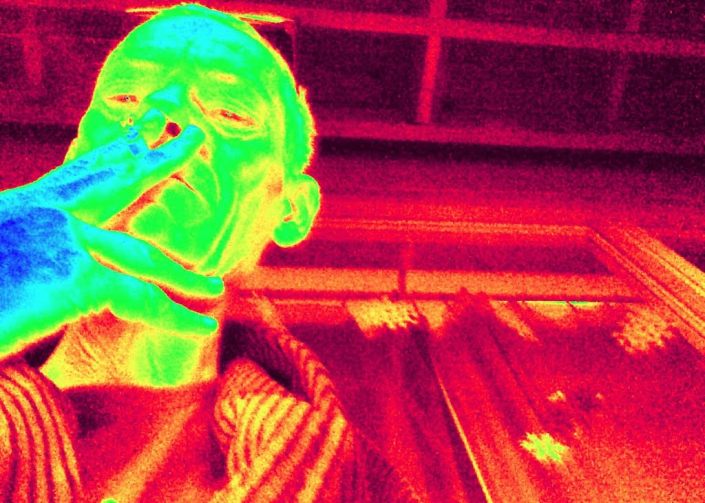
THE MUMBLE : Hi Rodney, so you are one of the stalwarts of the Edinburgh poetry scene – are you from the city
RODNEY : I was born in the university town of St.Andrews. Also famous for the old course, of which many opens have been staged on its hallowed turf. I was actually raised for most of my childhood in the Fife town of Dunfermline. When I eventually settled in Edinburgh which would be around 1992, Rebel Inc would already be taking off and the whole poetry scene was really thriving with writers like Paul Reekie, Sandie Craigie and Barry Graham.
EXISTENTIAL NIHILISM
they had to
accept the unbelievable
beyond terror outside
of the massacre
inside of it
in existential nihilism
crept killers stalked
victims in churches
up on the hills and
finally the marshes
***
RODNEY : All the writers I’ve just mentioned and Milan Kundera’s books shift the gears for me one way or the other. Current writers operating in Scotland would be Nick E Melville, J.L Williams, Jim Ferguson to name only a few. These poets truly stand out for me at the moment. I like writing to be brave and push the boundaries; all three have the talent and intelligence to do just that.
THE MUMBLE : When it comes to performance poetry, you seem keen adding musical soundscapes, why is this?
RODNEY : I used to be in punk band called Alternative back in the 70’s & 80’s, so composing music for the poems was just a natural progression for me. Also working with Nick E Melville in Shellsuit Massacre showed us both the potential for putting soundscapes to performance poetry. It doesn’t always work mind, I’ve heard some pretty diabolical so-called musical interpretations of poetry; believe me! I remember reading a quote a while back about Dylan Thomas poems being put to music, it didn’t work out as he had his own inner noing on. Just love that.
***
HYMNS OF FAITH
we note that on
sunday’s televised debate on
religion that the majority
of the participants were
of certain faiths
so in order to
insert some semblance
of balance to the
proceedings a few aetheists
and agnostics were allowed
into the circle none
were especially helpful except
the woman who proposed
cumulative process in
opposition to irreducible complexity
at no point
was there a
general consensus that
when we die
this is the end
instead they offered
up that if
you believe in
(a)god then
you could expect
to walk into
the gates of
heavan
as they arrived
at the station
one of the
woman asked
where are we?
she was shot
when her children
were found
there was no great
rapture that would
take away their
suffering or the
genocidical actions that
took place here
is there
anybody
there?
the answer is
debatable usually rhetorical
with sinister motivations
towards eliminationism:they
thought that they
were going into
red cross ambulances
instead they were
being taken away
from their families
to death in
numbers that would
haunt the world
so it was
in our hymns
of faith that
we heard the
sirens when the
destruction was complete
***
BLACK WILLOW
lovers under the
black willow sweetly
unknowingly of the
war in europe
***
COLOUR OF HARVEST
to their wives
and their daughters
men placed guns
in the fields
of corn and
rape the yellow
colour of harvest
***
RODNEY : Poetical future for Rodney Relax? Just keep writing, keep performing. There’s the small matter of Second Space poetry events, like to do one in Glasgow this year and keep adding more poets on to our YouTube channel. There’s also our FB page which could certainly do with more contributions i.e., poems, videos, audios & adding to our picture gallery. I‘m also recording a spoken word LP this year with various musicians – cut a few tracks all ready – lots of work still to be done though, it’ll be an interesting journey for sure.
Cat Hepburn

Click Yourself Happy and Thin
Then there’s obsessive and obscene celebrity culture
Paparazzis hanging round people like hungry vultures
Waiting to get the money shot of them getting out a taxi cab
Camera right under the skirt, hoping they’re not wearing pants
Mindless gossip and fabricated and exaggerated rumours
Growing in young minds like deadly tumours
Spending time on their appearance becomes a need
The illusion of personal choice is beginning to recede…
Look how this multi-millionairess
Has managed to lose all her baby weight and squeeze her ass into a tight dress
Shame on all you normal women without personal trainers and home gyms
Your life would be fine- if only you were thin
Adverts on every single page encouraging you to
Spend, Spend, Spend!
Spend money that you don’t have: take out a loan, increase your overdraft, get a credit card
Get into debt to get that great handbag- it’s a must have!
***
Fun Mistakes
Gurning lips meet filter tips
Your laugh’s making my stomach flip
Your mate just offered me a trip
I shake my head and take a sip
Through fag smoke haze
I meet your gaze
Lock eyes wi’ you then look away
I stop myself before I say
It’s going to be one of those days
Full of reckless fun mistakes
***
 To The Lassies
To the lassies!
Look up to people who are famous for being famous, lips injected with filler, silicone breasts and pert bouncing asses
You better pluck and shave and dye, and starve yourself as much as you can
In your endless search to find a man
Otherwise I’d be surprised if Prince Charming gave you a second glance
It’s better to romanticise than to criticise, while you wait to be saved
And remember that if you ever get raped
If you happened to be drunk and wearing a short skirt then it’s you who’ll get the blame
And if you dare express a like for sex, then you must expect
To be belittled and shamed and cat called and trolled
Called a slut, a slag, a tramp, a whore
Something
You are not my boyfriend
Calling you my boyfriend would mean it’s something, and if it’s something
then when it ends … I’m left with nothing
So it’s better to say ‘it’s nothing’
Than to admit it’s anything
Anything! Call me anything… but your girlfriend
Let’s fill in the gap between complete strangers and soulmates with…something…
Something like…. seeing- yes seeing
I’m seeing you
But if seeing is believing, does that mean that I believe in you?
I don’t believe we have a future, it’s just a bit of fun
The type of fun that makes me want to hold your hand when I’m drunk,
tell you a secret, go to you when I’m upset,
Chat to my pals about you, check my phone for your texts
Wait! This is turning into….Something
But it’s not anything, I’m still single on Facebook and you’ve not met my parents
We are keeping this casual, because I would rather do anything
Anything but admit that I’m falling.
Victoria McNulty

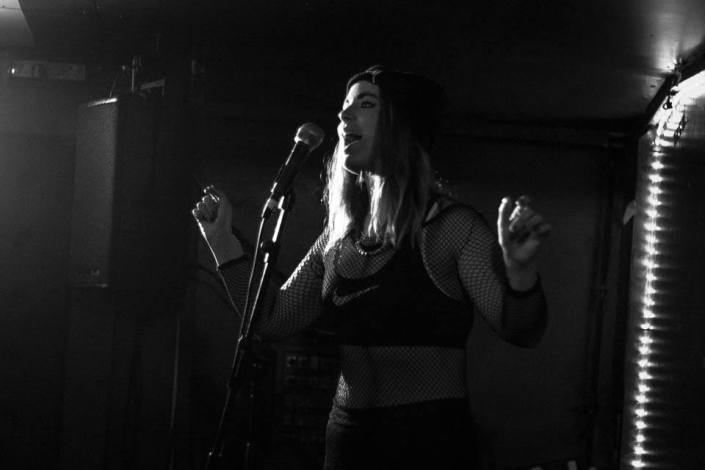
THE MUMBLE : So Victoria, where are you from originally & how did you get to Glasgow.
VICTORIA : Well I’m originally from Glasgow, from a wee scheme called Cranhill in the East end. I’ve lived in the east end most of my life, even as a student I didn’t venture any further than Dennistoun!
THE MUMBLE : You’re quite a newcomer to the performance poetry scene in the city – what got you into it
VICTORIA : I had written some song lyrics and performed them as poems about 2 years ago. Then the following year I was left pretty heart broken and at a loose end so started writing and performing. Basically to keep me off Tinder and out of bother.
**************************
THE EAST STAND
—–
Faster than a hurricane.
Louder than a bomb,
Leith Walk lay spread for us.
We pounded, pardoning no one.
We slugged vodka from plastic bottles,
Slung fags between fingers,
Only to linger at a picture,
Or some kind of kebab in the window.
The sky spit Sunshine on Leith,
Where whores and thieves tossed their Sunday bests,
With arrests,
And casuals dressed in sharp clothing.
It’s ongoing.
Thins pulse, in the black heart in the Crown Jewel of Scotland.
*******
THE MUMBLE : What are the main themes behind your poetry
VICTORIA : Well, after thinking about this for a bit a lot of my poems are probably about drinking, and smoking, sex and Celtic FC. But also I write a lot of politically inspired stuff, socialism. I’ve been described as a feminist poet before, and that’s probably quite fair. I write a lot about Glasgow and my family. And Manchester Indie, always need to get that in there.
THE MUMBLE : Who are your poetic inspirations, both classical & contemporary
VICTORIA : My pals and family. And people I see in the pubs are probably what inspires me the most. Lyrically, it’s probably more musicians I admire like Ian Brown, Joe Strummer or Shane McGowan, more than modern poets. Music my first love. Modern writers wise I read lot of Irvine Welsh and was really into Football Factory. It was inspiring to see that you could write in your own accent about your own environment. The first spoken word poet I saw that blew me away was Shaun Moore, and I suppose still my favorite contemporary poets are people I know on the Glasgow scene. But I do love traditional poetry William Blake, Yeats, Seamus Heaney. His poem The Casualty was the first piece I fell in love with and it still moves me to tears.
**********************
BONNY & CLYDE
—
I want to be your Bonny.
Well obviously.
In the sense you find me shockingly good looking,
Fit and amusing,
In every situation.
But that night you told your brother I was a ride,
I did find it a wee bit snide,
You compared me to a bike.
Or that black battered Voltzwagen
You park outside like a tank.
I still want you to be my Clyde.
******
THE MUMBLE : Where do you perform your poetry & which places are the most memorable
VICTORIA : I perform everywhere that I can! There was an open mic at the Blue Chair on Wednesdays where I first cut my teeth, and I have some of the fondest memories of those nights. The Inn Deep pub in the Glasgow West End… it was from performing there that made things started to happen for me. I performed at Eden festival this year. It rained all day and I was crammed under this pagoda with a wee audience, some beer and smokes, it felt special. The Rappers Vs Poets event at the Edinburgh fringe was huge. It was so slick and corporate, and kinda amazing to get a shot of something like that. If only once. I performed at a night for Castlemilk Against Austerity before and it was the best kind of rammy, a challenge and a warm crowd. Oh and I sneaked a couple of poems with Trongate Rum Riots, they are totally immense so that was cool.
THE MUMBLE : What are your thoughts on the current performance poetry scene in Scotland
VICTORIA : You know? I don’t feel too qualified to talk about a scene as such. But there’s a lot of very kind people busying away with good creative vibes. It’s a vibrant scene and a labour of love. I love the DIY punk ethos of a lot of it. So many performers just crack on and pull off something grand.
*************************
THE SOUTH SIDE
—
We were the last,
You see,
To drink Tetley and not Chai tea.
To go to gigs not see a band.
We didn’t need selfie sticks at festivals!
We just held hands,
And danced
And braved sunburns for tans.
Boxing night,
Sinking Tennents cans,
You swaggering up the night bus,
Shaun Ryder on a Manchester tram,
A born again bam.
In new trainers.
******************
THE MUMBLE : You won the Sonnet Youth Slam Championship last year -can you tell us about the experience
VICTORIA : That was surreal for me cause I still don’t feel like a poet, and certainly not a Slam poet. Sonnet Youth is such a high quality night and every performer was excellent. I had actually only prepared two poems, cause I didn’t imagine getting to the final round. After it I drank so much tequila I fell asleep on the taxi. I think I was in shock! But slams are what they are, it depends on so many factors, the judges, how you are on the night, so I don’t think they are always nessesilary representive or deserved. Just as well taking them for at face value.
THE MUMBLE : What are the future plans of the poetical Victoria McNulty.
VICTORIA : I am doing a long performance of a poetic story as part of a radical arts festival called Visible Women (4th of March, Kinning Park Complex). There are a lot of Glasgow artists from different disciplines involved and it coincides with International Woman’s Week. And I’ll be performing at Evidently in Salford in the summer. But apart from that my plans are to go with the flow and enjoy every minute of it.
**************
ALBA
—
So whose pen tells her freedom?
Whose lips dare not speak her tongue?
She cast me out the garden
To rot in her dole queues,
Her dank schemes.
I was a wandered teen,
And I deny her,
In all her shortbread pomp.
So this is why I write.
Not for islands, oil or troops.
Her bonny glens and low land stoops.
But for Gallaghers, Connollys
O’Hara’s and Donechy’s
Who carved the rock on which she stood.
Together they all stand,
Wrapped in a cloak of Saltire blue.
Freedom has no native tongue,
She binds no ethnic glue.
Our bonds are built in steel and stone,
The bedrock of proud Alba.
************************************
Tap into Victoria’s Facebook here
Richard Susskind & Daniel Susskind
Edinburgh International Book Festival
Studio Theatre
29th August 2016
—-
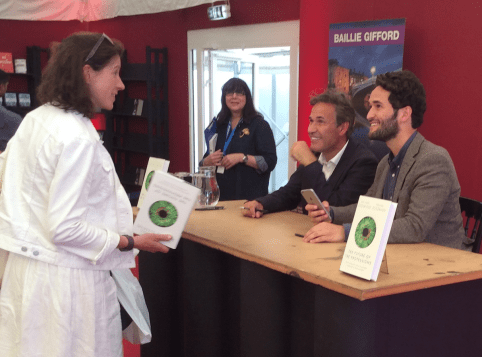
There is a problem with events like this at the Edinburgh Book Festival – it’s impossible to do justice to a book in the space of an hour, or rather, in forty minutes with twenty minutes of audience questions afterwards, particularly when the bulk of us who asked questions hadn’t read the book (yet) and wanted to challenge or probe points that the Susskinds had made during their interview. Lee Randall, the freelance journalist who chaired the event, told me afterwards that she had been out of her comfort zone, but – hey! – she managed the problem pretty damn well. The problem is, of course, conversely an advantage; precisely because it is impossible to do justice to a book in the time given, there is an incentive for the audience to buy it, and that’s what it’s all about…
Richard and Daniel Susskind are academics, father and son, and they are, frankly, experts. Both are advisors to professional companies, governments, to the great, the powerful, and the vested interest. So it is, in a way, rather ironic that the subject of their book, The Future of Professions, deals with the way that technology is already replacing ‘the expert’, and will very soon obliterate experts as a class in all fields including theirs. Reliable information will be sought – no, is already being sought, and sought increasingly – from databases and online resources. As systems become increasingly capable, as algorithms become faster and more adept at identifying patterns within information, they will not simply parallel the work of the professional but will overtake that work and thereafter dominate in all fields. In support of this, the Susskinds point out such facts as there are more visits to WebMD in the USA than walk-ins to general practitioners. Perhaps that’s not a particularly surprising point, given that health care in the US is damned expensive and it’s cheaper for someone at the bottom of the socio-economic ladder to pop to an internet café for an hour than it is to consult a doctor. However, that’s only one of a number of areas in which technology is accelerating.
Developing from this argument is the idea that the ‘job’ – in particular the ‘job’ of the ‘expert’ – will disappear. This does not mean that we will see beggars on the street with a sign saying “DPhil with family to support”, but merely that jobs will be replaced by ‘bundles of tasks’. Funny, that’s what I thought a job was, in essence, and my betting is that when they’re looking for people to do these bundles of tasks, they’ll give the work some kind of job title, but I digress. Many of these tasks, the ones that can’t be fulfilled by other systems and other machines themselves, will involve servicing the systems and the information that goes into them, it must be supposed. Throughout the event I found it difficult to stop my mind wandering back to a 1960s routine by American comedian Bob Newhart, in which he describes a recurring dream about a machine whose bundle of tasks includes firing other machines: “Sit down ma-chine your work has not been go-ing to well late-ly and we are go-ing to have to let you go. This is a rec-ord-ed ann-ounce-ment…”
No, no, no, that’s not it at all! But you can see why I couldn’t shake the idea.
The audience raised all kinds of other issues. Who will be the gatekeepers of the information? What of empathy? What of judgment? Richard Susskind said that the question of judgment was the wrong question (oh dear!), and the proper one to ask was ‘can computers handle uncertainty?’. I have difficulty with the doctrine of ‘the wrong question’, but in this case I see what he means; there is a necessity to think about what we really want to know when we ask a question. Ideally I am supposed to be at events like this to observe and to report and to review, but sometimes I just can’t resist sticking my hand up and asking a question. Mine related to critical review of the information available via computer systems: both Susskinds are academics, they will have had their work peer-reviewed, and once it is published it is open to challenge from others in the same field. I had not heard the concept of ‘critical review’ carried forward into their vision of how the future is turning out, so where in this vision does the testing of the accuracy of the information come in, given that an algorithm will pull in so much information from so many sources? They replied that firstly the process of ‘peer review’ is in the hands of people who ‘have a stake in the game’ (agreed!), that challenge and debate within the community/ies of online users will outstrip the professional peers, and that ‘communities of experience’ will develop which will be both more powerful and more transparent.
Someone asked whether there was a future for politicians, given that even their expertise has been challenged in referenda etc. Earlier that day I had been to a photocall with Gordon Brown, the former PM, and afterwards observed him walking to the Baillie Gifford, with a small knot of suited men, to give his speech. The rarified bubble in which the technocrat-managerial caste exists was almost tangible! Even though the UK’s latest referendum was conducted with an apparent nullification of the ‘expert’, with no critical voice heeded that questioned (rather than denounced) the information being given, there seemed no barrier to that field of expertise being dismantled either.
But “It’s not a free-for-all” said Daniel Susskind, and Richard pointed to three possible gatekeeping models for the systems-dissemination of reliable information. Firstly that it is taken in by the private sector, and based on the profit motive. Secondly that it is taken over by non-profit organisations as varied as charities and national governments. Thirdly that it is held in common in some kind of freely-accessible cloud – think of the database that is to come after Wikipedia, whose shoes Wikipedia is not fit to fasten, if that doesn’t sound too messianic! That last metaphor’s mine, by the way.
At the end of the day, so many questions were left hanging. I can hardly resist the temptation to email the Susskinds and ask them. It might be a good idea to see whether they’re answered in the book. Again I remind myself that I am not here to review a book I haven’t read, however, but the event itself. Let me make a comparison, then. With poet and author Louis de Bernières, I was scribbling and tweeting fit to bust; with the Susskinds I was just scribbling, because I simply had no time to tweet! The event was packed with thought-provoking information. Both father and son are articulate, so adept at putting their ideas into words; if anything father Richard seemed to do more of the talking, but that isn’t to say Daniel was left in the shade. And a quick look back shows that I have written more about this event than about any previous at this year’s Festival. That says something.
Reviewed by Paul Thompson
Lemn Sissay: Poetry with a Sharp Edge
Leila Al Shami / Robin Yassin-Kassab
Edinburgh Book Festival
August 18th
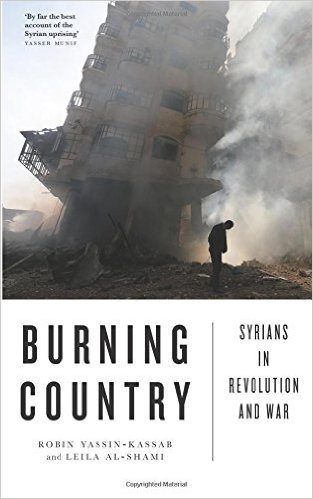
Scottish chair Brian Meecham was clear and commanding in his delivery, just like the two authors of ‘Burning Country’, Leila Al Shami, the co-founder of a network that connects grassroots organisations across the Middle East, and Robin Yassin-Kassab, a media commentator on Syria. Both Syrian-British, they were here to discuss their book, ‘Burning Country: Syrians in Revolution and War’; written to publicise the work being done on the ground by civilian organisations in Syria since the start of the civil war in 2011.
Leila had worked in the domain of human rights in Syria even before the the war began, particularly with women. Robin took his turn first to summarise their work, and was incensed that the Western media reports were so highly inaccurate about the very complex and particular situation that has developed in Syria. He’s weary of the commentary that emphasises geo-politics, speculation about US-driven regime change and the continuation of old rival factions. Where their work fills the void is in two main ways: firstly, in understanding the many factors contributing to civil war and subsequent displacement of millions, and secondly, focusing on the incredible work that regular Syrian people are doing in staggeringly difficult situations. For example, much of the mainstream media suggest that it’s a battle between secular and Jihadi forces, but the fact that many Jihadists are fighting on the side of the old regime itself contradicts this entirely. They have tried hard to add in critical details of context to these discussions in order to make any analysis of the Syrian situation itself much more accurate, as outsiders attempt to make ill-informed commentary based on their knowledge of other countries like Palestine or Iraq.
They discussed why the revolution occurred in the first place. The repression that ensued after the first failed ‘Damascus Spring’ an entire decade earlier, which simply asked for small reforms and an end to torture, created a lingering atmosphere of disappointment. Bashar al-Assad, after he unexpectedly took over the presidency from his late father, continued with crony capitalism and neo-liberalism, creating even more poverty in the country.The unwarranted violence the regime used to respond to the protests created an even more urgent call for reform and morphed into a revolution for social justice and freedom, including, importantly, a call for national unity. Support came from a huge variety of backgrounds, classes and factions, particularly amongst the working class.
Self-organised coordinating committees sprung up in secret, and worked in communities all over Syria, organising protests and linking with one another. Extreme repression resulted again, with torture, rape and disappearances. So extreme in fact, that many soldiers defected in disgust. This situation spiralled into war; convenient for Assad who wouldn’t have been able to justify killing peaceful activists. Al-Quaeda also wanted war; who became relevant again because of their needed military prowess. The regime and foreign states have contributed to sectarianism which was always part and parcel of the regime’s classic divide and rule policy. They outlined the major events leading to war; such as when the regime released the Jihadists who had been fighting in Iraq, imprisoned and then released as needed. Assad organising a massacre of Sunnis by the Alahouns who are a minority Shia sect. At this stage, the West, frightened of the alternative, decided to stick with Assad. Isis was being defeated, but Al Nusra, a home grown version of the Al Queda group, became stronger. Assad and his forces still have been by far the biggest killer of people.
Leila talked about the popular struggle for justice on the ground. The movement for democracy progressed to being a rejection of all forms of authoritarianism. In Idlib province, people protested daily for 160 days to get al Nusra out. It’s an Al Quaeda affiliate in Syria and people don’t want it. Civilians are self-organising in communities for self-rule, and it’s estimated that Assad was only in control of 20% of the country at one point. People were forced to take control at a local level, just to keep basic services like food, sanitation, health and education functioning. Protests were not enough, so people had to find a way to organise themselves using horizontal, autonomous organisational structures to provide food and medical services, many of which run by women. Local councils sprung up in the hundreds, and she estimates that there are now around 800. These administrative structures, many of which have been highly influenced by radical thinkers like anarchist theorists, Sufi clerics and an Italian interfaith priest, have the majority of their leaders democratically elected.
It felt like the discussion between passionate and knowledgeable speakers and a highly engaged audience could have easily gone on for hours, if given the opportunity. The questions were excellent and the answers were immediate and thorough. One of the questions was about the role of journalists, and whether they had given up on this war even though it has massive repercussions for the rest of the world; triggering the biggest refugee crisis since the second world war, and its own domino effect on Brexit and Putin’s military actions. Well-known commentators were named and shamed for being embedded or irrelevant, and even the political analyses of Noam Chomsky, the sacred cow of the left, were slaughtered for its old-fashioned binaries.
Laughter rippled across the tent as the last question was posed to Yassin-Kassab with just a couple of minutes remaining; what’s it going to take to stop the fighting? He sat back and smiled; the first and only smile of the session, given the subject matter. He wasn’t at all optimistic that the end was in sight any time soon. However, he suggested that pressure from outside would help; namely pressure from Western powers on Russia to withdraw its support of the government, and to investigate why the Americans vetoed support of arming the Free Syrian Army.
The audience was obviously a well-educated and politically aware crowd, with great concern and interest in the Syrian civil war and its effects within and without the country. People were keen to know how best we can continue to inform ourselves with accurate information, and what we as outsiders can do to help the situation. The authors indicated a list of news sources in their book, and suggested following blogs such as Syrian Untold and Syria Direct. The consensus was one of huge gratitude to the authors, as most of the vast amount of detailed information they gave us was new, and in a strange way, refreshing in its emphasis on people power and a radical departure from the standard media fare on Syria today.
Reviewed by Lisa Williams
Louis de Bernières
Edinburgh International Book Festival
Baillie Gifford Theatre
25th August 2016
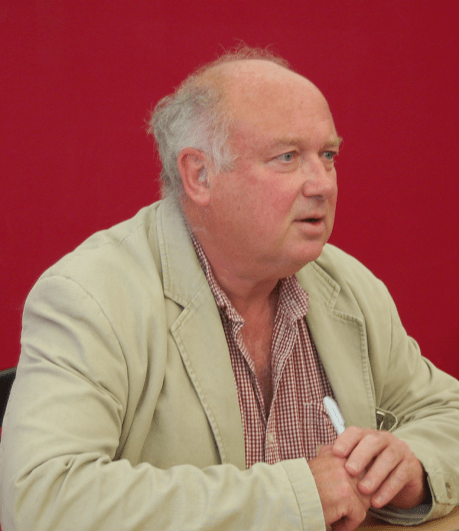
As I sat in the Baillie Gifford Theatre for this event, I filled more pages of my notebook and tweeted more tweets than during any of the events I have attended so far – and we’re almost at the end of the festival. The reason for this is simple. Louis de Bernières seems to produce more quotable quotes per minute than anyone else, and I’m talking about conversationally, never mind when reading his poems.
Poetry is de Bernières’s favourite and chosen medium. During the afternoon passing reference was made to the fact that in 1993 he was known as a promising young novelist, and again passing mention was made of a novel set on a Greek island in World War 2, but the prime purpose of his visit was to talk about Of Love and Desire, his new collection of poetry. Of Love and Desire is his second collection of poetry, and contains poems about, well, love and desire that he has written from the age of seventeen to the present. Viv Groskop, chairing the event, asked if the book was ‘a biography of [his] loves’; “Yes,” admitted de Bernières, “with lies and transformations,” and went on to say that generally when a poet celebrates a large number of loves it begins to sound like boasting.
We didn’t get to hear much of his poetry, it has to be said, as the majority of the time was spent in conversation. What we did hear perhaps couldn’t be called great poetry, but it was fluid, full of imagery, and tended, ‘like Middle-Eastern poetry’, to jump from subject to subject within the space of a line. De Bernières is an incredibly prolific writer of poetry, inspiration coming to him in bed, or whilst driving his car (in which case he has to memorise it), in an almost constant stream which he can’t imagine drying up. “It would be horrendous,” he said, “knowing I was on my deathbed and another poem was coming,” but he could see that happening! “I don’t have self-discipline, I have obsession,” he went on, recalling his younger days when his writing was fired by cigarettes and coffee. “Now that I’m fuelled on red wine I’ve started to slow down a bit [..] I have a demon that drives me on – I’m very grateful to it.”
His editor had told him that there was too much about wine in the first draft of Of Love and Desire, but de Bernières subscribes to the Middle-Eastern tradition of using intoxication by wine as a metaphor for both profane and divine love – again that marked M-E influence.
He treated us to a reading of his newest poem, composed the night before as he strolled along Princes Street and happened to see a street-beggar. This ‘Dreamer on Princes Street’ had ‘slipped through the bars of life.’
“Poetry ought to be speech made musical,” he said. When asked for his poetical influences he admitted to being “terribly influenced by anything I read”, citing Sappho, and Constantine Cavafy. He used to love Pablo Neruda – as do so many young people – but he is no longer young and said “I stopped believing what he was saying.” In pursuit of this musicality, he loves assonance and iambic meter – “T S Eliot has written some wonderful iambic lines, even though we think of him as a modernist poet.”
His greatest achievement? In his opinion, his novel Birds Without Wings, which is actually used in modern Turkey to teach Ottoman history. On a visit to that country he was surprised to see large pictures of himself on advertisements. His guilty pleasures? His collection of guitars. That prompted a member of the audience to ask if he would sing one of the many songs he has written, but that he declined to do unaccompanied. What is the greatest love in the world between two people? Between parent and child. “I have never been loved by anyone as much as I have by my daughter.” Having children is like having research material to hand all the time. His driving demon? He speaks of seeming to hear voices, and wonders if his talent is a constructive form of paranoid schizophrenia.
From all this you’ll realise how fruitful and how easy on the ear the event was. I think it was more relaxed than any event I’ve been to during this long-fortnight. Good listening, good value, enough said.
Reviewed by Paul Thompson
Prue Leith – The Prodigal daughter
Edinburgh Bookfest
Charlotte Square
22/8/16

Previous Michelin starred restaurateur , Prue Leith is publisher of a large volume of cookbooks, some published under her own Leith School of Food and Wine. Here to promote her second book in a pre-mapped trilogy which is her seventh novel to date. The Prodigal Daughter, will be out on the 15th September. It’s a story about, ‘an eighteen year old girl, Angelica, at a cookery school in Paris in the sixties who falls in love with her unsuitable Italian cousin, and her rocky journey from naive enthusiast to top caterer and telly chef.’
Leith has invested in and become an old friend of, ‘cobbler’s wax, the glue that sticks you to your chair ’ after a short course in novel writing. It certainly seems to be paying off : she has aspirations to become a film writer in her seventies, this trilogy has been optioned for a TV series by Stephen Fry’s company Sprout in partnership with Parallel Films. They are combining forces in the hope of making a big fat multi-series. Let’s hope it all happens for the focused, driven and funny lady who has had such an interesting career path that it doesn’t sound too ridiculous to go from chef to cookbook author to novelist and now possible film writer. Go Prue go!
Keen to ditch the chicklet/romantic fiction and be more aligned with her male counterparts whom she tells us are described as giving , ‘deep psychological insights into dysfunctional relationships.’ Leith cites Birdsong (Sebastian Faulks) and Anna Karenina (Leo Tolstoy) as the best love stories and reveals Birdsong as having the best sex scene ever. I’m guessing that her love scenes won’t disappoint her readers then! Being treated to an excerpt from the book we realise sharpish that Angelica is in Paris to learn but won’t be bullied by her forceful teacher, a sentiment close to Prue’s own teaching experience, ‘people who are frightened can’t absorb. You really have to be nice to them if you want them to learn.’
Always one for moderation when it comes to cooking and not for spelt biscuits she also discussed her belief in the saturation of cuisine books and food inspired television series. Slightly schizophrenic looks define her in her television career with her looking more , ‘homepride and voice of reason’ in Great British Menu on BBC2 and , ‘a bit freaky’ looking in My Kitchen Rules Channel 4. Did you know that publishers have algorithm analysis that let them know good names for heroines and what colour of eyes are the most popular ? Well, now you do. Apparently Celtic names are on trend as is Iceland for location. Hair should be red not mousy. A fascinating insight into the world of Prue which should be a good read from what the audience heard today.
Reviewer : Clare Crines
Why you should let yourself be yelled a in a random club, 4 stories high
Liam McCormick, 4 Stories High, Spoken Word
23rd August 2016

Under the shadow of Edinburgh castle, down a cobbled staircase there is a club named Silk, where Liam McCormick paces the stage maniacally in hole-ridden high tops and a number two buzz cut, ranting lyrical about a host of characters devised from the twisted innards of his mind. It feels in that strange velvety room that a number of worlds have collided, that perhaps the fusty plush bubble built no doubt for the minted tourists and students who keep the Edinburgh economy afloat has burst for a moment to let less fortunate creatures in. Indeed for a half hour or so, the space was home to Tam, xxxx, and xxx – the characters at the center of Liam’s poems – each of whom is subjected to the destroying forces of the societal pressure, specifically bullying.
The stories are well told, and at moments beautifully crafted. McCormick brings an intensity and a commitment to his performance which is as uncomfortable and electric as his subject matter. He should be commended not just for his ability as wordsmith, but also as performer. When I listen to him I am jealous that I am not Scottish. His rhymes are gutteral, and his rhythms twist and turn into the sing song lilt of a bygone storyteller. How I wish that I could utter words with the thick rasp of his.
His is an energetic, albeit slightly unhinged show. It is not easy to sit in a room and listen attentively to one voice swell and fall for half an hour. But everyone should try it. Isn’t Storytelling one of the age old ways of experiencing the unknown? Where heard in the firelight in a forgotten age or the neon glow of a fusty night club, it is beautiful form, and one which when used to great effect can convey emotions more deeply and directly than perhaps any other form. Liam’s work certainly does, and he is a star on the rise in the world of Scottish spoken word. Isn’t the Edinburgh Fringe about trying something new? Exceeding what you know? Taking a chance on hidden gems, and fresh talent? People these days seem to say all the time that they mean to do extraordinary things, that they want to support creativity, and encourage the bravery of young artistic talent. Well, get your arse to Liam’s show then! Support him, listen to him, open yourself up to something different. It’s free, and it’s interesting, and you’ll end the show with a great big chuckle, emerging from the dark stairwell of Silk into the hazy shadow of the castle, the sun starting to soften, and the bustle of the Fringe waiting for you around the corner.
Support young artists. Support spoken world.
Get yourself out to something interesting for a change.
Reviewer : Charlotte Morgan
Jim Crumbley & Stephen Moss
Studio Theatre
EIBF
22/8/16
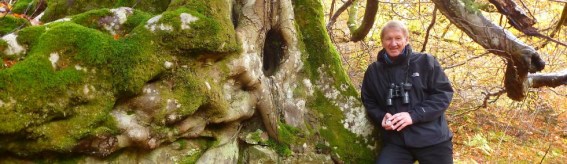
All Senter, in conversation with Scottish wildlife author Jim Crumley and Bafta award winner (Springwatch 2011) Stephen Moss on the launch of Crumley’s new book The Nature of Autumn . Describing the power of Autumn Crumley states in one chapter: ‘And the first day of autumn is the beginning of everything, the first stirrings of rebirth. The forest fall (it is better named in America than here) thickens the land with limitless tons of bits and pieces of trees. The earth is hungry for these, for they break down into food: all spring, all summer, it has been thrusting life upwards and outwards, and by the last day of summer it is tired. Autumn is the earth’s reviver and replenisher, the first day of autumn is the new beginning of everything and the last day of autumn is the beginning of next spring. Autumn is the indispensable fulcrum of nature’s year.’ Autumn it seems is the perfect fusion of form and function but , ‘nature is in big trouble.’ When Jim is asked why Autumn is his favourite season by Al Senter he simply and eloquently replied, ‘it’s nature’s state of grace.’
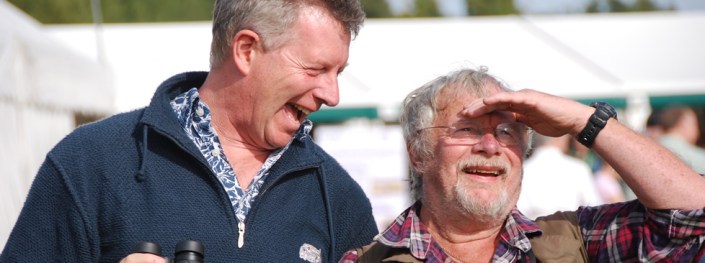
Having spent the entire autumn last year from as north as Harris to as south as Wigton this child of autumn gathered the necessary content of his book which is his widest interpretation of his title so far. Expect thoughts on his first sighting of a golden eagle reversing beautifully into its nest, studied by Jim for thirty years and now discovering that this piece of theatrical aviation had been denied to him till now. There is always something new to discover, to see or just to hear. Stephen Moss suggests to ,‘go out , stand and listen and close your eyes.’
It is heartening to hear Jim enthuse of the great Trossachs forrest, ‘ the scale of it is the sort of thing that can make a difference. It seems ironic that ecotourism and supermarkets came in the same year. 1959. While some were off to see the highlights of urban innovation the smart ones were osprey watching. They talked at length on the trial introduction of beavers in Scotland. Believing wolves would do more good than harm they advocate their return to our shores. Apparently elk do not behave elk like until a wolf appears when they suddenly discover a long lost ability to move at speed!
I learnt a lot about what is happening in the countryside north of here. So, what to look out for? Whooper swans, Scandinavian rushes, red deer ruts and aspen oaks.
Reviewer : Clare Crines

