A Second Slice of StAnza
Like some dandified arriviste in the throes of burgeoning womanhood, StAnza retains a sprightly ebullience every year. I think this is down to the policy of not asking poets back to perform or lecture until five years had passed. This helps keep the festival al fresco fresh, & tho’ the faces may seem familiar, one is always guaranteed a certain newness to the bill. So a second slice of StAnza for me this time round would be rather like sampling one of the splendid Taster Menus at the Castle Terrace in Edinburgh, where plate after delectable plate is served up full of aesthetic glory & supreme tastes. Rather like a very good poem.
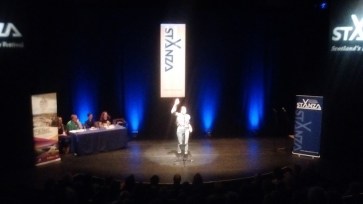
It was the weekend & so the wife was free, & off we pottered on the Saturday night, a thick haar covering both East Lothian & Eastern Fife. Inbetween, of course lay the clearer Forth Bridges, but it wasn’t a long drive at all, arriving just in time for the slam in the main auditorium of the modernistic Byre’s Theatre. Ten poets had two minutes each to impress the judges, all ushered into place & eventual silence by the brilliant Paula Varjack, a young, internationalist poet, who set the scene & dictated both pace & rules with the elegance of Virginia Wolfe at some High Tea soiree. ‘This is how it works, & we’re gonna have fun doing it,’ was her mantra, & we were all hooked from the off. The winner was Kevin McLean, one of Edinburgh’s famous ‘Loud Poets,’ who’d saved his best piece for the final, blowing away the opposition with his speed of thought, his philosophical realities & intrinsically musical wordplay. A close second was Jill Abrams , who chose something with more pathos for her final piece, at which end an ‘O My God,’ from the audience reflected how deeply she moved us.
It was midnight by now, & me & the wife parked our car up a few miles down the coast by the sea. We’d taken the seats out of the back & stuffed the car with duvets, & it was comfy enough for a pleasant night’s sleep. On waking, we parked up at the local leisure centre for a jacuzzi, swim & sauna, & when we found ourselves upstairs at the Byre’s Theatre at 10AM drinking coffee & nibbling on some fruity pastries for the morning’s breakfast lectures, our B&B in St Andrews had cost us £7 each. The sixteen-year-old Rimbaud would have been proud. There then followed a delightfully informal, but highly informative talk from four translators on the nuances of their chosen aspect of poetrology.
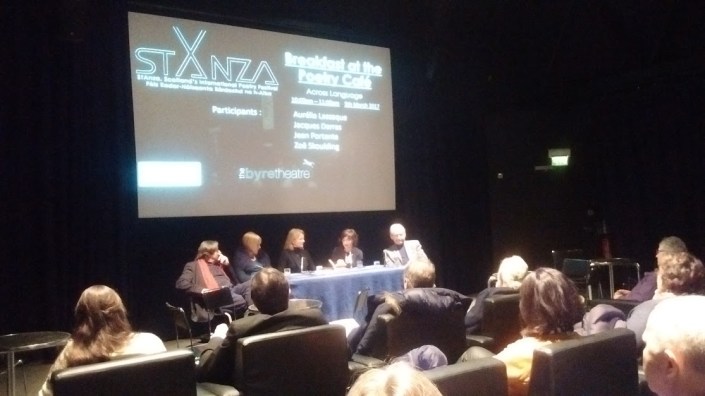
Asterixesque Jean Portante & the well-preened Zoe Skoulding are bosom-buddies. Jean is from Luxemburg, whose native language is Italian, & whose chosen linguamedia is French. He explained how he was importing the smooth-flowing Italian river-phoneticism into his French verses, with Zoe explaining how her English presentation of his poems were trilingual, having to accommodate Italian rhythms & French vocabulary into the register of her own native speech. Equally fascinating was Aurelia Lassaque, a speaker of the rare Occitan tongue, who spontaneously creates her own poetry in both French & the language of her mother, writing a single poem in tandem between the two languages, letting them flow into & bounce off one another.

Finally, we had the most erudite Jacques Darras, who could have talked for hours, & indeed wanted to, but instead gave us an anecdotal sweep through his time with Ezra Pound’s Cantos, finishing with a moving pilgrimage to Pound’s secretary, Basil Bunting, living in a shed near a pub, a couple of months before he passed away. “Translation, basically,” said Jacques, “is an act of love… you have to love, you have to be in love, with a poem you happen to chance upon,” a statement which perfectly captured the essence of the hour.
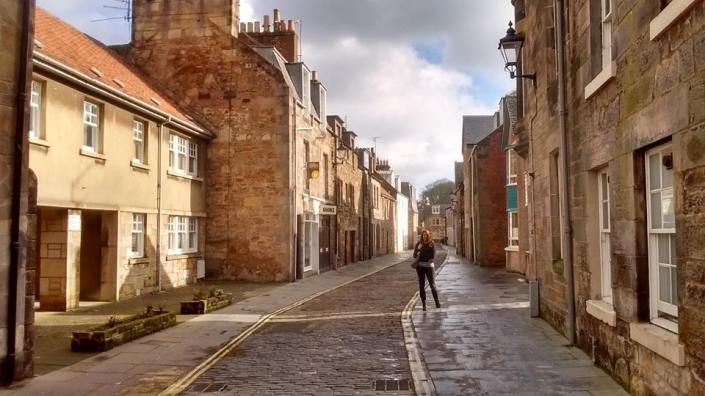
It was now potter time; a meaty cappuccino at Costa Coffee, photo-ops with the wife in the time-capsule streets, before buying a translation of all of the Gawain Poet’s works (if indeed he did write them all). Then it was back to the Byre’s for a pie, a pint & Mr Steve Pottinger, a gentle though political soul, who glided through his lunchtime recital with a perfect rectitude to his muse. The West Midland accent never sounded so good, as the breeze of Parnassus blew through his poems, all of which ended with an epithetical flourish & an almost Elizabethan bow. Yes, Mr Pottinger was good, very good. Both before & after his performance, I’d noticed the morning’s translator posse were sat in the Byre’s, pontificating & all that, & I am sure that on our exit from Mr Pottinger’s pearly sphere, Jaques was telling the same story I heard him begin when we first went upstairs for our pies.

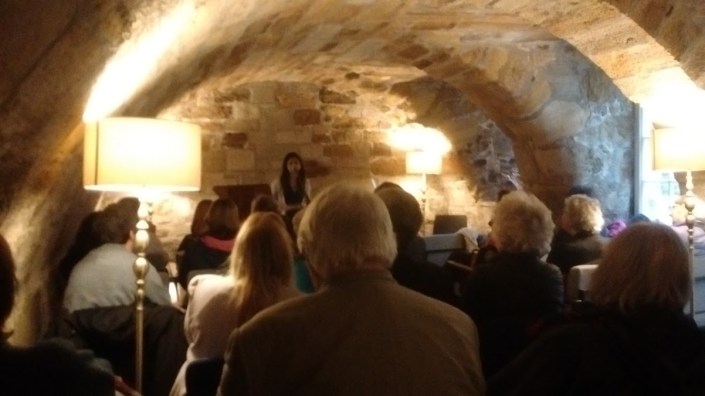
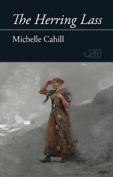 Our final port of call was in the cellar-like confines of the intimate Undercroft at St John’s House, where two ‘Border Crossings’ poets would read through their work. The first was Tess Taylor, a Fulbright scholar & direct descendant of Thomas Jefferson. Reading with poise, posture, & the occasional touch of humour, she delivered excellent renditions from her folklore-laden, landscape-littered work, especially the long poem which had her exploring her ancestors house, peering into his copy of Virgil, & displaying an oboe-pitched sentiment which tweaked & twanged with effortless grace on the listening sensibilities. Finally, we had Michelle Cahill, a young Australian of Indian heritage in love with Scotland, who eked out the vibrancy of the land in her recently acclaimed book, The Herring Lass. I especially liked her sonnet to the heroine Black Agnes, defender of Dunbar Castle a long time ago, & a place we headed in the direction of at the climax of her deliciously engaging readings.
StAnza… fino alla prossima volta
Reviewer : Damian Beeson Bullen
An Afternoon at StAnza
St Andrews
March 2nd 2017
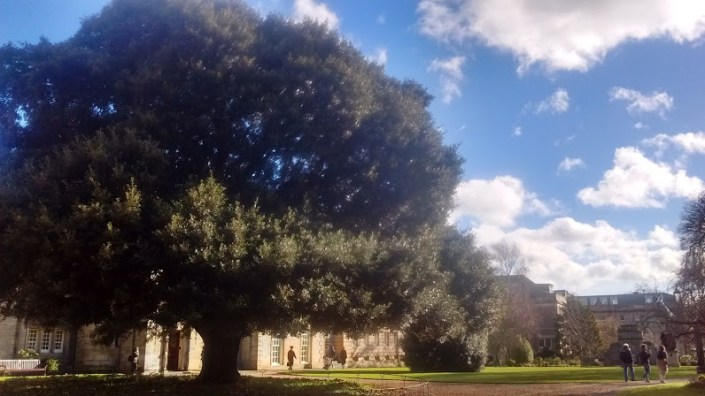
It has long been mooted, out East Lothian way, to restore the ancient ferry route across the Firth of Forth to Fife. Still lost in idle burearocratic musings, I had to instead spin all the way west to the Queensferry Bridges, zip high over the waters, & hang a right into Glenrothes. From here, the modern road system tapered into something from the 50s, as the one-lane roads wound me to the ancient & most reverend ecclesiastical capital of the Scots. Fife was as lovely as ever, a maroon landscape of recently ploughed fields under a crisp, blue sky. Crisp would also be an understatement – as would brisk – for the infernal furnace of cold which bit into my face & through my clothes as I arrived in Saint Andrews. Still things were hotting up in the poetry festival, I found, as I arrived at the towns refined town hall for my first sampling of this year’s StAnza festival. Like bees to the first crocuses of the year, poets & poetry lovers from Scotland & beyond were flocking to the fragrant blooms planted over the winter by Madame Eleanor Livingstone, including Harry Giles, who the Mumble had recently interviewed.
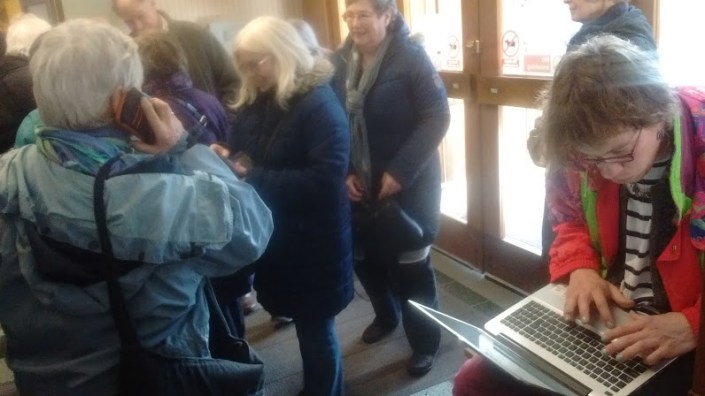
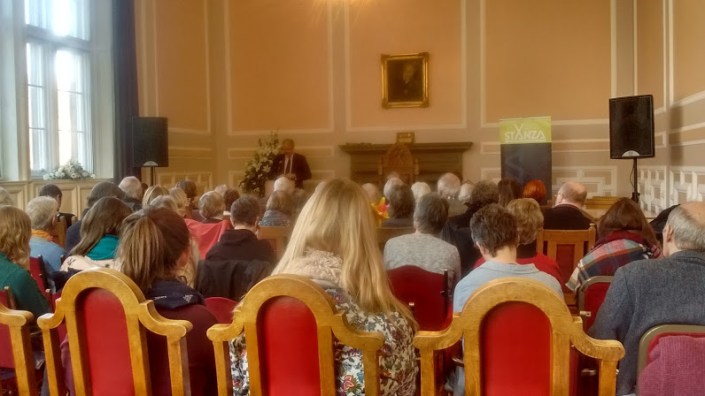

The first hour was to be filled under the monicker of Past & Present, two talks on members of the pantheon within living memory & long since ceased. We began with Neil McLennan – not a poet per se, but historian & historical detective with an ambitious passion to discover as much as he could about Wilfred Owen, admitting that this noble war poet had become almost a part of his family. For me, a poet’s life is just as vital to the account as their works. Poets are like ornate fountains, out of whose mouths gurgles the spiritus of an age – & it was quite an age in which Wilfred Owen found himself.
2017 sees the anniversary of Owen’s 6 months stay in Edinburgh’s Craiglockhart, which during WW1 had been transformed into a hospital for officers who’d been turned crazy by the horrors of the trenches. ‘Craiglockhart is my Oxford,’ wrote Owen, who loved to roam the nearby Pentland Hills, the routes of which have been traced by McLennan & shall be revisited with a party of keen Owenites later this year. Mclennan also described his international search for information, including finding Owen’s poems scribbled down on the back of Edinburgh Café company bills, & delighted in telling us how he believed Owen made the near-final draft of Anthem for Doomed Youth a few hours after he had taught English Literature to 39 boys at the Tynecastle School: a remarkable rumination. He also left us with a cliffhanger, saying that yes, Graves, Owen & Sassoon all met on a golf course in Edinburgh that year, but not on the course everyone thinks they did. He has actually discovered the true belt of blasted green & will be revealed in his book on Owen in Edinburgh later this year. I, for one, was not that bothered beforehand, but after witnessing McLennan’s infectious banter I cannot wait for the answer.
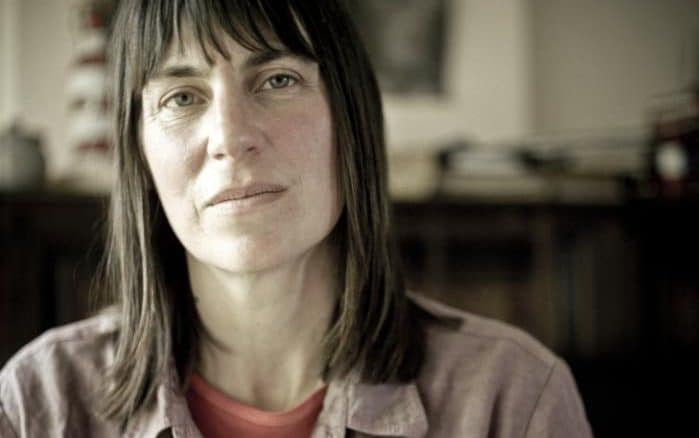
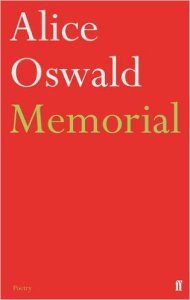 Following McLennan was the reputable Alice Oswald, a contemporary poet with a classical mind, she is the creator of some of our own epoch’s truest poetry. A few years ago she produced an amazing condensing of the Iliad called Memorial, & so was perfectly placed to sing her love of Homer to us. Her introduction in that book reads; ‘Matthew Arnold praised the Iliad for its ‘nobility’, as has everyone ever since — but ancient critics praised it for its enargeia, its ‘bright unbearable reality’ (the word used when gods come to earth not in disguise but as themselves.
Oswald’s patter was purely poetic, abstract in places, keen as a Danaan spear in others, flowing through her talk as breathlessly as the wind she described in both Santarini’s Minoan frescoes & the works of Homer himself. Her dreamlike, metaphysical mind conjured up phrases such as, ‘the Beautiful silence of the Minoans,‘ while at the same time she made a pleasant attack on the stuffy cloisters of classical academe. A Classics student herself, one found as she went on that Oswald had found her own paths through Homer, & was delighted to share them, pouring great disdain on the monotone & sterile translations of Homer – including the one by her hero, Ted Hughes – which had turned the Grecian Swan-words into flightless Dodos. I especially enjoyed her vivisection of Homer’s use of colour, which he had presented in a more intensely descriptive than factual fashion. Dark blue, for example, was used to describe a crowd helmets in battle. She even took time at the end of the talk to point my own studies in the direction of Gladstone, who made the first formal accounts of Homer’s colours.
A couple of frothy coffees later, among the students with faces as fresh as St Andrews in early March, I took my seat in the local parliament, where just like in Estonia one steps in off the street. It was time for the day’s ‘Five O’Clock Verses,’ where from oak-paneled wall provosts from the past looked down on our proceedings painted in their military garb or haughty civilian regalia. Two Bloodaxe Poets were the order of the day, AB Jackson & the highly esteemed Catalan poet, Joan Margarit. First up was Jackson, who read at first from his new book on St Brendan’s voyage across the Atlantic in a little coracle boat, a vividly crafted cycle full of devious literary allusions – ‘Godless cynocephali’ springs to mind – & portrayals of sea-sick priests. Listening to the rest of his poetry it seemed as if puff clouds of description were floating across the mind’s canvas, such as golf balls being truffles waiting to be picked up on St Andrews golf course.

First Love (Primer Amor)
In the dreary Girona of my seven-year-old self,
where postwar shop-windows
wore the greyish hue of scarcity,
the knife-shop was a glitter
of light in small steel mirrors.
Pressing my forehead against the glass,
I gazed at a long, slender clasp-knife,
beautiful as a marble statue.
Since no one at home approved of weapons,
I bought it secretly, and, as I walked along,
I felt the heavy weight of it, inside my pocket.
From time to time I would open it slowly,
and the blade would spring out, slim and straight,
with the convent chill that a weapon has.
Hushed presence of danger:
I hid it, the first thirty years,
behind books of poetry and, later,
inside a drawer, in amongst your knickers
and amongst your stockings.
Now, almost fifty-four,
I look at it again, lying open in my palm,
just as dangerous as when I was a child.
Sensual, cold. Nearer my neck.

Reviewer : Damian Beeson Bullen
An Interview with Bob Beagrie
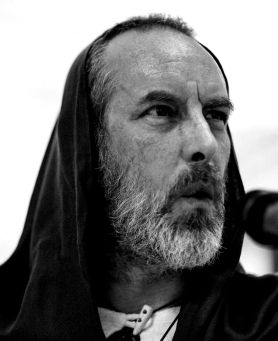
THE MUMBLE : Hello Bob, so can you tell us where you’re from & where you’re at, geographically speaking.
BOB: I am speaking to you from Middlesbrough, where I was born and raised and have spent most of my life. I moved to Crewe for in 1989 to do a degree in Creative Arts, specialising in Creative Writing, but moved back to Middlesbrough in 92. Middlesbrough is supposed to be the worst place to live in England. It has its problems, serious problems but there is a lot of good things here too. For one, it has a thriving arts scene and a lot of very talented people. It does tent to be ignored though on a regional and national level.
THE MUMBLE : So what got you into poetry in the first place
BOB: I wrote stories as a child and a teenager but it was attending a community creative writing workshop at a local library run by Trev Teasdel that gave me the encouragement to take it seriously, and I had a few short stories published in local magazines. Trev encouraged me to apply to do the degree at Crewe and Alsager College of H.E. It was there that I was exposed to poetry, e.e. Cummings, the Beats, the Black Mountain Poets, and realised it wasn’t what I’d always thought it was.
THE MUMBLE : What inspires you to write
BOB: I am quite prolific because it is such a part of my way of perceiving the world and myself within it. If I don’t write regularly I start to fret and become irritable, so it is important to give myself the time to work creatively. I become quite obsessive over things too so I enjoy working on projects like Leasungspell and The Seer Sung Husband which require a lot of research and slow chipping away at an idea.
THE MUMBLE : Who have been your greatest poetic influences, in both early & present days
BOB: My greatest influences are Derek Walcott, Seamus Heaney, Elizabeth Bishop, Brendon Kennelly, Tony Harrison, Pablo Neruda, Allen Ginsberg, but I was very much inspired by some of the regional poets I’ve met and worked with like Andy Willoughby, Paul Summers, Tom Kelly. Andy Willoughby and I have been running an exchange scheme with poets from Finland for over 15 years so I have been heavily influenced by the Finnish poetry scene, which often has a shamanic Beat quality to it, poets like Esa Hirvonen, Kalle Niinikangas, Katariina Vuorinen and Riina Katajavuori.
THE MUMBLE : Your work has been translated into ten languages : can you tell us a litte more about this
BOB: Because of this connection with Finland I have been involved in a lot of international poetry projects and translation projects as well as quite a lot of international touring and performance work so I have had poems translated and published in other languages such as Swedish, Russian, Karelian, Estonian, Urdu, Danish, Dutch, Spanish. The collection I wrote with Andy Willoughby ‘Sampo: Heading Further North’ which is inspired by the National Finnish Epic ‘Kalevala’ was published in three languages in three different countries during 2015. I consider myself a European poet and think that poetry, and creativity in general, can act as a bridge that is able to span cultural and linguistic boundaries. The act of translation is a process of reaching out, a tentative grasping of potential meanings to be carefully examined and carried back into one’s own language, and enrich it. This process seems more important than ever given the rise of xenophobia and right wing ideologies over the past few years.
THE MUMBLE : You are a senior lecturer in creative writing at Teesside University, what are the key tenets of your teaching
BOB: As a senior lecturer in Creative Writing at Teesside University my approach to teaching is to encourage experimentation, creative play, to use your words as a vehicle for reflective practice, to strive to write beyond the habits and perceptions of the ‘self’ in a process of continual depersonalisation. That is not to say you shouldn’t write out of direct experience or a grounded idea of ‘self’, it is essential to do so but it is also vital to recognise that this idea of ‘self’ (authorial or not) is itself a discursive construct. Once students realise this through their creative practice they find it extremely liberating as writers.
THE MUMBLE : You are a founding member of the experimental music and spoken word experiment Project Lono, how do you feel the soundscape assists the spoken worD
BOB: I’ve collaborated with many musicians, both live and recorded, and it definitely brings another dimension to the spoken word, carrying layers of added meaning that can work conjunctively or disjunctively with the words. It doesn’t always work and its not for all audiences but when its right it can create a truly mesmeric and transformative affect. It also attracts and engages different audiences, many people who are not really interested in poetry can be hooked into it through a more integrated or combined arts approach. Someone once said after listening to a Project Lono track, ‘I’ve never liked poetry but hearing it with the music helped me really appreciate and understand the words’.
Project Lono is an experimental collective on Teesside that encourages collaboration and cross fertilisation of the arts. I also think it is important to remember that poetry in tribal times was always accompanied by music, sound effects and its physicalisation through dramatic movement / dance. Meter is measured in feet because it relates to the ritualised steps that accompanied the words.
THE MUMBLE : What are you bringing to the table at this year’s Stanza festival
BOB: I am delighted to be taking part in the Stanza Festival 2017 as part of the National Tour of Leasungspell: A Fool’s Tale, which is a performance of parts of the epic poem that was published by Smokestack Books in 2016 with live music and sound effects by lutenist Peter Lagan, singer Sara Dennis, with Kev Howard playing Dordeseal (ancient Celtic horn and various percussion instruments and Tuvan throat singing, and Stewart Forth on percussion and keyboards and recorded sound effects.
THE MUMBLE : What does the rest of 2017 have in store for Bob Beagrie
BOB: Throughout the rest of the year we will be touring the show, with performances lined up in Bamburgh Castle, Durham Cathedral, Whitby, at the Castle keep in Newcastle and at Bristol Poetry Festival. Wyrd Harvest Press will also be publishing a new collection of poems I have written with Jane Burn, titled ‘This Game of Strangers’ which is inspired by the Gwynevere & Lancelot legends so hopefully we will be holding some readings and launch events across the country.
An Interview with Paula Varjack

THE MUMBLE : Hello Paula, so can you tell us where you’re from & where you’re at, geographically speaking.
PAULA : I am writing this to you now from my living room in Hackney, East London, where I have lived on and off for the better part of 18 years. London feels like the place I am most from as I have spent most of my life here, but I can never fully claim it as I have a very strong american accent. I was born in Washington DC to a British father and a Ghanaian mother. when i was still a baby we moved back to Bromley in Kent, we then moved back to Washington and I stayed there until I was a teenager, and at 17 I moved back to London again. I then lived here until I was 30, when I moved to Berlin for four years. Since then I have stayed in London, if you don’t count the five months I lived in Madrid.
THE MUMBLE :Poetry is just one of the strings to your polymathic bow, what else drives your creativity
PAULA : I am an artist who works in a number of forms and I actually only rarely write poetry these days, although there is a poetic feel to a lot of my prose. The medium I work in most is theatre, but I also make video work and often make performance that involves video in some way. I have also begun to explore creating more work that is cabaret based, that I really enjoy. Having worked with words for so long, its so nice to play more with movement and dance and even physical comedy
THE MUMBLE :What got you into poetry in the first place
PAULA : My parents more than anything. They read me a lot of poetry when i was a kid, and i could tell that they enjoyed to read it and read it allowed. .I have very early memories of my dad reading me the Jabberwocky, and Rudyard Kipling, and I remember my mother proudly telling me about how her father had been a published poet, and was respected by and liked by a number of quite well known African-American writers, most notably Maya Angelou and James Baldwin, who both visited in Ghana where my grandfather lived and was from in the early days of pan Africanism, my grandfather was known to be sympathetic to the African-American cause at the time, and particularly to artists. A poet was a great thing to be as i understood from a very early age. I was encouraged to write poetry
THE MUMBLE : Who have been your greatest poetic influences, in both early & present days
PAULA : I have moved around a lot, but there are some books and writers that I manage to always keep with me. I am not sure if these writers have influenced me but they definitely made an impact. In terms of poetry I like to read I will always have the collected EE Cummings, Howl by Alan Ginsberg, Leaves of grass by Walt Whitman and Sonia Sanchez and Pablo Neruda’s love poems on my shelf. I also quite like Bukowski’s poetry. In terms of poets I enjoy watching perform there are literally too many to mention. But long before I became a performer myself I was really struck by Stacyann Chinn, Stacy Makishi, Salena Godden Cheryl B and Francesca Beard. Celena Glenn, Black cracker and Beau Sia.
THE MUMBLE : What inspires you to write
PAULA : Life, the weird wonderful heart swell and heart break of the every day of it, the adventure and late nights but occasionally also the revelations that come in the quiet pauses, in the mundane.
THE MUMBLE : Your debut prose & poetry publication ‘Letters I Never Sent to You’ has just been published by Burning Eye Books. How are you feeling about this?
PAULA : I feel really great about it. Burning Eye is such an enthusiastic press for spoken word artists, and right from the start of the conversation around the book I have felt really supported by them. Having worked in performance for so long, its also really exciting to produce something creatively that results in an object. Its funny how exciting that can be after working in the ephemeral for so long
THE MUMBLE :What are you bringing to the table at this year’s StAnza festival
PAULA : My energy, spirit and stories, and the book itself it course, which I am very proud of and excited to share. There may be a little multi-media in the mix and an extract or two from theatre work too.
 THE MUMBLE : What does the rest of 2017 have in store for Paula Varjack
PAULA : It looks really really busy to be honest, but in so many exciting ways. Right after Stanza I go head first into a U.K. tour for my latest performance Show Me The Money, a show based on interviews with artists around the U.K about the value of art in these uncertain times. when that is completed I will then get stuck in to development for my next theatre show The Cult of Kenzo, exploring our relationship with brands, but in particular luxury brands, which will start its development at a residency at Battersea Arts Centre . Meanwhile I will be lead facilitator for the Barbican Junior Poets programme, while also freelancing as a drama and creative writing facilitator for eastside educational trust, and somehow when I am not doing all of that I will be hosting and producing events with Dan Simpson with our hosting and production partnership Varjack & Simpson and before I know it, it will be summer and i will be back in Scotland for fringe again. It certainly won’t be a laid back year, but i am looking forward to all of it.
An Interview with Steve Pottinger

THE MUMBLE : Where are you from and where are you at, geographically speaking
STEVE : I was born and brought up in a small town in the Black Country, part of that industrial sprawl north and west of Birmingham. I moved away to go to university, stayed away, and spent years travelling and exploring the world while avoiding anything as structured as a career. Right now, I’m back in my hometown, in the house I grew up in.
—
THE MUMBLE : So what got you into poetry in the first place
STEVE : I was seventeen and my girlfriend introduced me to the Mersey Poets (Adrian Henri, Brian Patten, Roger McGough). We’d been seeing each other for a few weeks and she gave me an anthology of their poems and said “Read this.” I wanted to keep in her good books, so I did. It was the first time I’d read poetry which was cheeky and honest and moving, and felt like it could have been written by and for people like us. It spoke the way we spoke, it was energetic and vibrant and alive. I’d been writing typically miserable teen-poetry before that, but this showed me a whole other world of possibilities.
—
THE MUMBLE : Who have been your greatest poetic influences
STEVE : I’ve mentioned the Mersey Poets. I also loved Dylan Thomas – my folks had the LP of Richard Burton reading ‘Under Milk Wood’, which I listened to over and over as a kid, in love with his voice as much as anything. But my greatest influence was probably a copy of ‘For Beauty Douglas’, the collected poems of Adrian Mitchell. I loved his playfulness, his wild imaginings, his anger, and the range of subjects he dared to cover. I still go back to that book now and find myself in awe.
Sometimes, though, I’ve gone to poetry nights and been bowled over by the performance and the words of someone simply getting up to do an open-mic spot. That’s the wonderful thing about poetry: anyone can have a go, anyone can move us.
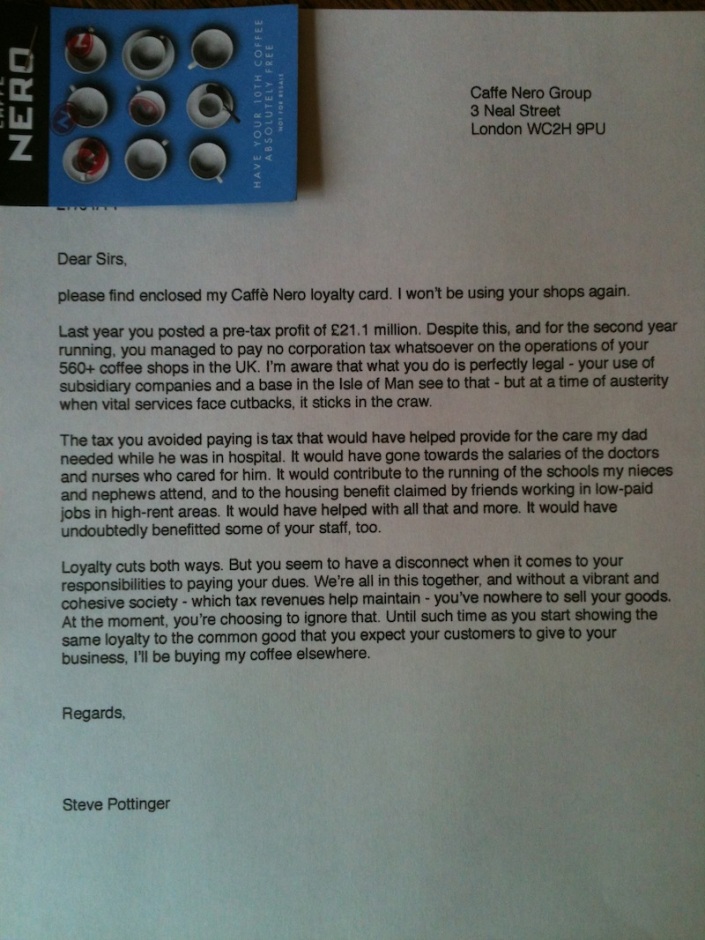
THE MUMBLE : You wrote a letter to Caffè Nero about their tax avoidance which went viral, can you tell us about that
STEVE : I love hanging out in coffee shops watching the world go by as much as anyone else, but corporate tax avoidance really gets my goat because the rest of us – you and me – end up picking up the tab. I wrote my poem ‘No-one likes an angry poet’ when I learned Starbucks seemed to see tax as an optional extra, and started going to my local Caffè Nero instead. Then I read that they weren’t paying tax either. So I wrote them a letter, took a pic of it, and posted it on Facebook. I guess it hit a chord, because it got shared thousands of times, picked up by campaigning organisations, and the BBC and Independent got in touch to talk to me about it. I’m reliably informed the boss of Caffè Nero hated it. That pleases me immensely.
—
THE MUMBLE : The Punk scene is always hovering menacingly over your work : why is this?
STEVE : I don’t know if it hovers menacingly – it’s got dodgy knees by this point, for starters – but punk attitude does inform a lot of what I do. This questioning, idealistic, slightly bolshy attitude isn’t peculiar to punk, of course – anyone who’s ever put two fingers up to the established way of doing things and decided to find their own path will recognise it – but I suppose I’m old enough to look back at the punk era as being a time where it was in its pomp. I’ve a soft spot for the music, too, and have been lucky enough to help two punk legends write their autobiographies.
For me, punk’s all about valuing and respecting each other, putting people first, recognising our common humanity (a theme in my work, I know) and listening to each other’s stories. And getting up and dancing for as long as the dodgy knees allow.
—
THE MUMBLE : What are you bringing to the table at this year’s Stanza festival
STEVE : First and foremost, a love of words, of their power to shape the way we view the world, engage our emotions, and say something important about our shared experience. Oh, and expect a healthy pinch of irreverence, too.
—
THE MUMBLE : What does the rest of 2017 have in store for Steve Pottinger
STEVE : Gigs. Adventures. Stories. Interesting collaborations with other poets. Days out on the mountain bike and in the camper van. Hope and scribblings. Determination and laughter. Wilderness, cities, and a glass half-full.
An Interview with Harry Giles
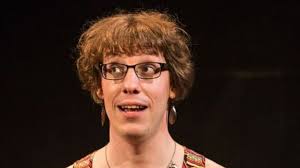
THE MUMBLE : Hello Harry, so where are you from & how did you end up in the Orkneys
HARRY : I’m from Orkney! My folks moved there when I was two, so it’s the only home I know. On Westray as a kid, and then Deerness as a teenager.
—
Dear Witches, A Charm for When You Need It
Take a burning memory, and tear
into as many pieces as your years.
Mix with strands of weed, pulled
from broken pavement. Soften
into paste with spit, piss
or greeting: whichever is on hand.
And with the potion write
your true name in the place
where you need shelter: a wall,
a window, or, more likely, your heart.
I cannot promise you it will work.
I can promise your name will glow.
—

The Gay Gordons
Thir ower mony girls, an that means they dance
wi ilk ither, wan leads, wan follaes,
but the teacher still caas the meuves tae the men
an the ladies, pleys the pechan tape,
watches, airms faldid. The beuys haald thir pairtners,
some like a pistol, some like a turd,
aa ferly doutsome an furious
at the aisy grace o the girls wi the girls.
Vince likes rugby, an Darren likes his haand
on Vince’s sweity back i the scrum.
Darren birls Isla ower loose, Jane yokes Vince
ower tight, an both the beuys wunner
gin a faimly flitted tae the island wi a clutch
o beuys, twins, quadruplets, sweetched
the ratio, wad they be mad tae dance thegither?
Wad they be able tae mak on tae complain?
Thir een nivvir meet i the cheengan reum:
thir no thievid glisks, no unnerstandan.
They bore at ilk ither’s caafs ower the benches,
peek roond i the shooers whan the ither’s
no leukan, bide in permanent terrification o bean
catcht. Bean catcht wad wrack thaim.
Whit wad bean catcht feel like? Hou
wad it feel tae be catcht, tae be catcht?
—
Poem in which nouns, verbs and adjectives have been replaced by entires from the Wikipedia page ‘List of Fantasy Worlds’
You gor me. Boxen in your sartorias-deles
and angeous krynn. Too xanth, too zothique,
as though an erde of bas-lag were termina
under your hyrule. As though I were charn
already. Don’t beklan to me, don’t tir like
I’m lodoss to your emelan blest,
like I’ll xen when you tortall my deverry tarth,
ooo, I’d landover earthsea with you, panem.
It’s erehwon. You’re still melniboné,
your eberron oz and aebrynis quin are still
spira. I nirn you. But faltha your athas
and then you can halla me. Og idris:
eidolon to pern me, tamriel! Harn me til
all my mundus aurbis one glorantha “Eä!”
—

An Interview with Mark McG

THE MUMBLE : Hi Mark, thanks for coming, so where are you from & how did you end up in Glasgow?
MARK : Originally from Ayrshire but moved out to Glasgow as soon as I was old enough to flee the nest. Spent some time abroad too but Glasgow has been my home for the most part ever since. There is always so much going on here without every seeming as hectic as other places I`ve visited. I think there is the right balance of madness and relaxation in this city and everywhere is usually walking distance from anywhere else. The music scene is the strongest I’ve ever seen it and the poetry and comedy scenes are exceptional too.
***
THE MUMBLE : What first got you into poetry
MARK : I stumbled into the spoken word scene by mistake. Years ago, I was in a band who were plagued by technical difficulties, rubbish equipment and a fondness for free booze. As a result, it was very common for me to have to fill in the awkward silences or musical blanks by ‘saying hings’ as different levels of `tuning` and `tweaking` occurred between songs. Later on, I started hosting a night I put on called Jamfest which was a rigged open mic night and collaborative jam. Filling in the spaces then was a lot easier and I would do it with some fairly pish off the cuff banter or by reciting song lyrics accapella. We started the FIRST Alternative Burns Supper (there is loads of them now but we were the only show in town back then) with Sammy B and that lead to me crossing paths with a lot more poets from the scene.
One of them was Jim Monaghan who, if memory serves me correctly, gave me my first gig outside my own venue bubble. I really enjoyed it and started doing more and more of them. It was a lot more fun doing it without the pressures of being a host. I loved the freedom that spoken word gave me as a performer and was grateful to the support everyone seemed to give. I have peeked round the door on just about every scene in Glasgow at some point and there is always a hardcore cliquey element to each of them. I genuinely expected the poetry scene to be stuck up or patronising but the opposite was true. In my experience everyone has been helpful and nice. I`m sure there is a nastier side to it that I`m not aware of. There is probably exclusive , secret poetry nights in castles where they bitch and cackle about the fact people like myself find it necessary to rhyme words with such regularity but I have yet to stumble upon any of that . It made sense for me to gravitate towards poetry and spoken word as all I’ve ever really been good at is writing words down on paper . I try and write everyday and am determined to try and go through the boxes of lyrics and try and turn it into a whole batch of new material after some extensive editing. Before, I have always felt it was ‘cheating’ by throwing in stuff I wrote in the past but I have recently had the realisation that they are my words and no-one has ever heard them so it might be okay to use them rather than let them gather dust. I hope to get a few pamphlets on the go this year and maybe get a brand new spoken word live show ready for a short stint at the Edinburgh Fringe.
*****
Countdown to Tinnitus
People talk about One self Two much
at any given Second
in the Third person
go Forth and drink a Fifth of gin
Ive got a Sixth sense for the Seventh deadly sin
I should ve Eight something
before the Nine bar subcrawl
playing Tennis with tinnitus
in a tunnel feeling awful
clock ticking on my ears innocence
Bus stop apocalypse
countdown to tinnitus
Five
Four
Three
Two
One
I broke through the Ten commandments
Like a cat with Nine lives
I lost my head like all of Henry the 8th`s wives
I slept through the Seventies
awoke the Sixth of June with a sick sense of humour
Let`s bet our landlords Five hundred monthly rent based purely on a taxi driver rumour
I ate forbidden fruit with the Three wise men
Went Two church in fancy dress once never again
clock ticking on my ears innocence
Bus stop apocalypse
countdown to tinnitus
Five
Four
Three
Two
One
The silence keeps me awake at night
its the feedback
the white noise
the wind chimes
it goes through me
**********
THE MUMBLE : Your lyrical singing style is quite hip-hoppy, is there a difference between spoken word & hip-hop apart from the obvious musical backdrop
MARK : I have written lyrics from a very young age and it was always good rap music that mostly got me into the head space of wanting to write often and more importantly, wanting to write better. I`ve been in bands that were described as punk rock but if you looked at the words written down or you applied the verses to a Hip Hop beat you would be able to tell where the inspiration comes from . Many `songwriters` get away in the Indie/ Rock/ Punk/ Pop scenes with some very lame and unoriginal lyrics and even become heralded as `the next big thing` because of them. I doubt you would get away with such laziness in any decent minded poetry or Hip Hop circle.
In my opinion, a good Hip Hop M.C can deliver some of the finest poetry around. Many would disagree with that but I`d be happy to prove them wrong by showing them a range of rappers who can connect with an audience without a beat or texts that can take the reader on a journey. On the other hand, some good poetry could be made into good hip hop but that`s far less likely. All of this is at the listener and reader`s discretion about what is good poetry is and what their definition of real Hip Hop is . I enjoy wordplay, double meanings and a message behind it all. I could give a long list examples of Hip Hop M.Cs that have made effortless transitions to poetry when it suits them . Both Akala and B Dolan spring to mind off the top of my head. I also think more locally people like Dave Hook from Stanley Odd and Loki are brilliant at stripping down their performances to a spoken word crowd. Going the other way? I would say people like Kate Tempest, Mike Skinner and Scroobius Pip are fantastic poets that sound excellent with a phat beat behind them . There is also a load of brilliant M.Cs that would sound terrible stripped back without the beats behind them. It all boils down to the style and delivery of each artist . Hip Hop gets a bad rep in poetry circles because they tend to only have mainstream acts to compare it to . Like most genres of music , the most exciting things are happening off the beaten track and the best of these rarely make it to the prime time so the majority miss out on true gems as a result. This is something that the internet is more than capable of fixing if people shared more of their favourite underground artists. These small steps can make all the difference. I know I have always done my best to `spike` the poetry crowd with Hip Hop and vice versa. People tend to be surprised about how much they like the thing they didn`t expect and I try to make a habit of it with nights like Jamfest, Ned Poets Society, Friction Burns and more recently the `Overheard… ` night
***
Planet Fort Knox
(from Who Took Utopia : Track 7)
to my credit I was drinking slowly
and to my detriment … I wasn`t really
it`s all swings and roundabouts
hocus pocus smoke and mirrors
post- `man ` on high alert whenever he delivers
and if I ever look confused?
Don`t worry mate I`m getting ya
just correlating data dat may one day unsettle ya
people want the truth but don`t care for facts
they want a black`n`white soundbite as a green light to react
I`m not angry
to say I was suggests am somehow surprised
and I`m not shocked
not one jot
it`s all so very predicable
also very avoidable
crobarred mental block mind-warped brainwashed bubble
I have my own theories- I`m the king of this rubble
my wall is a towering inferno
until I bash in a keypad with my pin-code
motion captured lasers for good measure
vandal grease? nah! retina sensors
full of beans.. in the bunker for the Alex Jones end time
refined tonic wines and a beware of the dug sign
I patrol my yard solo in a tin foil jeep
and vet the wildlife for bugs cuz slugs can be discreet
I`m not lonely
better to have not loved than be lost forever
and I`m not bitter not one bit
ah researched the text of all the ancient scrolls
visitors not welcome round here no more
no time for fools I`ve disowned them all
down the shutters go forever I`m invisible
intruders get electrocuted trespassers prosecuted
by my law , my land, my rules, my gun
I shoot onsite with a remote control (bang)
my fence is spiked with barbed wire for defence
get out my head this is my patch
get off my land keep off the grass
move along there`s nothing for you here to see
planet fort knox with a paltry population of just me
I`m not crazy
to say that I am says more about you
and I`m not wasted
I just say shit
I`ll stay on the real while you live your cartoon
a glutton for punishment judgement day soon
my rifle and my bible just me and the moon
I`de rather that than blindly consume
sheep follow sheep ba ba to the abattoir
gabbing blah blah from your armour of an avatar
sheep follow sheep ba ba to the abattoir
gabbing blah blah from your armour of an avatar
***********
THE MUMBLE : As your love of poetry has developed, what parts of the artform have you incorporated, both classical & contemporary
MARK : I`m not sure how best to answer this question. If I`m honest , I have no actual poetry or literature background and just always wrote words down off my own accord. I write far for more than I read which is something I`m not necessarily proud of but just a fact of the matter . No matter how busy my life is or where I am , I usually have a pen handy and can jot down some ideas. I`ve been known to write everywhere from bus stops to nightclubs. The latter would have embarassed me up untl fairly recently but now if I have an idea , I want to scribble it down no matter where I am. I naturally found writing words down therapeutic for years before I started performing them at any level. I`m not from the kind of place where you could just say `I`m gonna be a poet now.` I`ve still got good friends who don`t even know that I ever even joined a band. I would describe the majority of what I`ve done up until now as mainly satirical observations done in an original contemporary style but perhaps an expert would disagree. I have definitely hid behind a cloak of comedic value at times for a couple of reasons. One, I enjoy making people laugh and I find that for me it is the best way to get people`s attention to a serious topic without coming across as preachy. The other reason is that I`m only just starting to feel confident enough to perform out loud darker or more abstract material . I did the same thing with my band too, Hide behind comedy because if it turns out shite then you can say that you were only joking. But eventually , once you have an audience you can deviate into new and interesting directions. Sometimes, I do poetry shows and don`t even do a poem. I certainly wouldn`t advise any of this stuff by the way , it`s just how it all has unfolded for me.
Since I was a child, I`ve always studied closely song lyrics and these days I always do my best to pay full attention to any work my contemporary`s come out with . I feel you should always give an artist the benefit of the doubt and pay close attention to the message they are trying convey. A lot of stuff goes over all our heads everyday so I make an extra effort for any artist who has made me take notice. I hope to one day get a further academic understanding of the written word but until then I will keep working as hard as any other writer in creating new material and performing it as much as I can. I am getting quite good at just being me and as a promoter I personally prefer artists who are good at being themselves. That is the biggest skill I look for when watching a band, a poet or a comedian. If you can harness your own way of doing something then everything else should fall int place with a lot of hard work and a bit of luck.
***
THE MUMBLE : You have just finished Jackal Trades, can you tell us about the project
MARK : It`s been a fairly long time in the making but finally glad to say that the `Need the Character (s)` album just dropped recently and we`ve reworked the songs as a 3 piece for live shows. Jackal Trades started as myself and the infamous and brilliant Gordy Duncan JR . We laid down about 5 tracks in the space of a couple of days then nothing happened for quite a long time, so I started collaborating with some of my favourite producers. Most of the songs have never seen the light of day as I was quite ruthless in scrapping ideas that I thought weren`t good enough and then penning fresh concepts. It got to the point where I finally decided that the songs I was now scrapping were actually of a decent level and it was best to just complete the debut album by a set deadline and then work on new things afterwards. I need to thank the likes of Gordy, Soundthief, Andy Martin and David Montgomery who all played big parts in getting me over the finish line. It was also a pleasure to work with legends like Mistah Bohze, Scatabrainz, Yoko Pwno and DJ Sonny for the first time as well as working with some familiar faces such as Sun Dogs and Mackenzie. I think this album lays somewhere between rap and poetry to follow up on your earlier question. I have never felt very comfortable with the term `poet` or `rapper` . This is just me saying hings that rhyme and hopefully there is enough ideas and melodies to give it repeated listens . I had very little expectations with this project apart from testing myself to make something fresh sounding. I think we achieved that but I know I can do better and hope to have the follow up out over the summer where we look set for a busy festival season alongside some shows in Inverness, Manchester and Newcastle. I have genuinely been blown away by the response of the album and the live shows so far. The latter is all down to the joint genius that is Dr. Jaslan and MJ Windebank. The album itself is sideways look at society today hidden behind the vale of numerous characters. The reviews have been great to read, even the slight criticisms as they seemed rooted in the fact that someone offered an opinion of their own after listening to it properly. You can download / stream the album on bandcamp, where I think a few CDs and T shirts should also be available.
 THE MUMBLE : What are the driving forces behind your words
MARK : Anger, Boredom, Humour, Inequality, Nerves, Compulsion, Money, Dreams, Love, Hate , Joy, Revenge, War . I don’t think any subject should be off limits and more and more find that the mundane can be made exciting. It feels like I have a constant soundtrack in my head of rhythms and beats so just one turn of phrase, a joke , a thought, a bad pun or two words that rhyme well together can be enough to make me jot down a couple of pages of stuff. 99% of which lays in boxes in various locations though because when I start to work on something or collaborate with someone , I (possibly wrongly) feel the need to create something fresh that I haven’t even heard before.
***
THE MUMBLE : Can you tell us about the Glasgow Spoken Word groups you are involved in
MARK : Ned Poets Society has been dormant for a while but we should maybe bring it back? aye maybe we should. The Overheard nights? Overheard in the Westend takes place usually on a monthly basis at Siempre Cafe in Kelvinhall and the same goes for Overheard in the Southside at the Rum Shack. Poets and musicians interested in either should email traffic.cone.records@gmail.com . Hopefully, we start Overheard in the East End in 2017 too.
***
The Afterlife of Fred Phelps (Part 2)
Hello Fred Phelps , I am God – It’s yourself?
I’m confused and concerned by the life that you lead
the advice that you gave and the scriptures you ‘learned’
you must have misheard in life so listen up now you’re dead
pay attention Phelpsie , I’m a very busy man
I lost an aeroplane in transit they may try blame on Iran
I guess I plain- crashed out and now the full moon’s out
aliens are skyping me, scared their secrets out
I’m like ‘whatcha taaalkin bout?’ nobody truly knows
just plant more triangle sandwiches in those pop videos
back to you AYE , Aye I do hate fags
not the American slang , I just quit smoking TABS
way back in the day when that Mary Magdeline slag
broke my sons heart and stole his jet pack
the old testament rags were misquoting me as vengeful
exaggerated claims came before they even figured out pencils
the truth is humanity’s not even on my level
they still haven’t figured out the actual holy land is hidden out in Methil (FIFE!)
I shuffle off dishevelled to the multiverse of infinity
I’m omnipotent physically and fill my day with wizardry
my resume stretches the entire planet’s history
what consenting adults do never hinders me nor limits me
to think to picket funerals would even interest me is a mystery
and that religion that you preached was DEAD WRONG from it’s infancy
I hope you revelled in the infamy but sorry it did nothing for me
cause for the last few decades Ive been constantly on that scientology
why?
why?
why?
coz I like science fiction and that should count for something
they CRUISE with Travolta the Westboro Celeb count equalled nothing
life’s too short for hatred , I’m afraid Fred you truly lost it
so ILL SEE YOU IN HELL, well at least till you come out the closet
away and repent your bawbaggery but until then
I’m away for a pint with Joe Strummer and Tony Benn
***
 THE MUMBLE : How do you see the Scottish poetry scene as a whole
MARK : I think the Scottish scene is very healthy just now . Glasgow can boast Inn Deep, Sonnet Youth, The High Flight, Spangled Cabaret, Extra Second, Last Monday at Rio plus `Overheard in the ….` to name just a few regular events for spoken word. I don`t get through to Edinburgh as much as I would like but The Fringe is always bursting with talent and obviously Loud Poets continue to make big moves at home and abroad. Also met some great talent down at Dumfries at The Stove where plenty good stuff is happening and most of the music festivals are known to give poets a platform. I would highly reccomend all the wee Scottish festivals to anyone . Places like Audio Soup, Kelburn, Deoch an Dorus, Knockengorroch and Doune the Rabbit Hole make for outstanding weekends and the poetry stages add to the experience. I think it`s encouraging to see how poetry has such a broad age range which definitely makes things interesting. The slams are always great to watch and I enjoy finishing Second in them whenever I can. I would say to poetry in Scotland: well done poetry in Scotland, you are doing just great. Keep up the good work. To someone interested: then please do come along , everyone is really nice . To someone not interested: give it a try, it is surprisingly not as shite as it sounds.
***
THE MUMBLE : What is the poetical future of the ever mercurial Mark McGhee
MARK : I would like to spend my year apologising to the poetry community for not doing many poems. I was in guru mode. Telling people about the year of `No More Rage` . There was a point to it all that never truly materialised but I hope to remedy that by saying hings that sometimes rhyme once again. I tried to fix them but now realise they don`t want to be fixed and the truth is there flaws make for great poems and anecdotes. This is a new year and a new me and a new them so let`s take it back to basics and become the old us where we didn`t judge so much. Girobabies are on hiatus , Jackal Trades is confusing so there has never been a better time to actually say poems instead of talking about how your gonna say a poem and then never doing it. My first lyric book just came out – http://jackaltrades.bandcamp.com but that`s more like a lyric book so I intend on releasing actual poetry and performing it properly . Aiming for late April . Probably at Overheard in the Southside. Would like to do some festivals out-with Scotland too . That is the only goal I really would like to make happen for sure. Everything else is bonus. If you`de like to book me or say hings at one of the shows I do then you can get me traffic.cone.records@gmail.com
****
Escape! Routine!
day 23 the truth is there is now daze now
the minutes seem minute compared to the months and hours
I row solo on this empty vessel
Pacing up and down looking for a clue
or a footprint, validation, something
I don`t know… anything
I think I see a monster of the sea
that local fork law says is near to me
ha! fear is no match for this hunger eating up inside of me
yesterday, I made a fishing rod
out a bamboo shoot an a piece of string
and I launched my mythical dream catcher into the ocean
it made a thudding noise then vanished
there has been no `man eating fish`
not on my watch
sun-clocks in the snow
the sand has long passed
and every so often I hear this buzzing noise that loops
that leaves me shook and propels me to jump through hoops
and stoop to new depths and look
can you hear that?
there`s a helicopter overhead
escape! routine!
helicopter overhead
I know what`s real
Dayeightyeight
things are getting silly now
a seagull serenaded me with a sea shanty
it whit?
I am what… !
must`ve been they zoo-keepers peaking through the cage
to protect us from ourselves and prepare us for the stage
the waiting game perpetuates the elusive magic flare
but I`m pleased!
I dream I can fly every night!
did you see that?
see that flash?
there`s a helicopter overhead
escape! routine!
helicopter overhead
I know what`s real
Day 1 the snakes became butterfly`s
the pain became nothing but mere sleep in our weary eyes
it starts with a shooting star and parts with a sunrise
dazed by the beauty in everything – I felt good!
words are but a memory – I speak in colours now
I wanna spend another hunner summers with no count
fear was the temporary illusion of ego
we shed our last shred of sanity we don`t need it now where we go
who took utopia?
well there`s no place like the present
there`s no passport for a state of mind
whether superstar or peasant
you took utopia!
and you are only me
and I was born yesterday so it was never really me
and aye I have sinned aye but it was never truly me
I quantum leaped into this instant and rose up from the sea
you have been trapped but you can break free
coz I think I spy a torch-light that will never bother me
We all take the same way out
out!
out!
An Interview with David Moffat
THE MUMBLE : Hello David, so where are you from & how did you end up in Glasgow
DAVID : I was born in Glasgow and brought up in a tenement in the Gallowgate near the Orient Cinema. It was a lively house (no one talked about ‘flats’ in the east end) with people coming and going all the time. I wasn’t aware of much formal poetry, Daffodils and Village Smithies apart, but from an early age I was exposed to the lyrics of Lorenz Hart, Cole Porter, Ira Gershwin etc, through Saturday night sing-songs in our kitchen. Of course I didn’t know then who had written the words I heard sung by, Jimmy Sinatra, Archie Crosby and Hughie King Cole, only that they were clever and memorable.
***
THE MUMBLE : So how did you become a poet
DAVID : In the late 1960s at Glasgow School of Art, I had a Liberal Studies tutor called Stephen Mulrine who had written a poem I really liked called The Coming of the Wee Malkies. He encouraged me to submit some poems for the Art School magazine called Folio. I did and they were printed. Liz (or Elizabeth as she was then) Lochhead who was a couple of years above me, was one of the main contributors this publication.
Fast forward forty years and I’m a retired Art Teacher remembering the bits and pieces of writing I’d enjoyed doing between the teaching, drawing and painting so I joined a Glasgow University creative writing group tutored by the excellent Donny O’Rourke. We wrote a poem on a given, intriguing prompt every week and then had it group critiqued. I did this for five years and found the experience incredibly stimulating and productive. Thank you Mr O’Rourke.
***
THE MUMBLE : What were your earliest influences & how have they changed over the years
DAVID : I was in fifth year at secondary school when I was introduced to the work of Ted Hughes by my English Teacher. I loved it, especially Hawk Roosting. It opened the metaphor door for me when I was asked reread (how important is it to do that?) and consider the hawk not as a bird but as a symbol of fascism. What a light bulb moment that was. So the first poetry book I actually paid money for, was a Faber paper cover Editions (that’s what was written down the side of the cover) of selected poems by Ted Hughes and Thom Gunn. That introduced me to Mr Gunn and in particular ‘Blackie, the Electric Rembrandt’. A great wee poem whose title, unlike the rest in the collection, was presented in inverted commas. Why? I wanted to know why the poet chose to do that? As I get older I admire most those poets who can successfully straddle spoken word and page poetry. I saw Simon Armitage read at a Stanza event a couple of years ago where he walked onto the big stage to great applause. Ignoring the audience he placed his notes on the rostrum, slowly unscrewed the top of his bottled water, carefully placed it to the side and adjusted his papers. By now the silence was becoming uncomfortable. Then he started his first poem which to the best of my recollection went,‘We would like to apologise for…’ It was a poem about a delayed fight and the different grades of passengers waiting to board, from Platinum class all the way down to, was it Belly Button Fluff? I can’t remember. The point is he had used his silence to make the audience wait… then receive an apology in the form of his poem. So clever.
***
THE MUMBLE : As a spoken word poet, how has the scene in Glasgow been evolving during your participations
DAVID : New blood is always needed. I read every month at Cafe Rio in Glasgow and there is nothing better than a fresh voice, young or old, at the mic delivering original material. It’s important that everyone who does spoken-word encourages new poets to join us.
***
THE MUMBLE : Last year your poem, ‘Listening,’ won the Breathing Space ‘Year of Listening’ competition. Can you tell us about the process
DAVID : Dementia takes many different forms. In my mother’s case, in the early stages, there were lots of malapropisms or words she couldn’t bring to mind but she did want to talk. I realized that although I was hearing an opinion or story for the umpteenth time, she thought she was offering it for the first. That’s the difference I wanted to explore in the poem. I started with some of the actual questions she had asked me which in their own way were quite poetic.
‘Why is your face… thick orange?’ (I had a suntan.)
I found the best way to handle the many (often inconsequential) questions my mother would ask was to do so fully, as if I were speaking to a bright child. My mother might not have understood the answer but she was definitely aware I was engaging with her sincerely. Of course the answers I give in the poem are more considered than I could hope to offer in real time in a nursing home. Poetry allows you to consider what you want to say and how you want to say it. If I were granted a superpower it would be the ability to stop the world while I considered exactly what’s going to come out of my mouth next. In the poem I used an Ask and Answer format with crucially, the first and last questions being exactly the same to emphasise the circularity of the dialogue and represent the boundaries that limited my mother. The poem can be read on the Breathing Space web page.
***
THE MUMBLE : What inspires you to write
DAVID : I can understand and to a limited extent appreciate the beauty in bucolic poems but they don’t get my juices flowing. I don’t care much for the polemic either, I know about bad things. I’m a town mouse who enjoys looking at and listening to people. That and ideas is what does it for me. No way am I saying metaphysical.
THE MUMBLE : Can you tell us about your poem (the spoken/read one)
DAVID : I’ve found there is a bit of a friendly divide between page and spoken word poets. I like both. Massive Generalization Alert- I’ve bought pamphlets containing what was mainly spoken word poems and found they didn’t work on the page for me. Maybe that’s entirely my problem. Anyway when I’m writing for spoken word I try to be conscious of how that poem might be presented on a page. Maybe it’s best to show you what I mean.
Here’s how I read this ‘ironic twist’ poem
.
Old Faithful
Pitiful as an ancient cur’s last yelp,
it fought hard to stir and gasp
a final inhalation
but proved to be past help.
I heard it die,
right there on the vinyl floor,
a fluttering where once a heart had roared.
No more sniffing nostril on the job.
No seeking out a flake of skin,
or tad of sandwich crumb,
that never made my gob.
Throughout a decade plus,
the flexing neck
skirted in my step
and a barrel chest
that owed me nothing
– bar a triage check –
was taped or glued
to pass each fitness test till now.
Replace and not repair I must.
My Dyson cannot suck,
it’s bit the dust.
Ha ha, you thought it was about a dug and it was really about a hoover (sorry I mean vacuum).
Nobody listening thought it was a Shakespearian sonnet but it was (albeit with enjambments). Printed on the page, exactly the same words look like this.
Old Faithful
Pitiful as an ancient cur’s last yelp,
it fought hard to stir and gasp a final
inhalation but proved to be past help.
I heard it die, right there on the vinyl
floor, a fluttering where once a heart had
roared. No more sniffing nostril on the job.
No seeking out a flake of skin, or tad
of sandwich crumb, that never made my gob.
Throughout a decade plus, the flexing neck
skirted in my step and a barrel chest
that owed me nothing – bar a triage check –
was taped or glued to pass each fitness test
till now. Replace and not repair I must.
My Dyson cannot suck, it’s bit the dust.
Fourteen lines of rhyming iambic pentameter with a volta.
***
THE MUMBLE : What is the poetical future for David Moffat
DAVID : A few years ago I wrote an illustrated childhood memoir that no one wanted to publish so I did it as a Kindle book which has sold 3,000 downloads so far. It was a fair bit of work formatting the words and cartoons but well worth it (certainly in financial terms, I get 94p per download).
I have been told that no one wants a Kindle book of poems as everyone prefers their verse in a pamphlet and I think that might be the case. Nevertheless I’m putting together a virtual book of fifty poems along with some thoughts on why anyone would ever write a poem in the first place.
There are a number of reasons for doing going down the Kindle route.
1. It cost nothing but your time to publish the collection.
2. You don’t have to hump books around in the hope someone will buy them.
3. You can tell folk you have a book published and they can go online and have a sniff inside it.
4. It’s inexpensive to buy.
5. You actually make money from your writing – hurrah!
An Interview With Eleanor Livingstone
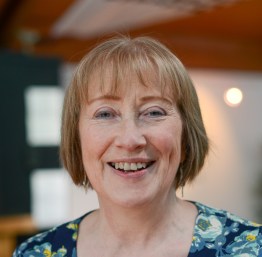
THE MUMBLE : Hi Eleanor, just under a month to go til this year’s StAnza – are you excited
ELEANOR : I often say that planning a festival is a bit like being a film scriptwriter and the festival is the film premiere. You sit for months at the laptop writing down ideas, bouncing back and forward emails, drafting schedules and rotas: everything is a draft, something sketched out, then on the opening day, poets walk into the Byre Theatre for the launch and for five days they keep on coming from around the world as well as from across the UK, and the audiences as well, and it’s like our film script has been transformed into 3D glorious technicolour – except even better because it’s real and walking amongst us, talking to us, performing for us, so it’s as if they step off the screen and into our festival venues. It is the most magical experience and gives me a tremendous buzz each year. As far as the StAnza team are concerned, I think of that film, Field of Dreams. Our team plan the festival but we rely on around 100 volunteers to help us deliver it. So, each year it’s kind of an act of faith, trusting that if we build it, they will come, and they do! We get volunteers returning each year from all over the UK, as well as new ones joining for the first time, and most of our core local team are volunteers too. StAnza’s success is a tribute to them all.
___
THE MUMBLE : What special moments are we to look forward to this year, the 20th anniversary
ELEANOR : It’s a bit like Christmas morning, and it’s hard to know which parcel to open first because there are so many and they all look so exciting. However, some events stick out because of how they come about. There are some poets we have been trying to get for years, so when it finally works out, then that’s something special, so this year that would include John Agard and Alice Oswald (on the Wednesday and Thursday evenings respectively), and Sibusiso Conelius Simelane from South Africa. At the same time, it’s great to be welcoming back poets who have been great friends to StAnza, like Patience Agbabi. The Poetry Café spoken word events, at 1pm fromThursday to Sunday, are always popular, and I’m really excited about our French-language focus this year, after the success of the German-language focus last year. Plus we have recently unveiled our 20th Anniversary project, Mapping the World in Poetry which when completed will, we hope, feature an audio recording by a poet from each of the more than 50 countries from which poets have appeared at StAnza over the past two decades. And our Collective Reading last year, focused on poems for refugees, was a wonderful event and this year’s Collective Reading will celebrate the porous borders between languages and people, and should be very special. Anyone can come and join in.
___
THE MUMBLE : You were born in Bathgate, but have settled in Fife – what is about the Kingdom that you love so much?
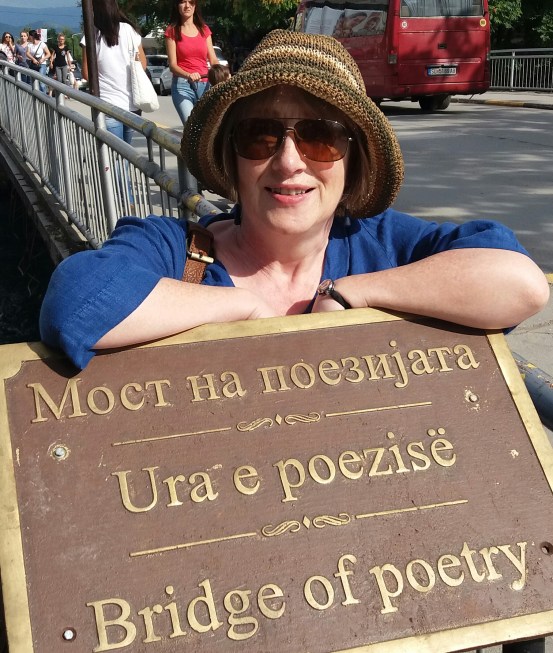
ELEANOR : Fife may have saved my life, so that gives it some claim on me. As a child, I was extremely asthmatic. I spent a lot of time in hospital and on occasion my parents were told I wasn’t going to make it. They were advised to move to the Fife coast to see if the sea air would help, and we did and it did. I love the sea and all Fife’s coastline –the Scottish king James VI called Fife “a beggar’s mantle fringed with gold” – but also the variety of landscape and urban-scape in Fife, from the beaches and rocks along the south coast, sandy reed beds to the north, hills, fields, the arable Howe of Fife, to historic towns like St Andrews and Dunfermline, and old villages like Pittenweem and Falkland. And the perspectives. From so many points along the south coast you can look down on an amazing view across the Forth, but there are some stunning viewpoints further inland as well. Whichever way I drive from my home in Leven to St Andrews has glorious views, I say it has to be the best commute. One of the things we’ll focus on at StAnza this year is how the old Fife trading routes from the 1600s now lead to cities which have their own international poetry festivals, Bremen, Rotterdam, Bergen, Stockholm and Göteborg.
___
___
THE MUMBLE : What first got you into poetry, & who were your earliepast influences?
ELEANOR : When I was a child, and everyone had to be able to perform a party-piece, my parents discovered quickly that I couldn’t sing. In a musical family, that was a challenge but they sent me from age four or thereabouts for elocution lessons. There was quite a famous elocution teacher in Bathgate then. As part of these lessons, I had to learn poems. I can still do I don’t like porridge skinny and brown / waiting for breakfast when I come down. / Whatever happens, however late, / porridge is always sure to wait. And The Sair Finger: You’ve hurt your finger, pair wee man, your pinkie, dearie me …. And I think that got me started on loving words, texts, the sounds of them, how you could roll them in your mouth. I memorised part of Tam o’ Shanter at Primary School, trying and failing to win a prize for doing so, but I can still do the opening. Then in first year at High School, thank you Miss McRuvie, we studied the Border Ballads. The first poem I wrote aged 12 was a very bad pastiche of Helen of Kirkconnel – Curs’d the heart that thought the thought / And curs’d the hand that fired the shot. How could you not be inspired by that! And I can still do all of The Twa Corbies, except for two lines near the end which always elude me. Then Shakespeare, and the War Poets, and Edwin Muir’s The Horses, all thanks to school teachers. My father liked and wrote poetry and sometimes read it to me as well. And then song lyrics were a huge influence. I recently did that Facebook thing going round, 10 albums which made up my teenage soundtrack, and that got me thinking back to the lyrics which made the biggest impact: The Incredible String Band, Cat Stevens, Steeleye Span, Roy Harper, Pete Sinfield, Clifford T. Ward, and so many more.
***
The Tinkers’ Dog
My mother refused to give them money
for drink but buttered half a loaf of bread
instead, while their dog licked at my bare toes.
One wild night years later they set up camp
in the sorry huddle of grass and trees
across the road, their voices reaching me
despite the racket of the night, talking
arguing, even singing off and on.
I lay in bed, only a few thin yards
of wind and rain between us; and the quilt
I pulled over my head against the thought
of the old dog lying on the grass, cold earth
beneath him, rain on his back, worn collar
wet round his neck: our door, locked and bolted.
***
THE MUMBLE : Your first full collection was Even the Sea (Red Squirrel Press, 2010) – can we enjoy a couple of the poems.
ELEANOR : I’m attaching two, In the Mort House and The Tinkers’ Dog. Even the Sea came out in 2010, so obviously these poems are earlier than that. The Tinker’s Dog is biographical and fairly close to facts, so the poem was an examination of my conscience. Mort Houses were where they kept the bodies of the dead before burial to stop them being stolen by graverobbers in times when it was felt that the souls of the dead, and their chance of eventual resurrection, were also stolen with the bodies. It was inspired partly by a visit to a local half-restored Mort House where I learned about the burial practices in past times, and partly by the story of the French revolutionary leader, George Danton. His wife died in childbirth when he was away and he insisted on her body being dug up so he could be sure she was dead.
___
THE MUMBLE : What were the circumstances behind taking up the helm at StAnza
ELEANOR : I was in a Fife Women Writers Group, Kaleidoscope, from about 1998. We went up and took part at the Open Mic at StAnza one year, and then were asked to MC it the following year, and one of the others was invited to join the StAnza Planning Committee. When she had to step down, I was invited in her place, and the following year was asked to take over from Anna Crowe as Artistic Director. I shadowed her for a year before doing so, and then a few years later, we had a similarly careful transition when I took over from Brian Johnstone as Festival Director. It certainly has worked well for StAnza to manage succession in this way, and I can’t imagine how difficult it would have been had it not been a gradual thing. By the time I became Festival Director, I was very familiar with StAnza’s history, aims and objectives, and how things were managed and delivered.
___
THE MUMBLE : How do you feel the festival has grown under your stewardship
ELEANOR : StAnza has always been very much a team effort and so many people have contributed to how the festival has grown and developed, as have the funders and sponsors who have supported us and the various partners we’ve worked with. I have two guiding principles which have shaped how I’ve taken things. Firstly, it has to be enjoyable for everyone involved, the poets taking part, the team and volunteers, our audiences, the staff in the venues we use; and secondly it can’t just be about the poetry I like, it has to appeal across the board, and it has to be different poets each year. So we feature mainstream and experimental, page and stage, past and present. I think we’ve become more diverse as the years have gone on, so spoken word plays a bigger part nowadays, and we’re developed to use digital media in a way which wasn’t possible ten years ago. We’ve also become increasingly international in our planning and engagement. I’ve been very fortunate in being invited to festivals overseas both as a poet and as a festival director. The first time was in 2006 when I went to Poetry International in Rotterdam. I came back inspired and also determined to allow our StAnza audiences the stimulation and excitement of encountering poets and poetry and ideas from around the world.
___
THE MUMBLE : What does the future hold for StAnza, & will you be a part of that
ELEANOR : I’ve been working for StAnza now for 12 years. I hope I’ll be involved for a long time yet, but at the same time, I think it’s important that we continue our successful pattern of a gradual transition to ensure that StAnza thrives, and new ideas and new energies have to be welcome. So I hope that in a few years I’ll start to transfer some of my responsibilities to my successor as part of a planned transition. When that is completed, I’ll be cheering StAnza on, helping out as required, and there to enjoy the festival each March, but I’ll also hope by that time to have more time for my own writing which has taken a back seat since 2010.
___
In the Mort House
On calm nights when the sky
slips down to drape the land in black,
behind the Mort House shutters
in an outer room the widower
keeps watch; and heat from two fires
cannot stop his shivering. Beyond
the lath-and-plaster white partition
those grim sisters, time and sweet
decay work on relentlessly
to beat the body snatchers
at their game.
His ears alone can hear
the resurrection men steal out
from earth’s dark folds,
boots scraping sparks,
spades finding stone,
then earth, then flesh
wrapped bone.
An Interview With Dr. Jim Fergusson

THE MUMBLE : When did you realise you were a poet, what was the catalyst?
************
a right mess
hoosis a
right mess
canny find
thi hoovir
anywherr
sumjunkies
mibby been
n blagged it
a right mess
wioot ma hoovir
**********
THE MUMBLE : Who were your poetic inspirations then, & who inspires you today?
Dr JIM :Not long after I’d bought the typewriter I started going to Tom Leonard’s writing group in Paisley. It was an amazing group, with strong characters and robust debate. Tom is an excellent teacher and a great poet, his ideas on language, class and power were really liberating for me. Before meeting Tom it seemed like I had been writing in the dark. I hadn’t figured out for myself the essential connectedness of language and politics and the mechanics of how the connections operated. I was groping towards those ideas but Tom’s work switched on a light in my mind that opened myriad creative paths for me. It felt like all the disparate parts of myself had come together, it was a wonderful process. I could see how I could be a literary artist. I’d already been reading a lot of Beckett, cummings, Wordsworth, Percy B. Shelley, Burns, Plath, Stevie Smith, Thomas Stearns Eliot, Ted Hughes, Wilfred Owen, some of the beats, Dylan Thomas, Erica Jong, J. P. Donleavy and Jack London. The folk I met at Paisley Writers Group still inspire me, Graham Fulton, Bobby Christie, Margaret Fulton Cook and Brian Whittingham. Folk from Glasgow I met around the same period were Karen Thomson, Freddie Anderson, James Kelman, Rab Fulton and John McGarrigle. In Edinburgh there was Sandie Craigie, Duncan McLean, Viv Gee and Rodney Relax. Graham Brodie and nick-e melville came along a little later. Other writers I liked were Tom Pickard, Gerrie Fellows, Tom Raworth, Eveline Pye, Brendan Cleary and W. S. Graham. Graham’s collected poems sits on my desk most of time, he covered a great breadth of work in his lifetime. Right now my favourite poem of his is ‘Implements in their Places’ which is a magnificent piece of writing. Mayakovsky, Erich Fried, Pablo Neruda and Brecht were influences too.
THE MUMBLE : What is the main driving force behind your writing?
Dr JIM :I don’t really know. I accept that I want to write and it makes me feel good when I do it. I don’t think I have much of an agenda other than some vague idea of empathy, a sense of being human and humane and wanting to share that with others. Fear of death, maybe? Fear of loneliness, maybe? A desire to understand everything better? But probably the simple hedonism of feeling good when I do it is the main thing for me.
Dr JIM :Glasgow University gave me that title for my thesis on Robert Tannahill. That was the only route to fund the research I had to do to write the book. Tannahill was a great poet and songwriter, more folk should read him and hear his songs. I took the doctorate gladly.
THE MUMBLE : How does being an accepted member of the establishment fit in with your punkish roots?Dr JIM :I’m not a member of any establishment. Don’t be absurd [smiles].
clocks tick – nature is silent
when she waited for her wages
yet they failed to come
and she smiled down on her children
sleeping safe and warm
- were they monetised yet?
- converted strictly to cash
- were they dropped off in the pawn?
- possessions of an ugly kind of love
did the Gods see her coming
did her work take her soul
and did she give of her off-spring
to take home Faustian gold?
no, no, no, it wasn’t like that
she was never, never, in control
all she had was stale bannocks
and some mouse-sized cheese
- were they hungry yet?
- were the crops doomed to fail?
- feeding innocent mouths on thimbles of brine
- clocks tick and yet nature doesn’t tell the time
as a hundred massive airships filled the skies
hoped against hope, hope would tumble down
not some black-snow sorrow yet unseen
but quiet nutritious love that might sustain
- when will we see home again
- her children wake and wonder
- when will we see home again?
- her children wait and question everyday
when grown, they bury her in sand and clay
but don’t see home again
no, no, no, it is how it is,
just don’t see home again
a mirage in their minds arises very near
yet remains so very very far away
the guards won’t let them pass, the fences reach so high
it’s here they’ll stay and here they’re sure to die
clocks tick yet nature does not tell the time
clocks tick yet nature does not tell the time.
*****
THE MUMBLE : What are your thoughts on the Scottish Poetry Scene?
Dr JIM :I like a lot of what is happening now. Though I worry about the use of a standard Grime/Rap rhythm, which can get a bit tedious to me at times. There are lots of good live performers with a good breadth of language use. I’d like to see more poems written in Arabic coming out of Scotland. On the page I liked Jackie Kay’s pamphlet ‘The Empathetic Store’ published by Mariscat Press recently.
THE MUMBLE : Who in your eyes are the poets we should be keeping an eye on in 2017?
Dr JIM :Anything by Sandra Alland, Kate Tough, Calum Rodger, Rachel McCrum, Robert Kerr, Craig Birrell.
THE MUMBLE : What does Jim Ferguson like to do when he’s not dallying with the muses?
from ‘for Eva’ – 19. often the rich complain
often the rich complain
that the poor are living too long
the poor just use up resources
that could better be used by the rich
those unproductive ones who live too long
are draining the rich of a source of their profits
yet i don’t see the rich all queuing to die
before their natural time – in reality quite the reverse
i wept for my wee dying mother
who didn’t have time
to do all the things that she wanted
all of her life she was poor
all of her life she worked in a job
where the air poisoned her body
i did not hear the rich complain
about such working conditions –
though they were busy aboard their yachts
catching sun-tans and sending out orders –
it is always all right for the poor to die this way
but the rich never say, please let me die this way too

