Birth of a Poet 2: The Grand Canal
Continuing Damian Beeson Bullen’s retrospective adventure through the journey that made him a poet…
EASTER SUNDAY 12TH APRIL 1998
***
Woke up at 7:00 as the first drops of morning rain splash’d my weary brow. Fortunately the station was open, & I caught a dry 40 winks before getting on the move again.
The two trains to Vienna were eventful. One guard ignored me, the other let me go, & soon I was back at the (very uninteresting) Vienna Sudbahnhoff. My train to Italy wasn’t ‘til 12:55 (it was now 10:00) so I ate a little & blagg’d some coins off an Austrian to make a call.
My sister replied, ‘do you know what bloody time it is,’ as I had woken her up. She then wish’d me to be careful just as the money ran out.
Felt a little lost, so started to chat to a young Czech couple. This pass’d a little time & as they left I had a look at the departures board. I noticed (God knows how) a separate train was leaving for the Italian border in a few minutes. I quickly pack’d & made it to the train just in time – a woman kindly opening the door for me the seconds before it left.
I stach’d my stuff, hid in the toilets & quietly waited for the result of my spontaneity to settle. As it turn’d out, the jump was simple. I sat down in a seat after twenty minutes, & the guard never check’d me again, which allow’d me the privilege of the most spectacular train journey I’ve had to date – all for free, including the hot water for the tea-bags I intelligently brought along. I was sat in the comfort of a nice inter-city, complete with psychedelic patterns on the wall, & a nice Austrian chick next to me.

The Austrian Alps were beautiful; huge rocky formations bursting from the earth. The train wound its way thro’ the valleys, sometimes climbing, sometimes descending (my ears popp’d) & sometimes thro’ tunnels. The towns were so idyllic, especially in the narrower valleys, where even the football pitches were narrow.
After a while, the non-stop mountains, the pine forests (although magnificent) & the snow-capp’d misty peaks grew a little monotonous. It was perpetually green & splendid, but I was on the train til 16:00, some 350K.
Yet, each new mountain still spark’d a warm glow within – it must be the poet in me. I reckon I’ll climb one one day, & if you read this as an old man, Damian (& are still able) – & have the money, time & freedom – bag some Sherpas & go hit the mountains of Ostreich!
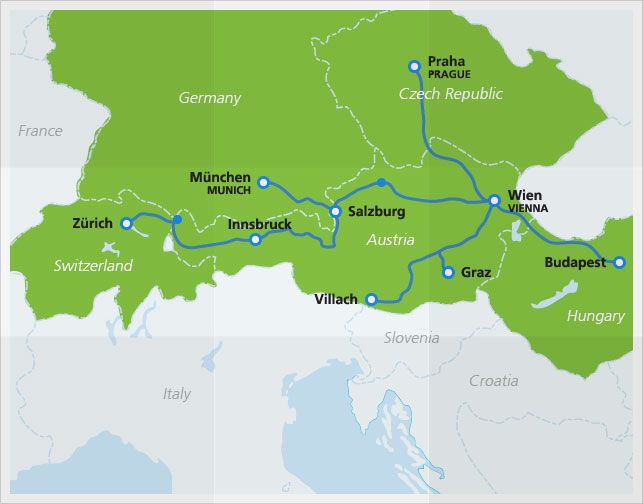
Just before the border a series of mountains all in a row loom’d before me, with a beautiful clear lake at their base. I had arrived at Villach. I had two hours to kill, so I stash’d my stuff beside a rail-line & had a wander around the town. It was quite dull, but the scenery was amazing, a ring of mountains!
I take the greatest train jump of my tour
From Vienna to Villach, on a sleek
Inter-City, as each Alp towers o’er
My little carriage, each volcanic peak
Thrust from the fertile, verdant valley floor
With breathtakin’ beauty – I could not speak,
Until dinnertime by a mountain stream…
Villach’s heap’d watchers echo to my scream.
I took out my bread, mustard, cheese, raisons, an orange & a tin of meat – & settl’d down to a meal. I follow’d with a quick strum on my guitar, then headed back to the station, to catch the train to Italy.
At the station, before getting on the train, I met some mad Brazilian bloke. I then found my carriage was home to a beautiful Italian girl. Roll on the wine, women & pasta!
Jumping the train was easy – there was an empty carriage at the back & I got to watch the Italian mountains disappear, & if anything, they were more beautiful than the Austrian ones; brilliant white tops illuminated by the sun & fantastic deep, azure blue skies.
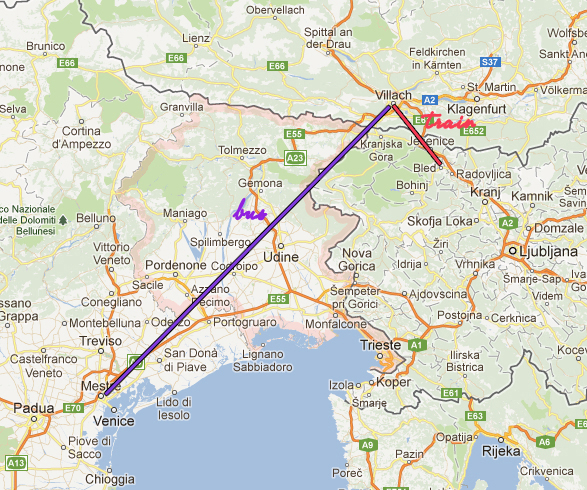
Eventually the carriage emptied, & I turn’d off the light for a few moments sleep – which was lucky as a conductor came, but chose not to wake me.
How glad am I to enter Italy,
For the call of the muse grows ever strong,
Like some wild animal trapp’d inside me,
To find a form in my juvenile song;
Snowy mountains shrink into flat country,
Thro’ fields of lazy green we zoom along,
To Venice; as Italy greets my feet
I see a canal sparkling,’ where’s the street?
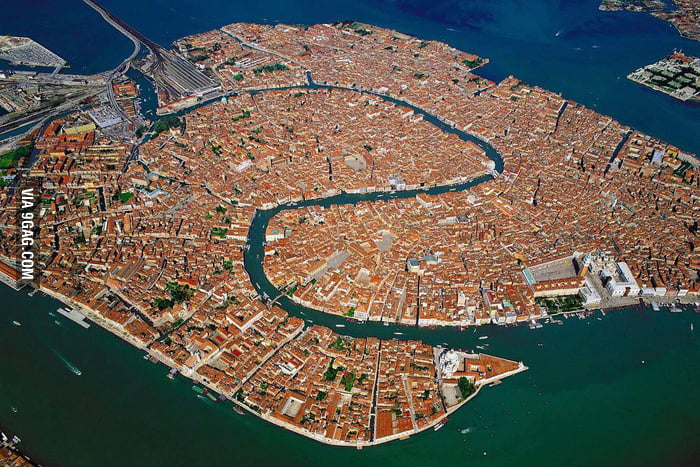
So I am in Italy, but no-one can prepare you for your first real look of the place as you leave Venice station. The Grand Canal is bang! right in front of you, & you immediately know the place is something special.

I follow’d my travellers instinct & found an empty carriage near the station to hide my stuff & sleep tonight, then set off out to explore the city. On the way, however, the start of perhaps the most bizarre incident of my trip began.
I bump’d into Edson, the Brazilian, & we began to walk about. He was trying to find a hotel (no luck), so we went to share a margarita pizza. He paid for most of it, then we went to meet his work-mate Kristina, who he’d just left at the station.
Now it turns out that they are here in Venice to get a visa, & then return back to Austria tomorrow. So they left their bags in a luggage depot at the station, except for a mysterious suitcase, which Kristina began to wheel about the town.
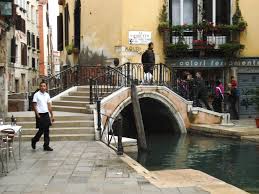
God knows what mission we were on, but my first stroll around Venice involved following Edson around at breakneck speed, asking every Italian the way to a mythical place. Apparently the Italians are an ‘uneducated bunch’ & we were sent in the wrong direction.
However Venice was beautiful! There are no roads (& no pollution) just beautiful streets & canals, still the same as in Byron’s day. The buildings were quite crumbly & decadent, but his added to the timelessness – or should I say onetimeness – of the place.
In the middle of being distracted by all things Venetian, I suddenly received the suitcase (voluntarily), & became intrigued by the whole affair. Could it contain drugs, money, gems (Edson said he was a gem-seller)? I was tempted to do a runner like in some dodgy Britflick – but of course didn’t. I am here to write poetry.
The evening ended at 2AM, after a few glasses of wine, some mad pidgeon English conversations, & my offer to share my sleeping bag with the fella. We left Kristina bobbing on one of the canal taxi berths, & settl’d down in my train carriage. It was a bit weird, sharing such a small space with a stranger, but hey! that’s life!
EASTER MONDAY 13TH APRIL
***
I woke up at 8:30 next to Edson who’d decided to share my carriage. We met up with Kristina (who had been in the station most of night), had coffee & rolls for breakfast, then went to get their visa. I thought I’d tag along because they were paying & it seem’d like fun.
There were more mindless meanderings a la last night. This time in the pleasant ‘new’ city of Venice on the mainland. Eventually we found the place, & all they received was a slip of paper for their troubles – no visa.
I finally managed to find out what was in the suitcase – photos of Kristina’s Jewish family, some choclates & a few documents.
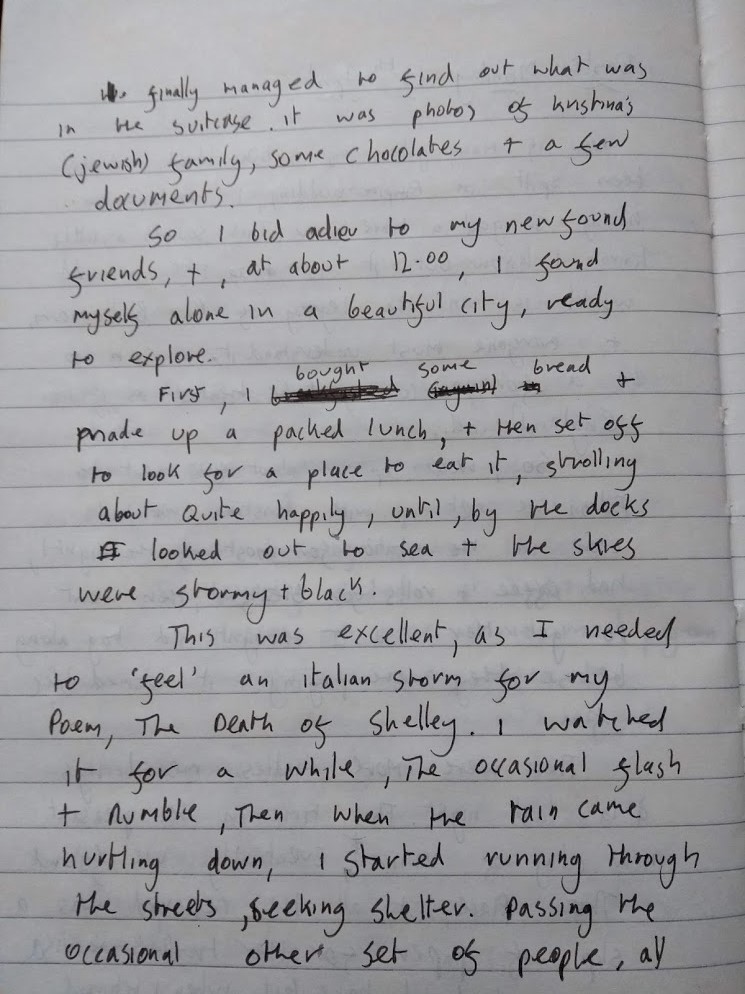
So I bid adieu to my new-found friends &, at about 12:00, I found myself alone in a beautiful city, ready to explore. First I bought some bread & made up a pack’d lunch, & then set off to look for a place to eat it, strolling about quite happily until, by the docks, I look’d out to the sea & the skies were stormy & black.
This was excellent, as I need to ‘feel’ an Italian storm for my poem, The Death of Shelley. I watch’d it for a while, the occasional flash & rumble, then when the rain came hurtling down I started running thro’ the streets, seeking shelter. Passing the occasional other set of people doing the same.
I found a nice alleyway, & a nice Italian guy gave me some mineral water for free from his restaurant. When the rain had almost stopp’d I stepp’d out onto the near deserted streets & returned to my ‘den.’
I strumm’d for a while by the canal, watching the boats full of people watching me, then it began to pour again. I ate a couple of bananas, tehn got chang’d for the night’s activities. I plann’d to do some busking (to keep an eye on my money). It will be the first time since last year & I feel a little nervous. So I bought some wine for 2000 lira (75p) – some carton’d Italian white.
I also chang’d a £50 note, giving me 140,000 lira. Sounds a lot, dunnit? I aim to arrive in Shelleyland with 100,000 – this giving me 10,000 a day (for 10 days) to write my poem.
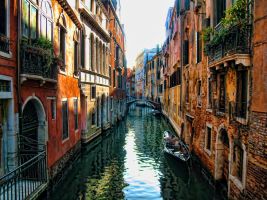
I did the big sight-seeing tour, hopping on a boat (not paid for) which took me round the edges of the city & to the Plaz de St Marco. This was a very big & beautiful place, with lots of museums. However, they were all mann’d by gruff Italians & so I couldn’t sneak in.
I did manage to have a look in the cathedral – which was glorious. I think it was from the 15th century, & was cover’d in paintings of Biblical times. These were quite faded, & I wonder’d how cool they would have been when the Church was all-powerful. The Church can be likened, I think, to an old painting.
Took a boat back thro’ the heart of the city, along the Grand Canal, just gazing at the amazing houses. I saw the Union Jack waving outside one – the consulate – hurrah!
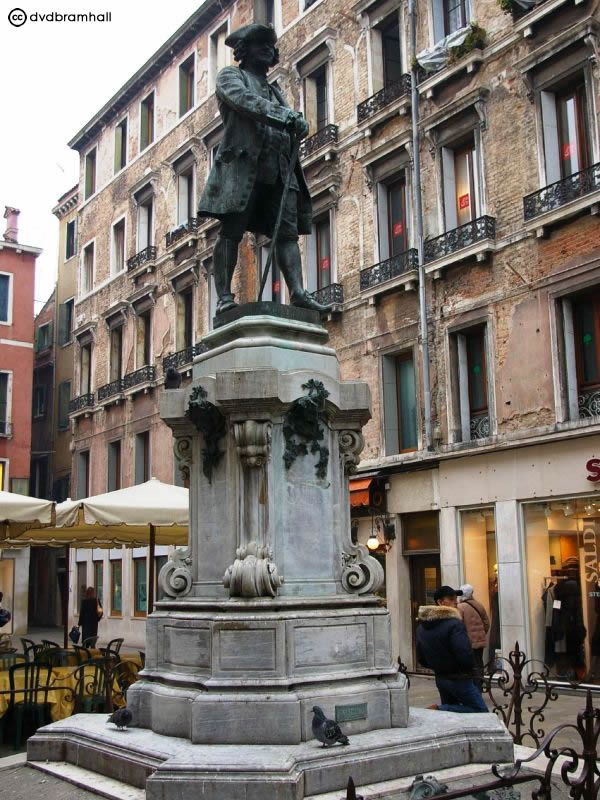 When it grew dark, I slung my geetah over my back & wander’d thro’ the city, looking for a place to play. The best spot was took by some gondaliers, so I bought an ice-cream, then headed for St Marco Square.
I began to busk under a statue of Casanova & two bare-breasted harpies. Only once did I receive some cash, off a young Italian couple, but the real fun started when I heard some Italian bongo players who I’d met in the afternoon.
The night then proceeded at full pelt, I gradually got piss’d & had a most amazing time. It felt like Bournemouth once again. Some mad old Buddhist play’d my guitar & we all got down nice & funky.
Thro’ Venice I, the poetic rover,
Roam streets by night, guitar oer broad back slung,
Under a statue of Casanova,
Ditties composed near Chichester are sung,
Eldritch voice attracts coins for each number,
Those tuneful tayles melodiously wrung,
& after playing for an hour or so
Buzzy black bongo bangers join my flow.
Caught a river-bus back home (it was very cold) & crawled into bed. My mattress was plastic bags, my pillow my rucksack, my bedding a sleeping bag & a curtain, & it was all nice & comfy, so I went to sleep.
THE BIRTH OF A POET
************************
Birth of a Poet 1: The Orient Express
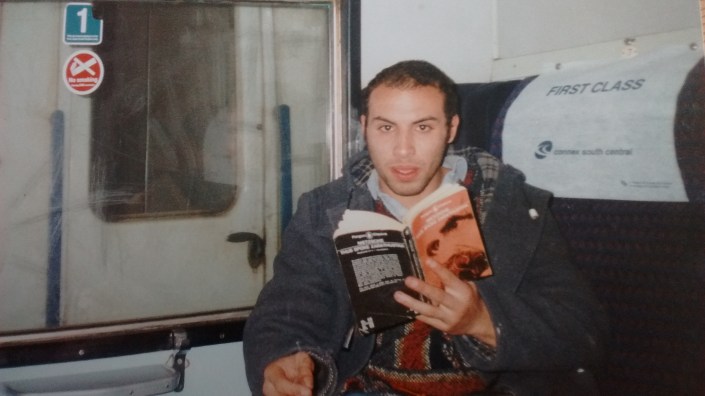
Commencing Damian Beeson Bullen’s retrospective adventure through the journey that made him a poet…
It is 21 years ago this week that I returned from the Continent as a poet. I had just been deported from Switzerland for apparent vagrancy, but unbeknownst to the Swiss I was trying to get home anyway. I have always put my lucky break down to the ways of the Muses, who had recently taken me under their wing. Landing safely at Heathrow, in my possession was what I call my first proper poem, 100 stanzas of Ottava Rima upon the Death of Shelley. After two weeks of touring Europe as far as Hungary, I then headed to Italy, Shelley’s own ‘Paradise of Exiles’ where I began my composition period in Pisa on the 16th April; concluding the poem by Shelley’s tomb a month later, at the Protestant Cemetery in Rome. In between was the the great moment of validation in my life, sat on a clifftop over Portovenere, composing to the gulls & the sunset. Like a young Wordsworth over Helvellyn, I too knew I was a poet & parley to the especial feelings of universal inclusiveness which being a true poet entails.


Those six & a half weeks of travel was my very own Grand Tour. I was no aristocrat, far from it, a little half-caste drop-out from the back streets of Burnley with sudden pretensions of poethood. I should have been better off in a factory like the one in Rawtenstall I’d worked at for 3 months or so in 1996 – the shoemakers Lambert Howarths. But I was, of course, a poet, for a poet is born… & then made of course. Having realized this was my fate in early 1997, a year later I embarked for Europe where I hoped to experience for myself just a sliver of the literary domicile in Italy which Byron & Shelley had set up in exile. Just what kind of poet I would turn out to be would be heavily influenced and nourished by the experience. My only source of income, however, would be the rent money I neglected to pay in London, & whatever I could whip together in the Italian streets thro’ my guitar.
Tis the end of March & my rent is due,
But two life options lie open to me;
Break with a lover, lose friendship, split thro
Or chain myself to the servility
Of capitalism; a poet true
I yearn to be, so young, so sure, so free –
Romancing my mind with poetry’s flow,
So be it, with sure brave heart, I shall go.
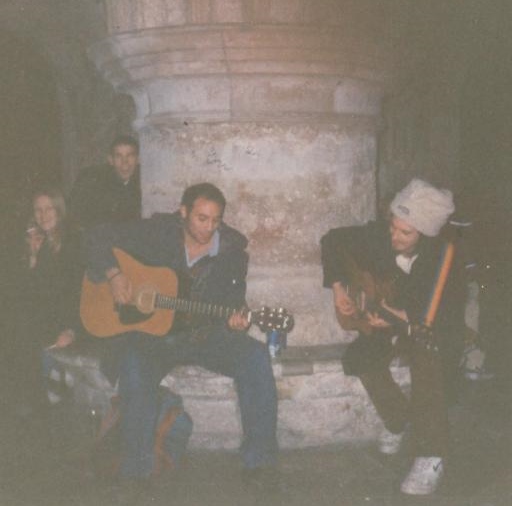
“What the fuck am I doing in Hungary!?”
Think I as I search for somewhere to rest
In the dirty, bustling, car-choked, friendly
Bullet-hole-wall-lined streets of Budapest;
Architecture touched clearly by Turkey,
But laced with the consumeristic West;
I find the Mellow Mood Hostel – what luck!
For four pounds a night it’s as cheap as fuck.
My retrospective adventure begins on the 11th April 1998. I awoke in a hostel upon my last morning in Budapest, set later that day to attempt to evade fares, or trainjump, to Slovenia, from where I would head for Venice. To tell the story I shall be recreating my journal from the period day-by-day & placing this alongside any actual compositions of the Shelley poem on those corresponding days. The latter have gone through a revision process over the years, & I hope to administer them through the powers of the 41 year old poet. Pictorially, I have included a smattering of sketches from my notebook made during my time in Italy, plus a number of photographs taken in my visits to the scenes of my youthful endeavor in the two decades since. My final piece of ‘evidence’ comes from 1999, & another poem in more precise Ottava Rima concerning my trip to Europe, entitled The Grand Tour. Despite misplacing the original manuscript, this poem too has undergone several revisions & now takes pride of place at the commencement of my Silver Rose sequence.
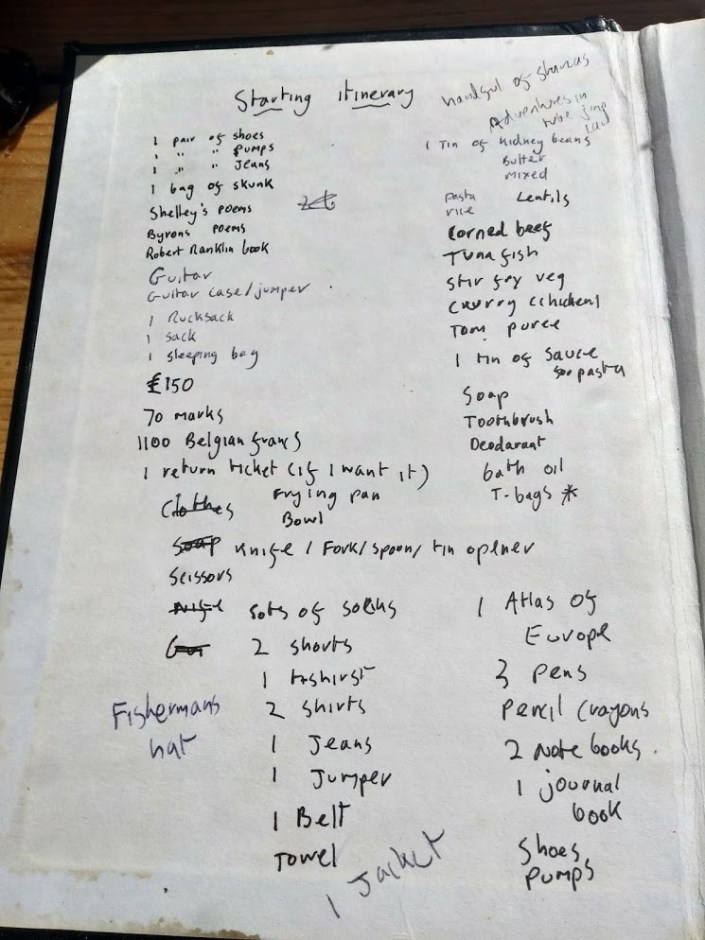
Saturday 11th April 1998
My last day in Hungary began quite pedestrian paced, then ended in the most bizarre circumstances.
I cooked up a few eggs, mushrooms & a bit of bacon for brekky, then began to meander. I changed some money, bought a load of fags & food for my journey (I’d better watch my cash now, only got £90 left), then found some Hungarians playing chess in a square. I had a few games with a big fella who fluster’d me into losing!! I lost 400 florins altogether, but had a grand time in the sunshine.
Then I met Megan one last time & we had a few beers through the afternoon til my 5.30 train to Slovenia. After donning my electric blue sunglasses I gave an impromptu performance of songs; Hymn to Apollo, Tumbleweed & Groovy Little Sunshine – laid back in the sun at the top of an international hostel, kinda tunes – with Fools Gold as an encore.

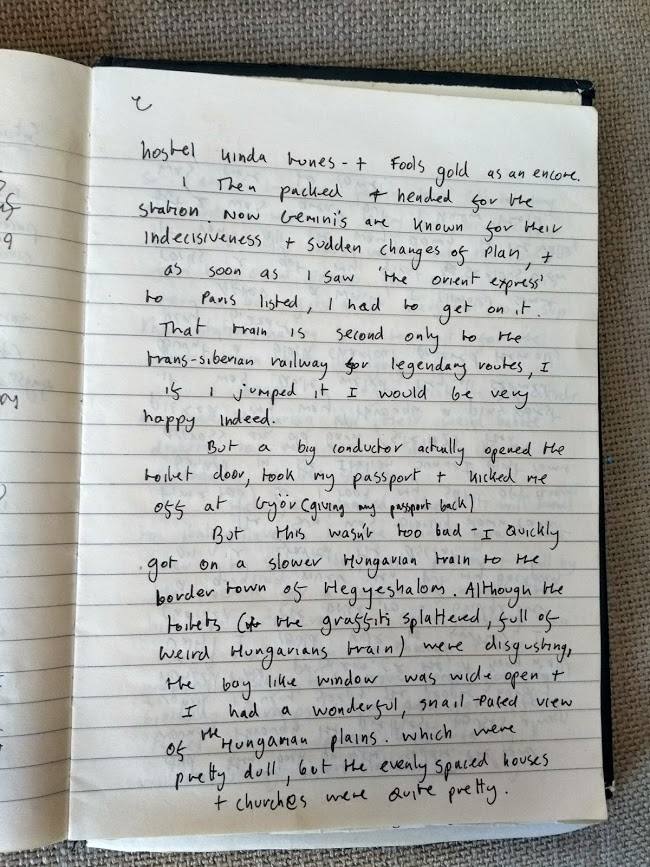
I then packed & headed for the station. Now Geminis are known for their indecisiveness & sudden changes of plan, & as soon as I saw the ‘Orient Express’ to Paris listed, I had to get on it. That train is second only to the Trans-Siberian railway for legendary routes, & if I jumped it I would be very happy indeed. But a big conductor actually opened the toilet door, took my passport & kicked me off at Gyor (giving my passport back).
But this wasn’t too bad – I quickly got on a slower Hungarian train to the border town of Hegyeshalom. Although the toilets (& the graffiti-splattered, full of weird Hungarians carriage) were disgusting, the bay-like window was wide open & I had a wonderful, snail-paced view of the Hungarian plains, which were pretty dull, but the evenly spaced houses & churches were quite pretty.

So I arrive in the border town (its too long a word to write out every time, accurately) & lo & behold, who’s waiting but the conductor from the Orient Express. He waves his arms for a bit, gets a bit kerfuffled, so I slip the station, having two hours to wait for the next train outta Hungary.
I bought a soft drink & sat outside a mad Hungarian pub, their weird babble drifting to my ears & adding to the surreality of the situation.
Here I planned ahead! I will travel to Italy & Ravenna to see Dante’s grave, then over to Le Spazia to write poetry & chill by the beach for a couple of weeks. Then I’ll hit the Riviera, do some busking & slowly make my way up through France – walking, busking – to arrive home for my birthday (June 11th). Perhaps I can get a ferry ticket for my present!
I returned to the station, but that same conductor (& the one from the other) accosted me, demanded money & took my passport. They sat me down & waited for the Vienna train to come. Two of their cronies arrived & they began making fun of me, pretending to be soldiers & going ‘English very bad, rat-a-tat-a-tat’ Nobs! The Vienna train came & as it pulled away they all began to laugh. So I slipped on my shades, whistled Rule Britannia & high-tailed it on outta town.
I was like a soldier marching along the road to the border, my backpack heavy & my guitar like a gun. I felt so funky, tho,’ that I decided to strum by the roadside, only a few hundred metres from the border. After a while I saw a car coming & thought I might hitch outta Hungary. So I leapt to the road, stuck out my thumb, & to my surprise the car screeched to a halt & two guys in camouflage & holstered revolvers quickly leapt out. I thought at first I was gonna be mugged, but was quite relieved to be in the company of some border patrollers. They had a quick look at my passport, then bundled me into the car & drove me back to the fucking train station again.
There were about ten guards in all, proper dumb-looking & pretending to be hard, so I made the chambers feel like home. I ate, had a fag, then bought out mah geetah, & whistled & played til they gave me back my passport. I played some weird shit & spooked them – & they wouldn’t even give me a stamp as a souvenir.
I gaze on familiar boyhood star
While I walk a few K to the border,
As just by the line I thumb a police car,
They bundle me in, “Silence!” the order,
So as they check the passport my guitar
Rings out in bizarre tuning & coda,
Bemused they release me at the train station
“Gizza lift” “No!” my tour’s first frustration!
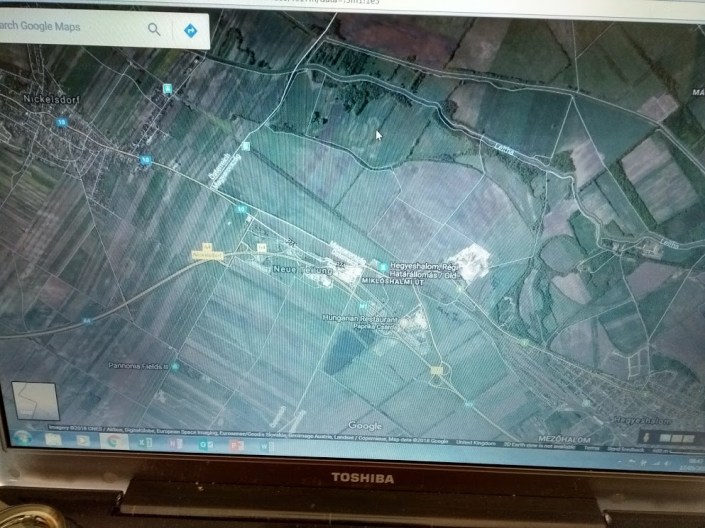
So I had to retrace my steps, & soon was making my way though the border zone. The Hungarians guards were asleep so I had to wake them! I passed some lads younger than me, wielding rifles & a big Austrian at customs. The actual area had a real sort of abandoned feel. The legacy of the Cold War – it was the East-West border – where only kids & old men inhabit. It was quite eerie walking through it into Austria.
In Austria I was manhandled by some guys who thought we were still in the war, then another guy on a bike, but all-in-all it wasn’t too bad… just 7 passport checks & ten or so kilometres of hiking.
I found the station at Nicklesdorf & bedded down behind it. Luckily it was a very pleasant night & I fell asleep to birdsong…

THE BIRTH OF A POET
**************************
A New Conversation
Scottish Storytelling Centre
May 4th, 2018
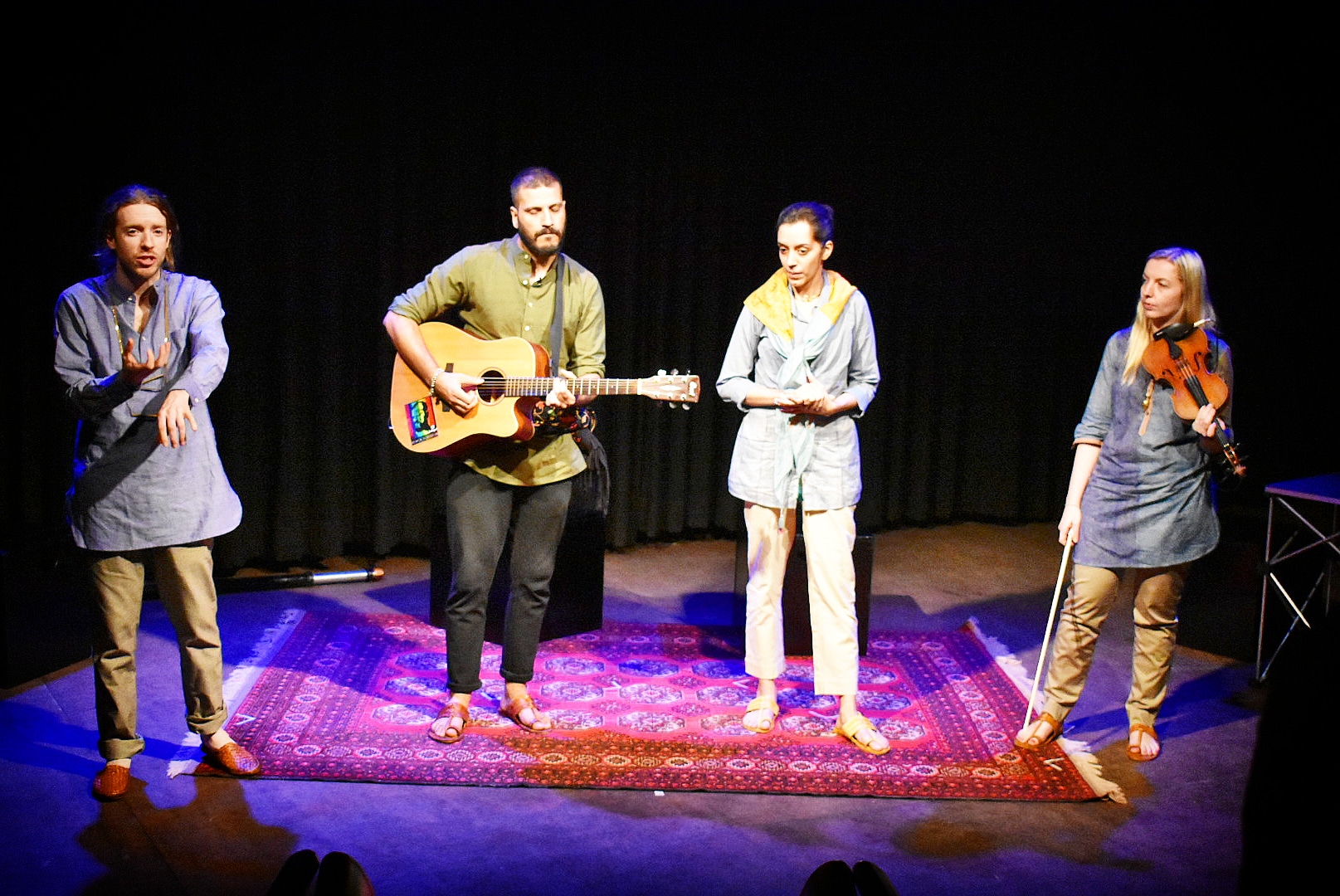
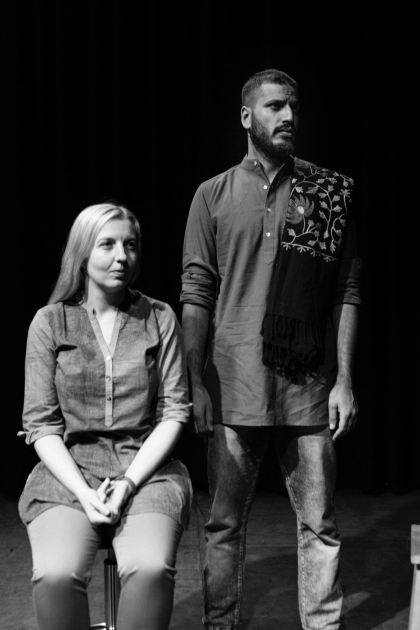
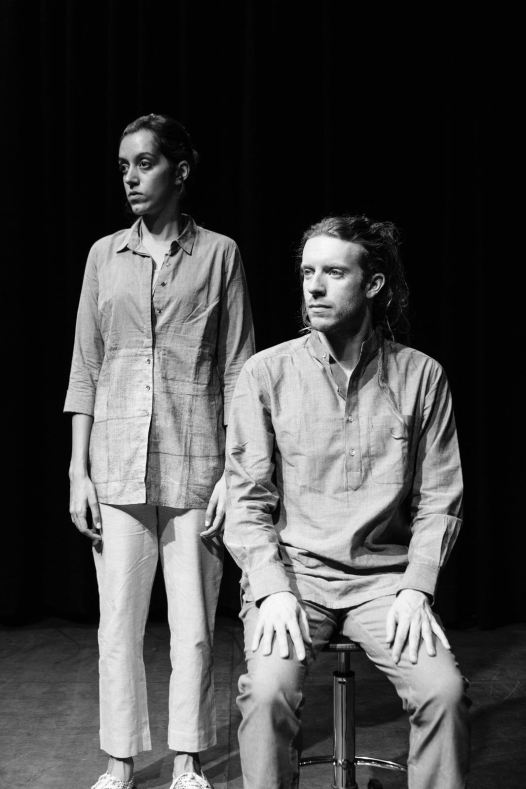
Four diversely different characters, each with an important story to tell. Maybe too many are recaptured in the 90 minute performance; blink once and you might miss something. One has to keep in mind just how far these guys have traveled to bring such magical words to our attention, with the show taking shape at a residency in Mumbai earlier this year. Each of the stories could have been a full performance, especially the conversation between Sheena Khalid and Eilidh Firth, about the similarities between the industrial nature of both Mumbai and Dundee – in itself was a very interesting history lesson. One has to remember that this performance of stories is still in its conception stage, a work in progress. Four performance artists all with something valid to say.
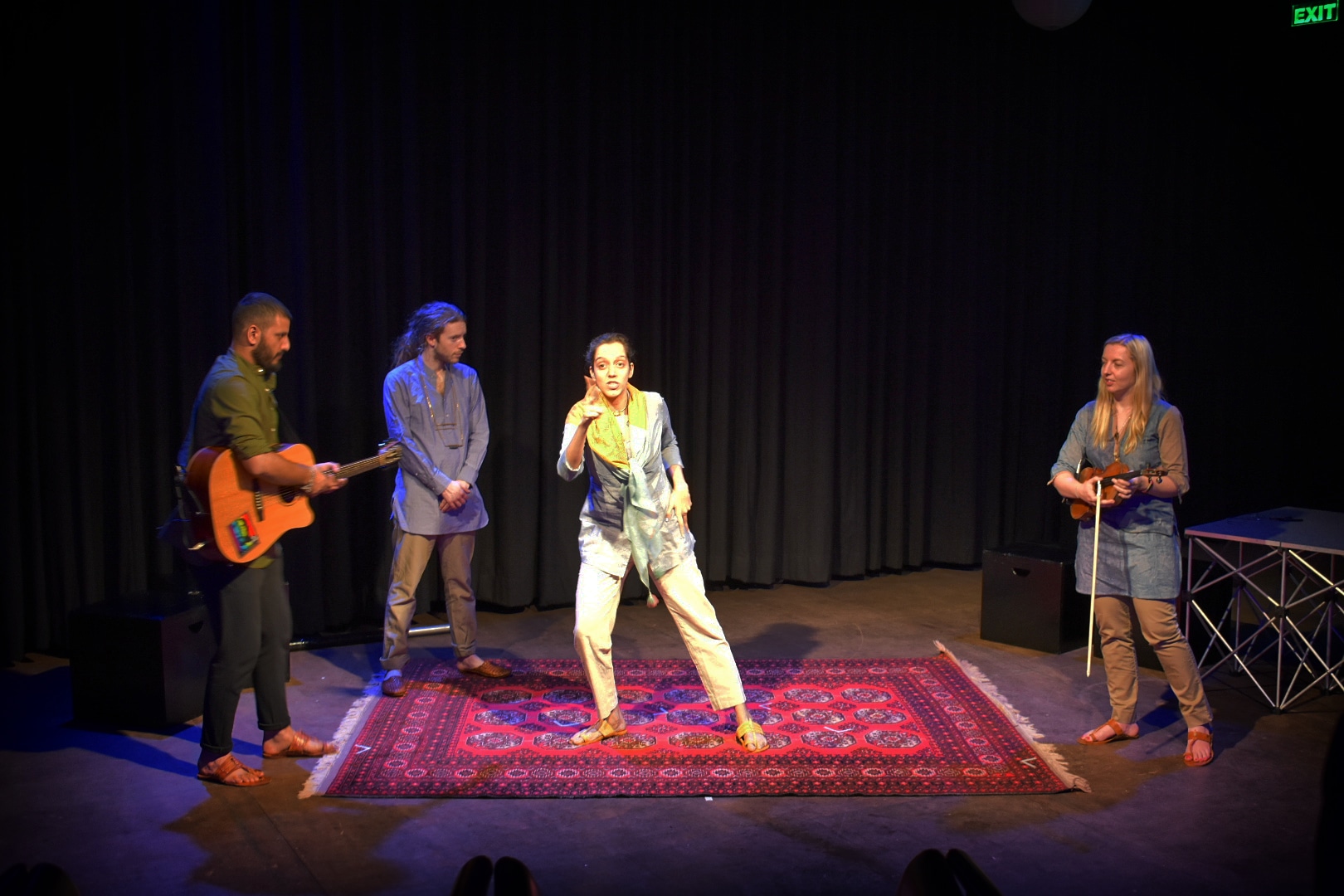 Jumping from story to story was a bit like a mental dream after a weekend on Magick Mushrooms. Mohammad Muneem Nazir was spectacular, a very confident man, full of grace and musical sparkle. With a genuine spirituality and deep wisdom. A True Sufi. Eilidh is a quiet genius who came across as being more comfortable as a violinist. In a recent interview with the Mumble, she gave an excellent account of the essence of the piece;
A New Conversation has brought together two artists from Scotland and two from India to create new work based through storytelling and music. I didn’t have any experience of storytelling before this residency, so it’s been fantastic to push the boundaries of what I do. I’m particularly excited about part of the show that looks at the links between mill workers in Mumbai and Dundee. The stories from the other artists have been really inspiring and I’ve loved experimenting with music for the show. We decided to call the piece ‘Where I Stand’ and it looks at our connection to our land and place through ancient myths and a reimagining of contemporary stories.
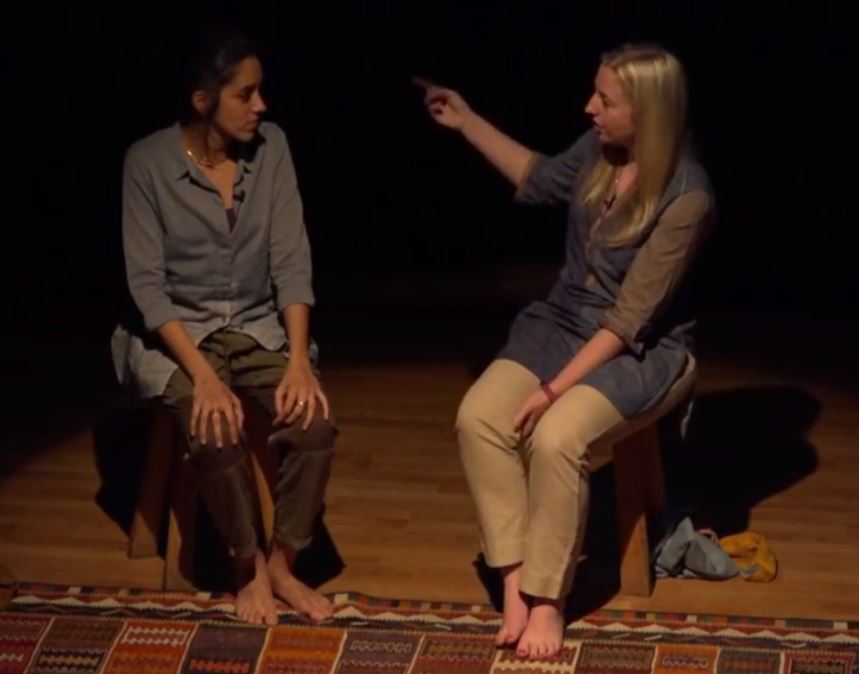
Sometimes during the performance, it felt like I was eavesdropping. It was very captivating & the night flew by. I have known Daniel Allison for several years having shared the performance stage with him at prominent Scottish festivals. He’s one of the best didge players in Scotland and he has already built a solid reputation as a raconteur with a deep wisdom and understanding of Celtic mythology. Like I said, each of these performers was infinitely interesting. Sheena Khalid is a natural actress who delivered quite beautifully, so much so this beautiful Indian mystic has inspired poetry within my soul. Possibilities and ideas became inspired within me. But still it was too much take in. Like a collection of ideas waiting to unfold to their potential.
Brilliant art always works me, and this has not been an exception; it has taken a weekend to process everything that I bared witness to. I think it will work me for a bit longer. The conception of the collective and the merging of culture, the Pagan roots of both Mumbai and Celtic Britain brought to life.
Indeed, my performance poet has been inspired.
Love Divinexx.
Mark ‘Divine’ Calvert
You can watch the entire production via Facebook here
An Interview with Daniel Allison & Eilidh Firth
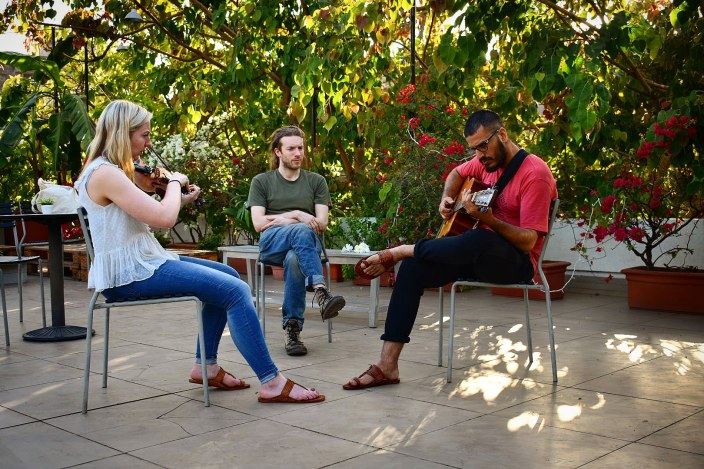
This Friday sees Edinburgh-based storyteller Daniel Allison, Dundonian fiddle-player and composer Eilidh Firth, Mumbai actor, writer and director Sheena Khalid, and Kashmiri poet and songwriter Mohammad Muneem Nazir begin A New Conversation. The Mumble managed to catch a wee blether with the Scottish contingent
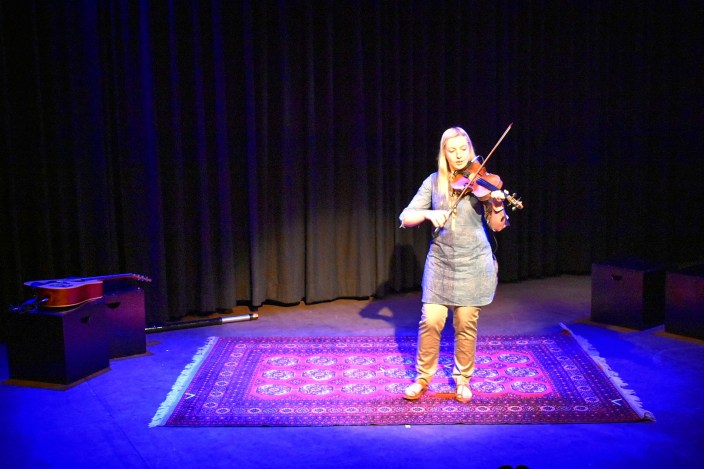
Hello Eilidh, so when did you realise you were musical?
EILIDH: I started getting violin lessons at the age of five, but I definitely wasn’t up for practicing! When I was ten I joined a local group called the ‘Tayside Young Fiddlers’ when I began to enjoy playing and after that my playing improved more and more.
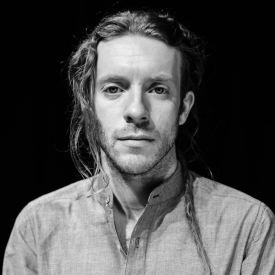
Hello Daniel. You are a true international troubadour. What is it about travelling that thrills you the most?
DANIEL: It’s very easy for us to get stuck in habitual ways of doing things, seeing things. Going to a place where nothing and no one is familiar frees you from outdated routines and perceptions, giving you the chance to experience the world and yourself anew. Unless you bring your phone…
You have worked as a chimpanzee tracker. What does that entail?
DANIEL: I worked on a chimpanzee habituation project in a developing nature reserve in Uganda. The job was to habituate chimps to human presence so that eventually tourists could come along and see them. So, we would walk through the forests listening and looking for chimps, in silence, all day, every day.
So Eilidh, you are a relatively recent graduate of the RCS; how did you find your studies there?
EILIDH: I loved my time at the RCS. It was great to be surrounded by people who were so passionate about traditional music. It gave me a grounding in the context around the music – the history, folklore and language – and they encouraged me to start writing my own tunes as well.
Back to Daniel. Creative Scotland have funded you to give four Scottish tours to date, visiting schools as if they were Dark Age courts & you were the travelling bard. Can you tell us a little about the experiences?
DANIEL: I love working as a modern-day bard, but I wanted to have a go at being a ye olden day bard, so I organised tours in which I would walk coast to coast across the country, wild camping and stopping to tell stories at schools along the way. The first one was very hard as I made my schedule too tight, so at one point I walked 28 miles in a day, slept and then got up at 5am to run for miles across the hills in the rain – with horrendous blisters – to get to my next gig. But I learnt from my mistakes and had wonderful experiences, like telling stories outside a chambered cairn on a hilltop on North Uist at sunset, and dancing Strip the Willow down Stornoway harbour at sunrise.
How does travel inspire your creativity & can you give us examples?
DANIEL: I love how people often begin creative practices while travelling, even if it’s just writing down what they’ve seen. I think somehow you can leave self-limiting beliefs at home. For me, I see or do things that stir my imagination, and then at some point they come out in a story. Based on that period in the forest, I wrote a story years later about a Tanzanian boy who is possessed by a chimpanzee, and a novella about an English girl encountering a local shaman while living in a Kenyan nature reserve.
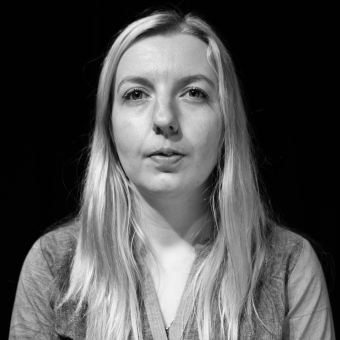
Eilidh, you are in integral member of the Scottish folk band ‘Barluath.’ Can you tell us about the experience?
EILIDH: We formed ‘Barluath’ while we were still at university and I feel like we’ve really grown up together. It’s been wonderful to travel and perform and I love making new music with them.
What is it about traditional Scottish music that makes you tick?
EILIDH: I love traditional music because every player can put their personal stamp on the music. No two performers will play a tune in the same way. I also think it’s great that the music has so much history surrounding it but it’s still as vibrant and relevant today.
…& Daniel, which instruments do you use when you add music to your storytelling?
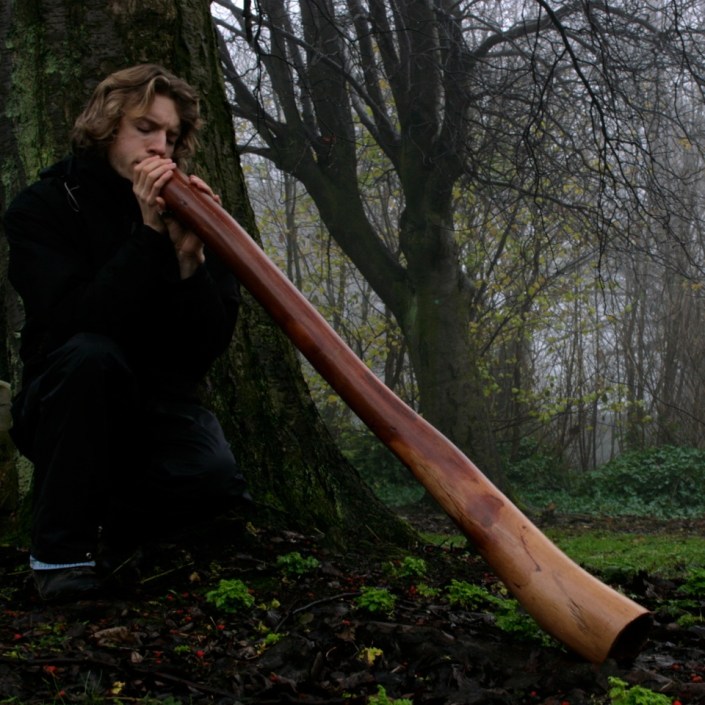
DANIEL: My main instrument is the didgeridoo, which I play in traditional and contemporary styles, but I also use Tibetan singing bowls, rattles, chimes, drums, jaw harp and a few other bits and bobs to give texture to stories.
What does Eilidh Firth like to do when she’s not being musical?
EILIDH: I love getting out into the countryside with the dog or up a hill – he keeps me fit! I’ve also recently taught myself how to knit so you’ll usually find me cursing under a pile of yarn!
Can you tell us about A New Conversation?
EILIDH: A New Conversation has brought together two artists from Scotland and two from India to create new work based through storytelling and music. I didn’t have any experience of storytelling before this residency, so it’s been fantastic to push the boundaries of what I do. I’m particularly excited about part of the show that looks at the links between mill workers in Mumbai and Dundee. The stories from the other artists have been really inspiring and I’ve loved experimenting with music for the show. We decided to call the piece ‘Where I Stand’ and it looks at our connection to our land and place through ancient myths and a reimagining of contemporary stories.
What will be your contribution to A New Conversation?
DANIEL: The meeting of the mythic and contemporary is a strong current in our piece; I think my job has been to hold the place of the mythic, choosing the right stories and presenting them in a way that shows their relevance to Scotland and India now, and to our own lives as individuals. One story I tell is the legend of a poet who went to live in the otherworld but returned because he missed th madness and sadness of this world. Mohammad and I worked together to explore how his own story of a growing up in and later escaping a conflict zone reflects this tale.
Are you finding connections between European music and stories & that of India?
EILIDH: I knew there would be links between our two countries and cultures, but I couldn’t have imagined how many similarities there would be. I think both countries are going through periods of change and in some ways uncertainties and it’s been fascinating to see the parallels reflected in the stories brought together in ‘Where I Stand’.
To which places will an audience member’s imagination be taken through the event?
DANIEL: A lot of places! Audiences will experience the murder of a giant, Iron Age warfare, industrial Mumbai, cosmic turtles, Urdu poetry, soul-stirring music and an erotic proposition from the goddess of war. I think that’s plenty to go on.
What does the rest of 2018 hold in store for Daniel Allison?
DANIEL: This year I’m going to be working hard to get my novel ready to send out into the world. It’s a dark and bloody adventure story for younger teenagers set in prehistoric Orkney.
What does the rest of 2018 hold in store for Eilidh Firth?
EILIDH: I’m really passionate about music education and when I’m not performing or composing I love to teach. Over the next few months I’m going to be taking some courses to give me some new approaches to working with young people and taking on some outreach projects to widen access to music. I also have a few jumpers I want to finish knitting and a couple of Munros to ‘bag’!
WHERE I STAND: A NEW CONVERSATION
Fri 4 May, Scottish Storytelling Centre
£10.00
Tradfest 2018
Scottish Storytelling Centre
April 30th, 2018
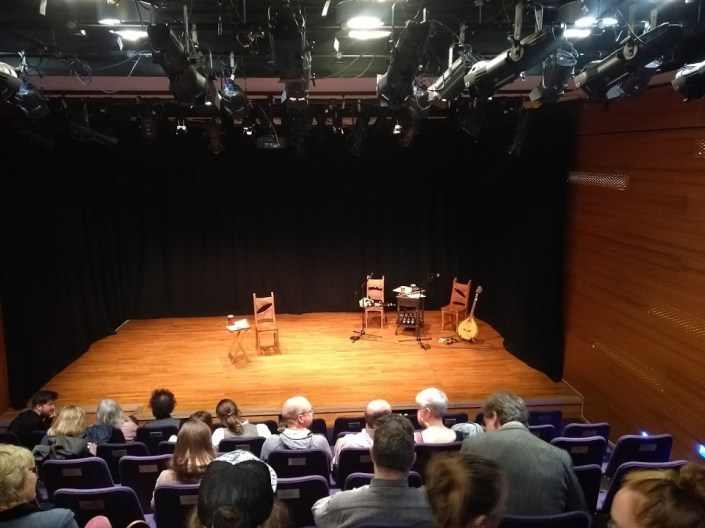
The situation of the Scottish Storytelling Centre; half-way up the Royal Mile by the old Tolbooth where John Knox used to preach to the passing public, & the World’s End pub, which marked the edge of the medieval city walls; is one of the most historical places in Scotland. No better site, then, for the modern dionysia that is Tradfest, thrust annually upon a receptive public by the TRACS organisation, with TRACS standing for – Traditional Arts & Culture, Scotland. A Monday is as good a day as any for culture, & so I headed into Edinburgh for a double helping of story-hearing.
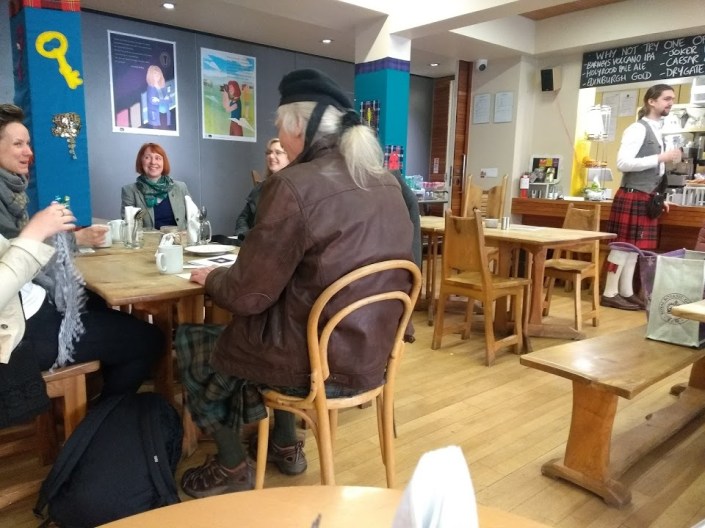
The occasion was to be two hour-long sessions, divided only by a quick dash of time between performing areas in the Centre. On arrival I noticed that one of Edinburgh’s finest storytellers would be in the audience, the irrepressible David Campbell. He had surrounded himself with a bevvy of intelligent, bonnie ladies, who spontaneously burst out into a rendition of que sera sera in the cafe. ‘Only at the Tradfest,’ I thought to myself, sipping on one of the rather especial speciality beers they have in stock.
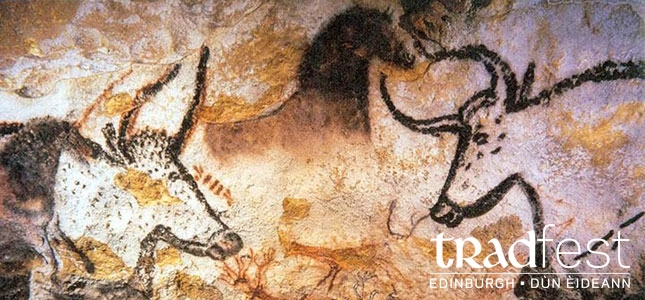
The first session was called MARY RUSHIECOATS AND THE WEE BLACK BULL, which turned out to be a celebration of Bulls, Beltane & the Buddha’s birthday performed with highly praisable panache by American storyteller, Linda Williamson, & Japanese harpist Mio Shapley. Linda opened with a tale recorded in 1985 by her husband, Duncan, who sadly died a decade ago. He did leave behind some remarkable works in the passing, including a classically nerve-wracking, mind-bending starburst of fairy tale, the Mary Rushiecoats, all in iambic pentameter with the odd rhyme thrown in too.

Following the charming wicked ogre ending, Mio also told a tale, the Bamboo Cutter, a tenth century story full of treasures & human change, & the oldest survivor in the Japanese tradition. The third tale thrust us straight into the Buffalo Nation of America, a remarkable cross-species flourish of glorious storytelling. Throughout, the ladies made us feel extremely comfortable, & the harp was so hypnotic & that it projected into my mind the harp-use of the Celtic bards in the mead halls of ancient days. In thus mind, I was perfectly set up for the second half of my Tradfest outing.
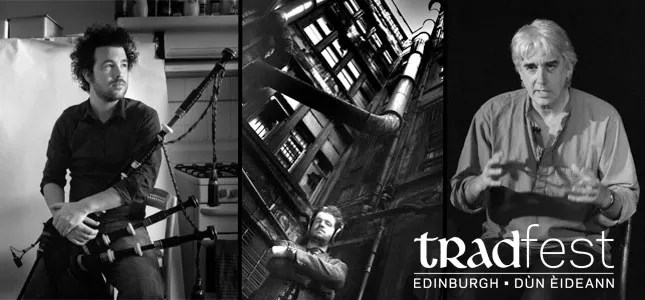
 The second part of my outing was downstairs in the Centre’s main theatre, & went by the rather elongated title that is A FLAME OF WRATH FOR SQUINTING PATRICK. The soul of this story is a Weegieland modernisation of a bardic tale, recited quite engagingly by snow-haired David Frances & accompanied through a theatrical splinter of the Pìobaireachd tradititon with the curiouser & curiouser music of Calum MacCrimmon, a direct descendant of the famous pipers to the Dunvegan MacLeods, & John Mulhearn of the ineffable Big Music Society. When Mulhearn said of the story that, ‘the underlying narrative is easily brought into the twenty-first century,’ he was completely accurate in his sentiment; & as I heard the madcap jauntings of Skelly Pat, Big Donnie, Devil MacKay and Mad Dog Mackenzie, I did rather take joy in the timelessness of a good story well told.
Damian Beeson Bullen
An Interview with Leyla Josephine

This Friday, Leyla Josephine will be returning to Edinburgh with her highly-acclaimed show, Hopeless. The Mumble managed to catch her for a wee blether & to see some of her poems
Hello Leyla, so where ya from & where ya at, geographically speaking?
I am originally from Glasgow spent most of my life there. I lived in Japan for a while and now I’m in Prestwick. I moved to be near the coast for some peace and quiet but it’s been a lot of commuting. I spend most of my time on the M77.
When did you first realise you were a poet?
I don’t know if I’ve ever really felt like a poet. There’s certainly not been a moment I can specifically think of. I think my work has always sat on the margins of performance, storytelling and poetry. I sometimes feel like a bit of a fraud when I call myself a poet. But I also believe that anything can be poetry, so when someone gave me the title I took it and ran with it.
Which poets inspired you at the beginning & who today?
I think in the beginning of liking words and rhythm I was more focussed on music and looking back some of my favourite musicians could definitely be considered poets like Jamie T, Ghostpoet and Alex Turner. At school I was obsessed with Liz Lockhead’s Medea. I try to look around me in the UK Spoken Word community for inspiration, Iona Lee, Sam Small, Liam McCormick and Lisa Luxx are some of my favourites. I have always been a fan of Kate Tempest, Hollie McNish. I love reading Ocean Vuong and David Ross Linklater. But I definitely look to people like Taylor Mac, Kieran Hurley, Julia Taudevin and Third Angel and who manage to so beautifully tie theatre and spoken word together. I think I’ve always been really lucky to have one foot in the door of both Spoken Word and Contemporary Theatre. I have seen so many brilliant performers and poets and I try to take inspiration from everywhere.
You’re quite the creative polymath; teaching drama, making theatre & writing poetry. Do all these artistic endeavors bleed into each other?
Definitely, usually I can’t really tell the difference between any of them. It’s just the framing of what you’re doing, all the creative processes are very similar. The blurring of the lines is what makes it the most interesting. My pamphlet isn’t a poetry book, it’s documentation of a theatre show which has poetry in it but does that make it a poetry book or maybe is it a script or because it’s true story is it a memoir? I find it fascinating when people try to name it because really I’m not sure either. I don’t know even if drama teacher is right because I’m encouraging people to write their own stories and perform them which is maybe more like poetry. I’m not sure what I am in any of it, but I’m happy to just cruise along and be whatever people want me to be.
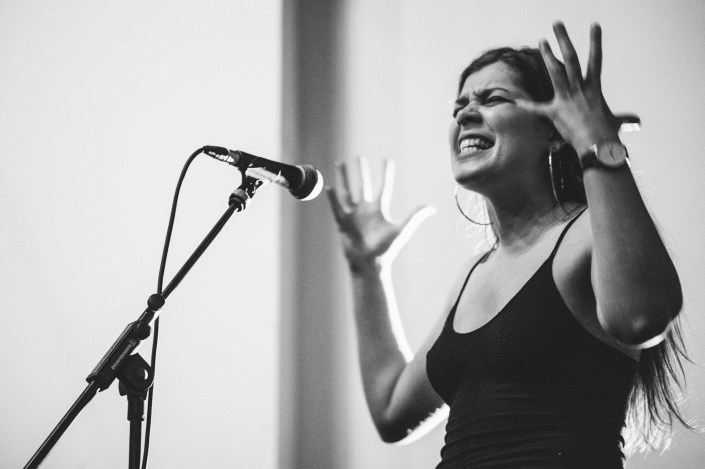
You first rose to public prominence when in 2014 you won The UK Poetry Slam at The Royal Albert Hall. Can you tell us about the experience, & what was the prize?
There was no prize but it has definitely helped me get exposure and book gigs. I came joint first with Vanessa Kissule – another brilliant poet. It was a long day, I think about 100 poets taking part. I really liked being one of the only Scottish people there, I think it gave me a bit of an edge. Slams are fun as long as you don’t take them too seriously. The best poet never wins, it’s all about manipulating the audience, it’s a performance, it’s a show but it’s so entertaining and such a buzz! That day was great because it was only my second slam and to come out top was really exciting.
You have performed all over Scotland, England, Wales, Northern Ireland and as far as Prague, New York, Victoria and Vancouver. Which are your three best gigs (in no particular order)?
That’s such a hard question! I’d say my favourite ever was at The Wickerman 2014, it was the first time I came off stage and I was like this is what I want to do. I love this feeling, I’m in control, I’m with my friends, I’m good at this, it’s sunny, the audience are enjoying it. This is it, I’m going to do whatever this is now. The BBC Stage at The Fringe with The Social’s Rappers Vs Poets is always great. There’s an audience of about 300 and it’s always absolutely terrifying cause it’s all filmed live, but I live for the pressure!! My pamphlet launch felt like another real moment – I packed out Inn Deep which was the first place I ever performed, people couldn’t get in and everyone was standing. I felt like a rockstar for about 10 mins. I had invited all my favourite musicians and poets to perform. The mic wasn’t working and my performance wasn’t perfect but it felt special and a milestone. I never thought anyone would ever want to publish me and I was so overwhelmed with the support.
What does Leyla Josephine like to do when she’s not writing?
I like to read, I drink a lot of tea, I like going for walks, seeing theatre – the madder the better. I was a ski instructor for a while so when I get to ski I absolutely love that. I used to party all the time but that’s slowly starting to fade out, I do love to dance and drink beer with my friends when I can but not I’m not as hardcore as I used to me.
DONEGAL
The road stretches ahead much like life does.
Mount Errigal, purple in the morning light,
greets me generously.
One foot in front of the other,
they would have walked the whole way
if it wasn’t for the water.
The smell of turf reminds me of home
but you can’t eat turf,
you can only burn it
and fire in the belly
doesn’t feed the starving.
The long grass brushes against my knees
much like grief does.
The ghosts from the Gorta Mor whisper from the ditches
‘Do not be afraid, you are not alone’
One foot in front of the other,
they would have walked the whole way
if it wasn’t for the water.
I’m trying to prove something,
anything, while the earth beneath me spins,
carefree.
The rain keeps me company,
it sounds like footsteps running.
THE GIRLS
I’ve got the girls.
Forever,
they’ve been with me,
staggering down streets,
laughing,
dancing
on table girls,
with our tales
that we keep for take-away meals,
girls.
Hold your hand
and make you tea,
come to bed with me
girl.
Seas separate us
sometimes,
but somehow,
we come home to melt into each other
always.
The girls,
the MAC counter warriors.
Belt of lipstick
weapons.
Contouring is
witchcraft.
Fuck him, fuck that.
Taking our bodies back.
Bring the girls out of the dark and
into highlighter
her story.
The girls,
try call us hysterical
girls
or freak
girls.
Fire in our cheeks
girls.
Keys between the knuckles
girls.
Betrayed again
girls.
When we are alone
you underestimate us.
but together
we take up
the pavement,
cemented.
You feel
threatened.
Our friendships
are the greatest love stories never told,
we are bold,
and the too much
girls.
We laugh just as loud as our mothers,
feel the moon in our waters,
don’t chew when we eat,
take no breath when we speak,
don’t interrupt us
girls,
we are angry
girls,
silenced
girls
dangerous
girls.
We’re coming for you,
girls.
What are the stand-out continuous themes running through your poetry?
I always want people to feel less alone in their sadness or try to dilute shame by talking about things that are not usually talked about. I mostly write about my own experiences with the hope that they tap into the universal experience.

You are currently touring your 5 star Edinburgh Fringe show Hopeless which was nominated, I understand, for both The Amnesty International Freedom of Expression Award and shortlisted for Saboteur Awards for Best Spoken Word Show? How is it going so far on the road?
Yeah it’s going really well. It’s pretty hard work, I’m currently organising everything myself, marketing, photoshop, ticket sales, performing, admin, tech – it gets really exhausting and a bit lonely. But having audiences that aren’t just friends and family is really cool and I have a lot of friends that help out when they can. I feel really lucky to be able to travel and see new cities all while doing something I love.
The pamphlet version of the Hopeless has been published by Speculative Books and is illustrated by Rosalind Shrivas. Can you describe your working relationship with Rosalind?
It was so fun working with Rosalind. She managed to do a great job without even seeing the show! I would send her photos and ideas and she would come back with such amazing pieces that just brought the pamphlet to life. She blew me away every step of the way. As I said before it’s a bit different from a normal poetry pamphlet so her drawings helped shape it into a visual of the show too and actually you get different images that you don’t get in the show.
You will be performing Hopeless at the Summerhall on the 4th May. Is it the same show, or has it been tweaked over time?
I’ve now done the show to an audience 30 times. It’s changed a little but I’ve kept the structure the same mostly. I was lucky enough to have Drew Taylor come in and direct me before the tour. He was brilliant at changing little things like my facial expression or tone just slightly. It’s been quite interesting to repeat the same thing over and over again. I need to find emotion in it every time or it comes across insincere and that’s been the biggest challenge. To still find the belief and love in all the words and actions. It changes every night but my goal is to give every audience a good experience and the attention they deserve.
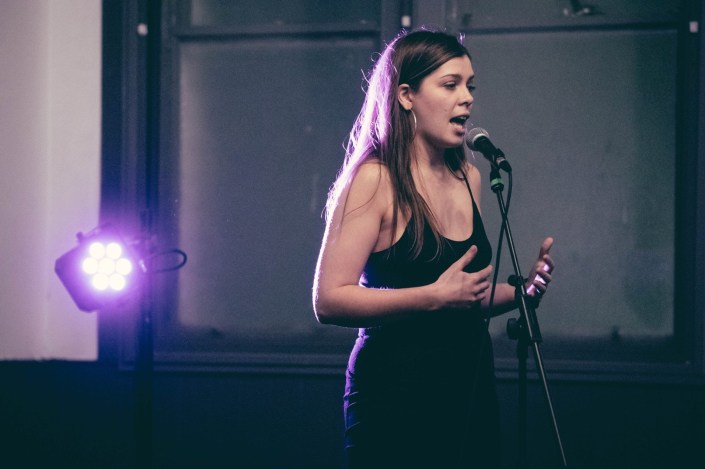
To someone who has never seen Hopeless, what are they to expect?
It’s a rollercoaster! Some of it is funny and some of it is upsetting. I talk about my dad, my great-great grandfather, The Day After Tomorrow, The refugee crisis and walking 55 miles one day to try and prove a point! I always want people to leave feeling hopeful but it really depends on the person.
What does the rest of 2018 hold in store for Leyla Josephine?
Hopeless is on at The Brighton Fringe, The Prague Fringe and Migration Matters Festival.
I’m starting to make my new show ‘Daddy Drag’ to be performed at The Fringe 2019! Lots more workshops and writing and walks on the beach hopefully (no pun intended).
Leyla will be performing Hopeless @
Edinburgh’s Summerhall, this Friday, the 4th May
Price: £12 / £10
www.leylajosephine.co.uk
Scotland and the Caribbean: our shared heritage expressed through the arts
 By Lisa Williams
Six years ago when I landed in Scotland, dragging my two reluctant children from their idyllic childhood on the white sand beaches of tiny Caribbean islands, we were hard pressed to find any community or events in Edinburgh that resembled anything they knew. Enjoying the novelty of our new community, we threw ourselves into traditional folk nights, attended ceilidhs, learned a couple of Scottish dances and even grew to appreciate bagpipes. But there was always a yearning for some Caribbean colour and vibrancy, to hear some bass played to the point where the walls shook, and to not always feel like an ‘exoticized or misunderstood minority’. We held parties where Scottish friends came, but turned the music down, or off, or put on the music that they were familiar with. There was the occasional reggae night in Edinburgh where I didn’t worry in the least about being the first or only person on the dance floor; the music was enough. Soca, the energetic, fast-paced, modern form of calypso that you hear at a Caribbean carnival, was nowhere to be heard, except for our Saturday mornings cleaning the kitchen at home. Scotland is only home to about 3,000 people of Caribbean descent. Glasgow has the lion’s share, even after the mass exodus of a Caribbean community in the late 1960’s after land was cleared for development of the railways. And yet, Scots role in the Caribbean has been huge over the centuries, ironically in this case, including a hefty contribution to the development of Scottish Rail by a Scottish plantation owner compensated for losing his ‘property’ after Emancipation. Yet, fairly rapidly, over the past five years or so, awareness of our shared cultural heritage is coming to the fore, across the spectrum of the arts.
There are some regular, well established reggae nights, mainly run by Scottish men, such as Steve Messenger with his monthly night at the Bongo Club. Reggae Got Soul is a mix of reggae and soul run by two Scottish guys, one of whom, Jeremiah, was part of the very first reggae soundsystem in Edinburgh; both sets collaborate with a Jamaican MC Ras Istallion to add some authentic Caribbean flavour. Jeremiah is a true lover of reggae, also being an artist whose work forms a tribute to reggae legends across the years. His Facebook page, Original Jeremiah, has a solid following across the world. The Gambian community in Edinburgh love their reggae too, and DJs such as DJ Gadda and DJ Jobiz are building their own following, most recently with a Thursday night at new club La Vida. Well known DJs occasionally make an appearance. Seani B, the best known dancehall DJ in the UK, with his weekly show on Radio 1 Xtra, threw the afterparty for the MOBO awards in Glasgow in 2016, hosted by Glasgow Reggae. David Rodigan, responsible for introducing reggae to a huge audience in the UK over the past few decades, is even making an appearance on November 3rd at Cabaret Voltaire.

The real power of reggae, however, is in live music shows, and the inspiration and feeling of togetherness and upliftment the singers give their followers. Glasgow, with its choice of venues and home to party lovers, at least, can pull some of the heavyweights from time to time. I’ve made pilgrimages to Glasgow to see various acts like Chronixx, Protoje, and sadly missed a few like Toots and the Maytals, Aswad, Misty in Roots and up and coming Raging Fyah. They are in small, intimate venues like the Rum Shack or the O2ABC, which means you can often get the chance to dance at the front of the stage or even go backstage and have a chat. In Edinburgh, it’s still a rare treat to get a well-known name, but the Wee Dub festival brings live acts like Macka B and soundsystems like Channel One out of London. Occasionally legends like Lee ‘Scratch’ Perry drop into a sold out crowd, populated by Scottish diehards of all ages.
Soca, however, in the absence of a sizeable Caribbean community or an annual Carnival, is still very much a niche market. I stumbled across a fantastic soca fitness class in a church hall, run by Lee-I John from St.Lucia, with his carefully designed Caribbean counterpart to Zumba, that I am still koping that he will take nationwide. The Jazz and Blues Festival have brought Caribbean bands from Trinidad, the Bahamas and Martinique to take part in their street parade along Princes Street. I took great pleasure in joining in with the costume making and dance workshops, and dancing along Princes Street with the Junkanoo Commandos. It was truly a highlight of 2014! But there are few DJ’s around, like DJ Yemster of Dundee, who are masters at delivering a high-energy mix of soca, dancehall and conscious reggae in a perfect party blend. On November 2, DJ Yemster will deliver his set as part of an evening’s entertainment showcasing Grenada, with a screening of Vanishing Sail at the Granary in Leith. The crossover comes when you include arts from the Spanish Caribbean, namely Cuba and the Dominican Republic; not exactly shared heritage with Scotland, but definitely worth a mention as a growing presence of dance and music from these islands in Edinburgh and Glasgow.
However, this lack of awareness of contemporary Caribbean music and dance may be about to change. Project X is a network of dance teachers from the African-Caribbean community based in Glasgow. ‘Through workshops, performances, artistic opportunities, discussions, screenings, a symposium and more, they platform contemporary and traditional dance forms whilst broadening perceptions and representation.’ (www.projectxplatform.co.uk) Part of their work involves going into schools and working with the pupils. This autumn, as the founder of the Edinburgh Caribbean Association I was part of Claudius’ England’s Reclaimed Territory, bringing Caribbean culture into schools in Scotland with the aim of the pupils beginning to recognise the many historical links between the two regions. Claudius England, a Jamaican gospel-dancehall singer, collaborated with the rest of the Jamaican team; Heidi Bryce, an artist and dance teacher who works with Project X, and a ‘jerk specialist’ chef, Clive Birch, who, as a trio, immersed Portobello High School for two days in the sounds, scents and moves of the Caribbean’s most globally influential island. Although the S1 pupils were at first hesitant about moving to the unfamiliar rhythms of Jamaican music, by the time the two days were up, even the boys with a serious image to protect were up on stage, joyfully dancing along with their principal, in a way that the school had never seen or anticipated. Dance, music and food were used as a vehicle for the pupils to connect with Caribbean culture, and be encouraged to do their own research into the far-reaching historical links between Scotland and the Caribbean, learning about and ultimately moving past the ugly reality of centuries of slavery, of which the Scots played a huge role.
This legacy is now just coming to the forefront, as Scots acknowledge their hugely profitable role in the slave trade. The Empire Cafe, set up by Scottish writer Louise Welsh and architect Jude Barber was a pop up cafe in the Briggait in Glasgow to form one of the cultural activities alongside the Commonwealth Games in 2014. Poetry, art, drama and music were all commissioned to explore the history of the Scottish role in the slave trade. One of the events that stood out was Emancipation Acts, produced by Graham Campbell (our first African-Caribbean councillor in Scotland) and his partner Anne McLaughlin, former SNP MP. Staged in four acts around Glasgow, it was a fabulous piece of theatre, staged in four areas of Glasgow connected with the slave trade, including a graveyard where many Glaswegian merchants lie, and finishing in a joyful celebration of African culture by the disaporic community in Glasgow outside the Museum of Modern Art, the former holiday residence of a wealthy plantation owner from Glasgow, tipped to be the future home of Scotland’s Museum of Slavery. Sir Geoffrey Palmer, a Jamaican professor, historian and activist gives much of his time to educating the Scottish public on the history of slavery, and the response is invariably slightly shocked, but very positive. Scottish historians like Tom Devine and Stephen Mullen among others have also been doing some deep investigations over the past decade to bring this formerly hidden history to light.
As part of Africa in Motion film festival’s summer internship programme, ‘Reviving Scotland’s Black History’, I went on a Black History walk with St.Lucian historian Marenka Thompsom-Odlum https://www.africa-in-motion.org.uk/blog/from-grenada-to-glasgow-curating-with-own-experience-by-elizabeth-williams/ who shared a wealth of knowledge about where much of Glasgow’s wealthy merchant families had made their money, by showing us street names, paintings, sculptures and gravestones around the city. She has been on the lecture circuit during Black History Month, and along with other historians, is working hard for all this fascinating research to be known, and eventually be part of the school curriculum in Scotland. The undercelebrated history of soldiers from Caribbean ex-colonies who fought for Britain in both World Wars was brought to our attention by Selena Carty of Black Poppy Rose www.blackpoppyrose.org during a fundraiser I held for Haiti after hurricane Matthew in Glasgow in November 2016 with acts like Ladies of Midnight Blue, Hannabiell and Yillis, www.hannabiell.com a Jamaican-American and Dominican Afro-Latin percussion, brass and mbira duet. www.hannabiell.com Again, the members of the audience from Scotland were shocked not to know about this history, and keen for more information.
Sometimes this history has been brought to us through music and art. Brina is a world reggae artist currenly based in Stirling, who has brought the historic link with Scotland to us through her music project, Jamaica Sings Robert Burns, www.jamaicasingsburns.com. An album with covers of Robert Burns classic songs by top Jamaican artistes alongside Brina, including Ken Boothe and Addis Pablo, and she has sung several of the songs from the project at Celtic Connections and other platforms in Scotland. The project began after facts emerged about Burns trying several times to board a ship to Jamaica to work as a bookkeeper on a slave plantation. Most Scots I talk to about this now seem to know about it, which means the formerly hidden history is starting to ripple through the national consciousness. Graham Fagen, a Scottish artist, has used both genres to explore our shared heritage. Graeme has been working with Caribbean artists for the past few years, and recently the National Portrait Gallery held a video installation of a collaborative version of the Slave’s Lament by Burns with Sally Beamish, the Scottish Ensemble and reggae singer Ghetto Priest. www.grahamfagen.com
The fine and conceptual art scene in Scotland has a variety of artists of Caribbean background working and collaborating with each other. One of these hubs for artists of colour is Transmission Gallery, www.transmissiongallery.org an artist-run space in Glasgow that hosts some very fresh and interesting work from a range of young artists. One of the committee members is Alberta Whittle is a conceptual artist and curator from Barbados, based in Glasgow, doing some groundbreaking work with creative strategies employed to question the authority of postcolonial power. www.albertawhittle.com Eddie ….
Caribbean culture is tentatively beginning to become part of the mainstream arts programming in Scotland across the genres. Theatre, film and comedy are the areas that could still do with a boost, but as interest in and understanding of the Caribbean grows among Scottish audiences it will no doubt come in time. The Edinburgh Book Festival and poetry events and festivals have a growing platform for writers of Caribbean background, no doubt partly due to the recognition given to two poets from the Caribbean, both recent winners of the Forward Prize, Kei Miller and Vahni Capildeo from Jamaica and Trinidad respectively, both of whom taught at the University of Glasgow for several years. Neu Reekie put together a Jamaica-themed evening at the National Portrait Gallery in 2015 with Brina performing alongside Selena Godden and Jean ‘Binta’ Breeze, and the Scottish Poetry Library www.scottishpoetrylibraryh.org.uk under the directorship of Dundonian Asif Khan has expanded its repertoire to bring Caribbean poets such as Jamaica’s Poet Laureate Lorna Goodison. The new Outreach Coordinator Hannah Lavery is of Jamaican-Scottish background, also runs the Coastword Literary Festival in Dunbar www.coastword.co.uk and will no doubt continue to diversify the programming content. This year’s Book Festival included writer Zadie Smith, and Guyanese poets Grace Nichols and John Agard. The Edinburgh International Festival in collaboration with the British Council put on a fantastic cross-genre event called Fire Down Below which had a cross-section of academics from literature, art, poetry and publishing to discuss modern pan-Caribbean identity in a post-colonial context. The day before had a lecture by Jamaican-British artist, curator and art historian Eddie Chambers www.eddiechambers.com at the National Portrait Gallery, and who is now living part-time in Edinburgh who will doubtless be an influence on Scottish cultural policy. He’s the author of numerous books on Black British identity as it relates to music and art, such as Roots and Culture: Cultural Politics in the Making of Black Britain.
Caribbean film is beginning to have a platform this year as part of Africa in Motion Film Festival, which is a ten day festival spanning a range of venues across Edinburgh and Glasgow, including the Filmhouse. www.africa-in-motion.org.uk Two events are part of the Reviving Scottish Black History Programme. On November 1, there will be a screening of two films, as part of an event The Transatlantic Slave Trade Acknowledged at St. John’s Church in Edinburgh; 1745 (Scotland) and the Crying Conch (Haiti) which explore slavery and its enduring legacy including a debate with historians Geoffrey Palmer and Stephen Mullen. However, important as slavery is to explore, Black History needs to expand the narrative with something more positive. This is why I chose to curate a screening of Vanishing Sail on November 2 in Leith, www.vanishingsail.com a documentary about the legacy that Glaswegian shipwrights left in the tiny island of Carriacou, which forms part of Grenada. It’s a beautiful story of a dying craft, kept alive mainly by a single family in the village of Windward, known in the area for its Scottish cultural connection through fiddle music and a dominance of Scottish surnames and ancestry. We are linked in so many ways, and I hope that the arts in Scotland can continue to explore the connections with the Caribbean as time goes on.

Tickets for Vanishing Sail here: https://www.eventbrite.co.uk/e/vanishing-sail-film-dj-yemster-after-party-tickets-38382083846
An Interview with Roger Garfitt
 Hello Roger, when did you first realise you were a poet?
When I was still at school. Some sixth-formers started a magazine and asked for poems for it. I thought, “Oh, you’re allowed to write them too!” I thought all the poems had already been written, by people who were called poets. Looking back, the first poem I wrote was quite comical. On the morning of a school cross-country match I had butterflies in my stomach and started to try and describe the feeling:
Mind hovering,
Never ‘lighting,
Nervous sickness
Not relaxing…
The phrasing is ludicrously old-fashioned because I had yet to read any modern poetry but I had found a fast-running rhythm,
Friends are rivals
Opponents devils,
Spirit ‘gainst such
Half-sport cavils.
By the time I reached the changing room, the butterflies had gone and I had that rhythm in my head. I had discovered that writing a poem gave me a buzz.
I did not realise how essential it was to my equilibrium until I was in the upper sixth and studying for the Oxford entrance exam, studying so hard that the brain wouldn’t switch off and I couldn’t sleep. In my memoir, The Horseman’s Word, I tell the story of how the tension built up until
“I was shaken by tears, sudden, overwhelming, undeniable tears.
Sent to bed like a small child with the mumps or the whooping cough. I drifted in and out of half-sleep, a warm, absolved half-sleep, quite different from the tense vigil I had been keeping. And something was lulled awake, something at the back of my mind I had been saving for when I had time. Phrase by phrase, I began to try out lines for a poem.
One of the farm cats was an accomplished thief. On a Friday, when my mother was cooking fish, it would crouch by the garden shed, watching her movements through the kitchen window. If she went to the pantry, or into the hall to answer the phone, it would be in and out through the fanlight, leaving a flurry of paw marks up the windowpane as the only evidence. The idea for the poem had come when I thought of merging that cat with one I used to watch out of the corner of my eye during English lessons. Our prefab overlooked its backyard and, as Jack took us through the intricacies of ‘A Valediction forbidding mourning’,
If they be two, they are two so
As stiffe twin compasses are two,
It would be disposing itself in the sun, regal on its coal bunker.
I cannot remember much of the poem itself. Only that it opened with a colloquial flourish, a trick I had learned from e. e. cummings,
That there cat
‘s a darn nuisance
filches fish
and the cat on the coal bunker came into focus later, sat upright with its tail neatly encircling its feet,
a pert, proletarian beauty.
What I remember is how the cluster of words grew each time I surfaced. I began to drift purposefully, waiting for the pull of the next phrase…
As the poem took shape, the last four days seemed to re-form around it. The insomnia, the mania, the embarrassments, they all fell away. I was intent on my compressions, on making the cat scramble through the lines so fast they rattled in their frame. It was like being given another life.”
In the poetic spheres, who were your earliest influences & who inspires you today?
It was Keats who first awoke me to the power of language and then Hopkins. As I recall in the memoir, Ted Hughes came to read in my first term at Oxford and made a big impression. Ten years later, by which time I was reviewing for London Magazine, Seamus Heaney had an impact. I see some of my work, the long poem ‘Lower Lumb Mill’, for instance, as a development from the short-lined stanza Heaney was using in Wintering Out and North. I think Seamus himself recognised an affinity because ‘Lower Lumb Mill’ was one of the poems he particularly liked in Given Ground.
Hughes and Heaney remain my reference points. There are contemporary poets whose work I admire, Jorie Graham and Michael Symmons Roberts, but I wouldn’t call them an inspiration. It’s more a case of admire and do otherwise.
When do you know you have written a good poem?
When it takes me by surprise. I don’t have the makings of a poem until I find what I call ‘a tension’, a phrase or a rhythm that takes me by surprise and has a kind of necessity. Sometimes I have to work for days until I find that. And often there’s another surprise that comes two-thirds of the way through working on a poem, when it declares its own logic and accomplishes itself more swiftly than had seemed possible.
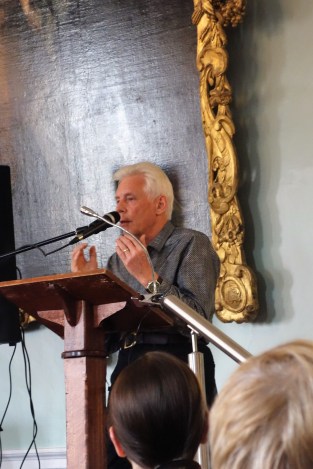 What does Roger Garfitt like to do when he’s not being, well, poetic?
I go for long walks. I live just under a Stone Age Ridgeway, so that’s easy. I listen to jazz and Latin American music and some World music – Yasmin Levy, Souad Massi, Ali Farka Touré and Toumani Diabaté. I listen to Radio 3 when I’m cooking and buy the occasional CD of contemporary classical music – Harrison Birtwistle, Simon Holt. I go to the occasional opening in a local art gallery and get the weekly Art Newsletter from The Guardian. I watch foreign films when I can – I came of age in the great age of European cinema, watching Bergman, Truffaut, Fellini, the Russian War & Peace – but I can’t livestream, given the slow speed of rural broadband, and I’m desperately holding onto my LOVEFILM subscription.
Nothing, in other words, that would surprise my readers. My life is pretty much all of a piece.
You won the Gregory Award in 1974. Can we see one of your winning poems?
With pleasure. ‘Hares Boxing’ came from one of my lucky breaks when an old farmer who was living all alone in a big stone farmhouse rented me two rooms for two pounds a week. This enabled me to stop teaching and write full-time and his generosity is duly acknowledged in the front of my first book. I used to walk round the fields each morning before I started work and that’s when I saw the hares.
Hares Boxing
for Nigel Wells
This way and that
goes the runaway furrow.
Nose to tail
goes the tunnel
in the grass.
Now the leader
swivels, jerks up his heels.
The trick flickers
along the rope of hares:
heels over head they go, head over heels.
It’s the Saturday after Valentine:
in Florey’s Stores
the kids go
into huddles,
Oh! What did he put?
Go on, tell us! we promise
we won’t tell.
Did she send you one?
Did she?
Over the winter nothing has changed
but the land. The hedgerows
are in heaps for burning.
The owl’s tree stands vacant
between the scars of smooth earth.
The sunlight falls on cleared spaces,
on the old lines. The hares meet
as they met before Enclosure, far out
in the drift of grasses, their fisticuffs
like tricks of the eye.
What catches the light, what the eye believes
is the rufous shoulder, the chest’s white blaze:
what it sees are up on their haunches
the blaze throw its guard up, the shoulder
slide in a punch: two pugs that duel
stripped to the waist by sunlight.
And the Fancy? They emerge
from the corners of the eye, low company
from the lie of the land, with guineas
in their stare, without visible means.
The purse is all he fancies. The generations
bunch in his arm.
Toora-li-ooral go the fifes in his blood.
As tall, as straight as a thistle,
Jack Hare squares up to Dancing Jack.
By the time the book came out, I was living in North Devon and I sent a copy to Ted Hughes. He wrote back, “Good to know where ‘Hares Boxing’ comes from. I came across it in a magazine somewhere and could never find it again. Very haunting poem.” That was all the endorsement I needed.
How has your poetic voice changed since the 1970s?
What happened towards the end of the 1970s is that the ideas started to open out and, whether I liked it or not, I found I was having to write long poems – something that came as quite a shock to someone who had always thought of the lyric as his natural medium. I had moved to North Wales to take up a writer’s fellowship at Bangor University and got to know the poet Tony Conran, the editor and translator of the Penguin Book of Welsh Verse. In Wales the communal tradition was still strong and the poet had a natural role in that. Many of Tony’s poems were written to celebrate a marriage or a christening or a life as it came to its end. When I set out to write a wedding poem for Tony himself, I came up against the fact that in the English tradition we no longer had a positive language in which to celebrate such moments, only a language of doubts and misgivings. That was the start of ‘Rites of Passage’, which appeared as work-in-progress in Given Ground and remained in suspension for another twenty-five years. Fittingly, it was a poem I wrote for another friend, the Irish harper Tristram Robson, that gave me the insight I needed to complete ‘Rites of Passage’ and Tony was able to see it in print before he died. It’s most easily found now in an anthology that came out from Bloomsbury last year, Building Jerusalem: Elegies for the Church of England.
The idea for ‘Lower Lumb Mill’ came as I was writing a report on a school course I had run at Lumb Bank, the Arvon Centre in Yorkshire, in 1979. The kids were from inner-city Manchester, a typical mixture of races and backgrounds, all brought together by the city’s history as the centre of the cotton-spinning industry in the hey-day of the British Empire. The beginnings of that history were all around them in the woods below Lumb Bank, in the mill chimneys, the dye-pits and the waggon-roads, but they were blind to it. They thought they were in the country and wrote poems about fields and cows. That blindness, that blindfold, if you like, of rural myth seemed to me very typical of English culture and I set out to strip it away and celebrate their real history, in all its persistence and difficulty. As I worked on the poem, I had to include my own history because I was coming to the end of a difficult relationship and had to decide which was the more loving course, to break off or to persist. It’s a long poem in four sections, beginning almost as a satire, an act of cultural dissidence, and ending as a love poem.
The relationship with Frances, which began in 1980, gave me, as it were, a ledge of stability from which I could look back at those earlier difficulties and Frances read the first two sections before she was diagnosed with cancer in 1982. It was 1985 before I was able to take the poem up again and I finally finished it in Bogotá in 1988.
It was while I was in Bogotá that I received the commission for the memoir, The Horseman’s Word, and for the next four years I worked on that. I did not come back to poetry again until my Colombian life ended in 1992 and I did a very free translation of a song by Atahualpa Yupanqui as a way of negotiating that loss. By then I was deep in debt and had to put the memoir to one side while I took on community writing projects. Then I had the commission for Border Songs, the first of three poetry commissions I used to subsidise the memoir, and it’s those three sequences, From the Ridge, In All My Holy Mountain and Border Songs, that form the final section of the Selected Poems. I wrote each of them in six months, From the Ridge and In All My Holy Mountain actually in the same six months, and that shows not only the advantage of having deadlines to work to but also the skills I had been forced to acquire when, to my consternation, poems insisted in turning into long poems.
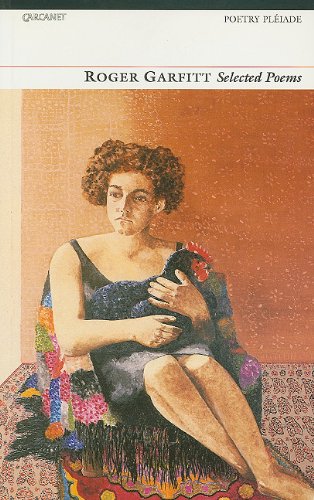
Of all your collections, which contains the most of the real Roger Garfitt?
I wouldn’t want to choose between Given Ground and the Selected Poems. Fortunately, I don’t have to because almost the whole of Given Ground is in the Selected Poems. The poems in Given Ground are more personal but the Selected has the journal extracts, which are more detailed and every bit as personal.
Could you give us a sample poem?
Hard to choose. ‘The Hooded Gods’ has had the most critical response. As Sean O’Brien said, it’s clearly socialist in impulse and that’s carried through into Border Songs and In All My Holy Mountain and more recently into the political sonnets that have appeared in Stand and PN Review. ‘Skara Brae’, written as an oblique elegy for the life I shared with Frances and her son Adam, draws the most response from readers. But I’m going to choose ‘At Vanishing Point’, the first of the Colombian poems, which is more openly personal.
At Vanishing Point
para Eugenia en El Cántaro
This morning we talk again
under the bony plum,
whose fruit, like a stone
sucked in the mouth,
can outwit thirst. I sit
on the garden seat as on
the bench of the ship of souls,
lashed to my oar. Almost hear,
between the tick-birds and
the parakeets, a gull’s keen,
invoking solitude, the doom
of the Wanderer, who dreams
of a hearth and companions, and wakes
to the ice of the whale-road.
My salve for hard times
is to make them harder still.
You do that too. You will
when I leave. Lock yourself
in your painter’s attic
in Bogotá. Work to
the wry songs of Bola de Nieve.
Geni, you and I are two
of a kind. I find you
on the bench beside me.
Above us, like a daydream, like a thought
moored between two pillars of cloud,
El Cántaro, the house you built
out of stubbornness, out of shipwreck.
It is just pencilled in
against the sky. Just held
at the point of erasure.
Built of shadings, cross-hatchings,
a pencil sharpening the whiteness
of paper, constructing
a moebius strip of light,
endless galleries, rising
scales of roof, ascending
and descending stairs.
The pencil sketched, suffered
erasure, sketched again.
One by one the variants
emerged. Plumped onto the page
and sank without trace. Stepped out
on their spindleshanks
and crumpled into the pits
of erasure, the hubbub of forms
jostling for life. Then the pencil
took wing. Took from the swift’s wing
the long, honed line, that austere
primary glide. Took from the owl’s wing
the crossing of tenons, that secondary
softness of flight. Something lifted
that could fly. Now we live under its wing.
Watch the diamond lattice compose the light
and the stairs rise in counterpoint. Hear
the three-part harmony in the turn of the stair.
Geni, we came here already erased.
All that life we lived on paper,
all the ways and means we had sketched
in our letters. What precise negations,
what scar-white lines your ghost must have crossed
to find me. I was a blankness walking
on the white fires of that grid.
Now we talk. My fingers touch the blade
of your shoulder. And are fingers
on warm skin. We touch as only survivors
can touch. Butterflies like blue water
lap the air. The charcoal tree has blossomed
into featherdusters of flame. We could walk down
to the Sumapaz, the Peaceable River,
naming the white-humped cattle, the hawk
who is a call, a circling
shadowed by her young, the lizards
who are known only by their vanishing.
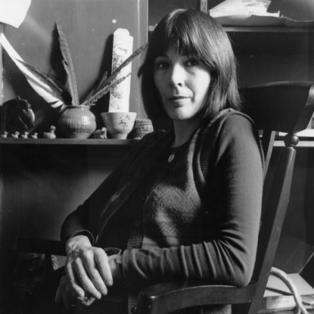
After the early loss of your wife, Frances Horovitz, how cathartic an experience was it to edit her Collected Poems?
I had yet to reach any possibility of catharsis. Rather, I was possessed by a fierce determination to justice to Frances’ work. I was rigorous in my editing because Frances’ reputation was by no means as secure then as it is now and I didn’t want to give any ammunition to the critics. But then Frances herself had been so exacting in what she allowed into print that there were very few poems I hesitated over and then only by the finest shades of judgement. What has been heartening in the years since is to see the respect that younger poets have for her use of space and the concentration of her language, for a free verse that is completely achieved, as durable as a border ballad.
I reprinted the dedications of each successive book in the Collected in order to acknowledge the contribution of her first husband, Michael Horovitz, who was an acute reader of her work, always able gently to point out when a poem was not quite finished, and to celebrate the inspiration of her son Adam, whose responses gave rise to a number of the poems. There’s one poem whose omission Adam regrets because it was prompted by a fairytale they read together and he remembers Frances working on it. I left it out because Frances felt it was a poem that didn’t really belong to her, that it didn’t have her voice. Adam will probably bring it back into print at the first opportunity and why not? The Collected has done its work now and there’s no reason not to move to a Complete Poems.
Where there was an element of catharsis was in seeing the design for the book come together, complete with Winifred Nicholson’s painting on the cover, and knowing that it looked just right, that Frances’ work was being sent out in the world, as it were, under her own colours.
Can you tell us about your life in Colombia?
Meeting the painter Eugenia Escobar in 1985 and spending long periods of time in Colombia was the saving of me in many ways. It didn’t just give me a new life, it gave me a new world. It was as if Frances had never died because Frances never lived there. The ground was still whole under my feet.
And in a very practical sense it saved me as a writer. In England I had to put together a living from all sorts of bits and pieces: giving readings, writing reviews, running poetry workshops in schools, judging poetry competitions. A friend once observed that the first requirement for a poet seemed to be a clean driving licence. Whereas in Colombia I could simply sit down and write. If the phone rang, it wasn’t for me. Hence I was able to finish ‘Lower Lumb Mill’ and assemble the collection that became Given Ground. And it was in order to earn my living simply from my desk that I found an agent, Jane Turnbull, who secured the commission for The Horseman’s Word.
There was an energy that came from watching Geni conceive and complete her paintings in a two-or-three-day storm. She painted a major series, El Condorpatrio, that took the Condor, the emblem of Colombia, through a series of transformations that reflected the violence the country was living through. And there was the music, the discovery of a whole continent of music that stretched from Mexico to Chile and took in Cuba and the Dominican Republic. Music and dance are so much a part of life in Colombia that, when Granta commissioned an article on the Drug War, I was careful to offset the drama with a description of El Día del Amor y la Amistad, one of the fiestas where families gather and drink rum and aguardiente and dance through till dawn:
When South Americans dance, they do not leap about, striking the ground with their feet as
Europeans and North Americans do. They dance from the ground upwards. Their feet softly
paddle and their hips begin to sway. It’s the outbreak of a communal rhythm. Children wriggle like elvers in a spring tide. The old yield to it gravely like trees to the wind. And the young dance as angels might make love, their hips close, fluent and inexhaustible, their feet hardly touching the ground.
The only problem was that The Horseman’s Word was cutting a very deep furrow and it quickly became apparent that I would never be able to finish it in the year the advance had bought. Granta published an extract from Part One, which helped, and I had a grant from the Society of Authors. But the point finally came when I couldn’t raise another air fare and Geni and I had to part good friends, which we still are, witness her painting on the cover of the Selected Poems.
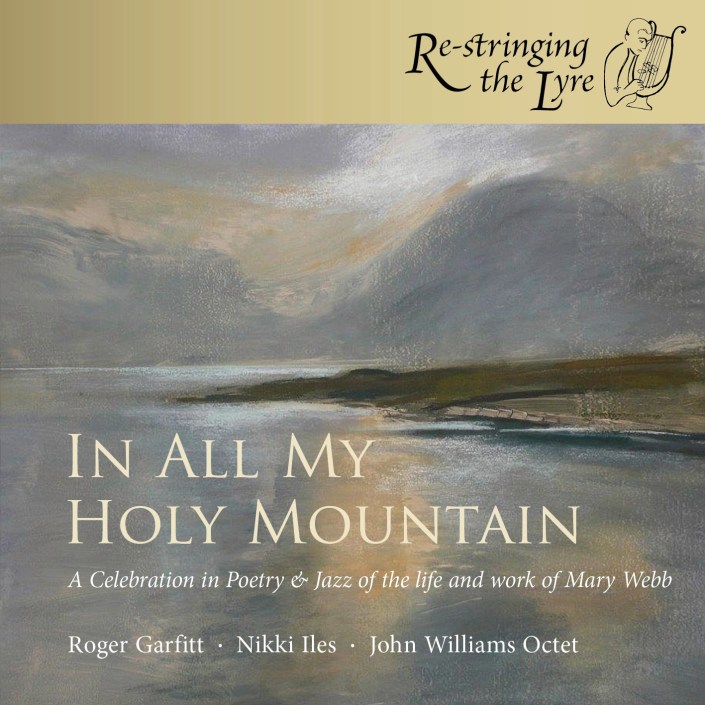
You seem to enjoy having music accompany your work. What is the reasoning and origin behind this?
Music has always been important to me. The school I went to, Tiffin Boys’ School, has a strong choral tradition and I grew up listening to Byrd and Palestrina. Then I discovered Jazz. The memoir has an account of my first visit to Ronnie Scott’s Club to hear Stan Getz play with the Stan Tracey Trio and I returned whenever I could to hear Stan Tracey play. His Jazz Suite to Under Milk Wood is a masterpiece, with an astonishing solo by Bobby Wellins on ‘Starless and Bible Black’. Poetry & Jazz was in the ascendant then and Christopher Logue’s Red Bird is another masterpiece, Logue’s voice interplaying with the Tony Kinsey Quintet as if it were another instrument.
Priscilla Eckhard, to whom I was married when I wrote ‘Hares Boxing’ introduced me to the folk tradition and that was reinforced when I moved up to Bangor, which had a folk club and a folk festival for which musicians came over from Ireland. For three years I lived with a Welsh folksinger, the only problem there being that folk song sessions go on into the early hours of the morning, which isn’t the best thing if you want to get up and write the next day. When I moved up to the North East, I met another strong folk tradition and it was there that Frances and I began to work with Tristram Robson, the Irish harper, and with an Irish traditional band, Faun. The friendship with Tristram continued when we moved down to the Marches and Tristram gave the first performance of Border Songs with me in the Morden Tower.
Poetry is a very concentrated form of language and I found when I was running readings that interludes of music sharpened the audience’s attention, both for the poetry and the music. But the relationship goes much deeper than that, much further back. In an oral culture poets were singers and melody was one of the mnemonic devices they used to preserve and transmit their work, as much part of it as the other devices they used to bind their work together, whether they were rhythm and rhyme, or stress patterns, alliteration and assonance. Whatever freedoms free verse has opened up, I think rhythm is still at the heart of it. I remember Seamus Heaney once remarking of another poet, who shall remain nameless, “He doesn’t have much of beat, does he? In fact, I wonder does he know there’s a dance going on at all?”
Sometimes I fear that sense of the dance is being lost, which is why I called the CD label I’ve set up, Re-stringing the Lyre. If you are collaborating with a visual artist or a musician, you have to leave space for the other art form, which can have the effect of refining your own work. Simon Holt, who has done some striking settings of Emily Dickinson, told me that he had found it impossible to set anything by Dylan Thomas because there was no space left for him. He came to the conclusion that the poems were already set.
Border Songs began as a collaboration with the glass engraver, Janice Howe. The poems are etched into the glass of the Shropshire County Archives, into the screen that separates the Public Room, where anyone can go to consult their parish records, from the Rare Manuscript Room. It’s a security screen and we had to come with an engraving that left the glass clear. Hence the form of Border Songs, the history of the Marches distilled into twelve short lyrics, the lines themselves very short and using lots of line breaks. Janice found a classic font, so classic that it’s self-effacing, and when you first enter the Public Room, the screen does look clear. But as you walk across the room, there’s a shimmer and the poems rise up, so many ghosts on the glass.
It was that space on the glass that left room for the music in the performing version, with Sue Harris on the hammered dulcimer. Sue found a wonderful intro, a tune called ‘Under the King’s Hill’ by her son, Benjy Kirkpatrick, and created other interludes that come after every three songs: but there are places where she is actually playing under my voice and that wouldn’t have been possible without the spaces between the lines. The interplay between the voice and the dulcimer is even closer in From the Ridge, which the Poetry Society commissioned under their Poetry Places scheme. I said I wanted to write about the hard place, turning loss into a landscape and making a journey across it, a possibility I had glimpsed in the songs of Atahualpa Yupanqui and the tradition of the huella, the song you make as you ride along the path. The dulcimer becomes the audible expression of the journey, pacing it out note by note in a way that holds the audience rapt.
In All My Holy Mountain was an Arts Council commission, a celebration in Poetry & Jazz of the life and work of the Shropshire poet and novelist, Mary Webb. She was so adept at catching the changing colours of the landscape in such a rich verbal palette that I felt we would need an equally rich sound palette, in other words a full horn section with all three saxophones and a trumpet who could double, as Miles Davis did, on flugelhorn. John Williams assembled a Septet of top jazz musicians who could all double and even treble on other instruments and suggested a rising young jazz composer, Nikki Iles. But how to write In a way that would give them the space they needed?
For the opening section, ‘Westerly’, I came up with a four-line stanza, so brief that it’s virtually a four-line haiku:
It begins as a breath
a softness in the air
over the oakwoods
the first dustings of blue
There are four of those stanzas in all, following the changes of light down my own valley, which is the Clun Valley, as a westerly air system moves in. and each of them took me a week to get right. My reward came six months later when I walked into a rehearsal studio in London and heard a flute coming in over two bass clarinets whose sound deepens and broods under the next stanza:
brings a sea-change
the luminous shadow
of an Atlantic calm
close faraway light
And so it flows on, my sixteen brief lines giving rise to seven minutes of music of a richness that surpassed all my expectations.
As I always say before a live performance, the librettist is only the springboard. It’s the composer who has to do the back flips and double somersaults and Nikki Iles has done them wonderfully. Her score for In All My Holy Mountain is, in the words of John Fordham, The Guardian’s jazz critic, “an imaginative and illuminating addition to the genre” and I’m so glad that we’ve finally had the chance to bring it out on CD with Nikki herself on piano, turning it from a Septet to an Octet.
![Garfitt, Roger 600dpi[1]](https://mumblewords.uk/wp-content/uploads/2017/11/garfitt-roger-600dpi1.jpg?w=273&h=406)
Can you tell us about your new collection & perhaps give us a sample?
It’s called The Action and it’s dedicated to my wife Margaret, who has been a warm and playful presence in my poetry ever since I was lucky enough to meet her in 1993. The Selected Poems has a sequence of ‘Valentines’, poems given to her on Valentine’s Day each year, and that flame is still burning in the new collection in poems such as ‘Vahine’ and ‘The Tap Shoes’, both of which appeared recently in Stand. But as we get older, we have to face up to darker realities and the title poem was written after we’d spent six months criss-crossing the country to visit Margaret’s brother as he was dying of cancer. That’s balanced by ‘The Calm’, which I wrote for Tristram Robson, the Irish harper, who played at Frances’ funeral and again at my wedding to Margaret. Tristram built the only copy of the Lawes Harp, an Irish double harp from the time of William Lawes, that can actually be played. It’s now in the National Harp Museum in Kilkenny. When Tristram was diagnosed with a brain tumour, he married his partner, Anne, and he set out to build another copy of the Lawes Harp because, as Anne said, the first copy was only 97% perfect.
The Calm
For Tristram and Anne Robson
There is the tension of
the strings, bronze
braced against willow
until every note
is sovereign
and rings true,
and there is the calm
in the fingers,
time for every note
to find its feet in
the lordless dance
and be lost in the joy
of it. I remember
your calm, Tristram,
when all the joy in us
had died. You bent to
the harp as Brocard said,
‘May she rest in peace’,
and found a lament that
would lead us down to
the still waters – but not
to leave us there. One note
sprang on, as if spirit
alone could act as
a causeway. Another
leaped from it, as if the strings
were a strength in themselves.
Interval by interval, gleam
by nailed gleam, you brought us
out of the shadow,
binding the pulse back
into the body, tight
as the matador’s wraps
under his suit of lights,
setting our feet on the ground
as if they struck fire
in passing. And then the notes
lifted, not for joy
but for the possibility
of joy, and the dance stepped
through us, so defiant
that I wish you calm even
now, as the chemo silts up
the spirit, the calm
and the cunning to set
in place every string
of a double harp won back
from exile and silence.
What does the future hold for Roger Garfitt?
I’d like to bring out a CD of the work I’ve done with Sue Harris, not just on my own poems but on some of Frances’ too. We did a performance of The Woman’s Dream, a sequence of four of her poems, at the Ledbury Poetry Festival, in which Sue created a lovely flow of the dulcimer under the voice. Atahualpa Yupanqui has a long narrative song in which he rides into Monte Callado, the Silent Mountain, which I imagine is some kind of Bardo state because he talks of a friend who has died as having gone away por el silencio, ‘into the silence’. I’d like to do my own version of that, which should please Gareth Rees-Roberts, the guitarist I work with, who has really taken to Atahualpa’s music. I have one of Geni’s paintings stored in the attic, one of the Condor Heads she gave me because I thought I might be able to make a sequence from it, and I’d like to have a go at that.
Dundee Literary Festival
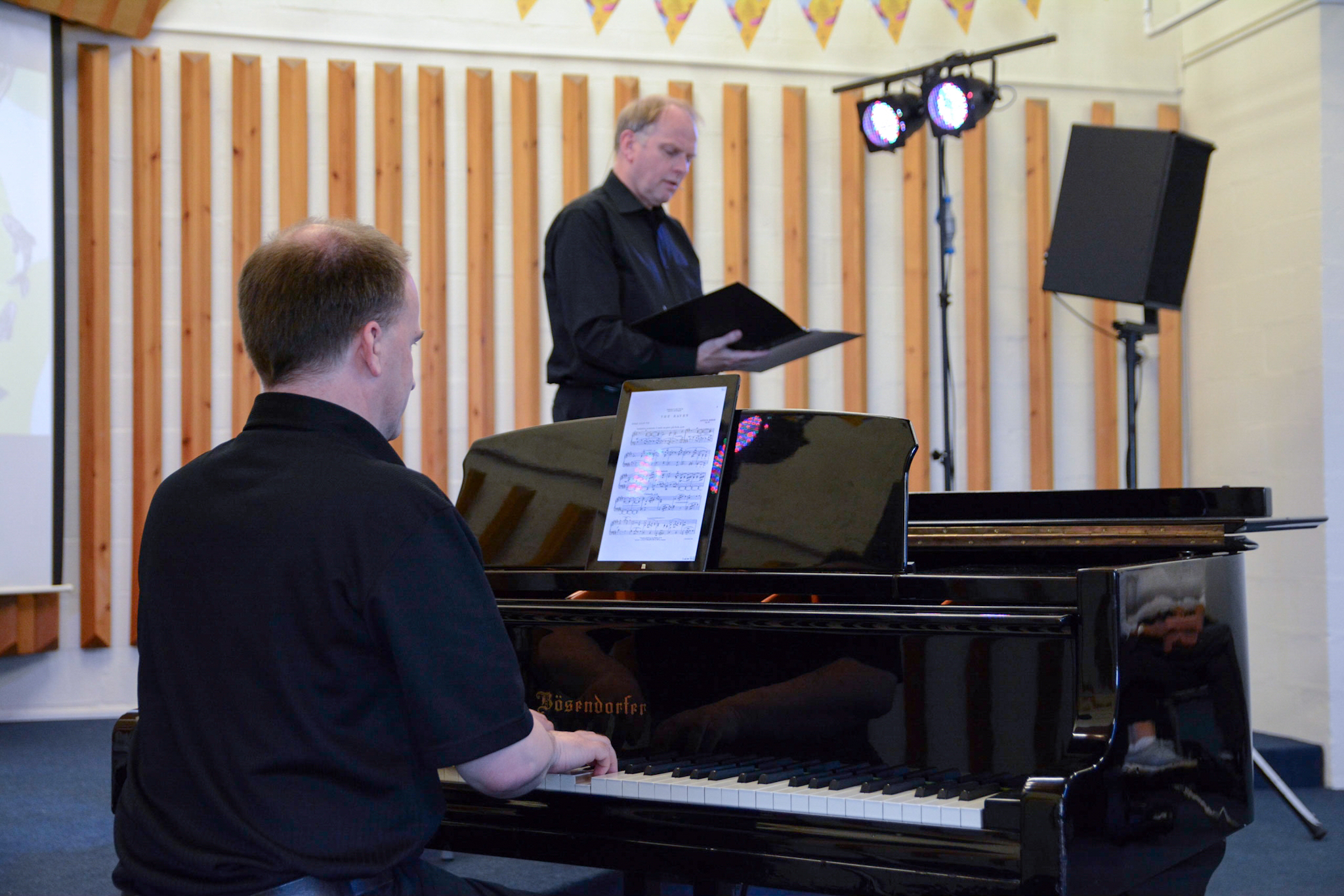
Bonar Hall
Dundee
20/10/17
I’ve only ever seen Dundee from across the Firth of Tay on the northern coast of Fife, a bedazzling apparition of tall buildings & hill-slopes linked to Fife by magnificent works of bridgeneering. So, it was with much enthusiasm that when the Dundee Literary Festival dropped into my inbox, I’m like to the wife, lets go darling. She was like, ‘I’ve heard the Malmaison is a really nice hotel, & that Broughty Ferry’s got a gorgeous beach.’ Parking up by the Agacan on Perth Road on an unusually balmy October day, I was met with a tiny city with gigantic ambition, architecturally & of course, culturally. We would be experiencing two slices of the pie; a rendition of The Raven by Edgar Allan Poe, & a talk on a recent book-publishing sensation, Nasty Women, by three of its authors.
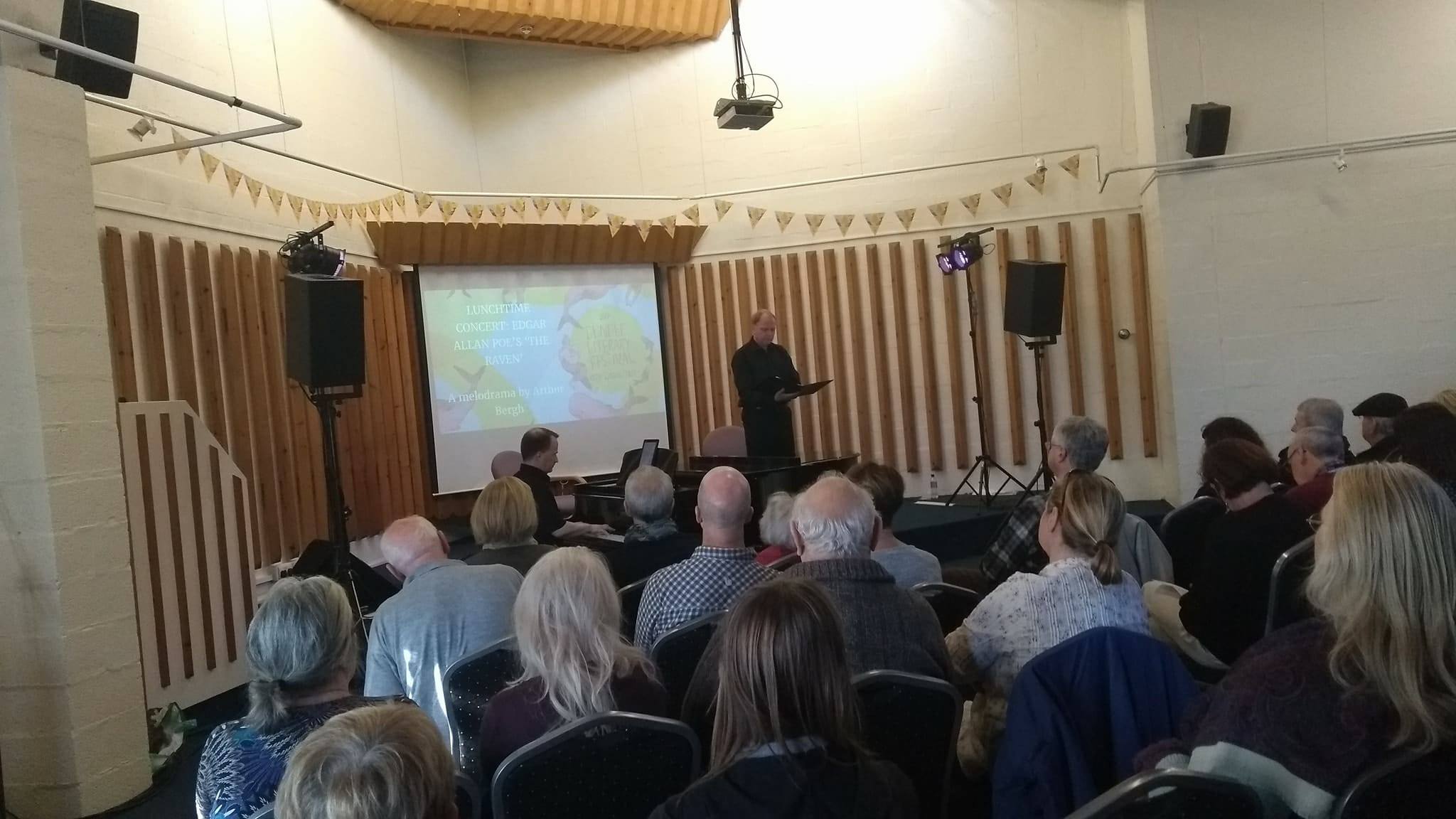 The Raven is one of my favorite poems, first published in January 1845, which by 1909 had attracted the attentions of Arthur Bergh, who created a popular-at-the-time but long-forgotten ‘melodrama,’ synchronising piano to Poe’s words. The performance was duly presented by Ken Murray (recital) & the University of Dundee’s Director of Music Graeme Stevenson on piano. Murray is a trained singer, & at times you could hear the lucid creak of him wanting to break out into melody – like a captive lion sticking its nose out of a cage – but managed to tame this natural beast & deliver an ambrosia-spurting, vowel-booming rendition of the Raven in his thick Scots accent. The music is charming & intelligent, opening at a pensive pace then keeping up with the more dazzling moments of Poe’s astonishing wordplay as the reciter descends into madness. As a performance, it was unquestionably excellent, but I couldn’t help feel that Arthur Bergh had tainted somewhat Poe’s original poetic chaunt. There is a certain hypnotic & thunderous rhythm to the poem’s mechanics which were all but wiped out by Bergh, as if he was painting over an original classic with art decor blocks of paint.
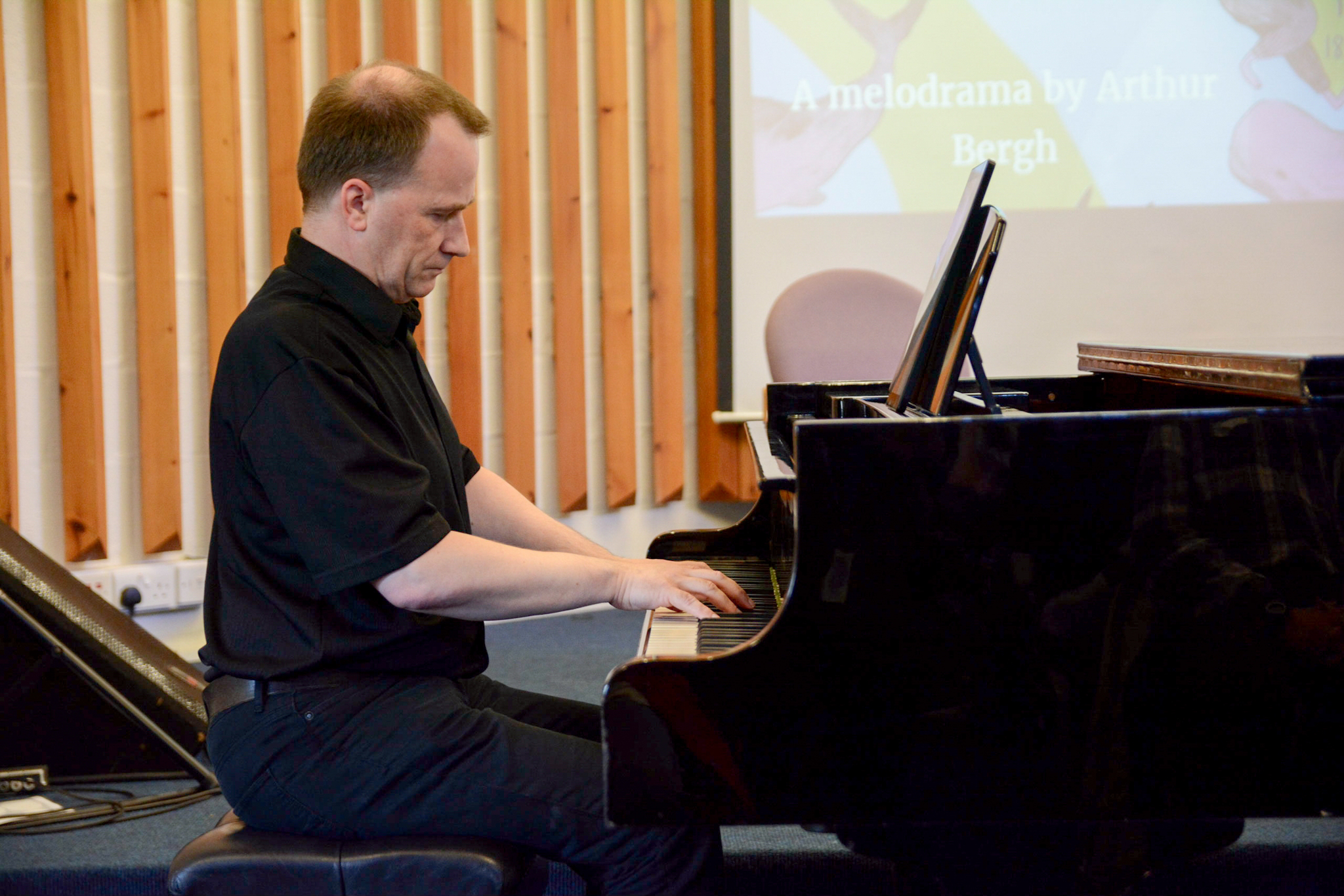
 It was now time for a potter around Dundee, checking into the luxuriant Malmaison, our room looking out high over a busy Dundee street. Back in the city we wandered about for a bit, finding an atmosphere full of stress-free geniality. I also rather enjoyed getting my photo taken with a Desperate Dan statue. My grandmother used to get me the Dandy & the Beano every week, published & printed here in the city by D.C. Thompson. I remember the day as a 13 year-old when I said to my gran could I now get Roy of The Rovers & 2000AD instead, as I felt I’d grown out of the Beano. But still, for many years, I kept those paper relics of my youth in the bottom of my wardrobe at my grandmas, & would occasionally flick through them for nostalgic pleasure. Back in Dundee 2017, after Perth Road’s Braes for a beer & then The Tonic for nachos, me & the wife returned quite giddily to nearby Bonar Hall, the heartbeat of the Literary Festival on the University campus.
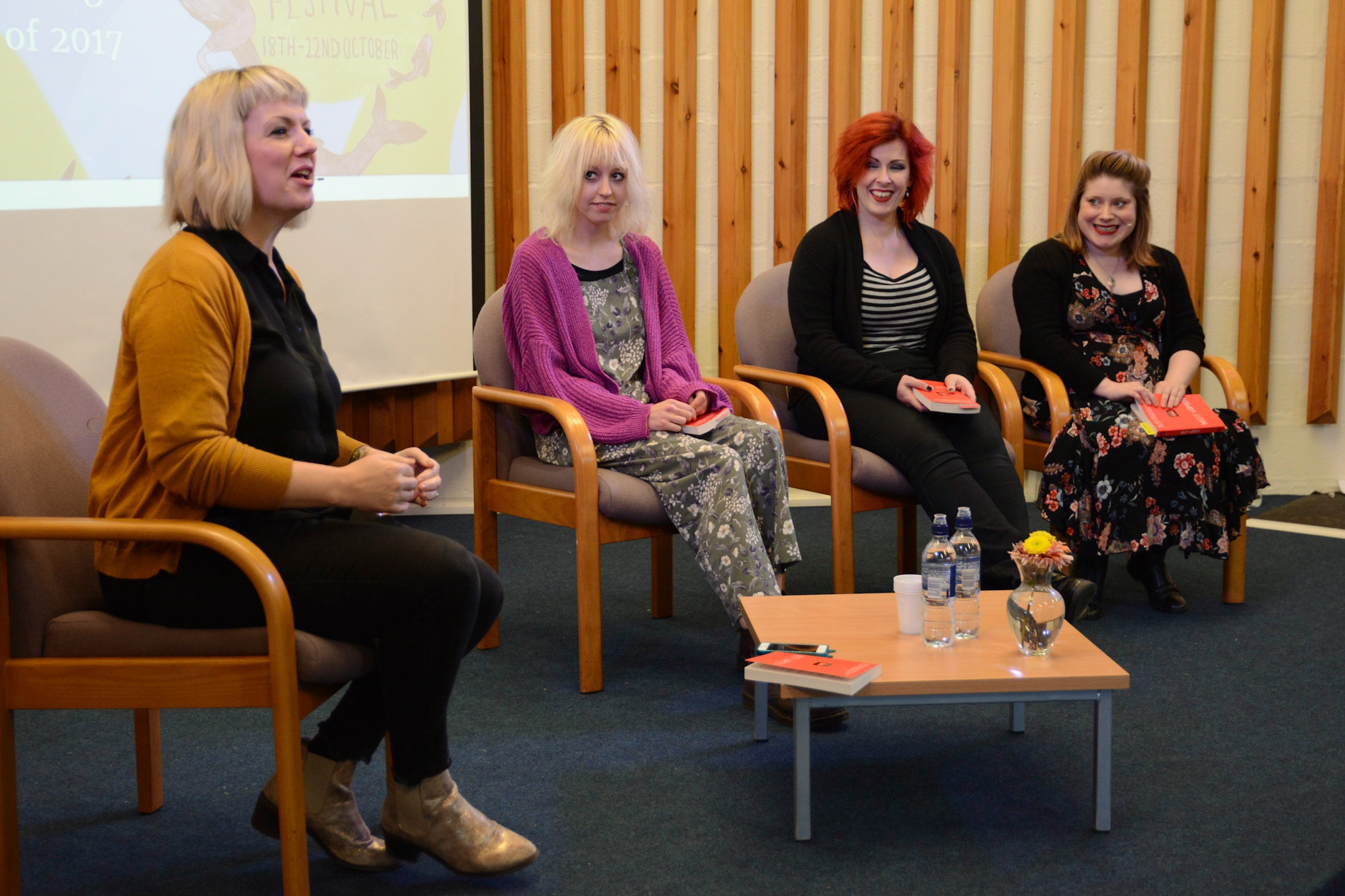
 The audience for the day’s second installment had swapped a tad elderly bunch of appreciatives with a mainly female group, where shocks of pink hair flashed by ladies of demure countenance. They had gathered for an hour or so with Becca Inglis, Jen McGregor & Alice Tarbuck; who like Euphrosyne, Aglaea and Thalia presided over our gathering, relaying their essays cooked up to order by virgin publisher 404 Ink in order to respond – through intelligent & therapeutic literature – to the brutally nonsensical & inane sexism of Donald Trump. Beginning as a tweet, the rise of a book called Nasty Women to prominence has been a 21st century, social-media wonder, & was already a cleverly hyped sensation before it was launched on International Women’s Day this year. By August it was the biggest selling book at the Edinburgh International Book Festival.
Chaired ably by Zoe Venditozzi, the three authors we were presented (out of a dozen or so in the book) all read extracts of high quality writing, followed by Venditozzi’s mutual dissemination of their work & some interesting audience forum questions. A classic example of the brightness of Venditozzi’s intelligent moment-melding came during Jen’s explanation of how she learnt more about what was happening to her body from internet forums rather than underfunded gynecologists. ‘When I was a teenager you had to write to Jackie,’ chirped in Venditozzi.
It is true that we live in a world of sexual inequality, & Nasty Women seems to have given a voice to much of the brush-under-the-carpet stuff of femininity; the embarrassment of depression, the disempowerment of natural instinct, the bone-density decreasing risks of contraceptive injections, & so on. The high point was identifying the disratification of the female ability to give birth, but not to have the choice of sterilisation until they were 30, to deny private agency over one’s own body. The low point was when the words ‘most men aren’t rapists‘ came out, suggesting something like an 80-20 split – rather than the 96 percent of all likelihood given figures of rapeline calls & those that go unreported. I think ‘vast majority’ would have been more accurate. Overall, however, a fine & emotion-provoking hour & the production of Nasty Women holds an especially important relevance to the age, when in a recent interview with The Mumble, Alice Tarbuck stated, ‘it’s more important than ever to hold the truth to account in the midst of sensationalism and international political turmoil.’
Reviewer : Damian Beeson Bullen
Main Photography : Matthew O’Donnell
The Negro Artist and the Racial Mountain
One of the seminal essays by Langston Hughes
Which first appeared in THE NATION (1926)
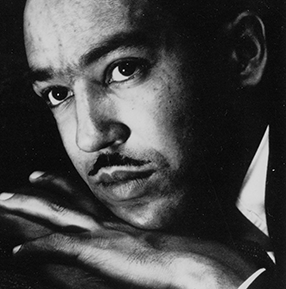 One of the most promising of the young Negro poets said to me once, “I want to be a poet–not a Negro poet,” meaning, I believe, “I want to write like a white poet”; meaning subconsciously, “I would like to be a white poet”; meaning behind that, “I would like to be white.” And I was sorry the young man said that, for no great poet has ever been afraid of being himself. And I doubted then that, with his desire to run away spiritually from his race, this boy would ever be a great poet. But this is the mountain standing in the way of any true Negro art in America–this urge within the race toward whiteness, the desire to pour racial individuality into the mold of American standardization, and to be as little Negro and as much American as possible.
But let us look at the immediate background of this young poet. His family is of what I suppose one would call the Negro middle class: people who are by no means rich yet never uncomfortable nor hungry–smug, contented, respectable folk, members of the Baptist church. The father goes to work every morning. He is a chief steward at a large white club. The mother sometimes does fancy sewing or supervises parties for the rich families of the town. The children go to a mixed school. In the home they read white papers and magazines. And the mother often says “Don’t be like niggers” when the children are bad. A frequent phrase from the father is, “Look how well a white man does things.” And so the word white comes to be unconsciously a symbol of all virtues. It holds for the children beauty, morality, and money. The whisper of “I want to be white” runs silently through their minds. This young poet’s home is, I believe, a fairly typical home of the colored middle class. One sees immediately how difficult it would be for an artist born in such a home to interest himself in interpreting the beauty of his own people. He is never taught to see that beauty. He is taught rather not to see it, or if he does, to be ashamed of it when it is not according to Caucasian patterns.
For racial culture the home of a self-styled “high-class” Negro has nothing better to offer. Instead there will perhaps be more aping of things white than in a less cultured or less wealthy home. The father is perhaps a doctor, lawyer, landowner, or politician. The mother may be a social worker, or a teacher, or she may do nothing and have a maid. Father is often dark but he has usually married the lightest woman he could find. The family attend a fashionable church where few really colored faces are to be found. And they themselves draw a color line. In the North they go to white theaters and white movies. And in the South they have at least two cars and house “like white folks.” Nordic manners, Nordic faces, Nordic hair, Nordic art (if any), and an Episcopal heaven. A very high mountain indeed for the would-be racial artist to climb in order to discover himself and his people.
But then there are the low-down folks, the so-called common element, and they are the majority—may the Lord be praised! The people who have their hip of gin on Saturday nights and are not too important to themselves or the community, or too well fed, or too learned to watch the lazy world go round. They live on Seventh Street in Washington or State Street in Chicago and they do not particularly care whether they are like white folks or anybody else. Their joy runs, bang! into ecstasy. Their religion soars to a shout. Work maybe a little today, rest a little tomorrow. Play awhile. Sing awhile. 0, let’s dance! These common people are not afraid of spirituals, as for a long time their more intellectual brethren were, and jazz is their child. They furnish a wealth of colorful, distinctive material for any artist because they still hold their own individuality in the face of American standardizations. And perhaps these common people will give to the world its truly great Negro artist, the one who is not afraid to be himself. Whereas the better-class Negro would tell the artist what to do, the people at least let him alone when he does appear. And they are not ashamed of him–if they know he exists at all. And they accept what beauty is their own without question.
Certainly there is, for the American Negro artist who can escape the restrictions the more advanced among his own group would put upon him, a great field of unused material ready for his art. Without going outside his race, and even among the better classes with their “white” culture and conscious American manners, but still Negro enough to be different, there is sufficient matter to furnish a black artist with a lifetime of creative work. And when he chooses to touch on the relations between Negroes and whites in this country, with their innumerable overtones and undertones surely, and especially for literature and the drama, there is an inexhaustible supply of themes at hand. To these the Negro artist can give his racial individuality, his heritage of rhythm and warmth, and his incongruous humor that so often, as in the Blues, becomes ironic laughter mixed with tears. But let us look again at the mountain.
A prominent Negro clubwoman in Philadelphia paid eleven dollars to hear Raquel Meller sing Andalusian popular songs. But she told me a few weeks before she would not think of going to hear “that woman,” Clara Smith, a great black artist, sing Negro folksongs. And many an upper -class Negro church, even now, would not dream of employing a spiritual in its services. The drab melodies in white folks’ hymnbooks are much to be preferred. “We want to worship the Lord correctly and quietly. We don’t believe in ‘shouting.’ Let’s be dull like the Nordics,” they say, in effect.
The road for the serious black artist, then, who would produce a racial art is most certainly rocky and the mountain is high. Until recently he received almost no encouragement for his work from either white or colored people. The fine novels of Chesnutt’ go out of print with neither race noticing their passing. The quaint charm and humor of Dunbar’s’ dialect verse brought to him, in his day, largely the same kind of encouragement one would give a sideshow freak (A colored man writing poetry! How odd!) or a clown (How amusing!).
The present vogue in things Negro, although it may do as much harm as good for the budding artist, has at least done this: it has brought him forcibly to the attention of his own people among whom for so long, unless the other race had noticed him beforehand, he was a prophet with little honor.
The Negro artist works against an undertow of sharp criticism and misunderstanding from his own group and unintentional bribes from the whites. “Oh, be respectable, write about nice people, show how good we are,” say the Negroes. “Be stereotyped, don’t go too far, don’t shatter our illusions about you, don’t amuse us too seriously. We will pay you,” say the whites. Both would have told Jean Toomer not to write Cane. The colored people did not praise it. The white people did not buy it. Most of the colored people who did read Cane hate it. They are afraid of it. Although the critics gave it good reviews the public remained indifferent. Yet (excepting the work of Du Bois) Cane contains the finest prose written by a Negro in America. And like the singing of Robeson, it is truly racial.
But in spite of the Nordicized Negro intelligentsia and the desires of some white editors we have an honest American Negro literature already with us. Now I await the rise of the Negro theater. Our folk music, having achieved world-wide fame, offers itself to the genius of the great individual American composer who is to come. And within the next decade I expect to see the work of a growing school of colored artists who paint and model the beauty of dark faces and create with new technique the expressions of their own soul-world. And the Negro dancers who will dance like flame and the singers who will continue to carry our songs to all who listen-they will be with us in even greater numbers tomorrow.
Most of my own poems are racial in theme and treatment, derived from the life I know. In many of them I try to grasp and hold some of the meanings and rhythms of jazz. I am as sincere as I know how to be in these poems and yet after every reading I answer questions like these from my own people: Do you think Negroes should always write about Negroes? I wish you wouldn’t read some of your poems to white folks. How do you find anything interesting in a place like a cabaret? Why do you write about black people? You aren’t black. What makes you do so many jazz poems?
But jazz to me is one of the inherent expressions of Negro life in America; the eternal tom-tom beating in the Negro soul–the tom-tom of revolt against weariness in a white world, a world of subway trains, and work, work, work; the tom-tom of joy and laughter, and pain swallowed in a smile. Yet the Philadelphia clubwoman is ashamed to say that her race created it and she does not like me to write about it, The old subconscious “white is best” runs through her mind. Years of study under white teachers, a lifetime of white books, pictures, and papers, and white manners, morals, and Puritan standards made her dislike the spirituals. And now she turns up her nose at jazz and all its manifestations–likewise almost everything else distinctly racial. She doesn’t care for the Winold Reiss’ portraits of Negroes because they are “too Negro.” She does not want a true picture of herself from anybody. She wants the artist to flatter her, to make the white world believe that all negroes are as smug and as near white in soul as she wants to be. But, to my mind, it is the duty of the younger Negro artist, if he accepts any duties at all from outsiders, to change through the force of his art that old whispering “I want to be white,” hidden in the aspirations of his people, to “Why should I want to be white? I am a Negro–and beautiful”?
So I am ashamed for the black poet who says, “I want to be a poet, not a Negro poet,” as though his own racial world were not as interesting as any other world. I am ashamed, too, for the colored artist who runs from the painting of Negro faces to the painting of sunsets after the manner of the academicians because he fears the strange unwhiteness of his own features. An artist must be free to choose what he does, certainly, but he must also never be afraid to do what he must choose.
Let the blare of Negro jazz bands and the bellowing voice of Bessie Smith singing the Blues penetrate the closed ears of the colored near intellectuals until they listen and perhaps understand. Let Paul Robeson singing “Water Boy,” and Rudolph Fisher writing about the streets of Harlem, and Jean Toomer holding the heart of Georgia in his hands, and Aaron Douglas’s drawing strange black fantasies cause the smug Negro middle class to turn from their white, respectable, ordinary books and papers to catch a glimmer of their own beauty. We younger Negro artists who create now intend to express our individual dark-skinned selves without fear or shame. If white people are pleased we are glad. If they are not, it doesn’t matter. We know we are beautiful. And ugly too. The tom-tom cries and the tom-tom laughs. If colored people are pleased we are glad. If they are not, their displeasure doesn’t matter either. We build our temples for tomorrow, strong as we know how, and we stand on top of the mountain, free within ourselves.

