EIBF: Carol Ann Duffy with Keith Hutson & Mark Pajak
Edinburgh International Book Festival
Baillie Gifford Main Theatre
14thAugust
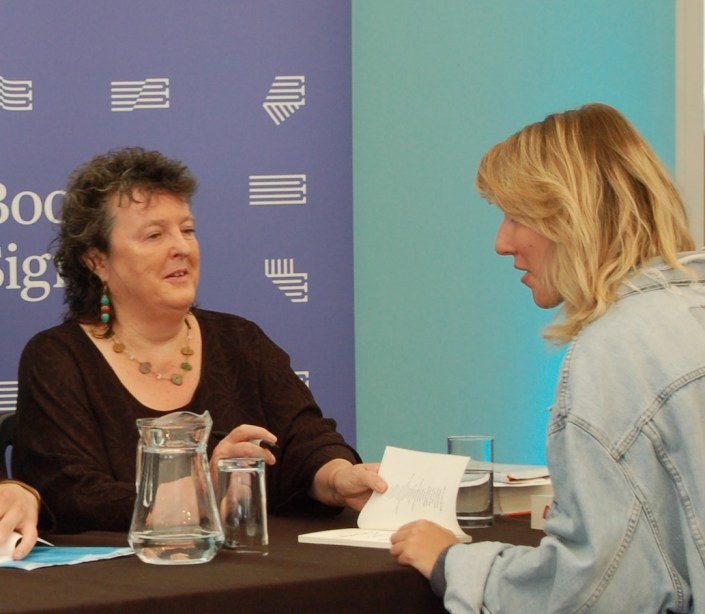
Carol Ann Duffy doesn’t smile much, one never knows how to take her. So when it was announced at the beginning of the event that there would be no question-and-answer session at the end, and that the poets who were taking to the stage had asked us not to tweet during the performance, there was that kind of hush you get when everyone wonders whether this was going to be a po-faced afternoon. As it turned out, there was no need to worry at all, because it was a sheer delight from beginning to end, so much so that the hour went by in what seemed to be the proverbial twinkling of an eye.
Carol Ann has an ongoing policy of seeking out relatively unknown, emerging poets and championing them. The presentation today included two of her latest protégés, Mark Pajak and Keith Hutson. Neither of them had ever appeared in a Book Festival event before – Mark said he had been here as a punter – and when I asked them afterwards how it felt now it was all over, they both testified to the adrenalin still working. You wouldn’t have known that they were anything other than totally relaxed from how they came across in front of the audience; this isn’t really all that surprising, as they had both given readings before, that much is obvious.
Mark Pajak is a Liverpudlian. He has a careful, lilting delivery which – he won’t thank me for this – reminds me a lot of Roger McGough. I know, such comparisons are inevitable whenever a poet from Liverpool appears. In Mark’s case there is something about the timbre of his voice and in the questioning inflection at the end of lines that evokes this. It is a style of delivery that captures and holds the attention, however, and it makes an audience hang on his every word. There is a lot of humour in his work, and a lot of tenderness. His account, a love poem if you will, of a stupid prank that he and the best friend of his childhood and youth carried out, and how it led on to the rest of their lives was… all right, I’ll say it… one of the most wonderful expressions of friendship since Edward Elgar wrote ‘Nimrod’. Over the top – moi? I’m being honest here, it was a Scouse David-and-Jonathan thing.
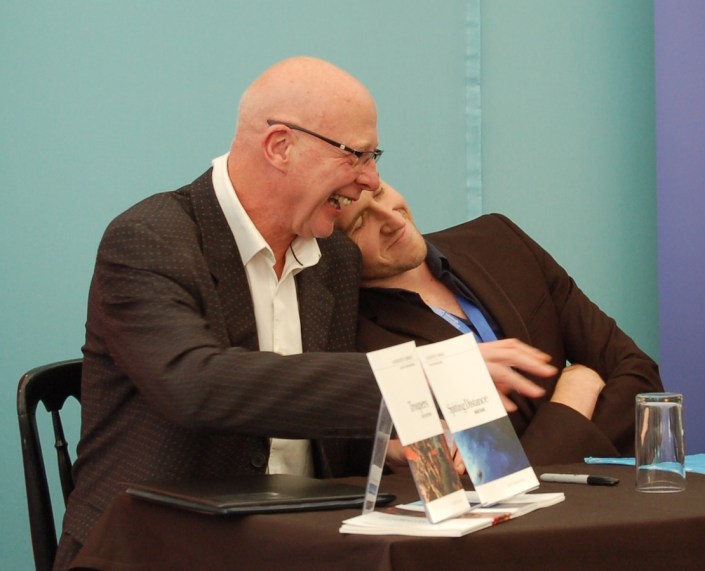
Keith Hutson was either born in Lancashire and lives in Yorkshire, or vice-versa. Anyhow, the Roses cricket matches must be hell for him! In contrast to Mark, Keith delivers his poetry and the intervening patter with a broad if imperfect grin. One tooth is missing. “You should see the other poet. All I said was don’t give up the day job!” His speciality is the celebration of bygone stars and meteors of the music hall and variety. His subjects ranged from an impresario who, after a walk-out by his whole cast, performed solo on stage every character in the story of Dick Turpin, to bandleader Ivy Benson and the resentment directed her as an outstanding female in a male world, to railway-obsessed, RADA-trained (hah!) Reginald Gardiner. I think Keith was tickled when, afterwards, I said “Reginald Gardiner – that’s the ‘biddly-dee, biddly-dah’ man, right?” Readers, that’ll only mean something to my generation, people who remember ‘Uncle Mac’ on the radio on Saturday mornings!
Carol Ann bracketed the event. She flagged up the humour of the event by opening with her short poem about encountering a gorilla at Berlin Zoo; they stare each other out, the gorilla’s gaze barely concealing rage – “with a day’s more evolution, it could even be President.” Okay, well-judged there, she took a chance that a certain politician currently prominent on the world stage is not popular in his ancestral country and it paid off. Her finishing poem was a sestina. Carol Ann can do this, she can bend old poetic forms to her will. This sestina depended on the repetition of six words (of course): arseholes, gatekeepers, chancers, tossers, bullshitters, and patriots. In passing, I wonder if, when she first wrote that poem, she speculated beforehand which of those six words spellcheck was going to reject, and whether she experimented just to see whether her computer would accept the American spelling of ‘arsehole’. Anyway, that’s hardly relevant, because her sestina wove those words and several homophones round themselves like the patterning on a Fair Isle jumper. I confess that I have never been her greatest fan, but reviewing a reading by her and, as is necessary in a good review, leaving my prejudices outside, I can say that I now see precisely why she was awarded the Laureate. Applause.
Overall, this was a splendid event to start of my personal tour of duty at Charlotte Square – thank you, Book Festival – but as always it felt much too short. I know, that can’t be helped.
Paul Thompson
EIBF: Rose McGowan with Afua Hirsch

Edinburgh International Book Festival
13.8.18
If any of you are for some bizarre reason unaware of who Rose McGowan is at this stage then its time to be introduced. McGowan was until recently mainly known as an actor, appearing in independent movies but also toying with the majors in films such as “Scream” and the successful TV show “Charmed”. All that changed though last year though when she became a Hollywood whistle-blower with regards to the sexual abuse prevalent in the film industry. Her courage in doing this helped to bring down Harvey Weinstein, one of Hollywood’s biggest players as well as encouraging other women to come forward with their own experiences kick-starting the ‘#MeToo movement’. But you knew all that already – unless that is you’ve been hiding under a rock for the last year. What you might not be aware of is that McGowan is now also an author and was here at the book festival to promote her autobiography, “Brave”. It was clear from the start of the interview that Afua Hirsch herself is something of a fan so I was concerned this was going to be a rather fawning affair – the acolyte stroking the ego of the glamorous movie star. Yet from the very beginning it was apparent that McGowan was not that kind of actor. Giving us a reading from the introduction to her book it became clear that her journey from Hollywood starlet to social justice warrior was complex and owed much to the harsh lessons of her early life.
McGowan described how her upbringing in a religious cult, “The Children of God” led her to have direct early experiences in the abuse of power which she feels is also so prevalent in Hollywood. She described how she feels the use of trigger words, punishments and similar cult techniques are used not only in Hollywood but also in the politics of Trump. In fact it was Trump’s election that encouraged her to contact the press to break her story early ( she was already writing the book). Sick of seeing the rise of sexism and racism his presidency seemed to foster she felt it was the right time to speak out. McGowan mentioned almost casually that when she was attacked by Weinstein she told people right away but was ignored or dismissed. Feeling voiceless she essentially just ploughed on with her work trying to distance herself from the culture of Hollywood whilst remaining working within it, an experience she described as being “a lonely road”.
Whilst working on her book and when she started to talk openly about her experiences she began to be hacked, stalked and spied on, an experience which has in part led her to selling her Hollywood home and living out of a suitcase. As she describes it “Hollywood acts like the mafia to protect its own’. This did not silence her however but merely encouraged her in the belief that she was doing the right thing. This steely resolve is clearly at the core of her as is a sharp self-aware intelligence which is critical of her own previous inability to see the warning signs of threat and danger in her early days in the industry. A former teenage runaway with ‘street smarts’ she could only put it down to being overwhelmed by the oily charm of ‘people who were not my people’. McGowan acknowledged that the last year has been tough on her and that “the stress of it almost snapped me’ but that it was fantastic that so many people were now coming forward to tell their own stories. When questioned if she had any inkling as to how big this would become she said that she didn’t think about it at all, that she just needed to act in order to as she put it “make it impossible to look away”.
The roots of the abuse she feels run very deep indeed and she described the serial abuse of aspiring starlets in the 1920’s as being not the casting couch but “the rape couch”. She described how she has been forced to look back over some of her early sexual experiences within Tinseltown in a new light as the molestations that they really were. Far from being merely an issue within the industry she feels that if women look back over their own lives they too will recognise this.

McGowan expressed her feeling that Hollywood holds a ‘fucked up mirror’ for all of us to gaze within and shows us a distorted image of the world which is damaging to both men and women alike. She feels that it is important for all of us to be self aware and critical of the culture we live within and be conscious that “what you have consumed from birth has formed you”. She feels that the images of women in much Hollywood product have a toxic effect on self identity and self esteem saying that “the men who thought they owned me think they own you too” This could all risk sounding a little hypocritical coming from an actor involved in the movie making machine itself but in fairness to McGowan she has remained mainly in independent cinema and been canny about her choices ( ‘Charmed’ being the longest running female led show in network history). She also is quick to point out how difficult this is admitting to loving ‘classic movies’ herself.
McGowan sees herself as essentially an optimistic person, and believes that Trump is in a sense an enabler of the kind of radicalism she espouses. She has no fear of offending and admits that to an extent it has cost her a more conventional creative career but believes that “being well behaved was not working in our favour”. By the end of the talk I was a fully paid up member of the Rose Army and would have happily taken the Queen’s shilling to do battle on her behalf. She was an eloquent, passionate and bracingly honest speaker who’s courage in speaking out against one of the most rich and powerful industries in the world has given us all encouragement to challenge corruption where we find it. Long may she reign.
Ian Pepper
Poetry Bordello

August: 9th & 16th
Woodland Creatures (20.00)
The lovely thing about the night was that it was poetry – funny sexy, erotic, friendly poetry. The poetry the Ladies performed was of exceptional quality. Classy, twenty-something poems of love, & about lovers, including a sonnet to well-used and loved vibrators. There were thin poets, fat poets, beautiful lesbians, drag kings, & also Rosie Garland from my beloved Yorkshire, looking splendid in Whitby Vampire Clothes & incanting her muse to perfection.

All of the night’s poets were fantastic and all of them beautiful. To the mix were added two burlesque acts that were so bad, they were brilliant. Of these we witnessed Andromeda Mystik’s performance art, that really makes one think. I saw Andromeda perform her burlesque act at last years Fringe, I didnae get it then. But last night the penny finally dropped.
There’s a lot of visual and physical poetry being expressed on the burlesque stage right now, and the presence of physical performers in a spoken word gig is very inspirational to poets and encourages them to explore their own range of movements and visual appearances.
Read the full interview
All in all, it was a whirlwind hour in the quaintly titled Woodland Creatures pub. The performance space was like walking into a bohemian Parisian boudoir; sultrily lit, wooden pews, with a small stage on which a piano resides. Our host, Max Scratchman, the only Male performer of the evening also recited a newly crafted poem about love and the etiquette of love making. This was a top hour of entertainment and my word there is a lot to take in. The next Poetry Bordello is on the 16th August, so book your tickets soon, its going to be a sell-out.
Mark ‘Divine’ Calvert
————————————————————-
Poetry Bordello
Max Scratchman. (Host)
Andromeda Mystik. Performance art.
Carla Woodburn. Poet.
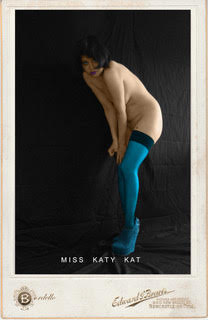
Katy Kat. Poet.
AR Crow. Poet.
Suky Goodfellow. Poet.
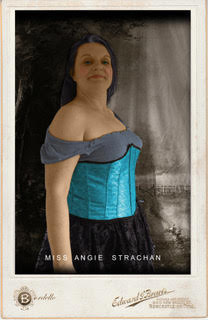
Angie Stachan, Poet.
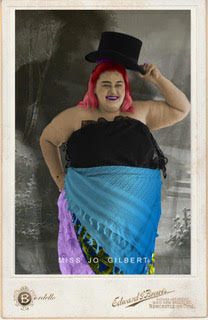
Jo Gilbert. Poet.
Elizabeth McGeowan. Poet.
Taylor Swift, 666. Performance Art.
Rosie Garland. Poet.
An Interview with Max Scratchmann
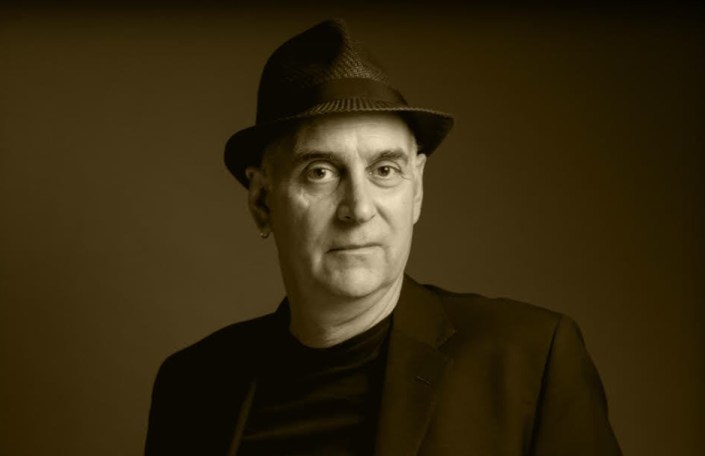
The illustrious Max Scratchmann, parvenu extraordinaire, is bringing a bevvy of beauty & talent to Leith Walk this Fringe. The Mumble managed a wee blether…
Hello Max, so where ya from & where ya at, geographically speaking?
Max: I currently live in Edinburgh but I was born in India as part of the huge ex-pat Scottish community who worked in the jute mills there and brought “home” when I was six. I’ve since lived all over the Untied Kingdom from London to Orkney and I settled in Edinburgh seven years ago when I totally fell in love with the city.
Which poets inspire you, both old skool & today?
Max: I have very catholic taste in poetry and the people I read tend to range from Poe to Pam Ayres. I’m a great fan of the late 19th and early 20th century nonsense writers, like Edward Lear, Hilaire Belloc and Harry Graham – and of course the iconic Victorian to Edwardian female poets like Christian Rossetti, Emily Bronte and the absolutely stunning and underrated Charlotte Mew. Contemporary poet wise, most of the people I admire tend to be featured in my shows, since when I find a poet or performer who inspires me I stalk them until they agree to take part in a Poetry Circus gig. It’s hard to single any one poet out, they’re all so good, but I’ll make a quick mention of our two fantastic headliners, Rosie Garland and Elise Hadgraft, who really push poetry to the furthest realms of its borders and use words in ways that even cynical old grumps like me find themselves amazed by.
You have traveled to, & perform’d in, events all over Scotland. How do you find the Scottish poetry scene?
Max: Poetry ‘scenes’ differ from country to country and even city to city, but the Scottish scene is particularly imaginative and vibrant right now. Rana Marathon is doing wonders in Perth; Glasgow is flourishing with Sam Small and Kevin Gilday & Cat Hepburn putting on regular nights; and though we’ve lost Blind Poetics and Soap Box here in Edinburgh there’s still Inky Fingers, the Goddamn Slam, Loud Poets and, of course, new girl Jacqueline Whymark’s runaway success, From the Horse’s Mouth.
Can you tell us about Poetry Circus?
Max: Yes. Poetry Circus started way back in 2014 after a chance meeting between myself and the dancer/poet, Josie Pizer, at a writers’ workshop. We had both been bemoaning the lack of theatre in poetry gigs, and the tendency of some poets to stand hiding behind the mic with their nose buried in their very expensive Paperchase note book, mumbling what was often really good poetry. What we really wanted to see was more visually stunning work, and more of poets who could demonstrate a big personality on stage. We were also particularly keen on ‘poetry’ that was expressed with more than just words, and, before we quite knew what had hit us we’d formed a spoken word theatre company and, over the last four years, we’ve hosted dancers, performance artists and film-makers under our all-encompassing banner of poetry.
What does Max Scratchmann like to do when he’s not being creative?
Max: I think I’m always being creative. In addition to my writing and performance work I’m also a visual artist & animator and an occasional tutor and workshop facilitator, plus I find time to be an artist’s model and – currently – a living sculpture in an art installation.
You are stranded on a desert island with three good books. What would they be?
Max: They would have to be very long books that could stand re-reading! I’d have to say The DANNY Quadrilogy by Chancery Stone; Midnight’s Children by Salman Rushdie and the complete works of Kirsty Logan. What would really be better though would be a perpetual library card and mobile library that was driven by passing dolphins…
You’re about to shoot the meteor of dazzling wordplay that is Poetry Bordello back into the Fringe’s poetical stratosphere, how did you get involved & are you excited to be back?
Max: Because a lot of my personal work is comedic I’m quite heavily in demand for cabarets – particularly during the Fringe – and, as such, i became very intensively involved in the burlesque scene a couple of years ago and was blown away by some of the performers and performance artists on that stage. It occurred to me that a lot of burlesque acts were visual poetry and lots of the artists make statements on important issues like gender politics and personal sexuality, so from there it was only a short hop towards inviting burlesque performers to join the Poetry Circus regulars, and the chemistry that we’ve discovered between the artistes is electric.
Can you tell us more about Poetry Bordello?
Max: Poetry Bordello is a unique show because it fuses physical performance art and burlesque with spoken word and poetry and provides a safe space for poets to perform their more personal work on themes of sexuality, gender and personality in a supportive environment. Plus they get to dress up if they want to!

Who is the MC & is she any good?
Max: Because we’re running a Bordello we really needed a Madam, and we found the ideal one in the shape of our very own Madam Isla. Bearing a passing resemblance to the outstanding stand-up comedian, Isla Maclean, Madam Isla will steer you into the shady underworld of the Bordello and ensure that you have an amazing time. And, yes, of course she’s good…
What acts have you got for us this year?
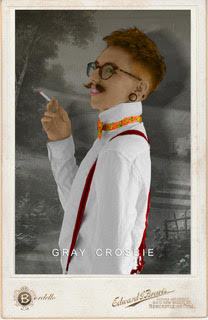
Max: We’re totally thrilled to be presenting bestselling novelist and chanteuse Rosie Garland headlining on 9th August, and Elise Hadgraft aka Corporationpop on 16th August before she heads off to Berlin to start a world tour with her new punk band; plus a mouthwatering array of slam-busting performance poets including the Belfast Slam Champion, Elizabeth McGeown, Imogen Stirling, Gray Crosbie, Max Scratchmann, AR Crow, this year’s Stanza Slam Champ, Jo Gilbert, Suky Goodfellow, Orla – Sparklechops – Kelly, Katy Kat, Express Yourself’s Carla Woodburn and the poet laureate of Aldi, our very own Angie Strachan; plus we’re super chuffed to be welcoming back the renowned sideshow dancer and choreographer, Andromada Mystic, from Sanctuary of Sin plus astounding physical performers Taylor Swift 666 and Sharrow.
Why do you think the blend of spoken word & burlesque works so well – especially in the hands of Poetry Bordello?
Max: As I’ve said, there’s a lot of visual and physical poetry being expressed on the burlesque stage right now, and the presence of physical performers in a spoken word gig is very inspirational to poets and encourages them to explore their own range of movements and visual appearances. We’ve been doing a series of photoshoots over the last few weeks, using the themes of bordellos and Edwardian music halls, and in particular the photography of E J Bellocq, and the performers have been pushing their own limits and have a whale of a time.
What do you think the audience will take away from the performances?
Max: Hopefully, they’ll have a totally amazing time but also find themselves thinking about some of the themes raised and maybe want to rethink their own attitudes on gender stereotypes and sexual labelling.
You’ve got 20 seconds to sell the show in the street, what do you say?
Max: Did you really, really hate poetry when you were at school? You’ll love this.
What will Max Scratchmann be doing after the Fringe?
Max: I’ll be producing a new show called Speakin’ Cajun with the Jennifer Ewan Band at the Traverse Theatre on 22nd September (and we’re doing a shorter Fringe version at Woodland Creatures on 22nd and 23rd August); plus I’ll be touring and appearing in cabarets and hopefully finishing my latest book of short fiction.
Poetry Bordello
August: 9th & 16th
Woodland Creatures (20.00)
www.facebook.com/poetrycircusevents
An Interview with Lily Asch
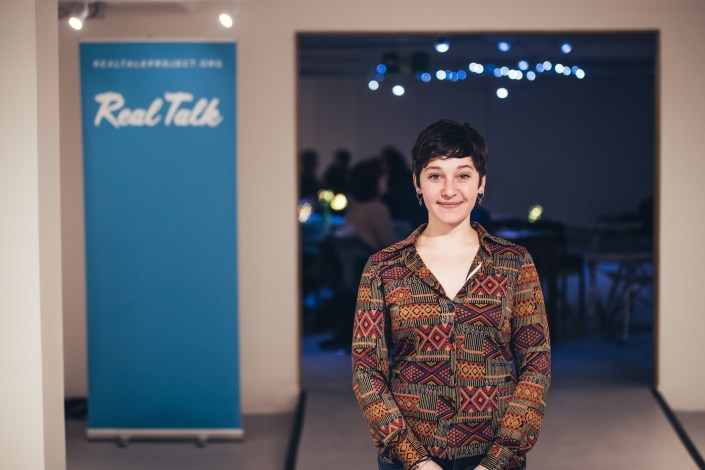
Real Talk is both a hugely beneficial social enterprise & the fertile bedsoil of a right good yarn. The Mumble caught its founder for a wee blether…
Hello Lily, so where ya from & where ya at, geographically speaking?
Lily: So I’m originally from Connecticut in the USA. I moved to Edinburgh when I was 20 and have been here for the past 5 years and it has become home to me.
When did you first realise you could tell a good story?
Lily: From a very young age I was enraptured with reading, consuming anything I could get my hands on particularly fairytales and high fantasy. I think that this early immersion in story made me naturally inclined to want to tell and share the stories I learned. My Mom constantly reminds me how I’d regale my family with minute details of my day each night at dinner (whether or not the audience was that interested). However it wasn’t until I got involved with theatre at age 9 that I really honed the more performative element of sharing. While I only acted for a few years, I think those foundational telling skills have stuck with me. So it has been a journey from loving to tell to actually developing my craft and I’m presently doing my storytelling apprenticeship at the Scottish Storytelling Centre and am a part of TellYours2018, a development programme for the next generation of UK storytellers.
You are stranded on a desert island with three good books. What would they be?
Lily: Oh my, this is really hard because quite a few of my favourite books are a part of a series… If I’m being cheeky I might bring along the entire His Dark Materials Series by Phillip Pullman in one book (which does exist because I have it). I’d bring along The Door by Magda Szabo, there is something haunting about it that makes me want to read it again and again, and then lastly the entire anthology of Grimm’s fairytales for a bit of variety :]
We are here to talk about an event of yours later this week, under the Real Talk banner. Can you tell us about the organisation?
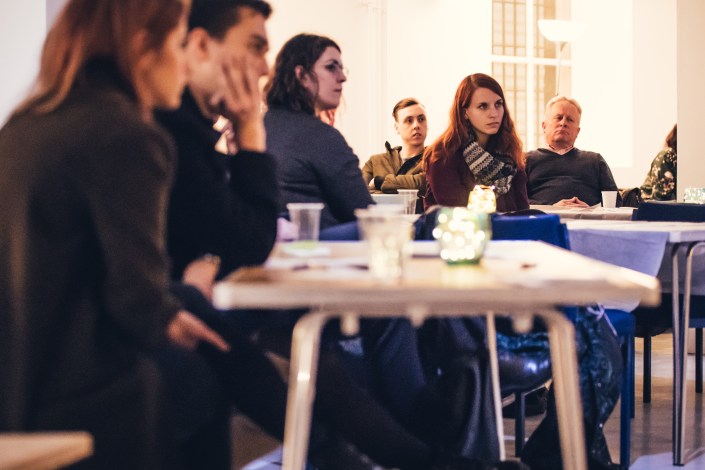
Lily: So Real Talk is a mental health storytelling social enterprise. Our vision is world that celebrates transparency and authenticity around experiences of mental ill health and actively supports wellbeing. In practice we support people who have experienced mental ill health to learn how to share stories about their lives. We have a process where we deliver two workshops that use traditional storytelling tools to help participants craft a 10 minute story. After these 2 workshops we host a community event where these stories are shared to an audience and used as an entry point to speak about mental health more widely. We’ve found the process and these events really cultivate compassion for oneself and for others.
How did you get involved?
Lily: So I’m actually the founder of Real Talk. It was born out of my own experiences with mental illness and realising the need for more safe spaces for people to talk about their mental health and for other people to listen. It started as a passion project in 2016 and over the past 2 years I’ve been slowly transitioning to working on Real Talk full time. It has been quite challenging starting up a social enterprise but also so rewarding. I’ve met hundreds of people all looking to connect about mental health and excited about the power of stories. You can learn more at www.realtalkproject.org.
I can imagine there are some emotional moments involved. Do the storytellers find it a cathartic experience or is it sometimes too much?
Lily: There are definitely some deeply emotional moments along the process. There is catharsis in sharing a bit of yourself to an audience, empowerment in being to share your story in your own words but of course the nerves and tentativeness that comes from acts of vulnerability. I think this is where the process is really important, storytelling as a creative practice is a wonderful vehicle for holding people where they are. However we always emphasise that participation is voluntary (so if people don’t want to complete the process they don’t have to) and I hold a COSCA Counselling Skills certificate and Mental Health First Aid training so am always on hand to help signpost to further support if needed.
Can you tell us about the event at the Scottish Storytelling Centre?
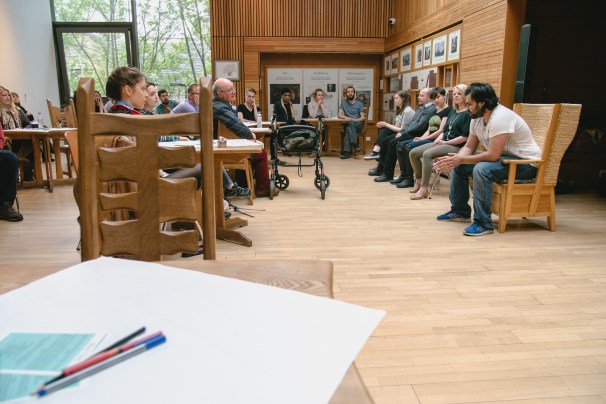
Lily: On Friday the 27th of July at 7.30pm, we will be hosting one of our community storytelling sessions. 7 participants will have come through the process and will be sharing 10 minute stories to a public audience. After all the stories are shared I’ll facilitate breakout discussion between the audience members before ending with an informal Q & A between the storytellers and the audience. We’ve run 11 events to date and they are always magical evenings where people come together to witness each other.
How much experience do the storytellers have?
Lily: Most of the tellers have very limited storytelling experience in a performative way, though some people definitely have experience with public speaking. For some it’s actually their first time sharing a part of their story in this way. It’s a big range but that is exactly why we have this preparatory process, so everyone has had a space to decide what story they feel comfortable sharing and how they want to do it. I’m always humbled by the creativity, bravery and strength of each speaker, even if they don’t see it in themselves.
 What do you think the audience will take away from hearing the stories?
Lily: Insight, emotion, resonance, clarity, empathy. Because the audiences are diverse, everyone takes away something different but I think that having genuine insight into someone’s lived experience really breaks down stigma and barriers. Some are supporting a loved one who is suffering, so to hearing a real story helps them know how to help. Others might be suffering themselves and the power of realising you aren’t alone in your journey cannot be understated. Others are just curious and we hold safe space to talk about mental health openly, which we don’t always feel allowed to do during our day-to-day lives.
What does the rest of 2018 hold in store for both yourself & Real Talk
Lily: The rest of 2018 hold incredible potential! I’ll be working away at building Real Talk’s foundation as a social enterprise; building a team to help run it and expanding our event series. Hopefully we’ll be collaborating with other awesome organisations and supporting more people (feel free to get in touch!). Personally I’m hoping to graduate from my storytelling apprenticeship this year and start working as a traditional storyteller out with my work with Real Talk.
Real Talk: Story For Well Being
Friday, July 27th
Scottish Storytelling Centre
Tweets by @realtalkstories
www.realtalkproject.org
Don’t be afraid; art is for all.
How to get the most out of your gallery visit
How do you feel about visiting an art gallery? Do you go for pleasure, for education, self-improvement or to socialise? Or do you avoid them and feel that art is just not for you? Many people feel uncomfortable just stepping over the threshold of a gallery, whether it’s a huge and majestic Victorian building or a temporary white box as cutting edge as they come. Maybe you just nip in for some quality cake and a clean loo?
If it’s pleasure; at the appreciation of human-made beauty, the vision and talent in expressing it to us, the viewers, does the act of viewing the art actually engender a feeling of joy inside you? Can you express that joy in an environment where you’re frightened your shoes will make too much noise on the ancient marble floor? This may come more easily to the introverts among you, savouring the silence and opportunity to have your own private encounter with a beautiful painting and the mind of the artist. What about the extroverts among you? Can you express that joy when you’re trying to quietly cross that marble floor or tentatively pad across the carpet? Perhaps you’ve gone for self-improvement purposes. If so, it could be a little easier to gain some satisfaction from spending your precious time, as you add to your bank of cultural capital. Or you might simply appreciate the respite from a frantic life; a chance to feel solemn, silent and dutiful, like in a Presbyterian church or libraries of old.
Or do you prefer the ‘cocktail party’ setting of a smaller gallery, and relish jumping into the intellectual debate with passionate, quirky artists discussing cutting edge contemporary art? Or do you worry that you don’t quite understand, that commenting at all will mean missing the mark with an inane comment, or worse, unwittingly become part of an experimental performance piece? Does it feel like forced intimacy, standing awkwardly with your wine glass at smaller events, where you feel expected to say something worth ransacking the smaller, more homely silence of a white-walled box? Uneasy at a sense that the artists might be observing you observing their thoughts made manifest. Do most of us realise the extent to which we have been trained to behave in prescribed and acceptable ways as we enter these environments?
http://www.tate.org.uk/context-comment/articles/white-cube-and-beyond
I’m just as ambivalent about children making noise in libraries as in art galleries. I want to hush noisy children so I can concentrate on reading in our shared space, but perhaps I’m only resenting their freedom because we had to be quiet, back in our day. I’m glad they feel free enough to express themselves; perhaps they’re part of a budding, enthusiastic pre-school book group. Just not when I’m there. I relate to their childlike state in a way, as I seem to have something resembling a middle-aged onset of ADHD, where sitting still or concentrating for long periods is difficult, but I generally manage for others’ sake. I can’t bring myself to raise more than a whisper in a library, but, bloody hell, in other settings, I want to join in with the conversation, in an almost ‘repressed Tourette’s’ type way. I want everyone to join in. If I’m honest, generally I want all hell to break loose and it to become one big carnival. Politeness and shyness merge with bourgeois norms of behaviour in high arts settings, hell, even cinemas, and it drives me to distraction. British audiences are expected to refrain from moving their bodies or making any noise during a play, except for polite applause or perhaps a hastily wiped tear. Partly because in an urban setting, the audience are the maligned or tolerated ‘public’, rather than friends and acquaintances, and the British are still the last nation on earth to embrace a messy and unnecessary display of emotions. Unless it’s splashed across a wall or screen or stage and safely at a distance. Perhaps the tots in the library are leading the way forward after all.
We seem to edging back toward the boisterous interaction of Shakespeare’s audiences in theatre settings, and it’s becoming increasingly acceptable, even necessary, in visual art environments. Accompanying a school group to the National Gallery is much more engaging and fun than going alone. I learned more about the secret symbols embedded in paintings in an hour than I have in years. We could take over the space and not worry about annoying anyone else or depriving someone more deserving of the leather couch. If art galleries went the way of museums with hands-on activities, even for adults, or just meeting or watching artists at work it would make you feel part of the place and stay for longer. There’s a wee gem of an exhibition currently showing at the oft-overlooked Inverleith House in Edinburgh’s Botanical Gadens; yet another collaboration of poetry and art that both delights the senses and delivers an deep message. The gallery space is warm and welcoming for all ages, this time with quiet opportunities for children to allow nature to inspire their creativity.
There are huge debates about why certain ‘demographics’ are less likely to visit British art galleries. Mostly between people who are not from ‘those demographics’, who, in awkward terms, display some imaginative ideas of what, for them, constitutes ‘the other’. Some of it is simply a ‘perception problem’, that art galleries are for the white and middle-class, and indeed, there is often a very real psychological discomfort for certain people in places that are not, perhaps in small but significant ways, welcoming to all. Women artists, working-class artists and artists of colour are still underrepresented, marginalized and ‘othered’ by curators and board members who are not from these backgrounds, partly because of the narrow understanding that results from stultifyingly homogeneous social and professional networks. As talented artists and their works suffer unduly from the lack of exposure that they deserve, whether through tokenism, pigeonholing or downright exclusion, some important conversations about history and society are also being omitted from the mainstream art world. The sociologist Pierre Bourdieu’s idea of ‘cultural capital’ is often used to explain why the intellectual elite, reared on a steady diet of high art from childhood, frequent and feel at home in high art institutions, which generally cater to their particular interests. Content, and how and by whom the content is curated, of course, can also be key, and is currently the subject of heated debates. http://www.voice-online.co.uk/article/black-people-dont-go-art-galleries.
https://www.theguardian.com/artanddesign/2018/may/04/baltimore-museum-art-warhol-artists-of-colour
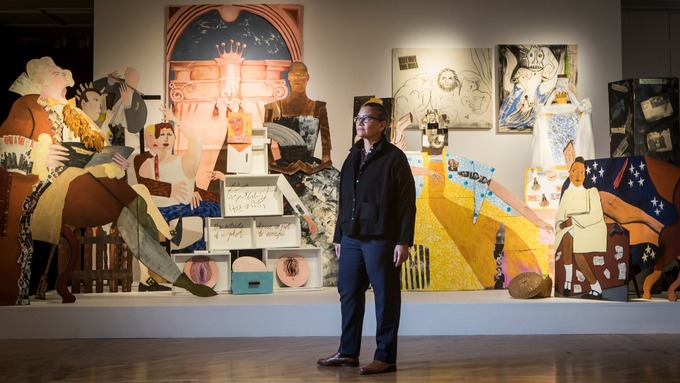
With major prizes going to women artists of colour recently, notably, Lubaina Humid’s 2017 Turner Prize win, and Barbadian-born, Glasgow-based artist Alberta Whittle claiming the 2018 Margaret Tait award, this no doubt encouraged the new director of Glasgow International to hold a variety of exhibitions, talks and performances by artists of colour. This was particularly welcome in the wake of Transmission’s Gallery’s funding recently being unceremoniously cut by Creative Scotland. The decision was made despite Transmission receiving high acclaim for their work and social impact by the very same organisation. The artist-run institution, founded by Glasgow artists in 1983, has continued in its radical tradition to encourage important conversations, particularly around Black art and artists, gender and sexuality; pushing boundaries and inspiring new ways of thinking. One of these artists is Camara Taylor, exhibiting at GI this year. Seeing as this is exactly the raison d’être of contemporary art, this has been a massive blow to both the artists and Scotland’s modern art scene. https://frieze.com/article/why-did-creative-scotland-defund-storied-glasgow-art-gallery-transmission
One of the exhibitions I attended at Glasgow International was ‘(BUT)..WHAT ARE YOU DOING ABOUT WHITE SUPREMACY? which included powerful live performances to a rapt, multiracial audience. https://manystudios.co.uk/syfu/ Sometimes the conversations that result might be unsettling for some people forced to reflect on and reframe some of their most cherished or simply unconscious beliefs about their own history and identity, but that’s precisely why art must make space for them.
The fear of ‘wasting time’, is a real one. Whether you’re hustling on the breadline, trying to make ends meet with three dead end jobs, or hustling as a CEO of an investment bank, the risk of wasting time aimlessly wandering around a gallery that doesn’t immediately serve your needs, is not one you are going to take. Even the visitors don’t like to waste too much time. Various studies have shown the average visitor spends 30 seconds in front of a painting, perhaps a masterpiece that has taken decades to complete, with careful patronage from a house of aristocrats or royalty. It’s rather like gobbling up a beautifully cooked and arranged dinner in 5 minutes flat. But, hey, don’t stay there just because you feel you should. The gallery will be gaining extra points for a steady stream of punters anyway. But why might you want to go to a gallery in the first place? What do you expect to gain from going? Seeing as most other arts, from novels to songs, involve story-telling of some kind, perhaps the emotional connection can’t be had easily without knowing something of the back story. Of the artists, the time, the place, the emotional state they were in during the period of creation and who else and what else they may have been responding to. I’ve been doing some research into Scottish historical figures and how their personal stories relate to wider themes, and it’s been exciting to spot them in both the National Portrait Gallery and the National Gallery, and realising how just how limited and misleading the information plaques very often are.
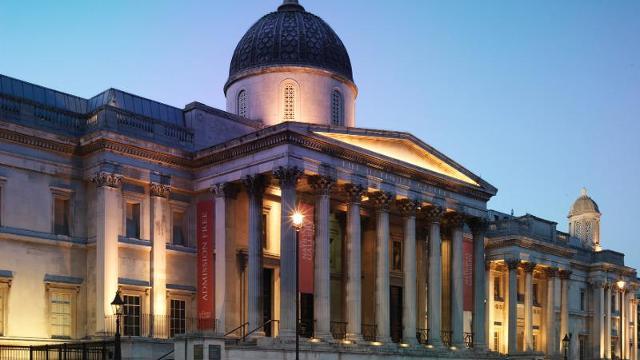
Big galleries are free, open, not demanding of a special invitation. You can stay as long as you like. In theory, it is entirely democratic, as it’s yours to share during opening hours. Yet, for many people, it doesn’t feel that way. The National Gallery in London changed their stairs at their entrance because apparently people found them intimidating. Do you like the majesty of columns and chandeliers or does going into these buildings, with architecture that stems from a tradition of an entrenched class structure, make you feel like you don’t belong there? Temples all over the world have stairs. Even the Christ statue in Rio has 220 steps… Ordinary people make the pilgrimage. Yet how familiar might we find the surroundings, let alone the people, of Oxford University if we haven’t gone to a top public school? How at home might we feel in the Houses of Parliament? The Vatican? Do we need to feel a sense of belonging? Does the beauty elevate us or oppress us? Edinburgh is well known for its snobbery, and tribal groupings easily coalesce around ‘low’ and ‘high’ art. Neu Reekie! is a local arts organisation that loves to mess with this dichotomy, and enjoys taking over otherwise solemn spaces like the National Galleries with an irreverent mix of poetry, music and animation, creating an atmosphere that’s a little freer. http://www.theskinny.co.uk/books/events/neu-reekie-does-titian-national-gallery-of-scotland

Collective (www.collectivegallery.net), a contemporary art gallery that’s been based in Edinburgh since 1984, has recently made the heights of Calton Hill its new home. It states emphatically that a major part of its mission is to be the friendly face of contemporary art precisely in order to encourage dialogue. Accessibility is its watch word; extending itself to offer an experience welcoming to all, adapting the trails to the site and the exhibitions to accommodate visitors who are blind or partially-sighted. I’m sure with advances in technology, visiting an art gallery as a blind person will be just as fulfilling as for a fully sighted person https://www.rnib.org.uk/blind-artist-launches-genuinely-audio-visual-art-exhibit-aid-talking-books.
However, a couple of years ago, I excitedly stumbled across their temporary gallery, in use while the painstaking restoration process was being finished, but I was left to my own devices in an exhibition I found bewildering and incomprehensible. I had no idea what I should ask the assistants to help me understand, and instead was happily distracted by the incomparable view of the city which in itself gave me the sense of elevation I needed. I hope Collective put their money where their mouth is for their relaunch later on this year, because their relaunch is a very impressive and ambitious project. They hope to create a visitor experience that encompasses not just contemporary art but heritage and science, having restored Playfair’s original observatory from 1818. They’ve put a great deal of effort into letting visitors choose the level of freedom or support and guidance that they might need and are hoping to create a space where people feel especially welcome, relaxed and inspired to observe their own reactions and engage in dialogue with others.
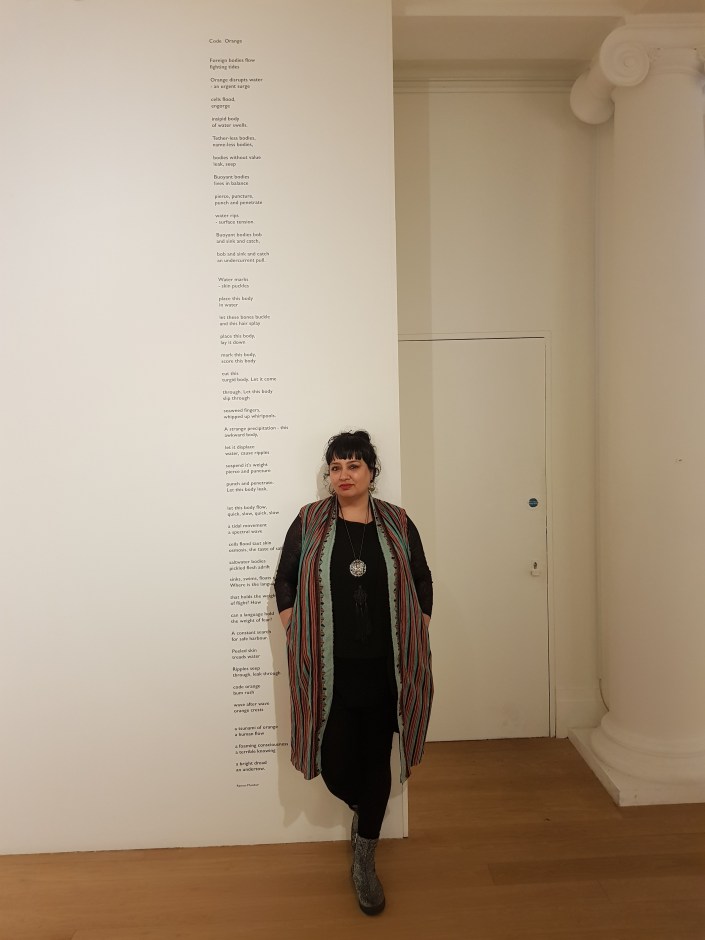
And of course, this should perhaps be the main point of creating, funding, and visiting contemporary art in the first place. The thoughts, conversations and debates that follow from experiencing and being affected by the art; the blending of the unique personal resonances that each viewer has due to their mood, life history and hopes for the future. I’m always interested in the ways one might catch something of the possibly ephemeral responses, solidifying them for just long enough to transmit a spark to the next along the circuit of new ideas, filtering through and co-creating a change in the zeitgeist. Or this is perhaps too much like pinning down a butterfly, for no one can foresee where or what a thought or word might spark. The Sunday lunchtime poetry events that accompany the Royal Society of Artists annual exhibition have recently drawn me back again and again, to look at the artworks through someone else’s lens. The poems have been written in response to selected artworks, and the events allow time for questions and discussion about the themes that emerge. https://www.scotsman.com/lifestyle/culture/art/art-review-the-rsa-annual-exhibition-2018-royal-scottish-academy-edinburgh-1-4739530 Fortunate to attend the private viewing, I enjoyed reading Raman Mundair’s powerful poem accompanying a short film by Pernille Spence/Zoe Irvine. However, I felt rather rootless wandering around the vast exhibition alone. Returning to their poetry events and sitting next to the artworks has given me the time, space, comfort and company to enjoy the exhibition’s varied works in much greater depth.
Often people are simply afraid they will have nothing to say, or won’t have the required background knowledge to make comments that are informed enough without feeling embarrassed. Part of this perhaps stems from the fact that our hierarchical education system lays down very early whose ideas carry the most legitimacy and weight. What if we fully integrated both democratic dialogue and art into mainstream schools in the UK like Paolo Friere advocated, or alternative schools like Krishnamurti schools do? Rather than relegate it to a separate, second-class subject? If children’s ideas were treated with more respect from the beginning, and a constructive and ongoing dialogue was encouraged in the classroom, we might have a generation of learners who, as Sir Ken Robinson would say, are not afraid to make public ‘mistakes’.
In the meantime, the risk of appearing foolish or wasting precious time can be mitigated by friendly gallery staff, and creative ways to engage the viewer, without doing all of the ‘work’ for them. If, as a punter, you’re still a little unsure, here’s some handy tips to make the most of your experience. At least let people know they can have an exhibition list for basic information about what they are looking at. If people have some background knowledge of an artist and painting, or their sense of curiosity is piqued with the help of a friendly assistant, they might just spend longer than 30 seconds in front of it…come and see it again..read about it online..discuss it..respond to it artistically..maybe even buy it!
Lisa Williams
An Interview with Imogen Stirling

Who is this Imogen Stirling, who is breaking over the Scottish Poetry Scene like a sudden Tsu-Na-Mi? The Mumble managed to catch her for a wee blether & find out…
Hello Imogen, so where ya from & where ya at, geographically speaking?
Imogen: I’m originally from North Berwick, a small town just outside of Edinburgh, and have since spent a long time living in Glasgow. I’ve also traveled a lot, mainly through music work, and have lived everywhere from Germany to the Canary Islands.
You have a background in musical theatre, so why the shift to spoken word?
Imogen: My roots will always be in theatre and music and I’m currently planning projects which really merge all three art forms. However, when I was solely working in musical theatre, I began to find the genre quite stifling in that you’re always performing somebody else’s material. Transitioning to playing in a band brought more creative freedom but there’s still that constant audience demand to hear cover songs. It just wasn’t me. Spoken word gives me complete autonomy over what I perform which is liberating. I find it a very exciting and malleable art form because it allows me to draw upon various genres to find a balance that feels right, so forming a show and performance that is creatively unique and very much my own.
You’re really enjoying quite a shooting star ascent into the Scottish poetical stratosphere, are you enjoying the journey?
Imogen: I certainly am! It’s been a whirlwind. I’m very driven and knew from the outset that I wanted to find success in spoken word. It’s required a lot of work on my part but has paid off as, in less than a year performing spoken word, I’ll have put on my first full length show, toured the UK, and performed at some major festivals. The effort is cushioned by being part of such a warm and supportive community. There’s a unique sense of camaraderie that motivates my work.
Which poets inspired you, both old skool & today?
Imogen: I have pretty eclectic influences, and a lot of them come from outside of poetry. I first drew inspiration from music – the lyrics of Leonard Cohen, Alex Turner, James Taylor. I’m a Kate Tempest girl through and through, her work brought me into poetry and consistently drives my performance. At university, I was taught by both Kieran Hurley and Kei Miller, between them they demonstrated the way that theatre and song can emerge through poetry and I still refer to them to hone my vision today. I’m a big fan of Jahra Rager who fuses contemporary dance with poetry to create some of the most blistering work I’ve seen. Ocean Vuong is a beautiful page writer and a useful foil to the more extroverted performance poets. I’ve found myself working alongside the most incredible talent in my current project: Piers Harrison-Reid, Zoka, Thomas Wolfe, Tamar Moshkovitz, Minty Taylor, Rob Carnie, and Billy Pilgrim with The Heartsease Kid. The diversity and sheer quality of the work they produce keeps me on my toes and encourages me to push my writing.
HIPSTER
Everybody wants to be a hipster
I come home, different’s taken over
And I adore itThe bearded baristas
The hashtag heroes
The craft beer, the matcha
The smashed avocados
The tattoos, the typewriters
Gluten-free dieters
Instagram, instagram, instagram
WorshippersEverybody wants to be a hipster
I come home, different’s taken over
Time for my go at breaking this mould
I dye my hair
I get the piercings
Start writing poetry
Learn how to tarot read
Know which wine is which and
Which coffee to ditch and
I think I could get used to living like thisEverybody wants to be the most hipster
I come home different’s taken over
And grown addictive
Whose beard is the longest
Whose man bun the tightest
Who’s the best read
Knows their Hamlet from Titus
Don’t know what the goal is
But we’re all chasing it
Topping the craze and the craze and the craze and it’s
All competition
Post-modern ambition
It’s all a distraction
Isn’t it?Because something is missing amidst it
We inflate the gravity of this dress up game
Engage the safe space to exercise difference
To learn to talk recite and proffer
But not to offer any real substance
Seems unconstructive, seems over indulgent
Seems underwhelming, seems empty headed
Seems where is the empathy
When we resort to trending hashtags to mitigate apathy
Seems appearance has superseded moral integrity
When do you know you have just composed a decent poem?
Imogen: To be honest, it takes a while. I’m a very harsh critic and need to have a piece well received by an unknown audience before I believe in it. A lot of what I write is political and intended to motivate a response from a crowd so it’s hard to judge its merit purely by my own opinion. That said, I’m at the stage now where I can recognise when a piece of mine is creatively strong – for me, it all comes down to flow, wording and clever rhymes. It’s quite mathematical really. But I can’t judge the overall impact of a poem until I’ve performed it live.
What is it about performing your poetry you love the most?
Imogen: How much it seems to affect people. The responses I get from folk after performing poetry are so different to that of a theatre or music audience. Perhaps it’s because poetry is so inherently personal, perhaps it generates a more emotional response in a listener. Whatever it is, it’s special to see the way words can communicate. And plus, it’s exciting. Performance poetry is so dynamic, such a show, and has the potential to be quite interactive – you can see who is responding to a piece, you can speak directly to them.

Can you tell us about Words w/ Friends?
Imogen: Words w/ Friends is a collective of poets working with producer, The Heartsease Kid, to creative innovative collaborations of lo-fi hip hop and spoken word poetry. We’ve just released an album, Words w/ Friends vol. III, which we’re touring around the UK in July. By fusing the genres, we;re aiming to heighten the accessibility of poetry through creating an art form that appeals to more diverse audiences. We want to re-establish the relevancy of poetry for a modern crowd.
What does Imogen Stirling like to do when she’s not being, well, poetic?
Imogen: I like to travel. Once the Fringe is done, I’m keen to get back to the Canary Islands, practice my surfing and my Spanish, find the sun. I’m a vegan activist and write for Vegan Connections, it’s great being involved in such a proactive and important movement. I love theatre – both performing it and watching it. Spending time with friends, drinking wine, discovering new music.
NICOLAS
Nicolas died in Somalia
When I met him we were both staying
In Gran Canaria
I told him he reminded me of my brother
Both fiercely determined and destined to be doctors
He said is that right
He said
Your brother
Must be smart, funny and handsome too then?
I laughed and said yesThe bomb was so strong that most victims could not be identified
It took me 5 weeks to learn of his fate
Every day I saw papers detail the events of the shooting in Vegas
58 victims described and mourned
Yet just two weeks later
Over 300 Somalians ignored
I learned more news of strangers
Than the boy I’d learned to surf with
As though covering his life had not been deemed worth itI looked at Nicolas and saw my brother
Others looked at him
And saw the third world urchins
The BBC leak through Comic Relief sob reels
We’re taught they’re used to extremities
So we could not assimilate
He was too much other
He must not have suffered
The Mumble caught you performing at Eden festival last week. Where else will your words be winging off to this Summer?
Imogen: I’ve a couple festivals still to come, V in the Park which is a new vegan festival, and then Latitude Festival in July. After that it’s all go with the Words w/ Friends tour, we’ve got 10 dates all around the UK. Finally it’ll be Fringe time where I’ll be performing #Hypocrisy alongside doing some other guest spots throughout the month.
Can you tell us more about your Fringe show?
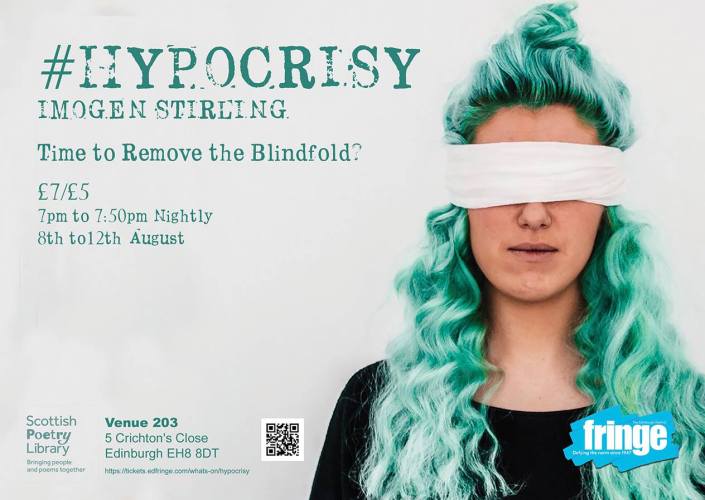
Imogen: The show is called #Hypocrisy and is a fusion of spoken word, theatre and original music. It’s my Fringe debut and will be on at the Scottish Poetry Library from August 8-12th at 7pm. The show is a response to the bizarre world we’re living in. One where dangerous politicians prevail, where the media constantly sells us fictions masquerading as realities, where an ocean of social media sympathy can pour forth for western terror victims but backs turn on the migrant crisis. Ultimately, a world of staggering hypocrisies. It’s presented from my perspective as a young white woman. Beginning by looking into my experiences travelling as a musician through Europe (during which time I often found myself reaping the benefits of my skin colour) it opens up to explore what is evidently becoming an increasingly racist world. The show is a contemplation and an interrogation of western privilege. It’s an exposure of hypocrisy and a reminder of perspective.
What will Imogen Stirling be doing after the Fringe?
Imogen: Hopefully a brief stint in the Canary Islands to unwind a little after what’s been a very full on year. I’m planning a tour for #Hypocrisy, an album, and a new top secret music project. There’s a lot to look forward to, I’m very excited.
www.imogenstirling.com
Birth of a Poet 3: Florence Nightingales
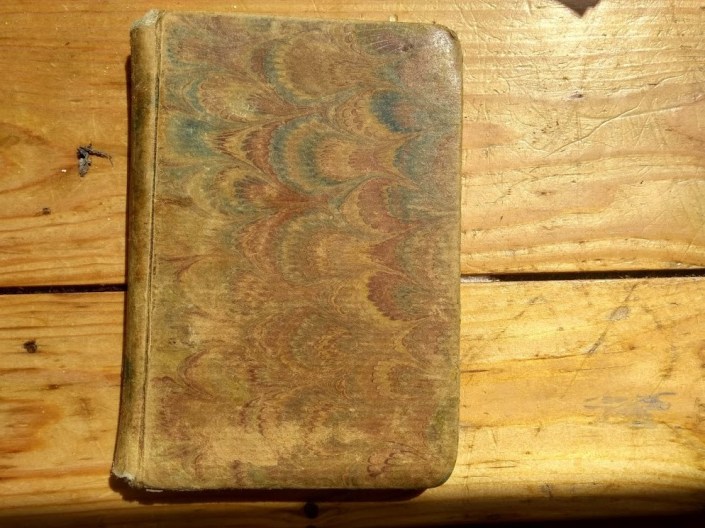
Continuing Damian Beeson Bullen’s retrospective adventure through the journey that made him a poet…
TUESDAY 14TH APRIL 1998
So I woke up, a little shivery, but otherwise excellent for a good ten hour sleep (a rare thing on the road), pack’d up & stepp’d out of the train. An old Italian guy gave me a funny look & a smile – to be honest, I must look a little strange to people. I appear a sort of noble scruff, my guitar being carried in a stretchy jumper, & my sleeping bag sticking out of my pack. This is even after halving it in bulk with some wire I found in Villach.
Bought some bread rolls & milk, then caught a train that would take me near to Ravenna – the place of Dante & Byron, two of my favorite poets. The ride was pleasant (easily jump’d) & went thro’ the flat Italian lowlands. These constitute acres of farms & seem quite slow. A more rural pace of life, dotted with young boys or shawl’d women tending the land. Even the stations I pass’d thro’ had chickens by the side.
I chang’d trains at Ferrara, where I bought a beer & cadg’d more fags (like I’d been doing all day) & realised the Italians don’t speak much English. The ride to Ravenna was another jump, & when I arrived I did a quick walk around the streets, saw Dante’s tomb (quite impressive but his bones are in Florence) & a glorious exhibition of metalworks in a beautiful column’d garden. Each piece was based on a section of the Paradisio, & some had come from as far as Australia. The detail was amazing, but I didn’t have time to soak it in properly as I felt fluster’d. I didn’t want to spend any money on a hostel, so decided to head to Florence instead.
Distant Riviera di Levante
My heart’s destination, mine art’s true call,
But first, the mausoleum of Dante,
To tap into a predecessor soul,
Overgrown with moss & creeping ivy,
My man, you were the wildest of us all!
Ravenna, this may be a swift sojurn,
But one day, with my wife, I shall return.
I had a couple of hours to kill, so I went searching for more bread. I found a supermarket, got a big roll & some orange juice – & lifted some sausages & fish. I know stealing is morally bad – but my poetry is all-important right now. I may be a rogue at times, but have a good heart.
I ate a hearty meal, then caught the train to Bologna, but disaster struck! I got caught (too slack!) & paid 15,000 lira (tho’ it could have been worse)! However, it cannot be too bad to pay just over a fiver for a journey around Europe. Chang’d trains again (by now its 9-30 in the evening) at Bologna. I didn’t have time to see the city, so stay’d on the station, sharing some food with a tramp & being quite impress’d by the uniforms, all shiny, of some Italian policemen.
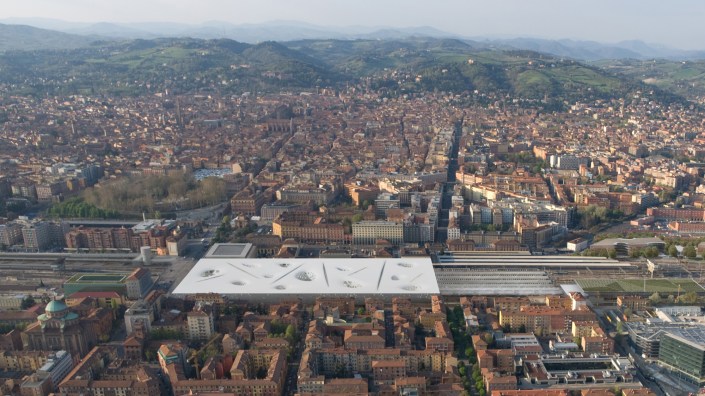
My ‘instinct’ help’d me get pass’d the police on the intercity to Florence, which was full of slick young Italian guys, well dress’d & wearing shades – we even had a little strum together on my guitar. Then we arrived in Florence, & after dashing back on the train for my journal just in time, I entered the capital of Tuscany.
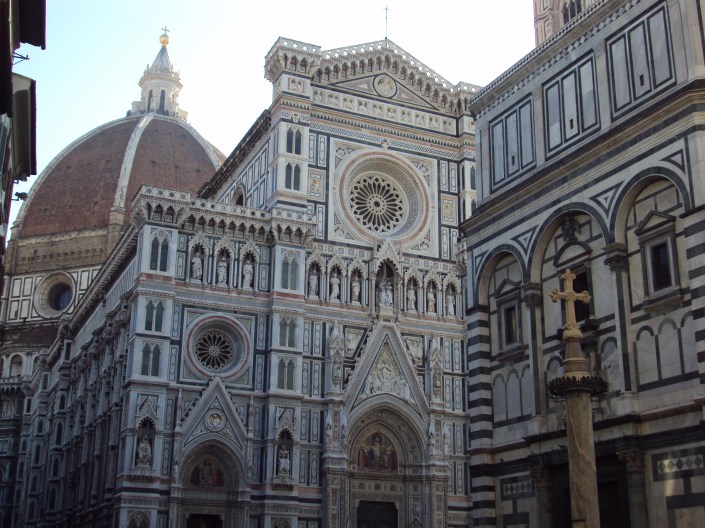
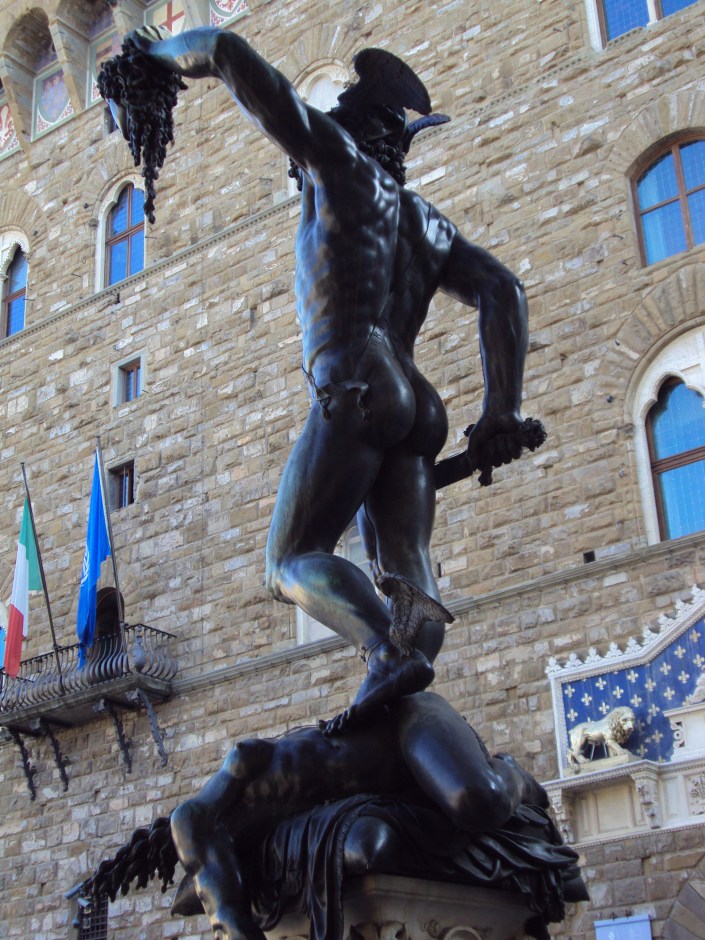
So I stash my bags in some bushes & start to look around Florence. I have an hour or so before the train to Pisa. I saw the main cathedral, which was breathtaking at first, then as I walked around the building it began to remind me of one of those cardboard cut-outs you build yourself with glue. Very surreal.
So I was just about to return to the station when I came across an Italian busker singing a Verve song (The Drugs Don’t Work) to some young Germans, accompanied by an old looking North African on harmonica. Of course I sang a song, then decided to fuck Pisa off & go get a pizza with my new mates instead. They all had sleeping bags & whatnot, so I would spend the night with them.
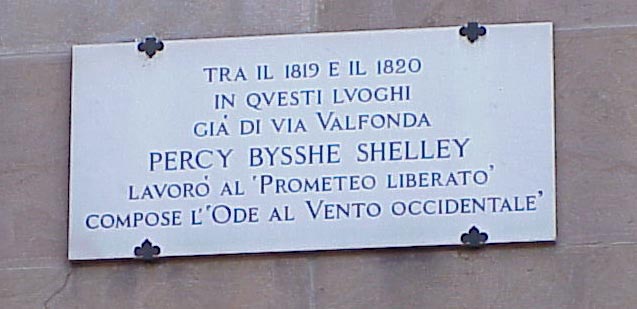
We had a beer & pizza in a bar, where I got offer’d some hashish off an Arab, who kept talking to me in Arabic & would not understand that I didn’t speak any Arabic. Just as I was about to buy it, the Germans decided to leave – they were mostly 14-16 year old girls (with a young 12-year-old lad & a mid-twenties German guy) as they were being hit upon. I follow’d, passing the house where Shelley had written Prometheus Unbound & Ode to the West Wind – the Palazzo Marini – & we chill’d at the station, where Louisa, a 16-year-old, began to take a rather uncomfortable shine to me.
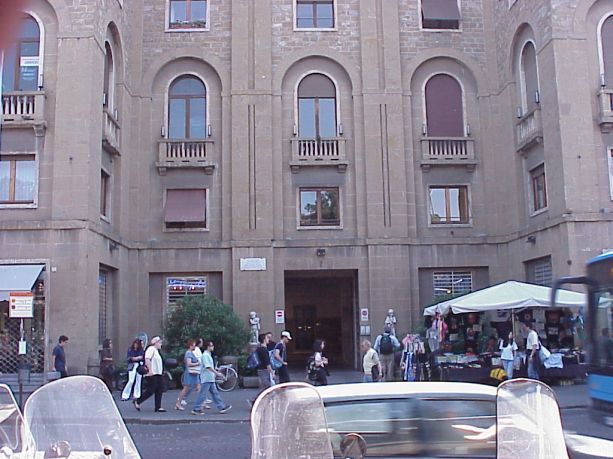
Two more German girls then arrived, in the same situation, & wearing flares! Cool – some hippy brethren! One was half-Turk, half-Yugoslavian, & look’d like a full-on gypsy – Romany hair, beads, head-scarf & string features. Her name was Eva & I took an instant shine. The other girl was a red-headed German, quite nice & calm. She was call’d Mia, & they both spoke quite good English.
We all found a park & huddl’d up in our sleeping bags, broke out the food & had a small shindig. Me & the German guy play’d guitar, I read some poetry & so on. Eventually they all left, just leaving me & my new friends – Mia & Eva. I manag’d to sleep in the middle (I can’t wait to get a harem one day) & we went to sleep after chatting about life, magic & fairies. I told a story (Fairy Exodus), then we all had sweet dreams & morning birdsong.
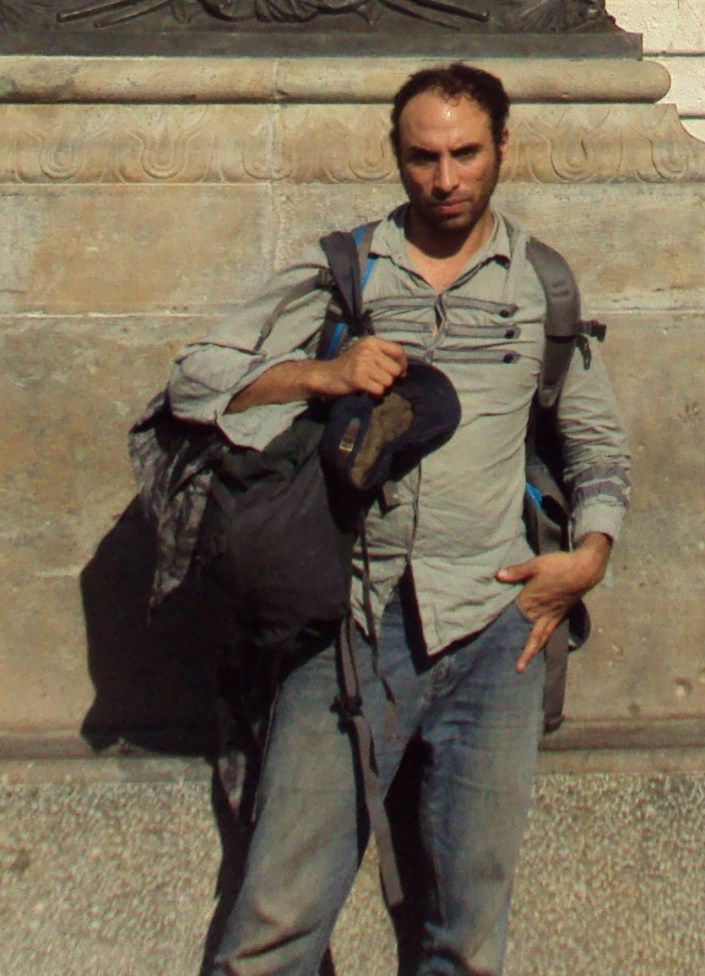
WEDNESDAY 15TH APRIL 1998
Woke up feeling quite nice at about 10-30. We slowly got ourselves together, play’d a little in the park, then went for cappucinos. As I sipped mine in the street outside the cafe, I saw how Italy is so very stylish, but the people have somehow lost their sense of dignity.
Afterwards we meander’d about town, dodging the occasional rainstorm (we got gradually wetter), seeing more nice buildings & doing some shopping! We all got on very well as we carted our stuff round the streets like a mini-hippy tribe, with Florence gaining a definite sense of romantic character in the daytime. Full of Americans, but old & calm.
We bought some food – our plan was to find a place to cook some veggies – lots of fruit & veg, a huge loaf, some water & a big bottle of dry Italian white. I also bougth a new string for my guitar & tried haggling down a hat on the market, which only cost 5000 Lira. Then it started to rain so I bought it to replace the one I lost in Belgium.
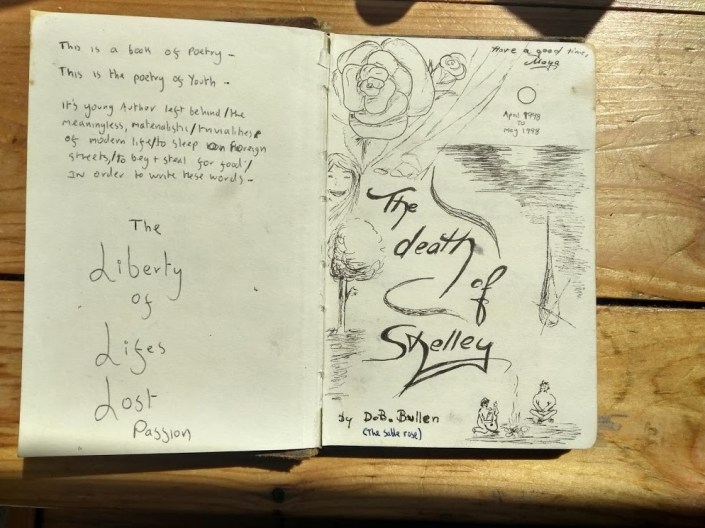
Then, in a beautiful stationary store, with amazing azure blue pens & ink, I bought a bound book for my poem, The Death of Shelley. It is going to be excellent, & Mia did the front title page as we sat in the street.
We then wander’d to the other side of the river, over a bridge where jewelers shops lined the road, climbed a hill & made camp near the top. I then made a fire thanks to last year’s woodsman’s summer in Bournemouth.
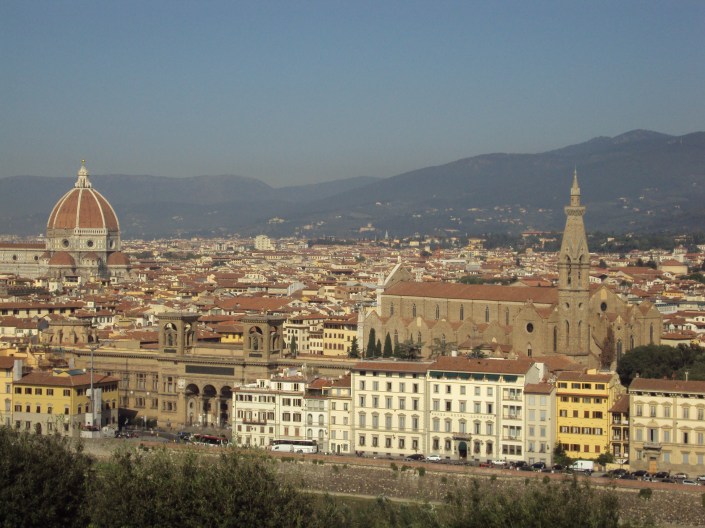
Altho’ we were next to a road, only one police car pass’d by, saying ‘no fire’ & threatening us with imaginary handcuffs. I pretended to put it out, then Eva went full steam ahead with the cooking.
The view of Florence at sunset was beautiful – no highrises, a sea of red rooves – & after dark we eventually had some home-cooked vegetable soup, assisted by my very own Knorr spice cubes. We then drank the wine & I sang some songs – new string sounds good – a special moment indeed on a Florentine hillside at dusk.
We wake in arms, after cappuccinos
Wander moped streets, O sacred city
Where argent-sheen’d Arno ardently flows;
I buy a book to fill with poetry,
On the title page Maya draws a rose,
Then buy fresh foods & climb a hill where we
Build a fire, cook dinner, watching sunshine
Fade over Florence with a sweet red wine.
After, at about 11PM, we wander’d thro’ drizzle to the fabulous city square, with statues of famous Italians every where. I could sense Shelley & Byron, who must have walk’d in these very streets. Indeed, Florence seems to have hardly changed in those two centuries.
Then, a kindly Tunisian call’d Karmel found us, scored us some cannabis from dodgy North Africans in the street, & we all proceeded to get stoned. It blew us all away, & the girls began singing, the acoustics in our coloumn’d corridor being amazing. Unfortunately, as I was playing along I snapp’d my brand new string!
Karmel’s French was worse than mine, but we still had a great life, him just babbling in Italian & me giggling along stoned off mi nut. Eventually, after 3 or 4 reefers, Karmel left & the girls huddl’d into me to get to sleep. Our clothes were quite damp, but it wasn’t too bad. It rain’d all night, & we were lucky to have shelter.
I now have 100,000 Lira (10,000 a day) & £10 sterling. The tests of my virtues & willpower begin tomorrow.
THE BIRTH OF A POET
************************
What I Told Frank
The Mumble have recently, & rather happily, discovered there is something quite addictive about reading the bitter-sweet paeans of Glaswegian poet, Megan Mccorquodale.
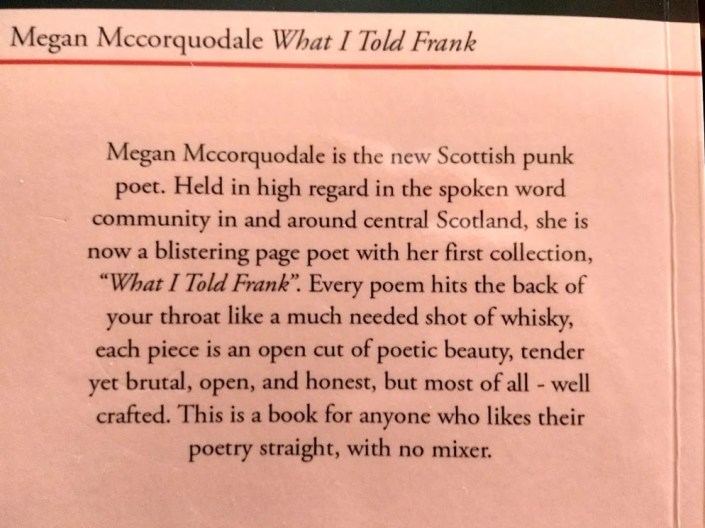
I like it when a slim volume of poetry lands on my carpet with the one o’clock post, wee Daisy barking in recognition of the package-size, knowing we’ll be out in the hills soon enough as I ponder over this fresh bouquet of page-uncrimpled poetry. I also like it when I don’t know anything about the poet, which was the case for Megan Mccorquodale, described on her book’s blurb as;
but being as stable as the dust
in the kitchen draft
I was aimlessly thrown around the house today
as fickle as Glasgow summers
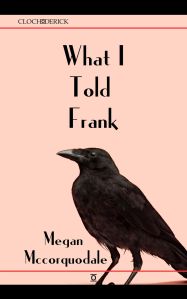
After reading Megan’s book, however, I now believe I know her a hell of a lot more intimately than when I first opened the pages of WHAT I TOLD FRANK, her debut collection published by Clochoderick Press. These fledgling poetry publishers have a keen, keen eye for quality, with the noble ambition of declaring their, ‘overall mission is to run Clochoderick as a non-profit service and to use any income to invest in new literary talent.’ So far so good, for WHAT I TOLD FRANK is an ethereally excellent book, in which the viscera of Megan’s voice – all bleeding & skin-gnaw’d – strips back the modern poetical psyche like the faded crumbling wallpaper of a condemn’d Glaswegian high-rise.
In fact the best sex we ever had
was after we argued about the existence of a god
and for a long time I felt like we
weren’t kneeling at the same altar
but in the end you told me no matter what
you had met your match with me
To begin with, WHAT I TOLD FRANK, is less a collection of separate poems, but rather one long unbroken piece of epyllia, like an Eve of St Agnes or something like that. The vast majority of the stanzas are in short, solid blocks of unrhyming free verse. In these Megan operates her mental music is if it were the drone of Milton’s epic organ, monotone but certainly not monotonous. She is gritty, & urban, but not in the cliched way of so many contemporary poets; for her angst contains beauty.
A product of youthful punkdom’s spit & distortion, the residues of those sweaty speed-fuel’d nights linger in her unglamorous lines, as does a woman completely aghast at the world she lives in – but is either too afraid, too drunk or too comfortable to escape. Some of her stanzas were brilliant, some were a little abstract – perhaps on purpose, like a diazepam dream – & it was rare that a complete poem had a full complement of those brilliant stanzas. Her efforts that did were, in the main, Megan’s more dramatic pieces, such as the fantastic I’VE NEVER BEEN GOOD AT PARTIES.

The poem has a final stanza which reads; ‘the shaking soul was the first / to answer the door / the most sober / but when it opened I sighed with relief / grabbed my coat / & followed Frank back out of the door.’ Frank, of course, is Megan’s muse, & companion through their shar’d Glaswegian half-life; & the whole collection is some kind of paean to her imperfect love for Frank who flutters in & out of her creative window like the Raven in Poe’s masterpiece & on the front cover of Megan’s book itself. In the next poem we gain an excellent flavor of her polluted love for Frank;

I can’t write today
when I wash my hands
waiting for the sting of bar work from the night before
I can’t feel the cuts on my fingers
As we wander through the moody, graphic, polaroid novel of Megan’s poetic art, we find her to be an uncomplicatedly natural poet. She extends her metaphors effortlessly. She is definitely neurotic, & obviously a chain-smoker – there seems to be at least one reference to cigarettes in every poem. She is also hypersensitive & hyper-accurate in her observations of the mundane & the marvelous, all of which intrigue Megan but ultimately bore her. But not us, by the way, we’re not bored at all; for she is blessed with the Bukowski droll, the melody melancholic of Barrett-Browning, polished off with the prettiness of Auden. A fascinating book which deserves several reads before, one hopes, the next collection is out. The bar is set very high now, however, so good luck Megan Mccorquodale!
BUY ‘WHAT I TOLD FRANK’ HERE
The Tiara of Theodore Roethke
My strength is the strength
Of ten young things: I am with you:
In that first moment of delight
When you look from the page, no longer lost
In the maze of youth
Roethke
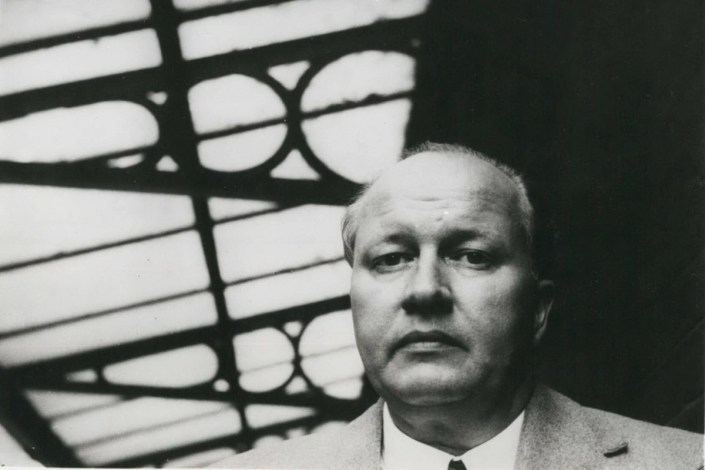
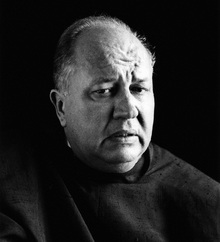
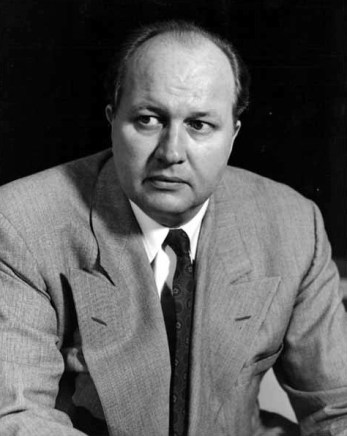
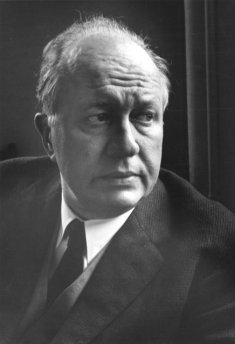
Just as the Islamic world absorbed the ancient scholarship of its Greek conquests, & just as the European renaissance repeated the assimilations, so too does Poetry have a duty to regurgitate itself from time to time, when the spirit of renewal strips away the evolutions of time, leaving shiny new versions of moments of classical brilliance. It is with this as my leading inclination that I now turn to the writings of Theodore Heubner Roethke; a very fine-minded, Twentieth Century, Pulitzer-prize winning, American, post-modernist poet. Very much respected by his peers, James Dickey once opined that he did not, ‘see anyone else that has the kind of deep, gut vitality that Roethke’s got. Whitman was a great poet, but he’s no competition for Roethke.’ Dickey was surely here analysing the poetry of the poet, but what I want to study here are a curious collection of whispy musings on the art of poetry which Roethke stuff’d his notebooks with in the mid-twentieth century. In this same period he was also an English teacher, & these spontaneous philosophartistical outpourings represent some kind of cross-pollinating hybrid of human thought.
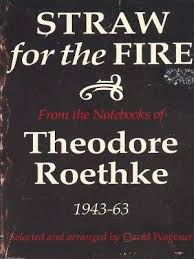
During the composition of these maxims, Roethke was too rush’d by teaching to collate his thoughts into a more conventional order. ‘I’m teaching well,’ he wrote in 1947, ‘if I can judge by the response – but haven’t done one damned thing on my own. It’s no way to live—to go from exhaustion to exhaustion.’ He seems have snatch’d at those scatter’d moments of focuss’d thought, scribbling them down in the depths of his office, to be discovered by his colleague, David Wagoner, upon the death of Roethke in 1963. Taking on the role of the Litologist (literary archaeologist) Wagoner dived into the 277 spiral notebooks full of fragmenting imagination, distilling them into a collection called Straw for the Fire (1972).
A half century later I intend to further the curation process begun by Wagoner by a secondary process of distillation. My endeavour shall be to select & reorder the most quintessentially poetic of Roethke’s maxims, in order to create some kind of spiritual map of the poetical experience entwined – with some magnitude & immediacy – with the entire universality of the poetic arts. As I do so, I hope to go against, as Roethke himself once said, ‘the academic tendency to rest: that profound impulse to sit down.’ Echoing the ‘garland’ collections of elegiac sayings espoused by the Tamils, I have named the collection’s form the ‘Tiara,’ in which are contained the choicest jewels dug up from the mines of mental ferment, which are polished & set in a smooth & solid structure.
‘The desire to express certain ideas,’ wrote John Cruikshank, ‘in as brief & memorable a form as possible is a long-standing human impulse.’ The aphorism has had many hey-days; the Kural of the Sangam age; the Roman epigrammical penchant as dictated by Tacitus & Martial; the intellectual epithetical flourishings of the seventeenth century French salon. In such brief capsules of literary exhortation, the qualities of elegance, accuracy & conciseness are held paramount. It is those maxims of Roethke which possess this triad of excellence the most which I have chosen for my materielle. Respecting Roethke’s deal love of teaching, I hope to have assembl’d the maxims in a way that will maximise the effects of the impartation of the poet’s empirical mind upon those who never had the pleasure of sharing a classroom with the man. Instead let us – & by us I mean every waking poet from now until the last gatherings of human time – listen to the everliving word-sage speak as if we were adepts gather’d at the naked feet of the wise Tamil sage; as if we were a young poet receiving Rilke’s letters of advice; as if we were one of the lucky students in the wartime poetry classes of Michigan State.
*********
BECOMING A POET
The young artist: there is no other kind of mind but my own
Poetry is the discovery of the legend of one’s youth.
There is an academic precept which says: never listen to the young. The reverse should be true: Listen, I say, & listen close, for from them – if they are real & alive – may we hear, however, faintly & distortedly – the true whispers from the infinite, the beckonings away from the dreadful, the gray life beating itself against the pitted concrete world.
The wisdom the young make holy be their living
We’re not going to split the heart of reality: not until the third semester.
And then there is the more honest & charitable mentor who regards poetry as a kind of emotional & spiritual wild oats of the young, a phase of adolescence to be pass’d thro’ quickly – & anything said to shake him out of this emotional orgy is all to the good.
*********
THE SPIRIT OF POETRY
The eye, of course, is not enough. But the outer eye serves the inner, that’s the point.
Basis of poetry is sensation: many poets today deny sensation, or have no sensation: the cult of the torpid.
Hearing poetry starts the psychological mechanism of prayer
The intuitive poet often begins most felicitously, but raptures are hard to sustain.
O keep me perpetual, muse, ears roaring with many things
Good poets wait for the muse, the unconscious to spring something loose, to temper & test the promptings of the intuition with the pressures of craftsmanship: they can think while they sing.
Simple & profound: how little there is
Say to yourself: I will learn & treasure every good turn of speech ever made.
The intense profound sharp longing to make a true poem.
*********
THE ART OF POETRY
Perhaps no person can be a poet, or even can enjoy poetry, without a certain unsoundness of mind.
The nobility of my imagination is my theme: I have to let things shimmer.
The essence of poetry is to perish – that is to say be ‘understood.’
A ‘movement’ is a dead fashion.
The artist has several levels of life always available. If he falls to the ground with a theme or gets a ‘block,’ he can always return to life – a routine task.
This is the lazy man’s out often: I haven’t read it, therefore it does not exist.
*********
POETICAL TECHNIQUE
Poetry is not just a mere shuffling of dead words or even a corralling of live ones.
A musical ear is a gift from nature: but like all gifts it can be develop’d
Rhythm: creates a pattern into which our mental faculties fall; this cycle of expectancy calls for surprises. The poet, at least the good poet, provides them.
My design in short poems: to create the situation, & the mood as quickly as possible: etch it in & have done; but is that enough? No. There must be symbolical force, weight, or a gravity of tone.
Play with it – The language has its cusses & fusses just like us.
Diction: one of the problems of diction, in certain kinds of poems, is to get all the words within a certain range of feeling; all elemental, all household, etc. etc. Often a very good figure from another level or range will jar.
The decasyllabic line is fine for someone who wants to meditate – or maunder. Me, I need something to jump in: hence the spins, & shifts, the songs, the rants, the howls. The shorter line can still serve us: it did when English was young, & when we were children.
To make it so good that there will be no actors will ever act it right: but none can be so bad, in any windy barn, to foul it up entirely.
It’s the damned almost-language that’s hardest to break away from: the skill’d words of the literary poet
Did I beat the poem to death? Did I worry the material like a mad dog?
*********
THE POET
We can love ourselves & literature with equal intensity – that’s our contribution
A poet is judg’d, in part, by the influences he resists
Puts his thoughts in motion – the poet
A poet: someone who is never satisfied with saying one thing at a time
The poet must have a sense not only of what words were & are, but also what they are going to be?
A poet must be a good reporter; but he must be something a good deal more.
Poet must first control, then dominate his medium
Maturity in a poet: when he no longer is concern’d with personal mortality… but whether the language dies.
There comes a time in the poet’s life when one personality, even with several sides, is not enough. Then he can go mad or become a dramatist.
There are so many ways of going to pot as a poet; so many pitfalls, so many snares & delusions.
The most bitter of intellectuals: he who was once a poet.
*********
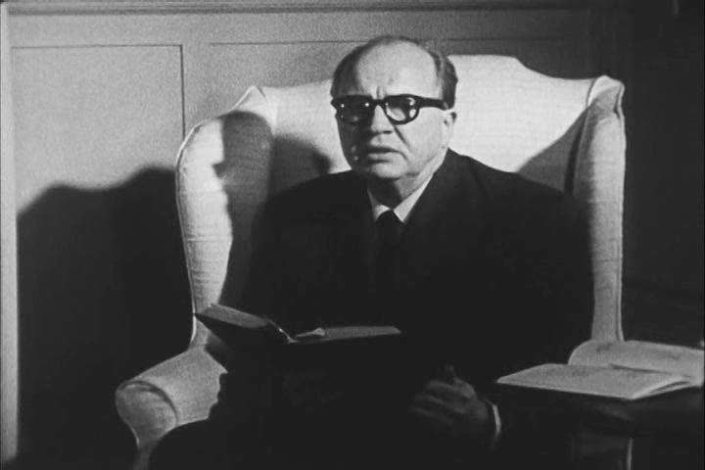
FORM IN POETRY
Remember: our deepest perceptions are a waste if we have no sense of form.
We must have the courage, as Kierkegaard says, to think a thought whole
Transcend that vision. What is first or early is easy to believe. But… it may enchain you.
The artist (not the would-be): you may have deep insights – but you also need the sense of form. Sometimes the possession of the first without the second may be tragic.
*********
CRITICISM
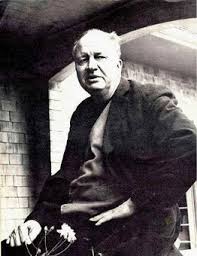
English poetry: mostly by ninnies, capable of fits & starts of ravishing feeling
The Victorians – they didn’t let enough go in or go out. They lived in ponds.
Some of these Limeys write as if they were falling over chairs
The ‘other’ poem in Yeats… had to set the stage for his best work. If he had not written at such length, he might not have been heard.
The lyric is almost forgotten in this time of sawing & snoring & scraping
One of the problems of the lyric poet is what to do with his spare time; & sometimes it becomes the community’s problems too. It worries people.
A bewildering bardling: no real feeling except a thin intense hatred of his contemporary superiors
A culture in which it is easier to publish a book about poetry than a book of poems
One of the subtlest tasks is the sifting from time. Some poems have that special sheen of contemporaneousness, the immediate glitter of fashion – & still survive.
*********
BAD POETRY
One of the virtues of good poetry is the fact that it irritates the mediocre
Not the stuff, but merely the stuffing, of real poetry. An anthology of abstractions from one of the less sure metaphysicians: a nowadays nausea.
Much to be learnt from bad poems
A wrenching of rhythms, verbal snorting; tootling on the raucous tin-ear, mechanized fancies: his poems have movement, sometimes they slide away from the subject.
Embroidering a few metaphors on his pale convictions
These fancy dandlers of mild epithets, graceless wittols hanging on the coattails of their betters. I can forget what they do until they forget to steal & start being themselves.
Those dreary language-arrangers. Don’t be ashamed if you belch when you try to sing
So many writers are an immense disappointment: they’re neurotic, grubby, cozy, frighten’d, eaten by their wits.
*********
WORLDLY ADVICE
Think with the wise, talk like the common man
When you begin to get good, you’ll arouse the haters of life
May my silences become more accurate
Live in a perpetual great astonishment
I can’t die now. There’s too much to do.
He was the master of the remark that insults everybody – including himself.

