The Pendragon Papers (3): Extraction of the Feminine Kharja for Future Refrains
Poetry is like music. Think of each form as an instrument, or for the larger forms an orchestra, through which poesis is directed form the poet & into the anterior experience. Certain free-form beat poets often reminded me of a jazz pianist consum’d by the shamanic trance. In the depths of the musical continent, there is to be found the leitmotif, a species of short & recurring musical phrase found in much classical music & opera. In the spheres poetry, the leitmotif appears as the refrain, a device which is not uncommon. In his 1846 essay, ‘The Philosophy of Composition,’ Edgar Allen Poe gives us an excellent description of the poetical refrain in the context of his poem, the Raven.
In carefully thinking over all the usual artistic effects — or more properly points, in the theatrical sense — I did not fail to perceive immediately that no one had been so universally employed as that of the refrain. The universality of its employment sufficed to assure me of its intrinsic value, and spared me the necessity of submitting it to analysis. I considered it, however, with regard to its susceptibility of improvement, and soon saw it to be in a primitive condition. As commonly used, the refrain, or burden, not only is limited to lyric verse, but depends for its impression upon the force of monotone — both in sound and thought. The pleasure is deduced solely from the sense of identity — of repetition.
I resolved to diversify, and so vastly heighten, the effect, by adhering, in general, to the monotone of sound, while I continually varied that of thought: that is to say, I determined to produce continuously novel effects, by the variation of the application of the refrain — the refrain itself remaining, for the most part, unvaried. These points being settled, I next bethought me of the nature of my refrain. Since its application was to be repeatedly varied, it was clear that the refrain itself must be brief, for there would have been an insurmountable difficulty in frequent variations of application in any sentence of length. In proportion to the brevity of the sentence, would, of course, be the facility of the variation. This led me at once to a single word as the best refrain. The question now arose as to the character of the word. Having made up my mind to a refrain, the division of the poem into stanzas was, of course, a corollary: the refrain forming the close to each stanza.
One hundred & eighty years later, in 2023, this brief essay of mine is set to examine a certain sub-species of refrain call’d the Kharja. They are, in essence, short & overtly sexualised statements by women about their male lovers, brief exhalations of yearning which were often clever, coquettish, provocative & witty. These kharja originated in Romantic Spanish dialects, & later embedded as signatory refrains by their chanteuse in more courtly poems for the Moslem conquerors of the Iberian peninsular.
Dated to the period 1000-1150, they were scholastically resurrected in 1948 by orientalist, Samuel Stern, who, working on the Arabic & Hebrew poems compos’d in Moslem Spain, identified over 50 Kharka embedded in poems taking the five stanza Muwashshah form. Peter Dronke, in his The Medieval Lyirc (1968), offers a number of excellent translations, including;
I’ll give you such love! – but only
If you’ll bend
My anklets over to my
Earrings!
I don’t want to wear a necklace, mother –
the dress is enough for me.
My lord will see a pure white
throat display’d
He won’t want jewellery
But, of course, the spirit of their Kharja is much, much older, & has also continued into the modern age. Egyptian love songs of second millennium B.C. employ’d a rich array of imagery and allusion in order to create highly sensual atmospheres in which perfectly kharjaesque sentiments can be found, such as one of the poems in the Chester Beatty I Papyrus, which reads:
Now, you shall bring it to the house of the female beloved,
So that you may storm against her cave.
Her gate will be raised. Her lady of the house shall prepare it.
You shall provide her with songs and dancing, wine and strong ale, in her pavilion.
So that you may intoxicate her senses,
And so that you may complete her in her night.
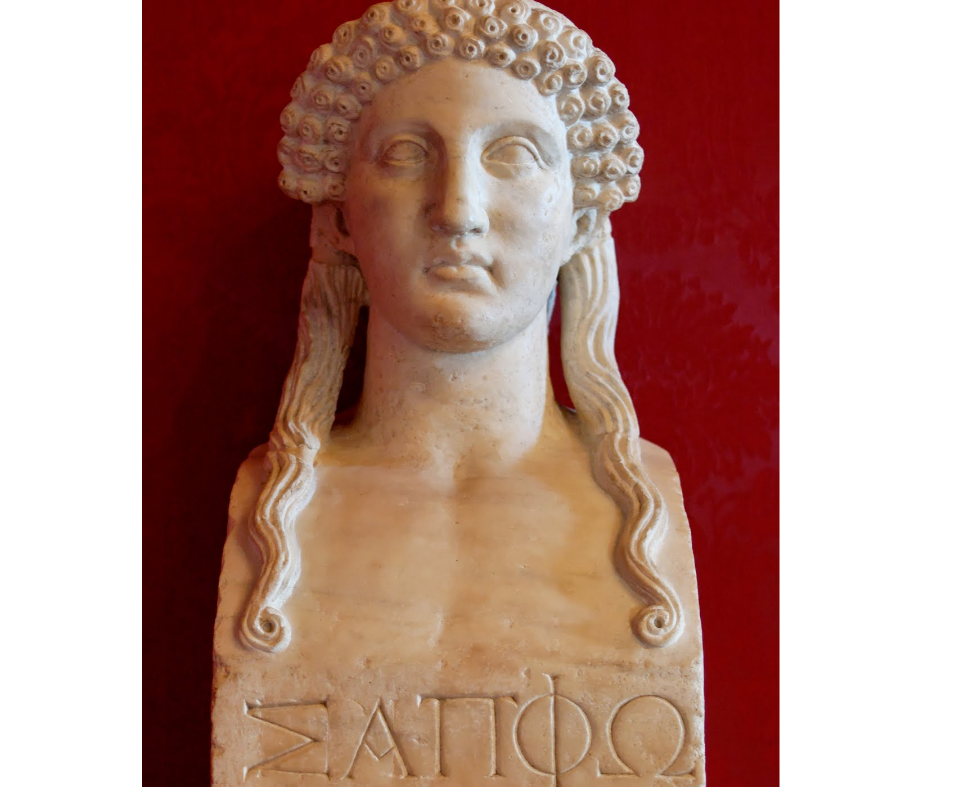
A thousand years later we have the wonderful effusions of the Greek poetess, Sappho.
He is more than a hero
He is more than a hero
he is a god in my eyes—
the man who is allowed
to sit beside you — he
who listens intimately
to the sweet murmur of
your voice, the enticing
laughter that makes my own
heart beat fast.
If I meet
you suddenly, I can’t
speak — my tongue is broken;
a thin flame runs under
my skin; seeing nothing,
hearing only my own ears
drumming, I drip with sweat;
trembling shakes my body
and I turn paler than
dry grass.
Later, in the ruins of a lava-preserv’d Pompeii, some anonymous versifier left the following as graffiti on a wall;
If you felt any stirrings of love in you, mule-driver,
You would drive more swiftly to see love’s goal!
I’m in love with a beautiful boy – use the spurs, please go faster!
You’re drunk! Go faster ! Use the reins & whip !
Bring me to Pompeii, where my sweey love lies !
You are mine…
Moving into the modern era, Elizabeth Barret Browning’s ‘The Lady’s Yes’ begins with a possible kharja, for sure;
” Yes !” I answered you last night ;
” No !” this morning, Sir, I say !
Colours, seen by candle-light,
Will not look the same by day.
Moving to the modern age & its vast plethora of superb female poetic voices, possible kharja are everywhere. Evolv’d, somewhat, with more dimensions as accord our modern society, of course, but they are kharja all the same. So, over at Lehman University, which serves the Bronx, Professor Vani Kannan wrote;
In one fleeting moment, He granted a mood
you embraced it together, when it was all new.
You landed and smiled, then parted and flew
but I’ll only remember when it was all new.
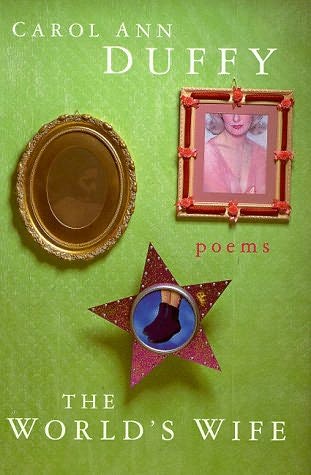
Elsewhere, in ‘The World’s Wife’, former Poet Laureate, Carol Ann Duffy, gave us;
After the split I would glimpse him
out & about
entering glitzy restaurants
with powerul men
There is also the stunning collection of the Scottish Punk poet, Megan Mccorqudale, ‘What I Told Frank,’ in which I have extracted the following kharja.
I left my underwear
on your floor last night
a woman at work
called me a slut
With morning light
You become bubble gum blue
I hadn’t even had the chance to get sick of the tatse of you
Before I had to spit you out
In fact the best sex we ever had
Was after we argued about the existence of god

Poets, & bards, of times not yet occurring, artisans of taste or tradition, who are concern’d with industriousness & mastering technique, may now allow the kharja into their set of tools. In the tradition of first study poetry, with modern female poetry being possibly pregnant with kharja, & then embed your chosen highlight into verses of your own. To conclude my essay, then, I have even compos’d a kharja of my own;
Counting the hours until he comes again,
The man she knew as Bobby now names Babes
Thro’ orgasms the o becomes ‘A star’
& at the end an ‘s’ for sexy guy
09/03/23
The Pendragon Papers (2): William McGonagall & the Almanack Poem – Naming the Year
The poet is, ostensibly, a poet of the zeitgeist. Our knowledge of medieval England is so much richer thro Chaucer’s Canterbury Tales, the Bronze Age of Greece still lives in epics of Homer. Poets also have the ability to record great individual occasions, such as Tennyson’s ode on the death of the Duke of Wellington; but there is one of sub-species of poem extant in which the poem names the year itself; perhaps a survey of the goings on of that twelvemonth, perhaps what the poet is doing himself in that year. These, I would like to give the name of ‘Almanack’ to. The name really means occurring every year, as in the Beano & Dandy hardback annuals which my grandmother gave me every Christmas, which I would sneak downstairs about 4 AM to open & read a strip or two, before hiding under a settee cushion to reveal to my parents half-way thro the unwrapping session when they were distracted, as coming ‘from my Grandma Joan.’ Yes, that is one kind of annual, but in the context of the poet, who cannot be relied on at all to compose poetry with such regularity, let us say their ‘almanack’ poems are those in which the year appears in the title. For the purposes of this paper I shall give several examples, including some of my own, whose compositions were inspir’d by some of the examples I now present.
Composed upon Westminster Bridge, September 3, 1802
Earth has not any thing to show more fair:
Dull would he be of soul who could pass by
A sight so touching in its majesty:
This City now doth, like a garment, wear
The beauty of the morning; silent, bare,
Ships, towers, domes, theatres, and temples lie
Open unto the fields, and to the sky;
All bright and glittering in the smokeless air.
Never did sun more beautifully steep
In his first splendour, valley, rock, or hill;
Ne’er saw I, never felt, a calm so deep!
The river glideth at his own sweet will:
Dear God! the very houses seem asleep;
And all that mighty heart is lying still!
London 1802
Milton! thou shouldst be living at this hour:
England hath need of thee: she is a fen
Of stagnant waters: altar, sword, and pen,
Fireside, the heroic wealth of hall and bower,
Have forfeited their ancient English dower
Of inward happiness. We are selfish men;
Oh! raise us up, return to us again;
And give us manners, virtue, freedom, power.
Thy soul was like a Star, and dwelt apart:
Thou hadst a voice whose sound was like the sea:
Pure as the naked heavens, majestic, free,
So didst thou travel on life’s common way,
In cheerful godliness; and yet thy heart
The lowliest duties on herself did lay.
William Wordsworth mark’d his presence in the capital of Britain with two excellent Petrarchian sonnets. He must have known this moment was some kind of watershed in his life. He was on his way to meet Annette Valon, a former lover of his from which union produced a daughter, Caroline. Later that year he would move north, to his destiny in the lakes, & his fruitful marriage to Mary Hutchinson. The first sonnet is what I call a ‘Vista’ sonnet, in which a poet absorbs a panorama, mixes the scenes with his poesis, & turns the mimesis to gold. In the second sonnet, he identifies with the great epic poet, John Milton, in an ‘Epistle’ sonnet, that is to say a direct open letter of sorts to an individual. One could say in this sonnet Wordsworth is exhorting some kind of vow to become a new John Milton type poet.
England 1819
An old, mad, blind, despised, and dying King;
Princes, the dregs of their dull race, who flow
Through public scorn,—mud from a muddy spring;
Rulers who neither see nor feel nor know,
But leechlike to their fainting country cling
Till they drop, blind in blood, without a blow.
A people starved and stabbed in th’ untilled field;
An army, whom liberticide and prey
Makes as a two-edged sword to all who wield;
Golden and sanguine laws which tempt and slay;
Religion Christless, Godless—a book sealed;
A senate, Time’s worst statute, unrepealed—
Are graves from which a glorious Phantom may
Burst, to illumine our tempestuous day.
This is one of my favourite poems, compos’d by Percy Bysshe Shelley in response to the slaughter of innocent protestors at St Peter’s Fields in Manchester, widely known as the Peterloo massacre, for the carnage that day resembl’d that of the Battle of Waterloo, four years previously. This poem in particular inspir’d two of my own sonnets, the first of which is a survey of British band music in 1998, & the second compos’d on returning from my first tour of India, 2002.
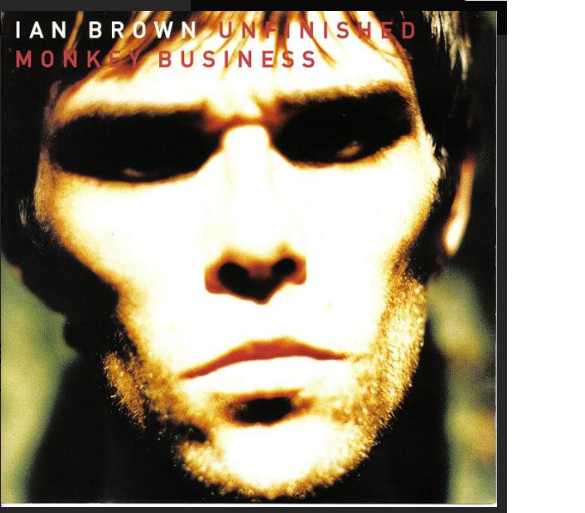
British Music: 1998
I wish I’d been absent for this year’s charts,
Nuthin half-decent to chill to and smoke,
Girlpower got pregnant – talentless tarts,
Shmoasises pub-rock souped-up on coke,
The soulless Dee-jay, class A parasite,
Spinning mixed-up beats to mind-numb masses,
The blurring churn of pulp sounds like the shite
Pulled out with their egos from their asses.
Robbie ‘Fuckin’ Williams rules a scene
Of talentless boy & girl groups galore,
The biggest bunch of nobodies I’ve seen –
Take That have got a lot to answer for…
All but for Ian Brown & the Beta Band
I’d say Britpop had done one from the land.
England 2002
England! forest of the sex-obsess’d West,
Still tax’d to the hilt, still chilly, still stress’d,
Moaning thro’ wintertime’s epic bummer,
Willing on another Big Brother summer,
Pop Idols have fifteen minutes of Fame,
But every song still sounds the fucking same,
The streets & parks are rife with kickabouts,
“Come on Svengland!” the passion & the shouts,
Four pills for a tenner, ten for twenty
Three quid for a beer, pints of milk forty pee,
Harry Potter, Prince Harry on pot,
& hook’d on the ripples of Bin Laden’s plot,
Tony Blair puts on a sycophantic front
For Dubya Bush, another name for cunt,
Who’s dragged us off to war, some 51st state
But still, my friends, still Britain, still great!
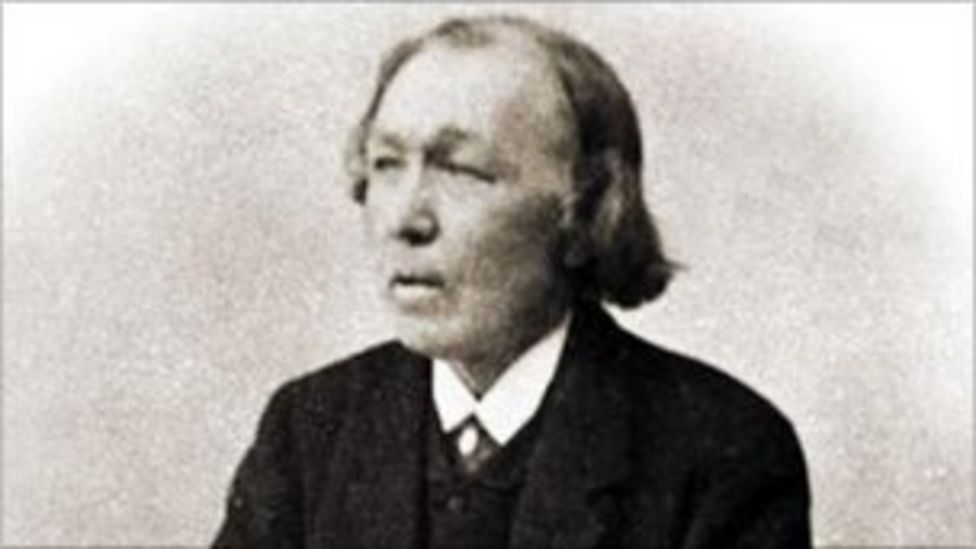
We have now come to the misunderstandingly monicker’d ‘Worst Poet in the World,’ William Topaz McGonagall. Born & bred on the Cowgate in Edinburgh, he spent the best part of his writing career in Dundee, in which place, at the age of 52, he had his poetical epiphany, which he recorded in his autobiography.
In the year of 1877 & in the month of June, when the flowers were in full bloom. Well, it being holiday week in Dundee, I was sitting in my back-room in Paton’s Lane, Dundee, lamenting to myself because I couldn’t get to the Highlands on holiday to see the beautiful scenery when all of a sudden my body got inflamed, & instantly I was seized with a strong desire to write poetry, so strong, I fact, that in my imagination I thought I heard a voice crying in my ears – Write! Write!
So, the eagle of invention had swoop’d into McGonagall’s soul, & he was about to embark on an exploration of a previously unexplor’d part of Mount Parnassus. There is a natural spontaneity to his verse, like a horse barely tamed, but there is an abundance of grace & genuinity, & a quite adorable affection for life in his works. The following lines should give a pleasant example of his style;
Oh, Bonnie Dundee! I will sing in thy praise
A few but true simple lays,
Regarding some of your beauties of the present day
And virtually speaking, there’s none can them gainsay;
There’s no other town I know of with you can compare
What marks out McGonagall, for me, as a bard, is his series of odes to events of his day – Queen Victoria’s Jubilee, battles in the Sudan, disasters & shipwrecks, he truly recorded the zeitgeist of his times. For the purposes of this paper, there is one year in particular in which he employ’d the ‘Almanack’ poem, 1893. In these he announces his struggles at being a poet in Dundee, he clearly feels unappreciated, but is also willing to fight for his reputation. The second poem isn’t actually dated, while the third only mentions the year in one of the lines, but I’ll present them both as part of the narrative McGonagall recorded for us in that year.
New Year’s Resolution to Leave Dundee
by William McGonagall
Welcome! thrice welcome! to the year 1893,
For it is the year that I intend to leave Dundee,
Owing to the treatment I receive,
Which does my heart sadly grieve.
Every morning when I got out
The ignorant rabble they do shout
” There goes Mad McGonagall”
In derisive shouts, as loud as they can bawl,
And lifts stones and snowballs, throws them at me;
And such actions are shameful to be heard in the City of Dundee.
And I’m ashamed, kind Christians, to confess,
That from the Magistrates I can get no redress.
Therefore I have made up my mind, in the year of 1893,
To leave the Ancient City of Dundee,
Because the citizens and me cannot agree.
The reason why — because they disrespect me,
Which makes me feel rather discontent.
Therefore, to leave them I am bent;
And I will make my arrangements without delay,
And leave Dundee some early day.
Lines in Reply to the Beautiful Poet who Welcomed News of McGonagall’s Departure from Dundee
Dear Johnny, I return my thanks to you;
But more than thanks is your due
For publishing the scurrilous poetry about me
Leaving the Ancient City of Dundee.
The rhymster says, we’ll weary for your schauchlin’ form;
But if I’m not mistaken I’ve seen bonnier than his in a field of corn;
And, as I venture to say and really suppose,
His form seen in a cornfield would frighten the crows.
But, dear Johnny, as you said, he’s just a lampoon,
And as ugly and as ignorant as a wild baboon;
And, as far as I can judge or think,
He is a vendor of strong drink.
He says my nose would make a peasemeal warrior weep;
But I’ve seen a much bonnier sweep,
And a more manly and wiser man
Than he is by far, deny it who can!
And, in conclusion, I’d have him to beware,
And never again to interfere with a poet’s hair,
Because Christ the Saviour wore long hair,
And many more good men, I do declare.
Therefore I laugh at such bosh that appears in print.
So I hope from me you will take the hint,
And never publish such bosh of poetry again,
Or else you’ll get the famous Weekly News a bad name.
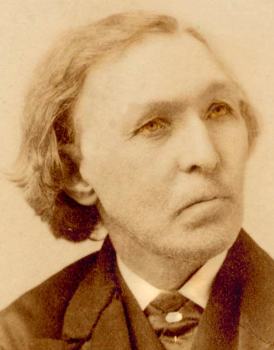
Lines in Praise of Mr. J. Graham Henderson, Hawick
Success to Mr J. Graham Henderson, who is a good man,
And to gainsay it there’s few people can,
I say so from my own experience,
And experience is a great defence.
He is a good man, I venture to say,
Which I declare to the world without dismay,
Because he’s given me a suit of Tweeds, magnificent to see,
So good that it cannot be surpassed in Dundee.
The suit is the best of Tweed cloth in every way,
And will last me for many a long day;
It’s really good, and in no way bad,
And will help to make my heart feel glad.
He’s going to send some goods to the World’s Fair,
And I hope of patronage he will get the biggest share;
Because his Tweed cloth is the best I ever did see,
In the year of our Lord eighteen hundred and ninety-three.
At the International Exhibition, and the Isle of Man Exhibition,
He got a gold medal from each, in recognition
Of his Scotch Tweeds, so good and grand,
Which cannot be surpassed in fair Scotland.
Therefore, good people, his goods are really grand,
And manufactured at Weensforth Mill, Hawick, Scotland;
Where there’s always plenty of Tweeds on hand,
For the ready cash at the people’s command.
Mr Tocher measured me for the suit,
And it is very elegant, which no one will dispute,
And I hope Mr Henry in Reform Street
Will gain customers by it, the suit is so complete.
Lines in Memoriam Regarding the Entertainment I Gave on the 31st March, 1893, in Reform Street Hall, Dundee
’Twas on the 31st of March, and in the year of 1893,
I gave an entertainment in the city of Dundee,
To a select party of gentlemen, big and small,
Who appreciated my recital in Reform Street Hall.
The meeting was convened by J. P. Smith’s manager, High Street,
And many of J. P. Smith’s employees were there me to greet,
And several other gentlemen within the city,
Who were all delighted with the entertainment they got from me.
Mr Green was the chairman for the night,
And in that capacity he acted right;
He made a splendid address on my behalf,
Without introducing any slang or chaff.
I wish him success during life;
May he always feel happy and free from strife,
For the kindness he has ever shown to me
During our long acquaintance in Dundee.
I return my thanks to Mr J. P. Smith’s men,
Who were at my entertainment more than nine or ten;
And the rest of the gentlemen that were there,
Also deserves my thanks, I do declare.
Because they showered upon me their approbation,
And got up for me a handsome donation,
Which was presented to me by Sir Green,
In a purse most beautiful to be seen.
Which was a generous action in deed,
And came to me in time of need.
And the gentlemen that so generously treated me
I’ll remember during my stay in Dundee.
McGonagall would soon enough leave Dundee, & return to the Cowgate once more in Edinburgh, where he would see out his days. Whatever happens in the history of poetry, his laurel crown is assur’d. Altho’ many aficionados of the poetic arts scoff at the quality, they could only dream of achieving the same sales figures & adulation as McGonagall – everything he ever wrote has been collated, pored over & simply adored.
The Pendragon Papers (1): The Poemorph & Balzac’s Lucien Chardon
No, Barbet–no. He is a poet, a great poet; he is going to cut out
Canalis, and Beranger, and Delavigne. He will go a long way if he does
not throw himself into the river, and even so he will get as far as
the drag-nets at Saint-Cloud.
Balzac: Lost Illusions
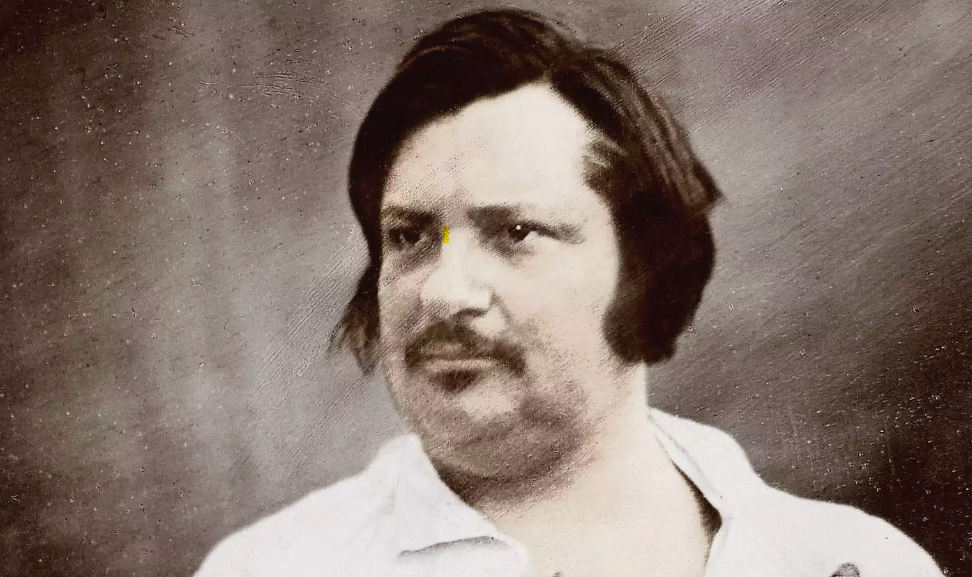
It is March 2nd, 2023, 8:37 AM, & I am now embarking upon the composition of my Pendragon Papers. The idea is to create a platform, a forward post if you will, from where my further advances into the vast continent of poetry shall continue. My first paper concerns the Poemorph, that is to say the dislocation & projection of the poetic spirit thro a medium that is not poetry, when the suspiration of a secret poet’s soul is finally exhal’d, & the perfume of his pent up poesis permeates & invigorates his prose.
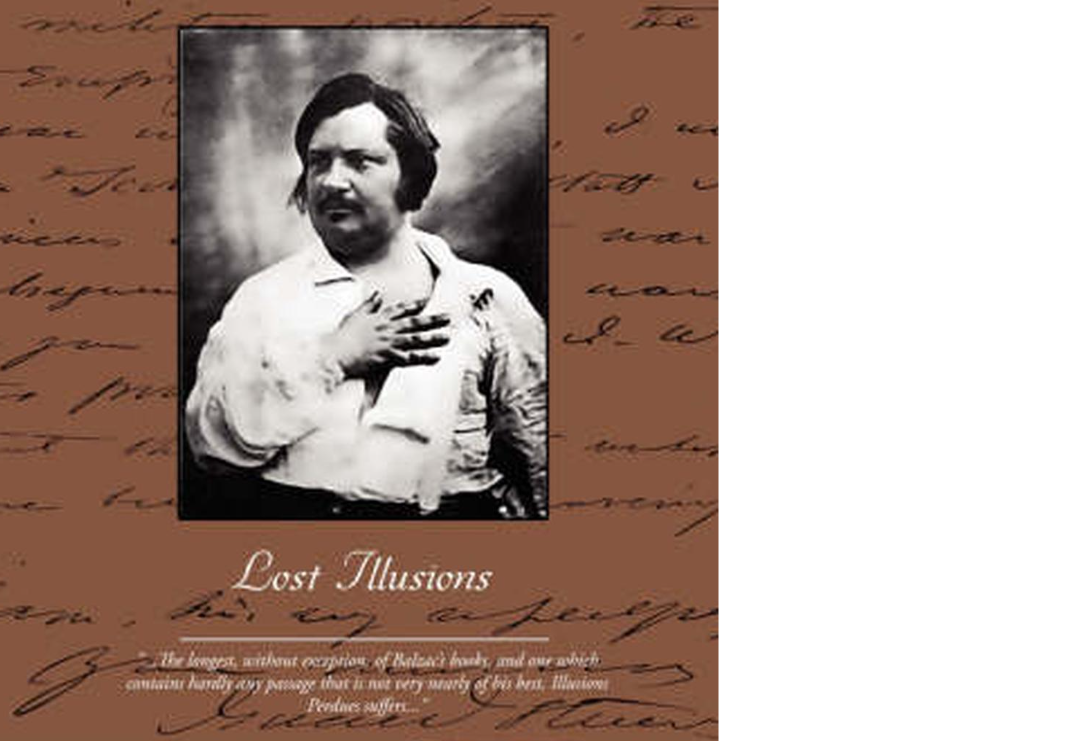
As a verb, To Poemorph means to embed poetry within the mouthpiece of a fictional character. As a noun, it is the presence & poetry of the aforedescrib’d within a piece of fiction. In the case of Honore de Balzac, one of the great 19th century French novelists, his poemorph can be found in the pages of his Lost Illusions (Illusions Perdues), in which Lucien Chardon becomes the mouthpiece of all things poetical in Balzac’s mind. Very much a mirror of Balzac’s own early years as a literary dilettante, Lucien Chardon sets forth with all the bright enthusiasm of a provincial poet & makes a play at becoming a successful poet in the metropolis of Paris. Along the way we gain a wonderful yardstick as to the state of play of poetry in France in 1837, when Balzac began his wonderful, often hilarious, tale. In this year, Baudelaire was only sixteen, & two more decades had to pass before Rimbaud was even born. Let us say Lost Illusions is set in the calm before the hurricane.
When John Milton compos’d, ‘his words, like so many nimble & airy servitors, trip about him at command,’ he could well have been writing about Balzac. A great creative artist, with supreme narrative powers, his Lost Illusions is one of the ninety novels & short stories which make up the Human Comedy, the umbrella term Balzac gave to his oeuvre, which depicts a hybrid world situated on the very boundary between real life & Balzac’s seer-like imagination, where everything is bath’d in the precise & illuminating light of Balzac’s visionary genius. His views on poetry are a case in point, which I have divide into three segments, all of which contain extracts from the actual novel. The translation is by Ellen Marriage,
The first part sees Chardon accepting his fate as a poet, which follow’d, ‘a reading which had shown the two friends that a new sun was shining over the fields of literature,’ he would soon be reading poetry to the ‘High Society’ of his native Angouleme, to no great success, complete disinterest in fact. The second part is taken, from his time in Paris, where on one occasion he, ‘felt like an embryo among these men; he had admired Nathan’s book, he had reverenced the author as an immortal; Nathan’s abject attitude before this critic, whose name and importance were both unknown to him, stupefied Lucien.’ The section we will look concerns a number of sonnets, drawn from the fictional ‘Marguerites’ manuscript, consisting of several pieces from the pens of Balzac’s own friends, including one from the only famous poet among them, Theophile Gautier, author of the Tulip, & future dedicatee of Baudelair’s Fleurs de Mal.
The final part sees Chardon, with the help of a friend, attempting to get his poetry publish’d, & what is remarkable how the vogue for buying poetry books has barely chang’d in two centuries. Altogether, I hope to have extracted some ore from the seam, to pann’d some gold from the bed, for poetry is poetry wherever it is found, any plant ever grown in the soil of Parnassus is important to record in the poetical & botanical diaries of mankind. For easier assimilation, the most important passages I shall highlight in bold.
1: ANGOULEME
A few habitues slipped in familiarly among the rest, so did one or two eldest sons; shy, mute young men tricked out in gorgeous jewelry, and highly honored by an invitation to this literary solemnity, the boldest men among them so far shook off the weight of awe as to chatter a good deal with Mlle. de la Haye. The women solemnly arranged themselves in a circle, and the men stood behind them. It was a quaint assemblage of wrinkled countenances and heterogeneous costumes, but none the less it seemed very alarming to Lucien, and his heart beat fast when he felt that every one was looking at him.
Lucien, luckless poet that he was, did not know that there was scarce a soul in the room besides Mme. de Bargeton who could understand poetry. The whole matter-of-fact assembly was there by a misapprehension, nor did they, for the most part, know what they had come out for to see. There are some words that draw a public as unfailingly as the clash of cymbals, the trumpet, or the mountebank’s big drum; “beauty,” “glory,” “poetry,” are words that bewitch the coarsest intellect.
He announced in an uncertain voice that, to prevent disappointment, he was about to read the masterpieces of a great poet, discovered only recently (for although Andre de Chenier’s poems appeared in 1819, no one in Angouleme had so much as heard of him).
Lucien began with Le Malade, and the poem was received with a murmur of applause; but he followed it with L’Aveugle, which proved too great a strain upon the average intellect. None but artists or those endowed with the artistic temperament can understand and sympathize with him in the diabolical torture of that reading. If poetry is to be rendered by the voice, and if the listener is to grasp all that it means, the most devout attention is essential; there should be an intimate alliance between the reader and his audience, or swift and subtle communication of the poet’s thought and feeling becomes impossible. Here this close sympathy was lacking, and Lucien in consequence was in the position of an angel who should endeavor to sing of heaven amid the chucklings of hell. An intelligent man in the sphere most stimulating to his faculties can see in every direction, like a snail; he has the keen scent of a dog, the ears of a mole; he can hear, and feel, and see all that is going on around him. A musician or a poet knows at once whether his audience is listening in admiration or fails to follow him, and feels it as the plant that revives or droops under favorable or unfavorable conditions.
When, like the dove in the deluge, he looked round for any spot on which his eyes might rest, he saw nothing but rows of impatient faces. Their owners clearly were waiting for him to make an end; they had come together to discuss questions of practical interest. With the exceptions of Laure de Rastignac, the Bishop, and two or three of the young men, they one and all looked bored. Lucien felt profoundly discouraged; he was damp with chilly perspiration; a glowing glance from Louise, to whom he turned, gave him courage to persevere to the end, but this poet’s heart was bleeding from countless wounds.
“Do you find this very amusing, Fifine?” inquired the wizened Lili, who perhaps had expected some kind of gymnastics.
“Don’t ask me what I think, dear; I cannot keep my eyes open when any one begins to read aloud.”
“I hope that Nais will not give us poetry often in the evenings,” said Francis. “If I am obliged to attend while somebody reads aloud after dinner, it upsets my digestion.”
“It was very well declaimed,” said Alexandre, “but I like whist better myself.”
After this dictum, which passed muster as a joke from the play on the word “whist,” (whisht = hush) several card-players were of the opinion that the reader’s voice needed a rest, and on this pretext one or two couples slipped away into the card-room. But Louise, and the Bishop, and pretty Laure de Rastignac besought Lucien to continue, and this time he caught the attention of his audience with Chenier’s spirited reactionary, Iambes. Several persons, carried away by his impassioned delivery, applauded the reading without understanding the sense. People of this sort are impressed by vociferation, as a coarse palate is ticked by strong spirits.
The intoxication of the poetry was upon him; he was far away from the hateful world, striving to render in speech the music that filled his soul, seeing the faces about him through a cloudy haze. He read the sombre Elegy on the Suicide, lines in the taste of a by-gone day, pervaded by sublime melancholy
Mme. de Bargeton sat with one hand buried in her curls, heedless of the havoc she wrought among them, gazing before her with unseeing eyes, alone in her drawing-room, lost in delicious dreaming; for the first time in her life she had been transported to the sphere which was hers by right of nature.
“The French language does not lend itself very readily to poetry, does it?” Astolphe remarked to Chatelet. “Cicero’s prose is a thousand times more poetical to my way of thinking.”
“The true poetry of France is song, lyric verse,” Chatelet answered.
“Which proves that our language is eminently adapted for music,” said Adrien.
When Francis and the Bishop joined the little group where Lucien stood, the circle who gave him the cup of hemlock to drain by little sips watched him with redoubled interest. The poet, luckless young man, being a total stranger, and unaware of the manners and customs of the house, could only look at Mme. de Bargeton and give embarrassed answers to embarrassing questions. He knew neither the names nor condition of the people about him; the women’s silly speeches made him blush for them, and he was at his wits’ end for a reply
“Do you work quickly?” asked Lolotte, much in the way that she would have asked a joiner “if it took long to make a box.”
The bludgeon stroke stunned Lucien, but he raised his head at Mme. De Bargeton’s reply–
“My dear, poetry does not grow in M. de Rubempre’s head like grass in our courtyards.”
“Madame, we cannot feel too reverently towards the noble spirits in whom God has set some ray of this light,” said the Bishop, addressing Lolotte. “Yes, poetry is something holy. Poetry implies suffering. How many silent nights those verses that you admire have cost! We should bow in love and reverence before the poet; his life here is almost always a life of sorrow; but God doubtless reserves a place in heaven for him among His prophets. This young man is a poet,” he added laying a hand on Lucien’s head; “do you not see the sign of Fate set on that high forehead of his?”
Glad to be so generously championed, Lucien made his acknowledgments in a grateful look, not knowing that the worthy prelate was to deal his deathblow.
Mme. de Bargeton’s eyes traveled round the hostile circle. Her glances went like arrows to the depths of her rivals’ hearts, and left them twice as furious as before.
“Ah, monseigneur,” cried Lucien, hoping to break thick heads with his golden sceptre, “but ordinary people have neither your intellect nor your charity. No one heeds our sorrows, our toil is unrecognized. The gold-digger working in the mine does not labor as we to wrest metaphors from the heart of the most ungrateful of all languages. If this is poetry–to give ideas such definite and clear expressions that all the world can see and understand–the poet must continually range through the entire scale of human intellects, so that he can satisfy the demands of all; he must conceal hard thinking and emotion, two antagonistic powers, beneath the most vivid color; he must know how to make one word cover a whole world of thought; he must give the results of whole systems of philosophy in a few picturesque lines; indeed, his songs are like seeds that must break into blossom in other hearts wherever they find the soil prepared by personal experience. How can you express unless you first have felt? And is not passion suffering.
Poetry is only brought forth after painful wanderings in the vast regions of thought and life.
“And what are you going to create for us?” asked Chatelet.
“If I were to announce such conceptions, I should give myself out for a man of genius, should I not?” answered Lucien. “And besides, such sublime creations demand a long experience of the world and a study of human passion and interests which I could not possibly have made; but I have made a beginning,” he added, with bitterness in his tone, as he took a vengeful glance round the circle; “the time of gestation is long—-“
“Then it will be a case of difficult labor,” interrupted M. du Hautoy.
“Your excellent mother might assist you,” suggested the Bishop.
The epigram, innocently made by the good prelate, the long-looked-for revenge, kindled a gleam of delight in all eyes. The smile of satisfied caste that traveled from mouth to mouth was aggravated by M. de Bargeton’s imbecility; he burst into a laugh, as usual, some moments later.
“Monseigneur, you are talking a little above our heads; these ladies do not understand your meaning,” said Mme. de Bargeton, and the words paralyzed the laughter, and drew astonished eyes upon her. “A poet who looks to the Bible for his inspiration has a mother indeed in the Church.–M. de Rubempre, will you recite ‘Saint John in Patmos’ for us, or ‘Belshazzar’s Feast’, so that his lordship may see that Rome is still the ‘Magna Parens’ of Virgil?”
“What do you think of our poet and his poetry?” Jacques asked of the Marquise. Jacques used to shoot over the lands belonging to the Pimentel family.
“Why, it is not bad for provincial poetry,” she said, smiling; “and besides, such a beautiful poet cannot do anything amiss.”
Every one thought the decision admirable; it traveled from lip to lip, gaining malignance by the way. Then Chatelet was called upon to accompany M. du Bartas on the piano while he mangled the great solo from ‘Figaro’; and the way being opened to music, the audience, as in duty bound listened while Chatelet in turn sang one of Chateaubriand’s ballads, a chivalrous ditty made in the time of the Empire.
2: THE SONNETS
Lucien was in his old place by the time that Lousteau reached the table; as the first comer, he greeted his acquaintance; they soon struck up a conversation, which grew so lively that Lucien went off in search of the manuscript of the ‘Marguerites’, while Lousteau finished his dinner. He had obtained leave to lay his sonnets before the journalist, and mistook the civility of the latter for willingness to find him a publisher, or a place on the paper. When Lucien came hurrying back again, he saw d’Arthez resting an elbow on the table in a corner of the restaurant, and knew that his friend was watching him with melancholy eyes, but he would not see d’Arthez just then; he felt the sharp pangs of poverty, the goadings of ambition, and followed Lousteau.
In the late afternoon the journalist and the neophyte went to the Luxembourg, and sat down under the trees in that part of the gardens which lies between the broad Avenue de l’Observatoire and the Rue de l’Ouest. The Rue de l’Ouest at that time was a long morass, bounded by planks and market-gardens; the houses were all at the end nearest the Rue de Vaugirard; and the walk through the gardens was so little frequented, that at the hour when Paris dines, two lovers might fall out and exchange the earnest of reconciliation without fear of intruders. There, on a bench beneath the lime-trees, Etienne Lousteau sat and listened to sample-sonnets from the ‘Marguerites’.
“The sonnet, monsieur,” said he, “is one of the most difficult forms of poetry. It has fallen almost entirely into disuse. No Frenchman can hope to rival Petrarch; for the language in which the Italian wrote, being so infinitely more pliant than French, lends itself to play of thought which our positivism (pardon the use of the expression) rejects. So it seemed to me that a volume of sonnets would be something quite new. Victor Hugo has appropriated the old, Canalis writes lighter verse, Beranger has monopolized songs, Casimir Delavigne has taken tragedy, and Lamartine the poetry of meditation.”
“Are you a ‘Classic’ or a ‘Romantic’?” inquired Lousteau.
Lucien’s astonishment betrayed such complete ignorance of the state of affairs in the republic of letters, that Lousteau thought it necessary to enlighten him.
“You have come up in the middle of a pitched battle, my dear fellow; you must make your decision at once. Literature is divided, in the first place, into several zones, but our great men are ranged in two hostile camps. The Royalists are ‘Romantics,’ the Liberals are ‘Classics.’ The divergence of taste in matters literary and divergence of political opinion coincide; and the result is a war with weapons of every sort, double-edged witticisms, subtle calumnies and nicknames ‘a outrance’, between the rising and the waning glory, and ink is shed in torrents. The odd part of it is that the Royalist-Romantics are all for liberty in literature, and for repealing laws and conventions; while the Liberal-Classics are for maintaining the unities, the Alexandrine, and the classical theme. So opinions in politics on either side are directly at variance with literary taste. If you are eclectic, you will have no one for you. Which side do you take?”
“Which is the winning side?”
“The Liberal newspapers have far more subscribers than the Royalist and Ministerial journals; still, though Canalis is for Church and King, and patronized by the Court and the clergy, he reaches other readers.–Pshaw! sonnets date back to an epoch before Boileau’s time,” said Etienne, seeing Lucien’s dismay at the prospect of choosing between two banners. “Be a Romantic. The Romantics are young men, and the Classics are pedants; the Romantics will gain the day.”
The word “pedant” was the latest epithet taken up by Romantic journalism to heap confusion on the Classical faction.
Lucien began to read, choosing first of all the title-sonnets.
EASTER DAISIES.
The daisies in the meadows, not in vain,
In red and white and gold before our eyes,
Have written an idyll for man’s sympathies,
And set his heart’s desire in language plain.
Gold stamens set in silver filigrane
Reveal the treasures which we idolize;
And all the cost of struggle for the prize
Is symboled by a secret blood-red stain.
Was it because your petals once uncurled
When Jesus rose upon a fairer world,
And from wings shaken for a heav’nward flight
Shed grace, that still as autumn reappears
You bloom again to tell of dead delight,
To bring us back the flower of twenty years?
Lucien felt piqued by Lousteau’s complete indifference during the reading of the sonnet; he was unfamiliar as yet with the disconcerting impassibility of the professional critic, wearied by much reading of poetry, prose, and plays. Lucien was accustomed to applause. He choked down his disappointment and read another, a favorite with Mme. De Bargeton and with some of his friends in the Rue des Quatre-Vents.
“This one, perhaps, will draw a word from him,” he thought.
THE MARGUERITE.
I am the Marguerite, fair and tall I grew
In velvet meadows, ‘mid the flowers a star.
They sought me for my beauty near and far;
My dawn, I thought, should be for ever new.
But now an all unwished-for gift I rue,
A fatal ray of knowledge shed to mar
My radiant star-crown grown oracular,
For I must speak and give an answer true.
An end of silence and of quiet days,
The Lover with two words my counsel prays;
And when my secret from my heart is reft,
When all my silver petals scattered lie,
I am the only flower neglected left,
Cast down and trodden under foot to die.
At the end, the poet looked up at his Aristarchus. Etienne Lousteau was gazing at the trees in the Pepiniere.
“Well?” asked Lucien.
“Well, my dear fellow, go on! I am listening to you, am I not? That fact in itself is as good as praise in Paris.”
“Have you had enough?” Lucien asked.
“Go on,” the other answered abruptly enough.
Lucien proceeded to read the following sonnet, but his heart was dead within him; Lousteau’s inscrutable composure froze his utterance. If he had come a little further upon the road, he would have known that between writer and writer silence or abrupt speech, under such circumstances, is a betrayal of jealousy, and outspoken admiration means a sense of relief over the discovery that the work is not above the average after all.
THE CAMELLIA.
In Nature’s book, if rightly understood,
The rose means love, and red for beauty glows;
A pure, sweet spirit in the violet blows,
And bright the lily gleams in lowlihood.
But this strange bloom, by sun and wind unwooed,
Seems to expand and blossom ‘mid the snows,
A lily sceptreless, a scentless rose,
For dainty listlessness of maidenhood.
Yet at the opera house the petals trace
For modesty a fitting aureole;
An alabaster wreath to lay, methought,
In dusky hair o’er some fair woman’s face
Which kindles ev’n such love within the soul
As sculptured marble forms by Phidias wrought.
“What do you think of my poor sonnets?” Lucien asked, coming straight to the point.
“Do you want the truth?”
“I am young enough to like the truth, and so anxious to succeed that I can hear it without taking offence, but not without despair,” replied Lucien.
“Well, my dear fellow, the first sonnet, from its involved style, was evidently written at Angouleme; it gave you so much trouble, no doubt, that you cannot give it up. The second and third smack of Paris already; but read us one more sonnet,” he added, with a gesture that seemed charming to the provincial.
Encouraged by the request, Lucien read with more confidence, choosing a sonnet which d’Arthez and Bridau liked best, perhaps on account of its color.
THE TULIP.
I am the Tulip from Batavia’s shore;
The thrifty Fleming for my beauty rare
Pays a king’s ransom, when that I am fair,
And tall, and straight, and pure my petal’s core.
And, like some Yolande of the days of yore,
My long and amply folded skirts I wear,
O’er-painted with the blazon that I bear
–Gules, a fess azure; purpure, fretty, or.
The fingers of the Gardener divine
Have woven for me my vesture fair and fine,
Of threads of sunlight and of purple stain;
No flower so glorious in the garden bed,
But Nature, woe is me, no fragrance shed
Within my cup of Orient porcelain.
“Well?” asked Lucien after a pause, immeasurably long, as it seemed to him.
“My dear fellow,” Etienne said, gravely surveying the tips of Lucien’s boots (he had brought the pair from Angouleme, and was wearing them out). “My dear fellow, I strongly recommend you to put your ink on your boots to save blacking, and to take your pens for toothpicks, so that when you come away from Flicoteaux’s you can swagger along this picturesque alley looking as if you had dined. Get a situation of any sort or description. Run errands for a bailiff if you have the heart, be a shopman if your back is strong enough, enlist if you happen to have a taste for military music. You have the stuff of three poets in you; but before you can reach your public, you will have time to die of starvation six times over, if you intend to live on the proceeds of your poetry, that is.
“I say nothing as to your verses; they are a good deal better than all the poetical wares that are cumbering the ground in booksellers’ backshops just now. Elegant ‘nightingales’ of that sort cost a little more than the others, because they are printed on hand-made paper, but they nearly all of them come down at last to the banks of the Seine.
You may study their range of notes there any day if you care to make an instructive pilgrimage along the Quais from old Jerome’s stall by the Pont Notre Dame to the Pont Royal. You will find them all there –all the ‘Essays in Verse’, the ‘Inspirations’, the lofty flights, the hymns, and songs, and ballads, and odes; all the nestfuls hatched during the last seven years, in fact. There lie their muses, thick with dust, bespattered by every passing cab, at the mercy of every profane hand that turns them over to look at the vignette on the title-page.
3: THE PUBLISHER
“What is it about?” continued Dauriat, addressing Lucien’s protector.
“It is a volume of magnificent poetry.”
At that word, Dauriat turned to Gabusson with a gesture worthy of Talma.
“Gabusson, my friend,” he said, “from this day forward, when anybody begins to talk of works in manuscript here–Do you hear that, all of you?” he broke in upon himself; and three assistants at once emerged from among the piles of books at the sound of their employer’s wrathful voice. “If anybody comes here with manuscripts,” he continued, looking at the finger-nails of a well-kept hand, “ask him whether it is poetry or prose; and if he says poetry, show him the door at once. Verses mean reverses in the booktrade.”
“Bravo! well put, Dauriat,” cried the chorus of journalists.
“It is true!” cried the bookseller, striding about his shop with Lucien’s manuscript in his hand. “You have no idea, gentlemen, of the amount of harm that Byron, Lamartine, Victor Hugo, Casimir Delavigne, Canalis, and Beranger have done by their success. The fame of them has brought down an invasion of barbarians upon us. I know ‘this’: there are a thousand volumes of manuscript poetry going the round of the publishers at this moment, things that nobody can make head nor tail of, stories in verse that begin in the middle, like ‘The Corsair’ and ‘Lara’. They set up to be original, forsooth, and indulge in stanzas that nobody can understand, and descriptive poetry after the pattern of the younger men who discovered Delille, and imagine that they are doing something new. Poets have been swarming like cockchafers for two years past. I have lost twenty thousand francs through poetry in the last twelvemonth. You ask Gabusson! There may be immortal poets somewhere in the world; I know of some that are blooming and rosy, and have no beards on their chins as yet,” he continued, looking at Lucien; “but in the trade, young man, there are only four poets –Beranger, Casimir Delavigne, Lamartine, and Victor Hugo; as for Canalis–he is a poet made by sheer force of writing him up.”
Lucien felt that he lacked the courage to hold up his head and show his spirit before all these influential persons, who were laughing with all their might. He knew very well that he should look hopelessly ridiculous, and yet he felt consumed by a fierce desire to catch the bookseller by the throat, to ruffle the insolent composure of his cravat, to break the gold chain that glittered on the man’s chest, trample his watch under his feet, and tear him in pieces. Mortified vanity opened the door to thoughts of vengeance, and inwardly he swore eternal enmity to that bookseller. But he smiled amiably.
“Poetry is like the sun,” said Blondet, “giving life alike to primeval forests and to ants and gnats and mosquitoes. There is no virtue but has a vice to match, and literature breeds the publisher.”
“And the journalist,” said Lousteau.
Dauriat burst out laughing.
“What is this after all?” he asked, holding up the manuscript.
“A volume of sonnets that will put Petrarch to the blush,” said Lousteau.
“What do you mean?”
“Just what I say,” answered Lousteau, seeing the knowing smile that went round the group. Lucien could not take offence but he chafed inwardly.
“Very well, I will read them,” said Dauriat, with a regal gesture that marked the full extent of the concession. “If these sonnets of yours are up to the level of the nineteenth century, I will make a great poet of you, my boy.”
“If he has brains to equal his good looks, you will run no great risks,” remarked one of the greatest public speakers of the day, a deputy who was chatting with the editor of the ‘Minerve’, and a writer for the ‘Constitutionnel’.
“Fame means twelve thousand francs in reviews, and a thousand more for dinners, General,” said Dauriat. “If M. Benjamin de Constant means to write a paper on this young poet, it will not be long before I make a bargain with him.”
Conclusion
Well, there we have it, the first of my Pendragon Papers, playfully presented in the main by Honore de Balzac, a man who possess the enormous psychic proportions which enable a major poetical personality to exist within the pages of one his many novels. Lucien Chardon was there all along, straining to burst from the pages of prose that were his chains, & just speak to the real poets of the world. I hope in this paper, a little of his voice can now be heard, with the rest waiting to be heard in the marvellous, Lost Illusions. As for French poetry, TS Eliot describes the arrival of Baudelaire’s counter-romanticism, & an end to the poetical society in which Lucien Chardon had attempted to forge his name;
‘The invention of language, at a moment when French poetry in particular was famishing for such invention, is enough to make of Baudelaire a great poet, a great landmark in poetry.’
02/03/23
Adventures on an Indian Visa (week 26) Hometime !
Day 176
Woah! I’m going home – can’t believe it. Touch wood & I’ve surviv’d this fucking malarkey. My shoulder’s sore still, but my mind is OK enough to get back on busses, & stuff. What doesn’t kill you makes you stronger, right.
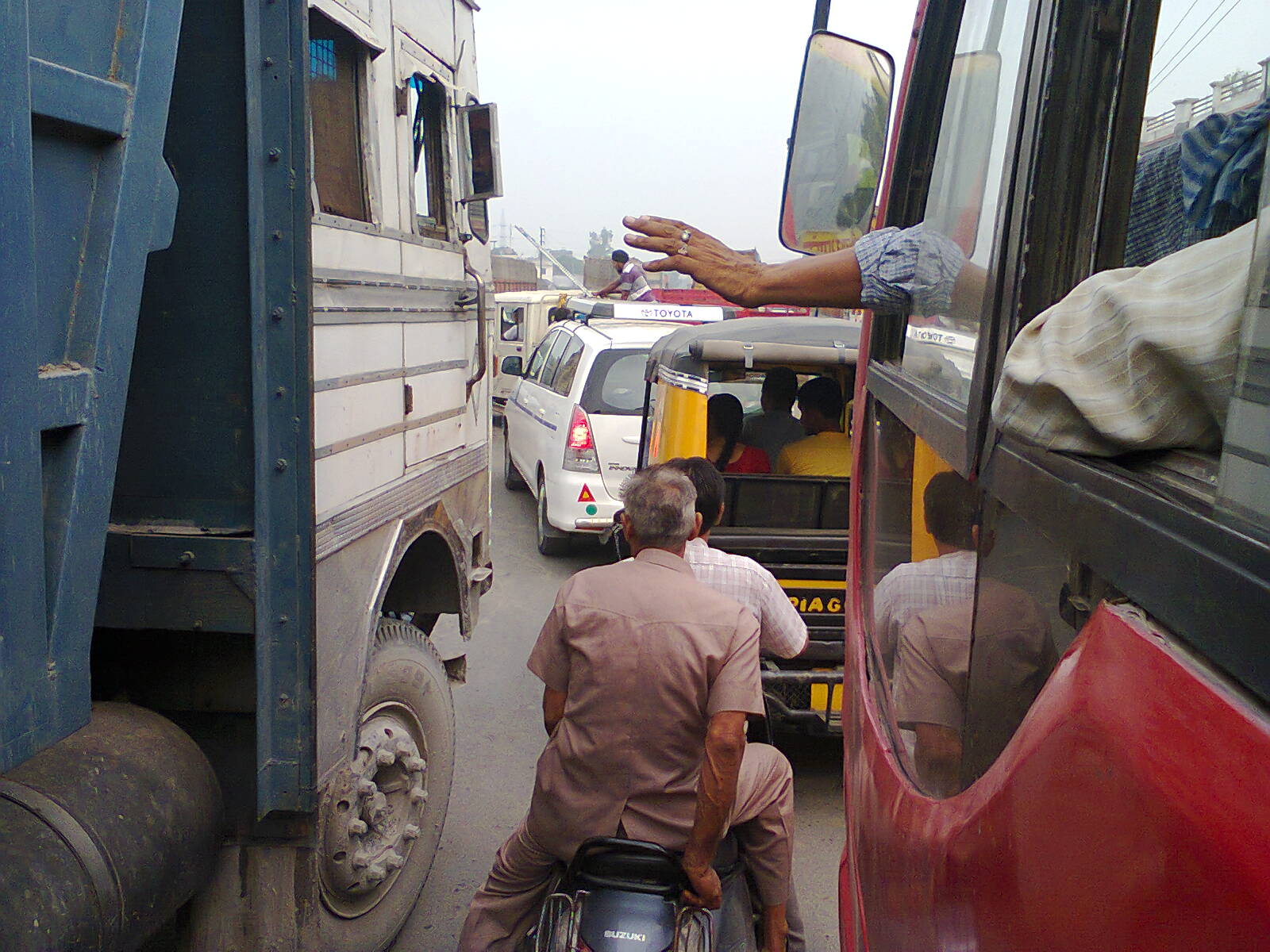
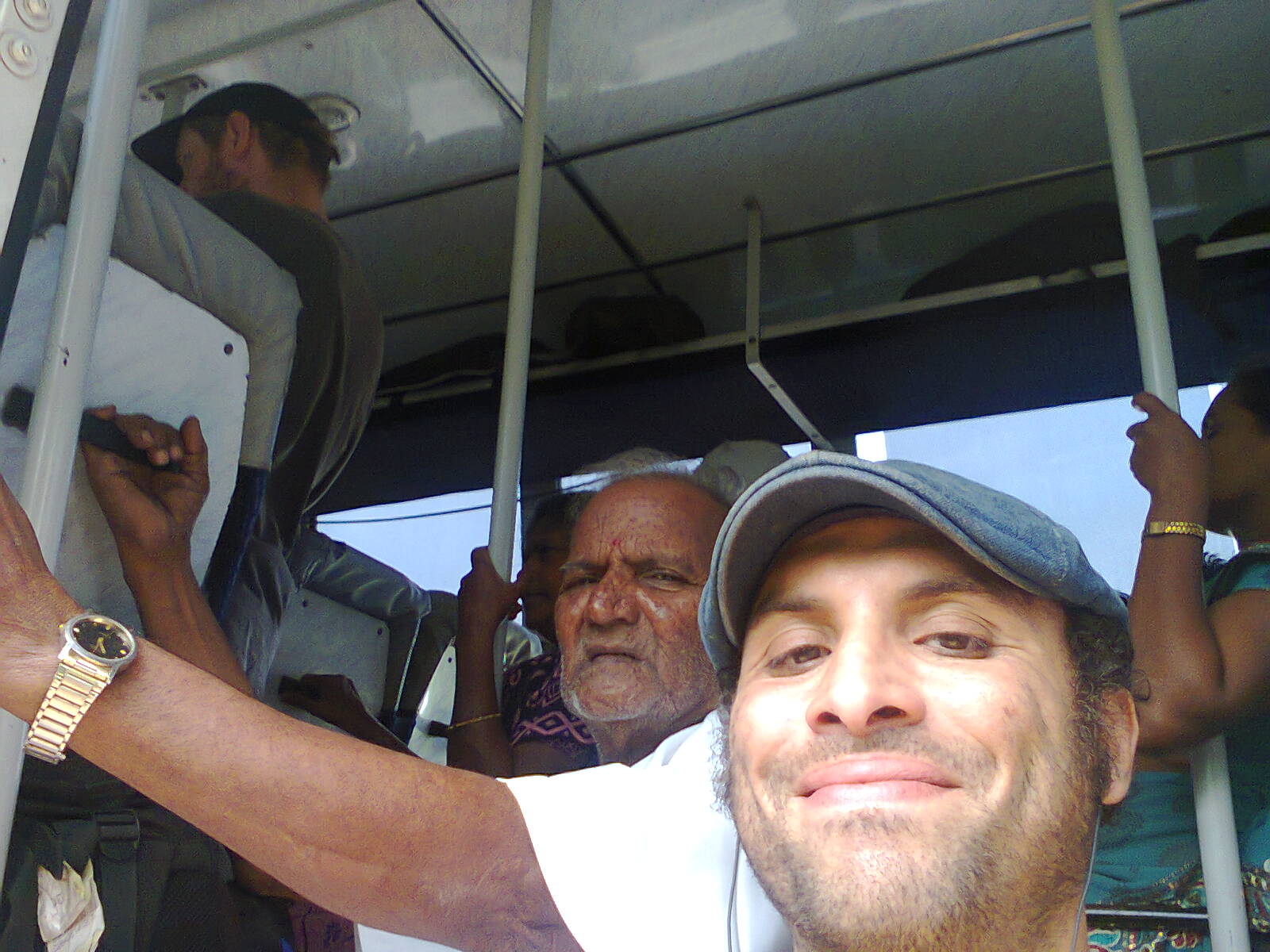
Today I reach’d Omkerashwar, via train to Omkereshwar Road station. A few minutes later I was the last man on a packed bus, clinging to safety at the doorway as we rumbled the last 15k to my destination.
In the past few days I’ve decided to make the switch from erudite Jesus scholar to dashing sonneteer. This particular India trip has seen a lovely flourish of new sonnets, there’s something quite photographic about the form that suits the travelling poet. As I’ve gone along recently, I observed possible potential, sonnet subject,s & being too endrenched in Jesus took notes accordingly to await a more salubrious day in the future to compose. That day, then, was today.
After taking pleasant rooms in the tourist-only Ganesh guest house, I collected the notes for 6 sonnets, along with an empty notebook, & hit the town for some old fashion’d Apollonian composition. As opposed to the Dionysian – which is pure inspiration – the Apollonian method sees a professional focus on creating poetry, but poetry that feels like it was inspired – a plastic muse if you will. When composing their long epics, poets such as Homer & Dante could not count on being inspired in every moment, & had to develop the ability to create poetry from sheer willpower & technique.
Taking food in the main square of Omkeraswar, I observed two goats engaged in a head-butting duel. This prov’d the catalyst for the day’s work, the spark that lit the poesis that had built up in my banks of creativity. The holy town of Omkerashwar is spread over two sides of a river, connected by two lofty impressive & modern footbridges, lined with beggars & men charging 10 rupees to take a photo of you & print it out. Over the bridges, one comes to a tranquil island, formed from the meeting of the mighty Narmada & Kaveri rivers. Wandering the island, I tossed off 4 sonnets in total, after which my poesis for the day have dried out. 60 lines wasn’t a bad effort; but in the full throes of Axis & Allies I could do 200+ lines a day without feeling tired.
You could really see & feel the poverty of Omkereshwar, & just as I was leaving the island, I was accosted by a couple of kids asking for some rupees, which I obligingly gave seeing as Omkereshwar is an extremely cheap place to be. However, just as pigeons flock & flutter to a spot where a generous human scattered bread crumbs, I was suddenly accosted by 30+ kids asking for rupees. I solved the problem by marching them all to the nearest sweetshop, lining them up in a row, & distributing three different kinds of sweets to their little outstreched hands. The whole thing cost me 90p, & I think the best money I’ve ever spent – I mean 30 happy children for the price of a double snickers!
So, I returned to my guest house, perched high on the cliffs with a glorious view of the area, typed up my sonnets & wrote this blog. I find that when returning to the poetic arts, one must not only learn to fall in love with poetry fall once more, but to fall in love with one’s own poetry. For me, the past few hours have been a lovely validation of my vocation & here’s a couple of the day’s efforts.
OMKERASHWAR
One morning in the bustling JP Choke,
That serves Omkerashwar’s most sacred space
Of rivers, lingams, islanders & Ram,
I heard a solid thud & turn’d to see,
Between the unused spearheads of their horns
Two proud, white street goats crack each other’s skulls,
Then rear again as if them did salute
Each other’s prowess in the sports of war.
A gather’d crowd stood wincing at each blow,
Until the loser stagger’d from the bout,
To ten yards later find some unshell’d peas,
These I stroll’d past, quite bridgewards, to the isle
Where Kaveri & old Namarda meet,
& Jyortirlinga lifts the married mind.
THE BALLAD OF THE JALLIANWALLA BAGH
To Amritsar have new god’s come, think Nanak quite unkempt
Under-the-thumb, bullet & drum & floggings with contempt.
Stan Rowlatt is no Indophile, sending the suspicious
To prisons vile, & without trial, blaming them seditious
Hindu & Muslim merge as one, & protest here in peace
By setting sun shall British gun the dogs of death release
Without a warning General Dyer flings a thousand bullets
O ruthless fire that host entire decimates in minutes
A dozen-dozen fill the well, a thousand others strewn
On such foul hell sheer grief befell beneath a witches’ moon
The soldiers dropp’d their lances down & did whate’er they could
Their lesson sounds all through the town, ‘Your protest drowns in blood!’
Tagore recoils in clear disgust with influential friends
British blood-lust has breach’d his trust, him back his knighthood sends!
Day 177
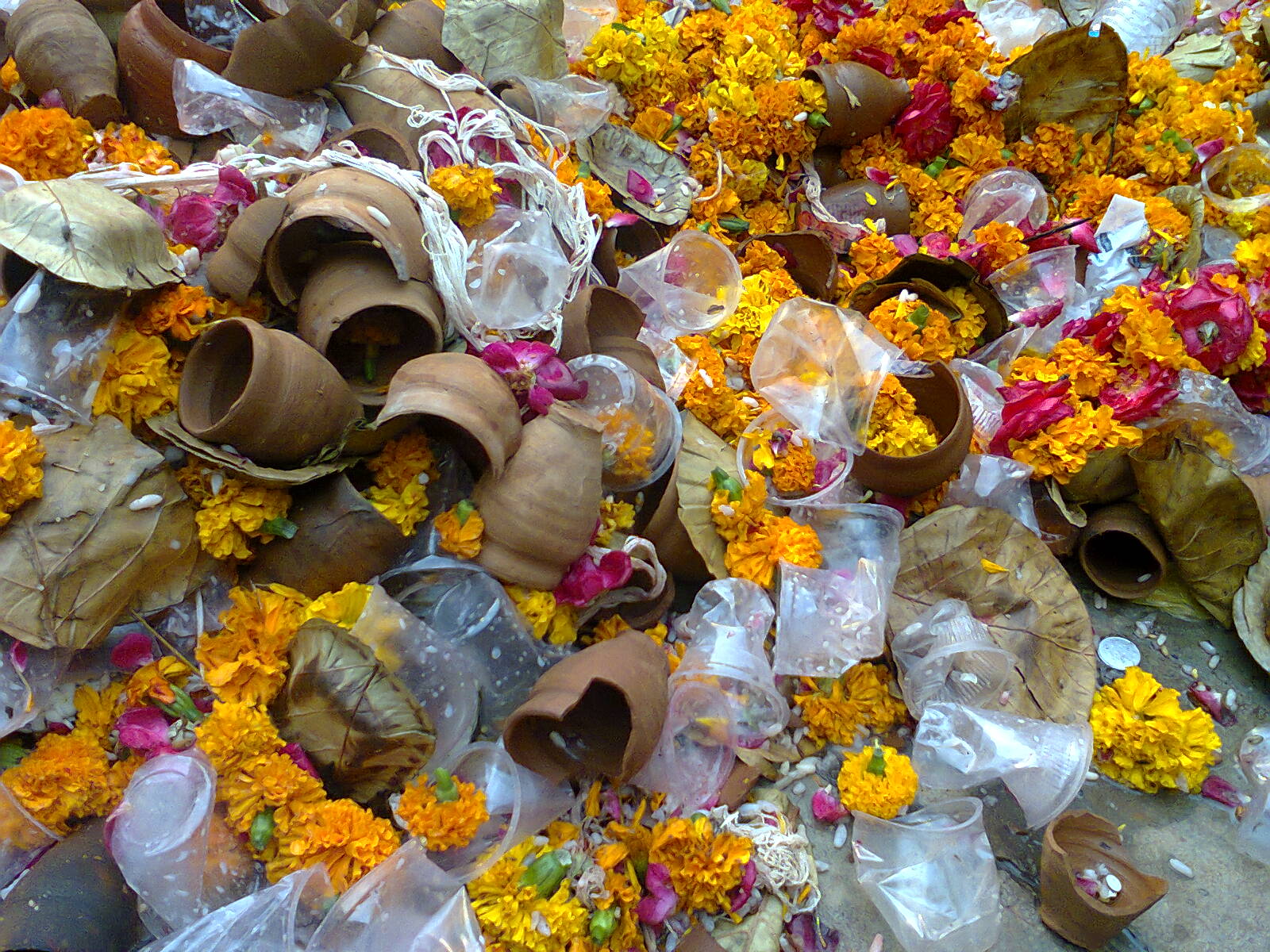
This morning, I was up before dawn again, waking to a damp but refresh’d Omkeraswar. Last night a wild storm had raged all round, roaring winds & rushing rains & constant flashes of electric light, that after the power-cut lit up – if only for a second or so – Omkeraswar as if ’twere day. I had decided to compose the two sonnets left from yesterday – including a transcreation of a Vedic hymn.
Crossing the bridge to the island once more, I headed for its eastern tip & found myself at a fabulous, millennium-old Chola temple, just as the red orb rose out of the very confluence of the Narmada & Kaveri; a lovely poignant moment that justified getting up so early again. Anyhow, here’s those two new sonnets;
THE LAST MUGHAL
Already old when to the throne he came
An emperor, but only one by name,
Whose palace pack’d with princes penniless
& empty treasury, relieving stress,
He pass’d his days perfecting Urdu rhymes,
Alas, this not the zeitgeist of his times,
For Indians have seen with open eyes
The British are but bandits in disguise!
“Uprise & fight!” “Be free!” amidst the dead
An ancient man becomes the figurehead,
That for a while the changing world defied,
‘Til Delhi fell, with nowhere left to hide,
He found his sad life exiled in Rangoon,
Approaching death, whistling an ustap’s tune.
TRIVIKRAMA
Sweet Soma-juice I sup Vishnu to praise,
O! steed-borne lord who stands on lofty hills,
Let us witness his three Earth-measur’d steps,
Three widely-striding paces thro’ the spheres,
& laud him like some wild, steep-scouring beast,
For midst those steps all creatures must abide,
Yes! Vigour give to Vishnu, many-hymn’d,
Who set himself apart & carv’d three worlds,
Three sweet & imperishable places,
& holds aloft, alone, all elements,
His mansion to attain midst happy gods,
Let us up to his highest footstep strive,
Where down on humblest oxen in the home,
His bull-light showers joyous benefits!
Day 178
I have taken a new lover – that is to say I’ve been cuddling into my first proper duvet in almost 6 months – an absolute heaven of a thing, white & fluffy & comfy as hell. I found it in Nashik, for back on my Jesus mission I discover’d that the South Indian sage, Agastya, was supposed to have had an ashram here, & was also the place where he met Rama, as told in Valmiki’s Ramayana.
There are a couple of supposed sites for the ashram, & on reaching Nashik this morning I tried to catch a bus to Igatpuri, 24 k to the SE of Nashik. However, the bus didn’t come, so I postpon’d the trip & check’d out the local sights instead. Walking through Nashik was quite a European experience; ca;m, clean streets & everybody dressed well in the western fashion – perhaps all down to Nasik’s proximity to Mumbai.
Ten minutes from my hotel was the Panchavati, a sprawling temple complex by the Godavari River. About a five-minute walk away, up a hill, I came to the temple said to be the place where Seeta – Rama’s wife – lived, before being kidnapped by the ten-headed demon god Ravana & whisked off to Sri Lanka in a flying car. Unfortunately, the cave was as fake as the flying car story, a modern cavity cut into stone complete with a papier mache roof painted to look like rock.
However, on my way out I picked up a booklet on Nashik & discovered that 8k away were the Pandavlini caves, a series of Buddhist temples & sleeping areas cut out of the rock & dated to the time of Christ. I’ll check them out tomorrow!
Day 179
This morning, I took a rickshaw to the Pandavlini caves, trundling along the National Highway that leads to Mumbai, 180k away. As we broke out of the city I saw two hills rising from the plain like gigantic gate-pillars, whose size & shape were rather reminiscent of the Laws of East Lothian, in particularly the one at North Berwick. Between them, the dual-carriageway roar’d like a lasar beam, & I got out eager to ascend the serenity of the larger, left-hand hill, called Tirasmi. The peak not massive, so I was up in a few minutes, paying my ‘foreign tourist’ 100 rupees while local Indians in their Sunday best paid 5 rupees each. Still, it was money well spent, for I spent a delightful perched high above Nashik & its sprawling & rising conurbation of new, modern white apartment blocks.
Firstly, I navigated the crude but effective path which circled the upper heights of the hill. It was great actually, far from all the cheap booze & baccy of Goa, I started to feel poetic again – those sonnets just keep on coming. As I made my way round the hill, I noticed how monochrome was the landscape below me, a sunburnt beige scrubland pepper’d by the occasion liquidy green-ness of a field, & those tabletop hills Id noticed on my journey to Nashik two days previously. Above me, the peak of Tirasmi Hill.
Eventually, I made it back to the Pandavlini cave complex, a series of 24 spaces carved smoothly out of the rock. They ranged from simple bedchambers, through water-tanks, to epic church-halls with 18 bedrooms, a shared living area & a temple. The place was definitely Buddhist – which fits in with Agastya – & excuisite carvings of Buddhas & Boddhisattvas were everywhere. Into the rocky floor were carved board-game patterns , conjuring up images of young monks passing the time between prayers.
On a sign at the entrance, a former Superintendent Archeologist wrote quite eloquently;
‘The beauty of these caves lies in their dignified facade, effectively composed & carved. The fleshy bodies, heavily emphasised sashe turbans & other details of the costume are strictly within the Indian tradition. The excavations of Pandu-Lini not only displays their artistic grade but at the same time they give glimpses of art, culture, religion & social setting of the ancient period.’
I really do get off on this stuff, y’know, the re-awakening of historical memories long thought-lost. Concerning the Caves & Jesus, the sun temple there connects to Iarchus, while the 18 bedrooms motif was found in two of the halls in total, & is a perfect match for the 18 disciples of Agastya who are suppos’d to have travelled south from the Gangeatic plain, & felt sure he had been here at some point.
On descending from the hill I began to walk back toward Nasik, my mind working information both new & old, & wondering how it all fits into the Jesus Jigsaw. En route I did indeed calculate some new lines of thought & open up new avenues of insight ready to explore, including something I’ve remember’d, which could be massive. It begins with the following passage from s Persian text known as the Siraj-ul-Maluk (1306);
Where is Isa, the Ruhullah, and, the Kalimatullah, who was the leader of the righteous, and the chief of travelers?
Here we have Isa, the Islamic name for Jesus, described as the ‘Ruhullah’. The word Kalimatullah philochisps into Cholamandalam, the ‘realm of the Cholas,’ named after an Indian dynasty who ruled over the coastal regions of Tamil Nadu. A Buddhist scripture known as the Vinaya Pitaka provides a near identical version of the epithet ‘Ruhullah.’ A section of the Vinaya called the Mahawaga records a future successor to the Buddha who would go by the name of ‘Rahula.’ The mother of this man was given the name ‘Magdaliyana,’ in which we may observe more than a hint of Mary Magdelane of the Gospels.
We must now acknowledge the possible influence of Jesus on the great body of didactic ‘Kural’ composed by the Tamil saint, Thiruvalluvar. From Ruhullah we philochisp easily to Ruvalluvar. When we add a ‘Thi’ element to this name – i.e. the Tamil version of the Sanskrit Sri, meaning ‘holy’ or ‘saintly’ – we come to the name of an ancient & mysterious Tamil saint known as Thiruvalluvar
So Jesus, Thiruvalluvar, India… man, what a possibility !!
Day 180
Woah! Made it! This morning I completed my circuit of India, all four corners. North, South, East & West have been explored in six month of craziness. I think I summ’d it up perfectly with the following sonnet
I rule one final walk about Mumbai,
From tranquil Dawn to Middle Morning’s heat,
Where as I breach the bustle of the street,
Twyx measured steps my senses amplify,
For flashing colours decorate the eye,
& finger’d foods both savoury & sweet,
Dance off the tongue, as Vedic songs compete
To treat our ears, each side of vendor’s cry.
I step tween mendicants, oxen,
Fresh stools, strays, tips & crows,
Strange monkeymen, hags, swine & then
A sense of kinship grows;
It’s one fuck’d up sub-continent,
But wondrous, I suppose!
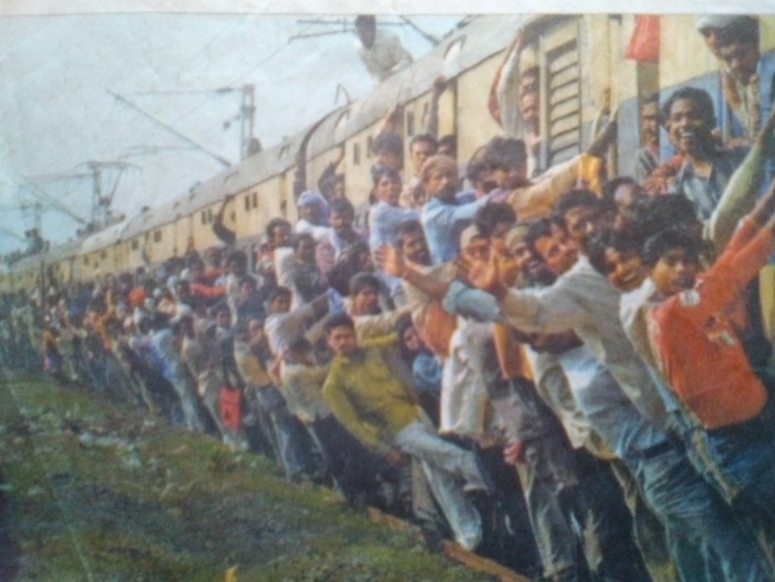
So, I caught an early train from Omkeraswar Road, & as we pulled through that epic metropolis’ suburbs, I decided to sit on a step with the door open, the train rumbling beneath me, watching the waking city pass me by, milking every moment, knowing full well life may never bring me back to India again.
The terminus station was actually on the edge of the city, & I decided to enjoy the mellower Bombay suburbs & do a spot of shopping. The international airport wasn’t far away so it made sense to stick around. It was quite nice actually, a far cry from the chaotic city centre, & before long I had a few gifts to take home to my family (I’d missed Christmas) – cooking spices for my sister, a load of sticky bindis for my niece & a few DVDs for my dad, each one having about 9 films on a single DVD. I also bought what I thought were some shoes for when I got back home. However, I’d been in sandals for 4 months & it has slowly dawned on me that this pair of soft shoes I’ve just bought are in fact slippers!
I hit the airport at the same time as this 21-year-old Norwegian lass. We soon hit it off & realised it would be more fun to go back into the city & have a meal & some beers. So, we pooled our funds & went on a wee rock’n’roll mission back into the city, having some fine food & turning up back at the airport reeking of booze. It affected her a lot more than me & it took a lot of persuading with the coppers to let her back into the airport. Her story was interesting – she was 3 weeks into her 6 month Asian tour when she realised she was pregnant, so was flying back to Oslo for an abortion, before flying back to Singapore in a couple of weeks to carry on her travels!
Leaving her dozing off the booze, I then went to spend my final rupees on a coca cola at this café in the airport car park, so my guard was down, my wallet was on the table & then it was gone. I realised this back in the airport, & I was like, oh fer fuck’s sake, I’ve been her six months & the only person who nick’d anything off me was fuckin’ Charlie! So, I went back to the café & said look guys, there’s no money in my wallet, but I need my bank cards for when I’m back in Britain. Lo & behold a sheepish old guy turns up a few minutes later & hands me back my wallet – result.
Day 181
Getting through Mumbai customs in the early hours was a bit of a drag – loads of checks & searches in response to a terrorist alert! However, I eventually got on the plane & a Valium & a half later I found myself back in Amsterdam. Now, I’m always up for a bit of ‘intelligent shopping’ – especially in the days of the credit crunch. However, it had been almost 4 months since I’d done any, but even in the sparsely customer’d shops of Amsterdam airport, I was soon munching into salami & a massive Toblerone, washed down with many soft drinks & reading English newspapers all for the price of zero euros – I guess shoplifting is just like riding a bike (with deep pockets).
DEPARTING INDIA
I know it’s more five-star now than it was then,
but it’s still a difficult tour
Ritchie Benaud
Many days have pass’d since that piazza
Where first I flirted with the myrtle muse,
Now knoweth I a new peninsula
Whose galaxy of monuments enthuse
The spiritus, where all Earthly aspects
Have form’d a microcosm of the sphere,
A foundation for when I travel next,
Days of endeavour drawing ever near.
I spend a moment musing on the wing,
As oer the Sea of Araby we sail’d;
Around the Raj was flung a faerie ring
& all its channel’d poesis regaled,
I have succeeded in my soldiering
Where Ghengiz Khan & Alexander fail’d
It was then a quick buzz over the English Channel, which seem’d to form a golden frame to the beautiful shade of English green. I felt quite patriotic coming home, & as we circled the metropolis I noticed how neat London was, with its straight roads, gentle curves & verdant parks -all a far cry from the ramshackle chaos of India, which seem’d just a dream by the time I set foot back on my native soil, with not a cycle rickshaw in sight…
An hour & bit later it was all a case of Beep-Beep-Fuckin-Beep! Yep, that’s me, back in London & back in Britain with the other 97 percent of the world’s baked-bean buyers. India might have been dangerous, but in my home country there’s an accident every three minutes – I’m taking more care now I’m home than I ever did in India. Going to India means I have cast myself loose, completely, without a home, but breathing the sweet air of freedom.
After such a spirit-cleansing sojourn to the east it was quite a shock to be thrown into the lion’s den of Brixton underground station. The rush of life overwhelmed my senses & within 30 seconds I was offer’d weed. Met my hippy hosts in the capital, Jimmy & Annie. I had met Jimmy on the steps of the Andaman office in Chennai. His girlfriend was a bonnie bohemian lassie, & before I knew it I was whisked off to her gig. It wasn’t far away, at the Bedford pub in Balham; what a place, four floors of Georgian class, the toppermost being the intimate venue where Annie, sat at a keyboard, & back’d by her boys on brass, chilled me out completely. Other acts included a Danish bird on banjo & a Madagascan doing things on guitar that blew me away. Most bizarre, however, was what was going on underneath us. The guitarist from the Scorpions was playing Vivaldi, back’d by a string orchestra full of fit birds, one of whom, when positioned best, was wearing some very skimpy velvet knickers. Its good to be home!
Day 182
What have I gained in England? I knew I had learn’d to wear a collar & tie, to polish my shoes, to brush my hair & to say ‘thank you’ & ‘I am sorry’ many times a day. I had learned to be fashionable & to drink as they drank; in other words I had learned how to worship my body. I saw far more evils in England than I ever did in India
Bakht Singh
My first full day in Britain for 6 months, & the end of my 26 week long journal, which I am going to call ‘ADVENTURES ON AN INDIAN VISA.’ I found myself in London, where luckily it wasn’t raining & my slippers did in fact keep my feet warm. I also went to a clinic to get my shoulder check’d out – apparently its heal’d now, despite being out of joint a bit, anything the NHS could do would only be cosmetic, so I’m just gonna leave it as a war wound, the experience of which led to the following sonnet;
MADE IT !
At last my gaze is cast oer English skies,
The thrills of one’s homecoming multiply,
Bursting through cloud we claim a poet’s prize;
Big Ben…Tower Bridge… & the London Eye.
I’m back at last, back from my epic tour,
Ten rupees all that furnishes my purse;
Scraggly & tann’d I call upon the door
Of compassion & an NHS nurse.
“It weren’t easy… I gush´d out dysentry,
Wee mozzy bites became massive bags of puss,
Salmonella, concussion, entwisted knee,
Neuropraxia… love, just look at us!”
“It’s lucky you survived”… I smil’d a smile,
“Dying,” said I, “It’s never been my style.”
The imperial capital can be a little too much at time, but there are pockets of loveliness, like deer-haunted Richmond Park. So, in need of a little nature I headed for the wide open wilderness of Hampsted Heath. In its heart is the Vale of Health, an idyllic cluster of houses in the middle of the expanse of green, like a rush of magic mushrooms in a farmer’s field. From there I dallied through the Heath, by pleasant ponds & the excellent capital vista from Parliament Hill. From it you can see the telegraph tower at Euston, thro’ Saint Paul’s & the Liverpool Street Gherkin to the metropolis skyscrapers of London Docklands. At the other end of the Heath I entered Highgate, drawn by literary memorials to the house where Coleridge spent his last years, & the little church across the road where he is buried.
By now it hardly felt I was in London at all, but this sensation was soon eroded as I made my way through the sweating concrete cyst back to Brixton. My mood was alleviated by a trip to the national gallery to see my favourite paintings – four epic battle scenes from the French revolutionary wars that hang at the entrance hall. A quick zoom on the underground, from Waterloo, & I was back in Brixton where I’m staying in this old Pub, the King of Sardinia. It’s wicked, instruments in the basement next to the old taps, acoustic guitars & sofas in the old pub bit & two floors of rooms, with a roof top terrace. I recently cooked my hosts an Indian style curry to say ta (three tins of chopped tomatoes!) & after some hearty drinking & literary chat with Jimmy, feel chilled out to fuck!
What an absolute buzz all that was, eh?
Adventures on an Indian Visa (week 25): Way Out West
Day 169
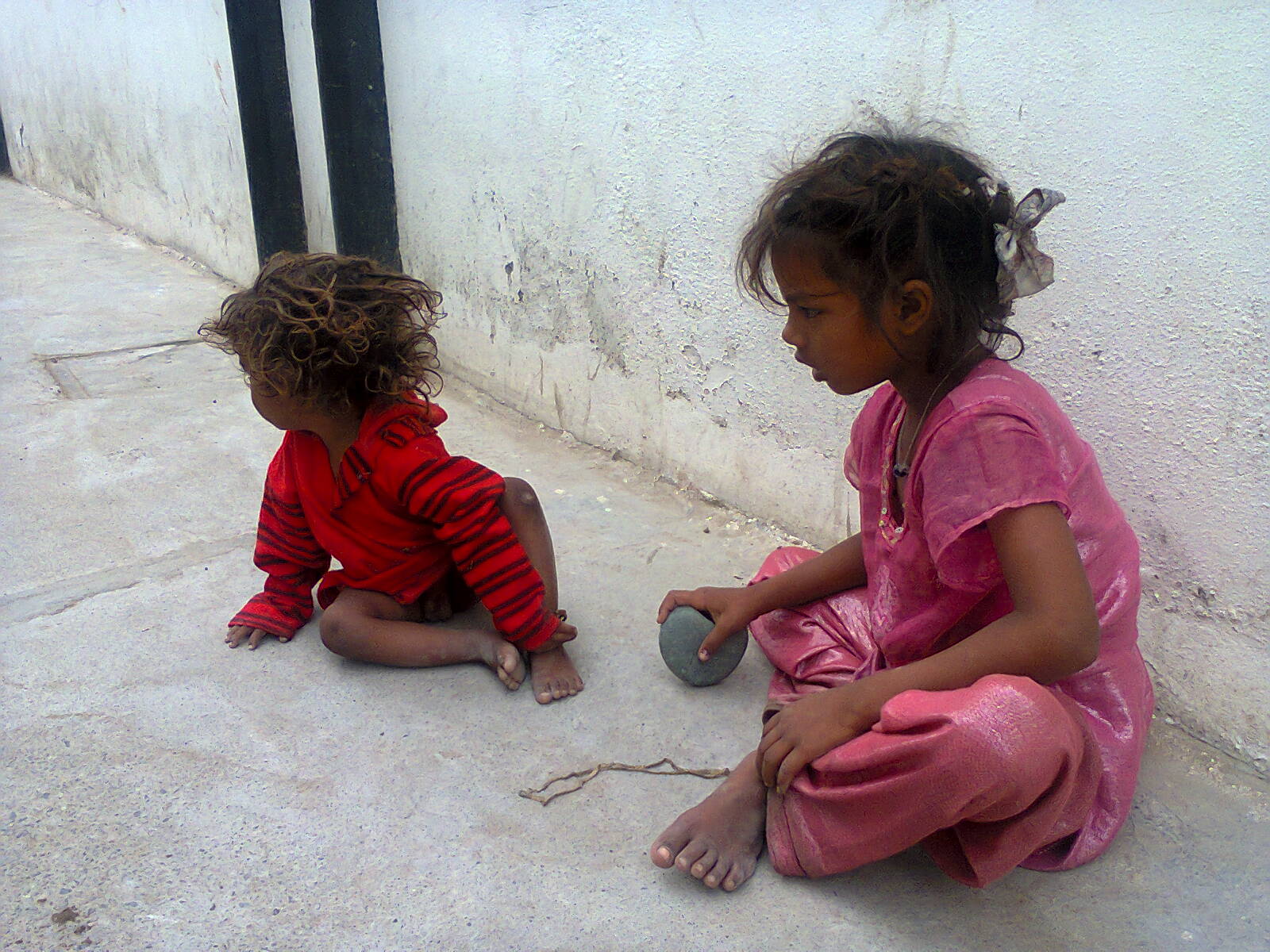
After the chaos of Jodhpur, it really is a joy to reach the medieval city of Jaisalmer, commanding a very Italianesque vibe as its narrow streets crowd the fortified hill on which it stands. Every building is built from the same reddy-brown sandstone, so the whole city seems to blend into the desert sands around. Jaisalmere does have its down-side, however – the constant harassment of the traders wanting you to buy something; I mean its fuckin’ constant, everyone leaping out at you to buy a plethora of goods, from the Rajasthani violin to camel safaris. I was tempted to do the latter, but the thought of a sore arse & the blazing sun put me off.
I instead hired a moped for a pound for the a day & went off razzin’ around the empty desert roads. It got me musing on how being a long way away from friends, family, acquaintances & even the idiosyncratics of my native land, is that one feels a sense of ‘personality.’ That is to say, my self is pure & I do things for myself which please me & no others. The way I interact with strangers is also based purely on my personality.
Driving about, I stumbl’d across a large town called Kuvalla, deserted for two hundred years after its citizens thought the local taxes were too high. In fact, even in these modern times, only last weekend nine debt-laden farmers have committed suicide.
So, I have reach’d one of the extremities of the subcontinental triangle, which for me was Darjeeling, Kannyakamari & now here on the edge of the Thar Desert. A few hundred k across the dunes lies Pakistan – but I aint goin’ that far, they don’t sell booze.
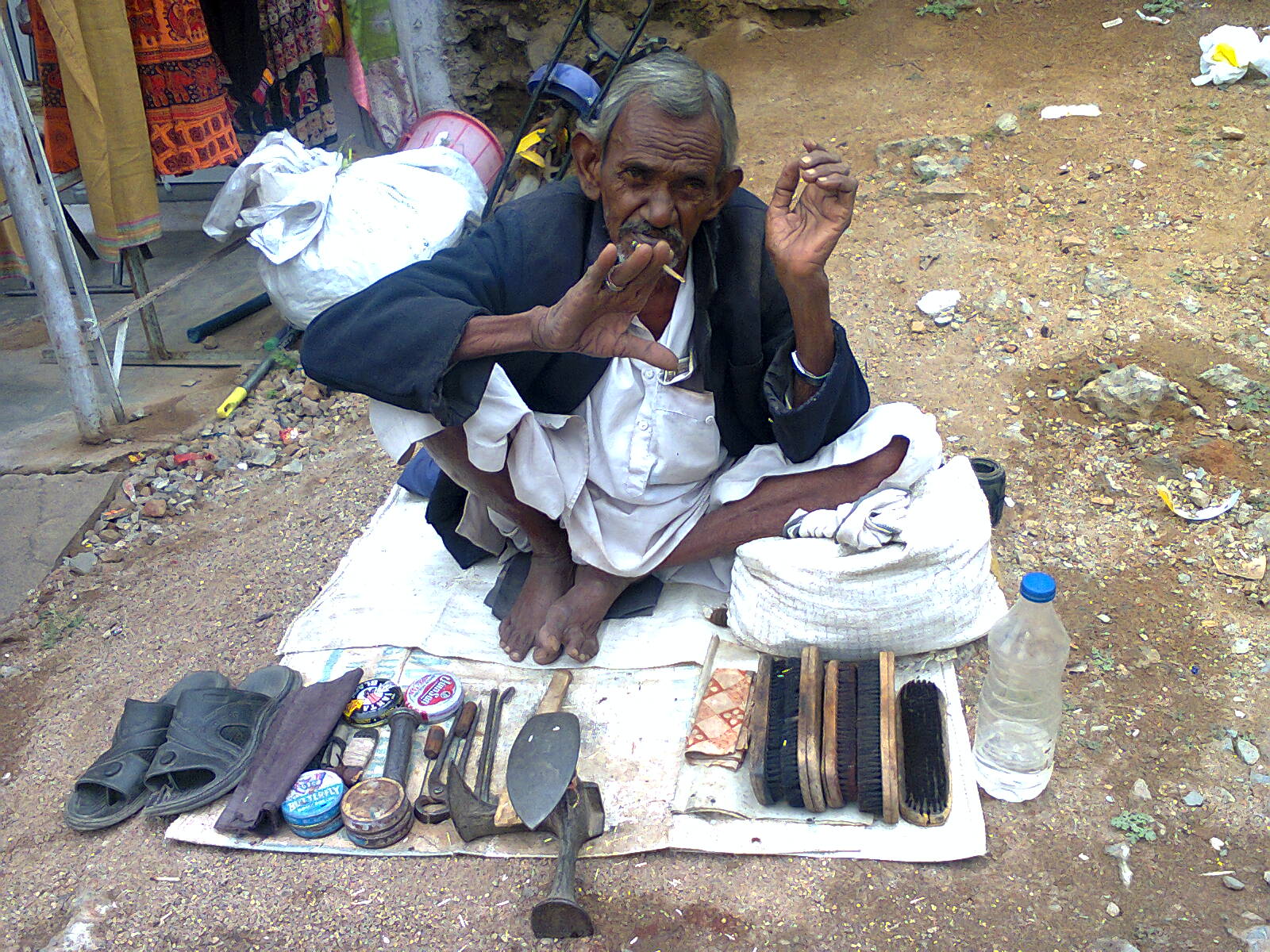
The following sonnet was compos’d in the desert, & concerns the depiction of the Hindu god Siva as the divine cosmic dancer of the tandava dance.
NATARAJA
One timeless night in the scorch’d wilderness,
When sands & stars ranged with immensity,
Sinew’d with the verve of youth’s loveliness,
Lord Siva, the destroyer, came to me.
He left Kailash with single, flashing stride,
Three velvet eyes a-gleam with dreamy hue,
Caphor white, clad in an ivory hide,
He had come to consecrate my Saddhu.
Nearby smoulder’d a fresh cremation pile,
Soon daub’d in ash we danced a pirouette,
Absorb’d in the Daemon Damaru drum.
His snakelike dreadlocks spun in sundry style,
His halo trail’d a blue blaze-tail’d comet,
My senses drew an esoteric numb.
Day 170
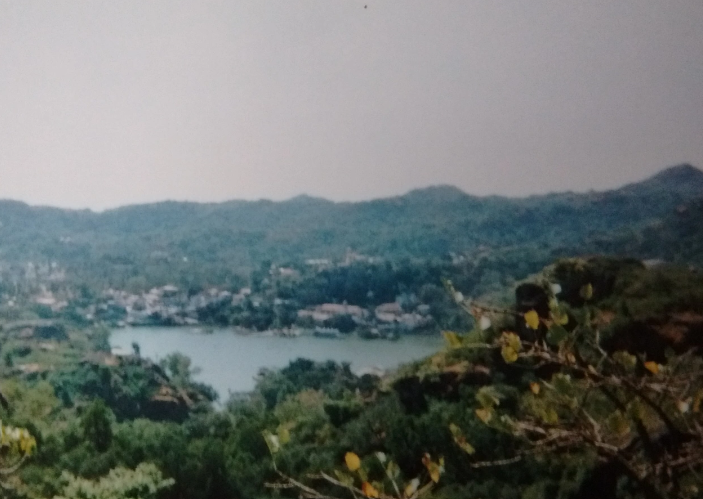
Today I travell’d to Mount Abu, a great relief from the Rajasthani heat & the dust whipped up by phrenzied tourist-leeches whenever a western wallet is opened. Amidst all of that flat, sandy, tank-country, nature has happily congregated some stunning Indian peaks. I arrived here on a fifteen-hour sleeper bus, leaving behind the dusty desert for the amazingly fertile mountains about Mount Abu.
En route, the driver invited me into his cabin for some kind of religious ceremony. By his side was a box of tricks, with ten or so buttons creating a series of swirling siren noises, which he operated in the same way we would use morse code. I began to recognise one, which I think meant something like, ‘I am hurtling round this corner at eighty miles an hour on the wrong side of the road & hope there is no-one coming towards me.’ Suffice it to say, I soon headed back to my cabin & blanked the whole thing from my mind.
Day 171
Woke up in paradise, yet again. Mount Abu is alive with fluttering butterflies & zip-zipping dragonflies, adding a most fluffy-bunny dreaminess to the clean, serene scene. There is a gorgeous green lake here, watched over by a ‘Toad Rock,’ which has been poised ready to leap into the water for millennia. It reminds me of the Toad Rock in Tunbridge Wells, which I used to pass on my daily walks when I was beginning Axis & Allies back in 2001. In fact, I settl’d into a similar rhythm here, with a burst of writing energy in the morning, scrambling over the smooth, thorny hills; followed by a lazy lunch & then a spot of writing led on my bed under the cool fan, watching a movie or two & the blanket coverage of the English Premier League. This was followed by a sunset walk & a last spot of writing on the starswept rooftop as I munch on an evening meal.
I have just returned from that sunset, shared by two thousand Indians, looking out over a vast fertile plain, made verdant by the recent rainy season; the sun reflecting off scattered rivers & dried up lakes. As the sun reached the hazy horizon, a great cheer rose up from the crowds about me, a moment reminiscent of our New Year’s Eve.
Day 171
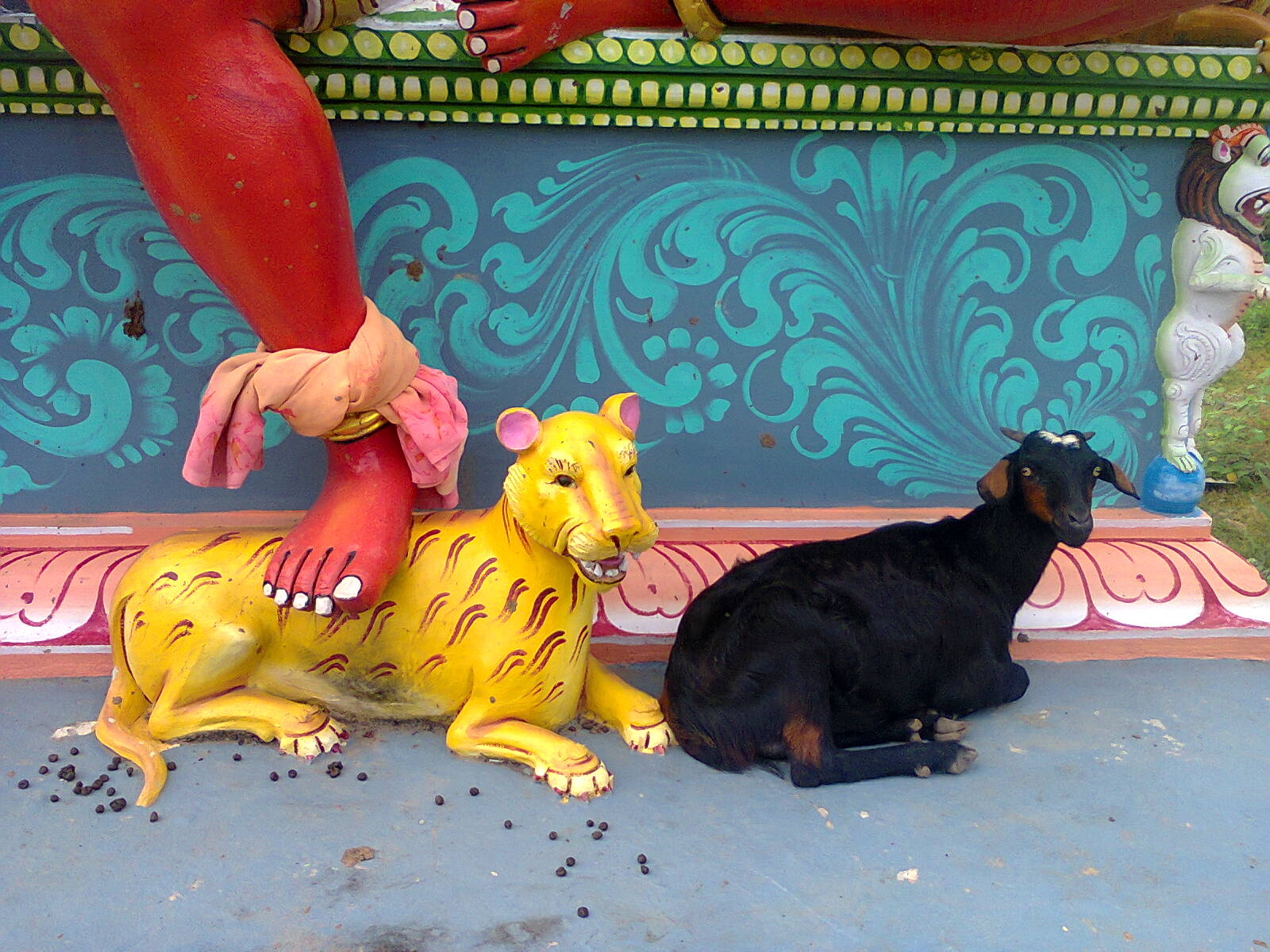
I set off from Mount Abu this morning, my bus sweeping me down from the hill-station on a series of serpentine roads, only a three-foot wall protecting us from a thousand-meter fall. Safely upon the level plain, we entered a country not dissimilar to England; the rolling, grassy hills reminding me of the Peak District. Eventually we came to the mystical lakes & decadent palaces of Udaipur, which viewed from either a high vantage, or from the soft waterside, endow a moment of soul-bathing serene. The place is famous for being where Octopussy film’d, & it really is a special place.
Anyway, I was primarily here to buy weed, the desert being dry in several senses, & began to find myself on the backs of bikes & rickshaws, being whisked to quiet streets & people’s houses. There, the obligatory bartering began, including many a sample which befuddled my sharp shopping instincts, as these ‘merchants’ very much intended. Buying weed in India is a case of damage limitation – you know you are being ripped off, but it’s a case of how much. However, in the end I got a very good deal, & am writing this lovely & ston’d.
I’ve notic’d my journal entries are becoming a little brief, less ‘investigative’ or keen-eye’d, observation-wise. But, I guess that’s because I’ve been doing them for six months nearly, & in a way its gonna be nice to not have to do this every night. And get a decent bottle of wine. And a decent Chinese chips & curry. And have a lovely bubble bath. There is a capability, of course, to enjoy these three pillars of western civilisation at the same time!
Day 172
Next stop, five hours & 200k down the line, was Chittorgarh. It has to be one of the dirtiest hell-holes anyone would choose to live in. But I wasn’t there to see the oily sludge in the street, nor be run over by the constant stream of trucks that whizzes thro’ this one road dungheap, but was there for the ancyent fortress city that sleeps on a tabletop plateau above the town.
The fortress of Chittorgarh has been witness three times to the same gruesome event. Three times has an invading army laid siege to the place & three times, after a long siege & when the food has run out, would the outnumber’d defenders ride forth to face the swords of their besiegers & to die a bloody, yet noble death. While the men were doing this, the women & children would be busy jumping into a huge fire prepared for the occasion & joining the men in heaven. Crazy!
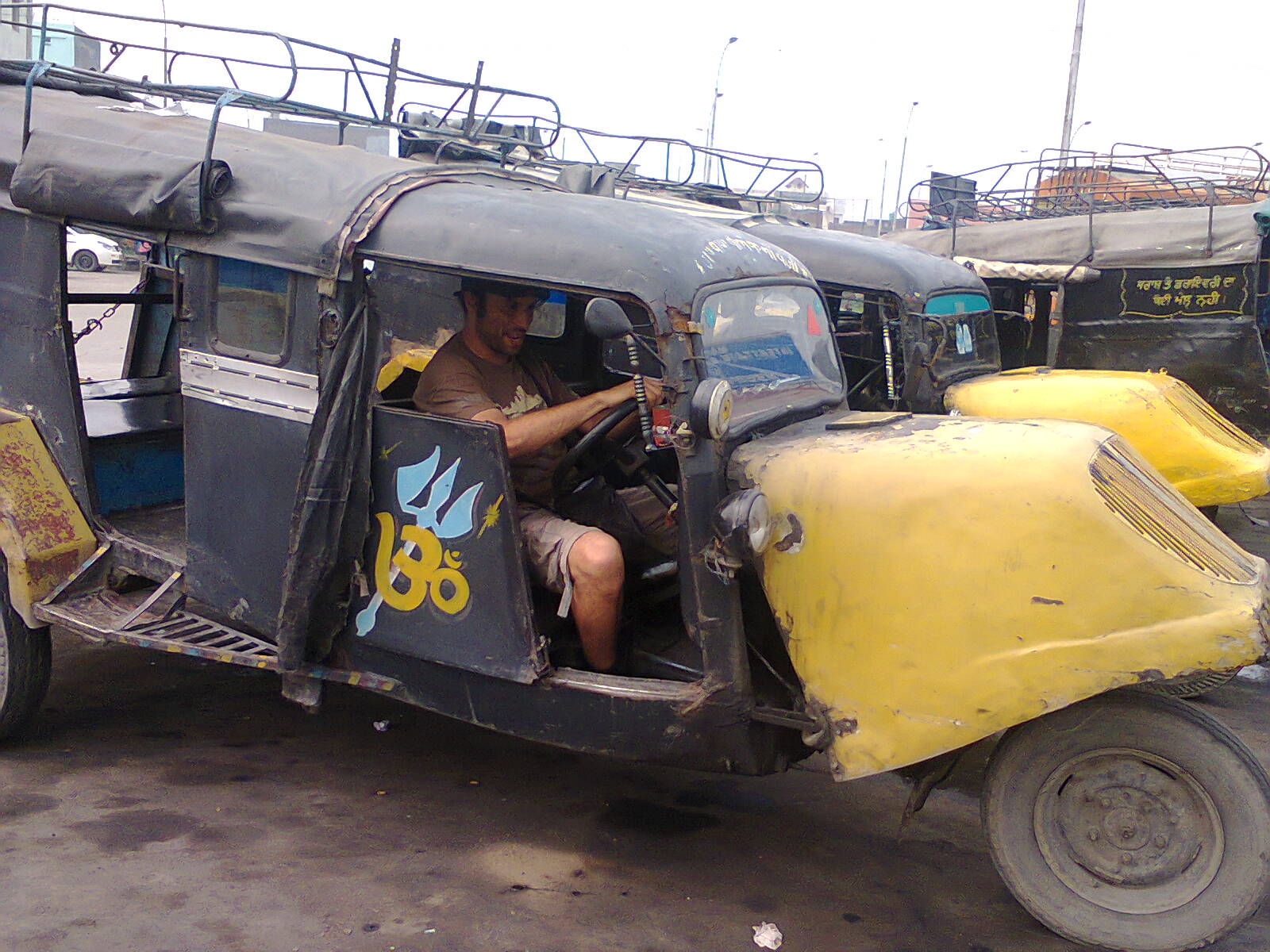
My hotel wasn’t much better than the town, but I did manage to pull off one of my favorite sonnets of the tour, collating my experiences of the roads of Rajasthan;
OVERTAKING LANES
Two saddus stood by the side of the road
Staring at a truck that had spill’d it’s load;
By that, an old wreck that just would not start,
Laugh’d at by a man in an ox-drawn cart,
& faster still; first a cycle rickshaw,
A dirt-green tractor from the days of yore,
Auto-rickshaw belching smoggy black smoke,
Mud-red moped missing many-a-spoke,
This lorry’s weird siren psychedelics,
Busses driven by mad alcoholics,
These, by breezy motorcycles bypass’d,
Then… an Ambassador of Rajput caste!
While gangs of robbers lawless highways stalk,
Y’know, it’s a nice day, I think I’ll walk.
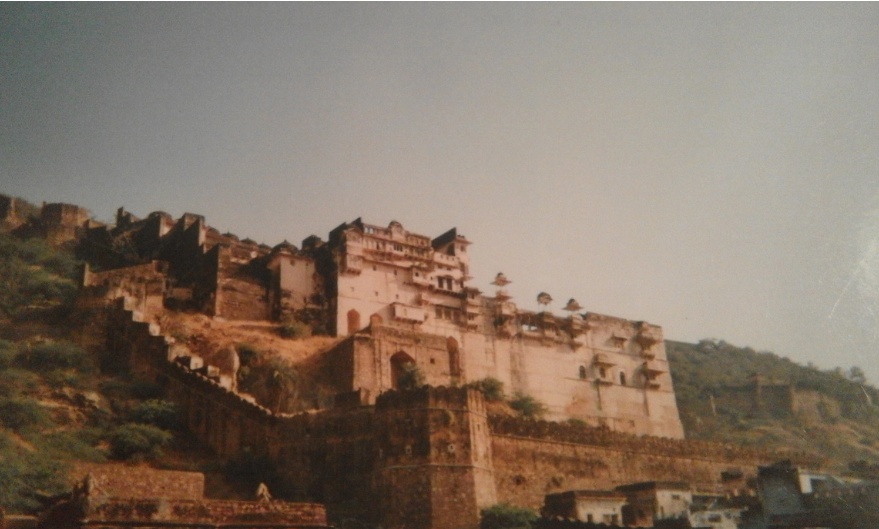
Day 173
Went for a walk beneath the fortress of Chittogarh this morning, just as the sun peep’d above the battlements. It felt like one of the last trulu poetic moment of the tour & I blew it a kiss as I turn’d my back on history & thought, ‘lets go home.’
A few hours later, the first hint of Bundi was the shadowy profile of a distant range of hills that swept the full-length of the horizon. Bundi station is about 6k from the town itself, so I found myself along with six others, all crammed into a little rickshaw, like we were trying to break some kinda record or something. The town is a joy, far from the tourist trails with a great goblin-built fort clinging to the steep slopes of the hill that overlooks it. It was been beautiful at sunset, stood on the Jump-London rooves with the monkeys, simply staring at its beauty. After yesterday’s sonnet, & with the end rapidly approaching, I seem to be in some kind of swansong flourish, & got another wicked poem today, inspir’d by Rudyard Kipling’s own visit to the town;
JAIT SAGAR
If India can make a man a man,
More than the veshyalay of Amsterdam,
If thro the chaos he can make a plan,
Respecting Hinduism & Islam,
If he can give the beggar his rupee
& tip the tout that charges o’er the odds,
If he can read his Rajput history
& choose a god but still bless other gods,
If he can sleep upon the railway run,
Find fresh, clean waterfalls amid the dirt,
If he can wonder how the Raj was won,
Then pause upon the horrors & the hurt,
If he can haggle down & know his daal,
Then does he need to see the Taj Mahal?
Day 174
I thought I’d stay one more day in Bundi, its so nice here. I am staying with a very friendly family who have thrown open their house to the outsiders – including the very noisy kids. My hosts even threw in a free motorbike, which I sped off this morning on toward this waterfall I had heard about. Unfortunately, I kinda soon crashed into another bike, carrying four big pots of water. After a bit of hammering down at some garage I got the bike back into shape, apart from one of the brakes didn’t work. The falls themselves were gorgeous, & I had my first chance in weeks to fully immerse my whole body in the emerald waters.
Revitalised, I returned to Bundi, stopping in a village halfway to dress the small wound I had received in the crash. It was a right Wild West moment, slowly cruising down the main street, all eyes upon me. After parking I was soon surrounded by a crowd of children, each staring blankly at me in confused wonder. I felt like a total alien, & it is here, away from the rickshaws, touts, tourists & internet shops of the tourist trail, that I found the real India.
The market in Bundi is busy, but the ginger-dyed shopkeepers begrudge you the right price – thinking it is a Westerner’s duty to pay more. They may be right, for it takes a week in India to spend what I would in one day in England – & it takes a week for an Indian to earn what I would spend in one day in India.
In the afternoon I went to buy a train ticket & somehow ended up on the back of a guy’s bike, who drove me 35k to Kota. En route, I actually got out my notebook & tossed off a sonnet – surprisingly legible considering the bumpy roads – something that Byron, Dante & Shakespeare never achieved in the poetic spheres. It reads;
POVERTY & WEALTH
Two goddesses bicker about beauty,
Content to start a second Trojan war,
Srinava’s wisdom thunders crore on crore,
“My Jyesthadevi, my Laksmidevi,
There is a young carpenter of Bundi
Who is so very honest to his core,”
Supreme goddesses stand soon at his door,
“Who is the most beautiful, she or me?”
Most humble cobbler thought a mortal while,
Then says, “Laksmi most lovely on arriving,
Yet Jyestha gorgeous more when she departs;”
This answer made each goddess equal smile,
& he – celestial wrath surviving –
Learns flattery woos e’en immortal hearts.
Day 175
This morning, just before I was about to set off for Kota & the start of my journey to Mumbai, I got robb’d. I’d drawn 3000 rupees out, 1000 rof which went missing from my room. I think it was the innocent acting ‘momma’ who runs it, who had spent a couple of days lulling me into a false sense of security, & then blaming it on the monkeys. The daughter also made some right sly comment about going shopping with it – I were like, fucks sake. But then I remember’d my antics in Pushkar, & I’m like, well that’s just karma, innit ! There’s also the drinking the munawwar piyala, or ‘cup of request,’ in which Rajput kings drown’d ancient enmities – lets hope my Pushkar guilt, which was gnawing at me a little bit actually, has gone forever now.
So, my last week in India began by journeying to a standard busy Indian city call’d Ujjain. In my train carriage I enjoy’d the pleasant company of a Swedish woman called Fidili. A few hours later we hit Ujjain – one of the Hindu pilgrimage centres famous for the Kumbh Mela held there every 12 years -, & after eventually finding ourselves a room each, I dragged her on one of my Jesus missions. En route, we stopped off for a bite to eat, a ‘superdeluxe thali’. It was tasty as hell, actually, a multi-dished taste sensation, & the only ‘superdeluxe’ thing I’ve ever had for less than a quid!
So… Ujjain has this temple, right, famous for being the place where Krishna (i.e. Jesus) was taught the Vedas. Now Krishna is a god, & is supposed to know all that stuff. However, the Hindus are adamant about this, & the temple is administered to this day by the descendants of Krishna’a teacher, a certain guru called Samdipani. I even met one of them, a lovely large lad who gave me a wee lecture on the mythology. Thing is, he doesn’t know what I know, & the legend of Krishna’s being here obviously means that Jesus was also here a couple of millennia back. Support for this comes from an ancient Kashmiri document, the 12th century Rajatarangini of Kalhana, which states that Issana (i.e Jesus) was the teacher of a sage known as Samdhimati.
Samdhi mati
Samdi pani
The names are similar, & although reversed, the teacher-pupil relationship suggests that Issana & Krishna were the same person. Indeed, the Ratarangini gives us what seems to be nothing but a garbled account of the crucifixion;
Samhdimati’s guru, Isana, came to perform funeral rites, found Sam’s skeleton still attached to the stake, and noticed an inscription on the skull which predicted: “He will have a life of poverty, ten years’ imprisonment, death on the stake, and still thereafter a throne.” Isana wondered about this, but later, in the middle of the night, smelled incense, heard bells ringing and drums beating, and saw witches outside on the burial ground. Isana pulled out his sword and went outside, and saw the witches rebuilding the body with their own limbs and flesh, then calling Samhdmati’s spirit back to the body. Thereafter, they covered him with ointments and “enjoyed themselves with him…to their full desire.
Food for thought !!
Adventures on an Indian Visa (week 24): Rajasthan
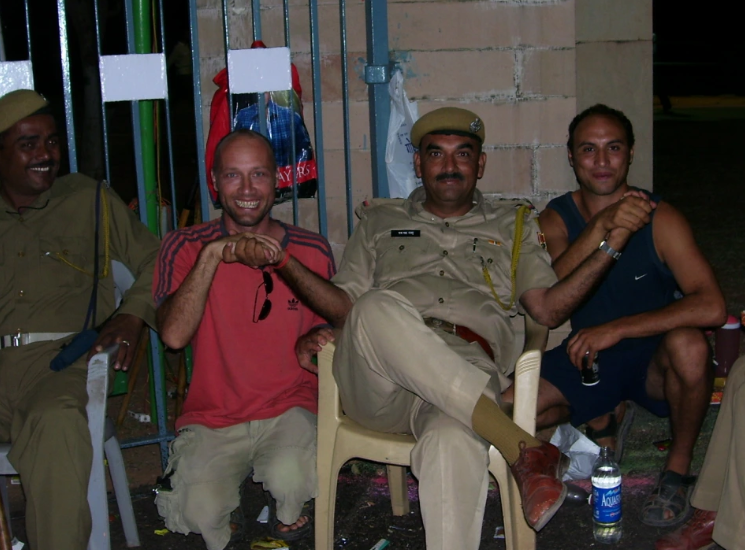
DAY 162
Spent the door wandering around the palaces & ruins of Orrcha. I had an interesting conversation with a local musician, a classical singer, whose main job is at the state radio station, but who also cycles miles & miles every day to conduct private music lessons in order to get a bit of extra cash, while fostering and nourishing a precious art at the same time. What’s mad is I still get more than this guy a month on my Working Tax Credits – its about 20000 rupees – its crazy! Anyway, this guy wakes up before dawn& takes several classes before his official ‘duty’ begins at 9. There are then more jobs after his work finishes, sometimes getting in at 9PM. The moon will be up sometimes, & of course this is where the expression ‘moonlighting as a ….’ comes from. India is just pack’d full of such hard working individuals who sacrifice rest and leisure and take up a second job so that the future of their dear ones are guaranteed – we’re so lazy in the rest, really.
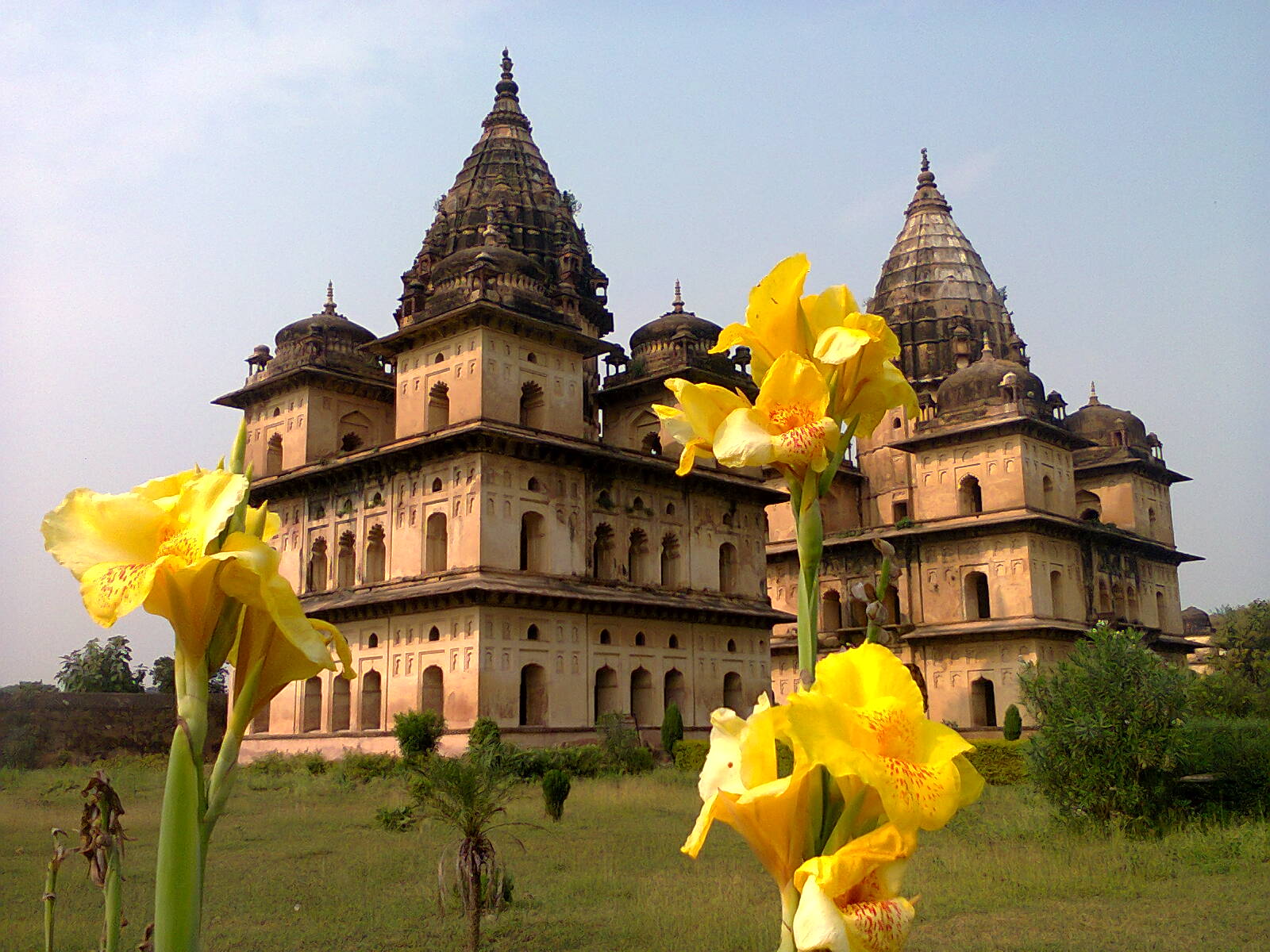
After a really nice day – towards, through, & after sunset in which I compos’d the following short exposition on the poetical nature of the Indian Jesus…
It is clear that in his ‘Life of Appollonius of Tyana’, Philostratus tells us how the Indian sage, Iarchus, was steep’d in Greek literature, including the Homeric poems. With Iarchus being a contender for the Indian Jesus, & the name Ishvara Krishna resembling Jesus Christ, we are led to the latter’s poetical composition, a text known as the Samkyhakarika, which expounds a philosophical system known as the Samkhya.
{The Samkhyakarika was} compendiously set down in the arya metre by the noble-minded and devout Ishvarakrishna, who thoroughly comprehended the established doctrine. (Ishvarakrishna’s Samkhyakarika)
The dates for Ishvarakrishna are unknown, but he definitely lived before the sixth century AD, when a Buddhist scholar named Paramartha translated the Samkhyakarika into Chinese. We possess little else: a 9th century commentary on the Samkhyakarika, the Jayamangala, describes him as an ‘itinerant monk;’ while a Vedic background is implied by the Samkhyakarika’s ‘such is creation from Brahma down to a blade of grass.’
This Samkhya system is also found in the Bhagavad Gita, spoken by the Krishna to Arjuna on the battlefield at Kurukshetra. Looking at the Gita, we learn it was created in the first century & is inspired by the Greek literary form known as the Socratic Dialogue. Thus, it is indeed plausible that Iarchus wrote the Bhagavad Gita, after which he was given the appellation Krishna, which would also explains how the memory of Iarchus giving sanctuary to the flood-hit populace around Govardhan, became the myth of Krishna raising the hill with his little finger.
Jesus
Iarchus
Ish vara Krishna
As va Ghosha
I myself know many Sudras who are masters of the four Vedas, and of philology, and of the Mimansa, and Sanc’ hya, and Vaisheshika and Jyotishika philosophies (Asvghosha’s Vajra Sucha)
Asvaghosa was another famous poet of exactly the same period, who began life as a Hindoo – giving him the opportunity to write the Bhagavad Gita – before converting to Buddhism. Asvaghosha also describes himself, in his own Saundaranda text, as a ‘mendicant and teacher,’ an excellent match to the Jayamangala’s description of Isvarakrishna as an ‘itinerant monk.
‘It cannot be denied,’ writes HT Colebrooke, ‘that the Samkhya is the most interesting, if not the greatest, of the six orthodox systems of Hindu speculation and the sixty-nine memorial verses of Ishvara Krishna… though undoubtedly representing a late period in its development, portray more exactly than any other work the true teachings of the school.’ If the Samkhyakarika represents a ‘late period’ in the development of the Samkyha, there must have been an earlier version of the system, a proto-samkhya if you will. This leads us to the twelfth book of Asvaghosha’s Buddhacarita, in which a primitive version of the Samkhya can be found. When GJ Larson tells us, ‘any attempt to comprehend the development of Samkhya must take Asvaghosa’s treatment seriously,’ we can sense how the poetical ‘Jesus’ wrote the Buddhacarita, then composed the Samkhyakarika in later life.
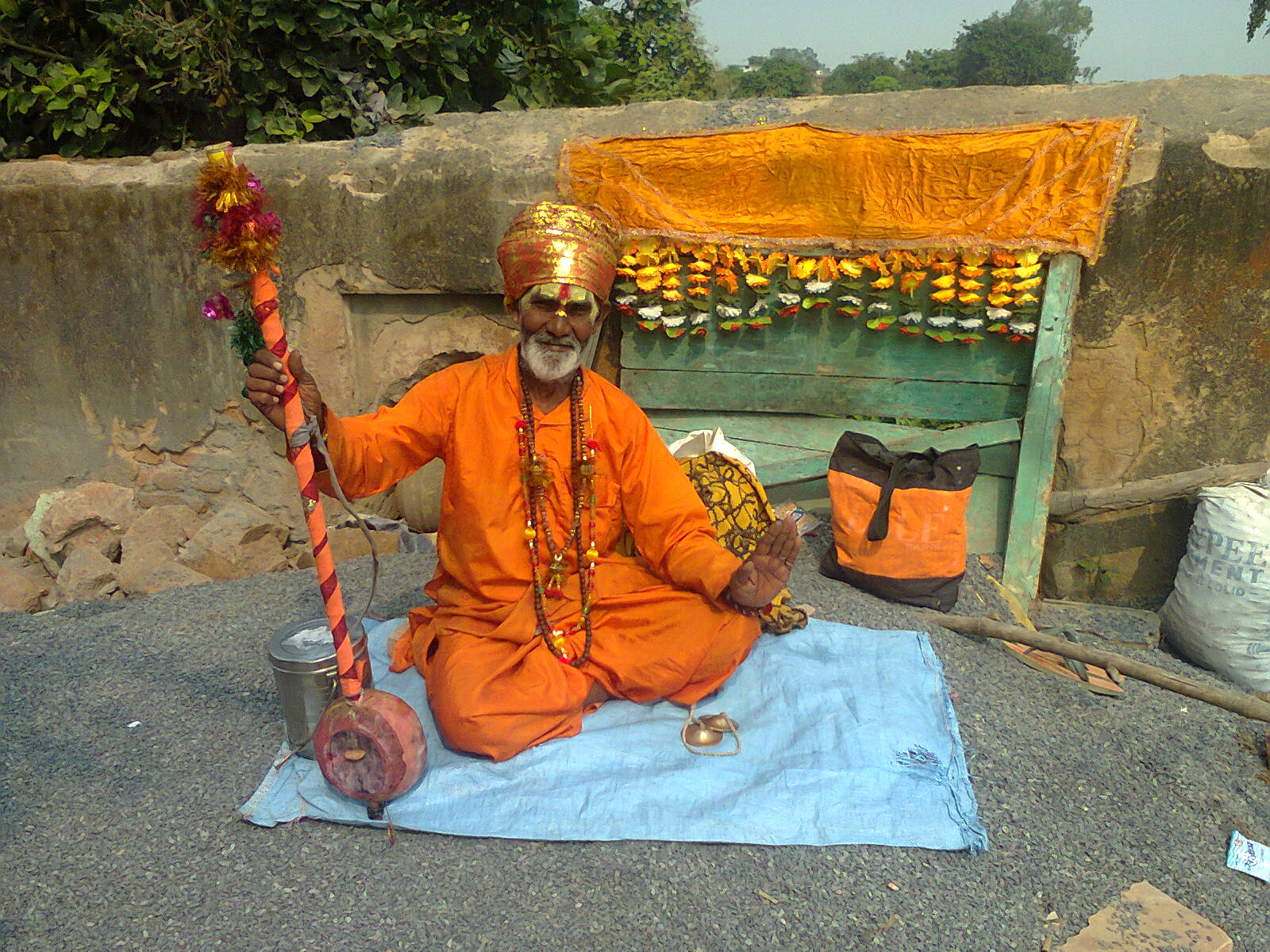
The Samkhya philosophy is the crucial link between the Buddhacarita & the Bhagavad Gita, both of which I have postulated as being composed by Jesus. ‘A supplementary point to be noticed in Açvaghosha is the abundance of similar thoughts and passages with those in the Bhagavadgîta,’ says Samuel Beal, & where the Gita contains elements from both Vedic scripture and early Buddhism, it also shares similar syntax, grammar and vocabulary with Asvaghosha’s use of Sanskrit. Other schlars have noticed the similarities; the twentieth century orientalist & professor of Sanskrit EH Johnstone wrote; ‘the account of Buddhacarita is closer to the doctrines of the Moksadharma and the Gita.’ It seems logical that after composing the Gita, Jesus was given the ‘Krishna’ epithet. Krishna is a Sanskrit word, which translates into Greek as Christos & it is no great effort to see the name Isha-Krishna transchisper’d by the writers of the Gospels into Jesus Christ.
The comparative theologist Holden Edward Sampson penetrated the Samkhyakarika’s symbolism, explaining how the Gita is actually an allegorical exposition of the Samkhya, writing; ‘Arjuna is the soul, Krishna is the eternal and divine ego who drives the chariot/body which carries the soul, while the three qualities that propel the body; sattva (light) rajas (desire) and tamas (indifference) desire, are in the Gita represented as three horses.’ In the foreword to Sampson’s ‘The Bhagavad Gita Interpreted,’ R.F. Hall, refers to the poem’s, ‘exact synchronism with the mystery-religion taught by Jesus Christ.’
Remembering that Jesus was the poetical mind behind the Bhagavad Gita, where Krishna becomes a reflection of his own mind & personality, we can assimilate this with Asvaghosha’s belief in the ‘ego-entity‘ as described by Kumārajīva’s, ‘full of a proud and arrogant spirit that speedily grew like a wild plant, he [Açvaghosha] firmly believed in the existence of an ego-entity and cherished the ultra-egotistic idea.’ This very ego-self is also present in the Samkhyakarika, the Gospel of Thomas and in the teachings of Iarchus himself;
We know everything, just because we begin by knowing ourselves; for no one of us would be admitted to this philosophy unless he first knew himself.
Does not Jesus say, “Whoever finds himself is superior to the world?” When you know yourselves, then you will be known, and you will understand that you are children of the living Father. But if you do not know yourselves, then you live in poverty, and you are the poverty.
The Gospel of Thomas
The purpose of the Self is the sole cause; by nothing else is any instrument activated… Since it is the intellect which accomplishes the fruition of all that is to be enjoyed by the Self, it is also that which discerns the subtle difference between Nature and the Self… This evolution, from Intellect to the specific elements, brought about by the modifications of matter, is for the emancipation of the individual Self… Possessed of this self-knowledge, and the proliferation of Nature having ceased (owing to its withdrawal from its sevenmodes), the Self stands apart and at ease, like a spectator. Samkhyakarika
Asvaghosha also turns up at the Fourth Buddhist Council as one of the chief initiators of Mahayana Buddhism, whose central poetic figure is the Jesus-like Avaloketisvara. To explain all this, one must assume that Ishvara Krishna/Asvaghosa/Iarchus was a great poet whose fertile & divine imagination created Krishna for the Hindoos & Avaloketisvara for the Buddhists. It makes sense, for it is the poets who first created & then articulated the gods, such as Homer & Hesiod’s work with the Greek pantheon.
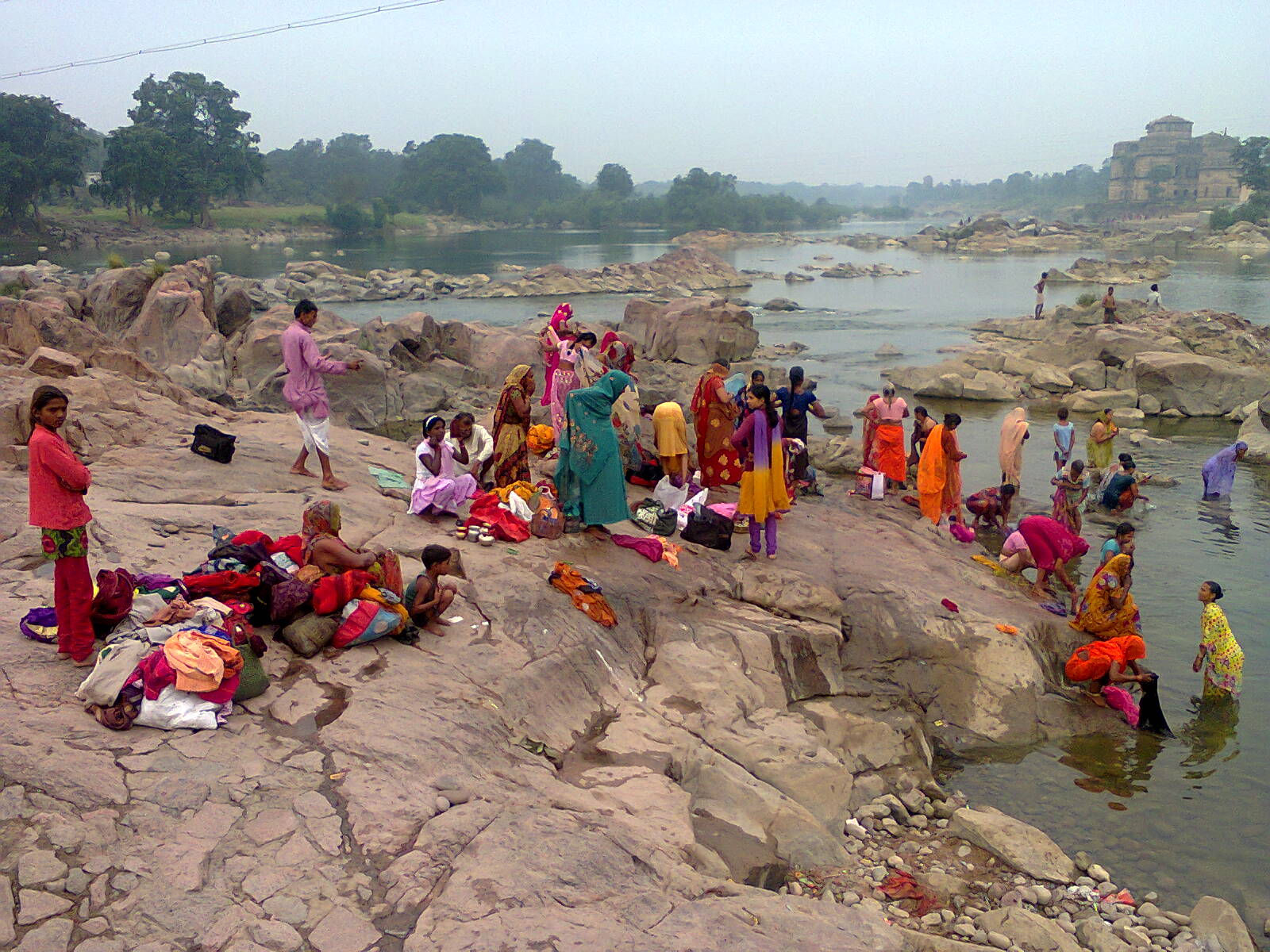
Day 163
Its almost time for Steve to go home, in a couple of days actually, from Delhi. Anyway, it’s been a wild ride with the lad – proper entertaining, after which I’ll have 3 more weeks life myself. Yeah, I’m now into my 24th week in India – a huge amount time that now, all of a sudden, has completely flown by.
So today we did a whistlestop tour, setting off early doors & reaching the Fataphur Sikri, another small town nestling at the bottom of magnificent ruins. The splendour of Mughal India is truly only a memory now, but their well-built relics remain, & at Fataphur Sikiri one can find the wonderful vagina-flesh-red Mughal Harem of the Islamic emperors of India. We had a wonder of the excellently preserv’d, once luxurious palatial quarters, where a polygynous household was pure women or eunochs, a place forbidden for any man to enter other than the emperor himself. The guides were annoying tho, who offer a tour for ‘free,’ then hit you for cash. Being a bit skint, now, I only took out a handful of rupee shrapnel with me, which really pissed them off when I offer’d them 5 rupee pieces – they wanted a hundred at least – but we never invited them to help us. Anyway, the experience led to me penning the following poem;
There’s a full moon over Fatapur Sikiri
With which five thousand women are in synch
But one man has their measure – tender, cheeky
He plys them all with opium & drink
& kama sutras with such appetite
Harlets have begged to enter his harem
Tho jealousy & intrigue seeds for fight
& furious frustration makes them scream
These dancing girls in their damsel dresses
The cutest Abyssinian concubines
Slave girls of Asia dress’d in Persian tresses
& Arab eunuchs’ henna-ful designs
Presents from all parts of growing empire
To satisfy its emperor’s desire
After leaving Fataphur Sikri we enter’d, for the first time, the desert state of Rajasthan, at a place call’d Bharatpur. It is the site of the World Heritage Keoladeo National Park (formerly known as the Bharatpur Bird Sanctuary), that hosts thousands of birds, & over 350 species, especially during the winter season. It was created by the Maharajas of Bharatpur for shooting park – 5000 ducks shot in one day kinda thing –, & we’ll take a look at it in the morning before heading to Delhi – otherwise it’s been a fun but tough day on the road, & a nice evening’s nothing is in order.
Day 164
This morning, me & VP hit the Maharaja’s national park, where a quick shimmy over the wall gave us access to its serenity. Most of the birds have left after winter, but we saw a few owls & green-feather’d things being stalked by the odd drooling jackal. But time was hurtling towards VP’s stepping on a plane, & as we approached the capital – from about 50 k out – skyscrapers were rising all around, in various stages of building, testament to the growing economic strength of modern India.
Our bus dropp’d us off, not in the centre of Delhi, but some random spot in the south. We weren’t that far from the Indhira Gandhi Airport, really, so decided to stay south for VPS last night. It was a rather pleasant experience actually, & being far away from the tourists & touts my view of the city chang’d completely. The traffic & buzz was immense, but one sight I think will stay with me always. Two noble white oxen, a bull & his cow, were casually strolling down the wrong side of the road, gliding like two swans on water, totally oblivious to the imminent death-on-wheels that constantly approached them, which would then veer away at the last minute.
We also stumbled across a lovely park full of cute bambi-esque deer, where even the stags had fluffy antlers! There, I joined in a game of cricket with some Indian kids, who used bricks for wickets, getting to bat for as long as I wanted. To make things interesting I offered a couple of rupees to anyone who could bowl me out, which added to the excitement.
So, we found a hotel near the airport, & had our last night together, me & VP, & yeah, its been great, safe journey home pal, see you back in Scotland. As for me, I’ve 3 weeks to get to Mumbai, via Rajasthan, where my tour of the Raj will be drawn full cycle, from which experience, & on the following morning, I will rise a wiser man.
Day 165
So, after dipping me foot in the boiling hot bathwater of Rajasthan the other day, I plunged right back in with a massive dive… it’s bloody scorchin’ man! From my train window all I could see was just a cacti-dotted wilderness framed by jagged silhouettes of mountains – pretty magical really, but still too bloody hot.
I eventually arriv’d in Jaipur that, despite its size, is surprisingly refreshing. There was a bit of a weird start tho – I got a rickshaw driver, & ask’d him to take me to some hotels. Problem is, I didn’t like them, which is my prerogative, & said sorry I wanna just walk about now & find one myself. Anyway, I think this lost him some commission & after I’d chosen one, he was waiting outside it, drunk & angry, ready to kick off. I’m like, fuck off mate, I’m off to watch the cricket.
It was time to meet back up again with my India pals, Steve & Kate, who are now deeply entrench’d in love. Thanks to the wonders of e-mail, we had arranged to all meet up here for the night, & I’d managed to get some great seats for the England-Australia cricket match for cheap off a local. We had a front-row couch, free drinks & a veritable banquet at ‘half-time.’ The funniest thing was getting in, however. The rickshaw driver dropped us off right at the gate, where twenty or so cops peered at me. They would have seen me hide the weed, so I just risk’d it. On reaching the gate, they asked me to turn out my left pocket – so I did & handed them my bottle of whiskey, apologising profusely. Then I just started walking in, but as I did so they said can we see what’s in your other pocket.
Shit! I thought. Possession is six months & dealing is ten years – but luckily the chief inspector was a Rajasthani poet, & after listening to him sing thro’ a few of his native airs, & I recited him a couple of my own sonnets, he happily gave me back the weed & the whiskey (which I hid around the corner under a bush) & let me in. The actual match was alright, a pre-Ashes blast, but England underperformed & watching them lose slowly to the Aussies felt like having a terminal disease – the long certainty of knowing the end is near, but still brief moments of hope to keep you going; & of course me & Steve nipped outside a couple of times for a joint & a whiskey!
Day 166
Leaving Jaipur & the lovebirds, today I pull’d into Pushkar, a bustling place crowded round a small lake. It’s very holy & there was definitely some kind of ley-line, head-zappiness going on here, like. The women are all garbed in psychedelic colours, the men wear nappies on their heads, camels whizz by yer in the street & mi head was buzzin on the energy.
Altogether, Pushkar’s a cool place, & even beat the local chess champion with a cunning kingside attack (to the shock of the locals). I also got blagg’d for a henna tattoos – this woman just grabb’d my arm, & started painting a pattern. I mean, it was nice, but I didn’t want it, & when she’d finish’d, insisted on money – I’m like, fucks sake, & gave her some.
Day 167
Early this morning, I took my recently brutalised arm (which looks pretty) & realizing I was getting drastically low on funds, & miff’d off that my arm had been bum-raped, I instinctually crept out of my room at dawn, stepping over the sleeping staff like a ninja, softly waking a rickshaw driver, & whisking off away to the bus-stop. A nervous few minutes were spent waiting for the bus, which then came & I slipp’d down under the window for a rather long time as we drove out of Pushkar! I mean, yeah, its not ideal, but no-one’s perfect – just ask Charlie, who’s theft of my £50 is finally having its knock on effect!
From what I have observ’d so far, the Rajasthani is a very colourful affair, from the lithe curly-moustached men squatting on their haunches all day, to the busy women who seem to be constantly pumping water & carrying it on their heads in metal pans. I saw a group of teenagers building a wall in the blazing sun, just like some Louisiana chain-gang. I am actually enjoying the animals more, who have much more freedom here than in the west; dogs, camels, boars, goats, donkeys & especially the sacred cows, swaggering about the place nuzzling through the rubbish for food. Talking of goats, I now know why humans call their children kids – the sound an anxious young goat makes is identical to a wailing baby. On the same note, I have also discovered that Thomas Crapper was once a very big name in porcelain toilet manufacture.
Reach’d Jodhpur, where this famous Rajasthani fortresses towers over everything & is seen for miles. The city itself sprawls around the majestic walls of the Mehwangar Fort, with half the rooftops painted sky-blue, giving the city a watery feel. Spent my time settling into a rickshaw-fuell’d, cannabis-driven writing rhythm, staying in a classy hotel, with a rooftop terrace & food on call. Outside, the city swirl’d about me, a constant drone of beeping cars, bikes, camel-wagons, buses & rickshaws all competing for whatever space they could find on the roads. Occasionally the smells of various street-vendor frying pans would waft up to my room & drag me outside for the munchies (I got some good weed in Pushkar yesterday), where I was once again mingling with 100% Indians. It’s all a far cry from the traditional tourist routes of Goa & Kerala, & I sometimes feel like I’ve just walked thro’ Blackburn town centre with a Burnley shirt on.
Day 168
Today saw a long train ride to Jaisalmer, the furthest east I’m gonna go on my tour of India, is right next to the Thar desert by Pakistan. Anyway, it was a long journey, so I thought I’d write about how Jesus was affected by his time in India, once he’d return’d to Palestine.
After six years of study, Issa… left Nepaul and the Himalaya mountains, descended into the valley of Radjipoutan and directed his steps toward the West, everywhere preaching to the people the supreme perfection attainable by man.
Life of Issa
When He began His ministry, Jesus Himself was about thirty years of age
Gospel of Luke
Coming to his hometown, he began teaching the people in their synagogue, and they were amazed. “Where did this man get this wisdom and these miraculous powers?” they asked
Gospel of Matthew
Let us also compare the praise given to Asvaghosha, whose, ‘ability as an expositor was without match,’ with the Gospel of Luke’s, ‘all spoke well of him and were amazed at the gracious words that came from his lips.’
After concluding his studies in the east, & upon his reappearance in Judea, a manly Jesus now steeped in oriental mysticism appeared, to all extents & purposes, like a magician. The Jewish Talmud describes Yeshu as a ‘sorcerer with disciples’ & also as ‘a magician who turned to idolatry’.
{Jesus} cured many of their infirmities and plagues, and of evil spirits; and unto many that were blind he gave sight’… and they were all amazed, and spake among themselves, saying, What a word is this! for with authority and power he commandeth the unclean spirits, and they come out. And the fame of him went out into every place of the country round about.
Gospel of Luke
During his time in India, the young Jesus had learnt the ins and outs of eastern medicine, many of which are reflected in Gospelic accounts of his miraculous healing abilities. One system in particular seems to have been celebrated in the memories of the Judeans, that of Siddha Here we can see Choondu Varma (mesmerism) and Kirikai Chikisai (psychiatry) as being the very disciplines on which Jesus drew, as given in the Gospel of Mark, in order to cure daemonic possession
Another Siddha-Jesus connection comes with the curing of ophthalmological disorders, which we may discern from Dr PJ Thottham’s, ‘certain oils believed to have a cooling effect are applied to the head. They keep the nervous system active and healthy. Among other types of medicine are the ones instilled into the eye, such as mais or kattus which are rubbed on a stone, along with the juice of a plant, milk, coconut water or rose water. The resultant paste is applied into the eyes with the help of a stick. Similarly, there are certain medicines in a paste form, which are applied externally on the eyelids of the patient.’ This method, of creating a paste to rub into the eyes of the afflicted, has an intimate resonant tone with the curing, by Jesus, of a blind man;
When he had thus spoken, he spat on the ground, and made clay of the spittle, and he anointed the eyes of the blind man with clay. And said unto him, ‘Go wash in the pool of Siloam. He went his way therefore, and washed, and came seeing.’
Gospel of John
In the Indian Himalayas wild cannabis grows abundantly to this day. Jesus’ mastery of this plant’s medicinal properties, in particular its ability to ease muscular spasming, may explain his curing of paralysis. This miraculous plant also alleviates the serious eye-condition known as glaucoma. Studies in the 1970s showed how the drug considerably eases the symptoms of the disease, while JE Joy writes;
Patients who reported their experience with marijuana at the public workshops said that marijuana provided them with great relief from symptoms associated with disparate diseases and ailments, including AIDS wasting, spasticity from multiple sclerosis, depression, chronic pain, and nausea associated with chemotherapy… Marijuana is often reported to reduce the muscle spasticity associated with MS.
Oil extracted from cannabis may have been rubbed by Jesus into the skin of people with diseases such as leprosy. In the modern day, cannabis oil helped to reduce an epileptic’s 1200 major seizures a month to just two or three mild ones, as reported by the American news channel CNN on August 7th 2013. The girl in question, Charlotte Figi, had been diagnosed with the devastating Dravet Syndrome. Her seizures soon stopped, however, after placing a spoon or two of cannabis oil in her food, perfectly matching Jesus’ curing of an epileptic;
When they returned to the crowds again a man came and knelt in front of Jesus. “Lord, do have pity on my son,” he said, “for he is a lunatic and is in a terrible state. He is always falling into the fire or into the water. I did bring him to your disciples but they couldn’t cure him.
Gospel of Matthew
So, back in my world, I finally got to Jaisalmere in the dark & walk’d straight into a scam almost. There was someone offering cheap hotel rooms, I thought, along with camel rides, so I went along with the tout & some other tourists straight off the train. Anyway, turns out the cheap rent only came if you took a camel trip into the desert as well. Anyway, I said look, I’m just gonna have a week walk about before I decide anything – but the hotel guy wouldn’t let me, maybe down to the fact I would have seen his prices for camel trips were thro the roof. Anyway, I just left & found a nice room in the heart of the medieval town, which I’m looking forward to seeing tomorrow in the light of the desert sun.
Adventures on an Indian Visa (week 23): Heartlands
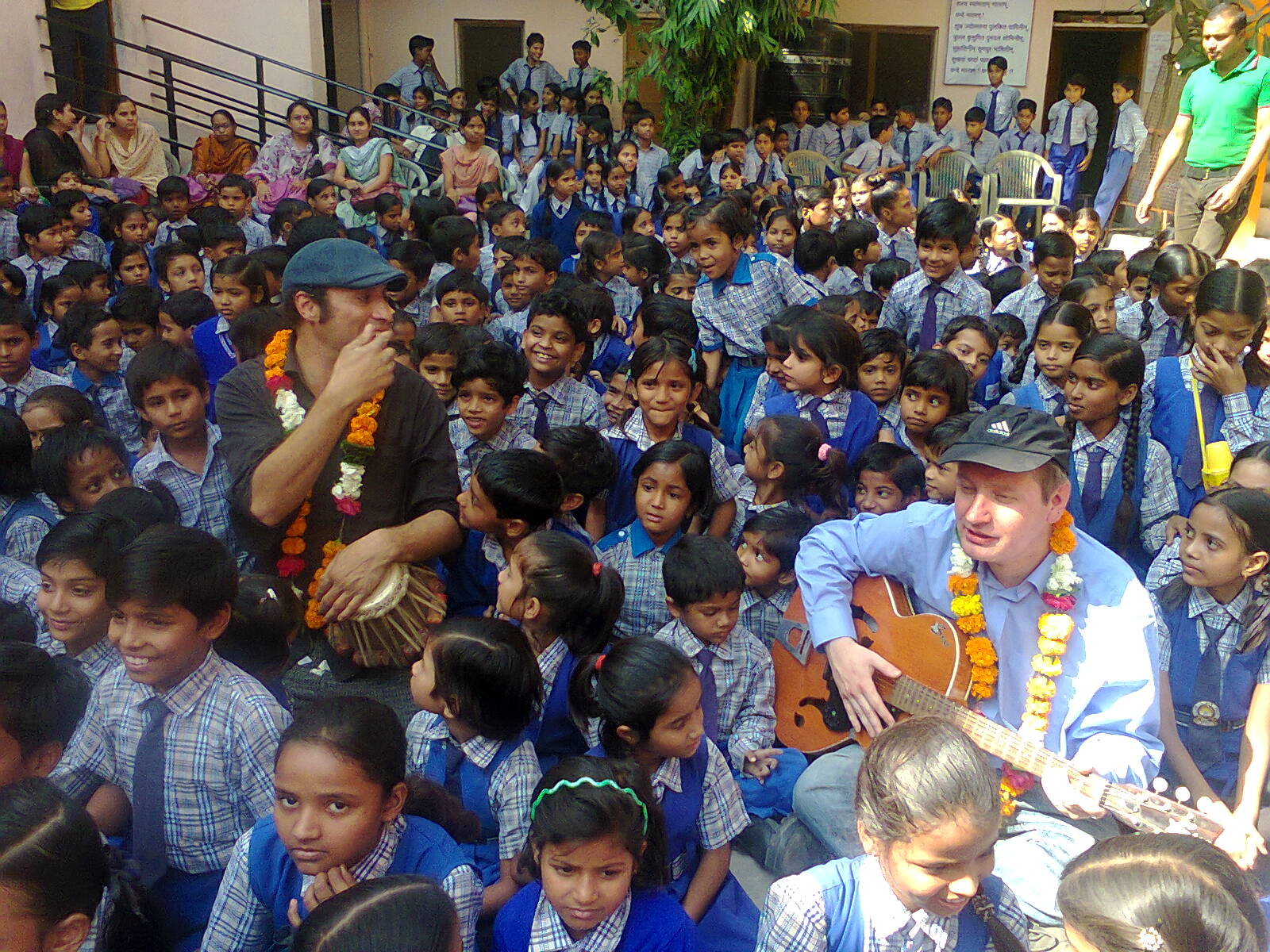
Day 155
This morning we leftall the wonder & chaos of happening, maddening Delhi, & headed south on a packed train for a couple of hours, before arriving at the city of Mathura. A thorough investigation of the ‘Life of Appollonius of Tyana’ by Philostratus had pointed me to this city as a possible area in which to place the Indian Jesus. On looking at the text, I saw that after Appollonius & his companion, Damis, pass’d eastwards beyond the Hyphasis River, they;
(i) Crossed a part of the the Himalayas
(ii) Reached the Gangeatic plain
(iii) Reached a city called Paracas
Analyzing those steps one-by-one…
(i) They Crossed a part of the Himalayas
They say that from this point they crossed the part of the Caucasus which stretches down to the Red Sea; and this range is thickly overgrown with aromatic shrubs
(ii) They Reached the Gangeatic plain
After crossing the top of the mountain (range), they say they saw a smooth plain seamed with cuts and ditches full of water, some of which were carried crosswise, whilst others were straight; these are derived from the river Ganges
(iii) They Reached a city called Paracas
They tell us that the city under the mountain (range) is of great size and is called Paraca, and that in the center of it are enshrined a great many heads of dragons
It is the city of Paraca which gives us a significant lead. In writing about the Indian journeys of Appollonius, Philostratus drew on the memoirs of his Syrian companion, Damis. That his name sounds a bit like Thomas is fascinating, & another Indian them’d name, Bharata, sounds like the text’s ‘city of Paraca’. If this was indeed the case, then we are drawn to Hastinpur, which sits only a few miles from the first risings of the Himalayan foothills. The city has a very ancient role as the capital of emperor Bharata, as given in the Mahabharata. That there were in Paraca, according to Philostratus, ‘enshrined a great many heads of dragons,’ strengthens the assumption, for 200 years before Appollonius visited the city, Samrat Samprati, the son of the Buddhist emperor Asoka, is said to have built a great many Jain temples in the city, all of which were destroyed by centuries of foreign invaders. These long-lost dragon statues would then connect with the serpent iconography of Jainism known as the Naga.
So far so good, & now for the deeper reason I’ve dragg’d us to Mathura. Philostratus tells us that the Sacred Ridge of a certain Iarchus was a four-day camel ride away from Paraca. This points to Mathura, 100 miles to the south of Hastinpur, which was ruled at the time of Jesus by a Greek speaking dynasty.
Apollonius of Tyana, whether he was a magician, as the vulgar say, or a philosopher, as the Pythagoreans say, entered Persia, traversed the Caucasus, Albanians, Scythians, and Massagetae, penetrated the most opulent kingdoms of India, and after crossing the very wide river Phison came to the Brahmans, so that he might hear Iarchas sitting on a golden throne and drinking from the fountain of Tantalus, and discoursing amid a few disciples about nature, about customs, and about the course of the stars. The 4th century Illyrian priest, Jerome
According to Philostratus, the sage Appollonius was going to meet at the ridge, Iarchus spoke Greek – & of course.
I ar ch u s
I ss a
J e s u s
Meanwhile a ‘factochisp’ occurs when a truth is altered by corruption through tranmission. In the case of Iarchus, the philochisps are subtle & quite common. The ‘a-to-e’ chisper & the softening of the ‘ch’ to ‘sh’ are both easy to hear, while the I becoming J is common in antique orthography. Indeed, the earliest Greek names of Jesus began with an I, as in Ἰησοῦς (Greek) & Latin (Iesvs), & it was only about the turn of the first millennium that the J sound began to take precedent.
On finding the sacred hill on which Iarchus dwelt, Appollonius passed four months in study & talks with his new guru, after which he composed the following letter;
Apollonius to Iarchas and the other sages greeting. I came to you on foot, and yet you presented me with the sea; but by sharing with me the wisdom which is yours, you have made it mine even to travel through the heavens. All this I shall mention to the Hellenes; and I shall communicate my words to you as if you were present, unless I have in vain drunk the draught of Tantalus.
An approximate date for the meeting of Jesus & Appollonius may be discerned through the latter’s encounter with a certain king called Gondophares directly before he reaches the Gangeatic plain. The reign of Gondophares is given by the Takht-I Bahi as AD19 to AD45. In addition, while Appollonius is residing on the Sacred Ridge, he witnesses a certain King Vardanes, who ruled Parthia between 38 and 47AD.
Philostratus describes many statues at Sacred the Ridge, which fits in with the Mathura School of statue sculpture dated to that very era. The Ridge is not in Mathura itself, but – I assumed – must be the Govardhan Hill, 20 k to the west. So, after taking a hotel for the night in Mathura, a fine enough city by the, I check’d my notes again;
An important clue comes from the mention by Philostratus of Heracles’ assault on the Sacred Ridge, which reads; ‘on many parts of this rock you see traces of cloven feet and outlines of beards and of faces, and here and there impressions of backs as of persons who had slipped and rolled down. For they say that Dionysus, when he was trying to storm the place together with Heracles, ordered the Pans to attack it, thinking that they would be strong enough to stand the shock; but they were thunderstruck by the sages and fell one, one way, and another, another; and the rocks as it were took the print of the various postures in which they fell and failed.’ Megasthenes, a Greek geographer of the third century BC, places Heracles in the Mathura area, describing him as being; ‘Held in especial honour by the Sourasenoi, an Indian tribe who possess two large cities, Methora and Cleisbora, and through whose country flows a navigable river called the Iobares.’ Megasthenes also describes the Pandyan Kingdom, of which Mathura was a part, as being named after Pandaea, the only daughter of Heracles.’
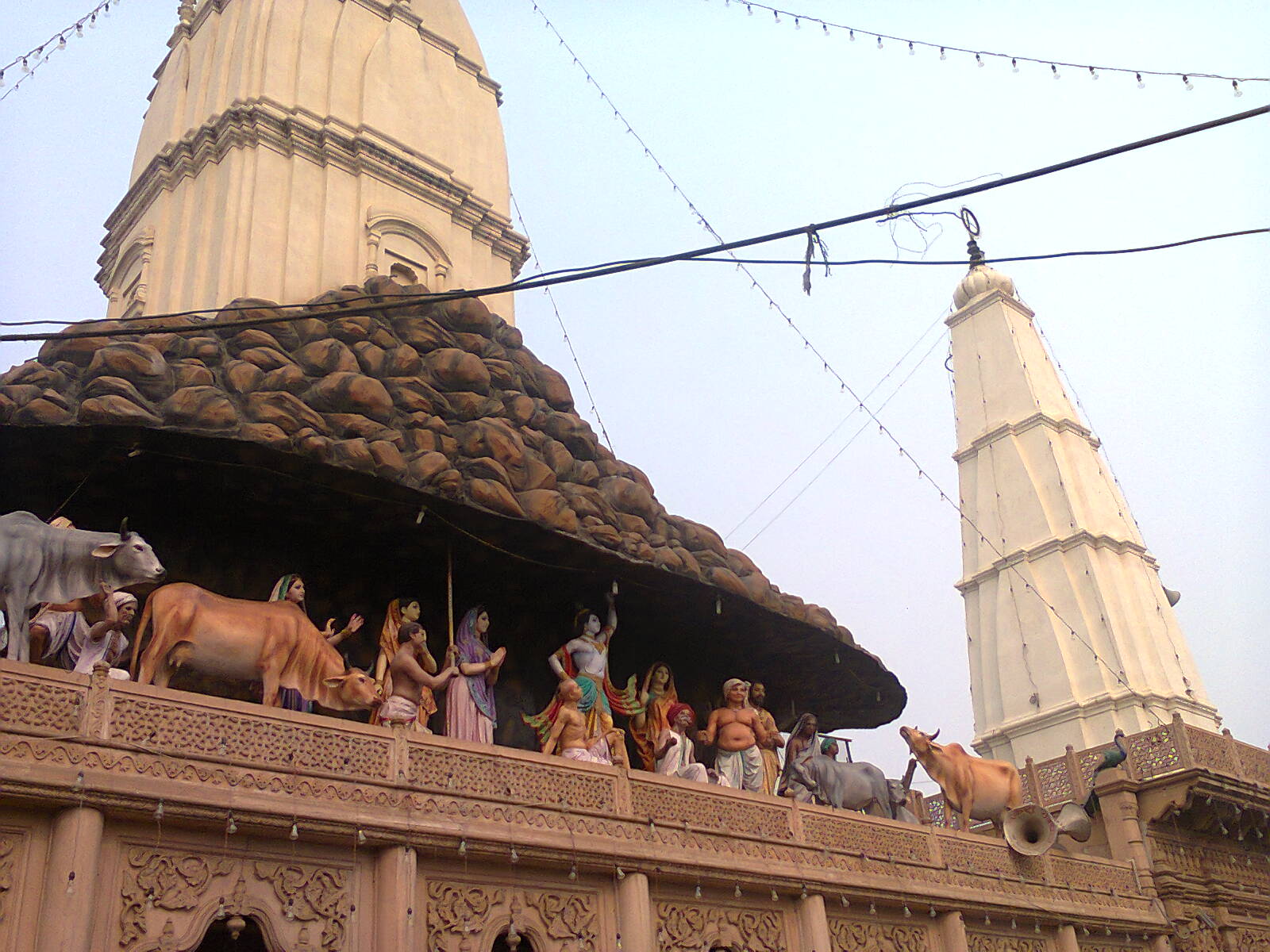
Day 156
This morning we jump’d in a rickshaw & sped oer the plains to Govardhan. Rising ominously from the Gangeatic plain, the Govardhan Hill. The place is essentially a small town clsuter’d around a not insignificant temple complex, all of which nestles underneath this low, ochre red hill. According to Philostratus, the Sacred Ridge of Iarchus was the same size as that of the Acropolis in Greece…
The hill, the summit of which inhabited by the sages is, according to the account of our travelers, of about the same height as the Acropolis of Athens; and it rises straight up from the plain, though its natural position equally secures it from attack, for the rock surrounds it on all side…
& though I had never visited Athens myself, VP has confirmed the two hills were indeed very similar in size & shape. Govardhan can be connected to both elements of Jesus’ name, as in; Jesus = Iarchus / Krishna = Christ. The hill at Govardhan is famous among the Hindus for being lifted by Krishna in defiance of the rain god Indra, who had sent a deluge to the local area.
The full story describes how Krishna observed huge amounts of offerings being prepared in honour of the old god, Indra, by the population of a village beside Govardhan. After debating with them as to the true nature of the Dharma, they were soon converted from the old sacrificial ways of worship, and began to concentrate instead on doing their ‘karmic duty,’ which as farmers would be to focus on agriculture and cattle rearing. Angry at the sleight, a furious Indra threw a seven-day deluge at the farmers, flooding the plains in the process. In face of this, the gallant, young Krishna rode to the rescue, protecting the farmers, along with all their families and cattle, by the aforesaid raising of the hill. When Indra witnessed this miraculous feat, he bowed in awe to Krishna’s greater power and subsequently halted the rains; the result of which was Krishna taking his place among greatest gods in the Hindu pantheon. To a modern mind, this defeat of Indra is an allegorical account of the initiation into Indian theology of a new brand of Hinduism. The old Indra-centric worship of the Vedic brahmins was superseded by a fresh and exciting devotion to Krishna, a rejection of the old ways that fits in perfectly with the anti-Brahmanical stance championed by Issa and Ashvaghosa. With Jesus having spent time in the Mathura area, it is through his relationship to Krishna that he should be connected, in some way, to the Govardhan Hill.
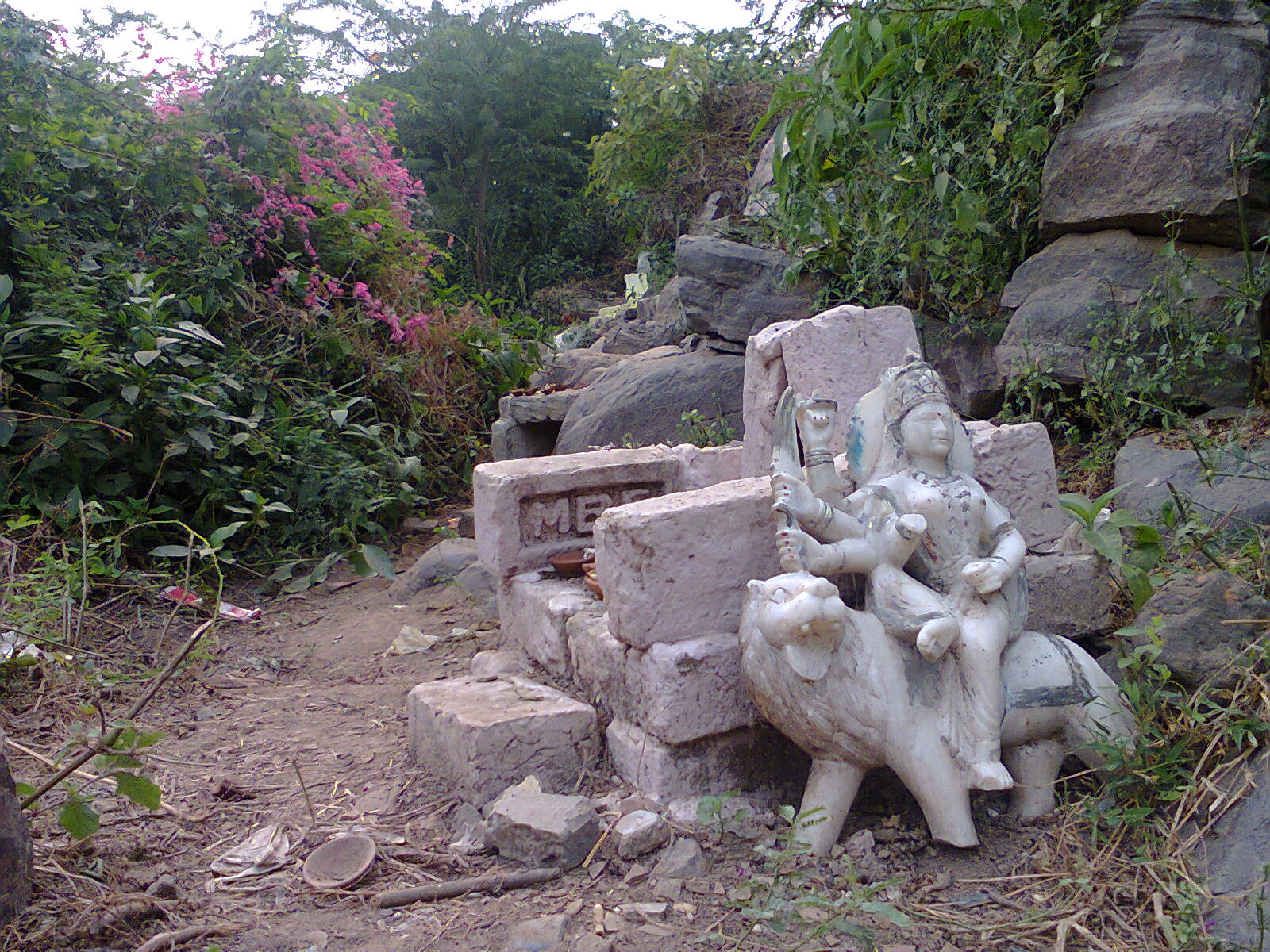
Digging through the poetical metaphor, we can see that Iarchus had allowed the locals to use the hill during flooding, & that this later became mythologized as Krishna lifting the hill.
Apollonius says that he himself ascended mostly on the south side of the ridge, following the Indian, and that the first thing he saw was a well four fathoms deep, above the mouth of which there rose a sheen of deep blue light; and at midday when the sun was stationary about it, the sheen of light was always drawn up on high by the rays, and in its ascent assumed the look of a glowing rainbow. The ‘well four fathoms deep’ is the Manasi Ganga of today – a sacred pond said to form the ‘mouth’ of Govardhan. A tall, standing stone with what appears to be a snake imprinted into it emerges from the waters, sporting a hole which the local brahmin consider as the navel which connects the visible earth with the subterranean world of the serpent-gods called nagas. They also consider the Govardhhan hill to be the highest point upon the whole earth, both of which notions have the following correlation in Philostratus:
And they say that they are inhabiting the heart of India, as they regard the mound as the navel of this hill, and on it they worship fire with mysterious rites, deriving the fire, according to their own account, from the rays of the sun; and to the Sun they sing a hymn every day at midday
As for Iarchus being Jesus, the healing techniques reflect Jesus’ own mastery of medicine, & the events described in the third extract are mirror’d in the Gospels’;
After sunset they brought to him all who were sick and those who were possessed by devils. The whole town came crowding round the door Mark 1-32
This discussion was interrupted by the appearance among the sages of the messenger bringing in certain Indians who were in want of succor. And he brought forward a poor woman who interceded in behalf of her child, who was, she said, a boy of sixteen years of age, but had been for two years possessed by a devil. …. “Take courage,” said the sage, “for he will not slay him when he has read this.” And so saying he drew a letter out of his bosom and gave it to the woman; and the letter, it appears, was addressed to the ghost and contained threats of an alarming kind… There also arrived a man who was lame. He already thirty years old and was a keen hunter of lions; but a lion had sprung upon him and dislocated his hip so that he limped with one leg. However when they massaged with their hands his hip, the youth immediately recovered his upright gait. And another man had had his eyes put out, and he went away having recovered the sight of both of them… Yet another man had his hand paralyzed; but left their presence in full possession of the limb. Life of Appollonius of Tyana
If I’m right, Jesus was running an ashram of sorts at Govardhan, a decade after his supposed crucifixion. The town is a very holy place, & in only a few days, half a million souls are actually due to walk the entire 21 K around the hill in an ancient ritual known as a Parikrama in celebration of its lifting by Krishna. Its done to coincide with the festival of Diwali, the Hindi Christmas, which is in a few days too. All this has already attracted a great deal of beggars, who were rather annoying actually, so we didn’t linger long, & headed back to Mathura for a fine meal. But, yeah, a cool day, that, that was cool. To come to India & not have a clue as to who Appollonius of Tyana was, then 5 months later trace his footsteps to an obscure Indian hill where Jesus seems to have gone to after the Crucifixion is definitely a more different international experience than lying on a Benidorm beach.
DAY 157
Today’s port of call was a night & a morning in Agra, an rather unpleasant place full of scruffy hotels that contravertedly is home to the ‘paradise on earth’ that is the Taj Mahal. Built in the 17th century by a grief-stricken Mughal King for his dead wife, it really is a spectacular & celestial place of beautiful, polished marble & an aristocratic air of human superiority – a once-in-a-lifetime experience ensured by the architect having his hands chopped off on its completion.
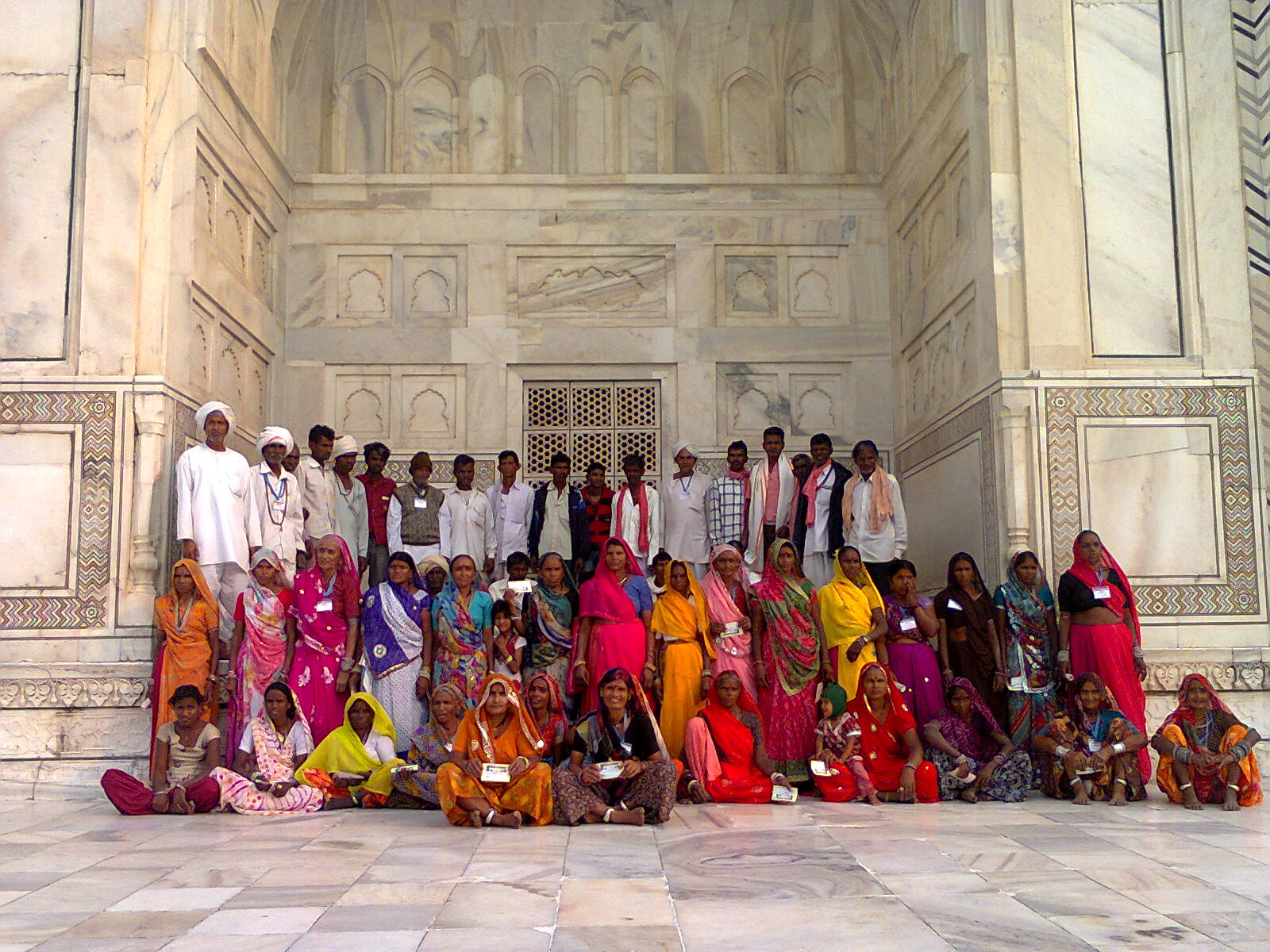

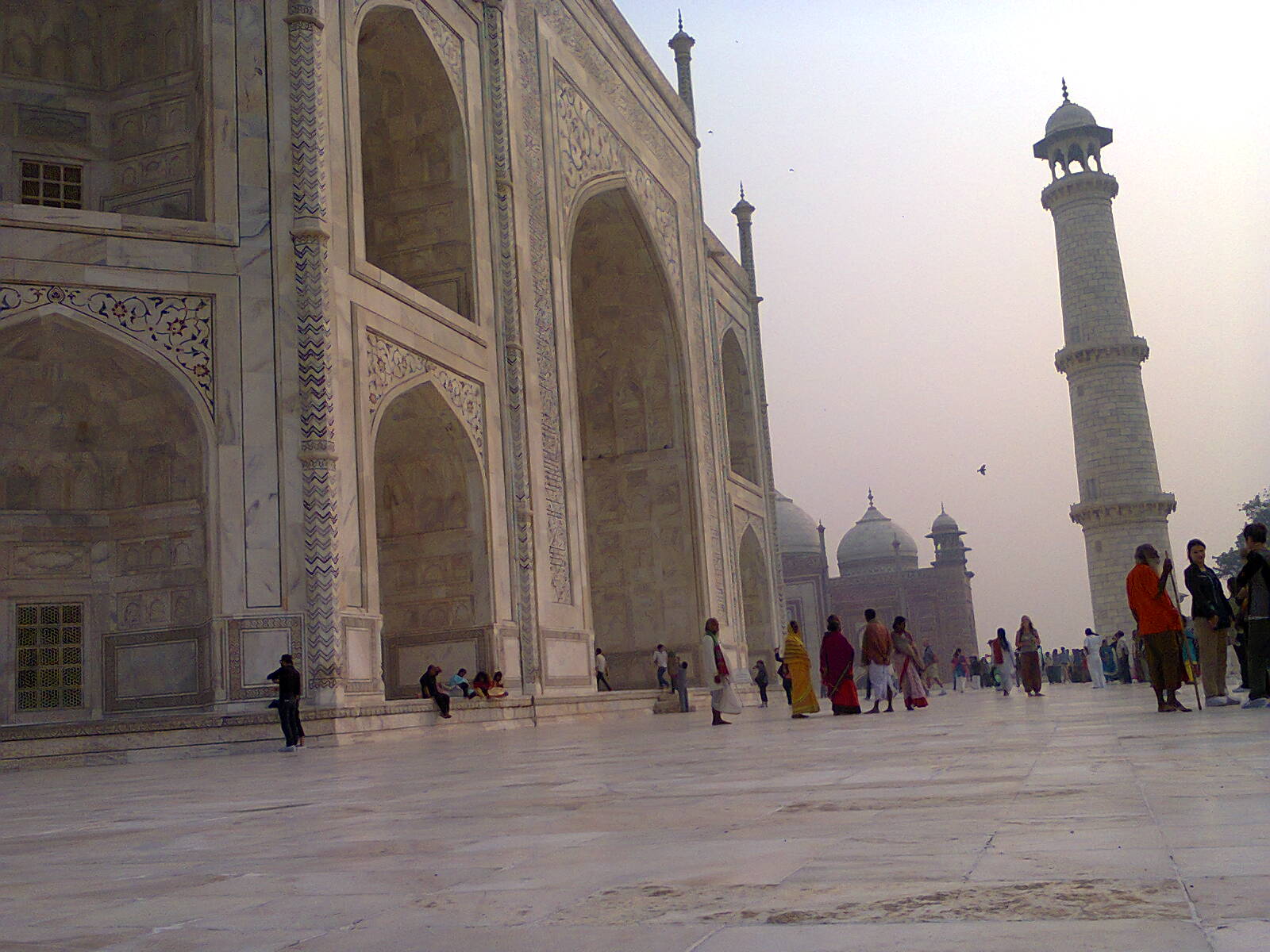
Seeing as the Taj is the international symbol of true love, experiencing it compell’d me to Call Sally Cinnamon up for a first wee chat in ages, which had a positive vibe (she misses me), the end result being the composition of the following sonnet;
I was staring at the back of this rickshaw driver’s neck
As I dragged my bags thro’ Agra, the Taj now just a speck
Of love dust immemorial, my mind’s eye to recall
Whene’er long life yearns deeply for some sheer uplift of soul;
In that place grew pure poetry, man-made & yet divine,
A funerary megalith whose Mughal marble wine,
Endrenches human spiritus with splendour thro’ its form,
All races & all nations round its majesty must swarm.
As I depart for Gwalior I think of absent touch,
For she was like a queen to me, I loved her love so much,
& haunted by her happy smile I’ve wandered far, alone,
Til mental peace has found me all my fuck-ups to atone.
So, I shall get my mobile out & make that magic call –
Her voice was soft & happy – back in Sally-love I fall.
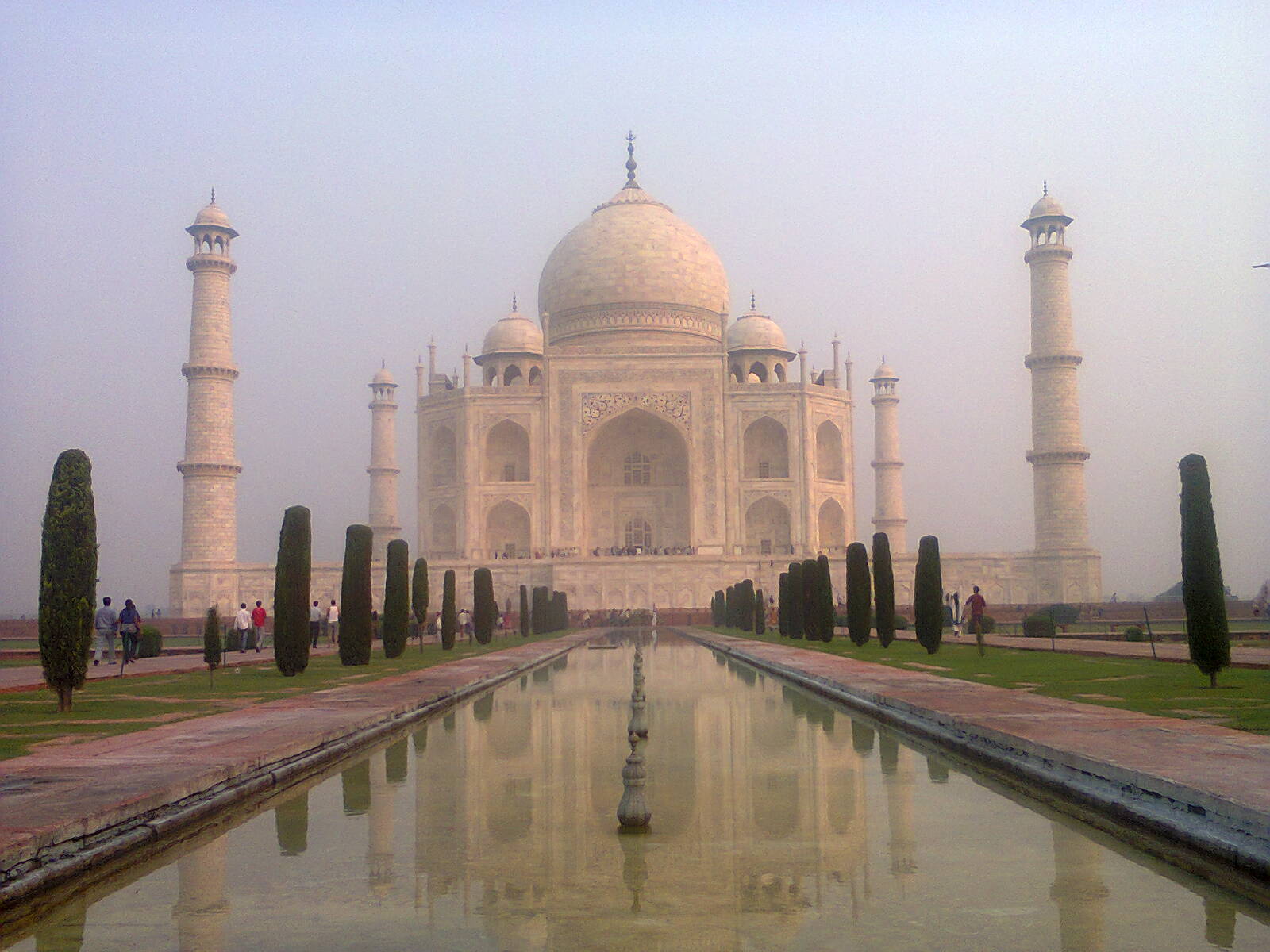
Day 158
This morning, after one last gaze at the sheer wonder of the Taj Mahal, we caught a bus to the fine bustling sprawl of Gwalior, where we were met by Bhagat, the 40-year-old principle of a couple of schools in the city. After putting us up in a hotel, me & Mr Steve (as VP has been happily monicker’d), went back to the school for a ‘gig.’ They had built a stage, hired a PA & sorted us out instruments – a guitar & a harmonium – plus three drummers who we quickly got up to speed.
Then, all of a sudden, 600 kids & their teachers were ushered into the yard & we were playing a wicked wee gig actually. The Sarita School provides an education for the poor of the area, & for all of them it was the first time they had seen a guitar being played. After the gig, we were inundated by autograph hunters, even in the streets afterwards a mental buzz that I took to like a duck to water but had Victor questioning whether he could handle the true trappings of fame.
Day 159
This morning me & VP play’d some songs to a number of blind kids in this blind school, who were really finickity over our unsophisticated attempts at accurate tunings. Still, it was a really nice vibe. Which the then carried on as we mov’d or the night to the nearby Snehelya orphanage, thro which connection we’ve ended up in Gwalior playing music to kids. There’s a festival in East Lothian which my band has play’d at & is run by coke-heads, so I’m like is all the money getting up their noses are really into this mythical Indian orphanage. I was obviously wrong to doubt them, & it’s a very cool place, with its own compound & various blocks for the neighbourhoods ‘undesirable’ children, abandon’d by poor villagers for various ‘conditions.’
VP & arriv’d the orphanage with bags full of sweets like venerable Indian Santas, if only to sprinkle a little happy dust for a few moments, & let the kids know that East Lothian is always thinking about them.

It is set in a compound in the middle of ‘bandit country’, protected by armed guards. Inside it is an oasis of peace for thirty kids with varying degrees of disability. They were all delighted to see & play with me. I even found a guitar there & we played them a gig – but as they only spoke Hindi it was difficult for them to appreciate my lyrical genius. The maddest moment was seeing this blind kid with a Burnley top on – honestly. Apparently it was donated after a recent visit by the RAF, but either way it was cool to see.
The Snehelaya set-up is very colonial, with the medical volunteers having an upper floor to themselves & waited on hand & foot. This afternoon, we went out with a roving ambulance, pulling into villages to give out health advice & medicine. While they were doing this I wandered into a local school & gave an impromptu English lesson to kids – great fun, especially when I sent out a kid for talking to much – just like me when I was his age. On the way back karma struck again, for some guy who had just had a bike accident. Tho’ in pain, his face lit up when our ambulance rounded the bend he had just skidded off.
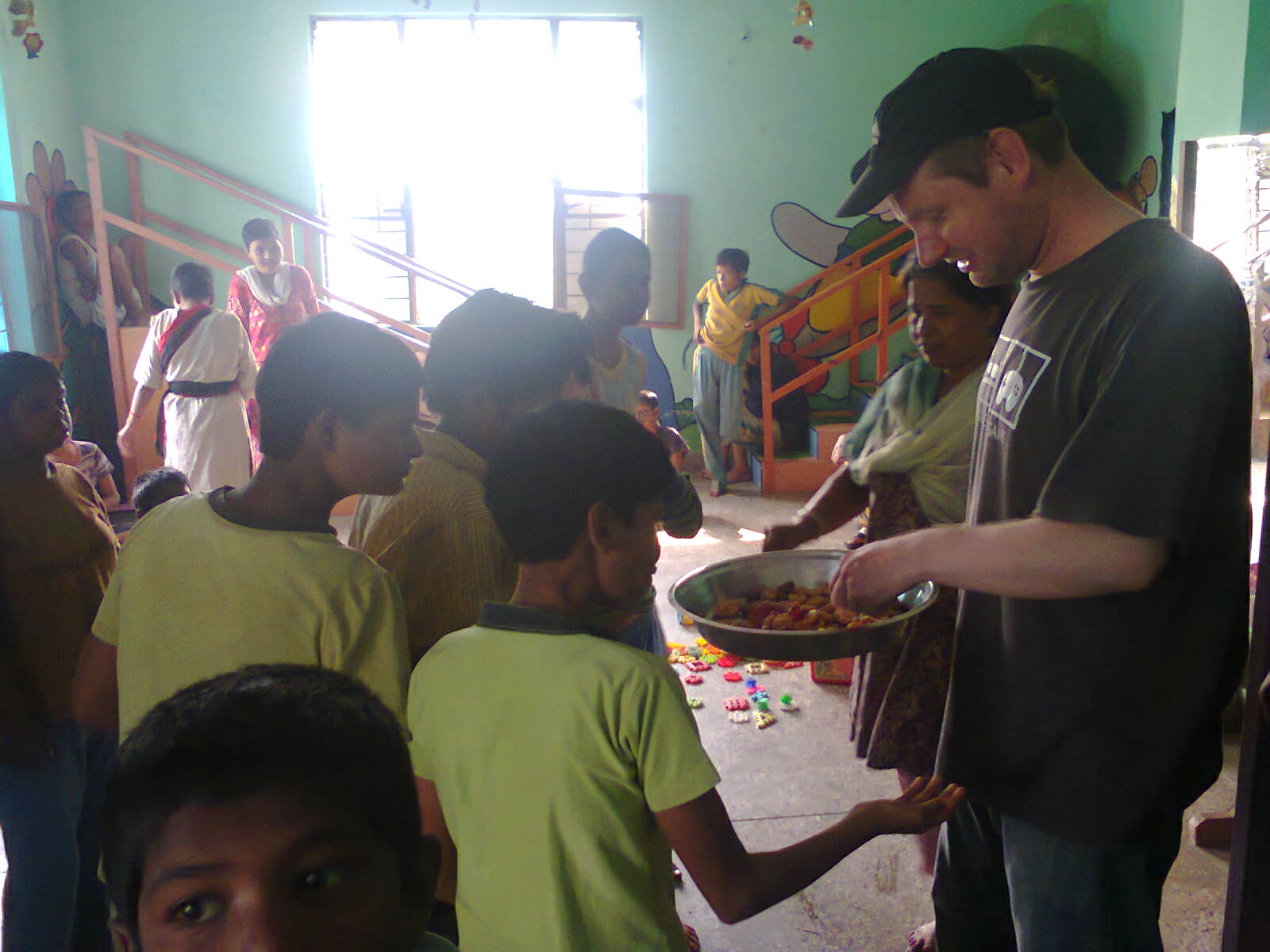
A power cut tonight got me into writing, both poetry & a couple of songs on the rooftop with a guitar donated by a Linkey Lea organiser. I also got friendly with the local farmer – the place aspires to self-sufficiency. His house was in a corner of the compound, a bathroom sized single roomed cottage about three feet tall! How he fits his wife & five kids inside at bedtime I will never know.
Day 160
We left the orphanage this morning in a flurry of fond farewells. It was quite poignant saying goodbye to the kids – we don’t realise how lucky we are guys – both to live in the West & to be able-bodied. Returning to Gwalior for one more night, there was time for some conventional sight-seeing, which saw us ascend the great hill at the heart of Gwalior – the Gibraltar of India – where the Man Singh Palace was a wonder to behold. Most disturbing, actually, was the sight of a thousand or so bats ‘sleeping’ upside down in one of the empty rooms – an unnerving experience but highly interesting. Back on the plain there was another, built for the Maharaja of Gwalior, whose opulence was quite ridiculous to see in a country of such extreme poverty as India.
Completed in 1874, the dining room was a wonder to behold, while much of the regalia was scattered about the palace & opened to view. It was an excellent hour of museum-going, at a cost of only £3.50. It was also interesting to learn that despite the Maharajas having lost any actual power, the Gwalior version has set himself up in politics & in a few weeks will attempt to take control over the state. Some things never really do change, I guess.
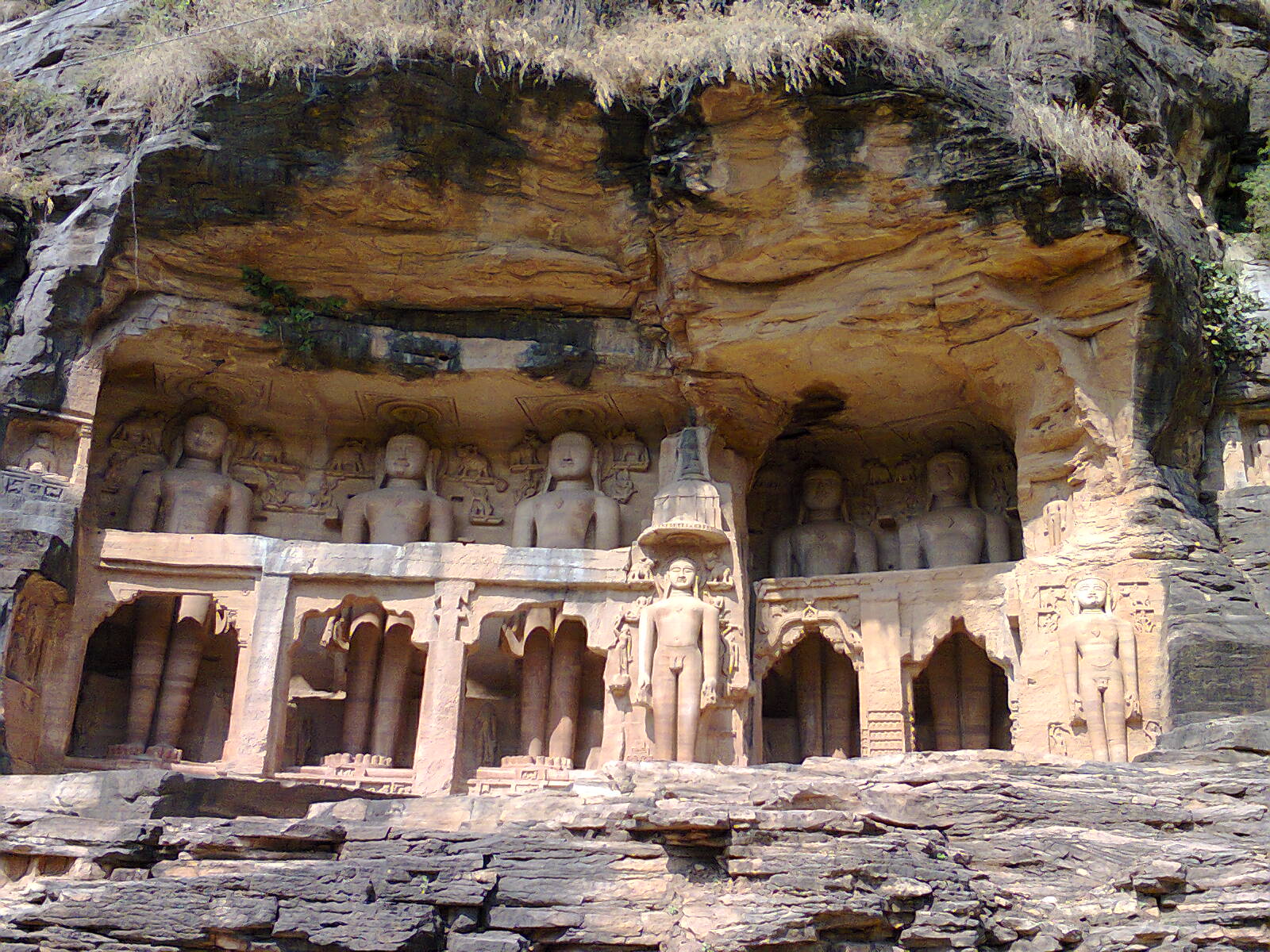
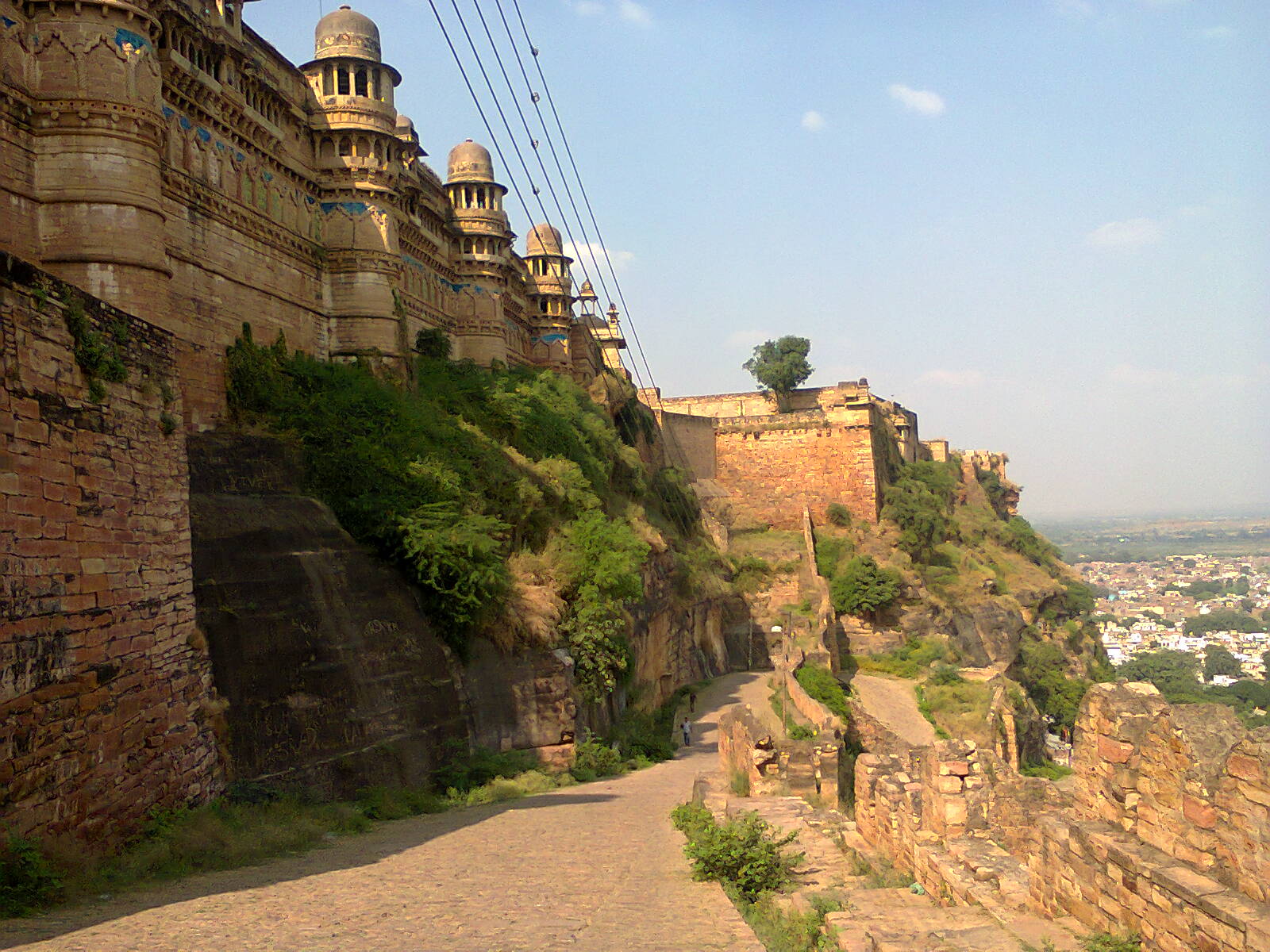
So it’s Diwali today – the Indian Christmas – & Bhagat & his family wanted us to share in the festivities. This ‘Festival of Light’ is based upon a poem – the Ramayana – & is meant to celebrate the day which Rama returned home after rescuing his beloved Sita from the clutches of the Sri Lankan demon, Ravana, & reflects the candles that Rama’s subjects lit around their city upon his return. Just like them, Victor & I also lit candles all about the school, which was a great many indeed & quite some time to finish.
After this, we shared in the worship ceremony, in which Bhagat’s father, the founder of this school, & a wonderful man in his own right, read out a hymn from the Vedas which was sang along to be the women of the household. After this, we all consumed far too much food (at separate times I may add) while a million firecrackers erupted through Gwalior, whose quality puts our own Guy Fawkes efforts to shame. In particular I loved the ‘butterfly,’ which upon being lit would flit & sparkle randomly about the place, just like the real thing.
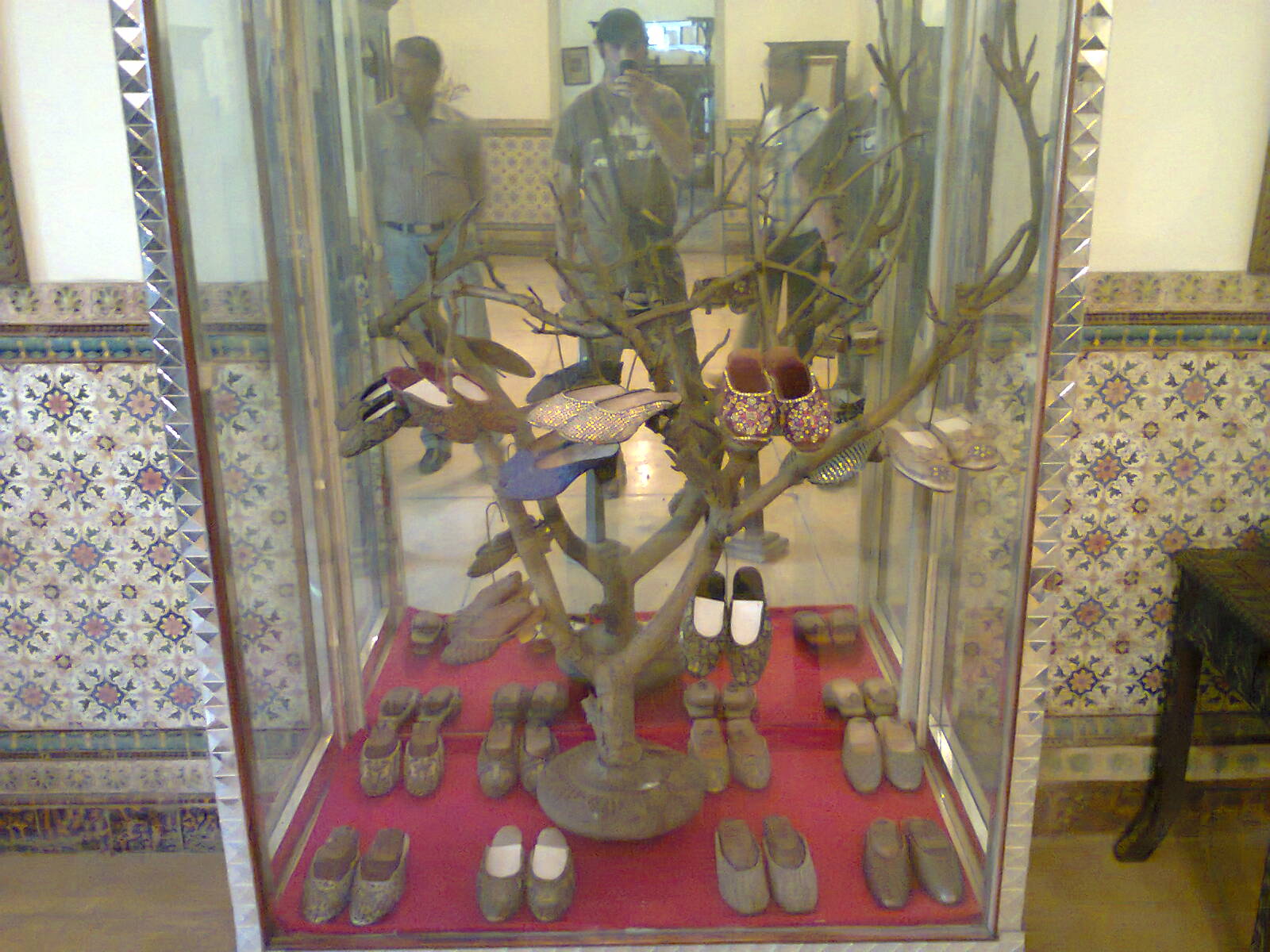

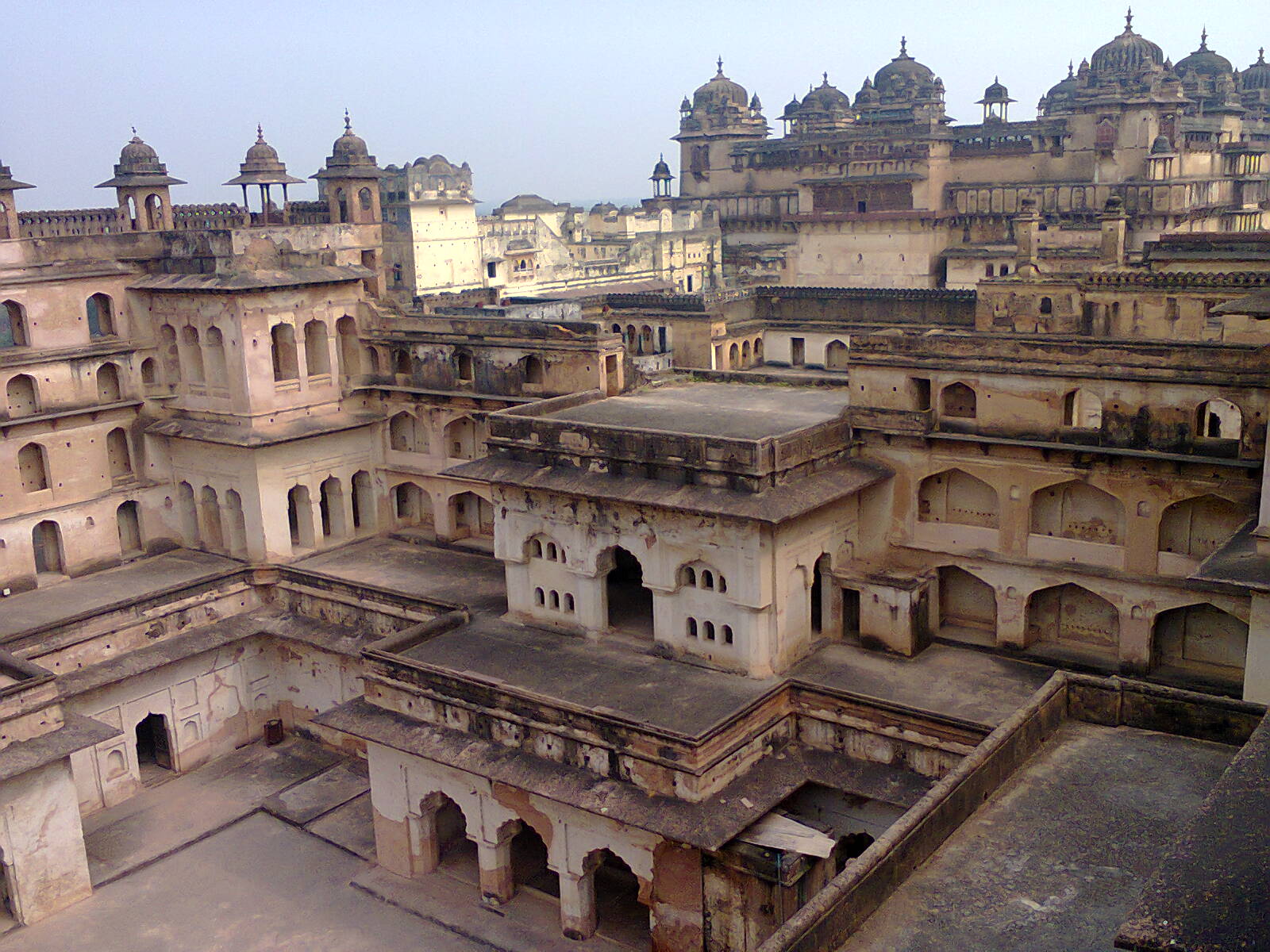
Day 161
Today, we finally left Gwalior, with Bhagat very kindly picking up the hotel bill. We are zooming south on the Shatab-di Express, the fastest train in India, as wide as a plane & pretty luxurious compared to the rusty charabangs I am used to travelling on. It took about an hour to reach Jhansi, an otherwise nondescript typical city. Sharing a rickshaw with a yank, we pull’d into the village of Orrcha, which spreads about the wonderful 500 year old palace & fort of the old kings of Orrcha. It is a quiet little temple town, whose elegant ruins are quite simply magnificent, haunted by vultures & flanked by two gorgeous swimmable rivers. Perfect poet’s country, & I penn’d the following sonnet based on a local legend here;
RAI PRAVEEN
Beside the bonnie banks of Betwa’s stream
A beauty dwelt, beholding her a dream,
Whose reputation to great Akbar flew
By regal claws she to his throne-room drew,
But noble are Bundellas & their Queens
& so played out the wondrous of scenes
As with a poem she made devlish dig;
“Hello King! You are King, not dog, nor pig,
& I am nothing but a plate well-used…”
Lord Akbar gasped, & gazed on her, confused,
While shell-shock’d audience grew hushly sure,
Such grave insult His Highness shan’t endure;
But no! Life’s nobler motions to protect,
He sent her home, alive & with respect.
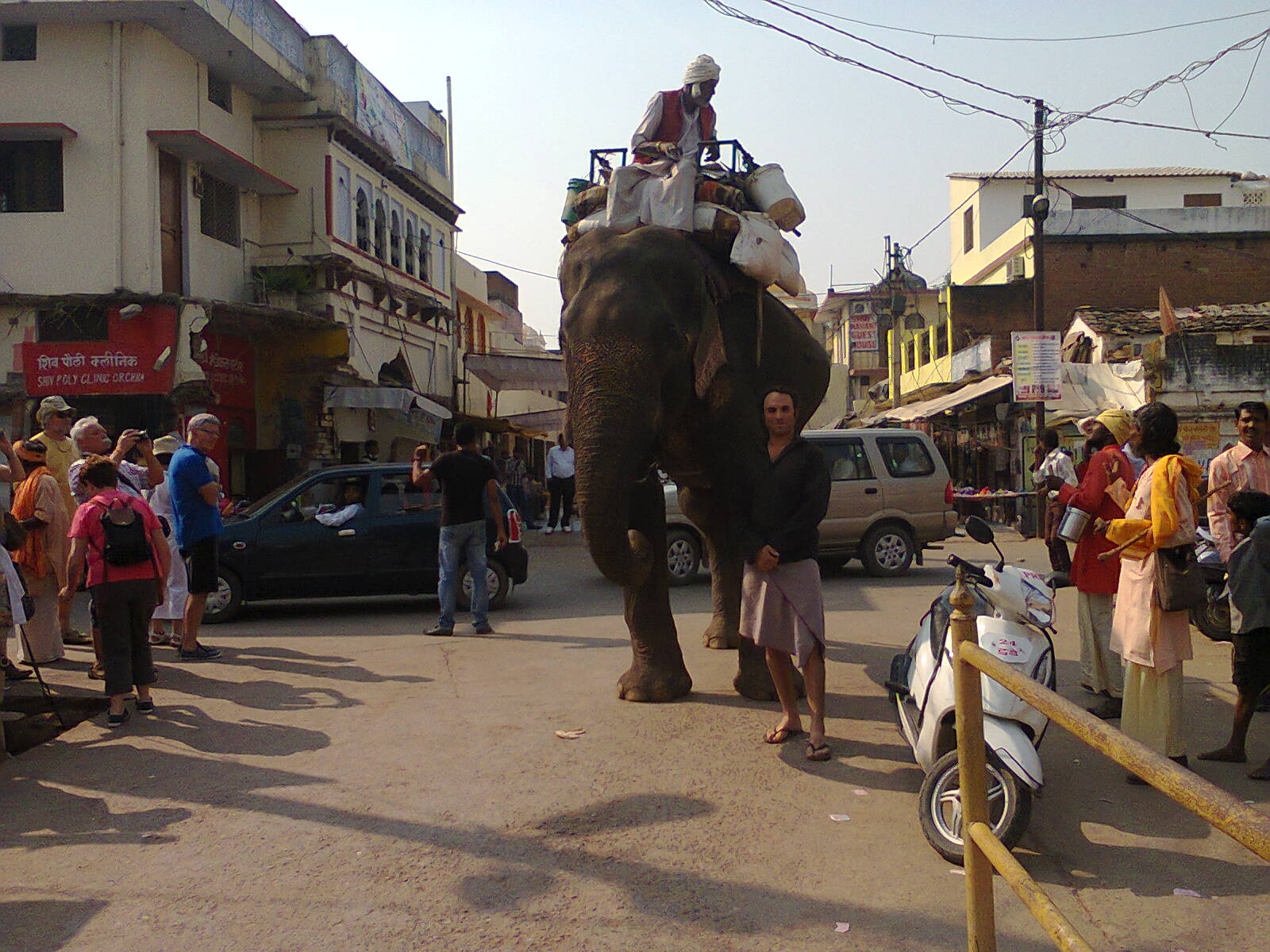
Adventures on an Indian Visa (week 22): Ladakh
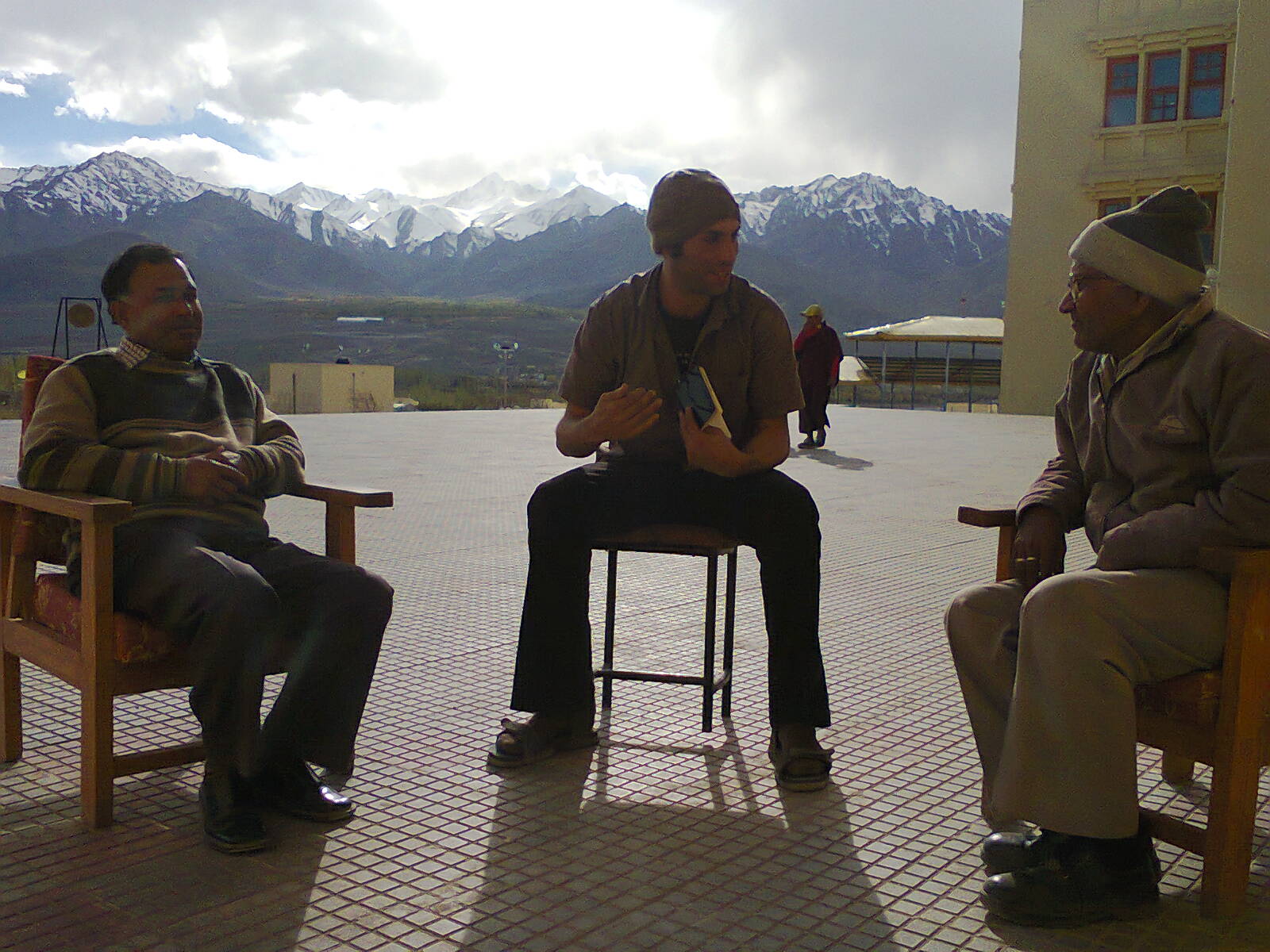
Day 148
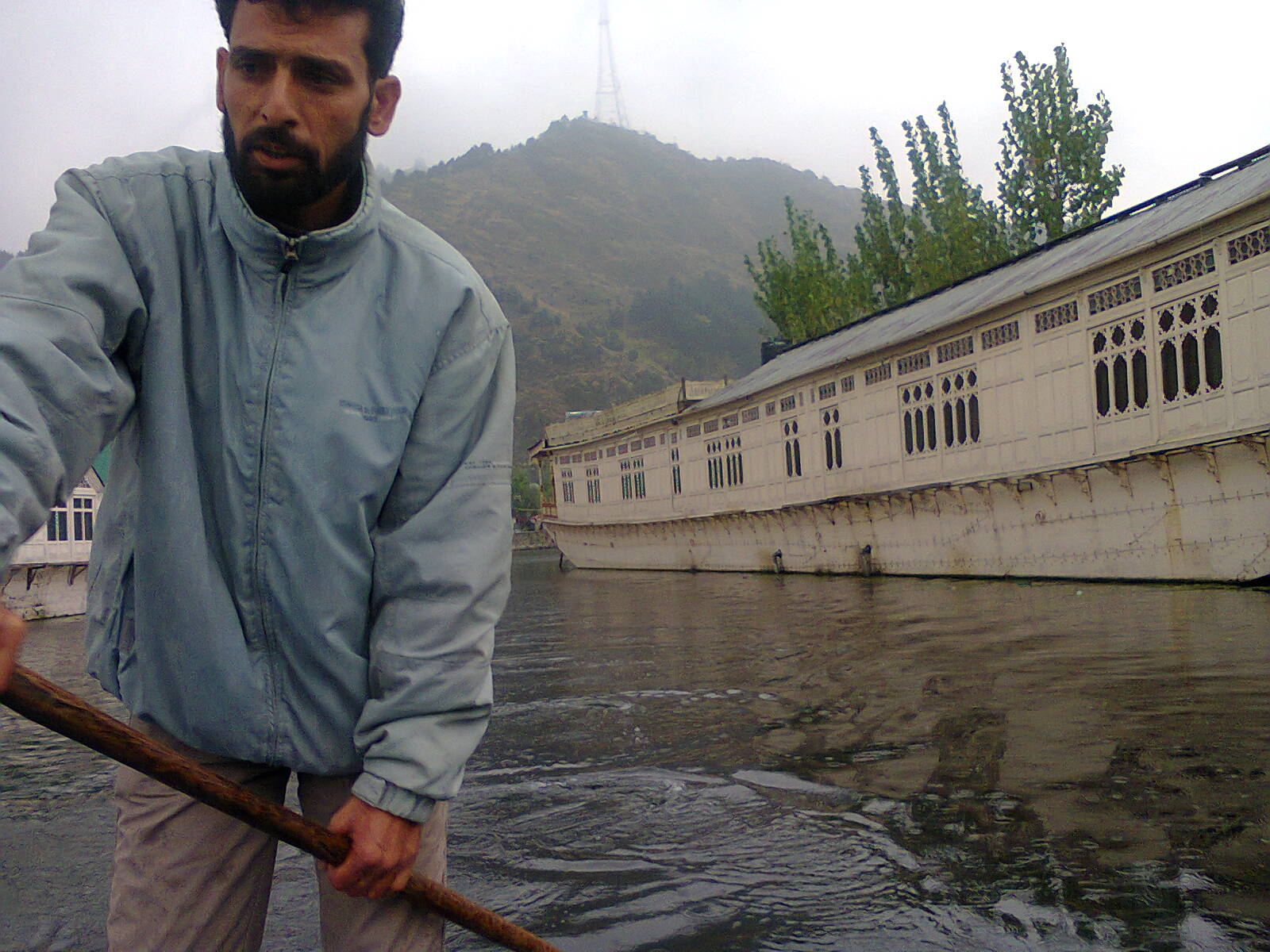
I woke up with the extremely excited feeling of wanting to explore the places, in my immediate vicinity, that I had been reading about; now only a ten rupee ride away across the pleasant green waters of the Dal lake. Me & VP resolv’d upon a plan to circumnavigate the impressively beautiful Dal lake, which forms the liquid heart of the city, beginning with the pyramid-like peak of the sensational & evocative Zabarwan Mountain that towers over the lake. Upon it stands the ‘Temple of Solomon’ – & we went up, & it was pretty enough, tho’ a bit busy with tourists, & yielding some spectacular views of Srinigar & the mountains to the east. This ancient site is venerated by three faiths: to the Saivites it is Shankaracharya, to the Muslims it is the Throne of Solomon, and to the Buddhists it is known as the Jyesteshwara temple.
So… an approximate date for the arrival of Jesus in Kashmir may be identified in a passage by the 15th century Persian scholar, Mulla Nadiri. The text describes inscriptions etched into the stonework of the Throne of Solomon. The inscription, recorded by Nadiri, provides a date – the year ‘fifty and four’ – which Professor Hassnain correlates to the Christian era’s 78 AD;
‘During this time Hazrat Yuz Asaf having come from the Holy Land to this holy valley proclaimed his prophethood. He devoted himself, day and night, in prayers to God, and having attained the heights of piety and virtue, he declared himself to be a Messenger of God for the people of Kashmir… It was because of this Prophet’s orders that Sulaiman, whom Hindus called Sandeman, completed the repairs of the dome. Year Fifty and four.’
Further, on one of the stones of the flankwalls encasing the stairs, Sandeman inscribed, ‘in these times Yuz Asaf proclaimed his prophethood,’ and on the other stone of the stairs he also inscribed that ‘Yuz Asaf was Yusu, Prophet of Children of Israel.’ Leaving the shrine, we then proceeded to the NE corner of the Dal Lake, where a curious passage in a 12th century Kasmiri history called the Rajatarangini seems a garbled account of the Crucifixion;
Samhdimati’s guru, Isana, came to perform funeral rites, found Sam’s skeleton still attached to the stake, and noticed an inscription on the skull which predicted: “He will have a life of poverty, ten years’ imprisonment, death on the stake, and still thereafter a throne.” Isana wondered about this, but later, in the middle of the night, smelled incense, heard bells ringing and drums beating, and saw witches outside on the burial ground. Isana pulled out his sword and went outside, and saw the witches rebuilding the body with their own limbs and flesh, then calling Samhdmati’s spirit back to the body. Thereafter, they covered him with ointments and “enjoyed themselves with him…to their full desire
Next up, & just a couple of miles away, a kind local led us through pleasant forestry to the ruins of a Buddhist Temple, built by the Kushan Emporer, Kanishka, in the first century AD. During my conversations with Professor Hassnain, he had suggested it had been the site of the great 4th Buddhist Council c.78AD & that Jesus had probably been there as an old man. It was at this council that a new branch of Buddhism was accepted called Mahayana, or ‘the Great Vehicle.’ My studies have been leading me to a certain Asvaghosha, the founder of Mahayana Buddhism, who I’m starting to believe was also Jesus, the Indian Jesus, that is. Here’s how the names all interconnect.
Hazrat Yuz As af
Jes us
As v aghosha
Both Christianity & Mahayana Buddhism had sprung up at roundabout the same time, & how these new religions were wrapped around a saviour-figure who preached love & compassion – in Mahayana Buddhism his name is Avoleketisvara. With Jesus being buried in the same place as where Mahayana Buddhism was launched, the connection has become too tangible to ignore, & I feel a deeper investigation of ‘the great vehicle’ is in.
Luckily, the chief centre of this faith is in Ladakh, only a 16-hour taxi ride away through the mountains, skimming along the LOC (Line Of Control), the de facto border line between Pakistan & India that is often used as target-practice for the mortar shells of Pakistani militants. Anyway, we’ll be setting off there in a couple of morning’s time
The day was heading to a close, which included a trip to the state museum, after which I saw the most horrific of sights. Round these parts, everyone’s getting ready for Eid, at the end of Ramadan, & loads of chickens are being slaughter’d in the streets. They are all in cages, then they get taken out one by one, a little water forc’d down their beaks, & then their throats cut there & then – it is not a nice sight, believe you me!
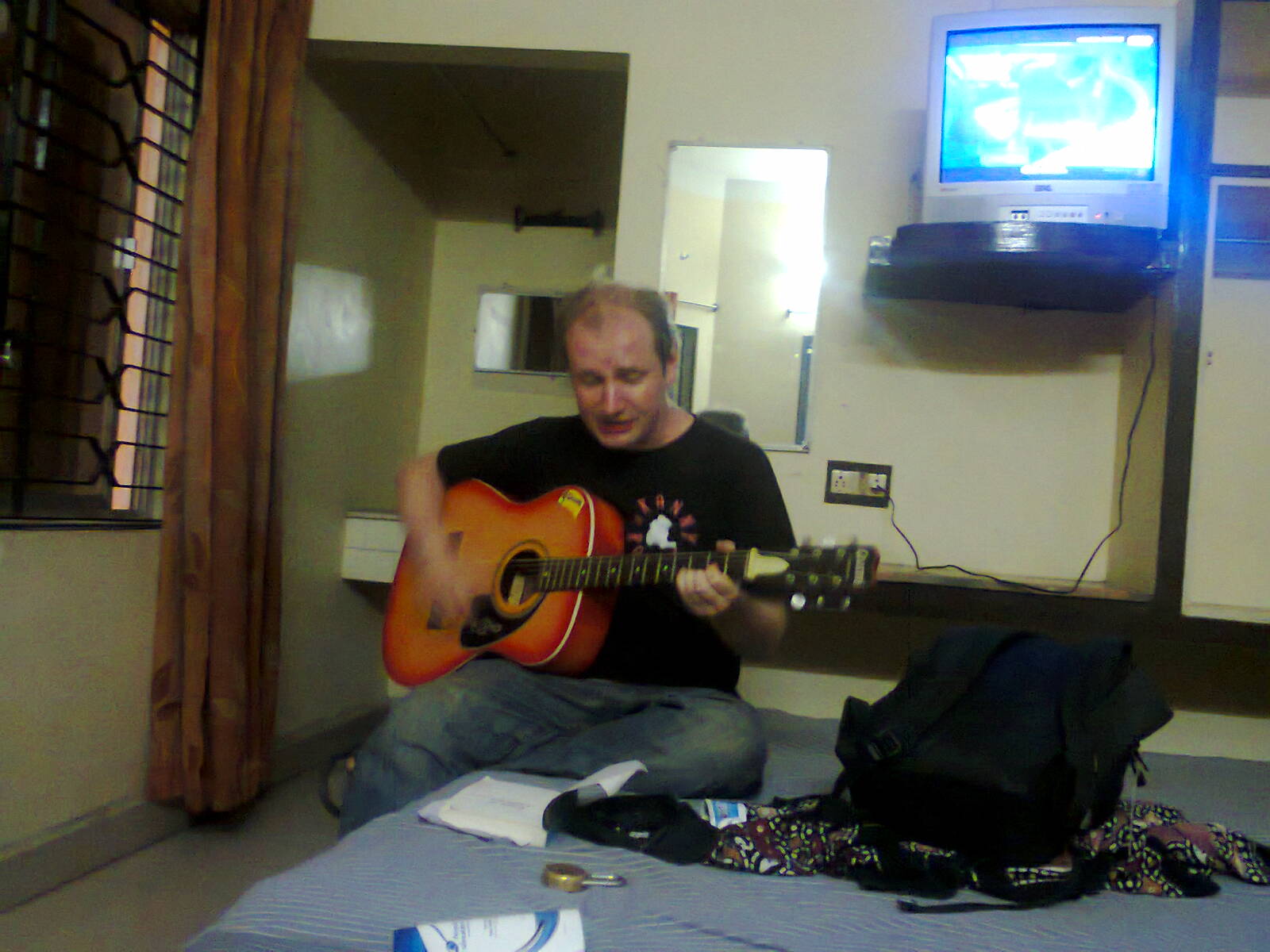
VICTOR POPE’S DIARY
Up in Srinigar the nights are cold and the days are warm. That’s how the Autumn goes in Kashmir. So, this morning, the sun was shining on our palatial houseboat and it was time to get back on the hunt for Jesus. We began by heading out for an arduous climb up a nearby mountain on top of which sat a Hindu temple where there were some inscriptions of great significance to Damo’s work. According to him, Jesus had also been spotted nearby in a Buddhist monastery around the beginning of the first century AD at the fourth Buddhist council. Where he had invented Mahayana Buddhism or something. The ruined monastery lay nestled in the bosom of Kashmir’s green hills and, though there was little left, what there was seemed to satisfy Damo’s curiosity.
We were then off to another dusty Indian Museum. The 50 rupee entrance fee barely justified the poultry two rooms of exhibits. Some fairly ordinary ancient Hindu carvings and the Norman Bates taxidermy room did little to lift my spirits. But I’m happy to say Damo’s heated debate with the sceptical curator of the museum did.
Once Damo had inevitably won the argument, he soon had something else to show me, namely the gruesome sight of chickens getting their throats cut while there sisters stared blankly on. The stench of the guts and feathers that lay strewn in a hideous pile was almost too much to bare and the thousand yard stare of the slaughterers was deeply unnerving. But was it enough to turn me Vegie?

Day 149
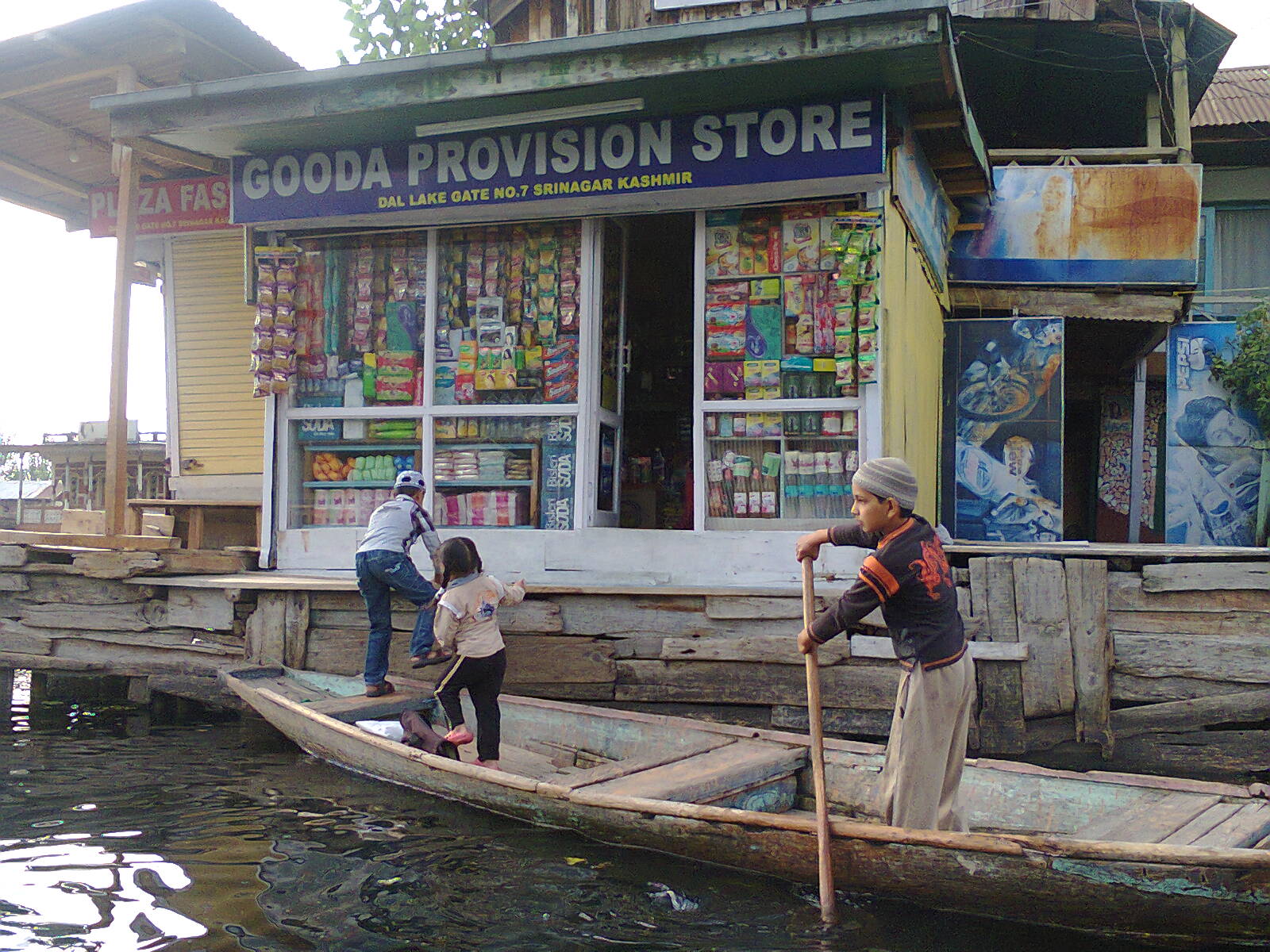
That Jesus/Yuz Asaf dotaged thro’ a long twilight in Kashmir is suggested by Muslim tradition, in which a seventh century cleric, Ibn Umar, reports in the Hadith that Jesus lived for a hundred and twenty years. This lifespan lies just within the limits of modern human longevity (122 is the known record), and we may acknowledge Jesus was a healthy man, living in an era far from the cancer-causing fatty toxicity of the chemicals which permeate our modern foodstuffs. As the Gospels portray, Jesus was a consummate master of medicine, whose knowledge of long-lost herbal remedies would have added to his personal life-span. Interestingly, this same figure of 120 years appears in the same Siddha tradition of South India, of which Agastya who founded who believe that if we generally take fifteen breaths a minute (21,600 a day), we could live for a period of at least 120 years.
For my last day in Sringar I was ready to visit the actual tomb of Jesus, & we hopp’d in a rickshaw for the short ride to Rozabal, & the fairly innocuous, but colourful square shrine of Yuz Asaf. Here are some historical notifications attesting to the matter;
The angel, therefore, guided {Yuz Asaf} to leave the country… and then leaving Sholabeth (Sri Lanka) he proceeded on his journey… after roaming about in many cities, reached that country which is called Kashmir.
The Persian History, the Ikmal-ud-Din by Shaikh Al-Said-us Sadiq
{Yuz Asaf} travelled in Kashmir far and wide and stayed there and spent his remaining life there, until death overtook him, and he left the earthly body and was elevated towards the Light.
The Persian History, the Ikmal-ud-Din by Shaikh Al-Said-us Sadiq
At the approach of death, he sent for his disciple, Babad. He was used to serving him and protecting him during his old age. He was perfect in all matters. Yuzu-asaph made a will, saying: As such, you should safegaurd your duties and never deviate from the righteousness, and absorb yourself in prayers. He then gave directions about preperation of sepulchre for him, at the very place where he breathed his last. He then stretched his legs towards the west, and kept his head towards the east. He then turned his face towrds the east, and breathed his last
The Persian History, the Ikmal-ud-Din by Shaikh Al-Said-us Sadiq
In a work by a Hindu it is said that this Prophet was in reality Hazrat Issa, the Soul of God – on whom be peace and salutations. He had assumed the name of Yuzu Asaph during his life in the valley. the real knowledge is with allah. After his demise, Hazrat Issa, on whom be peace & salutations, was laid to rest in the tomb in the locality of Anzimar. It is also said that the rays of prophethood used to emanate from the tomb of this prophet.
Mulla Nadiri (in 1420)
Sepulchre of the prophet, so illiuminating! Whosoever bows before it, received inner light, solace and contentment. Legends say that here was a prince, most accomplished, pious and great, who recived the Kingdom of God. He was so faithful to the lord that he was raised to the status of prophet. Through his grace he became the guide to the people of the valley. Here lies the sepulchre of that prophet who is known as Yuz Asap
Mir saas ullah shahabadi (1790)
The tomb contains the body of a prophet, who was sent by God to the people of Kashmir, and the place is known as the shrine of the prophet. I have seen in books on history that he was a prince who came to Kashmir from a distant land
Khwaja Mohammad Azam Diddimari (18th century)
On arriving at the shrine I found it painted green & white – the colours of Islam. Indeed, Srinagar is 96 percent Muslim, who after appropriating the shrine for themselves, have declared taking photographs of the shrine strictly forbidden, a matter which seriously irked the locals after I innocuously shot the shrine.
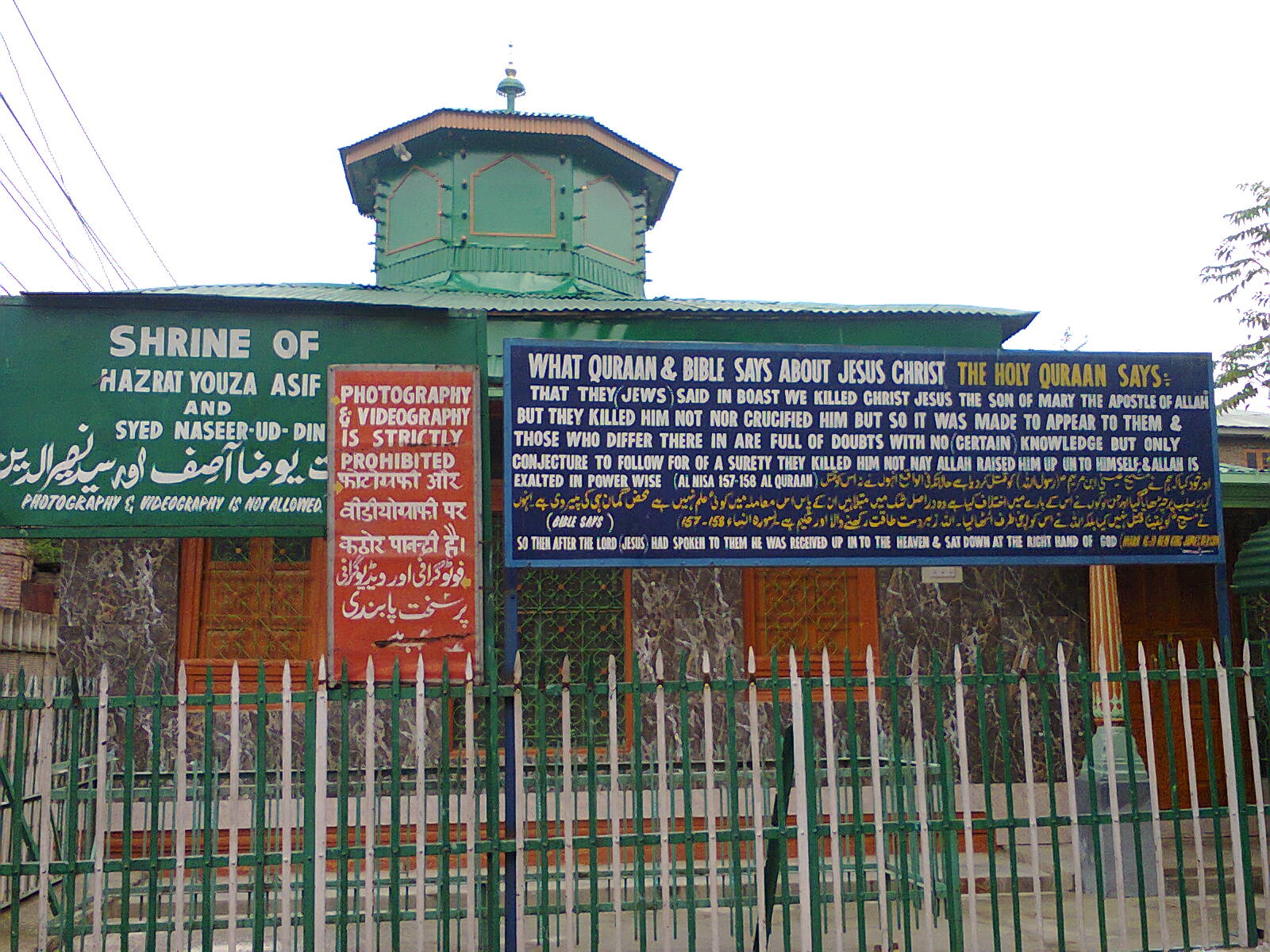
We were just departing from the shrine, when passing an open window I saw the very tomb of Yuz Asaf inside the shrine, covered with a velvet blanket. It seemed such a harmless act taking a swift snap, driven by my need to leave no research stone unturn’d, if you will.
However, only a second or two after taking the shot, I was accosted in the street by an angry, begrizzled man in his forties, demanding my camera with loud shouts & manhandling me to the ground. Victor quickly rushed to my rescue, putting his forearm against the guys neck & pushing him off me. At this moment saving the camera was more important, & I gave it to Steve with a swift, sly back-hand.
A small crowd was now beginning to form, & things were getting tense, but a potential tragedy was averted by the arrival of a young, clean, white-shirted gentleman, who diffus’d the situation at once
“It is an international dispute,” I was told by a tall, unpleasant looking fellow. Turns out some Australian tourists had taken a little masonry from the shrine a few years ago, compelling the Muslims who now control the shrine to clamp down hard on access rights. Anyway, I was proper freak’d out now & grabb’d Steve & scuttl’d off some side-alley & into the nearest rick-shaw. Speeding away, I looked down at my shirt & realised that in the kerscuffle the bounder had ripped the second top button off my new shirt!
“Driver, we must go back…”
“No,no,” piped in Victor, “Keep driving!”
“But I must give the scoundrel my tailor bill!” I retorted with the passionate elan of the hard done by.
“Nonsense, my friend… you know those two men we were observing cutting the throats of chickens near the shrine.”
“Yes…”
“Well, I observed them running down the street towards us… they were still holding their knives.”
That’s not quite how it happen’d, but potential mob assaults were rampaging round my head by this point. The incident reminded me just how many millions have died for their faith over the millennia, & I knew that following my skirmish, I would have to curtail my inbuilt northern swagger when handling such a sensitive subject as human religion. The photo, by the way, was fucking blurr’d, anyway.
VICTOR POPE’S DIARY
Today’s Jesus mission was the most controversial mission so far. There is a fairly innocuous but colourful yellow and green building in a dodgy ghetto of Shrinigar where is housed the alleged tomb of Jesus. But don’t tell anyone. The Muslims get very angry about it. As was proved when Damo tried to take a few snapshots. We were swiftly accosted by a local militant who tried to grapple the camera phone from Damo’s sweaty grip. For some reason I saw fit to intervene. And, while not succeeding in kicking the Muslims head in I did manage to rescue the camera phone. Thankfully a helpful local intervened and prevented the situation from escalating, allowing me and Damo and the camera phone to make a hasty retreat.
Day 150
I’ll always be beautiful in Ladakh – apparently Damo means ‘beautiful’ in Ladakhi…. bangin! The best way to describe the region is a 40,000 foot high beach surrounded by mountains. An arid desert of a place, it’s amazing how humanity survives up here; the roads in & out are closed 8 months of the year – but luckily Victor & I got in just in time.
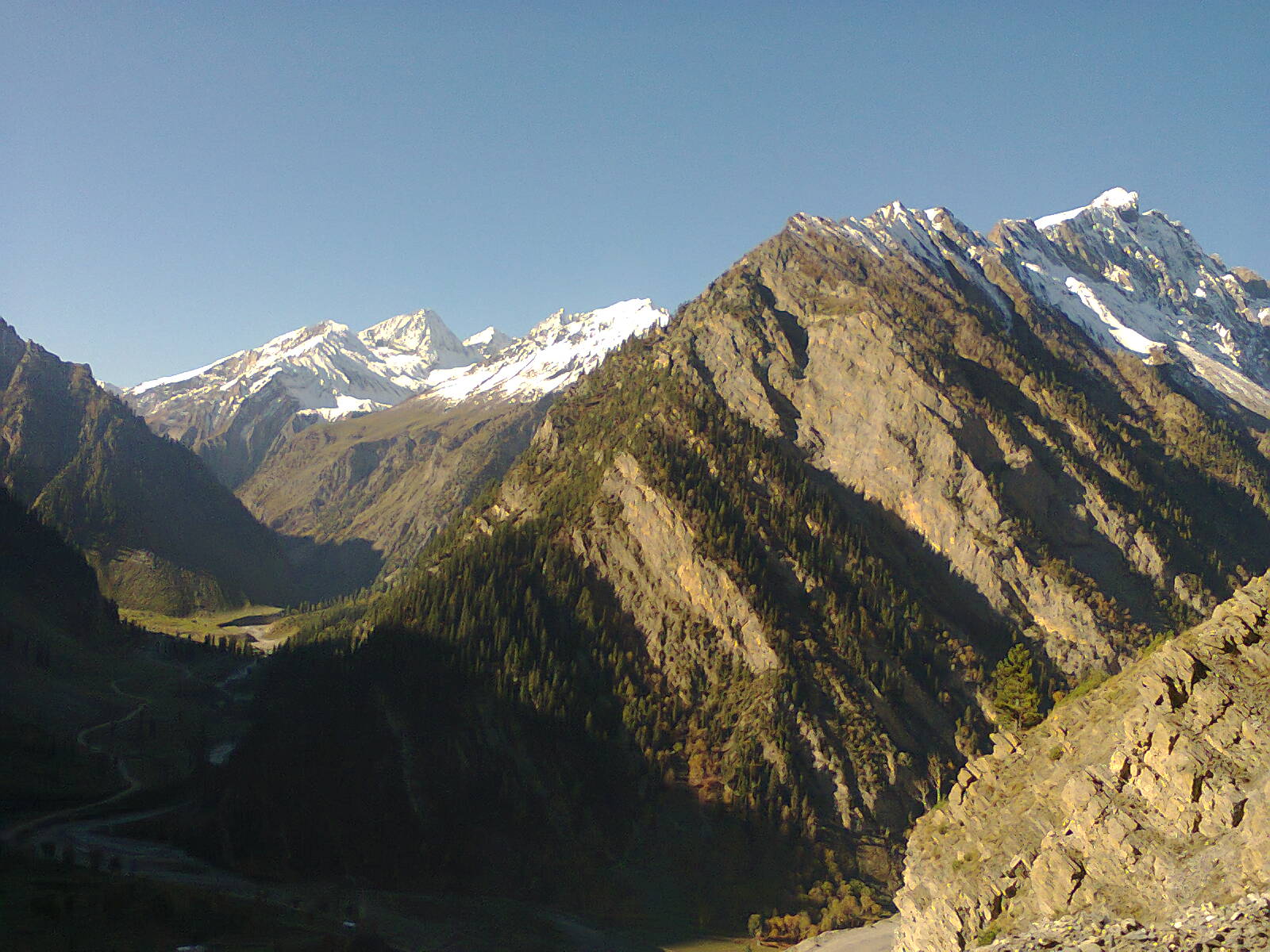
Our journey here set off from Srinigar before dawn, leaving behind the perfect serenity of the water village. There was an anxious wait for me in the twilight, still obsessing about a potential lynching after my cultural faux pas with the shrine photo. VP was well relax’d, smoking a ciggy, telling me to chill out. It didn’t work, like, & I was well reliev’d to see the taxi jeep come, driven by a wee, wiry Tibetan looking geezer, who inform’d us the journey would take less than 12 hours on near empty roads, reflecting the low population of Ladakh.
We soon were driving into the rising sun, which turn’d the mountains gold on both side of the narrow valley we were passing through. At first I felt elated, but these feelings soon turned to absolute terror as I experienced what was up that moment the worst hour of my entire life thus far.
Our jeep was rising up a road – or half-a road should I say – zig-zagging a mountain often a meter or so from the precipice. In the great tradition of Buddhism, I felt several lives flash by as down below in the ever growing valley-ravine I would see the occasional vehicle, & at one point an upturn’d bus. Our driver was even overtaking on bends, & at one point my nerve broke. The mentalist had parked up at the edge as he let a convoy of trucks pass us & I just had to get out & walk up the road to a safer spot. Even the normally stoical, unphaseable Victor felt his toes curling.
Still, I survived the experience, & from that moment on the journey was a wonderful passage through a landscape of such majesty, it was as if the gods themselves had painted them. The mountains were jagged like porcupine, or gnarled like tree-stumps, or rising into white-haired grey beards, beautiful Himalayan druids that ruled over all.
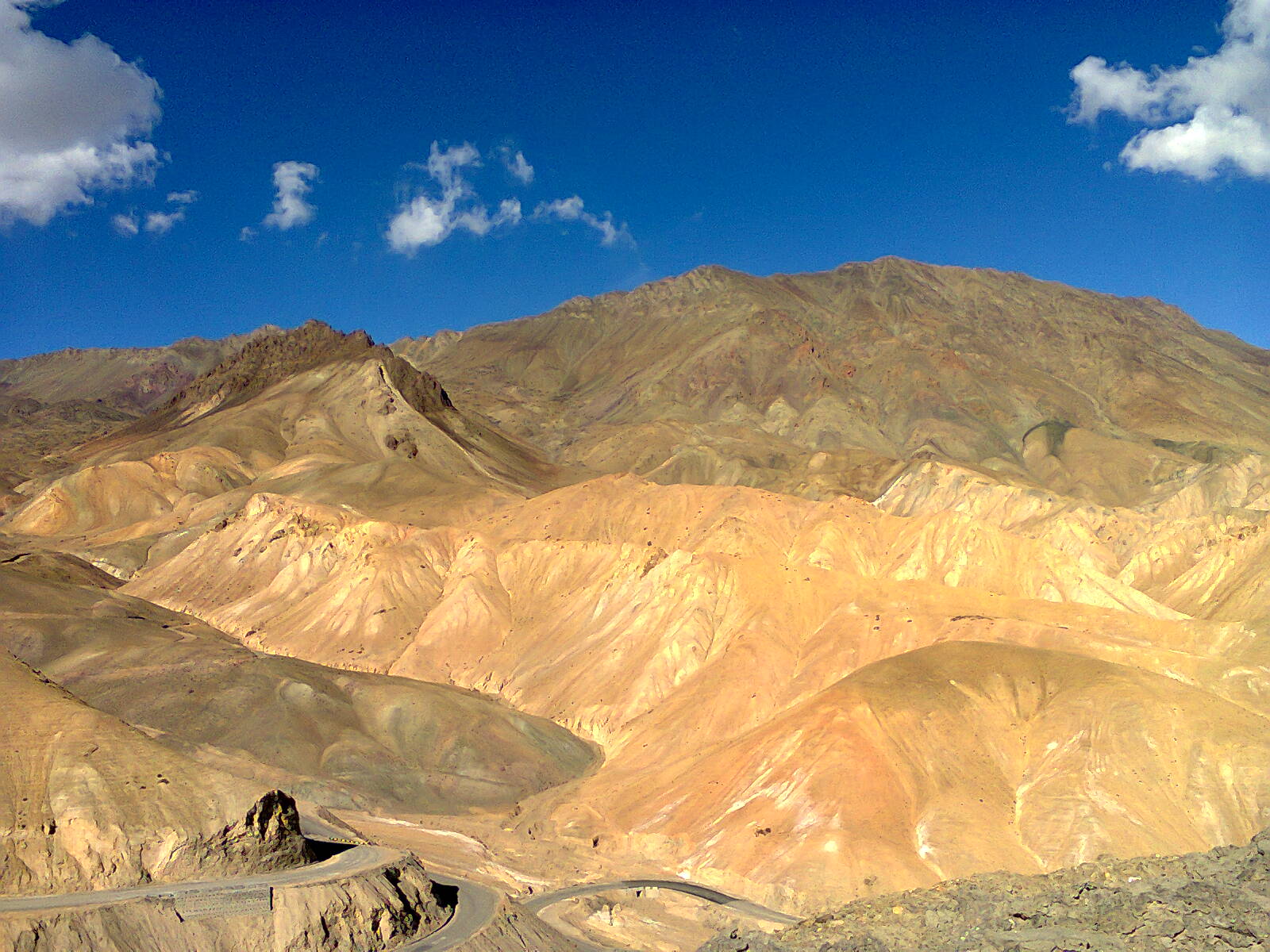
Shorn of trees, Ladakh offers a lunar landscape to the erstwhile traveller who dares reach this northernmost part of India. Also on display are the aquamarine waters of the great River Indus, here its infancy before it flows into Pakistan & down to the Arabian Sea. The proximity of Pakistan was made evident in the Kargil sector – named after a charming little town we passed through in a heartbeat – for here & there were scattered memorials & cemeteries of the Indian Army, who fought in the infamous three-month Kargil War of 1998.
And so, to Leh, the capital of Ladakh, where we have taken a great room for a few days. We have also bought flights to Delhi. My first plan was to travel by road towards Dharamshala, the refuge of the Dalai Lama, but after my recent harrowing experience on mountain roads, I’m like ‘I aint doing that again, fuck off!’
So, when I say capital, Leh is really just the size of a small town in Britain, something like an Indian Barnoldswick. Its situation is one of immense charm, surrounded on all sides by a grey, arid desert which bleeds into a great chain of mountains ringing the wide valley. There is a decidedly end-of-season atmosphere – many hotels & restaurants are clos’d, & only the hardiest of trekkers are in town in order to tour the region. There were a couple, tho’, including a sound Canadian lass named Maia (Berangere Maia Parizeau), & another Candian call’d Tony. We got on well & set off on an evening mission by taxi to some nearby famous temple. We had a great time before dining come evening on some delicious quasi-Tibetan food.
So Ladakh is wicked & it has been decided that tomorrow, VP’s going go trekking into its hinterland for a couple of days & leave me to my studies in peace. I’d lov’d to have gone with him, but the Central Institute of Indian Studies is just on the edges of Leh, & that’s where I’ll be for a few days, burrowing thro’ the books.
VICTOR POPE’S DIARY
After yesterday’s shenanigans, Damo was shaken by the experience, but I wasn’t not unduly concerned about a possible Fatwa. Anyway, at 6am we were off to Ladakh and, more specifically, the town of Leh deep in the foothills of the Himalayas. The taxi drive was the most spectacular and, at times, toe curlingly and butt clenchingly terrifying, I have ever been on. Beginning with dense, richly forested alpine valleys rising into a baron, unforgiving, harsh alien landscape of dusty yellows, blood reds, dirty silvers and shimmering golds. Broken up in great ominous bolders or folded over in velveteen desert lumps. In the shadowy distance the black and white of the distant snow capped mountains rose like great sharks teeth. And still the signs of humanity remained. Surely the most adaptable of all God’s creatures.
Leh itself is a welcome Oasis of calm in the chaos of India. Only the Indian touts hassle you and so far I have yet to spot a single beggar. The ostracised Tibetans and native Ladakians seem to exude an aura of Zen like calm and their food is delicious. Here’s the bit I think Mandy will appreciate.
So far I have tried a Tibetan pasta dish called Thawkum (or something). Kind of a pasta soup with chicken that a splash of sawyer sauce brings delightfully to life. Then there was Yak cheese. Kind of a dry cheddar with a nutty, gamy (if cheese can be such) taste. Although it doesn’t melt well and I wouldn’t recommend it with toast. And finally a mint Lassi that tasted like fresh mint not the choc chip variety we get at home.
So, all in all things are looking up. Damo’s found a Buddhist library to study in and I’ve found a laundry and lots of good places to eat. I’m also going to squeeze in a bit of trekking tomorrow in the Sham Valley that will include a stay in a local village and no doubt lots of poetic panoramas to write paragraphs about. It’s all very organised and safe and above board and it will be nice to give Damo a bit of breathing space for his studies for a couple of days.
We’ve also been mixing with the local traveller dudes, you’re never alone with a Damo in tow. They are both Canadians – Maia and Tony – although they don’t know each other. There’s Mia, a Canadian film maker who’s mother was the sole survivor in a plane crash over Haiti. She fell from the plane while it was at full altitude and was rescued by a tree (!). There is also Tommy, who seemed a little intense at first but after stuffing his face with paneer and a little of me and Damo’s collective (if slightly eerie) charm he soon warmed up, and the gay jokes and chai were flowing.
We finished the day with another spectacular taxi drive (this time with a driver who actually seemed to value his and his passenger’s lives), with Mia and Tony in tow, to an ancient monastery. Mantras cluttering the trees like laundry, the effigies on the walls, though cracked and grimy, retaining their auspicious detail and bright reds, blues and yellows and great technicolour giants of the various Buddhist deities towered over us. Mia snapped it all eagerly with her fancy camera while Tony ambled coolly around and Damo threw leaves at cows. There was also a shed packed to the rafters with dried cow shit. Say no more.
Day 151
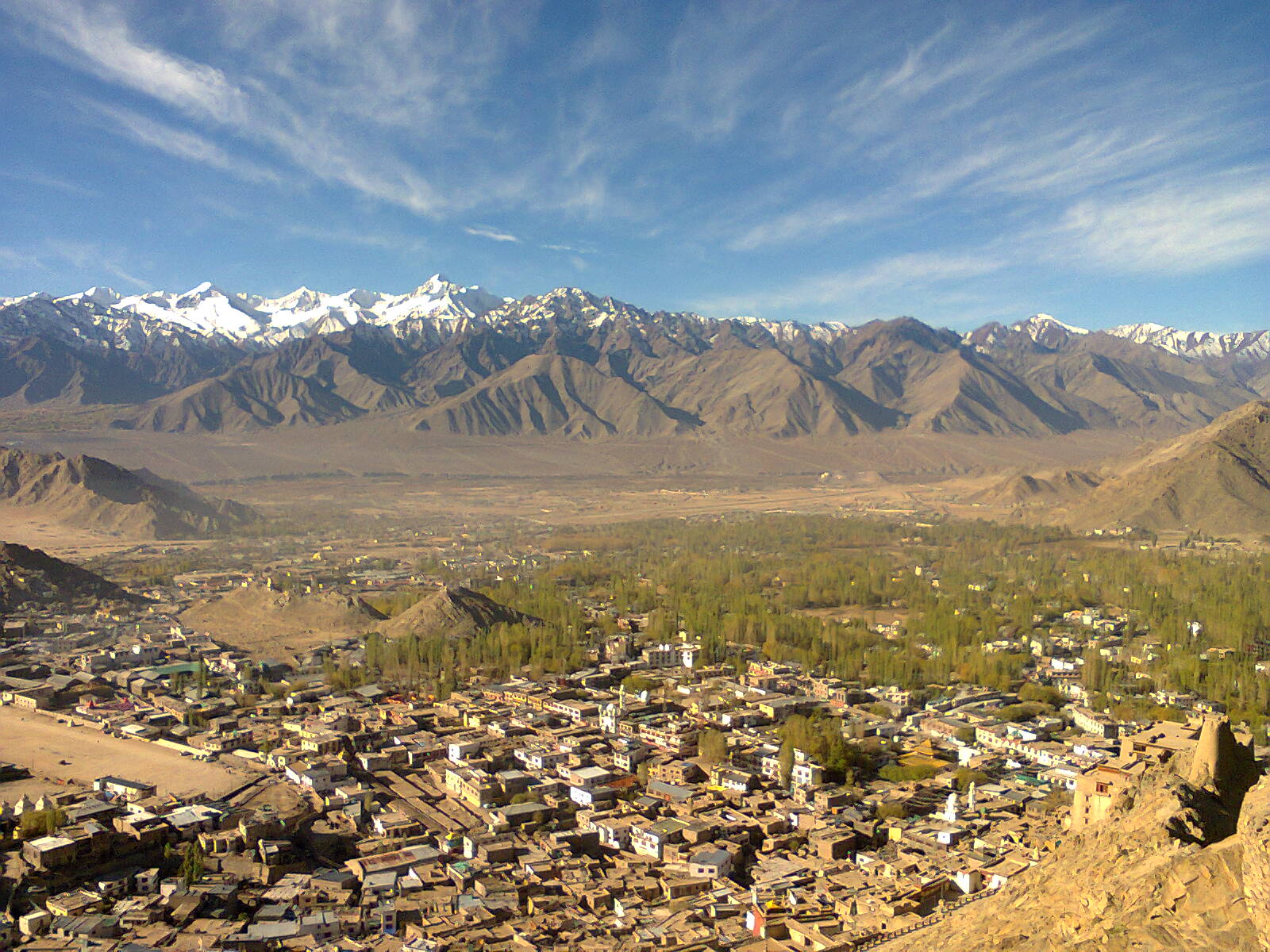
This morning VP set off early doors on his trek & I had the room, & the actual state, all to myself. A remote and scarcely populated land, there is a wonderful austerity to the place, although modernity is slowly seeping into its ancient fibres. Its capital seemed a suitable place to stay during my hunt for Jesus, where several fellow travellers had placed Jesus in these obscure & far-flung reaches of the Himalayas. One would imagine that the following tiny slices of Jesus’ life has never been preached in a Christian church – but does that really make it any less valid a biographical anecdote?
{The legend of Jesus} spread widely through Ladakh, Sinkian and Mongolia… the Hindu postmaster of Leh, and several Ladakhi Buddhists told us that in Leh not far from the Bazar, there still exists a pond near which stood an old tree. Under this tree, Christ preached to the people, before his departure to Palestine
F.A.Platner
In Leh is the legend of Christ who is called Issa… where he was joyously received and where he preached
Lady Henrietta Merrick
They keep sculptured representations of departed saints, prophets and lamas in their temples for contemplation. Some of these figures are said to represent a certain prophet who is living in the heavens, which would appear to point to Jesus Christ.
Meer Izzut-oolah
Semi-autonomous Ladakh is more affectionately known as ‘Little Tibet,’ a moniker reflected in the faces and food which permeate the region. After the Chinese invasion of Tibet in the 50′s, thousands of refugees streamed over the border into India, including the Dalai Lama himself, who currently resides in exile at Dharam Sala, a few hundred K to the south of Ladakh. The Indian government have warmly received the Tibetans, housing some of them 5 miles from Leh in the townlet of Choglamsar. It is there one can find the Central Institute for Buddhist Studies (CIBS), whose library I wish’d to avail myself of.
The journey to CIBS is made by sharing one of the many jeeps that work the route, costing a meagre 20 rupees one-way. The Institute is a pristine & modern affair, with clean, well-built buildings gleaming under the bright sun, with a backdrop of mountains that must be so conducive to academic endeavour. The spacious grounds are dotted with young claret-cloaked monks reading books, schoolgirls chatting about life & studies, while pupils of both sexes carved statues of the Buddha, all wrapped in a peaceful serenity.
On arrival, I was warmly received & given use of an excellent library, whose speciality books on Ladakh & Mahayana Buddhism I could have only really discovered in this very library. This was erudition at its most natural, & as I read, a professor noticed my studies & after a brief conversation, placed a great pile of his own books at my desk. A charming man & an excellent scholar, his books were to prove a valuable asset to my work.
I also was introduced to a professor of Comparative theology, & the institute’s best speaker of English. I spent 20 minutes with him at 11.40 this morning, in the gap between lessons, reading through the copy of Philostratus I have on my laptop. Philostratus was a Roman writer describing what would have been to him the strange dooings of Indian sages, one of whom was call’d Iarchus, whose name definitely sounds like Jesus. To a modern-day Indian scholar, these doings & names are all familiar, & have names & such-like. Thus, it was with the help of his ever-beaming smile that I am able to elucidate Philostratus with a truer & wiser angle.
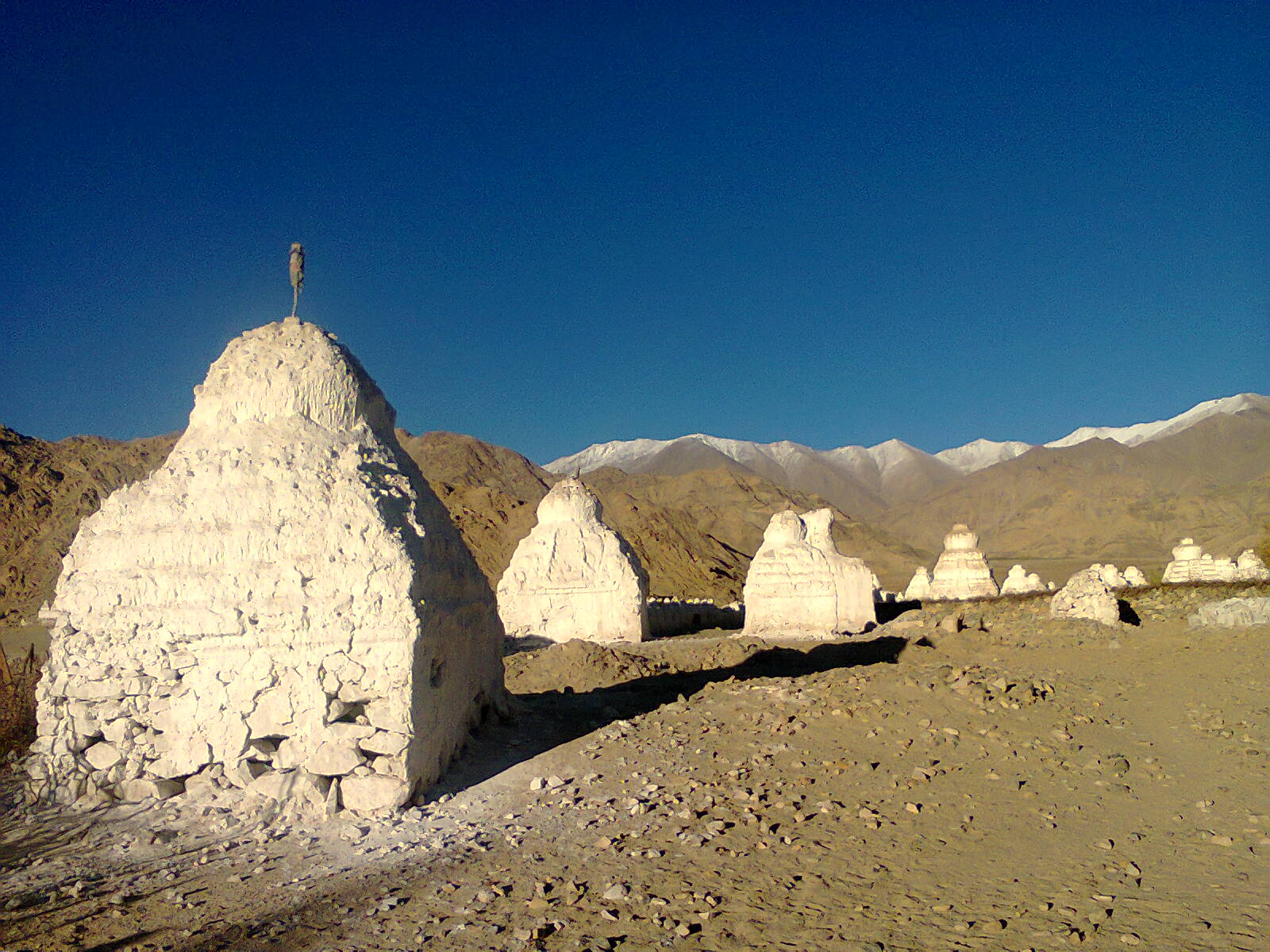
ACADEMIC BITS & BIBS
I also had a major breakthro’, today, which basically goes like this. Notovich’s Jesus was call’d Issa, of whom he writes;
He spent six years in Djagguernat, in Radjagriha, in Benares, and in other holy cities. The common people loved Issa, for he lived in peace with the Vaisyas and the Sudras, to whom he taught the Holy Scriptures.
They taught him to read and to understand the Vedas, to cure physical ills by means of prayers, to teach and to expound the sacred Scriptures, to drive out evil desires from man and make him again in the likeness of God.
The Brahmins and the Kshatriyas told him that they were forbidden by the great Para-Brahma to come near to those who were created from his belly and his feet;
That the Vaisyas might only hear the recital of the Vedas, and this only on the festal days, and That the Sudras were not only forbidden to attend the reading of the Vedas, but even to look on them; for they were condemned to perpetual servitude, as slaves of the Brahmins, the Kshatriyas and even the Vaisyas.
“Death alone can enfranchise them from their servitude,” has said Para-Brahma. “Leave them, therefore, and come to adore with us the gods, whom you will make angry if you disobey them.”
But Issa, disregarding their words, remained with the Sudras, preaching against the Brahmins and the Kshatriyas.
He declaimed strongly against man’s arrogating to himself the authority to deprive his fellow-beings of their human and spiritual rights.
“Verily,” he said, “God has made no difference between his children, who are all alike dear to Him.”
The Jesus described in Notovich’s ‘Life of Issa’ is an independent thinker, branching out into his own dogmas and preaching universal acceptance to all who wished to enter the Kingdom of Heaven. Just as the Sanhedrim reacted badly to Jesus in Judea, Issa’s radical new message was met with indignance by those who held the religious status quo in India, and his death was similarly ordered by the Brahmin priesthood. The main point of offence was Issa’s rejection of the caste system, and his pronouncement that, ‘God has made no difference between his children, who are all alike dear to Him,’ a notion which neatly reflects the Gospels’, ‘Jesus pronounced many ‘woes’ to the scribes, Pharisees and hypocrites… For you shut up the kingdom of heaven against men; for you neither go in yourselves, nor do you allow those who are entering to go in.’ (Matthew 23:13)
A highly similar, anti-establishment, god-loves-us-all message to that preached by Issa is found in a Sanskrit text I studied today called the Vajra Suchi.
All that I have said about Brahmans you must know is equally applicable to Kshatriyas; and that the doctrine of the four castes is altogether false. All men are of one caste… whoever in this life ever does well, and is ever ready to benefit others, spending his days and nights in good acts, such an one is a Brahman; and whoever, relinquishing worldly ways, employs himself solely in the acquisition of Moksha, such an one also is a Brahman; and whoever refrains from destruction of life, and from worldly affections, and evil acts, and is free from passion and backbiting, such an one also is a Brahman… and whoso has read all the Vedas, and performed all the Tirthas, and observed all the commands and prohibitions of the Sastra, such an one is a Brahman! and whoso has never injured a sentient thing by act, word or thought, such a person shall instantly be absorbed (at his death) in BRAHMA.
Of the discovery of the text, the 19th century British scholar, BH Hodgson, was a polymathic civil servant of the British Empire who enjoyed studying the anthropological natures of Indian religions. In his introduction to the Vajra Sucha, he writes;
A few days since my learned old Bauddha friend brought me a little tract in Sanscrit, with such an evident air few of pride and pleasure, that I immediately asked him what it contained. “Oh, my friend!” was his reply, “I have long been trying to procure for you this work, in the assurance that you must highly approve the wit and wisdom contained in it; and, after many applications to the owner, I have at length obtained the loan of it for three or four days.
It consists of a shrewd and argumentative attack, by a Bauddha, upon the Brahmanical doctrine of caste: and what adds to its pungency is, that throughout, the truth of the Brahmanical writings is assumed, and that the author’s proofs of the erroneousness of the doctrine of caste are all drawn from those writings. He possesses himself of the enemy’s battery, and turns their own guns against them.
We all know that the Brahmans scorn to consider the Sudras as of the same nature with themselves, in this respect resembling the bigoted Christians of the dark ages, who deemed in like manner of the Jews. The manner in which our author treats this part of his subject is, in my judgment, admirable, and altogether worthy of a European mind.
The Bauddha Treatise commences in the sober manner of a title page to a book; but immediately after the author has announced himself with due pomp, he rushes “in medias res,” and to the end of his work maintains the animated style of vivâ voce disputation. Who ASHU GHOSHA, the author, was, when he flourished and where, I cannot ascertain. All that is known of him at Nepal is, that he was a Maha pandit, or great sage, and wrote, besides the little Treatise now translated, two larger Bauddha works of high repute
Its attribution to the pen of a certain Ashu Ghosha raises the distinct possibility that its author was in fact Notovich’s Issa, whose name is actually pronounced ‘Isha,’ from the Sanskrit of īśa.
Issa
Isha
Asha
Ashu Ghosha
Asvaghosa
In the above extract from the introduction to his translation, we may discern how Ashu Ghosa’s, ‘shrewd and argumentative attack… upon the Brahmanical doctrine of caste,‘ has a direct match in the anti-brahmanical, ‘discourse to the Sudras,’ as given by Issa in Notovich’s ‘Life’. Support for the correlation comes from Issa’s declaration of there being ‘no difference‘ between god’s children, which matches Ashu Ghosha’s statetment that, ‘all men are of one caste.’ It makes sense that Ashu Ghosha was the same man as Issa/Jesus, for in the Gospels Jesus is seen breaking Jewish taboos by dining with prostitutes and touching ‘lepers,’ who like the bottom-caste sudras of India were considered to be ‘untouchables.’
Analyzing the etymology of Ashughosha’s name, the ‘ghosha’ epithet means ‘speech,’ with the author of the Vajra Sucha possessing a fully-translated name of ‘Speech of Ashu/Ashva.’ The name ‘Asva’ element derives from ‘Ashavan,’ which means ‘the possessor’ of the Zoroastrian ‘Asha.’ This knowledge lifts the veil from an obscure passage in the Book of Revelations, the last book of the New Testament. In it we learn that Jesus possessed a name rather like ‘the speech of Ashu.’
Now I saw heaven opened, and behold, a white horse. And He who sat on him was called Faithful and True, and in righteousness He judges and makes war. His eyes were like a flame of fire, and on His head were many crowns. He had a name written that no one knew except Himself. He was clothed with a robe dipped in blood, and His name is called The Word of God.
Ashu Ghosha is more commonly known as the Zoroastrianesque Asvaghosha. Little is known about the man. His life story contains only a smattering of biographical material that has been left to posterity through scattered Tibetan and Chinese traditions. In these, & every other account of Asvaghosha, his birthplace and parentage differ widely, flung across India from top to tail; a confusing collection which leads one to think that his true origins were actually unknown. The problem has been analyzed in great detail by Daisetsu Teitaro Suzuki (1870–1966), the great Japanese scholar of all things Buddhist, who states;
Among the Chinese traditions the Record of the Triratna (Li tai san pao chi) as well as the Accounts of Buddha and the Patriarchs (Fo tsu tung chi) agree with Târanâtha in placing Açvaghosha’s native land in the East {of India}; but the Life of Vasubandhu makes Açvaghosha a native of Bhâshita, while in Nâgârjuna’s work, the Mahâyânaçâstravyâkhyâ (Shih mo ho yen lun), he is mentioned as having been born in Western India… The Record of Buddha and the Patriarchs Under Successive Dynasties (Fo tsu li tai t‘ung tsai) agrees with neither of the above statements, for it says (fasciculus 5): “The twelfth patriarch, Açvaghosha Mahâsattva was a native of Vârânasî… A further contradicting tradition is pointed out by Prof. S. Murakami in one of his articles on the history of Buddhism, quoting the Shittanzô (fas. 1), which makes Açvaghosha a man of South India… A few more details about Asvaghosha can be obtained from oriental sources, but only serve to confuse the real man.
Varanasi is also known as Benares, & I’ve already shown how Issa spent time in that sacred city. This offers no clear proof, of course, but all the general confusion about Asvaghosha’s origins imply he could well have born outwith India, offering convoluted support for him being the Judea-born Jesus.
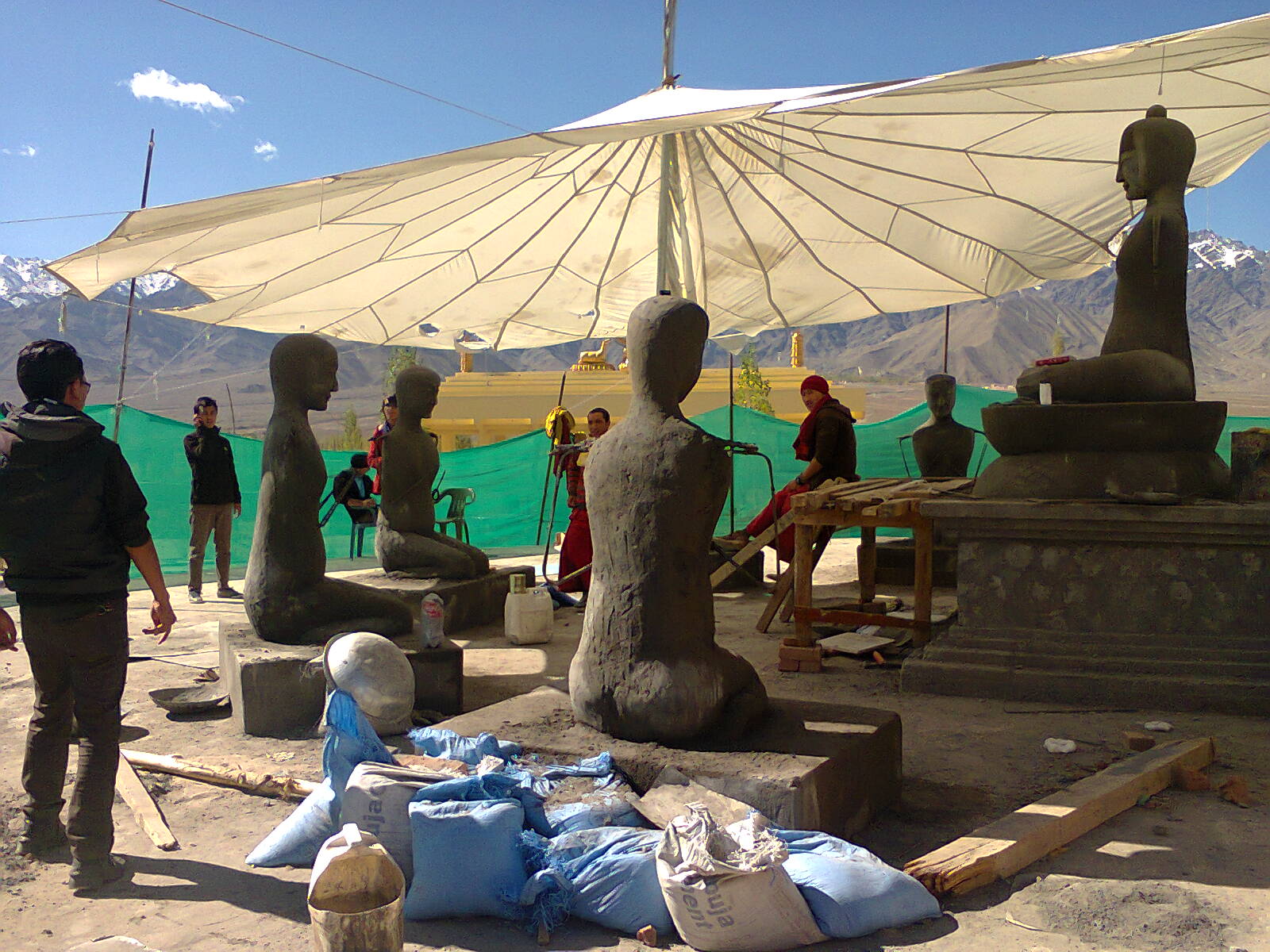
VICTOR POPE’S DIARY
My trek began with a two hour taxi drive, in which (whether to wind me up or not is unclear) my guide, Rigzin, was constantly pointing out the dullest looking valleys in view and declaring this would be where we were trekking. And they always seemed to be twenty minutes away. Happily when we did arrive at the destination it was fairly spectacular. A great sandy gash in the rocks that was instantly reminiscent of a thousand Sergio Leon films. I hummed the theme from “The Good, the Bad and the Ugly” as we sauntered ever deeper into the craggy ravine. All we were missing was the token luggage bearing donkey.
After a pleasant downhill amble the path soon reminded us that with every down must come an up and, after a brief stop at a delightful stream where Rigzin washed his face and I was told off for attempting to drink the water, came the brutal scramble to our first pass. Ladakh, incidentally, means “Land of Passes”. I reached the top in a single attempt, however (all those trips up Arthur’s seat apparently paying off) and was greeted by a spectacular panorama of jagged, viscous browns and yellows, peppered with the occasional light green of a poplar tree or those strange purple, flint like rocks. All framed by the ever present shark tooth peaks rising in the distance.
It was only a brief stroll down the welcome tarmac of a “Proper” road and we would arrive at our first village and the close of the first days trekking. The gentle pace of this final stretch gave me the ideal opportunity to get to know Rigzin a bit better. It turned out we had quite a bit in common. Not only was he into films but he was also a musician and producer who had his own band. He was also currently at a crossroads in his life, as he had been offered production work in Belgian and was afraid of leaving his simple country life in search of the fame and fortune and bright lights of….Brussels. I told him it was nothing to worry about but he was convinced it would be the ruin of him. Oh Brussels, you dark, malignant whore of a city. How often I have feared your vipers grip. But no, he was convinced a trip to Brussels would be an instant entry into the Devils Bargain. And, what did I know? I had myself many years ago given up the wholesome, loving arms of Kendal in pursuit of the seductive din and empty promises of that neon siren, Barnsley. But I digress. He is a lovely man and I wish him every luck whatever disission he makes.
When we arrived at the village it was barely mid day and the choice was soon made to, once we’d munched our tuna sandwiches, keep buggering on (as my Gran would say) and do the second days trek that day. After all there was little to entertain in this village, where as Rigzin assured me the next village had a lot more going for it, not least the fact that it was the birth place of his Mother and home to a good part of his family. So on we pressed. Rigzin stating telling me what we were doing was known as double trekking and only 5 in one hundred trekkers were capable of it. Again I was dubious of the truth of this allegation but none the less took it in good spirit and upwards again we climbed.
A punishing hour later we arrived at the highest pass of the trek. Four thousand five hundred metres above sea level. To put it in perspective that’s about one and a third Ben Nevis’s. The view was understandably spectacular but I was nearly dying so it was hard to appreciate. Rigzin persuaded me however, to take one final scramble up the final rocky peak and lay a stone on the piles that had been placed there by my fellow conquerors.
When we arrived at the village it was still far from nightfall and I had plenty of time for a cup of tea made by Rigzin’s smiling cousin and a read on my comfy double bed that adjoined the white square big windowed construction of the guest house. All rickety fences, walls of strange pots and pans and cooking implements, red patterned mats to sit cross legged on, roof packed with hay for the winter, strange smells and baskets of cow shit picked like fruit as fuel for the fire.
Around seven I was invited to join the family to help them make the pasta shapes known as donkey ears for the evening meal. We were joined by the mother, dressed in the traditional red and black thick dress of the region, the grandmother with her peculiar tall winged woolly hat and ever spinning hand prey wheel, and Rigzin’s uncle with his constant offering of butter tea. Kind of a savoury tea where salt replaces sugar to flavour. All in all the food was a somewhat stodgy but well filling affair that I’m sure works well with the harsh physicality and climate of the region. The evening was spent watching TV as Rigzin fiddled with his mobile phone, as it is in homes all over the world. He played me some of his tunes which were indeed excellently produced. He has a bright future ahead of him if he’d get some of these Faustian ideas out of his head.
Day 152
Today was an unusual day. On the way to CIBS, just down the road from my hotel, I receiv’d a rather rude shock from a stray street dog. As I was walking up an alley, the bitch pass’d me by, then a few moments later bit my lower left leg in a vicious attack from behind. It turns out she was protecting her new pups who I had inadvertently wandered close to. Within the hour I had hobbled to the local hospital, where I was prescribed a course of anti-rabies jabs – 3 at first & two more of the dog dies within ten days – plus a tetanus boost.
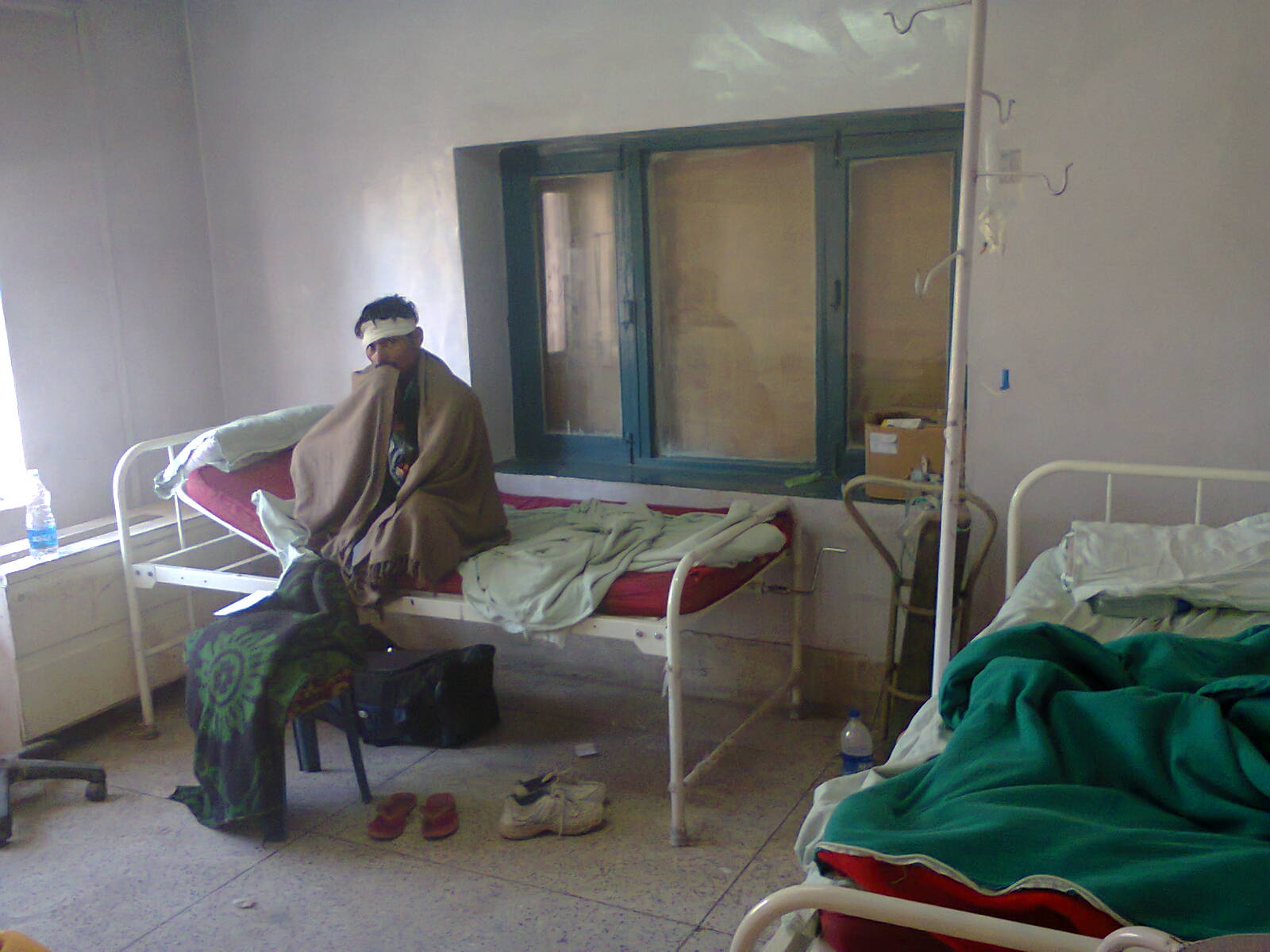

So, I’d call’d off my studies for the day, & I was breakfasting away in the street when the sound Canadian lass we’d mee the other day, Maia, bluster’d into town rather upset. Turns out this guy who’d driven her 150 k away & then back the next day was a right sleazebag. There’s something about being British, like, which defines you as a moral international policeman, & being a chivalrous soul I thought I’d help her out. So, we march round to his office where he was indeed a bit of a scumbag – a big bully basically. Anyhow, I got the police involved & not long after me, Maia, the nobhead & the chief of Ladakhi police are all sat in a room thrashing it out. We could have brought the guy down, but being emotionally unattached to the case I managed to calm Maia down enough for her to accept an apology from a now very humbled bully & a little financial renumeration. Leh is a small town & I think the guy will think twice before behaving dodgy again – public humiliation is a powerful (she was screaming he was a pervert in the street for example) & there’s no need for the guys wife & kids to suffer for the sleazy dad!
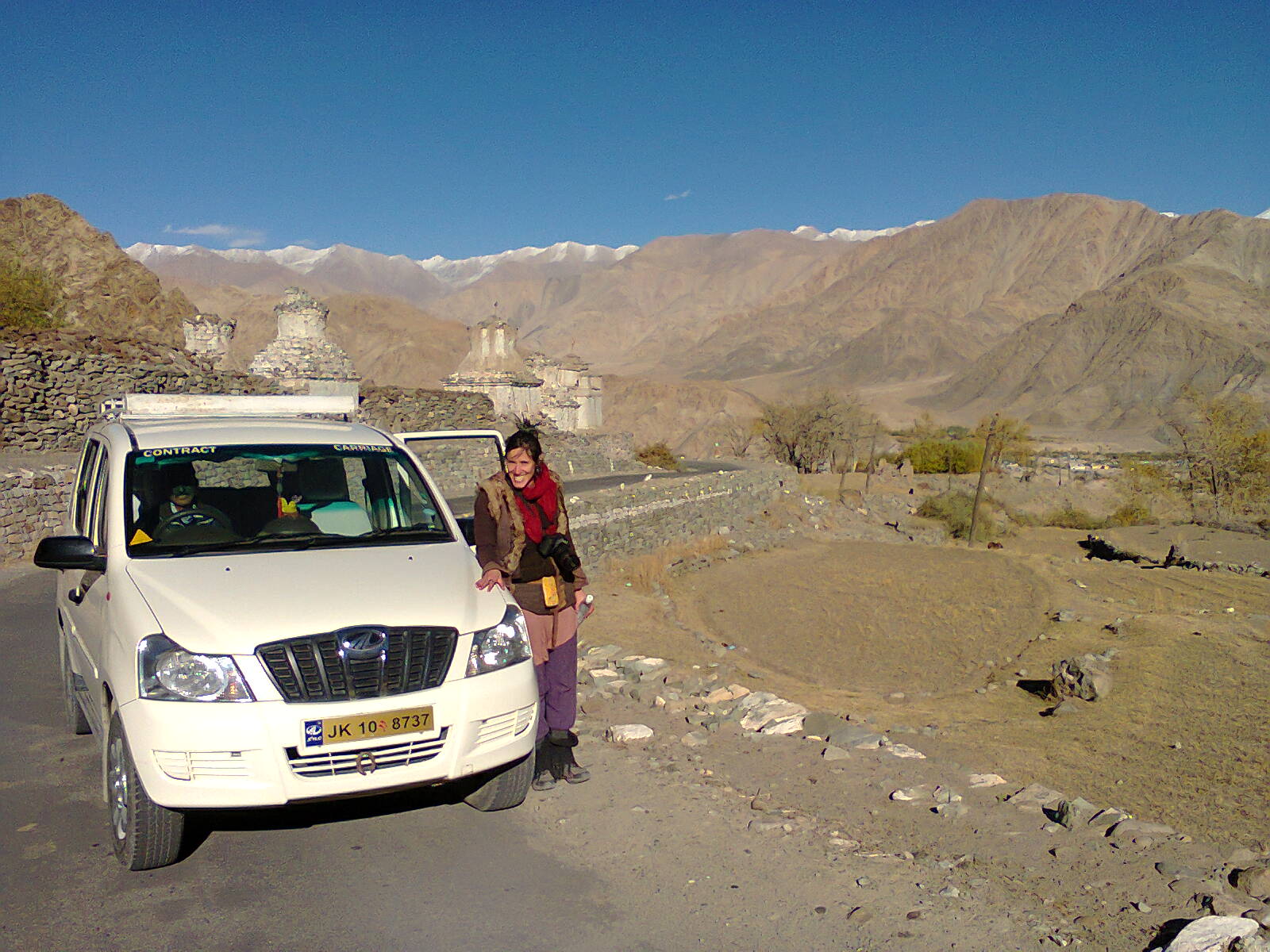
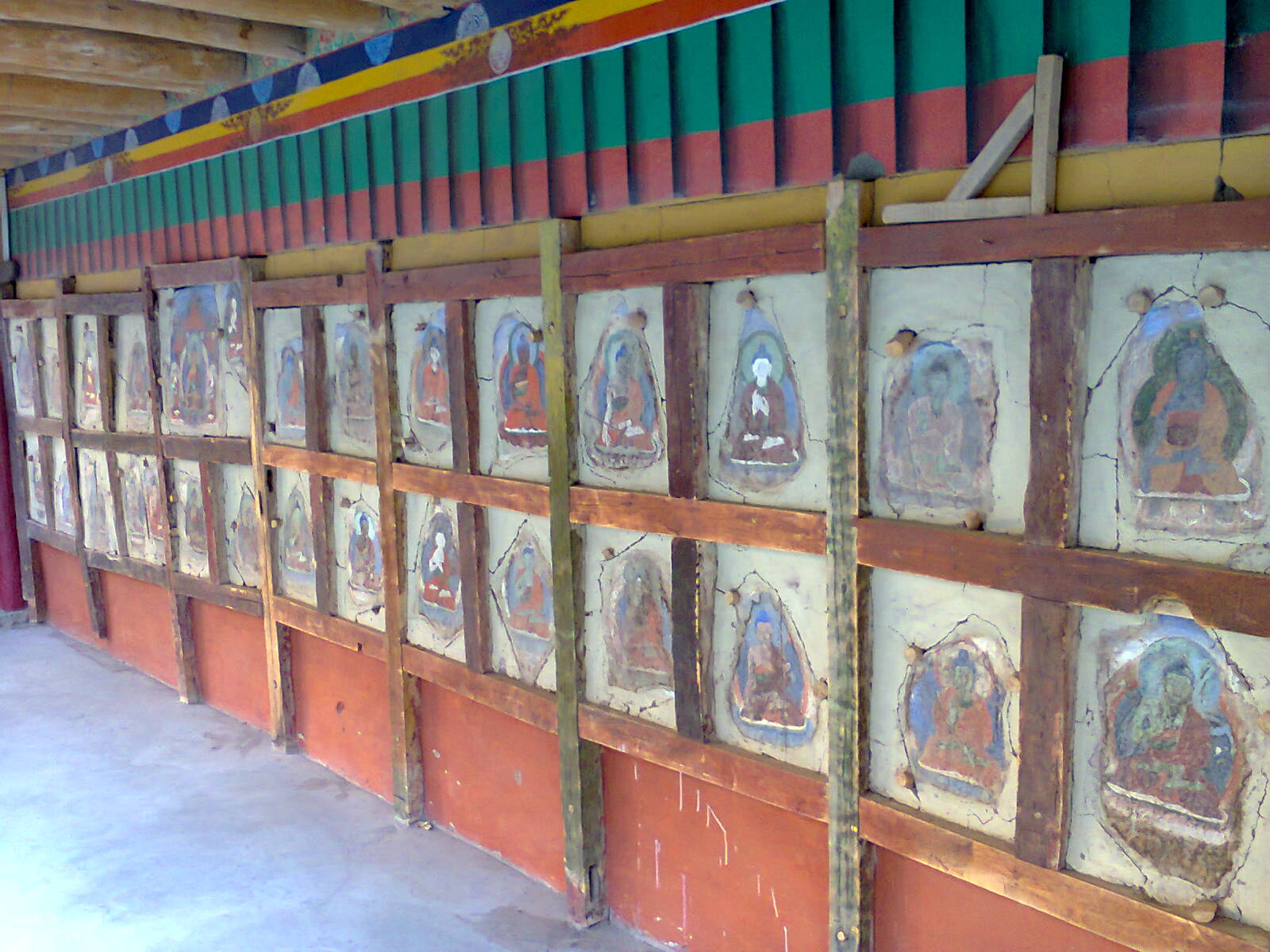
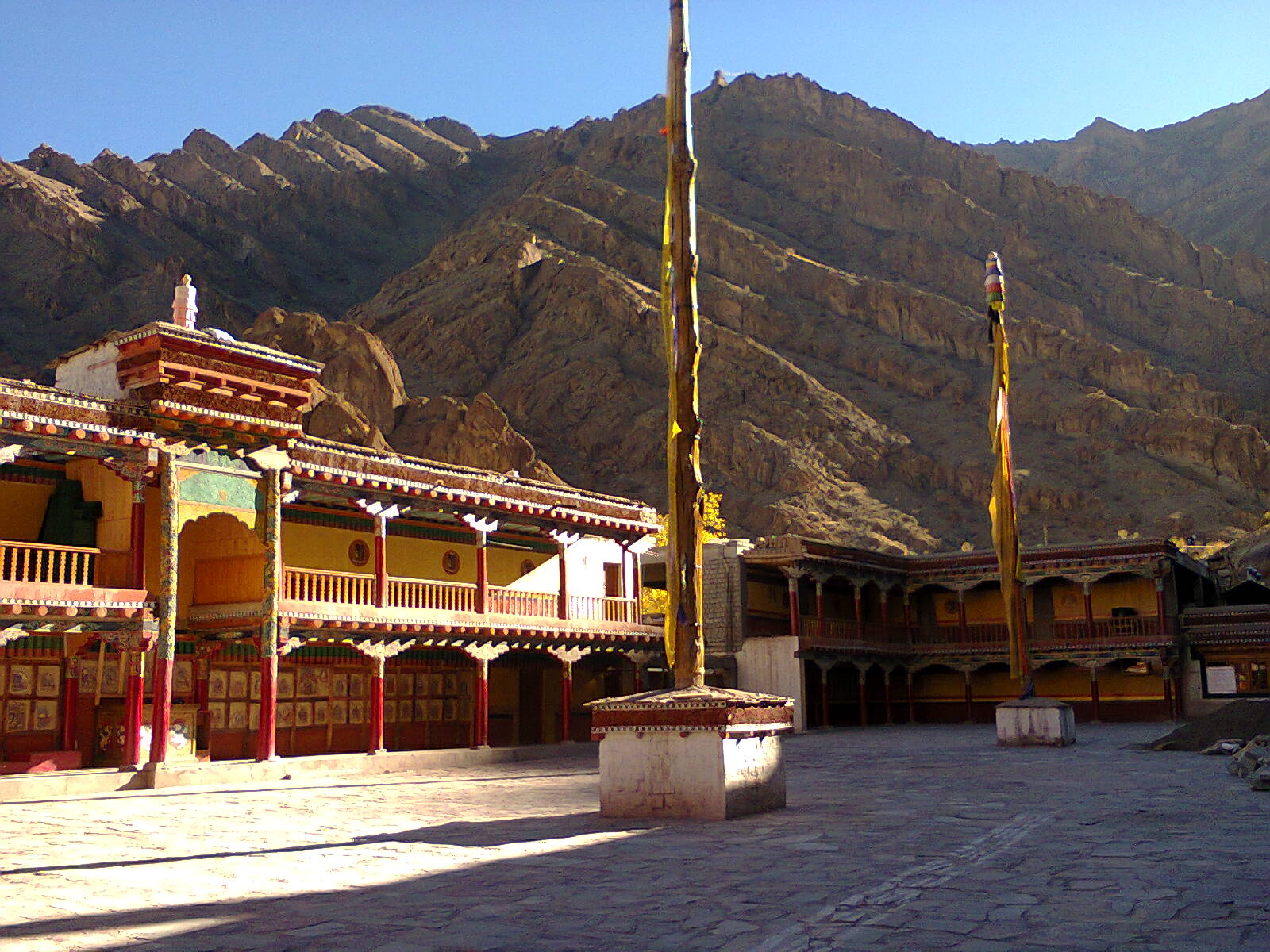
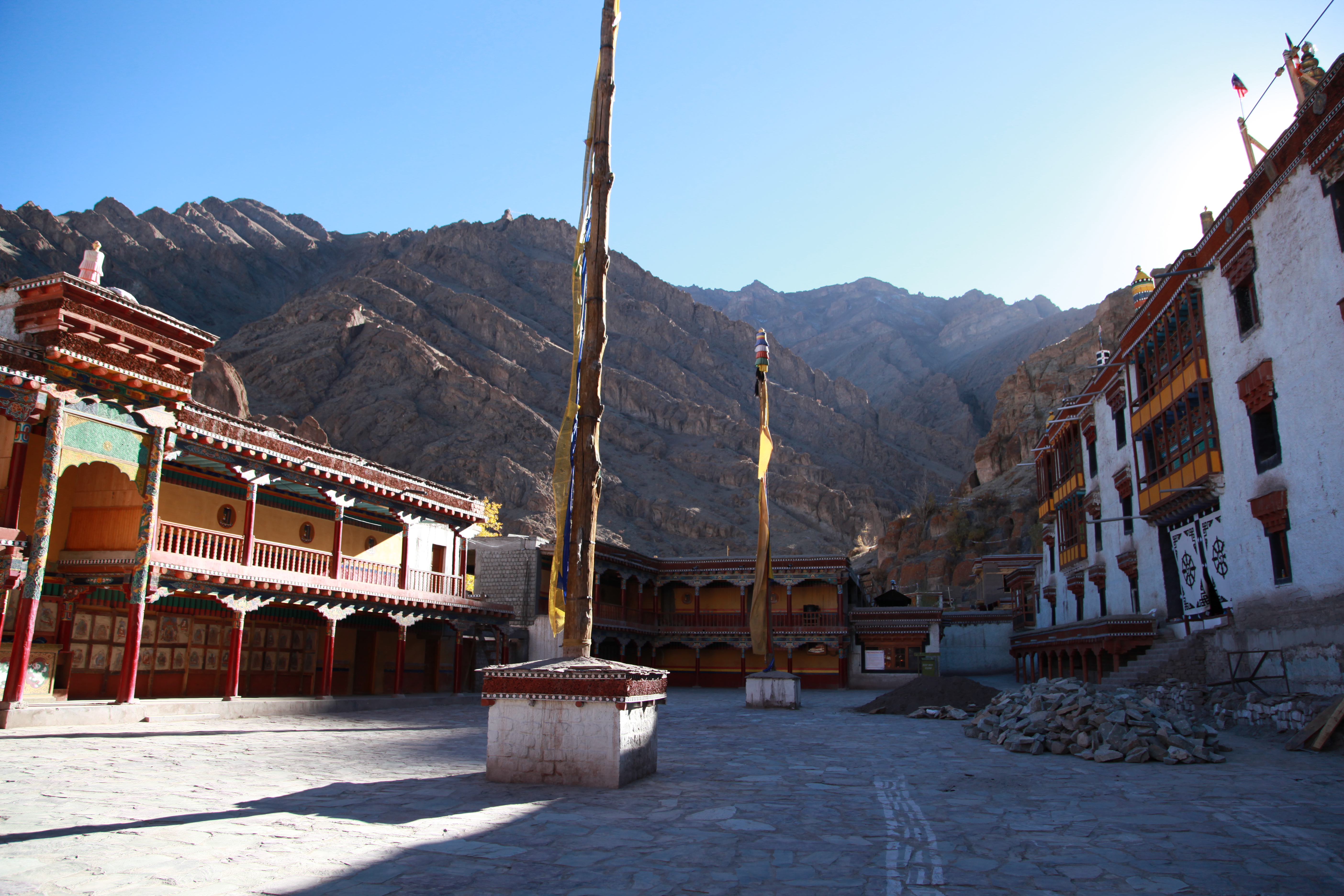
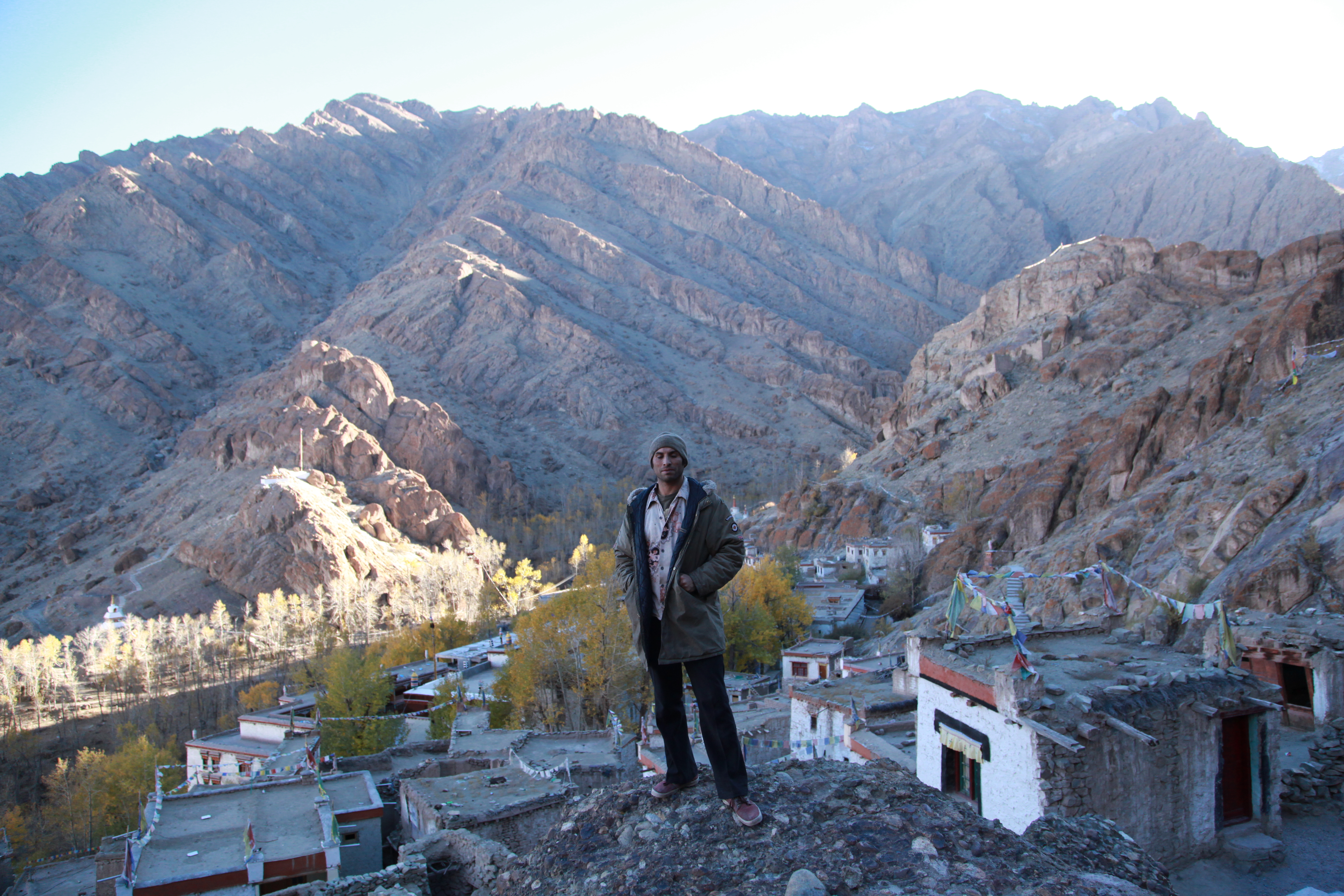
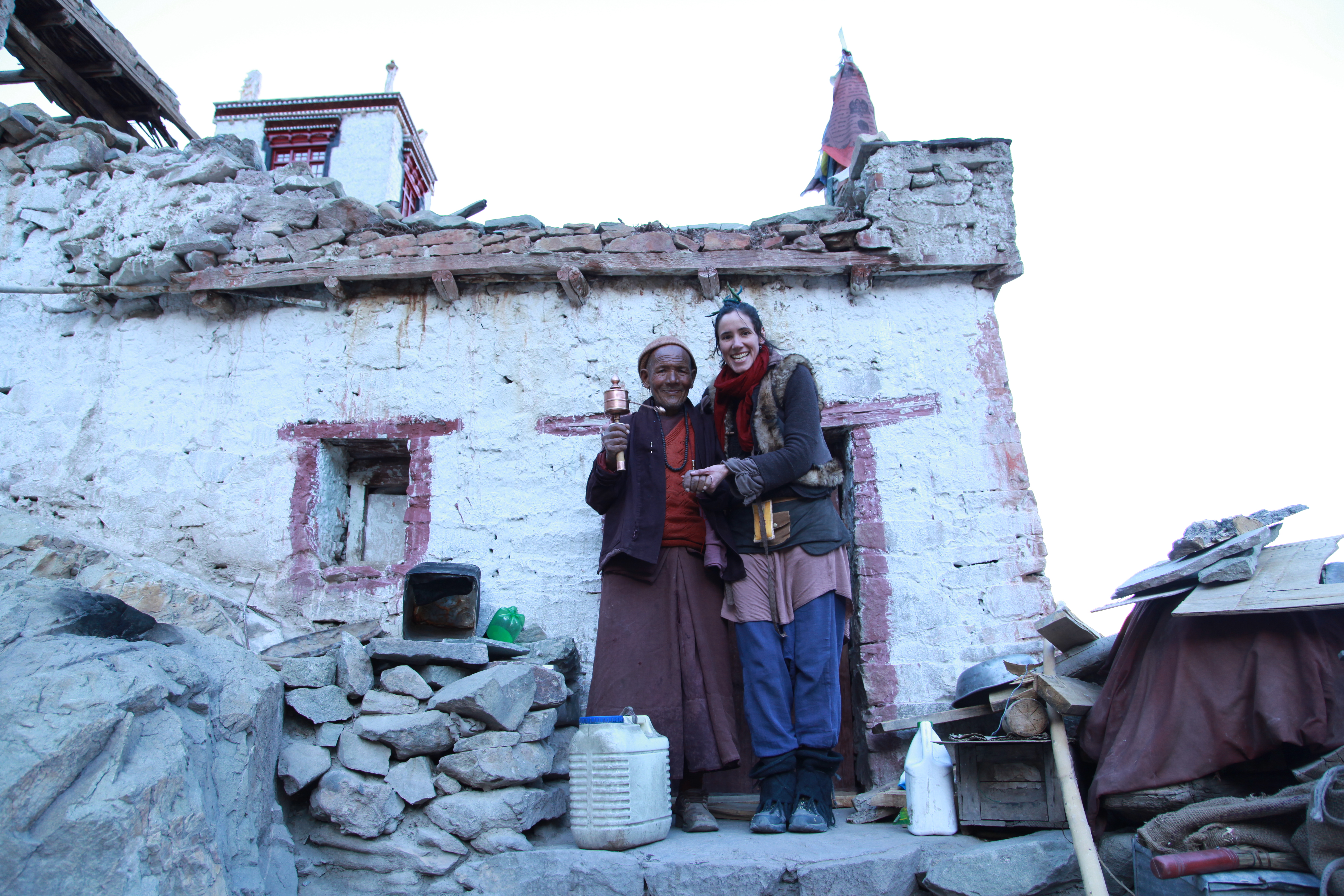

After this, me & Maia hopped in a taxi 40K to the amazing Buddhist monastery at Hemis. On the way she told me about how her mum was the only survivor of a plane crash in Haiti, & as she was a film-maker she made a documentary of the story. Our destination was Hemis, hidden in a mountainous fold of the Himalays, where all the Jesus-in-India ‘ressurrection,’ let’s say, began. Way back in the 1880′s, Nicolas Notovich found himself laid up in the monastery with a broken leg, being read extracts from an unknown life of Issa, i,e. Jesus, such as;
When Issa was thirteen years old, the age at which an Isrealite is expected to marry, the modest house of his parents became a meeting place of the rich & illustrious, who were anxious to have as son-in-law the young Issa, who was already celebrated for the edifying discourses he had made in the name of the All-powerful. Then Issa secretly absented himself from his father’s house: left Jerusalem, & in a train of merchants, journeyed towards the Sindh.
The rest of Notovich’s controversial book, published in 1894 as ‘The Life of Issa,’ it describes how after Jesus travelled to India as a teenager, he pursued an intense programme of study in the sacred scriptures. The most significant feature of Notovich’s book is that, for the first time, the two traditions of Jesus are reconciled into one seamless text, in which Jesus is presented as spending time in both Judea and India. The sources, as Notovich tells us, were ancient Tibetan scrolls that had been translated to him at the Hemis monastery, ‘compiled from diverse copies written in the Thibetan tongue, translated from rolls belonging to the Lassa library and brought from India, Nepal, and Maghada 200 years after Christ‘ That Notovich visited the monastery was confirm’d in the 1960s, when the following diary entry was discovered at the Moravian Mission in Leh;
When I visited the Lamasery [Monastery] at Hemis, and together with the Lama Ishe Tundup and Mr. Stobden interviewed the ‘Manager’ (The young head Lama being in Tibet studying), the other Lamas who also were present belonging to the Monastery immediately said that their older monks did remember an Englishmen being injured and brought to their Monastery and that some manuscripts were shown to him.
In the 1920s, Swami Nirmalananda Giri describes how Swami Trigunatitananda, ‘not only saw the manuscript in Himis, he also was shown two paintings of Jesus. One was a depiction of His conversation with the Samaritan Woman at the well. The other was of Jesus meditating in the Himalayan forest surrounded by wild beasts that were tamed by His very presence.’ Then in 1939, a Swiss matron named Elizabeth Caspari visited the Hemis monastery. Caspari reports how the chief librarian at the time showed her the scrolls, which he allowed her to examine while declaring, ‘these books say your Jesus was here.’
The claims made by Notovich caused a great deal of consternation throughout the Christian world, while the beautiful and tranquil idyll of Hemis suddenly became the eye at the centre of an ideological hurricane. This growing furore seems to have startled the monks into hiding the scrolls, for after 1939 these precious scraps of paper seem to have vanished completely. This lack of hard evidence inevitably led to a growing sense of academic indifference to the text, treating it at best as an unprovable curio, and at worst a complete fraud. Despite this, the legend of the scrolls had been firmly established, and throughout the twentieth century a series of scholars made the trek to Hemis hoping to see them at first hand. One of these hardy spirits was the young Holger Kersten, author of the widely-read, ‘Jesus Lived in India,’ who describes his experience as follows,
With an understanding smile, the wise lama instructed me first to find the Truth for myself, before attempting to convert the whole world… Finally, the old man informed me that the scriptures in question had already been looked for, but nothing could be found.
Roll on four decades and it seems that somebody at Hemis had found the scrolls. This vital reference is found buried in an Indian newspaper’s story concerning a Buddhist spiritual leader called Kyabje Thuksey Rinpoche.
We have a hand written manuscript of Jesus Christ in our secret library but we have not yet got the opportunity to make it public to the world
The Hindu Times – June 23rd 2013
In the middle of deriding the Indian government’s attitude to Buddhism, Rinpoche rather innocuously slips in the statement: ‘We have a hand-written manuscript of Jesus Christ in our secret library but we have not yet got the opportunity to make it public to the world.’ If the top lama of Hemis monastery, a man very much in the know, admits to possessing such controversial scrolls, who are we to claim any different? Unfortunately for my investigation, Rinpoche was in Delhi on religious business, but I didn’t mind, just being here was buzzing.
Back in Leh, Berangere decided she didn’t want to be alone that night. So stay’d with me – in my bed. She was cute, like, & on another day I might have made a move, but making a pass at someone who’d just had a difficult sleazy situation with another guy just didn’t feel right, so the English gentleman in me kiss’d her on the forehead & slipp’d into a Ladakhi dream.
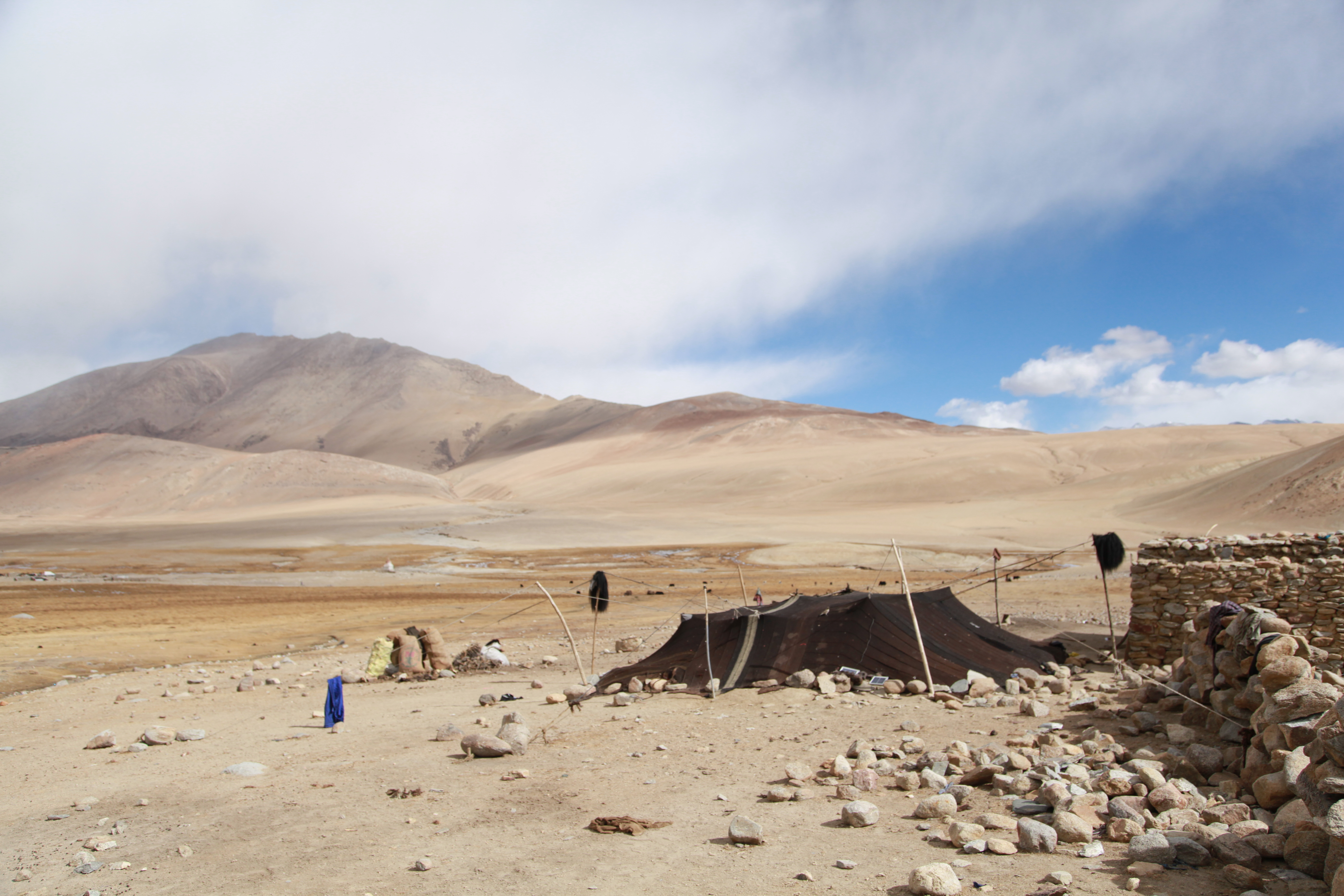
VICTOR POPE’S DIARY
As I’d double trekked the previous day we had a day to chill out and enjoy the sights of Rigzin’s village. Admittedly there wasn’t much to see but I did get a nice philosophical discussion about money and power with Rigzin and I did get to watch his Granddad, who had a face as cracked and lined as the surrounding landscape, make a traditional spiritual drum out of animal hide, wood and metal. In the evening I helped make tea again. Only this time it was the far easier on the stomach Mu Mu’s which are kind of like Tibetan dumplings served up with some cream of vegetable Knors cup-a -soup.
A previous trekker had left some reading materials for people like me, and I read a beautiful book of poetry and photography called simple “Ladakh” and a couple of articles in an Indian magazine called New Frontier. It turns out the Baba’s of India are just as depraved as our own catholic priesthood. Only add to the regular tales of sexual abuse an added layer of corporate corruption prevalent in many of India’s ashrams. There are a brave gang of Atheist crusaders from Kerala, however, who are combating this exploitation. Even proposing a law to ban superstition itself. India is, as ever, a land of extremes.
Then it was TV again, only this time with the full family compliment and the obligatory power cuts, and bed.
Day 153
This morning I headed back to CIBS, where not long after arriving I was taken from the library & introduced to a Sanskrit scholar. We sat in the sunshine, a small gaggle pupils observing our conversations, & I thought this would be the perfect opportunity to test out one of the chief tenets of my blossoming theory. In essence, I said that not only did Jesus survive the Crucifixion, but he went on to compose seminal texts in India which would form the fundamental pillars of Krishnaism & Mahayna Buddhism. Part of the theory is conflating two Indian poets into the same person – the anonymous author of the Bhagvad Gita & Asvaghosa. I didn’t get that far into my theory, though, I just wanted to see what an Indian expert thought. He straight away denied its possibility, & of course I thought I’d set him straight. The difference between conventional academics & the chispologist, is where the academic merely brushes the surface & accepts the work of his peers past & present to be gospel, the chispologist looks a hell of a lot deepr. Suffice it to say, after challenging his arguments with rational thoughts & fresh insights, he began to pace up & down & slap his forehead in confusion.
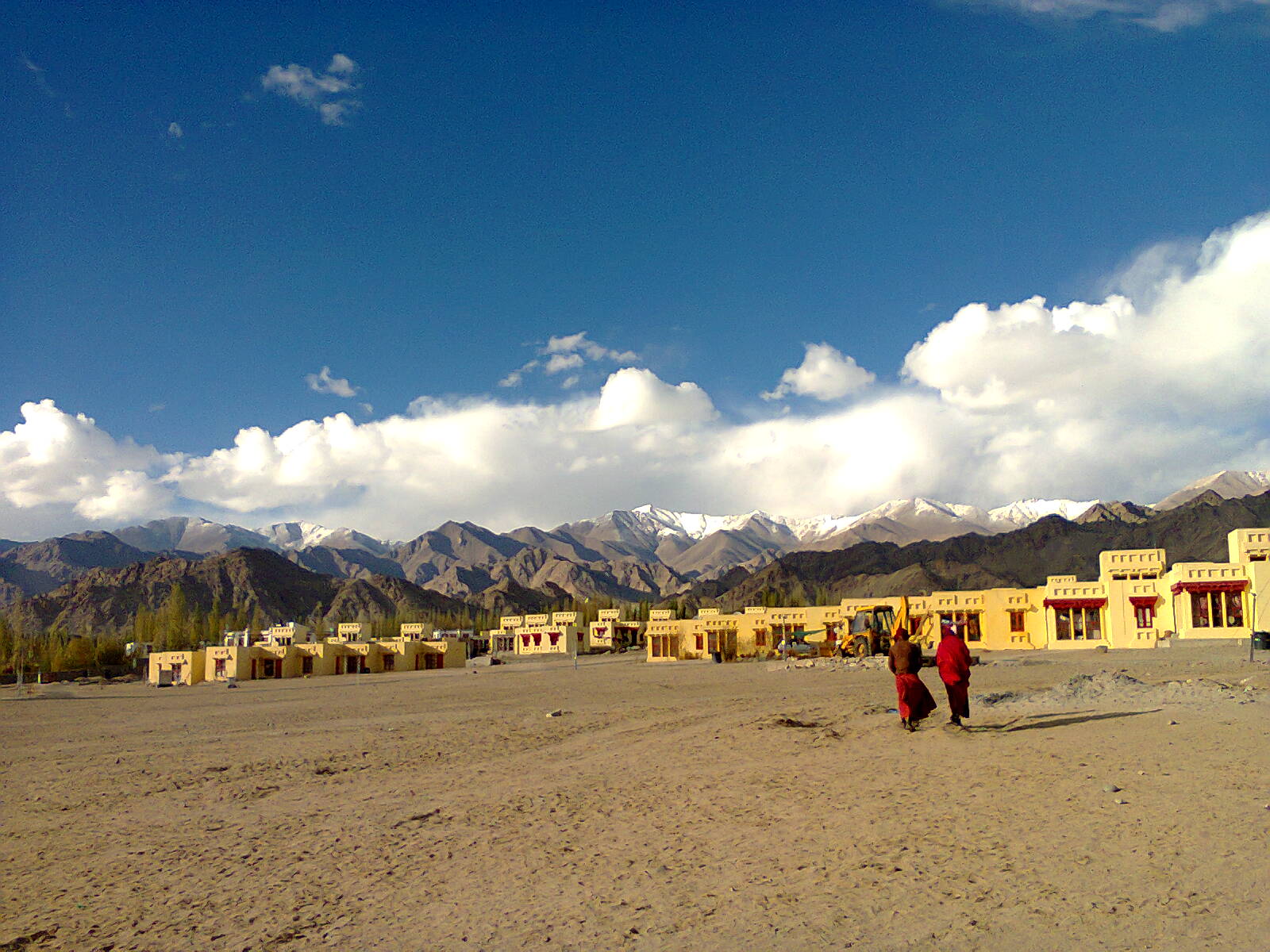
‘Asvaghosha,’ he said, ‘could never have compos’d the Bhagavad Gita, he is a poet.’
‘But Professor,’ I replied, ‘the Bhagavad Gita is a poem.’
I took heart in this, my theory had pass’d its first serious academic test – & my journey to Ladakh has not been in vain!
ACADEMIC BITS & BOBS
So, here’s where I am so far with my studies. I’ll begin with a text known as the Tarantha, which reads;
The “outsiders” know him as the Isvara. But the “outsiders” have no basis for this. The “insiders” [Buddhists] consider him as Avalokitesvara. This is based on the prophecy of the Manjusri-mulatantra: “Panini, the son of a brahmana, will certainly attain the sravaka-bodhi. I have predicted that he would be the great lokesvara by his own words.
Here we have the Jesus/Issa-esque Isvara connected with Avalokitesvara, themain boddhisatva godhead of Mayahayna Buddhism. These are then connected by the Isvara/Ashva phonetic. The Mahayana, or ‘Greater Vehicle,’ Buddhism was created in the age of Jesus (first century AD) as a breakaway branch from the more traditional Theraveda Buddhism. Teitaro Suzuki declares Asvaghosha as, ‘a prominent, if not the principal, actor, who, so far as is known to us, practically initiated this great spiritual and intellectual movement in India,’ The seminal Mahayanan text, the ‘Treatise for Awakening Faith’, was composed by Asvaghosha. A Christian link to the treatise was discerned by Samuel Beal;
There is one book, the K‘i-sin-lun, or ‘Treatise for Awakening Faith,’ which has never yet been properly examined, but, so far as is known, is based on doctrines foreign to Buddhism and allied to a perverted form of Christian dogma… The differentiation of enlightenment into two distinct qualities, wisdom and action, or, according to the terminology of later Mahâyânists, wisdom and love, constitutes one of the principal thoughts of the Mahâyâna Buddhism and shows a striking similarity to the Christian conception of God who is considered to be full of infinite love and wisdom.
In the Mahayana, there are a number of angel-like astral deities known as the Bodhisattva. These divine savior-figures are considered as enlightened (bodhi) existence-beings (sattva), said to have attained Buddhahood in order to help all sentient beings. Postponing entrance into the Nirvana in order to alleviate human suffering, the notion rings remarkably close to the core tenets of the Christian belief. Arthur Llewellyn Basham writes;
The Bodhisattva was thought of as a spirit not only of compassion but also of suffering. In more than one source we read the vow or resolve of the Bodhisattva, which is sometimes expressed in almost Christian terms… The idea of the Suffering Saviour might have existed in some form in the Middle East before Christianity, but features like this are not attested in Buddhism until after the beginning of the Christian era. The Suffering Bodhisattva so closely resembles the Christian conception of the God who gives his life as a ransom for many that we cannot dismiss the possibility that the doctrine was borrowed by Buddhism from Christianity.
Among the Bodhisattva, Avaloketisvara seems to have come straight from the creative poetical fermentations of Jesus. A seventh century Chinese explorer called I Tsing describ’d hymns composed by Asvaghosha being chanted in the name of Avaloketisvara at the evening service of the monasteries. Just as Jesus was known as the son of god, so Buddhists describe Avaloketisvara as being born from the Amithaba, a father-figure said to rule over a heavenly ‘Pure Land‘ established for the salvation of man. Itshould be no coincidence that Mathura was one of the first cities in India to take up the Mahayanan doctrine, where archaeological finds suggest that the classical university there was the area’s centre for worshipping the ‘Pure Land’ heaven of the Amitabha.
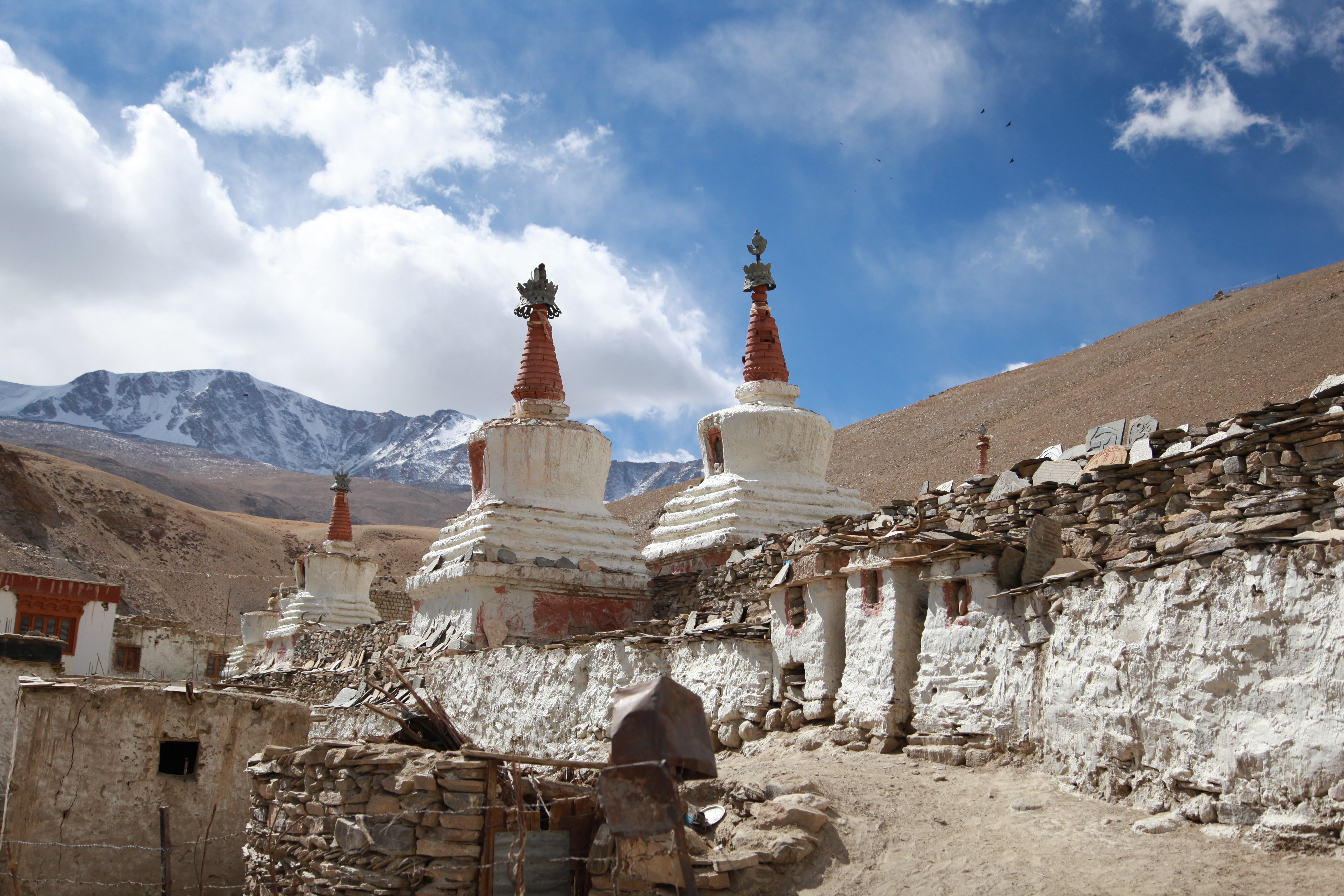
Another aspect of Avaloketisvara is the ‘Guanyin,’ said to be a saviouress, and considered to be the ‘Mother of all Buddhas.’ In Chinese art and sculpture she is represented as holding a child, just as Christians depict Mary, the Madonna, bearing the infant Jesus. There is also a concise connection between the Gospels & the Mahayana can be found with Luke’s ‘Parable of the Prodigal Son’ and an extremely similar story found in a key Mahayanan text, the Saddharmapundarika Sutra / Lotus Sutra.
Just as Notovich’s Issa was described as a student of both Vedic and Buddhist literature, according to Kumārajīva, Asvaghosha ‘gained an extensive knowledge of the myriad scriptures, thoroughly understanding both Buddhist and non-Buddhist teachings. His ability as an expositor was without match, and the four groups of Buddhist disciples all revered and submitted to him. The king of India greatly valued him and held him in high esteem.’
During the time Jesus seems to have been in India, the region was rul’d by an emperor known as Kanishka, which leads us to the following two passages, which I excavated from boosk in the library at CIBS;
The king of Tukhâra was very powerful. He was called Candana Kanishtha. Being very ambitious and bold, and far superior in courage to all his contemporaries, every country he invaded was sure to be trampled down under his feet. So when he advanced his four armies towards Pâaliputra, the latter was doomed to defeat in spite of some desperate engagements. The king demanded an indemnity of 900,000,000 gold pieces, for which the defeated king offered Açvaghosha, the Buddha-bowl and a compassionate fowl, each being considered worth 300,000,000 gold pieces. The Bodhisattva Açvaghosha had intellectual powers inferior to none; the Buddha-bowl having been carried by the Tathâgata himself is full of merits; the fowl being of compassionate nature, would not drink any water with worms in it,–thus all these having merits enough to keep off all enemies, they are on that account worth 900,000,000 gold pieces. The king of Tukhâra was greatly pleased at receiving them, and immediately withdrawing his army from the land went back to his own kingdom. The Fu fa tsang yin yüan ch‘uan
{Kanishka} sent a message to Açvaghosha to come to his kingdom, who, however, owing to his old age, could not accept the invitation, but sent him a leading disciple of his called Jânayaça, accompanied with a letter treating the essential points of Buddhism. The Blue Annals
Kansihka was very much a new Asokha, being both a peace-loving advocate of Buddhism and an incredibly powerful conqueror. The Kushana Empire which he founded was spread out across great swathes of land through the modern regions of north India, eastern Pakistan and southern Afghanistan. In The Blue Annals passage, we see the name of the apostle John transchispered into Jânayaça, here a disciple of Ashvaghosha. An analysis of the Book of Revelations finds it steeped in Indian mysticism. Revelations is the one book in the New Testament that seems to have slipped under the radar of quality control. It is a curious poetic prophecy about the endtimes & the Second Coming of Christ. Jesus is depicted Jesus as riding a white horse and bearing a blazing sword, an image which either inspired, or was inspired by, the Hindu depiction of Kalki, the future and final incarnation of Vishnu in this current age.
Now I saw heaven opened, and behold, a white horse. And He who sat on him was called Faithful and True, and in righteousness He judges and makes war. His eyes were like a flame of fire, and on His head were many crowns. He had a name written that no one knew except Himself. He was clothed with a robe dipped in blood, and His name is called The Word of God. And the armies in heaven, clothed in fine linen, white and clean, followed Him on white horses. Now out of His mouth goes a sharp sword, that with it He should strike the nations. And He Himself will rule them with a rod of iron.
The Book of Revelations
The ascetic prince Lord Kalki, the Lord of the universe, will mount His swift white horse Devadatta and, sword in hand, travel over the earth exhibiting His eight mystic opulences and eight special qualities of Godhead. Displaying His unequaled effulgence and riding with great speed, He will kill by the millions those thieves who have dared dress as kings. Bhagavata Purana
The Book of Revelations is a curious storehouse of esoteric knowledge, obscured by wonderful allegorical imagery, in which we can identify the presence of the spiritual process known as Kundalini. The Book of Revelations is full of references to the number seven; spirits, stars, candlesticks and especially the churches of Asia, which seem to be a metaphor for the seven chakras. Revelations mentions a sacred book with seven seals, which can only be opened by the personal sacrifice of the Lamb. In the Buddhist story, ‘The Perfection of Wisdom,’ a book was sealed with seven seals, which drove the Maitreya to sacrifice himself in order to become worthy. This leads us to the Kundalini, in which a process of inner focus and deep meditations by the mystric draws a ‘serpent’ upwards through seven energy zones known as chakras. Each of these is ruled by a planet, and the entire system of chakras are meant to be a reflection of the solar system, i.e. there is a universe within us all. The kundalini serpent is said to be coiled three and a half times about the bottom of the spine, a number which turns up frequently through the text.
11:2/13:5 – Forty and twenty months = 3.5 years
11:3/12:6 – One thousand two hundred and three score days = 3.5 years
11:9/11:11 = Three and a half days
The attainment of the Sahasara chakra seems to be described in Revelations as, ‘when he opened the seventh seal, there was silence in heaven about the space of half an hour.‘ The sensation of the serpent bursting out into the Sahasara chakra is described as attaining an inner nirvana, which echoes the words of Jesus, who stated that the Kingdom of Heaven was to be found within us.
Now having been questioned by the Pharisees as to when the kingdom ofGod was coming, He answered them and said, “The kingdom of God is not coming with signs to be observed; nor will they say, ‘Look, here it is!’ or, ‘There it is!’ For behold, the kingdom of God is within you.” Luke 17:20-21
To all extents and purposes the Second Coming of Christ is the same as a spiritual being in the Mahayana canon known as the MAITREYA, Only a short philochisp from the Christian word ‘Messiah.’ In the first century AD, the worship of this new Boddhisattva sprang up throughout the Kushana Empire. According to I-Tsing, Asvaghosha wrote hymns about the Maitreya, while the first images of this boddhisattva date from Asvaghosha’s era, appearing simultaneously in Kanishka’s Gandhara and the Mathura of Iarchus. In an excellent thesis by Yu Min Lee, ‘The Maitreya cult and its art in early China,’ Lee states, ‘We have enough evidence in sculptural tradition to prove the existence of the popular cult of Maitreya in the early Buddhist community, at least from the beginnings of the Kusana period.’ As the Judo-Christian Messiah is waiting for the end-of-times up in Heaven, the Buddhist Maitreya is said to currently dwell in the Tusita, the Pali name for heaven. Yu Min Lee tells us ‘the ultimate goal of worshipping Maitreya in China is the wish to be reborn in Maitreya’s paradise after death,’ which strongly reflects the Christian desire to join Jesus in the afterlife.
Back in the modern age, Victor Pope return’d quite happy from hi trek today, & tomorrow we leave Ladakh. It is a hardy place for hardy souls, & after a few days I am beginning to feel the effects of such a high altitude. While I am slowly getting into breathing difficulties, my hands are literally cracking in the dry air. With these physical diminishments, coupled with the completion of my studies at CIBS, it’s time to move on from this wonderful region.
VICTOR POPE’S DIARY
After a suitably stodgy breakfast of omelette and flat bread we left Hemis (the village in question) and headed back off into the mountains. The first pass was fairly gentle and allowed us to discourse a little, but Rigzin promised a surprise for the next pass. Sure enough when we reached the top we were greeted by a great rocky basin, up one of witch’s steep dessert sides we apparently had to climb. It seemed they’d saved the toughest until last. Not the highest however. Hell, they even had public conveniences at this hight.
When we did arrive at the climb it didn’t look so bad. But I should have been forewarned when Rigzin put on his headphones and recommended I do the same. I declined. Instead favouring to feel the real now of the moment. I just about made it half-way up before I collapsed in a panting, sweaty heap. Rigzin gave me a knowing grin before I attempted the final furlong. One more rest and we finally made it to the painful peak. The panorama didn’t disappoint and from here it was downhill all the way.
The taxi was late, which added another two hours to our trek, but pretty soon we were blasting at suicidal speeds. The beautiful scene of a green, emerald lake snaking through the hills only marginally marred by the drivers apparent death wish. After a quick stop for the best samosas in Ladakh, I arrived back from my trek alive and relatively unscath’d. Save a little sun burn on the back of my ears. And this was in no small part down the exceptional guidesmanship of my highly amiable guide Rigzin. After saying goodbye to him it was hello again to Damo, who had been comforting our new friend Mia after she’d had a slightly dicey incident with her own, somewhat more sleazy, tour guide. He said he felt like a regular Richard Geere, and who was I to argue?
After a quick (one hour) game of snooker in a nearby snooker hall with Damo. A tense snooker match of 3 frames between me and Damo with Damo (naturally) winning 2 games to 1, but the final game was knife edge close. Only a blue ball and our nerves between us. Damo’s hand, however, proved the steadier, after which it was time to settle down to another night of TV & a chill-out well deserved.
Day 154
Before I left Leh, I gave the slightly tatty green mod parker jacket I got in Almora to a nice shopkeeper, whose wife was hopefully going to tailor back into full health. A couple of hours later, after dragging ourselves through numerous security checks, we were zooming south over the epic peaks of the Himalayas. The flight to Delhi took just over an hour, & it was a pleasure to step once more into the duvet-heat of lowland India – I definitely won’t be needing that parker any more.
Back in the capital it was a chance to hook up with Phil, who was on some kind of paragliding shopping trip. He was with his pal, Duncan, another India-head I met back on the Andamans, who was just about to set off on a year-long round-the-world tour. To pay for it they were in Delhi buying handbags (for £3) to send to Australia where they would sell them on at £25 each. Cue copious amounts of beers diced with colonial chat, from our hotel roof-top. to a swanky New Delhi bar. Then, in a druken daze we said our farewells until the next time life would have us all cross paths.
VICTOR POPE’S DIARY
Mia has just left and tomorrow so will Tony and, indeed, me and Damo. On a ten thirty flight to Delhi, from whence we make for Mathura (back on the quest for Jesus) and Agra (for a little something for me – the Taj Mahal at dawn). So, for the time being at least, it’s the end of our little love gang (as Damo put it), though we may see Mia again in Goa. Then it will be only a month until I see all you guys again. But for now, thanks for reading and,
Julley,
Steve.
After taking a plane across the Himalayas that wasn’t half as scary as any of the taxi rides we arrived in Delhi some time around midday. The intention was to fire straight through to Mathura, but Phil and Duncan, some friends of Damo, were in town so we decided to stay a night for a little high jinx. This involved a fifty course meal from the hotel chef and lots of beer. It was good to get wasted for the first time in a month and the two guys, plus an additional Irishman, proved to be great fun. Indian hand massages, deep philosophical chats, valuable travel advice (don’t ride the mopeds in Goa) all dissolved by 1am into incomprehensible nonsense. But it was well worth it and we had our first experience of an Indian bar. Cowgate eat your heart out!
Adventures on an Indian Visa (week 21): The Indian Jesus

Day 141
Last night there were mosquitoes on the prowl, & I barely slept at all donn’d in full clothes armour, while the post-bite itchiness kept me wide awake. By morning, Victor’s hands & arm were covered in red blotches, & so not in the best of nicks we set off again, intending to catch a train to Amritsar & its Golden Temple. Unfortunately, match-day travel-sharpness hasn’t quite kicked in yet, & we missed the train, or rather let it come in & out again without boarding it.
There are not many English speakers in the highly-agricultural state of Haryana & I got muddled up at the station – it won’t happen again. Not keen to wait another day in Kurukshetra, I swiftly came up with another plan. Before we arriv’d, I had read about the city of Patiala, not too far away, so after buying a train ticket from Patiala to Amritsar for the Sunday, we set off on a rickety bus.
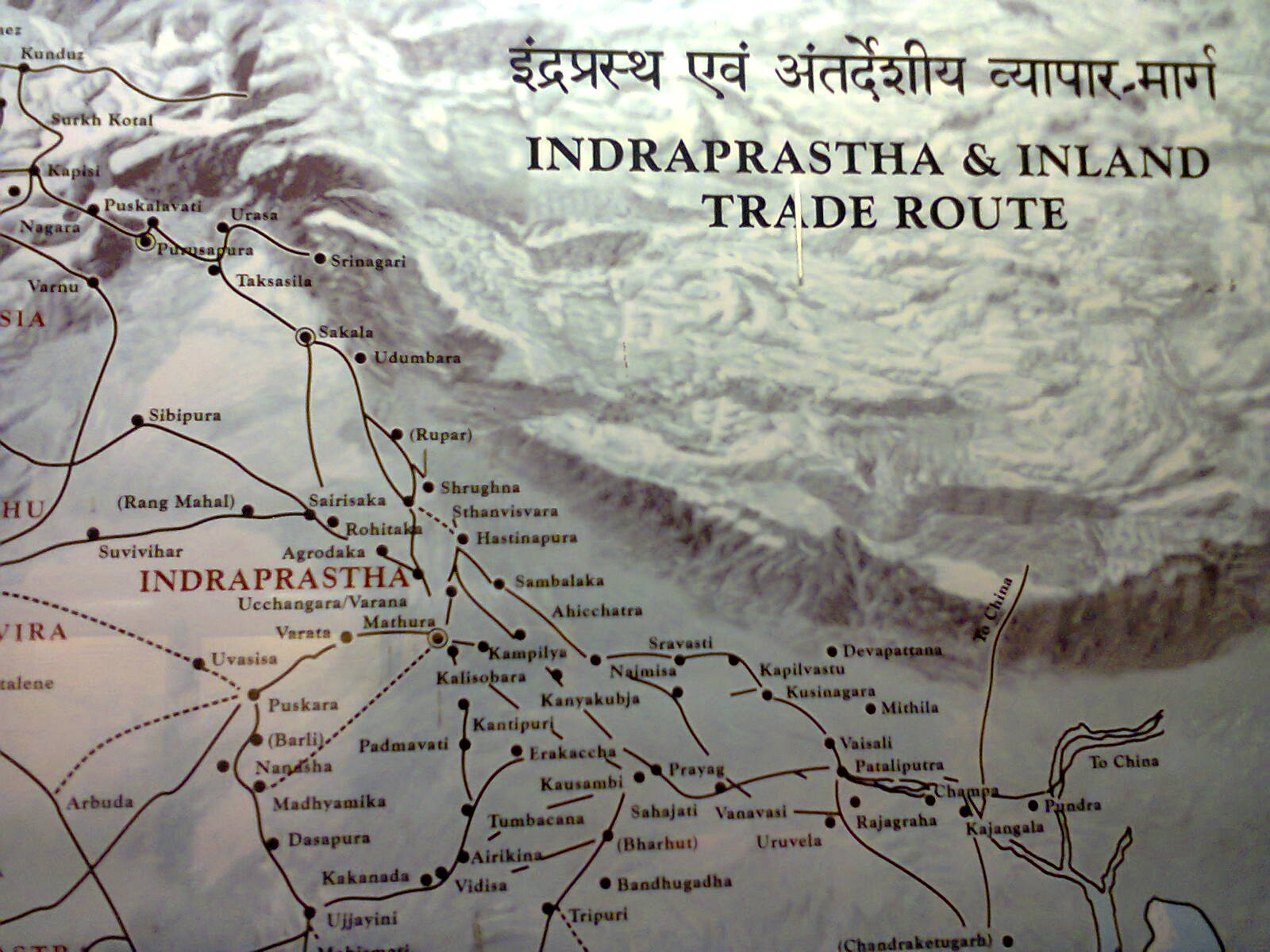
The first part of the journey was pleasant enough, but it was at the transit town of Pehawar that things got decidedly squashed. As our new bus came in, to the roar of its bleeping horn, people literally sprinted across the station at the the rough commencement of a mad free-for-all for all the seats on the bus. Me & VP were too slow with our bulky bags, & were forced to stand up for an hour in a highly overcrowded bus, which is OK for a one-off but I wouldn’t like to repeat it again all that soon.
En route to Patiala, we crossed the Saraswathi River herself, & were soon enough in the state of Punjab, a predominantly Sikh state, illuminated by men wearing these bright & often garishly colour’d turbans. The city of Patiala has a much warmer feel than Kurukshetra; with cages full of birds, & traders at every turn all placed into sections, such as the one which sold guns, a relic of the fighting nature of the Sikhs so successfully utilised by the British empire.
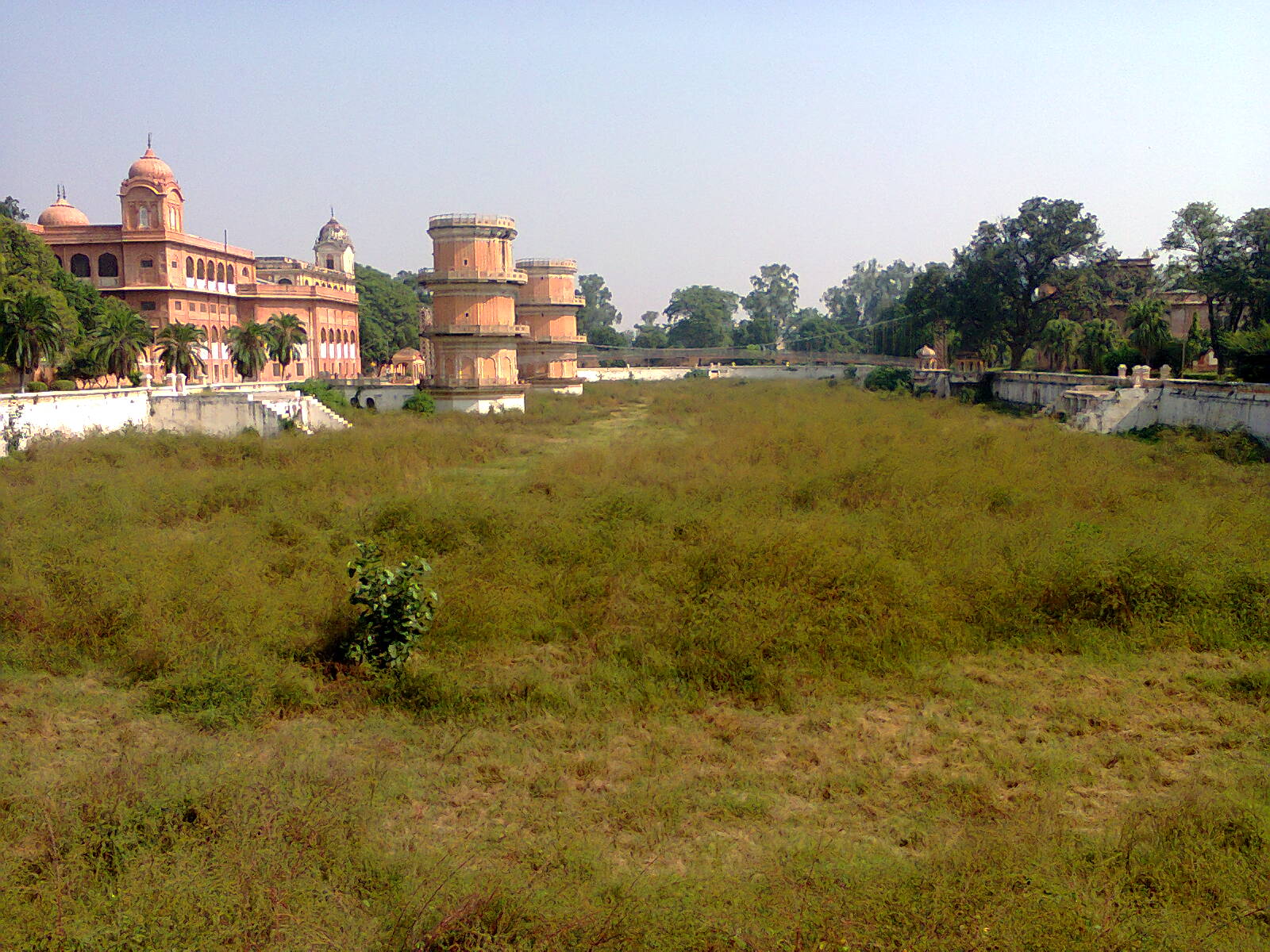
Being back on the road so soon after my salmonella dose, & last night’s non-sleep, had left me tired, & I convinced VP to have a night in mosquito-free comfort, which led us to a lovely four-star hotel with room service, laundry & air-conditioning (priceless) for only £15 a night. Its mad really, a decent enough room in India can cost about 3 or 4 quid, & a delux one about a tenner more – whereas in the West the difference in prices can be hundreds, if not thousands of pounds.
We finish’d the day by taking a rickshaw to see the decaying palace of a Maharahjah, known as the Sheesh Mahal, which has three statues of Queen Victoria in the grounds. I completely love wandering about the faded, jaded ruins of the Raj – the weight of history in such places is fascinatingly oppressive. Then, checking my emails found one from our new Swiss friend, Manuel, who we presumed had headed up to Srinagar in Kashmir, where we were gonna meet him. Instead, he went to Rajahastan, from where he e-mailed us this warning…
Hey Damo
I got myself the ticket to srinagar from trek & travel. After i met the guy we met on our first day and we had a lassi with. I told him about my plans and after he heard the price he was like: are you crazy? That must be some kind of rip-off. We went to an official travel agency and i showed them my voucher. The guy there confirmed that there’s probably something wrong with the deal. He told me that it’s quite common that if you stay on a houseboat in srinagar they’ll drug your food and drinks so you get sick and unable to leave. They advised me to change the hotel I’m staying in to stay out of trouble when they realize that i’m not doing the trip
Well… that’s not gonna be putting me off going to Srinigar – that’s where Jesus is buried, & those House Boats do sound cool – so maybe just shying away from eating boat-cook’d food might be a prudentially wise course of action.
Day 142
After crashing early last night I was up at 5AM; reading, writing & waving away these little flies that congregated round the lights in a mad ecstasy-fuelled rave. Then, just as the sun was rising, they all fell out of the sky & died in droves, to be swept away by a little Indian boy cleaning the floor with a brush.
So we left Patiala, rolling the rails north through 5 & a half hours of yet more monotonous flatlands. One wonders at the mental state of the British troops as they marched up & down these unpunctuated northern plains throughout the early days of the Raj – it is no wonder that they implemented the building of one of the best & most extensive rail networks on the planet, which is run with a rigour & vigour to this day.
Our destination was Amritsar, & I urge anyone who finds themselves in this part of Asia to visit the city on account of the majestic Golden Temple of the Sikhs. This is a gleaming holy house set in a vast ‘lotus pool’ which reflects the temple in its silky waters, creating a wonderful aesthetic effect, especially at night. Surrounding the square lotus pool, on all sides rise white marble buildings, & behind them yet more buildings, all contributing to the capital complex of Sikhism. In one section, up to 100,000 daily devotees are fed for free, squatting on rugs in great chambers while rice, curry, desert, chutney & water are placed in their metal pans. The sound of these, as they reach the washing area at the end of each meal, reminded me of blasting rain as it hit an aluminium roof.
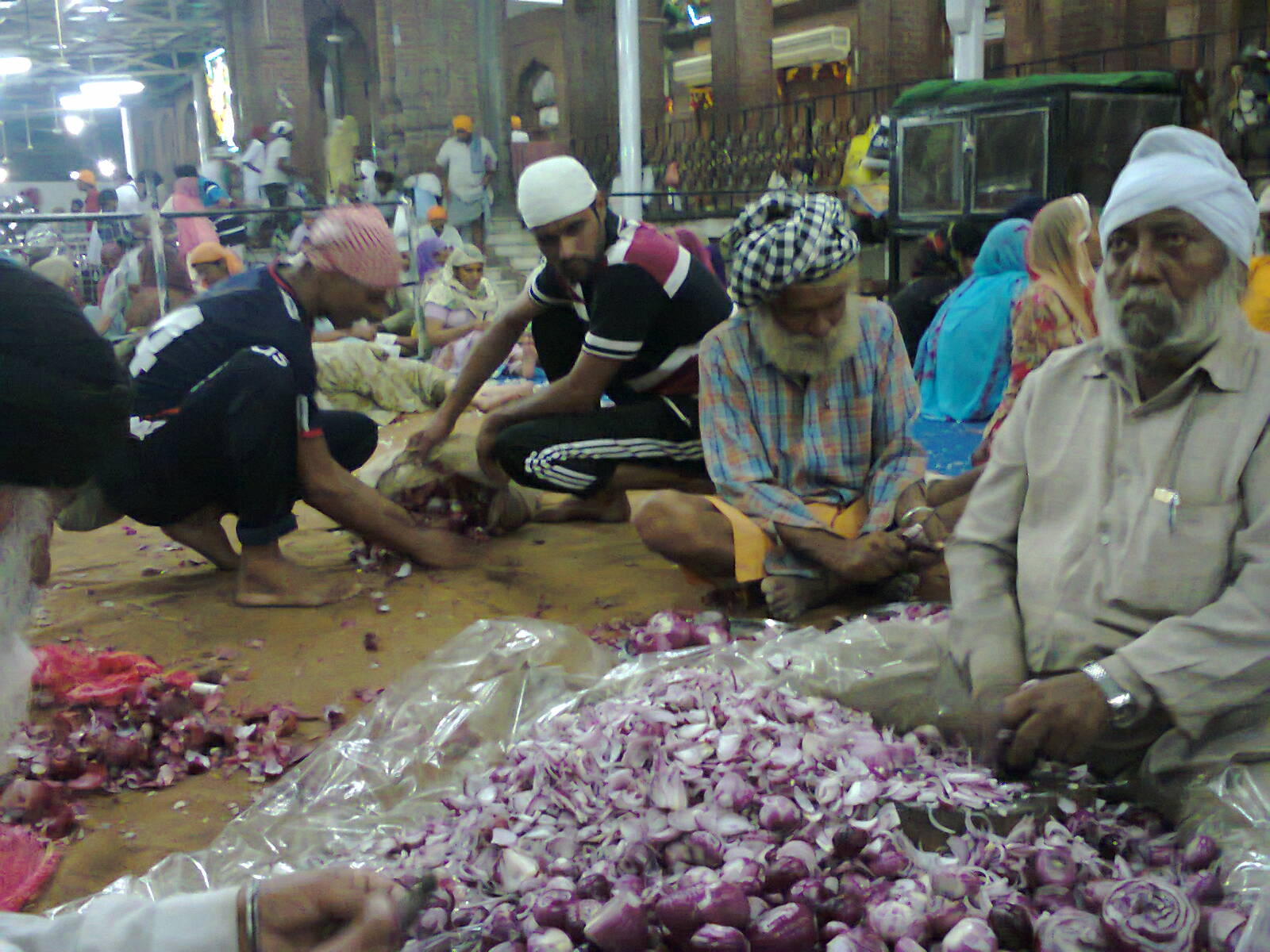
It was in the nerve centre of the temple that I felt a wonderful spirituality, garnered by the holy songs played & sung by devout Sikh musicians, while other practitioners of the faith were channell’d around them, kissing the floor or flinging rupees into their presence. Comparatively speaking, Sikhism is a new religion, founded in the 16th century by Guru Nanak. Monotheistic in nature, its rise as a major world religion proves how faith is really just about one’s personal interpretation of god, & spirituality a method of connecting with that interpretation. Many are indoctrined into a particular belief system from an early age, from which springs from an almost tribal loyalty to its tenets. Instead, the truth cannot be all that far away from there being just a single god who is worshiped differently from land to land all across the earth. Even the polytheistic Hindoos believe that all members of their divine Pantheon are actually different aspects of the same omniscient essence.
That night we slept in the cheap enough westerner’s section of the complex, a couple of smallish rooms, which unfortunately was a bit bedbuggy for me. Itchy as fuck!
Day 143
Moving out of the Temple complex, but not quite done with Amritsar, we took a hotel for the night & hit the sights. First up was a visit to the Jallianwalla Bagh, a peace garden on the site of the brutal & tyrannous massacre of unarmed innocents ordered by General Dyer in 1919. Out of 1650 bullets fired that day, 1550 hit their mark, killing over 300 & wounding the rest. 160 bodies were recovered from a well alone, the only cover at that time, shot as they tried to scramble over the sides & into safety. In response to such a tragedy, the Nobelprize winning poet Tagore gave Britain back his knighthood in protest & disgust.
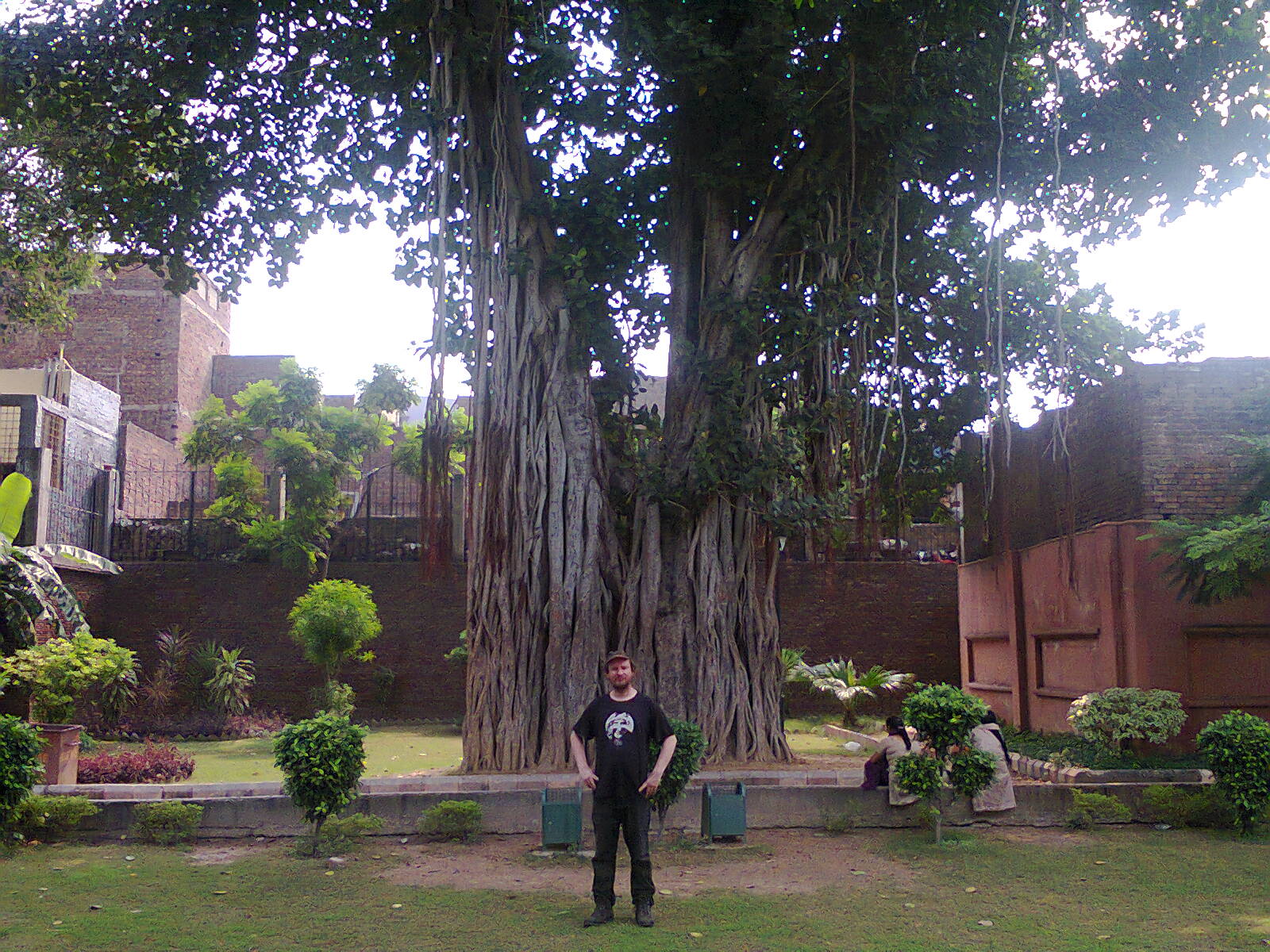
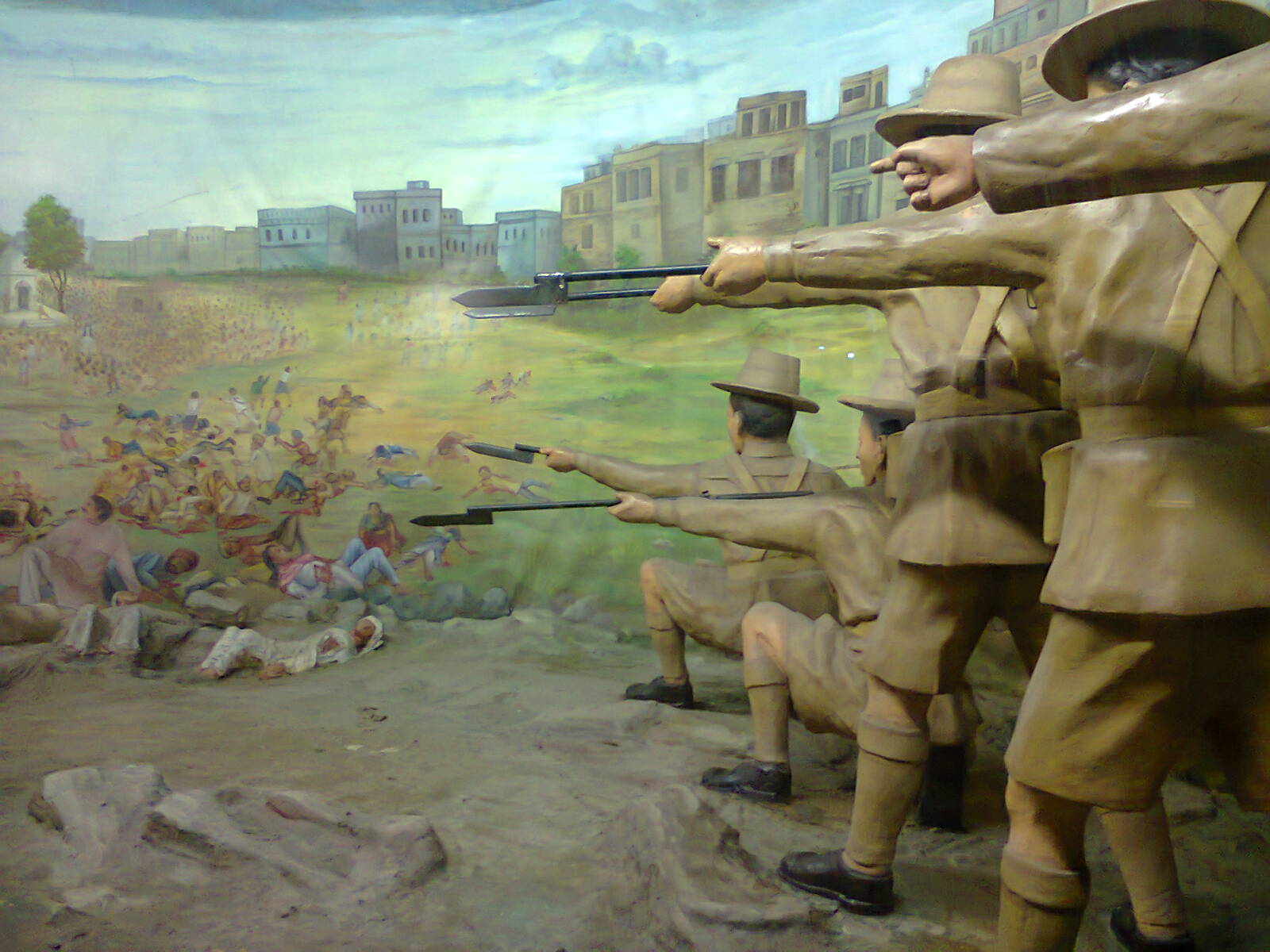
Indian independence was now only 28 years away, but when it came it came at a cost. The Muslims had been angling furiously for a separate Islamic state, & the British simply drew a line through the Punjab & created Pakistan. Cue all hell breaking loose, beheadings in the street etc, & the greatest movement of humanity the world has ever seen. In all 13 million people died on both sides for their religion in only a few months as they tried to get the touchdown of safety into their respective national end-zones. During this period, the King of Kashmir was also angling for a separate state, but was overwhelmed by Pakistan & India, who both tried to grab as much land as they can & came to an unofficial de facto border known as the LOC (Line of Control) that even as I write has seen an ongoing two-week skirmish between Pakistani militants & the Indian Army only a few kilometres from Sringar, a future destination of ours.
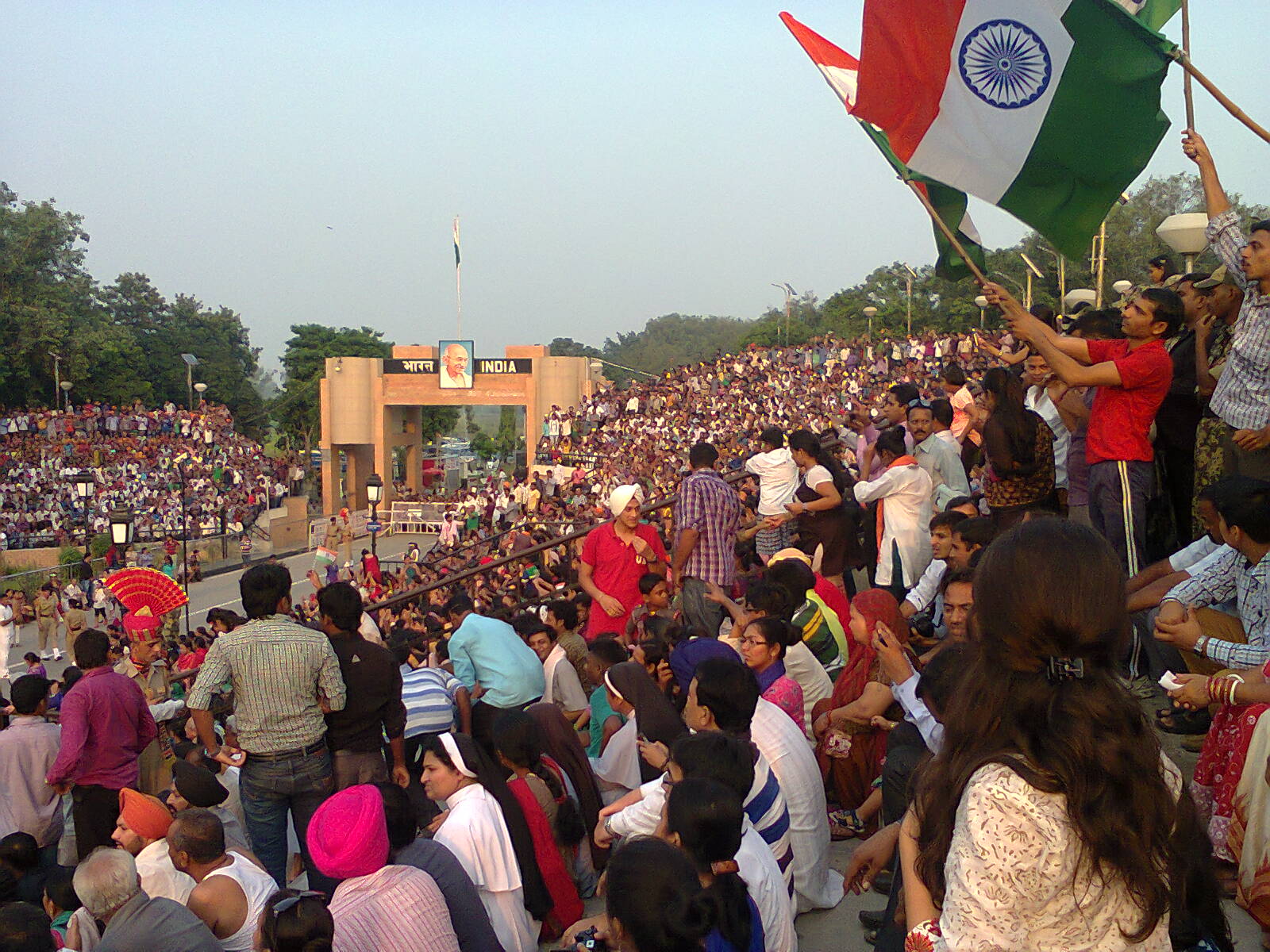
It is ironic, then, that while there is real shooting to the north of Amritsar, to the west of the city plays out the daily, riotous flag ceremony at the Pakistani border crossing, where both sides contemptuously march, stamp & gesture at each other, while behind them two football-style crowds cheer & sing their national songs. When we visited, the Indians heavily outnumbered the ‘away’ fans, like when Exeter City used to come to Turf Moor when we were in the old Fourth Division. The Pakistanis did their best, however, & we left the border thinking it was all rather good fun, & the hatred behind these two nuclear powers shouldn’t ever plunge the world into atomic darkness.
Day 144
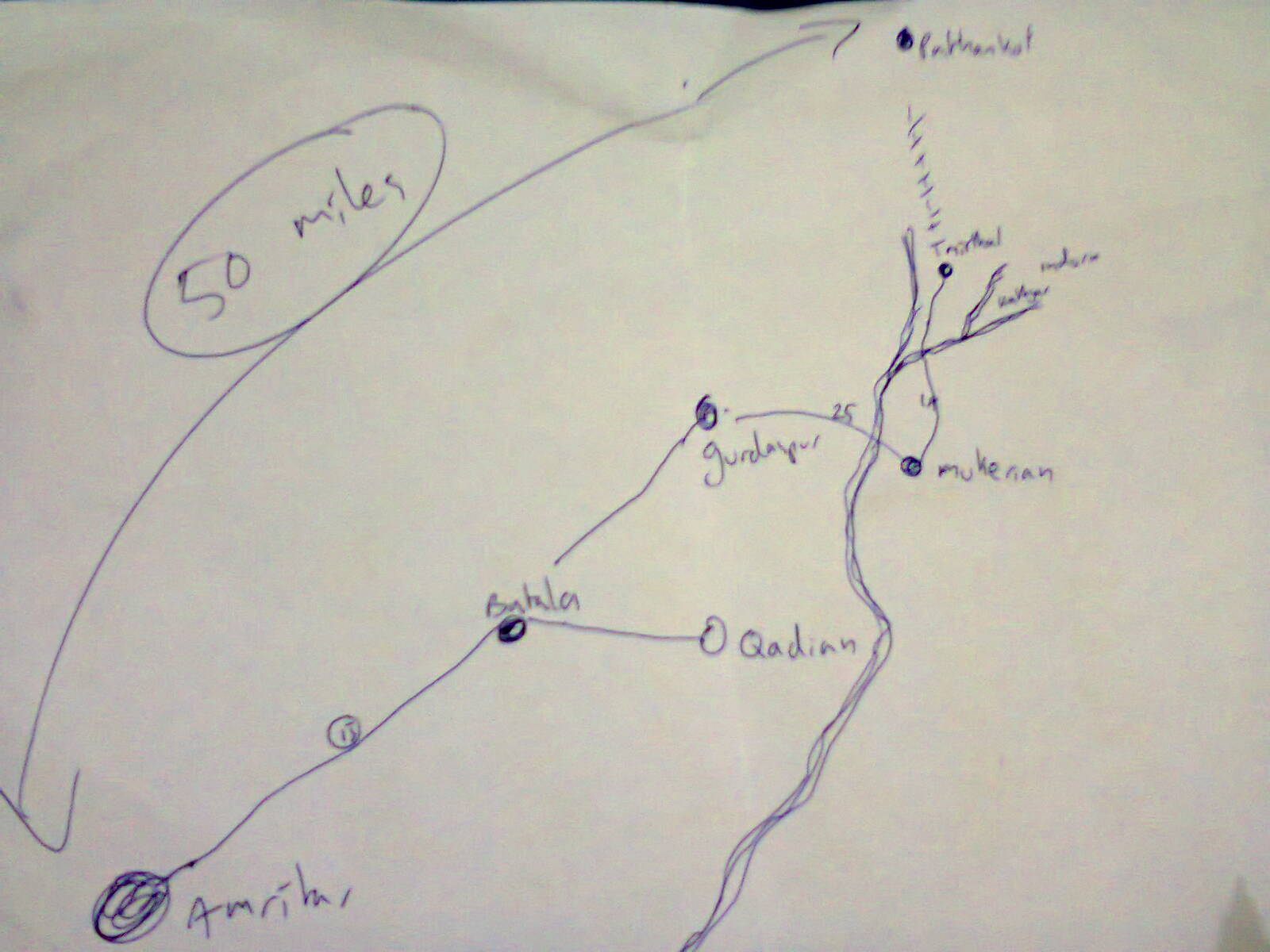
Setting off north towards Srinagar, I had noticed that our route was to take us fairly close to Qadian, the birthplace of Hazrat Mirza Ghulam Ahmad (1835 – 1908) himself, & felt compelled to pay his ghost a visit. A rapid 20-mile bus journey took us north to busy little Batala, half of which town seemed to be only half-built, from where a further bus brought us to Qadian. A town of 40,000 souls, there is a distinct relaxed attitude & atmosphere to the place, perhaps due to the narrow Italian-style streets the constitute the core of the town. Just on the fringes of these lies the spiritual home of the Amhiddaya movement, of which the author of Jesus in India is the spiritual head, the self-proclaimed ‘Promised Messiah’ who claimed that certain prophecies predicting the appearance of a divine teacher were fulfilled in his person.

Whether this is true or not, the movement is thriving, from just a few followers in 1889, when Hazrat proclaimed his messiahship, to today’s many millions spread throughout 204 nations across the globe. The Ahmadiyya are actually practicing Muslims, but have been ostracized by the majority of other muslims, & denied permission from the Saudi authorities to visit Mecca, while in Pakistan there are not even allowed to publicly pray to Allah, being forced to worship in a secretive silence. One cannot help but think of the early Christians, who were also persecuted by stalwarts of the old religion for proclaiming the promised messiah had come. Just like Christianity, the Ahmadiyya have their own martyrs, their faces hung up upon the walls of a museum/gallery space in Qadian. By them, like statues of the early popes that ring St Peter’s Square in Rome, Hazrat & his first five successors proudly stare down upon us, testament to the strength of their growing movement. Each of these khalifs have also added to the literature of the Ahmaadiyya, a process reminiscent of the growth of the New Testament corpus.
The hospitality of the movement is boundless, & we were put up & fed for free in a wonderful guest house – the rooms are normally used for visiting diplomats – near the impressive mosque & birth-place of Hazrat; not as visitors to the movement, but as, ‘guests of the promised messiah.’ himself. I found myself engaging in theological debate with various members of the movement, my hands placed behind my back as we gently strolled around the area. I was also shown the impressive modern library, which is a testament to the academic nature of Hazrat, without whose efforts I may never have taken up the challenge of finding the historical Jesus. I was also given access to many books written by Hazrat & his disciples, & ss I sat down to read through Hazrat’s Jesus in India in particular, I spared a thought for myself, sat in that library of Bhubaneswar, flicking through the same book for the first time. I would never have dreamt of visiting the author’s home, but there I was, tuck’d into a comfortable state of mind by our highly genial hosts, pouring through his texts to the sounds of minaret calling the faithful to prayer.
Parts of Hazrat’s book highlights the Islamic view of Jesus, including reports in the Hadith – a book of sayings attributed to Mohammed – that state Jesus reached 125 years of age. This, of course is indirect evidence that Jesus survived his crucifixion, when he was 33 years-old. Elsewhere in Islamic writings, Hazrat tells us, ‘The Kanz-ul-Ummal states both; ‘God directed Jesus (on whom be peace) ’0 Jesus! Move from one place to another’ — go from one country to another lest thou shouldst be recognised and persecuted.’ There were also other books on Jesus in India, written by a certain Professor Hassnain. For example, in his, ‘A Search for the Historical Jesus,’ Hassnain writes;
I was ordered, in the 1960s, to proceed to Leh, the capital of the former kingdom of Ladakh, to examine the historical records and maps relevant to the border dispute between China and India. I had visited Ladakh earlier, and had established the first State Archive Repository there. But my new assignment led me to make many more journeys to the region, and during one such visit I came by chance upon a document relating to Jesus Christ. This was the event which aroused my curiosity and led me to embark on a quest for the historical Jesus.
In the first of Hassnain’s books, the Fifth Gospel (1988), the professor reflects upon the course of his personal quest for the historical Jesus, stating, ‘ It took me many years to locate and examine oriental sources, in Sanskrit, Tibetan, Arabic, Persian and Urdu dealing, with the lost years of Jesus. The material was rich and, unlike much of the historical material to which the church had access, on the whole, untouched since ancient times. These ancient documents, recording as they did a little-known connection between Christianity and the East, were of immense fascination to me – each new discovery further fuelling my passion for the quest.’
After a few googles later I found Professor Hassnain was still alive & living in Srinigar. Reyt near the tomb of Jesus. I’m gonna have to go & meet the guy, for sure!
Day 145
After a tasty free breakfast courtesy of the Amhiddaya, we finally began to spend some actual money & hit the busses north. 6 hours later we pulled into Jammu, the city of Temples, & some lovely hills beckoning us into the Himalayas! We got a room in a hotel which also runs a taxi service up to Srinagar in Kashmir in the morning – 300 k away – & it’s costing us a tenner each, including the room. Meanwhile, the internet cafe I’m in right now has a room full of playstation 2s – so that’s keeping Victor happy for a few hours.
CUDDLEGATE: I’m adding this footnote at a later date. Apparently, after watching the possibly homoerotic 300 film, & sleeping in undies & sharing a sizeable double bed, & with my muscle memory thinking I was sharing a bed with Sally Cinnamon, & not Victor Pope – I tried to snuggle up to VP in my sleep. After beating me away I then went in for seconds. It took several says for VP to confront me with the situation, having realised I’d not follow’d up on my pass, & in fact was completely oblivious to it. ‘Had I invited him to India to seduce him,’ were his turbulent thoughts. ‘No, definitely not,’ was my reply, & ‘Cuddlegate’ went down in annals as the gay night that got away.
Day 146
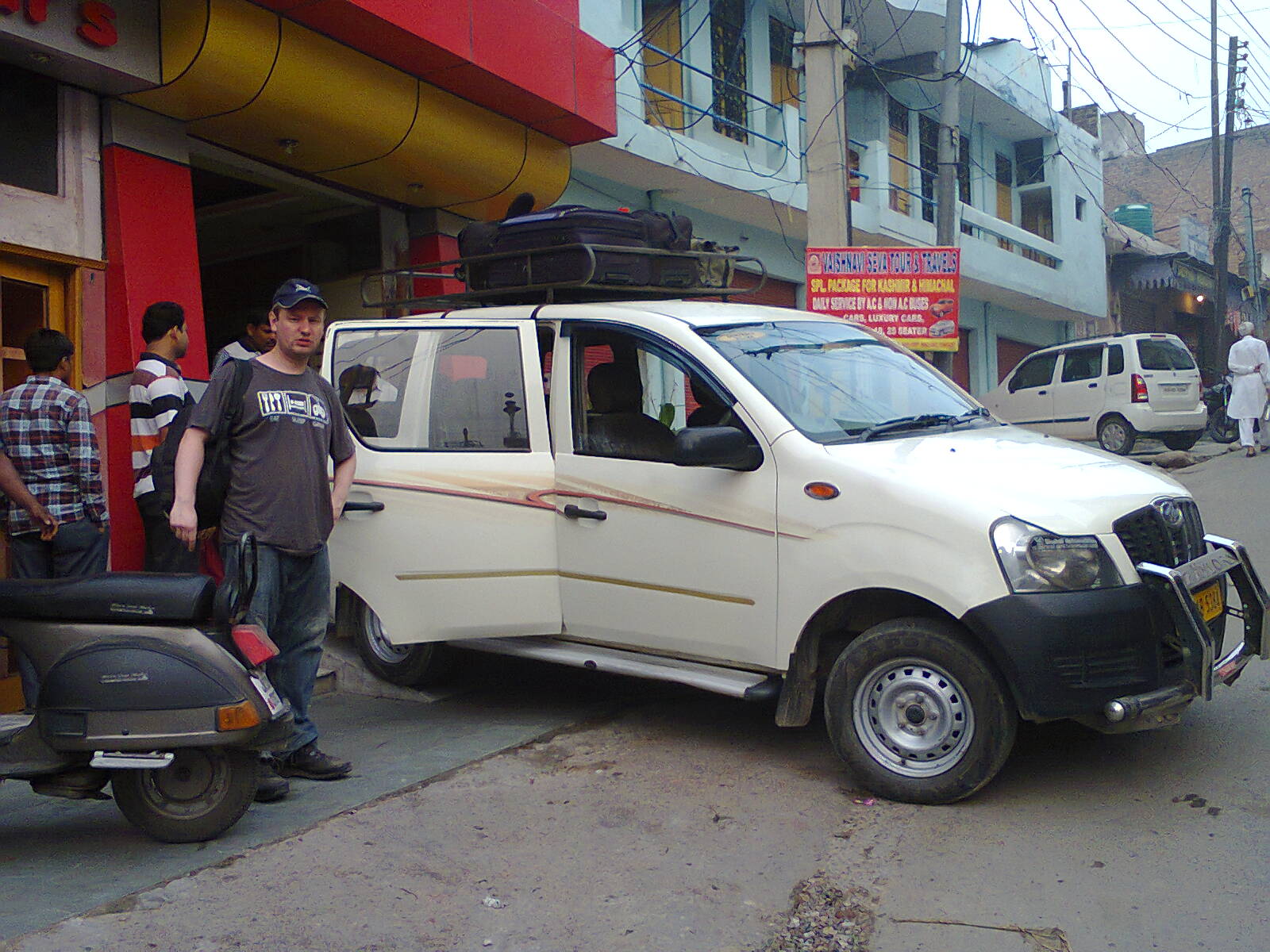
We departed Jammu at 7.30 AM, sharing a taxi with a pleasant Indian family for the 300 K to Srinagar, Kashmir. We began on a steady rise, climbing out of the smog-like mist that had descended on the Punjab a few days previously & steadfastly refused to budge an inch. The sight that greeted us was lovely, full of forest & slopes that were getting higher & steeper with every turn. The roads were busy & often slow, our driver doing his best to overtake every tractor & truck that blocked our swift passage. then often as we tried to overtake, there would often be in our way one of the vast convoy of trucks heading south filled with apples for all of India.

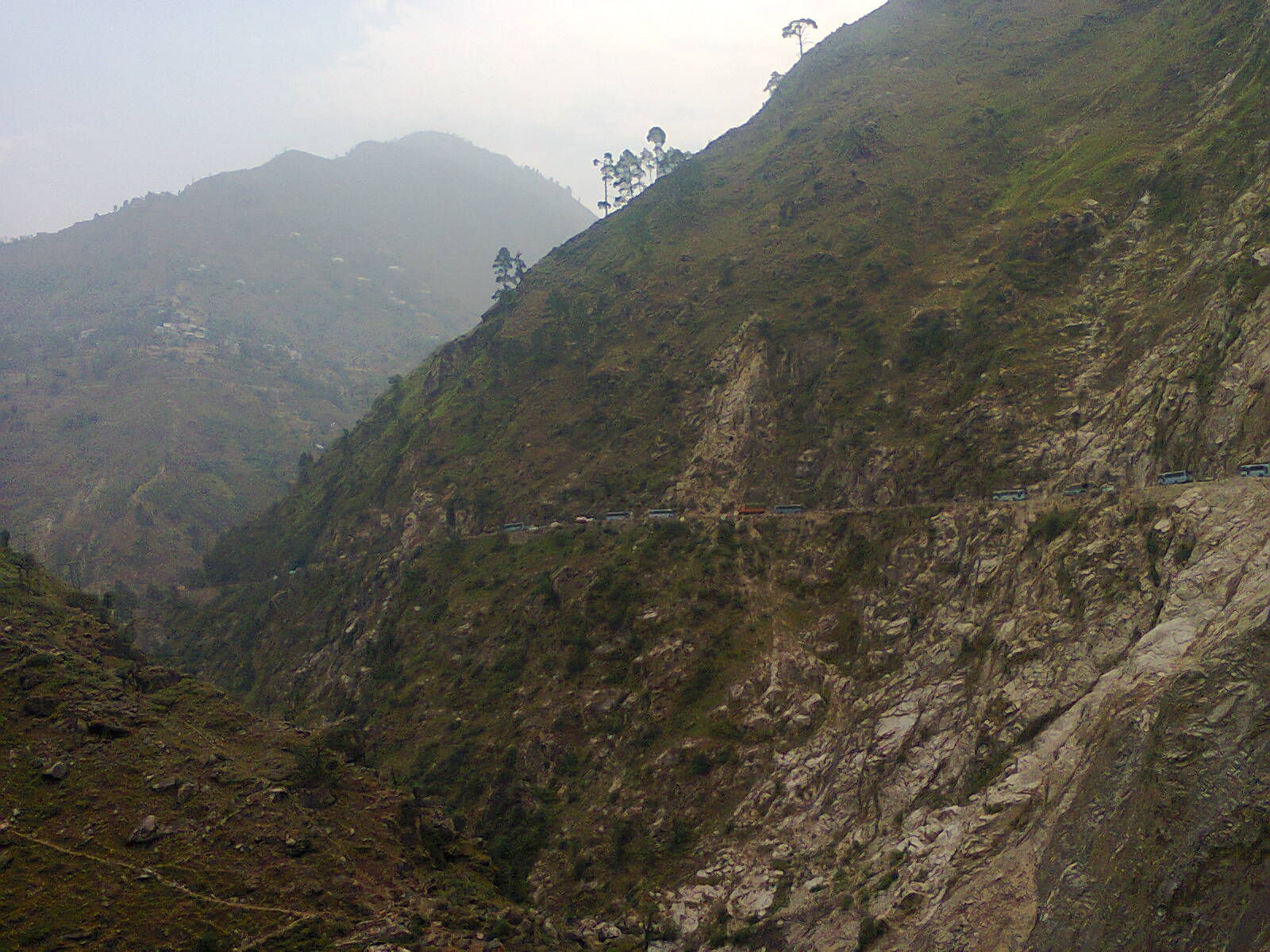
This state of affairs has led the Indian government to build a great double-carriageway between Srinagar & Jammu, which was under construction as I write. Thus this portion of the massif is practically one gigantic building site, the residue of grand ambition & a feat of engineering that should marvel the world – when it is finish’d of course. Until then, I, & every body else on the planet making the journey by road, must struggle & shuffle forward in a stop-start fashion. We also past numerous road-safety signs such as ‘After Whiskey, Driving Risky,’ & braving treacherous corners where one false move sees a vehicle & its occupants tumbling hundreds of meters to their inevitable dooms. Personally, my vertigo & I were petrified, but we both survived the journey to the Kashmir border & its ‘Titanic Viewpoint.’

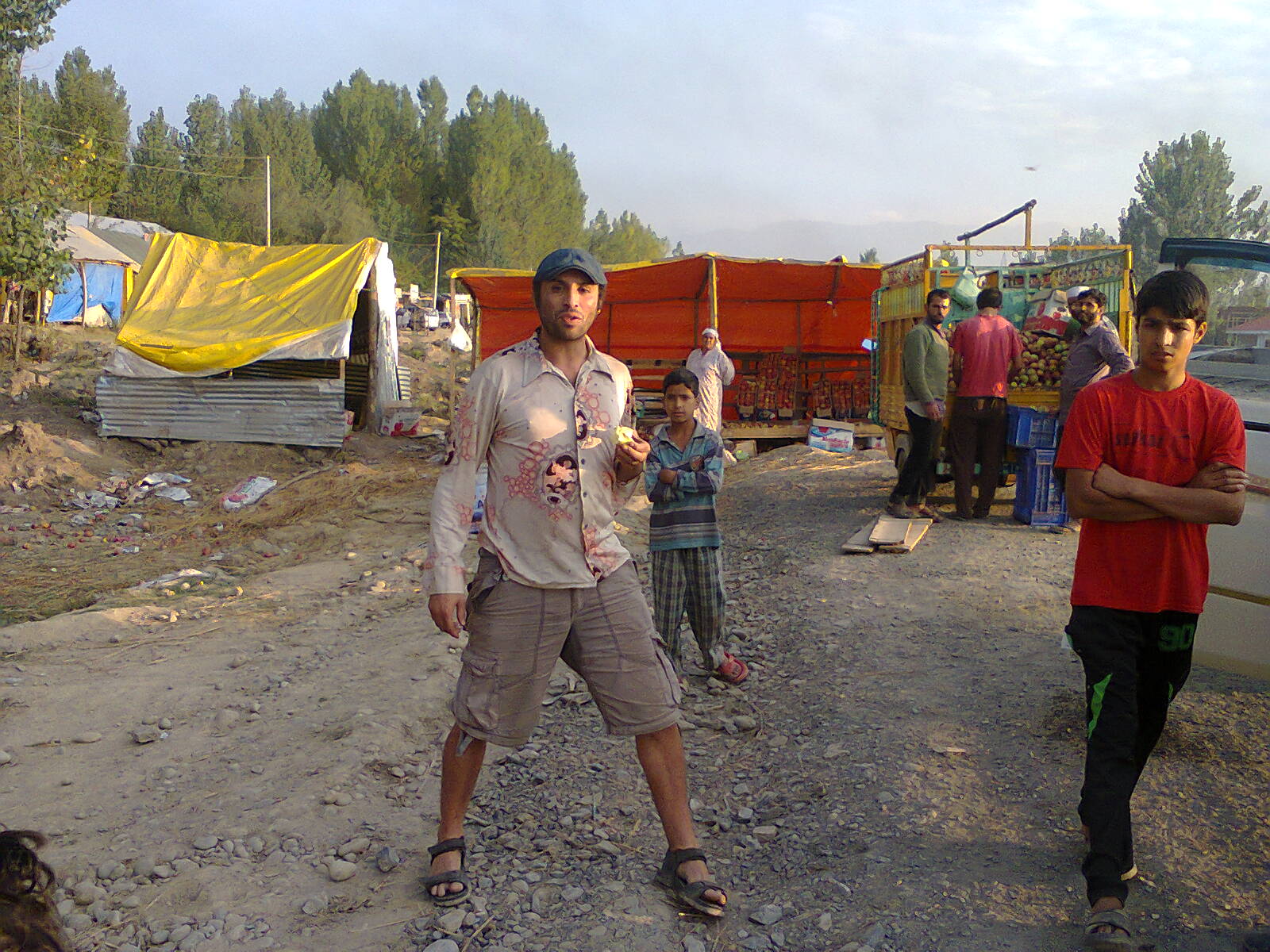
We had arriv’d at the famous vale at the end of the harvest season, where the paddy fields are shorn of their rice & have browned in the summer sun. Two months ago, were were told, all was green & surely contained the magical quality that makes the Vale of Kashmir so special. Another 80 k later we had arrived in Srinagar, the region’s capital, & swiftly took rooms in a decent enough hotel – the marathon 12-hour journey from Jammu having taken its toll.
Srinagar itself was a marked change from the cities of the Gangeatic plane. Despite its million inhabitants, the city was less busy, & cleaner, & in certain places had a quite European feel. Flat rooves were few & far between, with most houses having steep metal rooves to let the rains flow freely to earth. I bore witness to a great Kashmiri storm, which exploded in violent fury & raged for half an hour or so of torrential rain & booming thunder, after which it dissapear’d leaving a cool freshness & finally blowing away the mists that had been all prevailing for days – in the distance I could now see the mountains which had stepped out of the haze like handsome young soldiers on parade.
Day 147
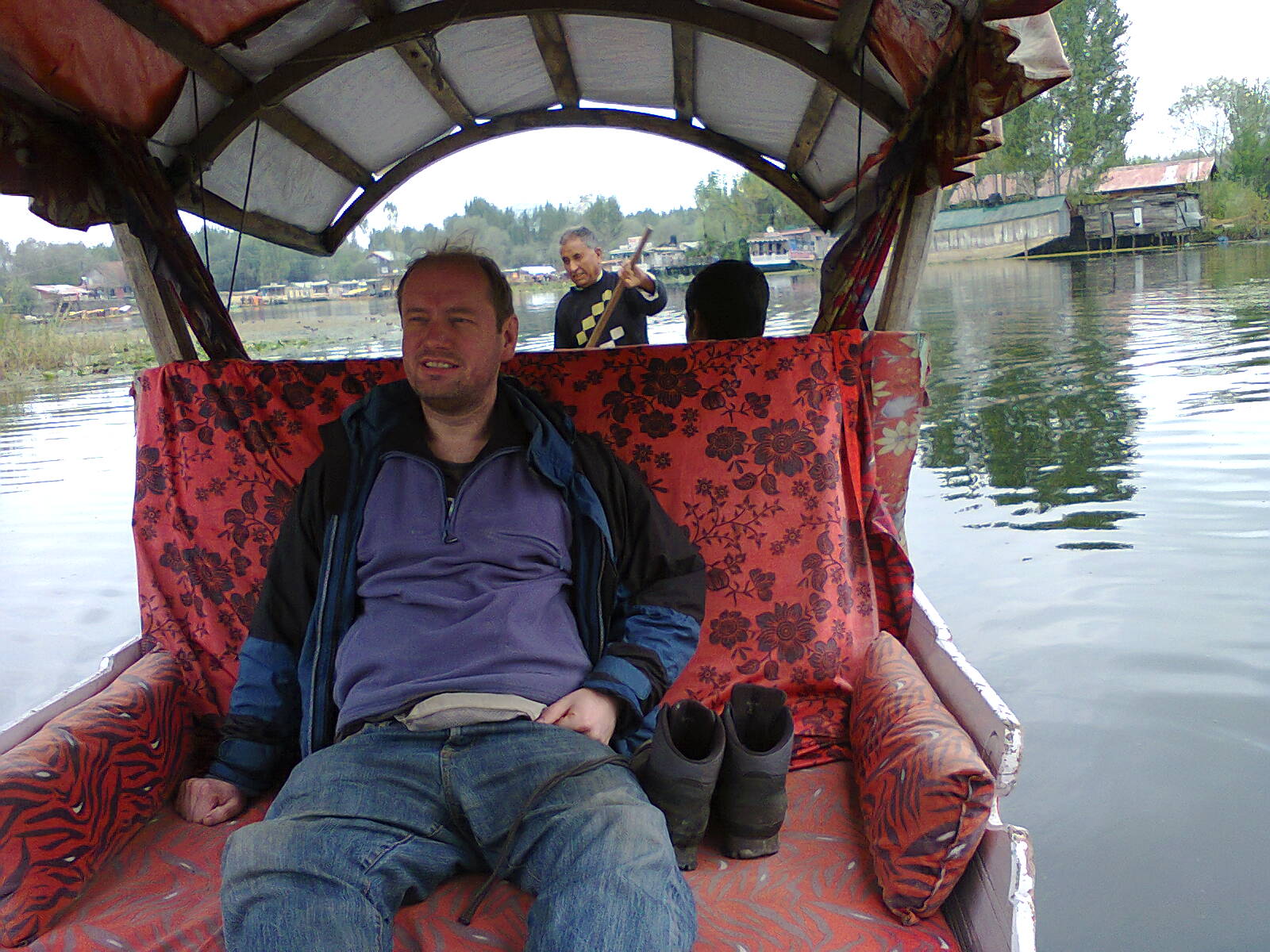
Today was a great day all round. It began by transferring digs to a hotel boat on the tranquil oasis of the splendid Dal Lake. Victor had found us a nice, non-poison, family-run houseboat, & what a joy it was to be there. A village on water, one must travel to & from the ‘mainland’ on the oar-drawn shakaras, a watery oasis of calm away from the sheer incessancy of India.
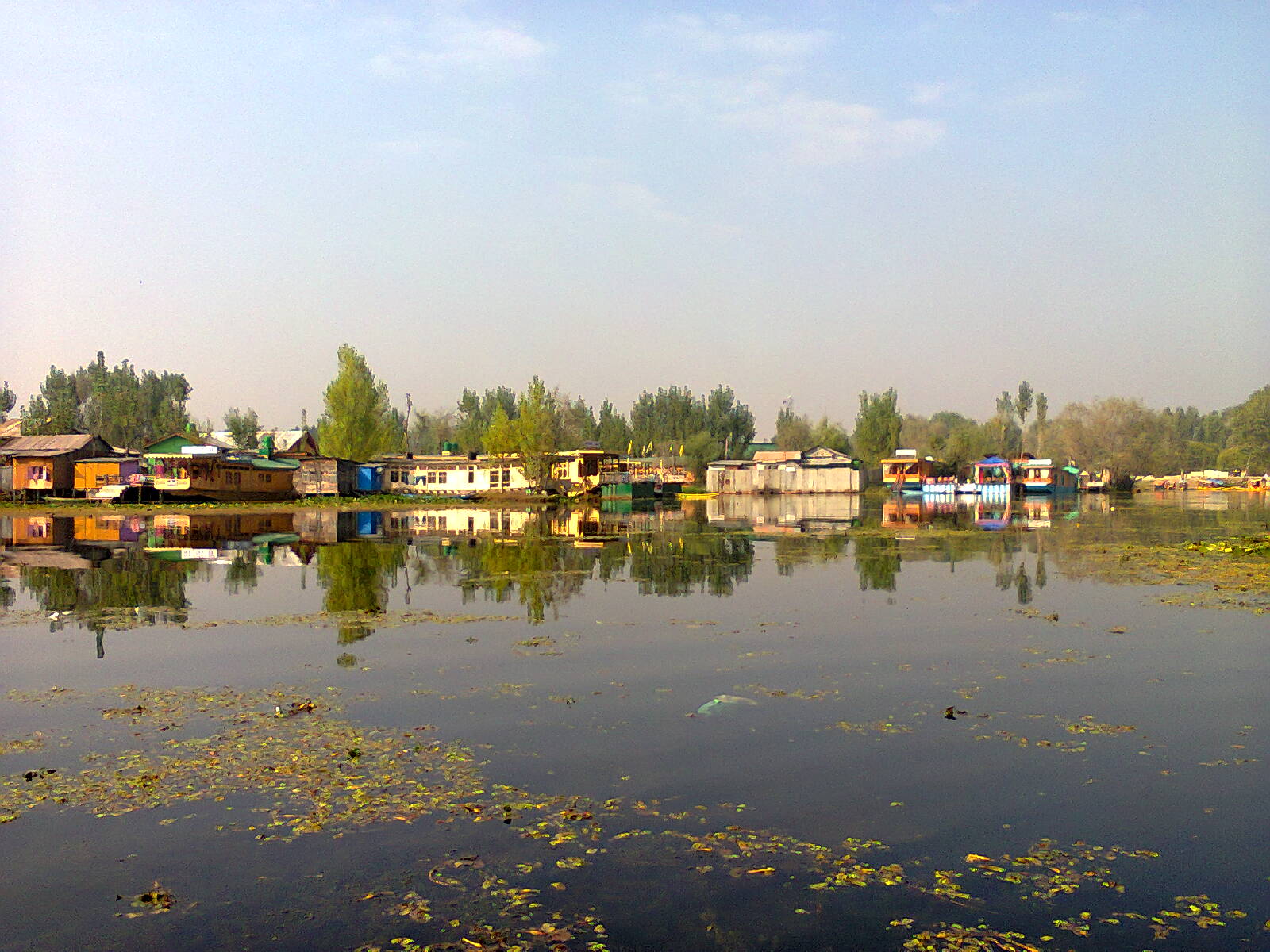
An hour later I embarked upon my research mission. The tomb of Jesus could wait, but what was more enticing was a chance of meeting the esteemed Kashmiri scholar, Fida Hassnain, who more than any man has unearthed genuine historical references that support the existence of an Indian Jesus. His own interest in the subject began in 1965, when he first heard of Nicolas Notovich in the archives of the Moravian Mission in Leh, Ladakh. He was well placed to do this, being the one-time Director of Archives, Archaeology, Research and Museums for Kashmir, which gave him an intimate access to ancient documents. He also acknowledged his own place in this new academic tradition by stating, ‘a research work entitled Messiah Hindustan Mein (Jesus in India) by Hazrat Mirz Ghulam Ahmad opened new vistas of research for me.’ It was fascinating – I was in the Hazrat’s very home town that I had read those very lines! Since Hassnain’s arrival on the world stage in the seventies, a series of interested parties have travelled to Srinagar, the capital of Kashmir, in order to discuss the Indian Jesus. Each visitor has been greeted warmly, and given free access to all the documents and information uncovered by the Professor. Hoping very much to be the next, me & VP set off thro Srinigar to try & track him down.
We got his address from a smart looking guy in the street, & one short rickshaw ride later Victor & I found ourselves in the Parray Pura district of Srinagar, knocking on the gate of a pleasant & large detached house. To my joy, Fida Hassnain came to see who we were, & I was amazed how sprightly he was on his feet, given he had passed his ninetieth year. After greeting him as auspiciously as I could, we passed an amiable hour in his garden discussing ideas & sharing theories. and I happily told the Professor how much I respected his work. On one occasion, he spoke excitedly about how he suspected that Jesus had met Mary Magdelane while they were both students in the ancient Indian kingdom of Magadha, with her name originally being Mary of Magadha. This idea definitely has some merit, for the ‘Life of Issa’ describes how Jesus studied in Radjagriha, the capital of the Magadha kingdom. The conversion of Magadha to Magdalene is a fascinating possibility, and propelled me to show the professor my own ideas as to who the Indian Jesus really was.
I began by telling him how much I respected his work on the matter of Jesus in Kashmir, & then asked him if he had ever heard of Philostratus. He had not. It was a sublime moment, & I seized my chance. I asked Fida for a pen & paper, & sketched for him a brief outline of my burgeoning theory, of how a certain Appolonius of Tyana had travelled to India to meet Iarchus, & where to find the appropriate information on the web. As I explained that very much I believed I had discover’d new evidence for Jesus’ time in India, his eyes lit up with a youthful excitement & I surged with pride. I had travelled many miles to show him my work on Jesus, which were built, of course, upon his own fifty years of study. His magnum opus on the field had been published only the previous year, & he gave both Victor & I a copy to take away. The book is called Jesus in Kashmir, & became a new companion for my stay in the area, & contained more than half a century of research, whose quantity & quality of textual references I found quite remarkable.
Back at the hotel boat, food was cooked by mother & served by a 17-year old ‘servant’ from a village 60 k away. A few meters across the water resided a family who loved on the lake, not for tourism but for life, a half-carved shakara testament to a world that spent its humanity amidst these gentle settings. It proved a perfect place to pour through the pages of Fida Hassnain’s latest book, underlining passages & filling them with scholia for the days ahead. There was one passage in particular that really struck home, which places Jesus in the Himalayas, AFTER the crucifixion.
A text known as the Bhavisya Mahapurana reads;
Once upon a time the subduer of the Sakas went towards Himatunga and in the middle of the Huna country the powerful king saw an auspicious man who was living on a mountain. The man’s complexion was golden and his clothes were white.
“The king asked, ‘Who are you sir?’
“You should know that I am Ishavara Puturam, the Son of God’, he replied blissfully, and am born of a virgin. I am the expounder of the religion of the mlecchas and I strictly adhere to the Absolute Truth.’
Hearing this the king enquired, ‘What are the religious principles according to your opinion?
Hearing this questions of Shalivahana, Isha putra said, ‘O king, I hail from a land far away. When the destruction of the truth occurred, –I, Masiha the prophet, came to this country of degraded people where there are no rules and regulations. Finding that fearful irreligious condition of the barbarians spreading from Mleccha-Desha, I have taken to prophethood.
Please hear, Oh king, which religious principles I have established among the mlecchas. The living entity is subject to good and bad contaminations. The mind should be purified by taking recourse of proper conduct and performance of japa. By chanting the holy names one attains the highest purity. Just as the immovable sun at-tracts, from all directions, the elements of all living beings, the Lord of the Surya Mandala who is fixed and all-attractive, and attracts the hearts of all living creatures. Thus by following rules, speaking truthful words, by mental harmony and by meditation, Oh descendant of Manu, one should worship that immovable Lord’.”
“Having placed the eternally pure and auspicious form of the Supreme Lord in my heart, O protector of the earth planet, I preached these principles through the mlecchas’ own faith and thus my name became ‘isa-masiha’.”
We see here that the ‘Bhavisya Suta,’ mentions a certain Ishvara Puturam. That he is Jesus is made clear by the Suta’s Ishavara being the self-styled ‘Son of God’ who most conspicuously, declares himself as ‘born of a Virgin,’ while the term ‘Masiha’ is an obvious deviation of the Greek Messiah. It is through this avatar that we shall transport Jesus from the Govhardan Hill to a region of the Himalayas known as the ‘Huna Country,’ an ancient kingdom known as Hunadesh straddling the modern-day borders of Nepal, Tibet and India. The Suta’s mention of Shalivahana, a sub-king of the Kushan empire, dates the sighting to his reign–span, as somewhere between 39 & 50 AD – which means Jesus came to India after the Crucifixion!
Adventures on an Indian Visa (week 20): Delhi
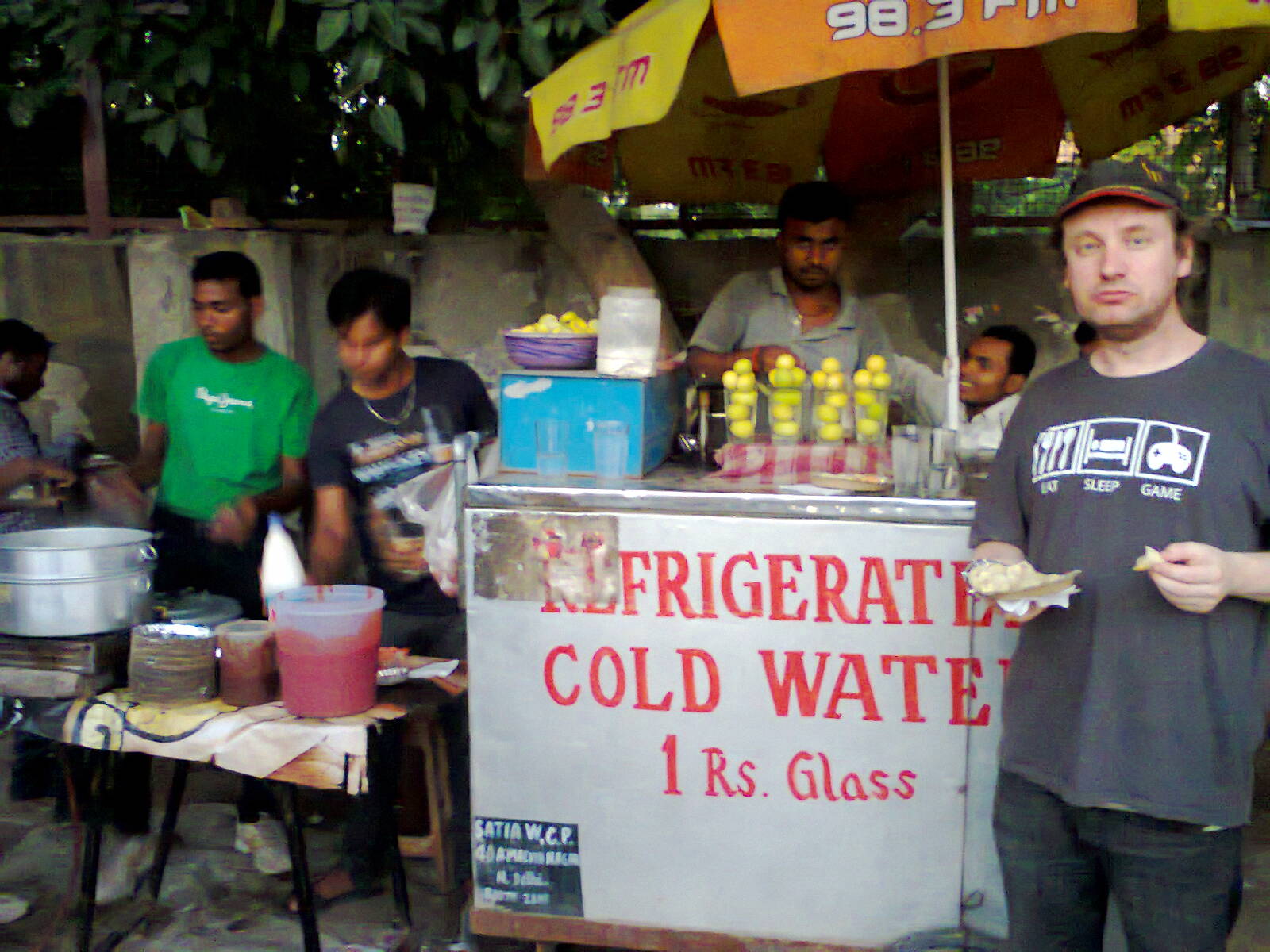
Day 134
They say that a mosquito never strays more than 90 meters from where it was born, but in the early hours of this morning, myself, the mosquito nest & my fellow sardine-tin travellers had all travelled 200K & reach’d the seething, beeping cauldron that is the Delhi ring road. The bus dropp’d me off to see a dog shivering prostrate with distemper – never a pleasant sight. One crazy, cow-dodging taxi ride later I had arrived at the Paharganj area of Delhi, the main budget backpacker district of the capital. There’s definitely a different edge to Delhi, & the friendly smiles of the Indians were turning, in my mind, to devious grins of thieves & vagabonds.
I soon found that the same reason why I don’t like living in London also applies to Delhi. Too many people, too much traffic, too much noise, etc. But at least London’s clean – the streets here are like pungent sewers, flies everywhere, stinkin’ stagnant water & huge piles of rubbish in the middle of the cow-crowded paths. However, the place retains a certain charm & I have enjoy’d the narrow alleys between some cool looking buildings around the hotel where I’m staying. Its call’d the Diamond & my innate bagging ability got me a 400 rupee deluxe room (with marble bath) for 200 rupees, just by being cheekily ‘northern’ with the Manager.
Almost immediately on my arrival I came down with a sore throat, which I put down to the terrible, Dantean pollution. It took until 11 AM this morning for the sun to break thro’ the clouds of smog that hang over the city. Meanwhile, Victor Pope arrives in a few days or so, so I’m gonna do a bit of sightseeing before he gets here. There are a couple of things I want to see especially, being all the British shit at New Delhi & the ruins of Tuqluquabad, but feeling under the weather a touch, & a bit overawed by the intensity of the capital, I just chill’d out & watch’d films & football for the rest of the day.
Day 135
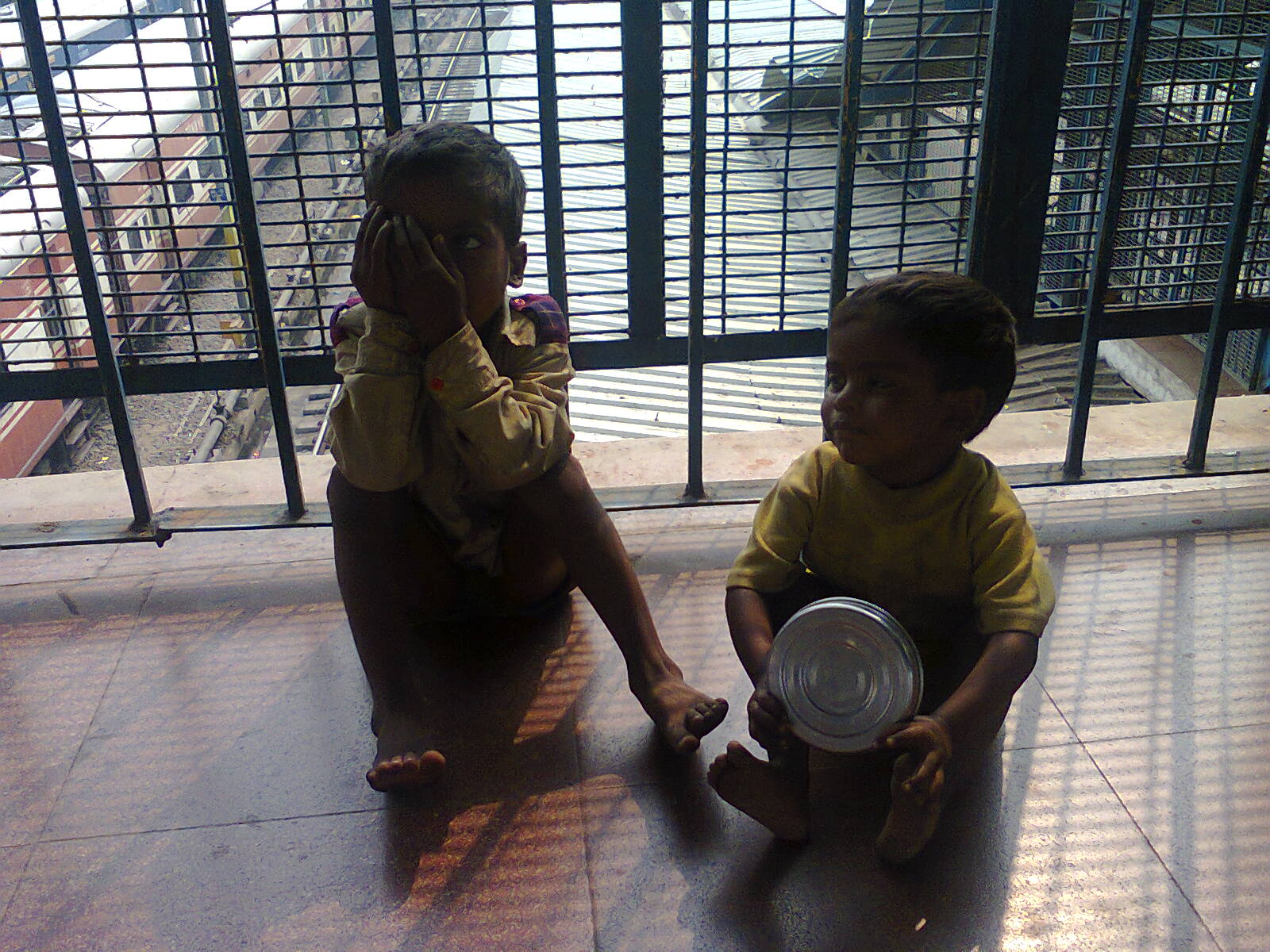
Felt reyt ill today, proper flu vibes. I’ve been constantly sucking strepsil & spent most of my time in my hotel room; resting, sleeping & skimming thro’ the 60-odd channels. Most of them are in crazy Hindi, but the movie channels are cool, the footys on most of the time & I’m now hooked on Benny Hill – the guy was a fuckin genius. I’ve enjoy’d myself doing nothing tho’ – after 4 months of hardcore trav’lin I appreciate the chillout – I can’t even remember the last time I’ve relaxed like this. I did force myself out for one wee excursion, a trip to the Red Fort, about 400 years old, very wide, grand & imposing & beautifully preserv’d.
Day 136
Still pretty ill. For today’s forc’d excursion I hired a rickshaw to take me 20 K south of the city where stands the ruins of Tuqluqabad. They were great! The empower Tuqluq decided to build a new capital (named after himself) which lasted until he died, when everyone pack’d up & moved back to Delhi, leaving the city to the decaying ravages of time. All that dwell there these days are bats & snakes. The view of Delhi from the battlements was pretty stunning, but my guide – who I never ask’d for – was gutted when I told him I’d spent all my cash on the rickshaw & entry fee.
I also went out in the evening for a shave – if you don’t feel good on the inside, it’s good to look good on the outside!
Day 137
So, in England I can usually shake off a bit of flu in a couple of days with a packet of lockets & foot rub, but if anything last night I felt worse, breaking out into hot sweats at regular intervals – so tomorrow morning I’hit the doctors. He wasn’t around for a couple of hours but I did speak to him on the phone. I told him my symptoms & he ask’d if I was takin malaria tablets – I told him I hadn’t had any for a month & he told his assistant to take some of my blood.
Oner nasty needle later I was told to go back in the evening for my results, & dragg’d myself back to the safety of my bed & its wonderful fan. In my fever, & to pass the time, I penn’d the following sonnet;
INDIA
Everyone has his own idea of India
JM Haynes
Nation of nations, hot & happy land!
With spicy dishes morsell’d by the hand,
Being a valorous & graceful race,
Thy universal mullet firm in place,
Despite taking three men to stamp a form
& creative corruption Laksmi’s norm,
A fanatacism for the rupee
Cements this secular society
Of power-cuts & cripples & bazaars
Beneath a pristine panoply of stars,
Of swastikas & cricket in the streets,
Bounteous crops & oversugar’d sweets,
Ashrams soothing riot-torn religion
Where always blaze the rays of Asia’s sun.
Whoa! It was salmonella! Going back at 7.30 PM, I got my results, & the fuckin’ doctor stung me for a great whack of rupees for mi antibiotics. However, health comes before wealth & I’m gonna be a lot happier feeling my strength return, especially with Victor Pope arriving tomorrow!
Racking my mind back, that shack in Almora was a bit unhygienic to say the least, & the street food I bought there could well be the source of my recent ails.
Day 138
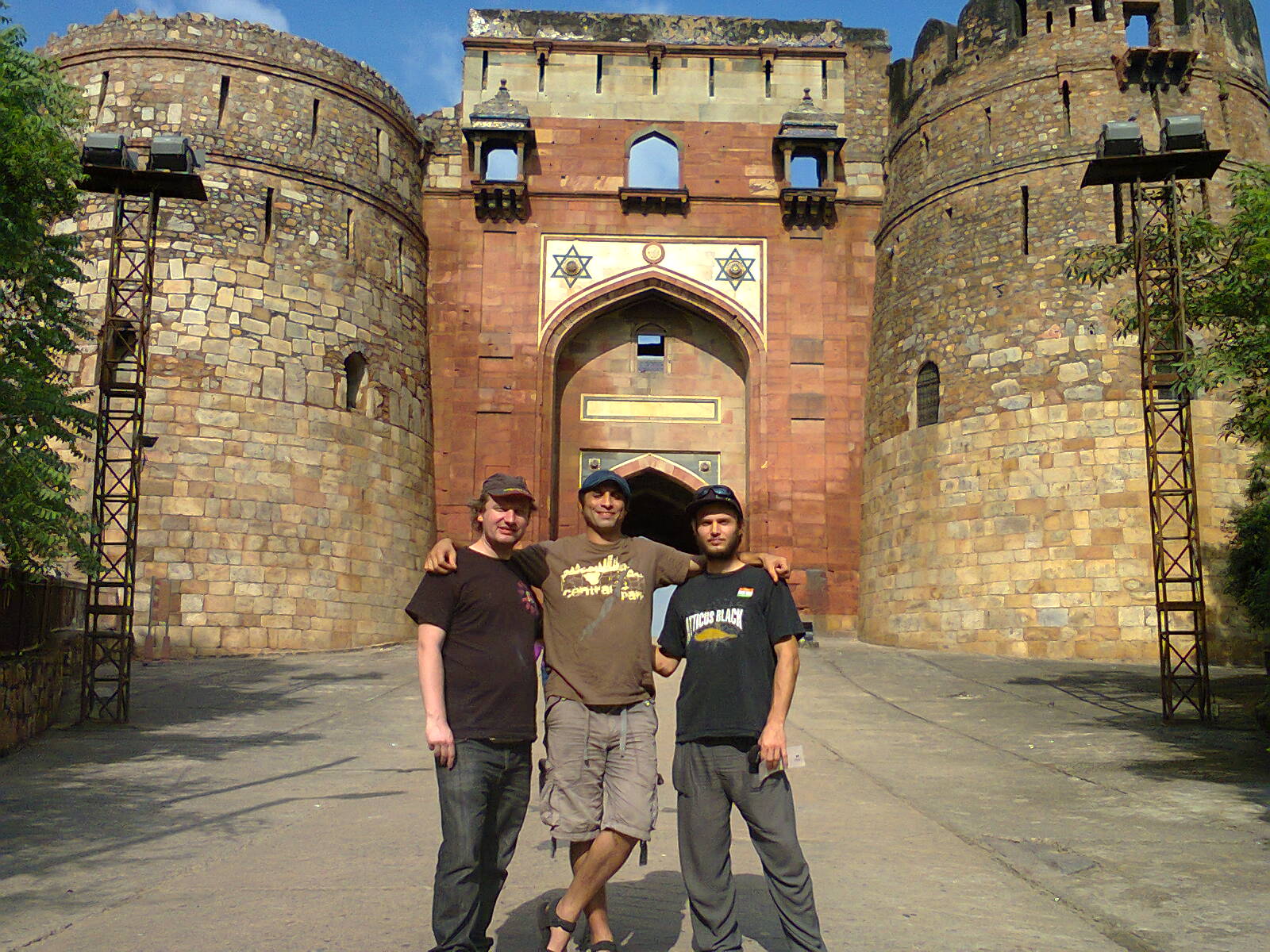
Felt much better today, & alongside the dysentery, another dodgy disease my body has beaten off with the help of a little tablet from an Indian doctor. So, Victor Pope arriv’d about 9AM this morning, with a Swiss guy call’d Manuel he’d met on the flight. Full of beans & booze – more legless than jet-lagg’d -they were both up for a sight-see; so after checking them into my hotel we hit sights of Delhi. Our car, driver, & petrol, cost us only £11 for 8 hours – mad, eh?
In this time we checked out some of wicked Delhi’s forts, buzzed about British-built New Delhi for a bit, then hit the Indian Habitat Centre for a great photo exhibition & a sitar recital. The Sitar guy was wicked, connecting with his tabla player like two loved-up gay guys on the job. In the audience was this very auspicious grey haired pandit (maestro) who was almost conducting proceedings – moving his own hands as the main guy strutted his stuff on the fretboard. It’s a credit to the sitar system that ancient pieces have been passed down from master to student quite note for note over many centuries.
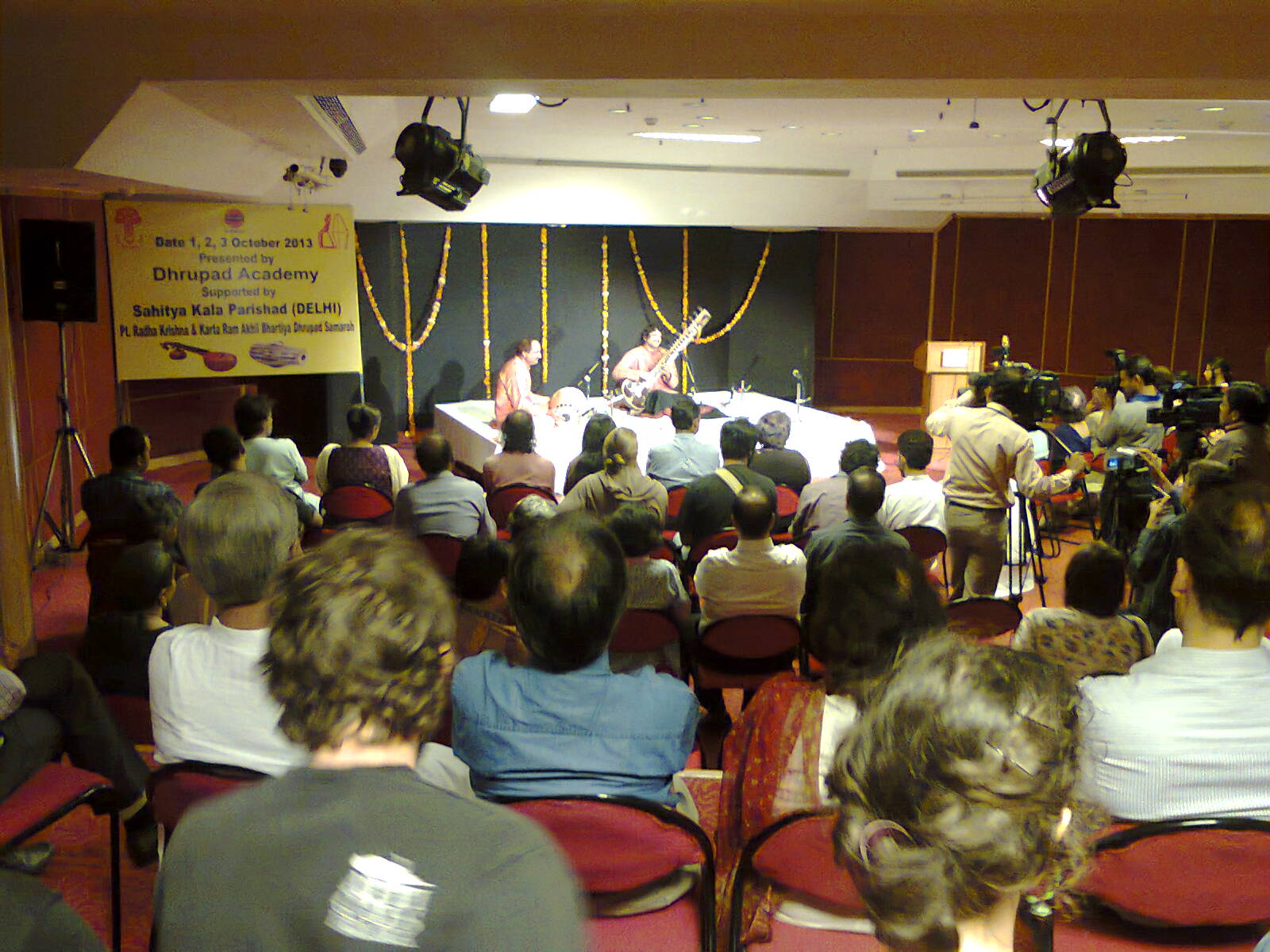
Victor Pope’s Diary
Two things have changed since I last came to India. 1) The beggars ask for ten rupees instead of one and 2) The toilets have flushes on them. This is definitely a sign that India is a rapidly developing nation and, whether it was this or the prospect of meeting my arch nemesis / best mate, Damo, on the other end, there wasn’t the creeping sense of dread and thoughts of “What the hell am I doing here” like there were the last time I was here. So… so far so good. The roads are as mental as ever and the taxi drive to the hotel was at times terrifying, but Damo’s constant tirade of nonsense set my mind at ease.
The Hotel itself is cosy if not quite five star. But it had a TV and they were playing the Hobbit on the movie channel the following night, so it seems in some ways they’re actually a little more developed than us over here. You won’t get that on film four for another three years at least!
Our first full day was spent bezzing around the streets of Delhi in a taxi we’d hired for 1000 rupees (around a tenner) for the day. I felt reasonably safe enclosed in its four metal, walls and we only witnessed one serious accident. We were joined by Manuel, an amiable Swiss dude I’d met on the plane. First stop was the spectacular red fort with it’s intricate, geometrical Islamic carvings and museum of independence, then to the India gate and centre of parliament where psychotic spoilt diplomat sons tried their damnedest to knock us off the road in their white Hondas. And finally to the ruined but noble old fort where the local hipsters chilled as much as was possible in the oppressive heat.
After a tour of a rug shop I believe our driver was “contractually obliged” to show us round, but where we we treated more like common thieves than valued costumers, we returned to our hotel to get changed before heading out to a sitar recital. At first I wasn’t so sure. The solo piece felt more like a prolonged tuning session than any kind of noticeable song. But once the drums kicked in the communication on an almost psychic level between the sitarist and the drummer was a thing of great beauty. After this elevating experience we retired to the Hotel for Lamb curry and Hobbits. A fine end to a fine day.
Day 139
Today I decided to begin my pursuit of the Indian Jesus in earnest. Me & Victor entered the extremely modern Delhi metro system (for 16p), & buzzed along to the Hauz Khas area & the Tushita Mahayan meditation centre. On the way I got chatting to a young Hindoo, who told me he had read the New Testament & felt that the teachings of Christianity & Hindooism were very similar.
Once in Hauz Khas, a cool half-Indian, half-British monk called Kabir met us in the street, clad in orange robes & as mellow as a Buddhist mantra. His grandmother on his mother’s side was a Bullen, by the way, which I thought an auspicious sign. He gladly led us to the centre & its library, where I was left to perform my research, finding certain evidence in the library which confirms my suspicions.
While I was doing this, VP had been wandering the city. He returned at 5PM, just in time for a talk by this Australian Buddhist on Mindfulness being the Key to Happiness. I found it quite rewarding myself, but Victor thought it unfair that he wouldn’t be able to let go of his anger by shouting at his computer (a scary sight trust me) & got nothing at all from the talk.
After this we went back to the Indian Habitat Centre for a performance of Kathak. I’d really fallen in love with it in Calcutta, it’s simply a thrill & delight to watch. A combination of ballet spins, manic tap dancing & poetic hand-arm movements, backed up by tablas & sitars, its a relentless hurricane of bodily movement that makes my own hyperactivity seem veritably slothlike – even Victor thought it was, & I quote, ‘alright!‘. The costumes are gorgeous & uniform, as is the synchronicity of highly complicated dance routines.
So that was Delhi. My salmonella’s now disappear’d, & I’ve now got a an old buddy by my side. As oppos’d to being with Charlie, who did my fuckin’ nut in, VP’s a delight to travel with, whose droll sense of humour & boylike appreciation for new sights & smells shows he is a true traveller.
Tomorrow morning we hit the road & the rest of the Raj, or rather the Radge, awaits.
Day 140
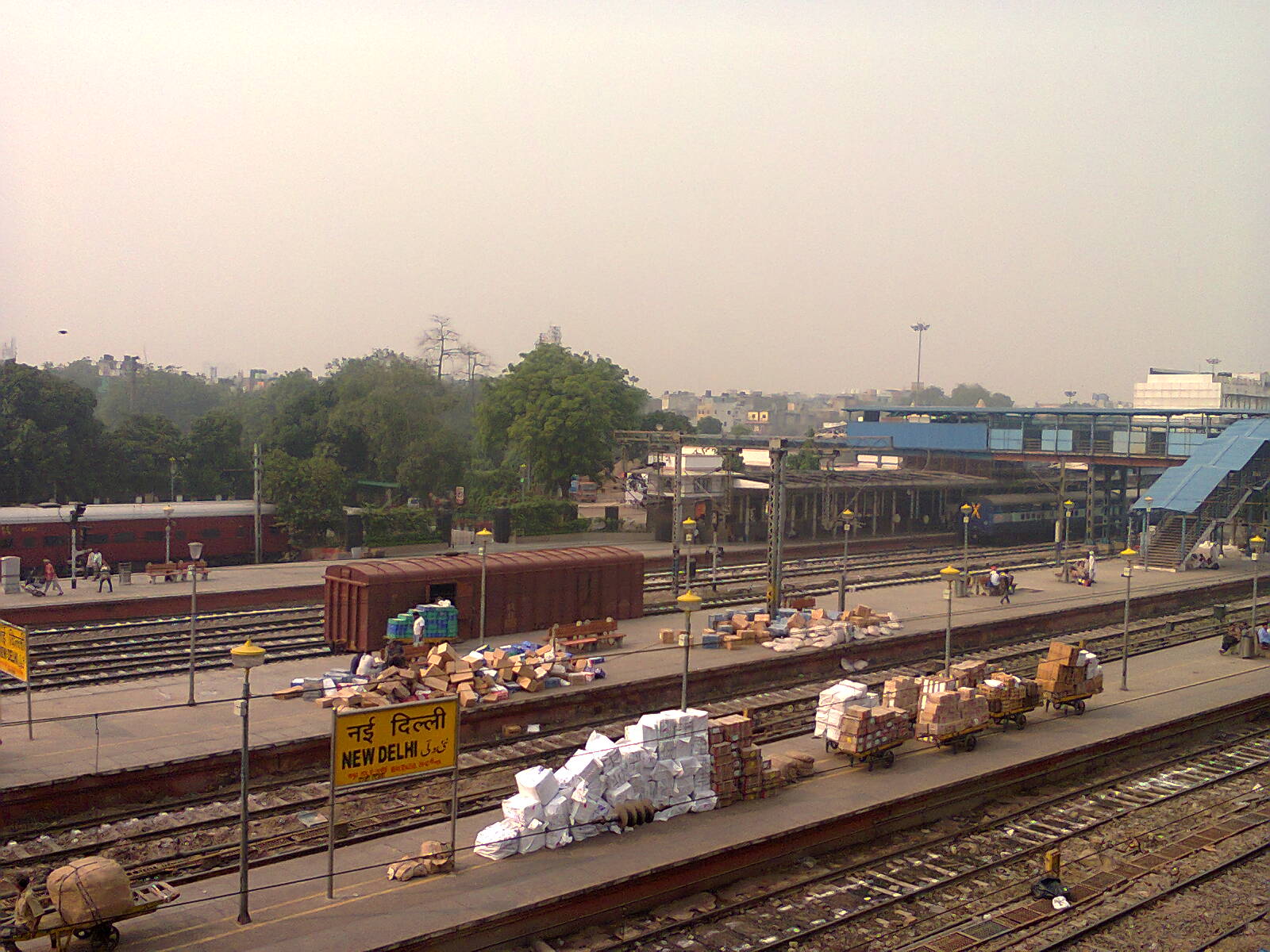
Victor Pope & I left the craziness of Delhi on this morning, upon what our travel agent called the ‘Best train India.’ It wasn’t amazing, but we did get western seats, complimentary newspapers, tea & a breakfast snack. We spent a pleasant enough two hours heading north through the uninspiring Gangeatic plane, before disembarking at the town of Kurukshetra. Our reason was the Bhagavad Gita – the Song of God – a text interpolated into the great Indian epic poem, the Mahabharata. The singer of the Bhagavad Gita is the Hindoo blue-skinned diety known as Krishna, as he stands in a chariot with Arjuna before the massive battle of Kurukshetra.
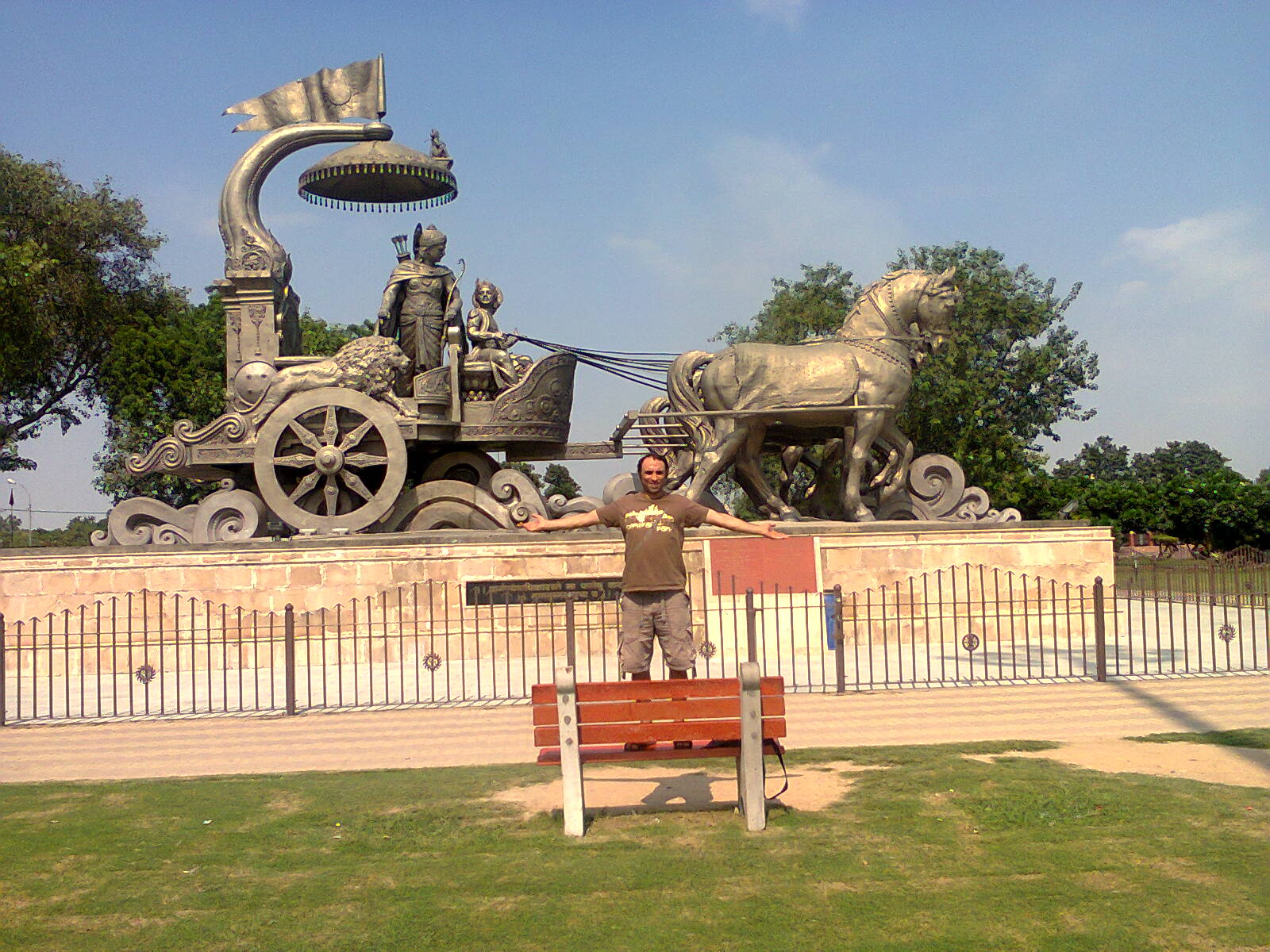
There are a number of reasons why we should connect Krishna with Jesus;
1 – Christos is the Greek translation of Krishna
2 – The tenth century text the Bhagavata Purana tells is that Krishna was born by divine “mental transmission” from the mind of Vasudeva into the womb of Devaki, a direct tally with the virgin birth of Jesus.
3 – Y Masih writes, ‘The phenomenon of ‘Krsnajanmastame’ in which the child Krishna is represented as a suckling at the mother’s breast. Nanda, the foster-father of Krishna had gone to Mathura to pay his taxes (just as Joseph had gone to Bethlehem for census). Krishna was born in a cow-shed (Gokula exactly as Jesus was born in a manger); massacre of infants of Mathura by Kamsa (just as was the massacre of infants by Herod)
4 – The Bhagavad Gita has many parrallels with the sayings of Jesus, as in;
Krishna: I am Beginning, Middle, End, Eternal Time, the Birth and the Death of all. I am the symbol A among the characters. I have created all things out of one portion of myself
Jesus: I am the Alpha & the Omega, the Beginning & the End, the First & the Last.
Krishna: By love & loyalty he comes to know me as I really am, Iove you well. Bear me in mind, love me & worship me so you will come to me, I promise you truly for you are dear to me
Jesus: Anyone who loves me will be loved by my father & I shall love him & show myself to him
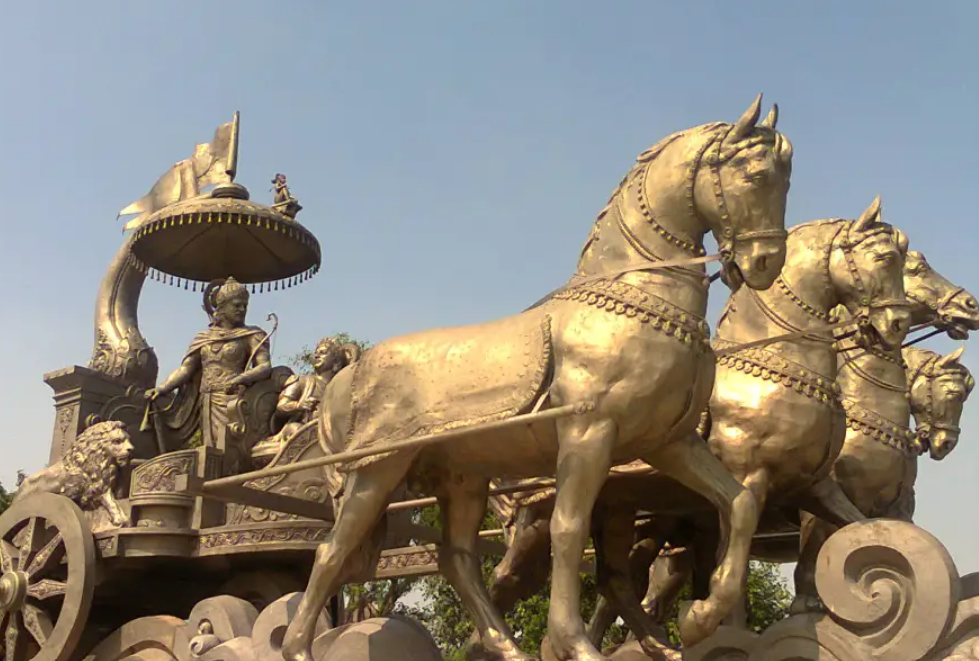
These points of contact are both too numerous & too palpable to ignore & we must consider the Gita as abstract evidence for Jesus having been in India. Robert Frederick Hall spoke of the Gita’s, ‘exact synchronism with the mystery-religion taught by Jesus Christ,’ & that, ‘no longer will this ancient epic be treated as some obscure or ‘heathen’ philosophy, peculiar to an Eastern Race, a relic of past human superstition, but as setting forth the fundamental Doctrine of all Masters, & especially of Jesus Christ & the Apostles.’ Elsewhere, Robert Frederick Hall writes, ‘no longer will this ancient epic be treated as some obscure or ‘heathen’ philosophy, peculiar to an Eastern Race, a relic of past human superstition, but as setting forth the fundamental Doctrine of all Masters.’
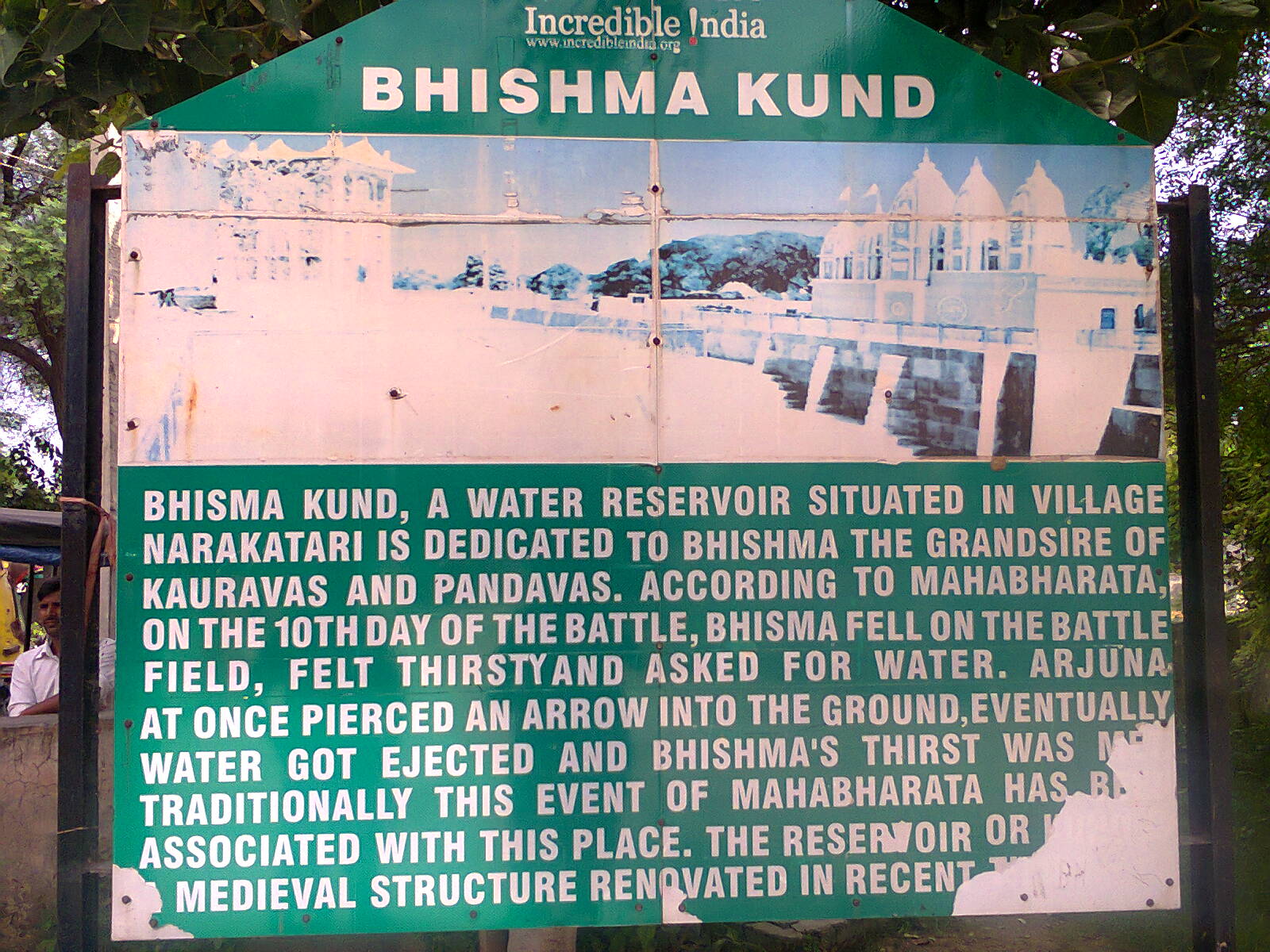
Thus, Kurukshetra was a great place to start my quest for the Indian Jesus. After arriving at the town, we called into a jewellers, where I enquired about the battlefield. He was friendly guy, eager to help, whose mother named him Parikshit, after the grandson of Arjuna. After telling me that I was actually standing on the battlefield, which spread & sprawled about us for 48 square miles, he sorted us out a rickshaw for a couple of hours in order to see the sights. Most of these were temples marking events which occurred during the battle, but there was a cool archaeological museum at the historical town of Thanesar (formerly Sthaneswar), on the edges of Kurukshetra.
In 634 AD, the Chinese explorer, Xuanzang described several Buddhist monasteries & a few hundred brahman temples at Thanesar, showing how religious the site was, whose earliest strata which has been dated to the Kushan era, which began in the first century AD. A line of thought one could take, then, would be that not long after the singing of the Bhagavad Gita, let us say about the time of Jesus, the first temples began to spring up at Kurukshetra.
The discovery of the first century strata at Thanesar was a wonderful nugget, unearthed in a museum in the field, far from the collections of western libraries & the prying eyes of the google mega-brain. I am now convinc’d the truth of Jesus’ stay in India lay out there somewhere, & was probably connected in some fashion to Krishna. The names are the same, the teachings are the same, & now the dates, of at least the Kurukshetran version of Krishna, are the same.
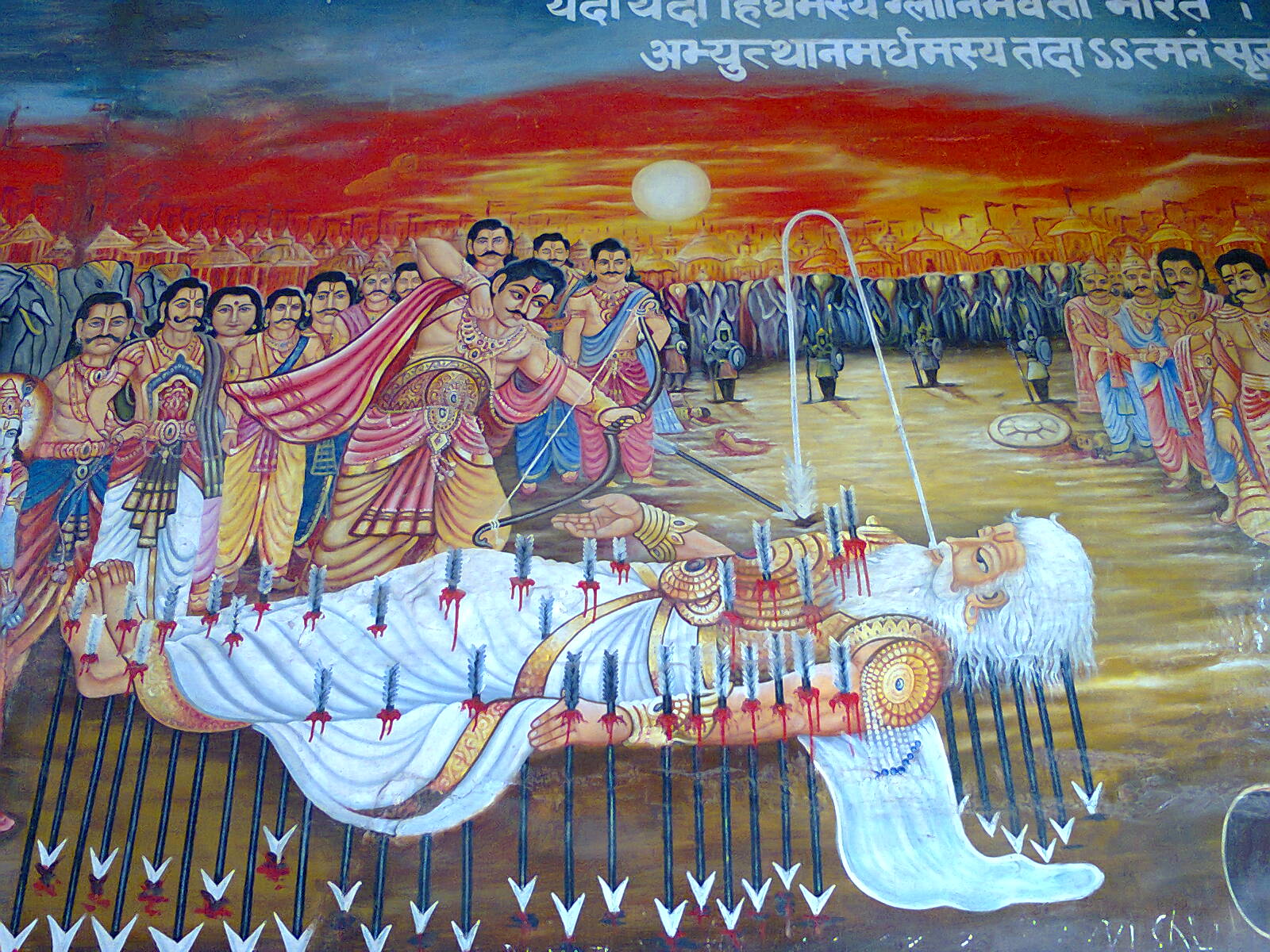
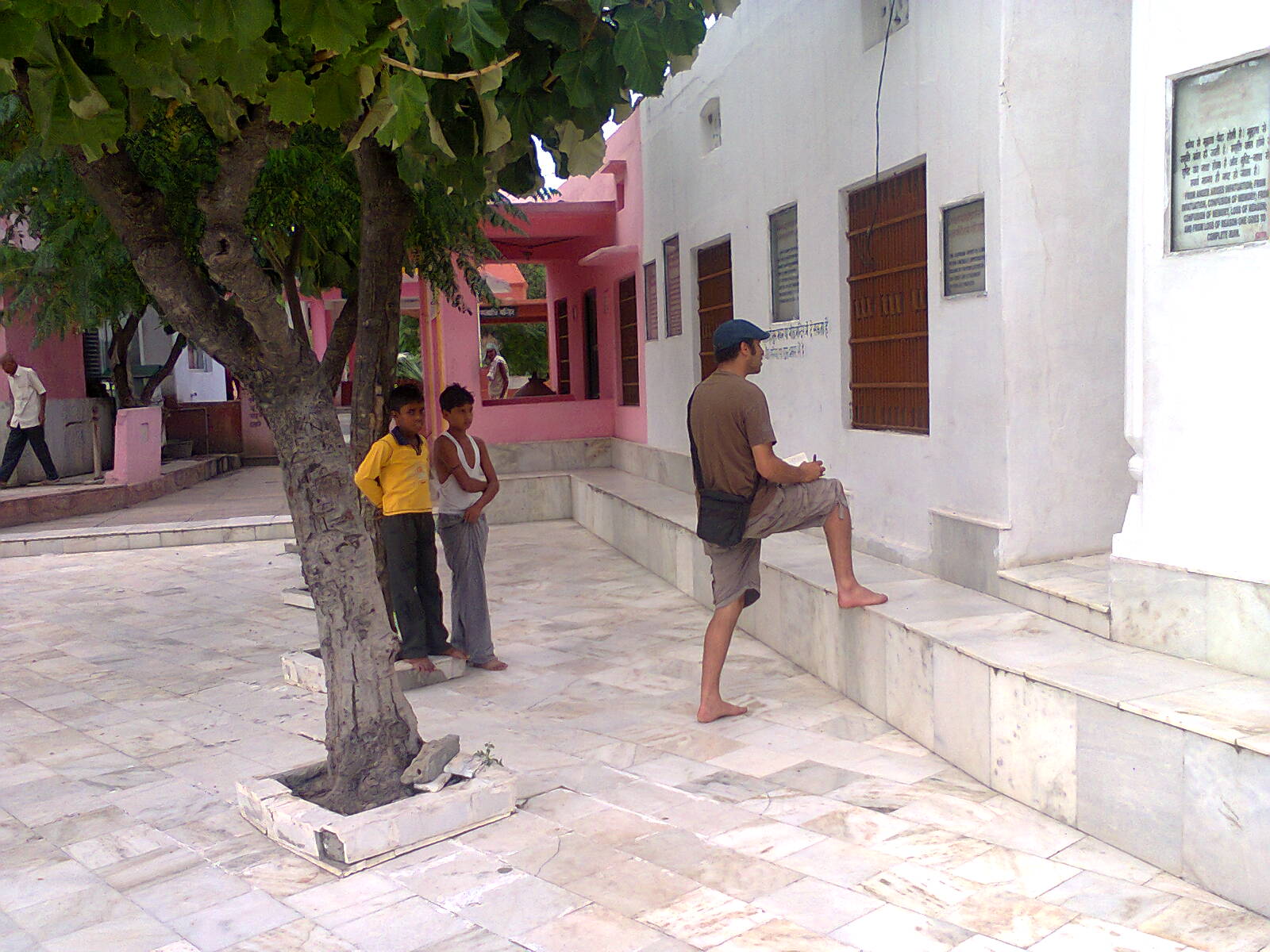
We spent that night in an ok-ish hotel, which lacked running water & had a problem with the electricity, but had a great dining area & even better food. We’re off!

