Uncategorized
A Weird and Wonderful Night at Sketchy Beats Café
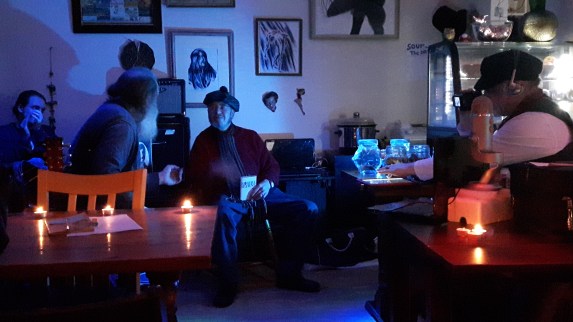
On a dark corner of Edinburgh, where a great stone bridge crosses the water of Leith, a curious pedestrian may spy a steamed-up door, and a room full of eccentrics. Beware ye, who enter. Sketchy Beats is not for the faint hearted, or the easily embarrassed.
The place in question is Sketchy Beats Cafe, a community-centered space for the weird and wonderful residents of Leith (and beyond) to gather in celebration of music, poetry and – on this particular night – Robert Burns. Chief Wrangler of such sessions is the wild-haired and talkative David Roberts – perhaps most eccentric of them all. His musical talent is not quite as plentiful as his enthusiasm. But certainly he has amassed a terrific set of artists to grace the lovely halls of Sketchy Beats Cafe.
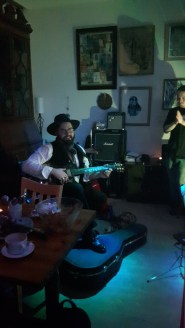
Alicia Ukelele – a sweet pixie of a thing with a lovely voice and a permanent smile – cooed a number of beautiful burns-themed ballads, before gifting us with a few songs of her own.
Van Tastik, a half-french, half-American, steampunk-ish gentleman with his name sellotaped to his back, delivered a smoky voiced set which had the whole room a-stomping. Best of the night was El Lowin – a prodigious singer with a growling, soaring roar of a voice which far surpasses his modesty, and age.
And finally the food! Classic Burns fare, catering to both the carnivorous and the strictly vegetarian was delicious. Spicy haggis and roasted vegetables were plentiful and on point. Never have I eaten such a feast for a mere £6 – with entertainment included.
In summary, David Roberts’ nights at the café are in a league of their own. The man himself was nothing except eager. And he did a brilliant job of engaging the audience (bar the moment when he bade everyone watch a woman breast-feeding her child – privacy, David!).
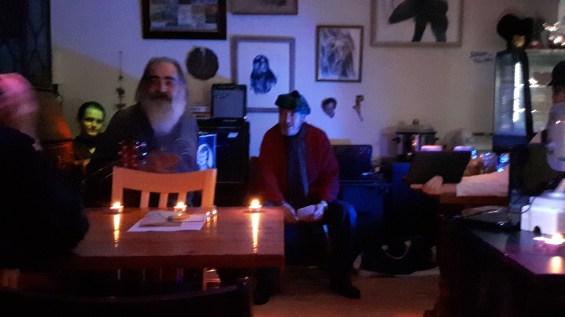
For those singers and poets looking for a strange and accepting place to draw, write, perform, or listen – look no further than this little slice of paradise. There is many a night in Scotland full of talent. But fewer places where a lonely soul can find such a warm welcome, or a safe space. Be ready for an awkward moment or two – and don’t expect things to run according to any schedule. But do tuck a new poem or song under your arm, get your biggest smile on, and try something different.
Sketchy beats is certainly a little sketchy – but it’s warm as can be.
Reviewer : Charlotte Morgan
Why Speculative Fiction is a great way to deal with this Fucked Up World

“It was only after I’d written this [story] that I realized it was a metaphor for the American occupation of Iraq.”
***
Do you fantasize about turning the tables on David Cameron, and fucking his skull with a pig’s dick?
Are there times in your day to day existence when you feel as though someone has swapped this life of ours with a nightmarish scene from a horror film?
If so, then you’re probably a functioning human being with eyeballs, a functioning sense of empathy, and shock at the state of our world.
***
Yes, dear Concerned Citizens.
Life, as ever, is a deluge of horror and beauty.
On one page of a newspaper, we are shocked by images of dead children washing up on beaches. On the opposite page we are offered “Childfree Holidays” on the sun-kissed sands of Tunisia.
None of it makes sense. Perhaps, like me, you find yourself swinging between outrage at the injustice of this world, and the strange ways we must keep on living, normally – trundling through the everyday. Even if somewhere over the rainbow a child has no access to water, you’ve still got to feed yourself. And no matter how much you donate or pledge to charities and relief funds and geniunely unfortunate humans begging for change, there will still be one more person asking for your cash.
What do you do if you cannot board a bus to Greece to support refugees? If you are too busy supporting your own family to spare time or money for another? If you are studying, working, perhaps struggling to exist yourself? Is it wrong to keep a bit of dough aside for your self? To turn off Panorama and fast forward through the fifth dog rescue ad you’ve seen today?
Is it not your right to escape?
***
Yes.
(Now, I’m not talking about a full-blown rave, strippers on a canal boat, or an application to this bullshit Martian population gimmick).
I’m talking about those moments on the bus, the hour you have to yourself on a Tuesday night, the Sunday afternoon veg-athon when you just want to sit on your arse, eat cheese puffs, and watch a film.
Because that’s when we turn to the things that help us deal with all the bullshit. Pass the time. Feel like life isn’t just a series of disappointments and deaths.
When we actually have a choice of how we spend our time, it’s books, films, music we want. These are some of the ways we make sense of the world.
And surely we are justified by a need to distract ourselves from our own lives, distance ourselves from the news, take on someone else’s reality for a short while? In many instances, these forms of entertainment actually help us to mediate trauma, fear, or loss. A few hours spent grossing ourselves out over zombie films, pissing our pants at bridesmaid comedies, or fantasizing over fluffy haired fops in period dramas with wanky classical music on repeat genuinely offer not just a form of escape, but the space and time and subject matter to help us deal with these fears: of world war and death, the passing of time, social inequality, an unquenchable desire for love or success or power.
And Now a Case for the Written Word:
Books in particular have created a space for speculation. They are places in which we undertake great leaps of imagination which enable us to leave this time, this planet, this universe altogether, and wonder at the sheer ambition and power of man. H.G. Wells, Aldous Huxley, Jonathan Swift … these are men who saw the good and the bad in our world and reshaped their vision into something everlasting. I’d even make a case for shit like 50 Shades of Grey and Hunger Games – as pieces of writing which have unlocked feelings of deep sexuality and repression amongst women, or fear at the mechanics of capitalism, and started conversations amongst the younger masses.
***
Now let’s talk quality…
There are small and brilliant voices sparking debate in Glasgow. Writers exist in this great city, who have seen the trauma of our time and given voice to it in refreshing and inspiring ways. Leading their charge is The Speculative Bookshop – one of the best platforms for new writing in Scotland.
Formed two years ago as a secondhand book stall, these guys have swiftly grown into one of Glasgow’s most interesting literary collectives – hosting events and speakers which constantly bring the creative mavericks of Glasgow into focus. Comic book illustrators, novelists, spoken word poets, and cabaret comics are amongst the many voices featured at the Speculate Bookshop events,
In a world so dominated by the giants of capitalism – by the self-aggrandizing mechanics of amazon, google, national cinema chains, and mass publishers, it is easy for voices to be lost. Often a film or book is created solely for profit, and pushed into a mold which the Forces that Be believe will fit to the average audience – a non-existent everyman with nothing in common with the true individual.
 It is a good thing that we are all learning to think for ourselves – to find podcasts, and independent films, to visit the shop around our corner rather than the superstore around the street. With the rise of the internet, self-publishing, and fan fiction, people continue to write. Choices abound, and little breweries, bookshops, and restaurants fuck The Man, the mega-sized Conglomerates who evade taxes and fuck off to Tahiti and make jobs harder to get, and only sell cheap, poor quality shite and suck off the MPs making it easier for them to profit, and harder for us to live.
Long live the tiny independent bookshop! That’s where all the best writers came from anyway. And nowadays (Hipsters take note!) Glasgow’s Speculative Bookshop has done a brilliant job of collating some diverse writers into their first anthology. Quick, get a copy while its still uber hip and relatively unknown!
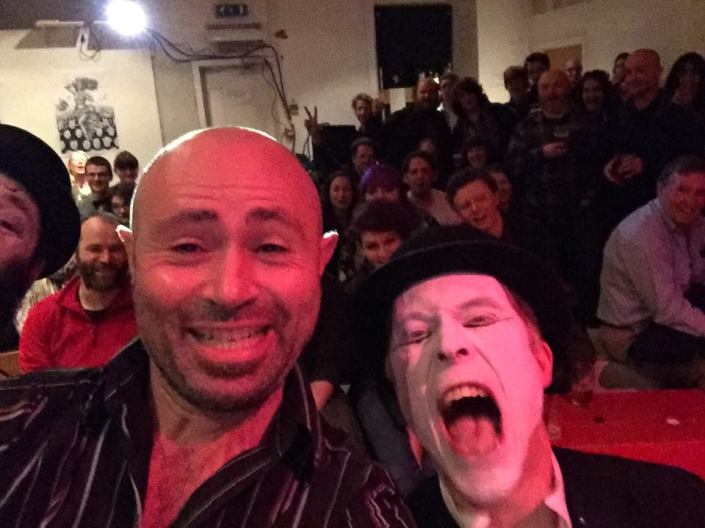
Speaking of Hipsters, on Friday 9th January, a few hundred of us assembled in the attic of Glasgow’s hidden gem, The Old Hairdresser’s for a night of poetry, fiction, and comedy.
The first reader, Ian Skewis, read a short and slightly surreal piece focused on the afterlife. His Martian vistas, simple dialogues, and dream-like imagery resonated with the same metaphysical surreality as Samuel Beckett.
Next up was ex-nuclear admin officer and Green party activist, Elaine Gallagher. A spectacular poet, and sensitive reader, Elaine Gallagher is a brilliant force on the Glasgow literature scene. Her reading was one of the highlights of the night – thoughtful, beautifully delivered, and best of all – simple. The final sentence of her piece was met with delighted laughter from the crowd. Her poem “Yesterday’s Tomorrow” is a terrific spoken piece, which meditates on ways in which the millennium has not lived up to the expectations (or predications) of the baby boomers.
Douglas Thomson’s piece, an excerpt from one of his newest novels, was impressive, and is even more so on the page. Thomson is a strong storyteller, with a firm grip on characterization, plot, and poetic imagery. I would highly recommend looking further at his opus. Dedicated fans can also catch him performing at a number of Glasgwegian poetry nights.
Offering a welcome respite from the heavier prose readings was Sam Small, one of Glasgow’s most prolific spoken word poets, and one of the biggest pioneers of performance poetry in the city, gave a number of terrific performances. His work ranges from comic and frenzied pieces focusing on love, sex, and the numbing forces of capitalism, to truly poetic and gut-wrenching poems centering on gender and suicide. He is a force to behold.
It is on the margins of society where the most unique voices can be heard. How fortunate that we possess the ability to publish such great writers, and discover them in Glasgow. There are a myriad of ways to make sense of this world. Sometimes we rage against the evil of the past, the folly of our own ancestors, the senseless mechanisms of government, and war. At best, we can protest, fund-raise, pray, and educate; failing that, we write.
There is something curious, something extraordinary afoot in the literary scene of Glasgow.
Get yourself over there, see for yourself.
Reviewer : Charlotte Morgan
Stories without Borders: Syrian Journey
![unnamed[1]](https://mumblewords.uk/wp-content/uploads/2015/11/unnamed11.jpg)
![unnamed[2]](https://mumblewords.uk/wp-content/uploads/2015/11/unnamed2.jpg)
*
From Renaissance to Referendum: Poetry, Culture and Politics
Saltire Society
Edinburgh
October 22nd
6.30-8pm

 ‘From Renaissance to Referendum: Poetry, Culture and Politics’ is a series of six public seminars aiming to bring academics down from their ivory towers into a more accessible public space. It’s a collaborative venture between the University of Edinburgh, the Scottish Poetry Library, the Saltire Society, with support from the British Academy. According to series organiser Greg Thomas (University of Edinburgh) the seminars will ‘plot more generally how modern Scottish poetry engages with political and cultural issues.’
The second of the seminars – ‘The Languages of Scottish Poetry’ – took place in the intimate, and fitting, Saltire Society, in lieu of the Scottish Poetry Library’s reopening on the 29th of October, where future seminars will be held. It was very much in the style of a typical literary event, with two speakers, Greg Thomas and Emma Dymock, chaired by poet Lila Matsumoto. The focus for the evening was two radical political Scottish poets, Sorley Maclean and Ian Hamilton Finlay, both of whom fused tradition with innovation and, positioning themselves on the outside, politicised the landscape in different ways.
Greg Thomas began with an anecdote about an Ian Hamilton Finlay pastoral sculpture and the dispute behind it, as a way of introducing the ‘principle of conflict’ which is crucial to Finlay’s work and life. Thomas suggested that Finlay ‘put the poem into war with the world’ and went into entertaining detail about the various public battles the pugnacious poet waged with arts councils, authorities and institutions during his career. Finlay’s art ‘goads us into battle to respond’ he concluded.
Translator and critic Emma Dymock considered radical socialist politics in Gaelic poetry, especially the work of Gaelic poet Sorley Maclean, who, she informed us, took the gospel of socialism at the age of 12. Illuminated by excerpts from his writing, provided on handouts, Dymock showed how Maclean continued the bardic tradition of Gaelic poets being spokespersons for a community, whether imagined or not, during times of political and cultural struggle. In doing so, Maclean helped develop a rich vein of revolutionary thought in Gaelic poetry.
While it’s admirable to take the academy to the public, indeed, this is very much the drive of the academy for impact and knowledge exchange, I’m not convinced that this will ensure a different audience. Both talks, while enjoyable, engaging and reasonably accessible, pre-supposed at least a little knowledge of their subjects. This in itself is no big deal, most people with an interest in Scottish poetry would have taken something from it and learned something new, as I did, but it’s possibly a bit too niche to capture an audience of neophytes. Time will tell. However, I think it’s important to attempt to bring discussion and debate about new and current research streams on Scottish poetics into the public domain, and this is the unique selling point of the seminar series. The next event, ‘Contemporary Scottish Poetry and Ecology,’ with David Farrier and Samantha Walton, will take place in the newly renovated Scottish Poetry Library, which is reason enough to go along, in my book.
Reviewer : Nicky Melville
A Sell-Out Night with Irvine Welsh
![ed-bookfest[1]](https://mumblewords.uk/wp-content/uploads/2015/08/ed-bookfest1.jpg)
Edinburgh International Book Festival
Charlotte Square Gardens
August 29th, 2015
![th[8]](https://mumblewords.uk/wp-content/uploads/2015/09/th8.jpg)
Irvine Welsh is doing pretty well for himself. His books have sold by the millions, he’s got a few film adaptations under his belt, and people are still clamouring to hear from him a good twenty years since the film version of Trainspotting was released to critical acclaim. Best of all, he can basically publish whatever he wants. Say what he wants. Do what he wants.
So, Welsh is writing, still. The same old filth. The same geezers. The same anthropomorphised asides (this time a penis instead of a Tapeworm).
Welsh’s most recent publication, A Decent Ride, re-hashes “Juice” Terry Lawson, who has previously appeared in Porno and Glue, following the bumbling character through a series of depraved and lunatic mishaps involving copious amounts of penis and misogyny (at one point, the penis speaks).
It’s not everyone’s cup of tea. But, the fact of the matter is: this is what Welsh has written. And that’s what he came to the Edinburgh International Book Festival to sell. As much as we’d all like to think Literary Festivals are about celebrating the artistry of the living canon, they’re also a sepia-toned marketing scheme concocted by publishing houses and literary agents. Which is fine, because, well, how else was the young American chap in the first row going to have the chance to proposition Welsh for a beer? (Welsh said no). We live in a late capitalist orgy of smut and masochism and Game of Thrones. A friend at Random House told me the other day that in the age of the kindle and digital sales, erotic fiction is King. Of course Welsh is writing another second rate version of Trainspotting. That’s where his dosh comes from. That’s what the people want.
And there’s nothing wrong with that. Since the dawn of time, writers have toed the line between entertainment and artistry … poetry and sex … unmitigated expression of the innermost desires… and porn. (Let’s be real, Shakespeare himself was a bit of a pervert; any good Eng Lit grad knows John Wilmot Earl of Rochester’s infamous Senor Dildo. And let’s not forget about Fanny Hill.) None of that lot were writing to flutter the eyelashes of the delicate literati. They needed to make themselves – and their minders – a bloody living.
Yes, Welsh is just one in a long line of bawdy wordsmiths, talented enough to grab the attention of the masses, and masochistic enough to keep on going. I expect most of the people at his talk were either blinded enough by the brilliance of Trainspotting not to notice the short-comings of his latest book, or just as depraved. Either way, they were in for a treat.
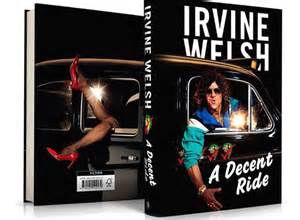 To start the evening off, Mr Welsh read to us from A Decent Ride. The reading lasted a little longer than I’d have liked, and the ride was not at all decent. Welsh probably knows what’s left of his appeal is confined to giggling pseudo-teenagers wallowing in a scots-tinged sewer of dick jokes and excrement. There was enough misogyny to satiate an army of football hooligans. But, to be fair, there were also some hilarious bits. Welsh’s greatest strength is the immediacy of his characters, the voices drenched in mania, the utter depravity of his (all too human) crooks. It was, I admit, really fun to hear Welsh-as-ventriloquist. He is a talented performer. I mean, I was too busy writing “awkward misogyny?!?!” in my notebook/ cringing to really relax and let the wave of debauchery wash over me. But I heard the beer-soaked blokes in front of me having a good chuckle.
https://www.youtube.com/watch?v=xRuuQUD3xb4
From there, the second half of the hour consisted of a series of awkward questions chaired by Viv Groskrop (whose attempts at a Scottish accent went down like nails on a chalkboard). Groskrop quizzed Welsh on his attitude to writing (Welsh tells us he writes because no one will employ him to do anything else), the development of his latest novel (he says he only realized half way through that his protagonist was basically Terry Lawson in disguise); and his biography (grew up in Leith, moved to London, and now lives in the US). The most interesting thing I learned from the night was one of Welsh’s ideas about age – the early twenties, he says, are the best age to write about because they’re so charged – “you either fucking love, or fucking hate everything”.
Well, I’m afraid I must be getting old because this early-twenties-year-old experienced neither of the above sentiments throughout the night. I admire Trainspotting, I do. In fact my feelings about the book do verge on the “fucking love” end of the Irvine Welsh scale of early-twenties mawkishness. But when Welsh started talking politics, I realized what a pity it was that he wasn’t writing better stuff.
Why, I wondered, was this award-winning novelist choosing to re-hash his Trainspotting and Porno grandeur again and again, rather than exploring the ideas he had about austerity, the government, and Scottish independence? Or, if those simply weren’t areas he wanted to write about, why wasn’t Welsh following the Phillip Roth-ian vein of mostly autobiographical tragi-comedy he’s so suited for? (Roth’s Sabbath’s Theater and American Pastoral are brilliant examples of an established author doing what he does best (again and again) with fresh and surprising twists). Why, I wondered, in a desperate spate of antiquated literary wistfulness, isn’t Welsh fresher?
My theory is this: he doesn’t need to be. He’s rolling in dosh. His publishers know his name commands a hefty sales figure. And he’s filling rooms at Book Festivals with young twenty something blokes who’ve seen Trainspotting and fucking love him. That’s that.
Oh, and the night?
Definitely a sell-out. Irvine Welsh is, well, He’s successful. You all know what it takes to become a rich white man in this day and age. But, let’s face it, he’s Irvine F*cking Welsh. Ewan McGregor and James McAvoy have starred in his films. He takes literary depravity, and fucks it up the ass. He makes William Burroughs look like Enid Blyton. He’s an entertainer (that’s the word I was looking for). He gets his literary cock out for the lads. So, if that’s what you’re into, then I’m sure there’ll be another chance for you to lap it up.
It’s not the worst ride I ever had, but it’s definitely not the best.
Reviewer : Charlotte Morgan
A night with Tom McCarthy, Man-Booker nominated novelist (who I shall now compare to a certain kind of booze)
Edinburgh International Book Festival,
Charlotte Square Gardens, Edinburgh
August 30th 2015

As I queued outside the small side tent awarded to Tom McCarthy by the Edinburgh International Book Festival, the gentleman to my right lamented the relative anonymity McCarthy receives even at literary festivals. McCarthy is, I (and many others) would argue, one of the greatest living authors of our time. His expertly crafted novels, beginning with Remainder, and culminating with his (hot off the press) Booker-nominated Satin Island are dense with carefully crafted symbolism and commentary on the repetitive and viral nature of commoditized contemporary existence. They are beautifully written riffs on the material culture and endless feedback loops of self-awareness which characterize our era (McCarthy says buffering is the “symbol of our age”).
But not many people came to hear Mr. McCarthy.
McCarthy’s was the only talk I attended at the Edinburgh International Book Festival which wasn’t held in the fancy tent, and wasn’t sold out.
(btw, if you make it to the end of this article with all its big words and cerebral ramblings, I will reward you with footage of kittens)
The gentleman to my right (first in line, and wielding a fresh, bookmarked copy of McCarthy’s newest novel) asked me why I thought McCarthy did not receive more attention. He made a point, he told me, of attending as many of McCarthy’s talks as he possibly could. And to be fair, the man was clearly a McCarthy aficionado, absolutely gushing with excitement at the chance to hear from his avowed favourite author and waxing lyrical about the incredible deliberateness of McCarthy’s prose – the way motifs recur throughout the chapters, engaging with the strangeness of computerized existence, the absurdity of late capitalism, and the repeated failure of man to achieve any kind of grandeur beyond the everyday. (At one point, the guy even told McCarthy himself where to find a passage in Satin Island… I mean, the dude knew McCarthy’s book better than McCarthy). Why oh why, my mad friend wondered, weren’t more people tuned in to McCarthy’s genius?
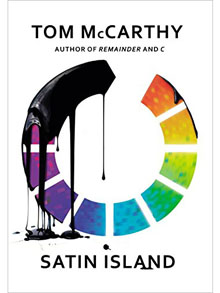 I wasn’t sure. In fact, I was surprised myself that the booker-nominated novelist wasn’t being rushed in and out of a big fancy tent by literary bouncers, or being accosted mid-question time by frothing youths in the front row begging to buy him a beer (this actually happened at Irvine Welsh and boy was it awkward). But the fact of the matter is this: McCarthy’s novels are formidable. Dense. Cerebral. You’ve got to be a little bit patient, and more than a little bit bookish to get into McCarthy. In fact you’ve probably got to have a few degrees.
(And the same could apply to his night.)
From the minute McCarthy began his discussion with Stuart Kelly, I felt as though I were witnessing a tutorial, or some kind of literary theory slam. Phrases like “dissident surrealist tradition”, “irredeemably subversive”, “oil is an orgiastic archive” and “post-death curator” were tossed back and forth so quickly across the stage, this reviewer was left gasping for extra brain cells. There may or may not be a small section of my notebook that simply reads: ??? wtf is metastasis ???
It’s not that night wasn’t intriguing, or brilliant. Indeed, Stuart Kelly was incredibly sensitive to the duplicitous meanings woven into the McCarthy’s novels. He was by far the most prepared interviewer, the most engaging host, and the most dedicated listener I had the good fortune to hear from throughout the festival. Where most hosts had clearly prepared little to nothing (cough, Don Paterson), or spent most of the time sorting out which question they were going to ask next (everyone else), Kelly responded with force to McCarthy’s responses, drawing out – and building on – the most intriguing points McCarthy had to make about the construction of his narratives, and the intricate meanings behind them.
But the thing is, it was heavy. There was so much to think about, so much theory, and so many allusions to countless authors, genres, and cultural phenomenon that I was almost reduced to my past self as a first-year masters student at a certain elite London university surrounded by uber hipster liberal avant-garde poets and writers with insane haircuts (!), with nothing left to do for myself but curl up in a corner under a desk wailing I AM NOT WORTHY I AM NOT WORTHY I AM NOT WORTHY
But, reader, I was worthy. I kept up (thanks, degree number 3). And I gained enormous insight into McCarthy’s process, as well as the kind of meaning he was aiming to confer through his writing. Certainly, I would never have made so many connections between his references on my own – turns out his influences range from Richardson’s Clarissa to Forster, to Deleuze and Guattari (god help us). If you want to learn any more, then you’ll have to a) read his books; and b) buy a bloody ticket to one of his talks. It was well worth the trip, and considering I go through an existential crisis once a week or so, when I remember that amazon is taking over the world, and 90% of people only want to read shit like 50 Shades of Grey, it was actually quite an inspiring night. In an age of proliferating media forms and reality television, McCarthy’s work makes a brilliant case for the survival of the novel.
Buttttt… I can see also why people aren’t murdering one another for front row seats. We can’t all be post-modernist buffs who know what transhumanism means.
See, I think of it like this:
If Irvine Welsh is a good pint of Guinness, Tom McCarthy is one of those weird 100 year old bottles of Port few people have the time or money to appreciate. You’ve gotta have some kind of degree in wine or banking to even be into the stuff; and you’ve probably had to invest a lot of your life in getting to know it. You know, swirling it around in a glass. Tonguing it. Spitting it back out.
And most people wouldn’t even bother drinking a glass, because they know they wouldn’t be able to taste it properly. They haven’t had the time or the opportunities or the degrees to really appreciate it. (They’d probably just get a bit drunk, eat some cheese. Move on to tequila.) But for a few people out there – the ones that really give a shit, the ones with the time and the money and the commitment – that 100 year old Port: it’s the best fucking drink you’ve ever had.
Well, that’s Tom McCarthy. In fact, that’s fucking art, man. It just leaves you hanging a little.
So, yeah.
I’m off to drink some port.
Thanks for reading: Here’s something to make you feel better about yourself:
Reviewer : Charlotte Morgan
Erik Swyngedouw: Why we need political dissent
Edinburgh International Book Festival
Garden Theatre
31st August 2015
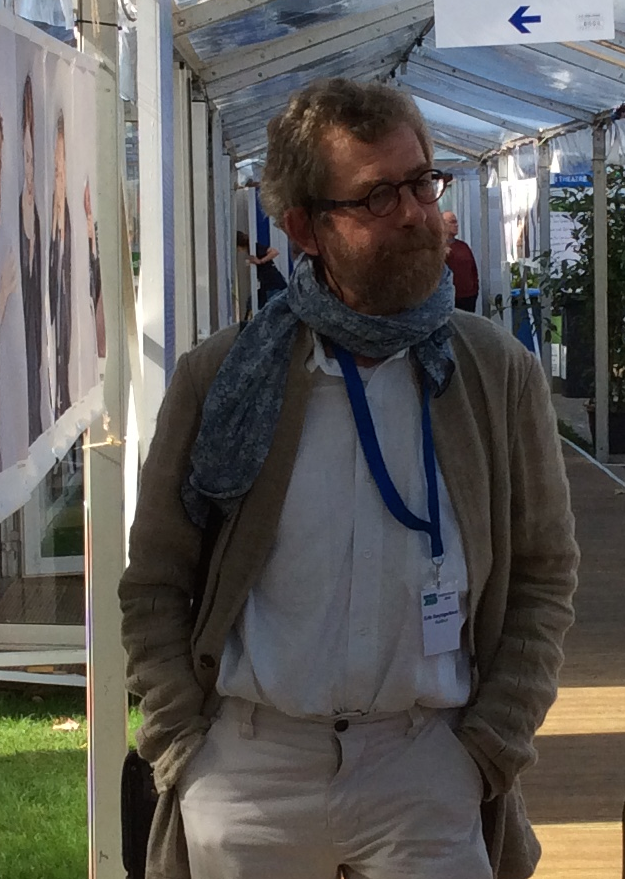
It is the last day of the Edinburgh International Book Festival, an isolated Monday after a long fortnight, and there is an end-of-term, bring-your-own-book atmosphere. The early morning seems less hurried, more relaxed, the crowds sparser until crocodiles of schoolchildren file in for specific events. A writer who draws a slot on this last day to explore an ostensibly adult subject might not get a sell-out audience. Indeed we did not fill the Garden Theatre for Erik Swyngedouw, which is a shame because the issue which he brought to us could, in theory, could have kept a week-long conference going – how could it be covered in the single hour of a Book Festival event? Beforehand, my head was buzzing with a dozen or more questions on the subject of the form, stance, and effectiveness of political dissent, it seemed to me to be such a vital thing to discuss. But perhaps the fact that there were empty seats is part of the problem that Erik Swyngedouw is trying to highlight.
Erik is Professor of Geography at the University of Manchester, but sees himself more as a political philosopher, I guess. He is certainly passionate about his subject, starting the ball rolling with a short lecture, walking up and down the stage, in and out of the spotlight, almost haranguing us, as rather distracting bullet-points flashed up on the screen. But there was self-deprecating irony in what he was saying to us. “I get paid to think,” he said, at the same time as warning of the dangers of looking to ‘master-philosophers’ for a solution to our political problems instead of ourselves acting. “At the moment that we invoke a master… it will inevitably lead to terror and exclusion!” Chairman Tahl Kaminer emphasised this irony by asking for the house lights to be brought up slightly, to bring us into the event as active participants rather than passive, and saying it was probably something we should have demanded ourselves.
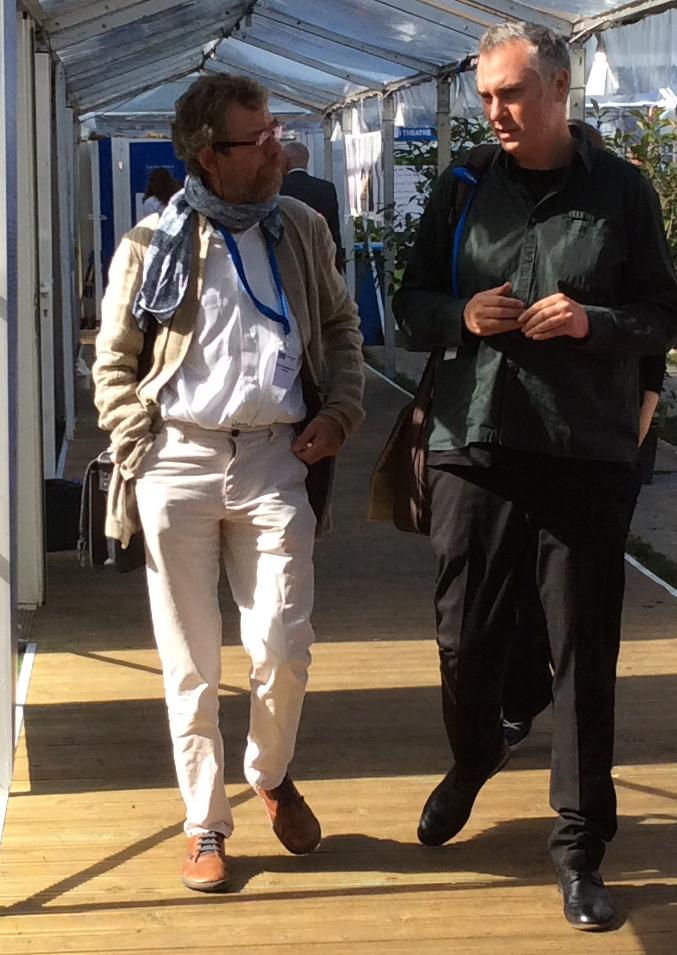 It is this ‘parallax gap’ that Erik Swyngedouw highlighted as being the situation we are in today, like the silhouette picture which can either be two faces in profile or the outline of a chalice, but never both at the same time. There is a gap between the act of governing and the process of politics. Politics is something we do at the grass-roots level, whilst what the professional politicians do is a techno-managerial function, what they offer is a managerial solution – “Yes,” they say, “the country is in a mess, but trust us, we’ll sort it out for you.” And we cheerfully go back to our sofas and TVs, taking no further part in anything remotely political.
It seems that ‘we’ ‘won’ in 1989, that we reached Francis Fukuyama’s The End of History, and that current interest in the political process (except, Erik conceded, perhaps here in Scotland) has dwindled. On the one hand we in the comfortable, prosperous West have allowed this rendering of matters of public concern to techno-managerial government, and have abrogated our democratic autonomy, yet on the other hand there is so much discontent. Erik cited the Arab Spring of 2011, movements like Podemos and Syriza, the Occupy events and other protest movements, many of which, it seems to me, are routinely excluded from media reporting. He also warned that perhaps the best organised dissidence currently comes from the Right and from religious fundamentalism, and that the left is disorganised. But even amongst the ostensibly apathetic there is concern and grumbling; what they lack is some kind of motivation to become actively political.
 Tahl Kaminer asked him about the concepts of ‘freedom’ and ‘equality’, which Erik rather surprisingly called ‘empty signifiers’. He begged us to think of them differently from the way politicians define them, differently from how they are defined in our constitutions, and to start thinking of them in terms of what people do and how that challenges constitutional definitions and the views of political managers. Rosa Parks, he pointed out, defined ‘freedom’ by ‘putting her black bum on a seat’. Yes, if some of you find that a rather surprising turn of phrase, then this is something Erik does deliberately. He choses to use terms which he calls ‘obscene’. By that he does not mean conventionally ‘dirty’, but rather, because the ‘democracy’ that exists, where we turn everything over to a managerial class, is ‘an obscene perversion of democracy’, Erik suggests that we seize and use hate-words like ‘communism’ and bend them to our purposes. To him ‘communism’ is a signifier to answer his semi-rhetorical question “What is the name of what we want?” because it has meanings that pre-date its undoubtable twentieth-century disaster.
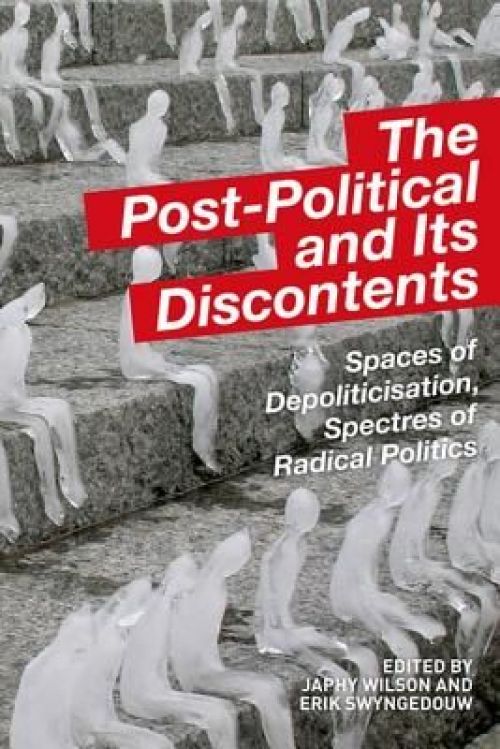
This view didn’t go unchallenged, of course. Tahl Kaminer wondered whether, as the ideas discussed by Erik and his fellow-thinkers seem to have a clear anti-property, anti-statism aspect, ‘anarchism’ would be a better defining term. I myself asked Erik what we could do to reclaim the term ‘democracy’ plain and simple, when the word itself is now so universally used to describe the elective-managerial hegemony, to the extent that systems, both real and theoretical, with more participation and involvement had to be qualified by an adjective. Erik, whilst taking these points, seemed to favour the shock effect of using an ‘obscene’ term, a term with more strength than ‘anarchism’ or ‘democracy’. Nevertheless, the book that Erik was promoting today, and which he co-edited with Japhy Wilson, The Post-Political and its Discontents, contains this interesting and telling quotation from José Saramago:
We live in an era where we can discuss everything. With one exception: Democracy. She is there, an acquired dogma. Don’t touch, like a museum display. Elections have become an absurd comedy, shameful, in which the participation of the citizen is very weak, and governments represent the political commissionaires of economic power. There isn’t democracy, only the appearance of democracy. We live in a simulation. If we want real democracy, we will have to create it ourselves.
This situation that Saramago refers to is what Erik Swyngedouw, Japhy Wilson, and their co-writers mean by ‘Post-Political’. It is a captivating definition and world-view, so much so that I actually went straight to the Festival bookshop and bought a copy of the book. That was a first for me this year – up to then I had only made a note to put something on my Christmas list – and I think I’m going to enjoy reading it. From my point of view there’s no better way to cap Book Festival ‘long fortnight’ than to come out stimulated like this.
Reviewer : Paul Thompson
Meera Syal: Dreams of Motherhood and Freedom
Edinburgh International Book Festival
Baillie Gifford Main Theatre
27th August 2015

Of the Book Festival events I have been to this year, this was the first which was intended to promote a novel. The House of Hidden Mothers is the story of two women. One is here in Britain, Shyama, aged forty-eight and with a new love in her life, and desperate to raise a child with him. The other is in India, Mala, a woman from a poor background who, with only one asset to exploit, is part of that country’s $4.5 billion-per-year surrogate mother industry. Each, in a way, holds the answer to the other’s dreams. It is Meera Syal’s first novel in sixteen years, and Lee Randall in the chair called it ‘beautifully done’, praised its ‘bold authorial choice[s]’ and its ‘bold and breathtaking’ ending.
The event gave us a chance to hear some of the novel’s content, as Meera read out a passage where Shyama and her friend are sitting in a café, waiting for their order to arrive, and browsing a surrogacy site whilst they wait. The dialogue was, as I might have expected, a script-like exchange, as though Meera had been visualising its being acted out, right down to the reaction and recovery of the approaching waiter on hearing the subject of sperm being loudly discussed. In narrative passages I noted that her style involved choosing words like ‘emanating’ rather than ‘coming from’, and I wondered why, because it didn’t seem necessary in the slightest. The script-like quality of the dialogue was reinforced by Meera’s reading ‘in character’ – she would do, she’s an actor! – and it was obvious that the audience enjoyed this. Later of course she played up to this by treating us to an imitation of her cousins over in India. Easy winners.
More attention-holding was the passage she read out where Shyama and Toby her partner are discussing the options offered by an Indian surrogacy agency, and the costs involved, and they are overheard and interrupted by Shyama’s teenage daughter by her first marriage. As the teenager confronts her loathing, at that moment, for her mother and for her own reaction, we realise that the issue is going to effect an increasing number of people beyond those immediately involved.
I had wondered whether Festival-goers might have come to this event to be entertained by someone who is cleverly funny and can assume characters, rather than for the issues raised by the novel. From the questions raised at the end I doubt that. Of the ten questions, nine were from women, and all focused in the novel’s serious content and intent. Both the answers and the main discussion beforehand were very thought-provoking.
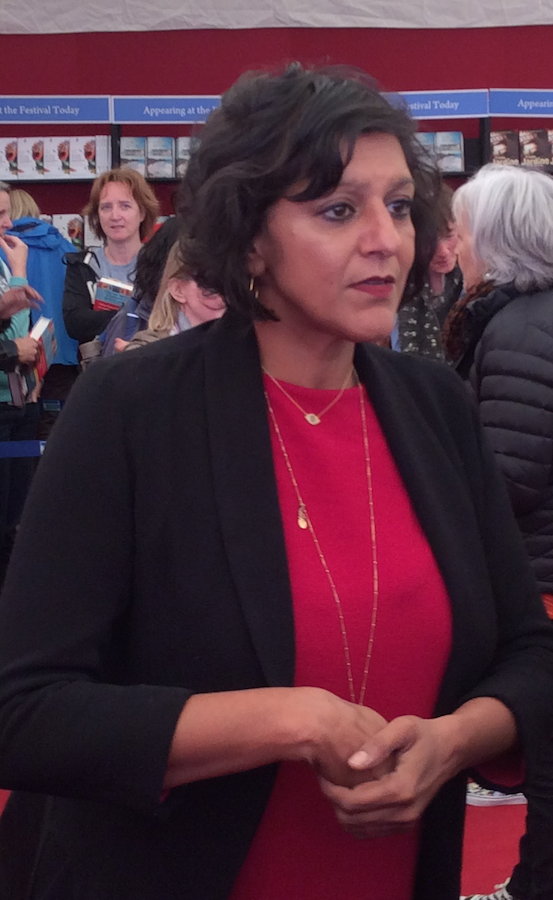 The whole subject of women’s ownership of their bodies, said Meera, and the use of those bodies as sources of income, became ‘muddier’ rather than clearer the more she looked at it. Surrogacy became a metaphor for a lot of other things she wanted to talk about. In the Baillie Gifford Theatre we were led to consider such things as the Jyoti Singh Pandey rape/murder case, the age at which a cut-off point for becoming a mother should be, whether there should even be a cut-off point, whether couples should have children for ‘stability’, how surrogacy can be a matter of altruism in one country and commerce in another, how status-conscious India is becoming paralleled by and increasingly stratified Britain, how social media has changed everything for women growing up, and the difference between feminist issues at the forefront today and those of one generation further back.
The House of Hidden Mothers was written – Meera was first to admit – from the point of view of a Non-Resident Indian, a British Indian exploring her roots, but writing irrespective of those roots. The book is coming out in India, where it will be read by people whose life experience is wholly of India. Meera reminded us that we have outsourced fertility there like we had outsourced call centres, and reminded us that culture shifts all the time. Don’t confuse ‘tradition’ with ‘old bad habits’. Like most of the events at this year’s Book Festival, the scheduled hour ended with loads more to talk about, and that talk moved on to the signing tent. So, no old bad habit there, then.
Once again I’m in the ‘male-thrust-in’ position here. No matter, it was fascinating. Whether I’m inclined to buy the novel is another matter. From what I heard I might not get on too well with stylistic aspects of it. But I’m sure I’ll be in the minority.
Reviewer : Paul Thompson
Edwyn Collins and Grace Maxwell with Ian Rankin.
Charlotte Square
25th August 2015
Aphasia, do you know what it is? Grace Maxwell, Bellshill born and bred knows. Only because she has witnessed it first hand, ‘ It’s an umbrella term for the loss of speech, word finding, language comprehension, reading and writing, as a result of brain injury, most commonly, through stroke.’
Ten years ago, on a February evening, Grace’s ‘charmed life’ changed. Her life partner whom she also manages suffered a stroke with double cerebral hemorrhaging.The ensuing weeks were critical followed by months coping. Eventually years assisting in re-learning the cruelest affliction a musician could suffer – how to compose not only his music but also himself. With nothing working on his right side, Edwyn Collins of Orange Juice fame was left unable to support himself with no method of communicating with Grace other than hand squeezing and face stroking. Sassy Grace is a joy to listen to, a bag of positive energy who takes no prisoners in her search for valid post stroke life for her family. Quickly sussing out the good, the bad and the exceptional in our ever strained NHS, she praises language therapists Trudy Jenkins and Sally Ghibaldan for , ‘ giving him back meaningful life. Simple as that.‘ Elaborating further – “ As a witness to this process, I have watched an unfathomably complex work of reconstruction. Order from chaos.”
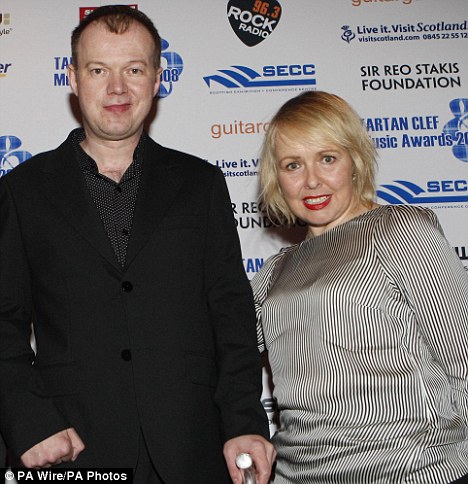 Through a maelstrom of highs and lows, Edwyn Collins and Grace Maxwell have found a way to fall then laugh then live. They demonstrate this with Ian Rankin who gets the balance right teasing out fictitious character cockney Dave, Grace’s supposed personal assistant. This was in the early days of Maxwell’s managing career when she discovered Collins would answer her calls with, ‘Grace isn’t available, this is Dave, her assistant. Well, I’m not really orfarised to make those decisions. But I’ll pass it on to the organ grinder when she gets back.’ Grace talks of these crazy years laughing, explaining the difficulties of being mother, promoter, bus driver, manager – all organized from the living room floor. Their son Will toured with them when school authorities, ‘ were more relaxed and didn’t argue with my theories about adventure and learning..’
Barrington Stoke books suits Edwyn in his quest for literacy. His return to drawing has been therapeutic: he was (in pre pop stardom ) a graphic designer for Glasgow Parks!
Witnessing them play Never Met a Girl Like You Before together was a highlight of the Edinburgh Book Festival and it was no surprise that Edwyn and Grace, who were in comical banter with author Ian Rankin throughout a spellbinding hour, received a standing ovation from the audience. And rightly so.
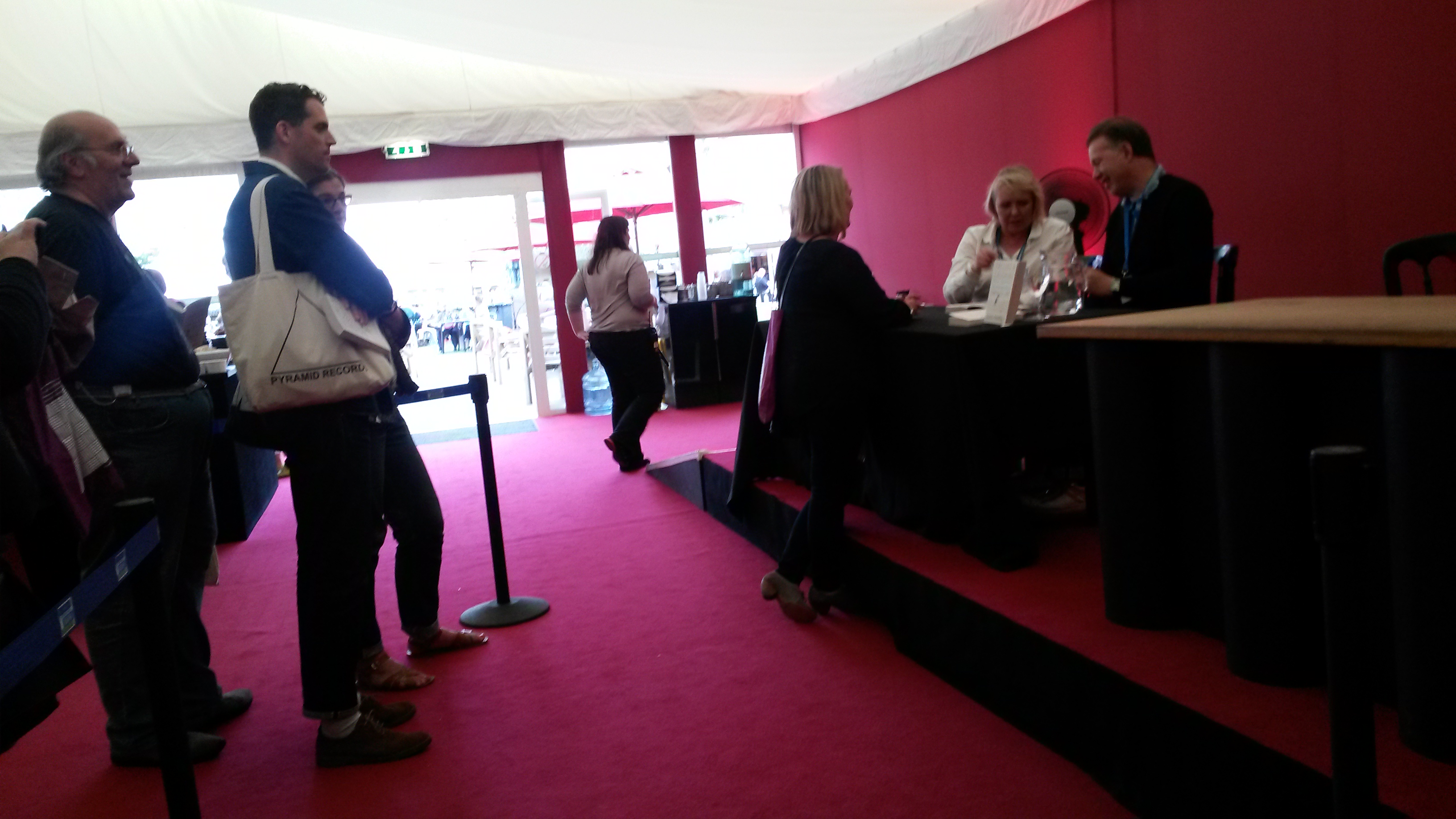
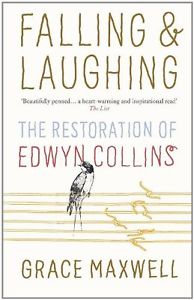 Edwyn’s inability to strum his guitar is no deterrent for Grace who makes a wonderful extension of his body transforming herself into a surrogate strummer and right arm for his perfectly functioning left. This remarkable duo are composing their next chapter together and there is such a sense of joy and fun connecting them to their present and future in Helmsford, Sunderland where they have relocated. This eloquent book is an extraordinary victory shedding powerful light on the best of human spirit. Barriers can be broken if you fly in the face of statistics and refuse to be a victim, aways moving forward. Just like his song Quite Like Silver, Collins is true to his words :
And when I rise , I rise up steadily.
Reviewer : Clare Crines
Ben Crystal: Understanding Shakespeare
Edinburgh International Book festival
Baillie Gifford Imagination Lab
22nd August 2015
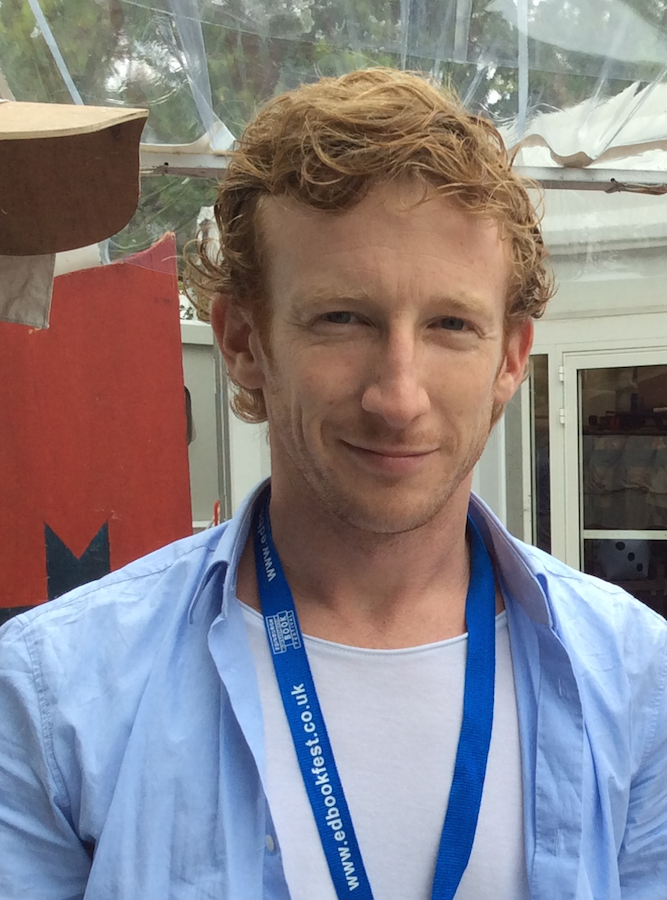
I’ve been sent to review all kinds of events – everything from the Proclaimers to the RSNO, and from poetry readings to discussions on the place of literature in minority languages – and although they have, by and large, all been good, I had wondered when I would be able to say that I had been to one that was a total blast. After this session from actor, director, producer, scholar, writer, and general all-round good guy Ben Crystal, I wondered if I would actually be able to say anything negative about it. You’ll have to read through to the end to find out. No skipping ahead!
I was lucky enough to be able to spend some time with Ben both before and after the event. Beforehand I found him trying to settle, to get into the right frame of mind for his appearance. Stage fright? He certainly did not seem to be relaxed. Afterwards he told me it hadn’t been a successful tactic, that there was no way he could plan what to say when he had no idea of the size and layout of the venue, nor how many people would be there, nor what proportion of young people and of what ages. So he had extemporised the whole thing for us. But this was entirely understandable, because as a youngster who had hated Shakespeare and whose ambition was to run a computer games shop, he had been persuaded to audition for the part of Ariel; he did so against his wishes, and when he stepped, reluctantly, in a flimsy costume, onto a cold, outdoor stage in North Wales, still hating Shakespeare, the moment he opened his mouth and started delivering his lines was a moment of epiphany. He knew what he wanted to do for the rest of his life – which is precisely what he has done. Of course with an experience like that under his belt, Ben would have been able to take whatever the Book Festival could throw at him, and his apprehension would have melted.
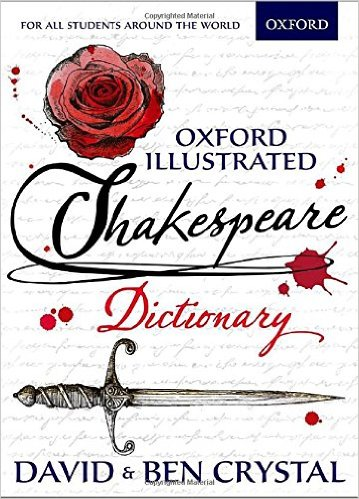 So that’s how he operated in front of the audience at the Baillie Gifford Imagination Lab. I think I was the only unattached adult there (I am in fact an orphan; O! I’ll reveal why I said ‘O!’ later). Even Ben was accompanied by a responsible adult, his father – perhaps I should say his most potent, grave, and reverend signior – Professor David Crystal, probably the UK’s best known linguist and the co-author of the book which the event was promoting: the Oxford Illustrated Shakespeare Dictionary. The event had been a sell-out from almost as soon as it had been advertised on the Book Festival web site. From the moment he stepped onto the stage, Ben began to engage the youngsters in the audience, asking them questions – what did they know about Shakespeare? Did they know the names of any of his plays? How many plays had he written? He remembered which kid had said what. He greeted every contribution from the young audience with enthusiasm. He spoke about the ‘magic upon magic upon magic’ of The Tempest, and likened Prospero to Lord Voldemort. Yes, okay, that took some head-getting-round but you could see exactly what he was driving at – this sorcerer, this not simply a magician but the ‘seventh son of a seventh son’ who had a slave who was half-fish, and another who was made of pure air.
Ben told us of things I had forgotten and maybe the youngsters hadn’t known. Such as Shakespeare wrote his plays to be read by only twenty people – his company of actors. Such as the fact that an Elizabethan audience did not come to ‘see’ a play but to hear it. They came to ‘audit’ it, which was why they were called an ‘audience’. This is why Shakespeare’s inventive, poetic language is so important. An aside from me: I call it his CGI – that’s the analogy I draw. One stand-out section of the event came when Ben dealt with Sonnet XVIII.
Shall I compare thee to a summer’s day?
Thou art more lovely and more temperate:
Rough winds do shake the darling buds of May,
And summer’s lease hath all too short a date;
Sometime too hot the eye of heaven shines,
And often is his gold complexion dimm’d;
And every fair from fair sometime declines,
By chance or nature’s changing course untrimm’d;
But thy eternal summer shall not fade,
Nor lose possession of that fair thou ow’st;
Nor shall Death brag thou wander’st in his shade,
When in eternal lines to time thou grow’st:
So long as men can breathe or eyes can see,
So long lives this, and this gives life to thee.
He addressed the sonnet principally to one young girl in the audience, Aphra by name (another aside from me: amazingly, according to her father, she is not named after Aphra Behn!), first going through it line-by-line and talking about the language and some of the images, then delivering it whole and with a subtle accent. Thus he introduced us to ‘Original Pronunciation’ (‘OP’), which is his specialism – the presentation of Shakespeare’s words in, as near as can be ascertained, the way they would have been spoken and heard at the time of their writing. Having introduced it mildly, he then delivered the sonnet again, unleashing OP in its full power. The young audience was then encouraged to feed back what they heard – it sounded a bit like a Somerset accent, or Scots, or Pirates of the Caribbean! The important thing was that it was no longer alien to them, they could relate it to something they knew.
I said I would get back to ‘O!’ Ben introduced us to what he called ‘the most important word in Shakespeare’ – ‘O’ – with the passage from Hamlet where the Prince of Denmark learns from the ghost of his father, the ghastly truth about his death, and about the treasonous machinations of Hamlet’s uncle. Hamlet replies with ‘O’. ‘O’ could signify anything from boredom to delight, but what did the young audience suggest it could signify, in the light of the ghost’s grim and terrible revelations? Grief! Shock! Fainting! were some suggestions. So Ben delivered Hamlet’s lines, throwing all of that into them:
O all you host of heaven, O earth – what else? –
And shall I couple hell? O fie! Hold, hold, my heart,
And you, my sinews, grow not instant old,
But bear me swiftly up…
Thus he made them producers and directors of the scene. How better to introduce them to what, for him, made Shakespeare magic upon magic upon magic.
“What’s your favourite film of a Shakespeare play?” one asked.
“The Lion King,” Ben replied. “It’s Hamlet!”
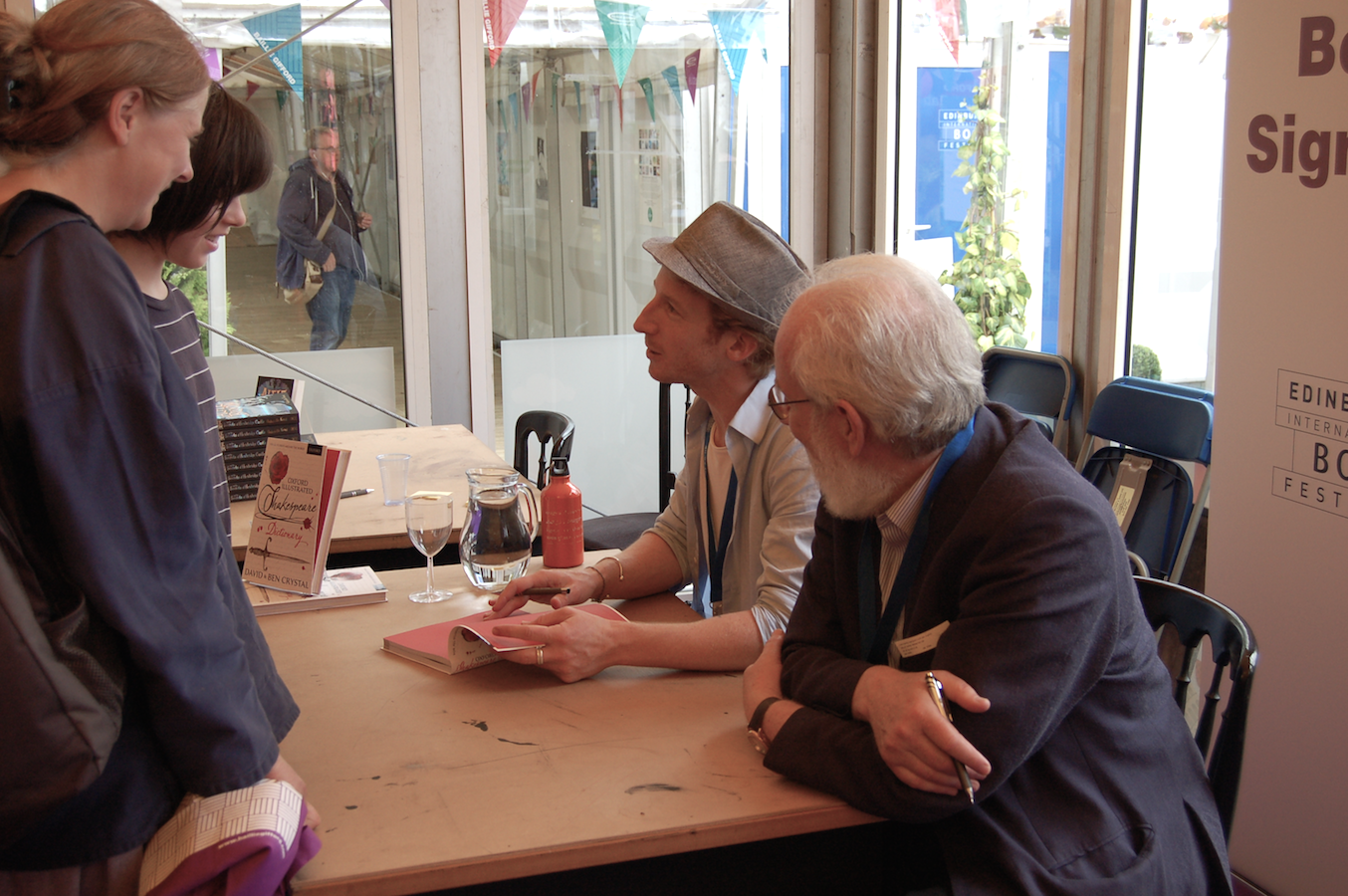 If the queue afterwards to get copies of the Oxford Illustrated Shakespeare Dictionary signed, by Crystal, père et fils, is anything to go by, then promotion of the book was an unqualified success. I can actually provide a comment about the book, because I bought it when it when the ink was still wet. It is a fine thing for a young readership. Not only that, it is an enjoyable read and a useful tool for me, as I have already used it to help me study not Shakespeare but his near contemporary Thomas Kyd’s The Spanish Tragedy, and I found it invaluable. Oh yes, did I find anything negative to say? No, not really, but as I promised you something, let me give you the pettiest of petty quibbles. Ben spoke of ‘Elizabethan’ times; but we’re in Scotland, and we didn’t have any. I told you it was a petty quibble, so you can now throw stones at me. O forget the quibble, then, the event was a total blast!
Reviewer : Paul Thompson
 Mumble Words